 How to resolve AdBlock issue?
News
Dogs available for adoption this week include mixes of American bulldog, Anatolian shepherd, Catahoula leopard dog, German shepherd, husky, Jack Russell terrier, pit bull, plott hound, pointer, and terrier.
Dogs that are adopted from Lake County Animal Care and Control are either neutered or spayed, microchipped and, if old enough, given a rabies shot and county license before being released to their new owner. License fees do not apply to residents of the cities of Lakeport or Clearlake.
The following dogs at the Lake County Animal Care and Control shelter have been cleared for adoption.
Call Lake County Animal Care and Control at 707-263-0278 or visit the shelter online for information on visiting or adopting.
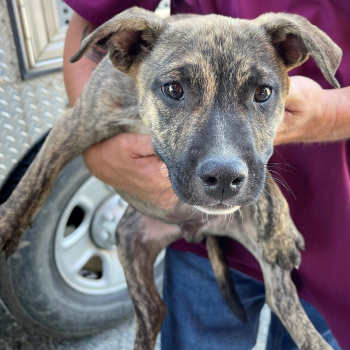
Male pit bull terrier
This 3-month-old male pit bull terrier has a short brindle coat.
He is in kennel No. 7a, ID No. LCAC-A-5265.
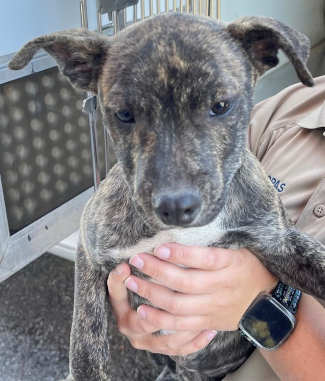
Male pit bull terrier
This 3-month-old male pit bull terrier has a short brindle coat.
He is in kennel No. 7b, ID No. LCAC-A-5266.
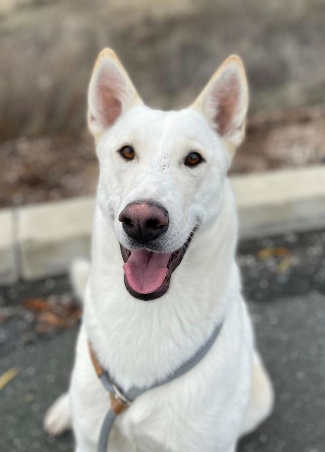
‘Sky’
“Sky” is a 1 and a half year old female German shepherd with an all-white coat.
She is in kennel No. 8, ID No. LCAC-A-4297.

Male wirehaired terrier
This 1-year-old male wirehaired terrier has a brown coat.
He is in kennel No. 9, ID No. LCAC-A-5261.

Female pit bull terrier-hound mix
This 2-year-old female pit bull terrier-hound mix has a short black and tan coat.
She is in kennel No. 10, ID No. LCAC-A-5259.

Male pit bull
This 1-year-old male pit bull terrier has a short black coat.
He is in kennel No. 11, ID No. LCAC-A-5258.

Female Catahoula leopard dog puppy
This 2-month-old female Catahoula leopard dog puppy has a short black coat with white markings.
She is in kennel No. 12a, ID No. LCAC-A-5243.
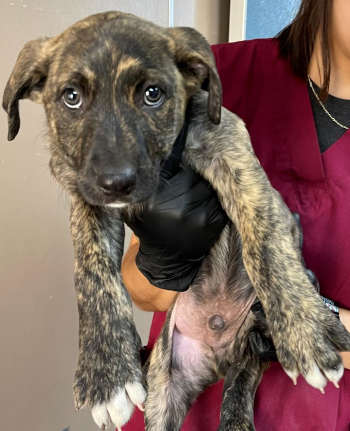
Male Catahoula leopard dog puppy
This 2-month-old male Catahoula leopard dog puppy has a short brindle coat with white markings.
He is in kennel No. 12b, ID No. LCAC-A-5245.
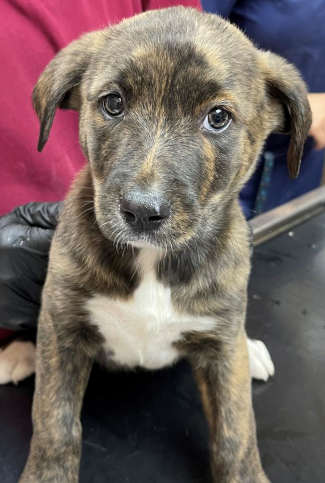
Female Catahoula leopard dog puppy
This 2-month-old female Catahoula leopard dog puppy has a short brindle coat with white markings.
She is in kennel No. 12c, ID No. LCAC-A-5246.

Female Jack Russell terrier
This 9-month-old female Jack Russell terrier has a short brown and white coat.
She is in kennel No. 13, ID No. LCAC-A-5236.

Female pit bull-pointer mix
This 8-month-old female pit bull-pointer mix has a brown brindle and white coat.
She is in kennel No. 14, ID No. LCAC-A-5230.
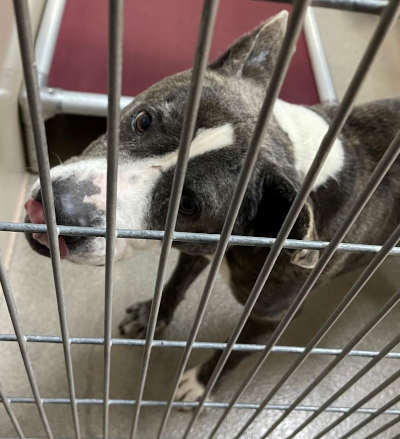
‘Kyle Barkson’
“Kyle Barkson” is a 5 and a half year old male pit bull with a black and white coat.
He is in kennel No. 15, ID No. LCAC-A-5039.
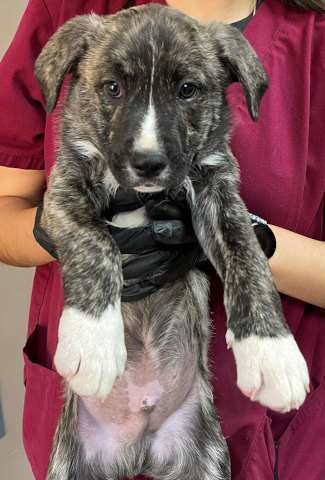
Male Catahoula leopard dog puppy
This 2-month-old male Catahoula leopard dog puppy has a short brown brindle coat with white markings.
He is in kennel No. 16a, ID No. LCAC-A-5244.
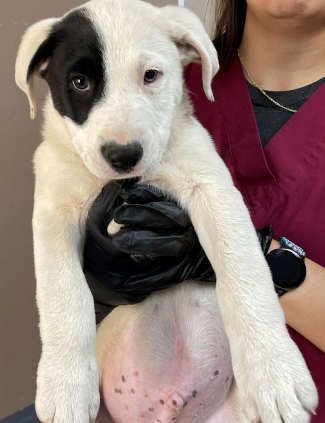
Male Catahoula leopard dog puppy
This 2-month-old male Catahoula leopard dog puppy has a short white coat with black markings.
He is in kennel No. 16a, ID No. LCAC-A-5247.
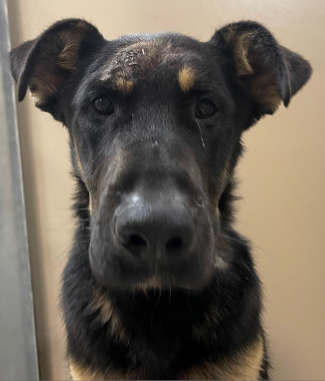
Male German shepherd
This 9-month-old male German shepherd has a short black and tan coat.
He is in kennel No. 17, ID No. LCAC-A-5054.

Male plott hound
This 2-year-old male plott hound has a short brown coat.
He is in kennel No. 18, ID No. LCAC-A-5143.
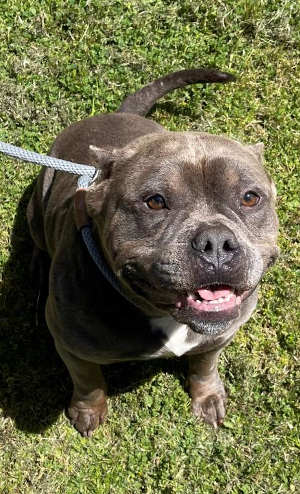
Male American bulldog
This 4-year-old male American bulldog has a gray and white coat.
He is in kennel No. 19, ID No. LCAC-A-5204.

‘Pluto’
“Pluto” is a 2-year-old male pit bull terrier-hound mix with a short brown coat.
He is in kennel No. 20, ID No. LCAC-A-5052.

Male pit bull terrier
This 3-year-old male pit bull terrier has a short black and white coat.
He is in kennel No. 21, ID No. LCAC-A-5076.
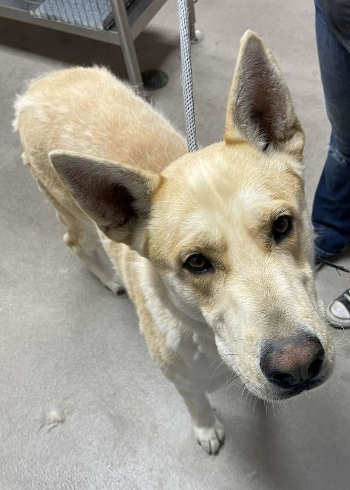
Male shepherd
This 2-year-old male shepherd has a tan and white coat.
He is in kennel No. 22, ID No. LCAC-A-5223.

Male terrier
This 1-year-old male terrier mix has a short brown coat.
He is in kennel No. 23, ID No. LCAC-A-5110.

Male terrier
This 1-year-old male terrier has a short tan coat.
He is in kennel No. 24, ID No. LCAC-A-5111.

Male Anatolian shepherd
This one and a half year old male Anatolian shepherd has a tan and black coat.
He is in kennel No. 25, ID No. LCAC-A-5036.

Male pit bull terrier
This 1-year-old male pit bull terrier has a black coat with white markings.
He is in kennel No. 27, ID No. LCAC-A-5203.

Female Labrador retriever-pit bull mix
This 3-year-old female Labrador retriever-pit bull mix has a short yellow coat.
She is in kennel No. 29, ID No. LCAC-A-5229.

Pit bull terrier-pointer mix
This 1 and a half year old female pit bull-pointer mix has a white coat.
She is in kennel No. 31, ID No. LCAC-A-5231.

Female pit bull-shepherd puppy
This 5-month-old female pit bull-shepherd puppy has a short tricolor coat.
She is in kennel No. 32, ID No. LCAC-A-5072.

‘Max’
“Max” is a 7-month-old male terrier mix with a short black coat.
He is in kennel No. 34, ID No. LCAC-A-4248.
Email Elizabeth Larson at
My wife and I were in the grocery store recently when we noticed an older woman reaching above her head for some produce. As she stretched out her hand, she lost her balance and began falling forward. Fortunately, she leaned into her grocery cart, which prevented her from falling to the ground.
Each year, about 1 in every 4 older adults experience a fall. In fact, falls are the leading cause of injuries in adults ages 65 and older. Falls are the most common cause of hip fractures and traumatic brain injuries.
Injuries like those are also risk factors for placement in a nursing home, where the fall risk is nearly three times higher than for people living in the community.
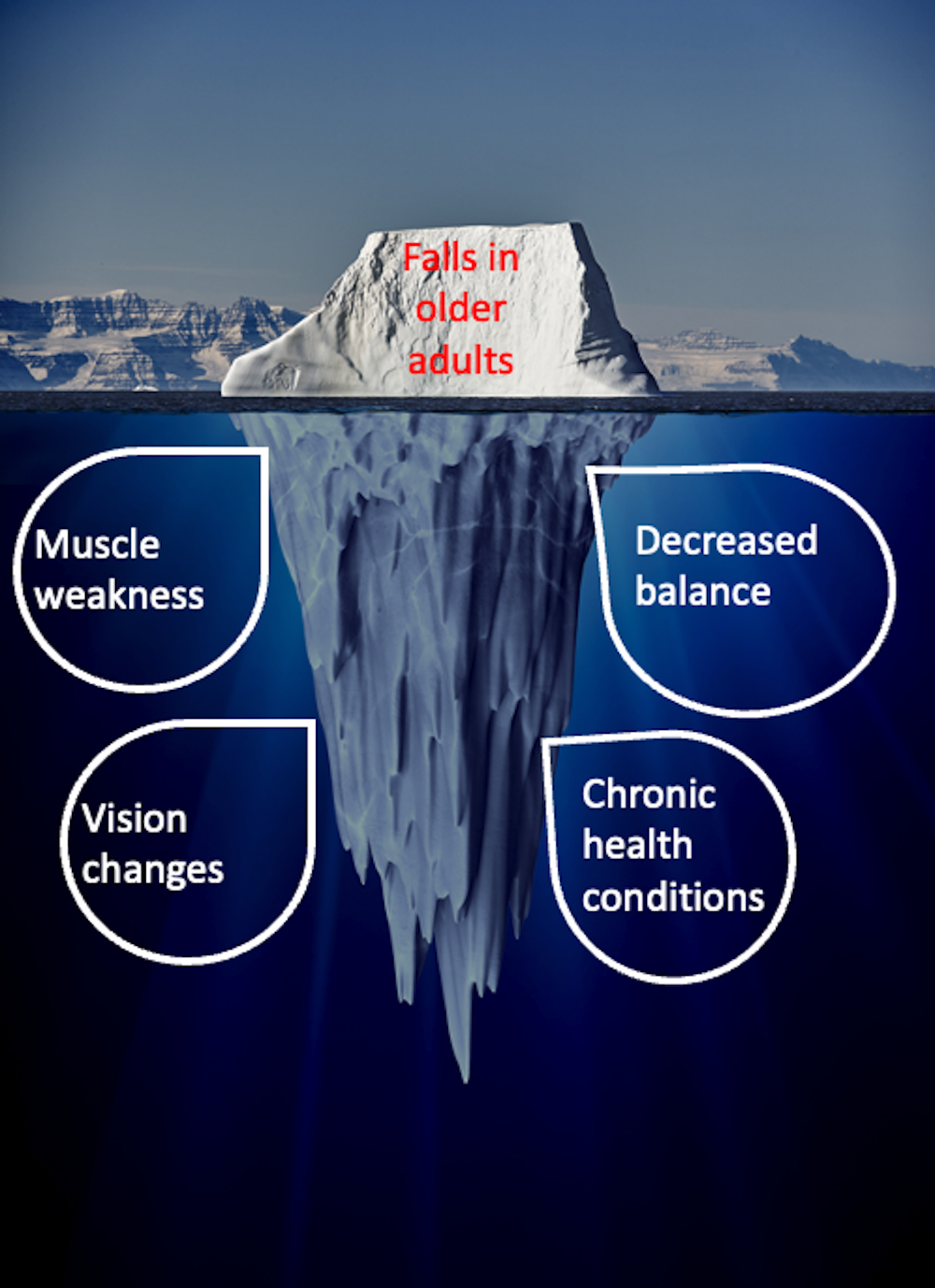
A number of physical changes with aging often go unseen preceding falls, including muscle weakness, decreased balance and changes in vision.
I am a physical therapist and clinical scientist focused on fall prevention in older adults, commonly ages 65 and older. I’ve spent most of my career investigating why older adults fall and working with patients and their families to prevent falls.
Why aging leads to increased risk of falls
Aging is a process that affects the systems and tissues of every person. The rate and magnitude of aging may be different for each person, but overall physical decline is an inevitable part of life. Most people think aging starts in their 60s, but in fact we spend most of our life span undergoing the process of decline, typically beginning in our 30s.
Older adults are more prone to falling for various reasons, including age-related changes in their bodies and vision changes that leave them vulnerable to environmental factors such as curbs, stairs and carpet folds.
Based on my experience, here are some common reasons older adults may experience falls:
First, aging leads to a natural loss of muscle strength and flexibility, making it more challenging to maintain balance and stability. The loss of strength and poor balance are two of the most common causes of falls.
Second, older adults often have chronic conditions such as arthritis, Parkinson’s disease or diabetes that can affect their mobility, coordination and overall stability.
In addition, certain medications commonly taken by older adults, such as sedatives or blood pressure drugs, can cause dizziness, drowsiness or a drop in blood pressure, leading to an increased risk of falls.
Age-related vision changes, such as reduced depth perception and peripheral vision and difficulty in differentiating colors or contrasts, can make it harder to navigate and identify potential hazards. Hazards in the environment, such as uneven surfaces, slippery floors, inadequate lighting, loose rugs or carpets or cluttered pathways, can significantly contribute to falls among older adults.
Older adults who lead a sedentary lifestyle or have limited physical activity may also experience reduced strength, flexibility and balance.
And finally, such conditions as dementia or Alzheimer’s disease can affect judgment, attention and spatial awareness, leading to increased fall risk.
Theories of aging
There are numerous theories about why we age but there is no one unifying notion that explains all the changes in our bodies. A large portion of aging-related decline is caused by our genes, which determine the structure and function of bones, muscle growth and repair and visual depth perception, among other things. But there are also numerous lifestyle-related factors that influence our rate of aging including diet, exercise, stress and exposure to environmental toxins.
A recent advance in scientific understanding of aging is that there is a difference between your chronological age and your biological age. Chronological age is simply the number of years you’ve been on the Earth. Biological age, however, refers to how old your cells and tissues are. It is based on physiological evidence from a blood test and is related to your physical and functional ability. Thus, if you’re healthy and fit, your biological age may be lower than your chronological age. However, the reverse can also be true.
I encourage patients to focus on their biological age because it empowers them to take control over the aging process. We obviously have no control over when we are born. By focusing on the age of our cells, we can avoid long-held beliefs that our bodies are destined to develop cancer, diabetes or other conditions that have historically been tied to how long we live.
And by taking control of diet, exercise, sleep and other lifestyle factors you can actually decrease your biological age and improve your quality of life. As one example, our team’s research has shown that moderate amounts of aerobic exercise can slow down motor decline even when a person begins exercise in the latter half of the life span.
Fall prevention
Adopting lifestyle changes such as regular, long-term exercise can reduce the consequences of aging, including falls and injuries. Following a healthy diet, managing chronic conditions, reviewing medications with health care professionals, maintaining a safe home environment and getting regular vision checkups can also help reduce the risk of falls in older adults.
There are several exercises that physical therapists use to improve balance for patients. It is important to note however, that before starting any exercise program, everyone should consult with a health care professional or a qualified physical therapist to determine the most appropriate exercises for their specific needs. Here are five forms of exercise I commonly recommend to my patients to improve balance:
-
Balance training can help improve coordination and proprioception, which is the body’s ability to sense where it is in space. By practicing movements that challenge the body’s balance, such as standing on one leg or walking heel-to-toe, the nervous system becomes better at coordinating movement and maintaining balance. A large research study analyzing nearly 8,000 older adults found that balance and functional exercises reduce the rate of falls by 24%.
-
Strength training exercises involve lifting weights or using resistance bands to increase muscle strength and power. By strengthening the muscles in the legs, hips and core, older adults can improve their ability to maintain balance and stability. Our research has shown that strength training can also lead to improvements in walking speed and a reduction in fall risk.
-
Tai chi is a gentle martial art that focuses on slow, controlled movements and shifting body weight. Research shows that it can improve balance, strength and flexibility in older adults. Several combined studies in tai chi have demonstrated a 20% reduction in the number of people who experience falls.
-
Certain yoga poses can enhance balance and stability. Tree pose, warrior pose and mountain pose are examples of poses that can help improve balance. It’s best to practice yoga under the guidance of a qualified instructor who can adapt the poses to individual abilities.
-
Flexibility training involves stretching the muscles and joints, which can improve range of motion and reduce stiffness. By improving range of motion, older adults can improve their ability to move safely and avoid falls caused by limitations in mobility.
-
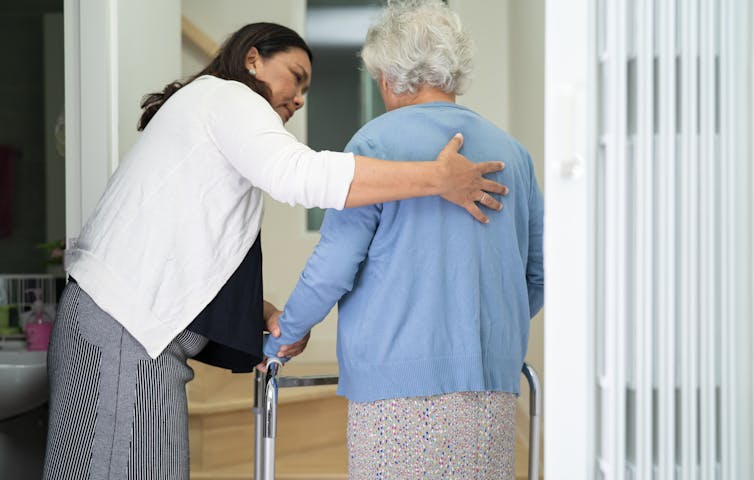
Use of assistive devices can be helpful when strength or balance impairments are present. Research studies involving the evaluation of canes and walkers used by older adults confirm that these devices can improve balance and mobility. Training from a physical or occupational therapist in the proper use of assistive devices is an important part of improving safety.
When I think back about the woman who nearly fell in the grocery store, I wish I could share everything we have learned about healthy aging with her. There’s no way to know if she was already putting these tips into practice, but I’m comforted by the thought that she may have avoided the fall by being in the right place at the right time. After all, she was standing in the produce aisle.
Evan Papa, Associate Professor of Physical Therapy and Rehabilitation Science, Tufts University
This article is republished from The Conversation under a Creative Commons license. Read the original article.

This just in: NASA’s new Daily Minor Planet project seeks your help discovering and tracking asteroids — in a dazzling new data set.
Remember asteroids, those lumps of rock tumbling through space left over from the formation of our solar system? There are so many reasons to find these objects. Some asteroids pose an impact hazard to Earth, while others are essential for humanity's endeavor to explore, live, and work in space. Now there's a new way you can help.
The Daily Minor Planet project, uses data from the NASA-funded, University of Arizona-based Catalina Sky Survey, which collects more than 1000 images per night. "We take so many images of the sky each night that we cannot possibly look through all of our potential real asteroids," said Carson Fuls, a science engineering specialist for the Catalina Sky Survey who heads the project.
At the Daily Minor Planet, you'll decide if the specks of light in the images look like genuine celestial bodies or, instead, are false detections resulting from inconveniently timed "twinkles" of the star-studded background, dust on the telescope mirror, or other causes. After answering by clicking a "yes" or "no" button, you can either write a comment or move on to the next set of images.
The new Daily Minor Planet project replaces the Catalina Outer Solar System Survey project, which is now complete. If you contributed to the Catalina Outer Solar System Survey project, thank you! The science team learned from their experience working with you on that project and cleared up some bottlenecks in their data pipeline. The new Daily Minor Planet will feature new images uploaded daily—come give it a try!
"I thought it would be great if people could do what we do every night," said Fuls. "We see this website throwing open the doors: Do you want to look for asteroids, too? If so, come on in."
Can't get enough asteroids? You'll also enjoy searching for comet-like objects hiding in the asteroid belt with the Active Asteroids project or getting a group together to join the International Astronomical Search Collaboration.

LAKE COUNTY, Calif. — In partnership with the city of Clearlake and Blue Zones Project Lake County, Konocti Unified School District invites community members to participate in their walking school bus event.
It will be held on Wednesday, May 31, starting at Austin Park at 7:30 a.m. and ending at Pomo Elementary School.
The goal of the event is to highlight the need for walkable neighborhoods and encourage federal funding to support the effort.

LAKE COUNTY, Calif. — California State Parks' Division of Boating and Waterways kicks off the official boating season in California in coordination with National Safe Boating Week held May 20 to 26.
The Division of Boating and Waterways, or DBW, encourages all boaters and outdoor enthusiasts to brush up on boating safety skills and prepare for the boating season.
This observance week is a global awareness effort that encourages boaters to make the most of their boating adventure by being responsible. One of the important safety measures to take while boating is wearing life jackets.
“With the weather warming up, the snow melting from this year’s historic snowpack and boaters heading out to the water, it is crucial that life jackets are worn at all times while boating,” said DBW’s Deputy Director Ramona Fernandez. “Just like you wear your seatbelt in the car, wearing a life jacket while boating is one layer of prevention to avoid unnecessary tragedy.”
U.S. Coast Guard statistics show that drowning was the reported cause of death in four out of every five recreational boating fatalities in 2021 and that 83% of those who drowned were not wearing life jackets.
Newer styles of life jackets are much more comfortable, lightweight and stylish compared to the bulky, orange life jackets that boaters used to know. There are innovative options, such as inflatable life jackets, that are much cooler in the warmer weather and allow mobility and flexibility for activities like boating, fishing, paddling or hunting.
Here are some helpful tips for selecting and maintaining life jackets:
U.S. Coast Guard–Approved: Wear only U.S. Coast Guard-approved life jackets while boating. All life jackets approved by the U.S. Coast Guard will have an approval number located on the inside label.
Proper Fit: Life jackets are sized by weight and chest measurements. An adult-sized life jacket is not suitable for a child, as the life jacket may be too large and may ride up around their face or even slip off. Always check the fit of the child’s life jacket before entering the water. A life jacket too small for the wearer may not keep them afloat.
Intended Boating Activity: Make sure that the life jacket is approved for the specific boating activity in which you plan to participate.
Good condition: Check the life jacket before use to ensure it is in good condition. Replace a life jacket that has faded labels, rips, tears, mildew, loose or missing straps, frayed webbing or broken zippers or buckles. If an inflatable life jacket is used, check recommendations from the manufacturer on the CO2 canister and arming mechanism, and replace as necessary.
Children and life jackets: Under California law, every child under 13 years of age on a moving recreational vessel of any length must wear a U.S. Coast Guard–approved life jacket in serviceable condition and of a type and size appropriate for the conditions and the activity. Many cities and counties also have regulations about children and youth life jacket requirements along rivers and lakes. Always check with local managers about life jacket rules.
Life jacket loaner program: DBW partners with local agencies to ensure boaters have access to life jackets. A life jacket can be borrowed from more than 100 life jacket loaner stations throughout the state. View life jacket loaner stations.
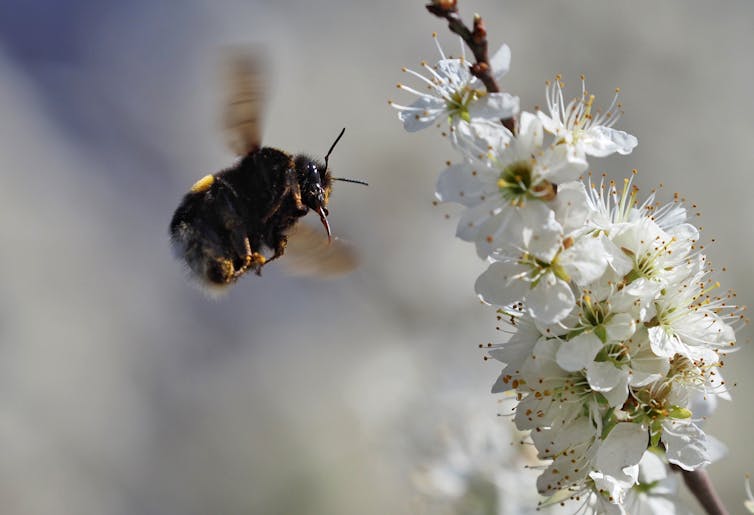
As trees and flowers blossom in spring, bees emerge from their winter nests and burrows. For many species it’s time to mate, and some will start new solitary nests or colonies.
Bees and other pollinators are essential to human society. They provide about one-third of the food we eat, a service with a global value estimated at up to $US577 billion annually.
But bees are interesting in many other ways that are less widely known. In my new book, “What a Bee Knows: Exploring the Thoughts, Memories, and Personalities of Bees,” I draw on my experience studying bees for almost 50 years to explore how these creatures perceive the world and their amazing abilities to navigate, learn, communicate and remember. Here’s some of what I’ve learned.
It’s not all about hives and honey
Because people are widely familiar with honeybees, many assume that all bees are social and live in hives or colonies with a queen. In fact, only about 10% of bees are social, and most types don’t make honey.
Most bees lead solitary lives, digging nests in the ground or finding abandoned beetle burrows in dead wood to call home. Some bees are cleptoparasites, sneaking into unoccupied nests to lay eggs, in the same way that cowbirds lay their eggs in other birds’ nests and let the unknowing foster parents rear their chicks.
A few species of tropical bees, known as vulture bees, survive by eating carrion. Their guts contain acid-loving bacteria that enable the bees to digest rotting meat.
Busy brains
The world looks very different to a bee than it does to a human, but bees’ perceptions are hardly simple. Bees are intelligent animals that likely feel pain, remember patterns and odors and even recognize human faces. They can solve mazes and other problems and use simple tools.
Research shows that bees are self-aware and may even have a primitive form of consciousness. During the six to 10 hours bees spend sleeping daily, memories are consolidated within their amazing brains – organs the size of a poppy seed that contain 1 million nerve cells. There are some indications that bees might even dream. I’d like to think so.
An alien sensory world
Bees’ sensory experience of the world is markedly different from ours. For example, humans see the world through the primary colors of red, green and blue. Primary colors for bees are green, blue and ultraviolet.
Bees’ vision is 60 times less sharp than that of humans: A flying bee can’t see the details of a flower until it is about 10 inches away. However, bees can see hidden ultraviolet floral patterns that are invisible to us, and those patterns lead the bees to flowers’ nectar.
Bees also can spot flowers by detecting color changes at a distance. When humans watch film projected at 24 frames per second, the individual images appear to blur into motion. This phenomenon, which is called the flicker-fusion frequency, indicates how capable our visual systems are at resolving moving images. Bees have a much higher flicker-fusion frequency – you would have to play the film 10 times faster for it to look like a blur to them – so they can fly over a flowering meadow and see bright spots of floral color that wouldn’t stand out to humans.
From a distance, bees detect flowers by scent. A honeybee’s sense of smell is 100 times more sensitive than ours. Scientists have used bees to sniff out chemicals associated with cancer and with diabetes on patients’ breath and to detect the presence of high explosives.
Bees’ sense of touch is also highly developed: They can feel tiny fingerprint-like ridges on the petals of some flowers. Bees are nearly deaf to most airborne sounds, unless they are very close to the source, but are sensitive if they are standing on a vibrating surface.
Problem solvers
Bees can navigate mazes as well as mice can, and studies show that they are self-aware of their body dimensions. For example, when fat bumblebees were trained to fly and then walk through a slit in a board to get to food on the other side, the bees turned their bodies sideways and tucked in their legs.
Experiments by Canadian researcher Peter Kevan and Lars Chittka in England demonstrated remarkable feats of bee learning. Bumblebees were trained to pull a string – in other words, to use a tool – connected to a plastic disk with hidden depressions filled with sugar water. They could see the sugar wells but couldn’t get the reward except by tugging at the string until the disk was uncovered.
Other worker bees were placed nearby in a screen cage where they could see what their trained hive mates did. Once released, this second group also pulled the string for the sweet treats. This study demonstrated what scientists term social learning – acting in ways that reflect the behavior of others.
Pollinating with vibrations
Even pollination, one of bees’ best-known behaviors, can be much more complicated than it seems.
The basic process is similar for all types of bees: Females carry pollen grains, the sex cells of plants, on their bodies from flower to flower as they collect pollen and nectar to feed themselves and their developing grubs. When pollen rubs off onto a flower’s stigma, the result is pollination.
My favorite area of bee research examines a method called buzz pollination. Bees use it on about 10% of the world’s 350,000 kinds of flowering plants that have special anthers – structures that produce pollen.
For example, a tomato blossom’s five anthers are pinched together, like the closed fingers of one hand. Pollen is released through one or two small pores at the end of each anther.
When a female bumblebee lands on a tomato flower, she bites one anther at the middle and contracts her flight muscles from 100 to 400 times per second. These powerful vibrations eject pollen from the anther pores in the form of a cloud that strikes the bee. It all happens in just a few tenths of a second.
The bee hangs by one leg and scrapes the pollen into “baskets” – structures on her hind legs. Then she repeats the buzzing on the remaining anthers before moving to different flowers.
Bees also use buzz pollination on the flowers of blueberries, cranberries, eggplant and kiwi fruits. My colleagues and I are conducting experiments to determine the biomechanics of how bee vibrations eject pollen from anthers.
Planting for bees
Many species of bees are declining worldwide, thanks to stresses including parasites, pesticides and habitat loss.
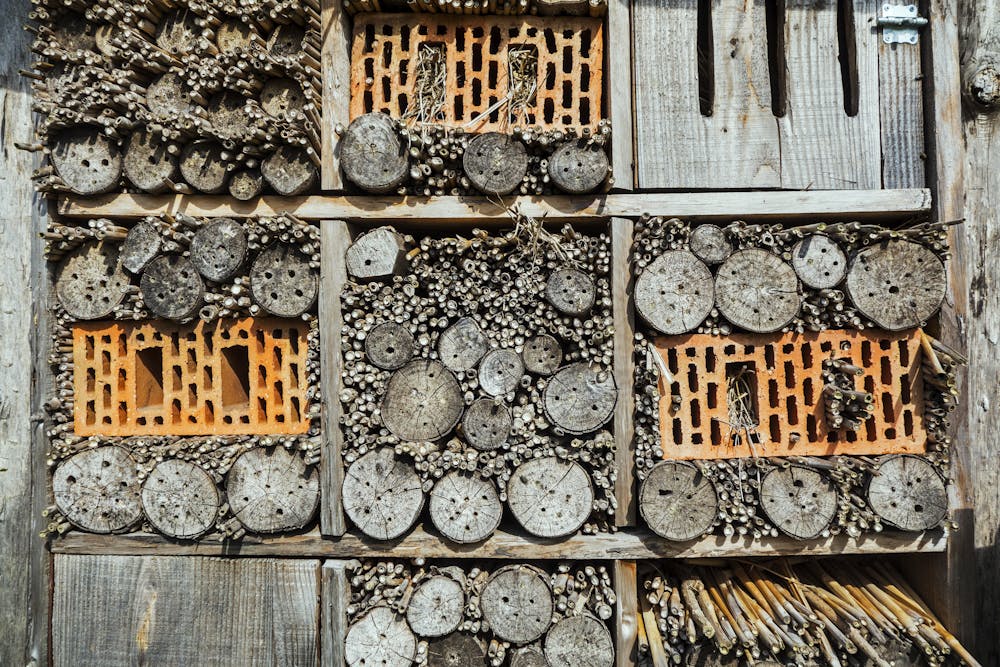
Whether you have an apartment window box or several acres of land, you can do a few simple things to help bees.
First, plant native wildflowers so that blooms are available in every season. Second, try to avoid using insecticides or herbicides. Third, provide open ground where burrowing bees can nest. With luck, soon you’ll have some buzzing new neighbors.
Stephen Buchmann, Adjunct Professor of Entomology and of Ecology and Evolutionary Biology, University of Arizona
This article is republished from The Conversation under a Creative Commons license. Read the original article.