 How to resolve AdBlock issue?
News
NORTHERN CALIFORNIA — Lake County’s representative in the California Assembly has been promoted to a key role in the Legislature.
On Friday, Assemblymember Cecilia Aguiar-Curry (D-Winters) was appointed speaker pro tempore of the California Assembly by Speaker Robert Rivas (D-Salinas), who administered the oath of office to her in a ceremony at the State Capitol.
“I am extraordinarily grateful to Speaker Rivas for his faith and confidence in me,” Aguiar-Curry said. “I am excited to work hand in hand with Majority Leader Bryan and the rest of our leadership team to serve the speaker, the Assembly Democratic Caucus, our legislative institutions, and the working people of this state.”
The Assembly speaker pro-tempore reports directly to Speaker Rivas and runs the Assembly floor together with the Majority Leader Isaac Bryan (D-Los Angeles).
“I won’t lie to you, I never thought I would be here — ever, in my wildest dreams — because I, like many others, started from nothing and here I am a grandmother, and I’m standing in front of all of you, telling you that we are going to change the world,” Aguiar-Curry said.
She said she couldn’t ask for a better job and told Rivas she wouldn’t let him down.
Aguiar-Curry, first elected to the Legislature in November 2016, represents the Fourth Assembly District, which includes all of Yolo, Napa, Colusa and Lake counties, and parts of Sonoma County.
This initiative, which began in March 2022, represents a collaborative effort between Lake County Museum staff and the volunteer Tribal Advisory Committee to the Museums of Lake County.
The funding is part of the $19.7 million awarded by the California Cultural and Historical Endowment to support 63 museum projects spanning from San Diego to Shasta counties.
These projects aim to provide resources for small capital projects and programs in museums that have been severely affected by COVID-19 and serve historically underserved communities or students subject to Title 1.
Wade Crowfoot, California Natural Resources Secretary, expressed his enthusiasm for the initiative, stating, “California's museums teach us about our state's dynamic, diverse history and culture. This funding will support projects across the state that lift up history and culture that has been underrepresented in the past and enable more people to learn these remarkable stories.”
The ambitious endeavor will lead to the establishment of a permanent exhibit in the Historic Courthouse Museum, showcasing the rich and vibrant history of the seven federally recognized Pomo Nations of the Clear Lake basin.
The exhibit will feature an extensive basketry collection and other cultural objects displayed in modern cases, incorporating dynamic mounts and interactive screens with oral histories and other cultural content in collaboration with the tribes in Lake County: Big Valley Band of Pomo Indians, Elem Indian Colony of Pomo Indians, Habematolel Pomo of Upper Lake, the Koi Nation of Northern California, Middletown Rancheria of Pomo Indians of California, the Robinson Rancheria of Pomo Indians of California and the Scotts Valley Band of Pomo Indians.
Additionally, contemporary art from Pomo artists will be included to connect the present and future with the generations of Lake County's indigenous heritage.
Planning for this transformative project began in the summer 2023, with a grand opening scheduled for 2024.
The gallery will welcome museum visitors and students on tours, fostering knowledge and appreciation for the culture and identity of the Lake Pomo tribes.
In another partnership, the county of Lake also was successful in its application to the Upstate California Creative Corps Grant program, which will enable the completion of the Lake Pomo Family statue on the grounds of the Historic Courthouse Museum in Lakeport.
This grant is part of a broader media, outreach and engagement campaign designed to increase awareness for issues such as public health, water and energy conservation, climate mitigation, and emergency preparedness, relief, and recovery.
The California Arts Council views the California Creative Corps program as an opportunity for job creation and human infrastructure development, fostering artist engagement in public work and intersectional public interest goals.
The life-size bronze sculpture featuring a Lake Pomo family will be erected on the grounds of the museum.
The project represents the culmination of nearly a decade of fundraising efforts and will be a major attraction for the community, drawing visitors to the county and museums alike. The statue holds profound symbolism, representing the cultural beauty and heritage of the Lake Pomo people for generations to come.
This statue project aims to address historical trauma and foster healing within Indigenous communities that have endured centuries of marginalization and assimilation. The power of public art, such as this statue, promotes well-being by providing individuals with a sense of purpose and inviting public spaces that encourage physical activity, socialization, and a deeper understanding of the world.
Throughout the process, the Tribal Advisory Committee to the Museums of Lake County has worked closely with Kelseyville artist Rolf Kriken to ensure cultural authenticity of the individual figures in the statue and reflect the family bonds, resiliency, and intergenerational connection of the Pomo people.
The committee, consisting of elders and tribal members representing all seven Pomo tribes, has creatively guided the project and contributed significantly to its realization.
Their vision and input have been central to the creation of the Lake Pomo Family bronze statue, county officials said.
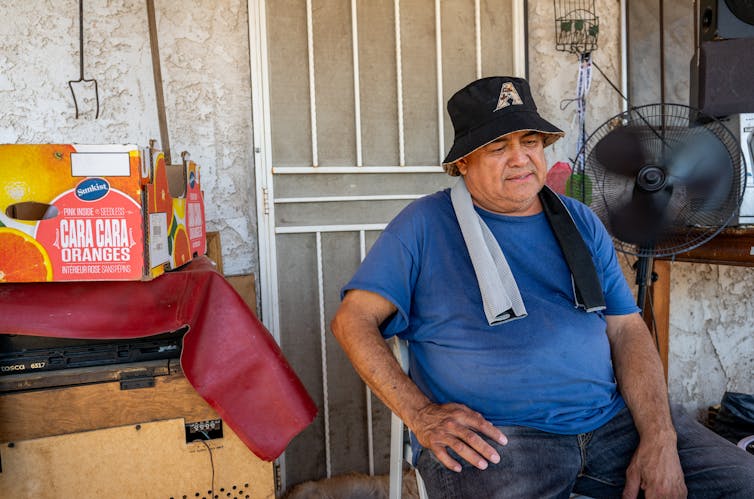
Scorching temperatures have put millions of Americans in danger this summer, with heat extremes stretching from coast to coast in the Southern U.S.
Phoenix hit 110 degrees Fahrenheit (43.3 Celsius) or higher every day for over three weeks in July. Other major cities, from Las Vegas to Miami, experienced relentless high temperatures, which residents described as “hell on earth.”
While the evening news runs footage of miserable sunbathers on Miami Beach and joggers in Austin, Texas, dousing themselves with water, these images conceal a growing hidden crisis: the millions of older adults who are suffering behind closed doors.
As researchers who study older adults’ health and climate change, we have found that two societal trends point to a potentially dire future: The population is getting older, and temperatures are rising.
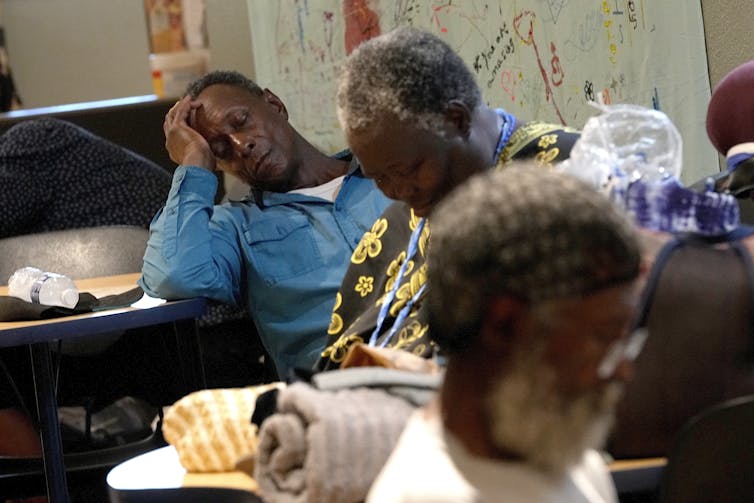
Some of the country’s hottest states, including Arizona, are forecast to see dramatic growth in their older adult populations. But heat isn’t just a problem in the South: Northern populations also face rising risks from extreme heat that many people aren’t accustomed to.
Communities, families and older residents need to understand these risks and be prepared.
Why older adults face higher heat risks
Triple-digit temperatures are miserable for everyone, but for older adults they can be deadly.
Older adults don’t sweat or cool down as efficiently as younger people. Heat stress can worsen underlying conditions like heart, lung and kidney disease, and extreme heat can trigger delirium.
Poor air quality makes it harder to breathe, especially among people who already have breathing difficulties. For older adults with physical health problems, temperatures as low as 80 degrees F (26.7 C) – to say nothing of 110 degrees – can pose a grave danger.
Prescription medications make older people more sensitive to heat. Anticholinergics, used to treat chronic obstructive pulmonary disorder, or COPD, reduce our capacity to sweat. Dehydration is a side effect of beta blockers and diuretics, which are used to help control blood pressure.
Medications also work best when stored at room temperatures of 68 to 77 degrees and may lose their effectiveness if not kept in a cool place on a very hot day.
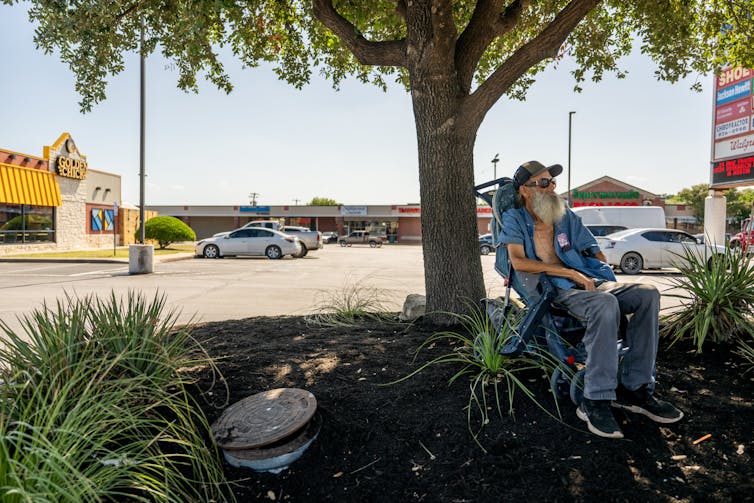
And it’s not just physical health that suffers.
Having to stay indoors all day to keep cool and enduring the stress of heat emergencies can make older adults depressed and isolated. Those with cognitive problems or dementia may not understand their health risks or may not take proper precautions. Seniors with physical disabilities, limited mobility or lack of access to transportation can’t easily travel to a public cooling center – if there is one nearby.
Drawn to high-risk regions
Retirees are often drawn to the South’s sunny skies, low taxes and costs of living and amenities, like golf courses, beaches, health care facilities and age 55+ residential communities tailored to their needs. In Phoenix, the share of residents over age 65 is projected to rise from 10% of its 1.6 million residents today to roughly 17% by 2050.
At the same time that these populations are rising, the number of days people will need air conditioning is rising, too.
We used scenarios of future county-level population and climate model output from NASA to assess the consequences of moderate and dramatic warming. Our projections show that ever-rising numbers of older people are at risk of the harmful physical and mental health consequences of heat extremes.
We found that populations in historically hot locations like Arizona and desert regions of California are aging at a rapid clip, placing demands on cities, counties and states to meet the pressing needs of older residents during heat waves.
These include providing cooling centers and ensuring that they are physically accessible to those with mobility challenges, and training first responders to be sensitive to the special needs of older adults who may be reluctant to leave their homes during a heat emergency.
Communities also need to find effective ways to warn “snowbirds,” vacationers or recent migrants who might hail from cooler climates and be less aware of, or adapted to, the risks of extreme heat.
Northern regions are at risk, too
Our research finds that historically cooler places like New England, the upper Midwest and the Pacific Northwest also have rising heat risks.
These regions – historically home to high shares of older adults – are projected to experience the steepest increases in heat exposure relative to temperatures historically experienced. Older adults who are accustomed to the New England chill may not fully understand the threats an extreme heat wave can pose, and they may underestimate the harm they might suffer from a day in the hot sun.

Older homes in the Northeast also tend to have less efficient cooling systems. Nighttime heat can be particularly harmful for those without air conditioning, including people who live in densely populated Northeastern and Rust Belt cities where “heat islands” trap temperatures. For older adults with health conditions, a night of restless sleep may make one more depressed and confused during waking hours.
What you can do about it
Older adults and their caregivers can take some steps to adapt.
Stay indoors. Use air conditioning. Drink plenty of water. Don’t use the oven, especially in small homes. Help an older adult with transportation to a cooling center. Place medications in the coolest spot in one’s home. Be sensitive to symptoms like dizziness and call for medical attention as needed.
However, community-scale adaptations also are needed. Public investments in early warning systems for extreme weather, ride services to transport older adults to cooling centers and hospitals, geographic information systems to help first responders identify neighborhoods with high concentrations of older adults, and installation of energy-efficient air conditioning in homes and public settings can help to fight back against sweltering days in the future.
Deborah Carr, Professor of Sociology and Director of the Center for Innovation in Social Science, Boston University; Giacomo Falchetta, Postdoctoral Research Scholar in Energy, Climate and Environment, International Institute for Applied Systems Analysis (IIASA), and Ian Sue Wing, Professor of Earth and Environment, Boston University
This article is republished from The Conversation under a Creative Commons license. Read the original article.
The Clearlake Animal Control website continues to list 34 dogs for adoption.
This week’s dogs include “Freddy,” a 4-year-old male German shepherd-Labrador retriever mix.

There also is “Mikey,” a male American pit bull terrier mix.
The shelter is located at 6820 Old Highway 53. It’s open from 9 a.m. to 6 p.m. Tuesday through Saturday.
For more information, call the shelter at 707-762-6227, email

This week’s adoptable dogs are featured below.
Email Elizabeth Larson at

Young stars are rambunctious!
NASA’s James Webb Space Telescope has captured the “antics” of a pair of actively forming young stars, known as Herbig-Haro 46/47, in high-resolution near-infrared light.
To find them, trace the bright pink and red diffraction spikes until you hit the center: The stars are within the orange-white splotch. They are buried deeply in a disk of gas and dust that feeds their growth as they continue to gain mass. The disk is not visible, but its shadow can be seen in the two dark, conical regions surrounding the central stars.
The most striking details are the two-sided lobes that fan out from the actively forming central stars, represented in fiery orange. Much of this material was shot out from those stars as they repeatedly ingest and eject the gas and dust that immediately surround them over thousands of years.
When material from more recent ejections runs into older material, it changes the shape of these lobes. This activity is like a large fountain being turned on and off in rapid, but random succession, leading to billowing patterns in the pool below it. Some jets send out more material and others launch at faster speeds. Why? It’s likely related to how much material fell onto the stars at a particular point in time.
The stars’ more recent ejections appear in a threadlike blue. They run just below the red horizontal diffraction spike at 2 o’clock. Along the right side, these ejections make clearer wavy patterns. They are disconnected at points, and end in a remarkable uneven light purple circle in the thickest orange area. Lighter blue, curly lines also emerge on the left, near the central stars, but are sometimes overshadowed by the bright red diffraction spike.
All of these jets are crucial to star formation itself. Ejections regulate how much mass the stars ultimately gather. (The disk of gas and dust feeding the stars is small. Imagine a band tightly tied around the stars.)
Now, turn your eye to the second most prominent feature: the effervescent blue cloud. This is a region of dense dust and gas, known both as a nebula and more formally as a Bok globule. When viewed mainly in visible light, it appears almost completely black — only a few background stars peek through.
In Webb’s crisp near-infrared image, we can see into and through the gauzy layers of this cloud, bringing a lot more of Herbig-Haro 46/47 into focus, while also revealing a deep range of stars and galaxies that lie well beyond it. The nebula’s edges appear in a soft orange outline, like a backward L along the right and bottom.
This nebula is significant — its presence influences the shapes of the jets shot out by the central stars. As ejected material rams into the nebula on the lower left, there is more opportunity for the jets to interact with molecules within the nebula, causing them both to light up.
There are two other areas to look at to compare the asymmetry of the two lobes. Glance toward the upper right to pick out a blobby, almost sponge-shaped ejecta that appears separate from the larger lobe. Only a few threads of semitransparent wisps of material point toward the larger lobe.
Almost transparent, tentacle-like shapes also appear to be drifting behind it, like streamers in a cosmic wind. In contrast, at lower left, look beyond the hefty lobe to find an arc. Both are made up of material that was pushed the farthest and possibly by earlier ejections. The arcs appear to be pointed in different directions, and may have originated from different outflows.
Take another long look at this image. Although it appears Webb has snapped Herbig-Haro 46/47 edge-on, one side is angled slightly closer to Earth. Counterintuitively, it’s the smaller right half. Though the left side is larger and brighter, it is pointing away from us.
Over millions of years, the stars in Herbig-Haro 46/47 will fully form — clearing the scene of these fantastic, multihued ejections, allowing the binary stars to take center stage against a galaxy-filled background.
Webb can reveal so much detail in Herbig-Haro 46/47 for two reasons. The object is relatively close to Earth, and Webb’s image is made up of several exposures, which adds to its depth.
Herbig-Haro 46/47 lies only 1,470 light-years away in the Vela Constellation.
The James Webb Space Telescope is the world's premier space science observatory. Webb is solving mysteries in our solar system, looking beyond to distant worlds around other stars, and probing the mysterious structures and origins of our universe and our place in it. Webb is an international program led by NASA with its partners, ESA (European Space Agency) and the Canadian Space Agency.
The $113 million in new funding, made possible by the $52 billion California Climate Commitment budget, will support 96 wildfire prevention projects across the state — with more than eight in 10 grants directed toward vulnerable or underserved communities.
“These kinds of projects save lives and livelihoods, and we’re scaling it up,” said Gov. Newsom. “It was work like this that helped communities like South Lake Tahoe and Pollock Pines avert unknowable destruction. Our goal is to stop devastation before it happens — to keep Californians safe, and preserve our communities and shared history.”
Cal Fire’s Wildfire Prevention Grants Program funds programs to protect people, structures and communities. This year’s investment adds to the 144 ongoing projects funded last year and includes hazardous fuels reduction and wildfire prevention planning and education.
These projects support the goals and objectives of California’s Wildfire and Forest Resilience Action Plan, as well as the Strategic Fire Plan for California.
“Investing in communities before a wildfire strikes is a critical component of California’s wildfire strategy,” said Cal Fire Director and Fire Chief Joe Tyler. “These proactive investments support local projects that protect, engage, and educate communities to increase wildfire prevention and resiliency efforts throughout the state. Wildfire is a year-round reality in California, and even though a historically wet winter was the exception this year, we are always ready for when conditions change and to continue our charge of creating a more wildfire resilient California. We are proud to help further this important and proactive work.”
“This investment is critical for increasing the resiliency of our rural community against catastrophic wildfire, and we’re excited to get to work,” grant recipient Trinity County Resource Conservation District said in a written statement. “This timely funding will provide critical defensible space support for low-income, disabled, and senior community members. In addition, it gets us closer to fulfilling the goals of our fire protection plan while helping to protect the communities of Weaverville, Junction City and Lewiston — strategic areas that have all been threatened by major wildfires in the past decade. These projects help complete critical projects underway, improve evacuation routes, and add strategic fuel breaks around our homes and communities.”
Examples of projects
In Lake County, the Clear Lake Environmental Research Center will receive $1,774,314.14 for the second phase of a hazardous fuels reduction project.
The Lake County Resource Conservation District’s Tree Mortality Mitigation and Public Safety in Lake County project, which also focuses on hazardous fuels reduction, will receive $374,920.
The Trinity County Resource Conservation District will receive nearly $2 million for fuel reduction work in rural, low-income communities and grant funding will assist in providing defensible space work around 100 homes for vulnerable residents in Weaverville, Junction City and Lewiston.
In San Diego County, the Pala Band of Mission Indians is one of many tribal organizations receiving funding for wildfire prevention efforts. Their projects will include fuel reduction efforts to prevent roadside fires and provide safe evacuation routes near the community of Pala, which includes a 10-acre fuel break, planned as a result of the Mesa Fire which ignited on June 21, 2021.
View all the projects and awards here.
The Wildfire Prevention Grants Program is funded as part of California’s Wildfire & Forest Resilience efforts with a portion of the program funded through California Climate Investments (CCI), which puts cap-and-trade dollars to work.
For more information about Cal Fire’s Wildfire Prevention Grants, please visit Cal Fire Grants.