 How to resolve AdBlock issue?
News
Shortly before the rover’s 11th anniversary on the Red Planet, its team helped guide it up a steep, slippery slope to examine meteor craters.
On Aug. 5, NASA’s Curiosity rover will notch its 11th year on Mars by doing what it does best: studying the Red Planet’s surface.
The intrepid bot recently investigated a location nicknamed “Jau” that is pockmarked with dozens of impact craters.
Scientists have rarely gotten a close-up view of so many Martian craters in one place. The largest is estimated to be at least as long as a basketball court, although most are much smaller.
Jau is a pit stop on the rover’s journey into the foothills of Mount Sharp, a 3-mile-tall (5-kilometer-tall) mountain that was covered with lakes, rivers, and streams billions of years ago. Each layer of the mountain formed in a different era of Mars’ ancient climate, and the higher Curiosity goes, the more scientists learn about how the landscape changed over time.
The path up the mountain over the last several months required the most arduous climb Curiosity has ever made. There have been steeper climbs and riskier terrain, but the mission has never faced the trifecta of challenges posed by this slope: a sharp 23-degree incline, slippery sand, and wheel-size rocks.
This trifecta left the rover struggling through a half-dozen drives in May and June, vexing Curiosity’s drivers back on Earth.
“If you’ve ever tried running up a sand dune on a beach — and that’s essentially what we were doing — you know it’s hard, but there were boulders in there as well,” said Amy Hale, a Curiosity rover driver at NASA’s Jet Propulsion Laboratory in Southern California.
How to drive a rover
Hale is one of 15 “rover planners” who write hundreds of lines of code to command Curiosity’s mobility system and robotic arm each day. (They don’t operate the rover in real time; instructions are sent to Mars the night before, and data comes back to Earth only after the rover has completed the work.)
These engineers collaborate with scientists to figure out where to direct the rover, what pictures to take, and which targets to study using the instruments on its 7-foot (2-meter) robotic arm.
But rover planners are also constantly on the lookout for hazards. They have to write commands to steer around pointy rocks and minimize wear on Curiosity’s battered wheels. Geologists on the team use their field experience here on Earth to help look out for deep sand and unstable rock formations.
There’s even a role on the mission to gauge whether a canyon wall could obstruct radio communications with Earth.
Six-wheeled ascent
Curiosity was never in danger while climbing to Jau: The team doesn’t plan anything that could damage the rover, and the planners write commands so that Curiosity will stop moving if it encounters any surprises.
Unexpected stoppages — referred to as “faults” — can occur when the wheels slip too much or a wheel is raised too high by a large rock. On the route to Jau, the rover found itself in both scenarios on several occasions.
“We were basically playing fault bingo,” said Dane Schoelen, Curiosity’s strategic route planning lead at JPL. “Each day when we came in, we’d find out we faulted for one reason or another.”
Instead of continuing to struggle with the original course, Schoelen and his colleagues put together a lateral detour, eyeing a spot roughly 492 feet (150 meters) away where the incline leveled out.
At least, it seemed to: Planners rely on imagery from NASA’s Mars Reconnaissance Orbiter to get a rough sense of the terrain, but images captured from space can’t show exactly how steep a slope is or whether boulders are there.
The detour would add a few weeks to the journey to Jau — unless the terrain was hiding more surprises. If that were the case, the detour might have been for nothing, and the team’s scientists would have to keep looking for another path up Mount Sharp.
Fortunately, the detour paid off, allowing Curiosity to crest the slope.
“It felt great to finally get over the ridge and see that amazing vista,” Schoelen said. “I get to look at images of Mars all day long, so I really get a sense of the landscape. I often feel like I’m standing right there next to Curiosity, looking back at how far it has climbed.”
Since the difficult ascent, Curiosity’s scientists have wrapped an investigation of the Jau crater cluster. Common on Mars, clusters can form when a meteor breaks up in the planet’s atmosphere or when fragments are tossed by a large, more distant meteoroid impact. Scientists want to understand how the relatively soft rocks of the salt-enriched terrain affected the way the craters formed and changed over time.
Despite all that Mars has thrown at Curiosity, the rover isn’t slowing down. It’ll soon be off again to explore a new area higher up on Mount Sharp.
Curiosity was built by JPL, which is managed by Caltech in Pasadena, California. JPL leads the mission on behalf of NASA’s Science Mission Directorate in Washington.
For more about Curiosity, visit https://mars.nasa.gov/msl.
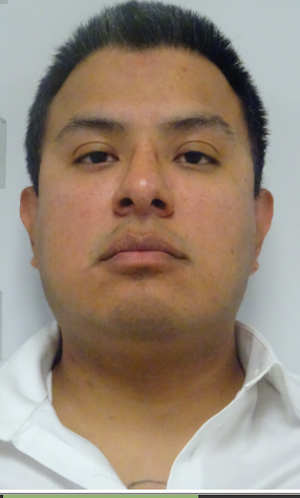
LAKE COUNTY, Calif. — A former Middletown High School soccer coach and science teacher has been convicted of felony stalking and misdemeanor annoying or molesting a child for his treatment of students in a case that occurred two years ago.
The District Attorney’s Office originally charged Michael Antonio Dodd, 31, with 14 counts involving nine juvenile victims, both males and females, in the case, which originated in the summer of 2021 while Dodd was a Middletown Unified School District employee.
Had Dodd gone to trial, he would have faced one count of felony stalking, two counts of felony lewd and lascivious acts with a minor, eight misdemeanor counts of annoying or molesting a minor, and three counts of misdemeanor simple battery, which is harmful or offensive touching.
He was held for trial following a January preliminary hearing, but in the spring Dodd reached a plea agreement with the District Attorney’s Office.
Dodd’s plea agreement called for him to be sentenced for felony stalking and two counts of misdemeanor annoying or molesting a child.
As a result, on June 5 Judge Andrew Blum sentenced Dood to two years probation, up to 120 days in the Lake County Jail and a requirement to register as a tier one sex offender, for which registration lasts for 10 years.
Judge Blum remanded Dodd into sentencing following the June 5 sentencing hearing. By this week, Dodd already had been released from the Lake County Jail due to half-time credits.
From June to September 2021, the time frame covered by the District Attorney’s Office’s charging document, Dodd — who came from out of the area — worked as a science teacher and boys soccer coach at Middletown High School.
The first day of school that year was Aug. 16. On Sept. 14, the Lake County Sheriff’s Ofifce received a report from a school staffer about Dodd’s inappropriate communications with a female student.
Three days later, on Sept. 17, 2021, Middletown Unified gave Dodd a letter of release, terminating him from his job based on the school’s own investigation into the allegations.
Initially, the sheriff’s investigation focused on one female juvenile victim, eventually increasing to a total of nine victims.
Deputy District Attorney Rich Watson said in a Friday interview that he charged the case very thoroughly and interviewed 20 students about Dodd’s behavior, which included touching and rubbing their shoulders, speaking to them inappropriately with sexual undertones, antagonizing them, gawking at them and being “just creepy.”
Dodd would call girls out of class to come to his classroom, where he would have them sit next to his desk and would rub their shoulders, Watson said.
The main victim was a teen girl who was the focus of Dodd’s attention, one he was grooming and with whom he had tried to have a relationship, but she stopped it. Watson said it was at that point that Dodd threatened the girl.
“He’s a felon now and a sex offener because of the totality” of his behavior, Watson said of Dodd.
Watson said he never would have considered allowing probation or dropping some of the more severe charges had he been able to prove that Dodd had done more than just touching the students’ shoulders. That’s why the lewd and lascivious charges were dismissed. Watson also noted that Dodd had no previous criminal history.
Before reaching the settlement agreement, Watson said he also spoke to the victims’ parents, making clear the plea agreement would accomplish goals including keeping Dodd away from children.
Watson credited the children involved for taking a stand against Dodd’s behavior, and the school district for acting swiftly to investigate and terminate him within 30 days of the start of school.
Hearing from victims
Due to schedule conflicts and to being called to serve on a jury in another case prosecuted by Watson at the same time as the Dodd case was coming to resolution, this reporter was unable to attend the Dodd sentencing or to speak to Watson about it in the weeks immediately afterward.
In order to report on the case’s outcome and the complete testimony from victims and their families, Lake County News requested the court reporter’s transcript of Dodd’s sentencing hearing. The publication received that document in mid-July.
During the June 5 sentencing, the grandmother of Dodd’s main victim said Dodd befriended high school girls and was even coming to her house to see her granddaughter.
Another time, when she was at the park, the woman said Dodd showed up with his dog and began telling her he was in love with her granddaughter. She said he held his head and told her “there’s all these demons in his head and that he doesn’t know what he’s going to do.” He also told her that with the demons going on in his head, “it’s kind of like I’m a pedophile.”
Dodd told the woman that he was filing divorce papers on his wife and that as soon as her granddaughter turned 18, “he was coming to our house and he was taking her. And then he said, ‘Or what are you going to do? Stop me with a shotgun?’”
The woman believed Dodd was capable of rape and murder, and told the court he had been following her granddaughter at school to try to get her to come to his classroom and do papers with him.
She warned the court that he is vindictive, that he had been driving by their home and that they had to put up cameras. “It’s awful. And nobody should have to go through this.”
Her granddaughter also spoke to the court. “I just want to say that I’m glad I spoke up along with the other kids so no one else has to go through this. I’m sorry,” the young woman said.
“It ruined so many of our senior and junior years to have to go through this, to the point where most of us can’t even walk into the classrooms that he was in, to where I feared for my safety going to school, to where I couldn’t see a truck that he drove without having a panic attack, to where most of these girls can’t even go play a sport that they love because he’s ruined it for so many of us,” she said.
She added, “It’s sad to say that people like this are in the world that we trusted as a teacher, a coach, and a role model, someone we’re supposed to look up to and go to to confide in things as a school. We can’t even do that.”
The victim said he had even threatened to drop her grades and fail her in class.
Another young woman who spoke to the court recounted how Dodd pulled her into a classroom to pour out his feelings to her about the main victim, offering to pay her $50 and buy her breakfast and coffee if she would go to the victim to ask how she felt about Dodd.
“He kept begging me to ask her, begging me. And I just — I didn’t know what to say. I was uncomfortable, and I’m still, you know, like shaky and disgusted by it. I feel as if I could have been the next victim,” she said.
That young woman told the court that Dodd had come to her home one night to speak to her about his plans to divorce his wife and his feelings about the victim while her mother was recording the encounter on their doorbell camera.
As soon as Dodd left, “that’s when I sat down and I cried and I told my mom everything about what happened and was going on,” she said.
During the June 5 hearing, Dodd’s defense attorney, Chance Oberstein of Laguna Niguel, said Dodd has a mental illness, that he went through a manic episode — his first — during the time period of the case and that he’s been diagnosed with bipolar disorder.
Watson told the court that the District Attorney’s Office entered into the agreement after having discussed it with the victims, and noted the agreement’s goals included that Dodd would be a convicted felon, that he would plead to felony stalking and be a registered sex offender.
“We spoke to 20 children to determine the severity of Mr. Dodd’s behavior and if it had been any more severe than what we had before us, there’s no way we would agree to probation. But we talked to all of those children. We talked to most of their parents, and they’re all in agreement, as far as my knowledge is, with who I spoke to, that our goals that we’ve set for these kids and to punish Mr. Dodd have been achieved,” Watson said.
He said the case was handled swiftly both by the children Dodd victimized and by the school district. “And I do feel that the negotiated disposition is appropriate because it was handled so swiftly and his access to the kids was ended.”
In his arguments, Oberstein told the court that Dodd is on medication that as of April had pulled him out of mania, led to him being more emotionally stable, and “he is making and maintaining great gains in functioning.”
Oberstein said Dodd’s doctor asked for him to be allowed alternative sentencing because incarceration “would surely be a huge setback with regard to his progress in treatment.” He also asked for Dodd to get community service as an alternative to jail time.
During sentencing, Judge Blum emphasized that there was no sexual contact between Dodd and the minor victims, otherwise, probation would have been out of the question.
Blum said Dodd cannot be a schoolteacher again, or work or volunteer in any capacity that caters to minors, and that he must enroll in and complete an approved sex treatment program.
Watson also asked for, and received, a no-contact order barring Dodd from interactions with the four main victims. After the hearing, Dodd was immediately taken into custody.
Dodd received four months in jail at half time, “And there is nothing I can do about that,” Watson said Friday.
Lauren Berlinn, spokesperson for the Lake County Sheriff’s Office, told Lake County News that Dodd was released from the Lake County Jail on Thursday, Aug. 3. Berlinn said he was given 61 days of half-time credit and one day of credit from the courts for time previously served.
Email Elizabeth Larson at
LAKEPORT, Calif. — The Lake County Vector Control District confirmed Friday that five more mosquito samples from Lake County tested positive for West Nile virus this week.
“We’re seeing West Nile virus active throughout the state, and Lake County is no exception,” said Jamesina Scott, Ph.D., district manager and research director of the Lake County Vector Control District. “If you are outside around dusk or dawn, use a mosquito repellent that contains Picaridin, IR3535, Oil of Lemon Eucalyptus, or DEET.”
West Nile virus occurs every year in California, and the summer heat increases virus activity and mosquito populations.
In Lake County this year, a total of seven mosquito samples and one dead bird have tested positive for West Nile virus, or WNV.
The positive mosquitoes were collected in Clearlake Oaks (1), Kelseyville (1), Lakeport (2), Lower Lake (2), Middletown (1).
The positive dead bird was an acorn woodpecker found near Cobb.
Mosquitoes develop in water, so tipping over any buckets or other containers of water prevents adult mosquitoes.
For water sources that can’t be drained, like a pond, livestock watering trough, water feature, or an out-of-service (green) hot tub or pool, residents should contact the District for free mosquito-eating fish to prevent mosquitoes from growing there.
A video of mosquito eggs and larvae can be viewed here.
To prevent mosquito bites, the district offers the following tips:
• Apply mosquito repellents to exposed skin before going outdoors; reapply as recommended.
• Wear repellent containing Picaridin, IR3535, DEET, or oil of lemon eucalyptus.
• Dump and drain any containers filled with water at least once a week.
• Close unscreened doors and windows to prevent mosquitoes from entering your home; repair broken or damaged screens.
• Wear loose-fitting long-sleeved shirts and long pants.
Dr. Scott reminds residents that the Lake County Vector Control District is here to help if they are noticing biting mosquitoes, would like help with a neglected pool or spa, or have an in-ground yellowjacket nest on their property that they want treated.
Contact the Lake County Vector Control District at 707-263-4770 or submit a request online at http://lcvcd.org/request-service/.
Residents should report dead birds — especially crows, ravens and scrub-jays — to the California West Nile Virus Call Center online at https://westnile.ca.gov/report or by calling 1-877-968-2473 (1-877-WNV-BIRD).
Statewide, this year 27 California counties have detected WNV, mainly in mosquitoes. As of Aug. 4, eight human cases of West Nile virus illness have been reported in California residents.
For more information about West Nile virus, visit http://westnile.ca.gov/. Information about mosquito repellents can be found on the US Centers for Disease Control and Prevention website at http://www.cdc.gov/westnile/faq/repellent.html.
“We’re seeing West Nile virus active throughout the state, and Lake County is no exception,” said Jamesina Scott, Ph.D., district manager and research director of the Lake County Vector Control District. “If you are outside around dusk or dawn, use a mosquito repellent that contains Picaridin, IR3535, Oil of Lemon Eucalyptus, or DEET.”
West Nile virus occurs every year in California, and the summer heat increases virus activity and mosquito populations.
In Lake County this year, a total of seven mosquito samples and one dead bird have tested positive for West Nile virus, or WNV.
The positive mosquitoes were collected in Clearlake Oaks (1), Kelseyville (1), Lakeport (2), Lower Lake (2), Middletown (1).
The positive dead bird was an acorn woodpecker found near Cobb.
Mosquitoes develop in water, so tipping over any buckets or other containers of water prevents adult mosquitoes.
For water sources that can’t be drained, like a pond, livestock watering trough, water feature, or an out-of-service (green) hot tub or pool, residents should contact the District for free mosquito-eating fish to prevent mosquitoes from growing there.
A video of mosquito eggs and larvae can be viewed here.
To prevent mosquito bites, the district offers the following tips:
• Apply mosquito repellents to exposed skin before going outdoors; reapply as recommended.
• Wear repellent containing Picaridin, IR3535, DEET, or oil of lemon eucalyptus.
• Dump and drain any containers filled with water at least once a week.
• Close unscreened doors and windows to prevent mosquitoes from entering your home; repair broken or damaged screens.
• Wear loose-fitting long-sleeved shirts and long pants.
Dr. Scott reminds residents that the Lake County Vector Control District is here to help if they are noticing biting mosquitoes, would like help with a neglected pool or spa, or have an in-ground yellowjacket nest on their property that they want treated.
Contact the Lake County Vector Control District at 707-263-4770 or submit a request online at http://lcvcd.org/request-service/.
Residents should report dead birds — especially crows, ravens and scrub-jays — to the California West Nile Virus Call Center online at https://westnile.ca.gov/report or by calling 1-877-968-2473 (1-877-WNV-BIRD).
Statewide, this year 27 California counties have detected WNV, mainly in mosquitoes. As of Aug. 4, eight human cases of West Nile virus illness have been reported in California residents.
For more information about West Nile virus, visit http://westnile.ca.gov/. Information about mosquito repellents can be found on the US Centers for Disease Control and Prevention website at http://www.cdc.gov/westnile/faq/repellent.html.

CLEARLAKE, Calif. — Clearlake Animal Control is continuing to look for homes for a variety of great dogs.
The Clearlake Animal Control website continues to list 33 dogs for adoption.

This week’s dogs include “Boo,” a handsome male husky with a gray, black and white coat.
There also is “Dawn,” a female Labrador retriever mix with a black and white coat.
Another featured dog is “Sosa,” a 4-year-old American Staffordshire terrier mix.

The shelter is located at 6820 Old Highway 53. It’s open from 9 a.m. to 6 p.m. Tuesday through Saturday.
For more information, call the shelter at 707-762-6227, email
This week’s adoptable dogs are featured below.
Email Elizabeth Larson at
In anticipation of another possible wet season with record rain and snowfall, Gov. Gavin Newsom on Friday signed an executive order that will expedite critical work like levee repairs and debris removal to help protect and prepare communities.
A copy of the executive order can be found here.
This year’s historic winter storms damaged levees and left debris in river channels that exacerbate the risk of flooding next winter — damaged levees provide less protection from high water flows, and debris and vegetation within river channels reduce capacity to move high water flows.
By acting now, the executive order allows affected communities to accelerate work to restore levee function and river channel capacity degraded by last winter’s storms and floods.
More specifically, the executive order:
• Streamlines public agencies’ emergency levee repair and debris removal work to address this past winter’s storms and prepare for next winter;
• Applies to emergency levee repair and debris clearing impacted by this past winter’s storms, including: the San Joaquin River and tributaries, the Tulare Lake Basin and tributaries, the Salinas River and tributaries, the Pajaro River and tributaries, and other coastal streams between the Pajaro River and the Ventura River;
• Suspends certain laws, regulations, and criteria in existing orders – conditioned on agencies complying with specified environmental and resource protection requirements – for emergency levee repair and debris removal projects. Suspensions include:
• Lake and streambed alteration agreement laws and regulations implemented by the California Department of Fish and Wildlife;
• Limiting provisions in State Water Board water quality certifications that would otherwise limit circumstances under which a public agency could rely on emergency regional general permits issued by the U.S. Army Corps of Engineers;
• Waste discharge requirements laws and regulations implemented by the Water Boards for projects that do not require an Army Corps of Engineers emergency permit;
• The California Environmental Quality Act.
• Includes a number of common-sense conditions to protect the environment and natural resources, drawn from the existing regulatory expertise at the Department of Fish and Wildlife, Department of Water Resources, and the Water Boards.
This action builds on the series of measures Gov. Newsom has taken to protect communities from flooding while replenishing California’s groundwater and storage.
• Proclaimed a state of emergency in January mobilizing state government ahead of the winter storms, proclaimed a state of emergency in 53 counties to support response and recovery efforts, and activated the National Guard to support disaster response and relief;
• At the governor’s request, President Biden issued a Presidential Emergency Declaration and a Presidential Major Disaster Declaration to bolster state and local recovery efforts;
• Executive orders to expedite emergency flood preparation and response activities in the Tulare Lake Basin and San Joaquin River Basin, such as floodwater diversion, debris removal, and levee repairs;
• Visited the Tulare Lake Basin to see flooding impacts firsthand, meet with community leaders, and emphasize the state’s commitment to supporting the counties impacted by flooding.
• Announced $17.2 million to fortify the Corcoran Levee, protecting critical infrastructure, correctional and medical facilities, and more;
• Committed over $500 million in the 2023-24 state budget to support flood response and projects to protect communities from future floods;
• Executive orders in February and March to capture rain and floodwater for groundwater recharge, reservoir storage, and more.
• Leveraging the more than $8.6 billion committed by Gov. Newsom and the Legislature in the last two budget cycles to build water resilience, the state is continuing to take aggressive action to prepare for the impacts of climate-driven extremes in weather on the state’s water supplies.
A copy of the executive order can be found here.
This year’s historic winter storms damaged levees and left debris in river channels that exacerbate the risk of flooding next winter — damaged levees provide less protection from high water flows, and debris and vegetation within river channels reduce capacity to move high water flows.
By acting now, the executive order allows affected communities to accelerate work to restore levee function and river channel capacity degraded by last winter’s storms and floods.
More specifically, the executive order:
• Streamlines public agencies’ emergency levee repair and debris removal work to address this past winter’s storms and prepare for next winter;
• Applies to emergency levee repair and debris clearing impacted by this past winter’s storms, including: the San Joaquin River and tributaries, the Tulare Lake Basin and tributaries, the Salinas River and tributaries, the Pajaro River and tributaries, and other coastal streams between the Pajaro River and the Ventura River;
• Suspends certain laws, regulations, and criteria in existing orders – conditioned on agencies complying with specified environmental and resource protection requirements – for emergency levee repair and debris removal projects. Suspensions include:
• Lake and streambed alteration agreement laws and regulations implemented by the California Department of Fish and Wildlife;
• Limiting provisions in State Water Board water quality certifications that would otherwise limit circumstances under which a public agency could rely on emergency regional general permits issued by the U.S. Army Corps of Engineers;
• Waste discharge requirements laws and regulations implemented by the Water Boards for projects that do not require an Army Corps of Engineers emergency permit;
• The California Environmental Quality Act.
• Includes a number of common-sense conditions to protect the environment and natural resources, drawn from the existing regulatory expertise at the Department of Fish and Wildlife, Department of Water Resources, and the Water Boards.
This action builds on the series of measures Gov. Newsom has taken to protect communities from flooding while replenishing California’s groundwater and storage.
• Proclaimed a state of emergency in January mobilizing state government ahead of the winter storms, proclaimed a state of emergency in 53 counties to support response and recovery efforts, and activated the National Guard to support disaster response and relief;
• At the governor’s request, President Biden issued a Presidential Emergency Declaration and a Presidential Major Disaster Declaration to bolster state and local recovery efforts;
• Executive orders to expedite emergency flood preparation and response activities in the Tulare Lake Basin and San Joaquin River Basin, such as floodwater diversion, debris removal, and levee repairs;
• Visited the Tulare Lake Basin to see flooding impacts firsthand, meet with community leaders, and emphasize the state’s commitment to supporting the counties impacted by flooding.
• Announced $17.2 million to fortify the Corcoran Levee, protecting critical infrastructure, correctional and medical facilities, and more;
• Committed over $500 million in the 2023-24 state budget to support flood response and projects to protect communities from future floods;
• Executive orders in February and March to capture rain and floodwater for groundwater recharge, reservoir storage, and more.
• Leveraging the more than $8.6 billion committed by Gov. Newsom and the Legislature in the last two budget cycles to build water resilience, the state is continuing to take aggressive action to prepare for the impacts of climate-driven extremes in weather on the state’s water supplies.
What's up for August? See Saturn at dusk and dawn, the Perseid meteors return and a “super blue moon.”
In August, we've lost Venus and Mars from the evening sky, but we'll have great views of Saturn all night. Saturn reaches opposition this month, meaning it's directly opposite the Sun as seen from Earth.
Planets at opposition rise just after sunset and are visible until dawn, and it's when they appear at their biggest and brightest for the year. Look for the giant planet low in the eastern sky around 9 p.m. by mid-month, appearing a bit higher each evening as August continues.
On the morning of Aug. 3, Saturn appears just a couple of finger widths apart from the nearly full Moon. Find them in the west before sunrise.
The Moon then makes a nice pairing with the Pleiades star cluster on the morning of the 9th, with Jupiter hanging nearby. And then the Moon has a super-close meetup with the reddish star Antares — brightest star in the constellation Scorpius — on the evening of Aug. 24.
August brings one of the best known annual meteor showers, the Perseids. And this year the stage is set for a good show, as the peak night — Aug. 12 and into Aug. 13 — is near the new moon.
The meteors are bits of dust — most no larger than sand grains — that originate from comet Swift-Tuttle. Earth sweeps through the comet's debris trail every year about this same time, resulting in the annual shower.
The radiant — the point in the sky where the meteors appear to originate — is toward the northeast, appearing in-between the upside down “W” of constellation Cassiopeia and bright star Capella.
Observing the Perseids is easy — just find yourself a safe, dark spot to lie down with your feet pointing roughly toward the northeast, and look straight up. The best time to view them is between midnight and dawn, as the radiant rises higher in the sky. Meteor activity likely will be at its greatest in the hour preceding dawn.
Now, the crescent moon also rises in the couple of hours before dawn, but it's only about 7% illuminated, and so it shouldn't pose a significant problem for viewing the meteors. You might also see a few meteors in the early morning hours during the week before and after the peak.
August begins and ends with a full moon, making for a special occurrence that only happens every couple of years. You see, a second full moon in a single calendar month is commonly called a “blue moon.” They happen every 2 to 3 years because the Moon's monthly cycle is just a bit shorter than the average length of a month. So eventually a full moon will happen at the beginning of a month, with enough days left for a complete lunar cycle. When that happens, we get a blue moon.
But there's more! The Aug. 30 blue moon is also a supermoon. The moon's orbit isn't a perfect circle, so sometimes it's a little farther away from Earth and sometimes closer. At its closest point, called perigee, it's 14% closer than at its farthest.
About three to four times a year, the full moon phase happens to coincide with the Moon reaching perigee, and we call that event a supermoon. While it technically appears a little bit bigger (and a tad brighter) than the average full moon, the difference is not super noticeable to the eye.
The combination of these two special full moons, making for a “super blue moon,” occurs about every 10 years, on average — though the time between any two occurrences can vary from two months to two decades or more.
So enjoy this month's two full moons. And while the second one won't appear supersized, or any bluer than usual, now you know what makes it special.
Stay up to date with all of NASA's missions to explore the solar system and beyond at nasa.gov.
Preston Dyches works for NASA's Jet Propulsion Laboratory.