 How to resolve AdBlock issue?
News

As a woman in my 30s who was constantly typing “ADHD” into my computer, I had something interesting happen to me in 2021. I started receiving a wave of advertisements beckoning me to get online help for ADHD, or attention-deficit/hyperactivity disorder. One was a free, one-minute assessment to find out if I had the disorder, another an offer for a digital game that could help “rewire” my brain. Yet another ad asked me if I was “delivering” but still not moving up at work.
The reason the term ADHD litters my digital life is because I am a clinical psychologist who exclusively treats patients with ADHD. I’m also a psychiatric researcher at the University of Washington School of Medicine who studies ADHD trends across the life span.
But these advertisements were a striking new trend.
The following year, in October 2022, the U.S. Food and Drug Administration announced a nationwide shortage of mixed amphetamine salts, a drug that is marketed as Adderall. The brand name Adderall and its generic counterparts have become one of the most common medication treatments for ADHD. Over the next several months, additional ADHD medications joined Adderall on the list of prescription drugs in short supply.
As of August 2023, the U.S. is still experiencing a shortage of several ADHD medications, with some not expected to be resolved for at least a few more months.
The shortage appears to have been triggered by a combination of high demand and access to key ingredients. In recent months, millions of Americans have found themselves with no guarantee of access to their daily medications.
In March 2023, the U.S. Centers for Disease Control and Prevention reported an unprecedented spike in stimulant prescriptions between 2020 and 2021. Perhaps most surprising was that the demographic showing the greatest increases in stimulant use – an increase of almost 20% in one year – were in women in their 20s and 30s.
The CDC’s findings, along with the stimulant shortage, raise some interesting – and still unanswered – questions about what factors are driving these trends.
The challenge of diagnosing adult ADHD
Despite the growth in awareness of ADHD over the past couple of decades, many people with ADHD, particularly women and people of color, go undiagnosed in childhood.
But unlike depression or anxiety, ADHD is quite complicated to diagnose in adults.
Diagnosing ADHD in either kids or adults first involves establishing that ADHD-like traits, which exist on a continuum and can fluctuate, are severe and chronic enough to prevent a person from living a normal, healthy life.
The average person has a couple of symptoms of ADHD, so it can be hard to draw the line between ADHD-like tendencies – such as a tendency to lose keys, having a messy desk or often finding your mind wandering during a dull task – and a diagnosable medical disorder. There is no objective test to diagnose ADHD, so doctors typically conduct a structured patient interview, ask family members to fill out rating scales and review official records to come up with an actual diagnosis.
Diagnostic challenges can also arise for psychiatrists and other health care practitioners because ADHD shares features with many other conditions. In fact, difficulty concentrating is the second most common symptom across all psychiatric disorders.
Further complicating things, ADHD is also a risk factor for many of the conditions that it resembles. For example, years of negative feedback may lead some adults with ADHD to develop secondary depression and anxiety. Zeroing in on the correct diagnosis requires a well-trained clinician who is able to take enough time to thoroughly gather necessary patient history.
Stress of the COVID-19 pandemic
Looking back, some clear factors have been at play, but it remains unclear the degree to which they are driving the spike in stimulant prescriptions.
In 2021, the U.S. was still deep in the acute phase of the COVID-19 pandemic. People were still losing jobs, facing financial strains and juggling work-from-home challenges such as having children at home doing online schooling. Many families were losing loved ones, and there was a huge sense of uncertainty over when normal life would return.
The demands of the pandemic took a toll on everyone, but research shows that women may have been disproportionately affected. This may have led to a greater proportion of adults seeking stimulant treatments to help them keep up with the demands of daily life.
In addition, without access to in-person recreational spaces, the pandemic increasingly drove many people to spending more time on digital media.
In 2021, a social justice movement focused on “neurodiversity” was gaining momentum online. Neurodiversity is a nonmedical term that refers to the wide diversity of brain processes that diverge from what has traditionally been considered “typical.” In this moment, #ADHD became the seventh most popular health topic on TikTok. Relatable anecdotes of missing keys, procrastination, romantic mishaps and secret signs of ADHD began to flood the internet.
But while the internet exploded with ADHD content, researchers in Canada began sorting #ADHD TikTok videos into categories based on their accuracy and helpfulness. They reported something important: A majority of #ADHD content was misleading. Only 21% of the posts provided useful and accurate information.
So, amid the growing online community of newly self-diagnosed people with ADHD, many probably did not actually have the condition. For some, cybochondria – or health-focused anxiety after online searching – may have been creeping in. Others may have mistaken ADHD for another condition, which is surprisingly easy to do. Still others may have had mild attentional issues that do not rise to the severity of ADHD.

What ADHD care looked like in 2021
In 2021, the U.S. mental health system was overloaded. Most traditional ADHD providers such as psychiatrists, psychologists, mental health therapists and psychiatric nurse practitioners, had monthslong wait lists for new patients. People who were newly seeking help for ADHD found faster appointments with their primary care providers, who may or may not be comfortable diagnosing and treating adult ADHD. Since demand for ADHD care exceeded capacity, new options were needed to meet patient needs.
Around that time, online ADHD care startups began to pop up, reaching prospective consumers with appealing digital ads like the ones I received.
Compared with traditional care, the startup models were reportedly using cost-cutting methods, such as favoring quick assessments and a low-cost workforce. The startups were also reported to be relying on a uniform care model that did not adequately personalize treatments, often prescribing stimulants over treatments that may have been better indicated.
Some of these companies are now under investigation by the federal government.
Although they were controversial in the medical community, these models may also have reduced barriers to ADHD care for many people.
The verdict is still out
Until the CDC releases its 2022 and 2023 stimulant prescription data, researchers like me will not know whether the 2021 trends of increased prescribing to adults and high demand for ADHD medications will continue.
If the trends stabilize, it may mean that patients who have been unable to access care may finally be getting the help they need.
If ADHD prescribing returns to pre-pandemic levels, we may learn that a perfect storm of COVID-19-related factors caused a momentary blip in people seeking ADHD treatment.
What is clear is that the current shortage of mental health care workers who feel comfortable diagnosing and treating ADHD in adults will continue to affect the ability of new patients to get proper diagnostic evaluation for ADHD.
Margaret Sibley, Professor of Psychiatry and Behavioral Sciences, School of Medicine, University of Washington
This article is republished from The Conversation under a Creative Commons license. Read the original article.
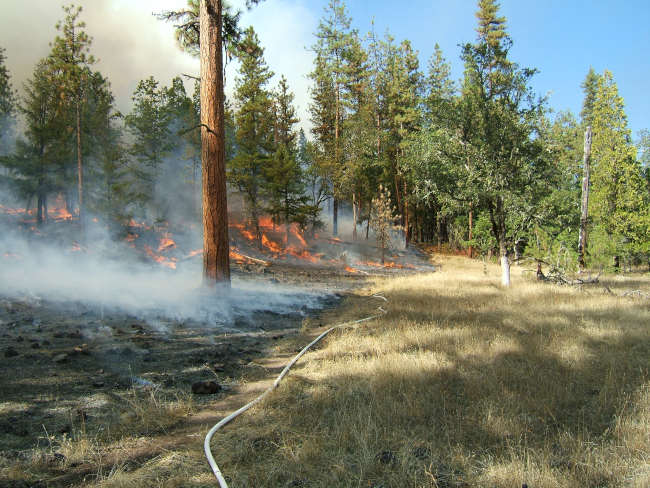
LAKE COUNTY, Calif. — The Bureau of Land Management on Tuesday unveiled what it called an ambitious and coordinated approach to tackle high wildfire risk through an accelerated process for creating fuel reduction projects on millions of acres throughout California and northwest Nevada.
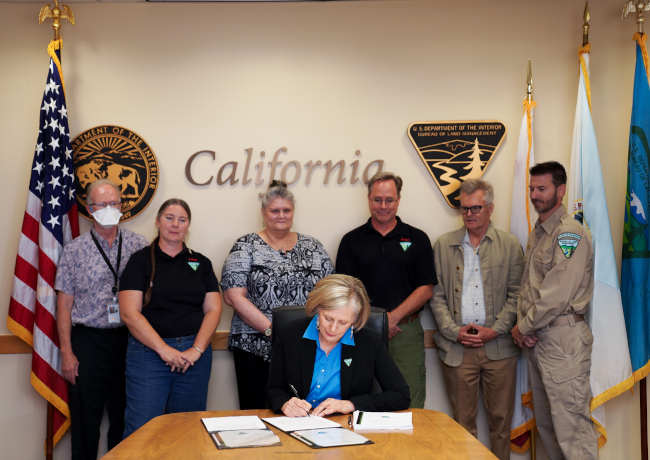
At the BLM’s Sacramento headquarters on Tuesday morning, California State BLM Director Karen E. Mouritsen signed the decision record for the Statewide Wildland-Urban Interface Fuels Treatment Programmatic Environmental Assessment.
“This plan helps reduce the intensity, severity and spread of wildfire near communities that border public lands managed by the BLM,” said Mouritsen. “Through partnerships with local and state agencies we will prioritize and coordinate fuels treatments to protect people, property and vital infrastructure.”
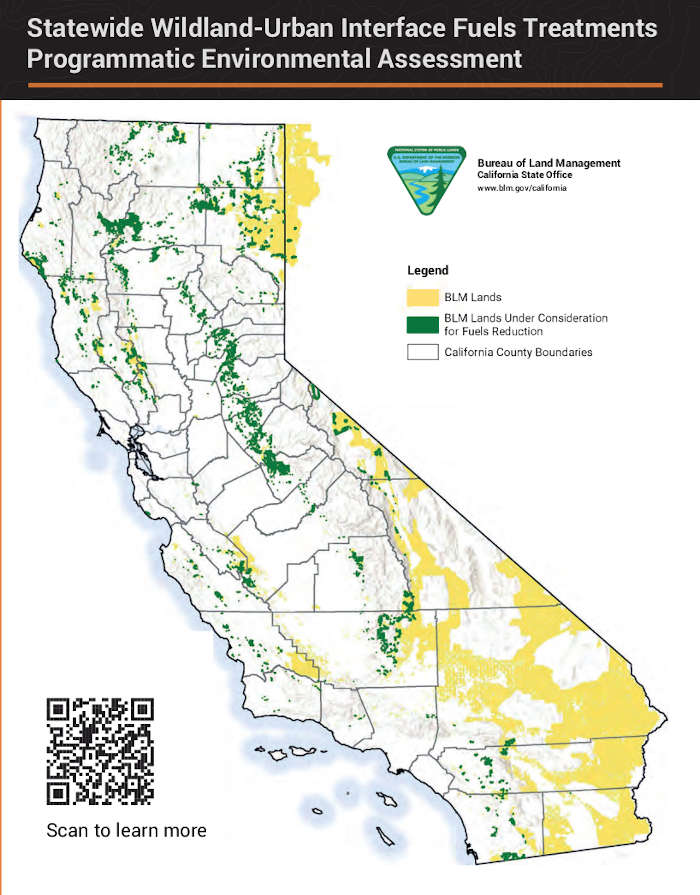
The assessment is meant to accelerate fuels reduction projects on 930,000 acres of public lands in Lake and 43 other California counties and two Nevada counties by streamlining plans to protect communities, reduce wildfire risk and improve forest health.
The BLM said the assessment conducted a broad analysis across the public lands slated for fuel reduction.
As local communities and the BLM identify wildfire concerns, the new streamlined fuels treatment plans will permit on-the-ground work to begin in a matter of months. This will allow the BLM to treat an anticipated additional 20,000 acres of public lands each year.
Jessica Gallimore, the BLM’s California state fuels specialist, told Lake County News that the framework is the result of two years of development work.
She said the BLM did an earlier programmatic assessment for the Hazardous Vegetation Removal Management Plan, or HVRM, in 2018.
“It’s a similar tool that allows for us to do hazardous vegetation removal,” she said of the HVRM, adding that the plan allows them to remove vegetation within 200 feet of infrastructure, like roads, power lines and homes.
The new assessment unveiled on Tuesday built off the HVRM, Gallimore said.
She said they focused on areas of high fire risk and analyzed all the types of vegetation management treatments — including prescribed burns, mechanical means like cutting and mastication, herbicides and grazing — to use on BLM lands.
“Without this process, everybody would have to do their own full analysis. We’ve just taken that piece off the table by doing it up front,” said Gallimore.
This will expedite the process significantly. Gallimore said it will now be a couple of months for field offices to go through the project preparation process, versus up to two years to get to the point of implementing a project.
Under this plan, fuels treatment projects will be coordinated across land ownerships to provide the best results for communities, creating a landscape-level network of strategic fuels treatments and breaks within the wildland-urban interface, the BLM said.
Gallimore said field offices will be able to develop local projects, determining what treatments are needed and at what size and scale specific to their areas, and they will do that work in partnership with other agencies and the community.
She said it opens up the ability to partner with neighbors — including private landowners, counties, the states and the U.S. Forest Service — and work together on “meet at the fence” projects in the expedited treatment areas. “The work can happen anytime, year round.”
The BLM manages 15 million acres in California and 1.5 million acres in northwest Nevada. “The goal was really to focus in on the urban interface,” said Gallimore, in an effort to make the most positive impact for communities and the urban interface.
“We honed in on a one-mile radius around the urban interface, in the high and very high risk areas,” said Gallimore. “That’s where they came up with the 900,000 acres that this project covers.”
Lake County is part of the Ukiah Field Office. The BLM said 13,240 acres in Lake County were assessed as part of this project.
Gallimore said the process locally would include Lake County entities working together to conduct coordinated planning of fuel reduction projects in an expedited manner.
The plan covers 44 counties in California: Amador, Butte, Calaveras, Colusa, El Dorado, Fresno, Glenn, Humboldt, Imperial, Inyo, Kern, Lake, Lassen, Los Angeles, Madera, Mariposa, Mendocino, Modoc, Mono, Monterey, Napa, Nevada, Placer, Plumas, Riverside, Sacramento, San Benito, San Bernardino, San Diego, San Joaquin, Santa Clara, Santa Cruz, Shasta, Sierra, Siskiyou, Solano, Sonoma, Stanislaus, Tehama, Trinity, Tulare, Tuolumne, Yolo and Yuba; and two counties in northwest Nevada, Douglas and Washoe.
Gallimore said projects under this program can begin as soon as this fall.
Email Elizabeth Larson at
Advocates seek national monument expansion for Berryessa monument following Grand Canyon designation
Tribal and community leaders and elected officials have united behind the effort to protect the area along the eastern edge of the existing Berryessa Snow Mountain National Monument known as Molok Luyuk.
Molok Luyuk is Patwin for “Condor Ridge” and is a name provided by the Yocha Dehe Wintun Nation.
Tuleyome said the expansion of the national monument would safeguard public lands that are sacred to the Yocha Dehe Wintun Nation and are critically important to protect in the face of a changing climate.
“Tuleyome is thrilled to hear that President Biden has protected significant public lands by designating the Baaj Nwaavjo I’tah Kukveni – Ancestral Footprints of the Grand Canyon National Monument in Arizona. We thank President Biden for preserving these critical cultural and natural landscapes,” said Sandra Schubert, executive director of Tuleyome.
“We urge President Biden to use his authority from the Antiquities Act to expand Berryessa Snow Mountain National Monument in Northern California to include Molok Loyuk. The Yocha Dehe Wintun Nation’s connection to this area stretches back thousands of years. The land is of tremendous present-day cultural and religious importance to the Tribe and includes sites central to their origin stories. They have advocated for the protection of these lands, a return to an Indigenous name, and the establishment of co-management with federally recognized tribes,” Schubert said.
Schuber said the region is home to unique geology, a great diversity of plants and animals, and a habitat for imperiled wildlife.
The area is also popular for recreation including hiking, sightseeing, mountain biking, camping, horseback riding, and off-highway vehicle use on designated routes.
“The expansion of Berryessa Snow Mountain National Monument would help improve access to the outdoors for the region’s residents and visitors alike,” Schubert said.
Representatives John Garamendi and Mike Thompson and senators Alex Padilla and Dianne Feinstein have joined tribal and community leaders in supporting all approaches, including the president’s use of the Antiquities Act, to permanently protect Molok Loyuk as part of the National Monument. They have also championed legislation to protect the area.
The Antiquities Act is a 1906 law that grants presidents the ability to designate federal public lands, waters, and cultural and historical sites as national monuments to permanently conserve them.
To learn more about this effort and to sign a petition in support of the expansion of the Berryessa Snow Mountain National Monument, visit www.expandberryessa.org.
MATH will meet at 7 p.m. Thursday, Aug. 10, in the Middletown Community Meeting Room/Library at 21256 Washington St., Middletown. The meeting is open to the public.
To join the meeting via Zoom click on this link; the meeting ID is 832 1989 2440. Call in at 669-900-6833.
While Zoom meeting attendance is offered, due to minimal equipment, tech support and poor WIFI connections, to fully participate in the MATH meeting, community members are encouraged to attend in person if possible.
MATH previously had reported that Chris Meredith of the Guenoc MAHA Project was going to offer a presentation at the August meeting.
However, the group reported this week that the update has been indefinitely postponed.
“The project is still awaiting the recirculation process. In an email sent to the MATH Chair, Mr. Meredith stated he has been advised by his legal team to hold off on community outreach at this point. The Guenoc MAHA Project will be rescheduled at a ‘yet to be determined’ future date.
At 7:05 p.m., MATH will hear from the meeting’s speakers, beginning with Cal Fire Division Chief Paul Duncan, who will speak about this year’s fire season, to be followed by District 1 Supervisor Moke Simon, who is expected to give his monthly update on issues in the south county.
Under business, the group will discuss forming a committee regarding projects and cannabis.
Agenda items for future meetings expected to be discussed include a September presentation on the community garden and the beginning of board nominations for 2024, now scheduled for October.
MATH will next meet Sept. 14.
The MATH Board includes Chair Monica Rosenthal, Vice Chair Todd Fiora, Secretary Ken Gonzalez, Rosemary Córdova and Bill Waite, and alternates Julia Bono and Tom Darms.
MATH — established by resolution of the Lake County Board of Supervisors on Dec. 12, 2006 — is a municipal advisory council serving the residents of Anderson Springs, Cobb, Coyote Valley (including Hidden Valley Lake), Long Valley and Middletown.
For more information email
Email Elizabeth Larson at

The Research Brief is a short take about interesting academic work.
The big idea
Moms of school-age children get significantly less sleep during the school year than during the summer.
We are economists who specialize in education and health research. We combined extensive data on school district schedules with information derived from the American Time Use Survey to explore the ways families use their time differently depending on whether school is in session or out for summer.
We observed mothers on average tend to sleep 25 minutes less, have 28 minutes less free time and allocate seven minutes less for exercise on weekdays during the school year than during the summer. For comparison, fathers reduce sleep by 11 minutes during the school year relative to the summer, have 21 minutes less free time and five fewer exercise minutes.
Conversely, mothers spend about half an hour more per day during the school year taking care of others, including kids, and five additional minutes on travel – which often involves driving their kids to and from school.
Interestingly, even though both mothers and fathers spend more time physically present with children in their household during summer months, both spend more time actively engaged with the children – such as helping with homework or reading together – during the school year. However, the effect is almost three times greater for women than it is for men: Moms spend an extra 34 minutes per day during the school year actively engaged with the children versus an extra 12 minutes for dads.
Our study also observed teenagers ages 15-17, as they are the only children included in the time use survey.
During the school year, teenagers sleep about one hour and 20 minutes – or 13% – less than they do during the summer, and they have over two hours – or 33% – less free time each day. This reduction in free time includes nearly an hour and a half less time spent each day on television, games – including video games – and computer use.
Why it matters
Prior research has shown there is a gender gap in mental health, with women faring worse than men on measures such as anxiety and depression. Women are also four times as likely as men to be diagnosed with seasonal affective disorder, a type of depression that typically occurs in fall and winter.
Our results suggest the possibility that these issues are exacerbated by the greater demands placed on mothers during the school year.
Regarding teenagers getting more sleep, our findings support arguments for later school start times so that teens can get more sleep. The American Academy of Pediatrics has recommended middle and high schools start no earlier than 8:30 a.m. so that adolescents can get sufficient sleep to support mental health and academic achievement. However, the average start time for U.S. high schools is 8 a.m..
Our results also suggest that when school is out, teenagers may be especially susceptible to media overconsumption. Teens themselves say they spend too much time on screens.
What we still don’t know
We do not yet know how these changes in schedules affect teen mental health. While some measures of teen mental health improve during summer months, we found that teenagers spend the lion’s share of their extra summer free time in front of screens, and studies have linked excessive screen time to higher levels of depression and poorer mental health.
This article was updated on July 31, 2023 with a new chart.
Todd Jones, Assistant Professor of Economics, Mississippi State University; Benjamin Cowan, Associate Professor of Economics, Washington State University, and Jeff Swigert, Assistant Professor of Economics, Southern Utah University
This article is republished from The Conversation under a Creative Commons license. Read the original article.
It will closely resemble the Zero-Emission Vehicle Market Development Strategy to help California collectively move forward and deliver zero-emission benefits to all Californians.
“California is all in on clean, renewable hydrogen — an essential aspect of how we’ll power our future and cut pollution,” said Newsom. “This strategy will lay out the pathway for building a robust hydrogen market to help us fully embrace this source of clean energy.”
Expanding the market for clean, renewable hydrogen is key to achieving California’s climate goals — especially for a clean electric grid, net-zero carbon emissions, and drastically cutting air pollution.
California is currently competing to become a federally funded Hydrogen Hub, a program that will leverage $8 billion from the Bipartisan Infrastructure Law to establish at least four Hydrogen Hubs across the United States.
What it will do:
• Create a market development strategy that is focused on leveraging hydrogen to accelerate clean energy deployment and decarbonizing our transportation and industrial sectors;
• Build on our 2022 Scoping Plan while leveraging the upcoming SB 1075 hydrogen report and ARCHES’ cross sector, multi-stakeholder hydrogen market white papers;
• Developed in consultation with state agencies – including the California Air Resources Board, the California Energy Commission, and the California Public Utilities Commission – while clearly defining agencies’ roles and responsibilities;
• Identify shared strategies to deliver projects, which may include new financing models, permitting modifications, and procurement initiatives;
• Engage relevant stakeholders, including local communities, to advance equity and deliver environmental and economic benefits;
• Ensure state agencies and partners continue to pull in a shared direction to accelerate the use of renewable energy throughout our economy and increase the resilience and reliability of our energy system.
This initiative builds on the governor’s executive order to create an Infrastructure Strike Team to streamline projects throughout the state.
The Hydrogen Strategy will be one outcome of the Infrastructure Strike Team’s hydrogen, clean energy, transportation, and zero-emission vehicle workgroups.
California’s application for this federal funding was led and submitted by California’s Alliance for Renewable Clean Hydrogen Energy Systems, or ARCHES, a public private-partnership organized to create an economically sustainable, multi-sector, renewable hydrogen ecosystem that directly benefits California’s communities.
“As a founding member of ARCHES, GO-Biz is eager to work with all stakeholders to create California’s first-ever Hydrogen Market Development Strategy,” said Dee Dee Myers, senior advisor to the governor and director of GO-Biz. “Hydrogen has tremendous potential to not only grow our economy but also clean our air, create family supporting jobs, and lead the nation’s clean energy transition. The ARCHES model provides an incredible opportunity to accelerate this market and drive down cost for everyone — while unlocking critical community benefits."
“ARCHES was structured to enable and deliver a clean renewable hydrogen energy system in California and beyond,” said ARCHES CEO Angelina Galiteva. “Gov. Newsom’s all-of-government approach to accelerating the hydrogen market is exactly what we need to deliver for California and the nation. ARCHES is fully committed to continuing to work hand in hand with GO-Biz and our broad coalition of partners to accelerate California’s transition to a carbon free economy.”