 How to resolve AdBlock issue?
News

Ending pandemics is a social decision, not scientific. Governments and organizations rely on social, cultural and political considerations to decide when to officially declare the end of a pandemic. Ideally, leaders try to minimize the social, economic and public health burden of removing emergency restrictions while maximizing potential benefits.
Vaccine policy is a particularly complicated part of pandemic decision-making, involving a variety of other complex and often contradicting interests and considerations. Although COVID-19 vaccines have saved millions of lives in the U.S., vaccine policymaking throughout the pandemic was often reactive and politicized.
A late November 2022 Kaiser Family Foundation poll found that one-third of U.S. parents believed they should be able to decide not to vaccinate their children at all. The World Health Organization and the United Nations Children’s Fund reported that between 2019 and 2021, global childhood vaccination experienced its largest drop in the past 30 years.
The Biden administration formally removed federal COVID-19 vaccination requirements for federal employees and international travelers in May 2023. Soon after, the U.S. government officially ended the COVID-19 public health emergency. But COVID-19’s burden on health systems continues globally.
I am a public health ethicist who has spent most of my academic career thinking about the ethics of vaccine policies. For as long as they’ve been around, vaccines have been a classic case study in public health and bioethics. Vaccines highlight the tensions between personal autonomy and public good, and they show how the decision of an individual can have populationwide consequences.
COVID-19 is here to stay. Reflecting on the ethical considerations surrounding the rise – and unfolding fall – of COVID-19 vaccine mandates can help society better prepare for future disease outbreaks and pandemics.
Ethics of vaccine mandates
Vaccine mandates are the most restrictive form of vaccine policy in terms of personal autonomy. Vaccine policies can be conceptualized as a spectrum, ranging from least restrictive, such as passive recommendations like informational advertisements, to most restrictive, such as a vaccine mandate that fines those who refuse to comply.
Each sort of vaccine policy also has different forms. Some recommendations offer incentives, perhaps in the form of a monetary benefit, while others are only a verbal recommendation. Some vaccine mandates are mandatory in name only, with no practical consequences, while others may trigger termination of employment upon noncompliance.
COVID-19 vaccine mandates took many forms throughout the pandemic, including but not limited to employer mandates, school mandates and vaccination certificates – often referred to as vaccine passports or immunity passports – required for travel and participation in public life.

Because of ethical considerations, vaccine mandates are typically not the first option policymakers use to maximize vaccine uptake. Vaccine mandates are paternalistic by nature because they limit freedom of choice and bodily autonomy. Additionally, because some people may see vaccine mandates as invasive, they could potentially create challenges in maintaining and garnering trust in public health. This is why mandates are usually the last resort.
However, vaccine mandates can be justified from a public health perspective on multiple grounds. They’re a powerful and effective public health intervention.
Mandates can provide lasting protection against infectious diseases in various communities, including schools and health care settings. They can provide a public good by ensuring widespread vaccination to reduce the chance of outbreaks and disease transmission overall. Subsequently, an increase in community vaccine uptake due to mandates can protect immunocompromised and vulnerable people who are at higher risk of infection.
COVID-19 vaccine mandates
Early in the pandemic, arguments in favor of mandating COVID-19 vaccines for adults rested primarily on evidence that COVID-19 vaccination prevented disease transmission. In 2020 and 2021, COVID-19 vaccines seemed to have a strong effect on reducing transmission, therefore justifying vaccine mandates.
COVID-19 also posed a disproportionate threat to vulnerable people, including the immunocompromised, older adults, people with chronic conditions and poorer communities. As a result, these groups would have significantly benefited from a reduction in COVID-19 outbreaks and hospitalization.
Many researchers found personal liberty and religious objections insufficient to prevent mandating COVID-19 vaccines. Additionally, decision-makers in favor of mandates appealed to the COVID-19 vaccine’s ability to reduce disease severity and therefore hospitalization rates, alleviating the pressure on overwhelmed health care facilities.
However, the emergence of even more transmissible variants of the virus dramatically changed the decision-making landscape surrounding COVID-19 vaccine mandates.
The public health intention (and ethicality) of original COVID-19 vaccine mandates became less relevant as the scientific community understood that achieving herd immunity against COVID-19 was probably impossible because of uneven vaccine uptake, and breakthrough infections among the vaccinated became more common. Many countries like England and various states in the U.S. started to roll back COVID-19 vaccine mandates.
With the rollback and removal of vaccine mandates, decision-makers are still left with important policy questions: Should vaccine mandates be dismissed, or is there still sufficient ethical and scientific justification to keep them in place?
Vaccines are lifesaving medicines that can help everyone eligible to receive them. But vaccine mandates are context-dependent tools that require considering the time, place and population they are deployed in.
Though COVID-19 vaccine mandates are less of a publicly pressing issue today, many other vaccine mandates, particularly in schools, are currently being challenged. I believe this is a reflection of decreased trust in public health authorities, institutions and researchers – resulting in part from tumultuous decision-making during the COVID-19 pandemic.
Engaging in transparent and honest conversations surrounding vaccine mandates and other health policies can help rebuild and foster trust in public health institutions and interventions.
Rachel Gur-Arie, Assistant Professor of Nursing and Health Innovation, Arizona State University
This article is republished from The Conversation under a Creative Commons license. Read the original article.
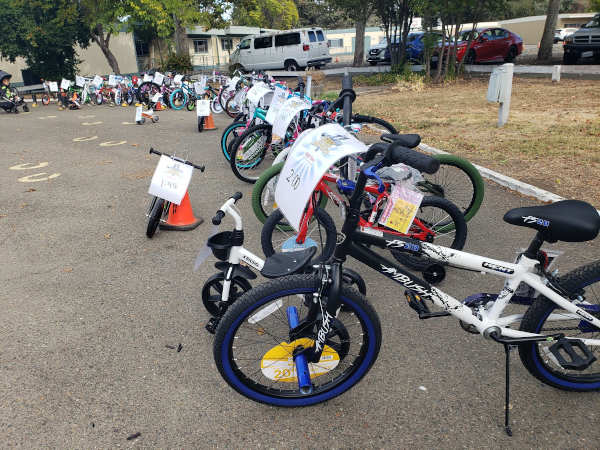
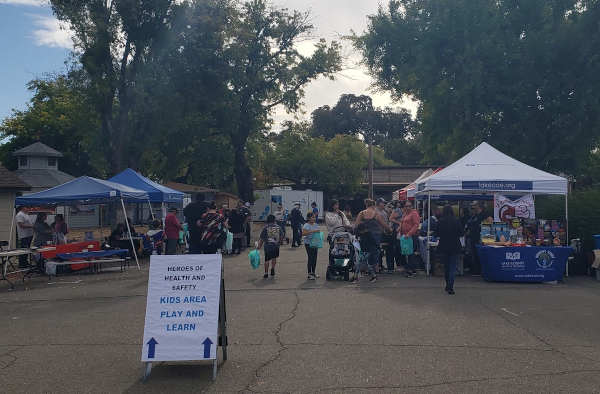
LAKEPORT, Calif. — Hundreds of people came to the Lake County Fairgrounds on Saturday to take part in a day of fun and health.
The 10th annual Heroes of Health and Safety Fair took place from 10 a.m. to 2 p.m.
The event was spread across the fairgrounds, with dozens of booths featuring local organizations, among them, nonprofits, local agencies that help families and children, law enforcement and health professionals.

Children were able to enter raffles for brand new bikes, pick up toys, snacks and other goodies at vendor booths, and learn more about healthy lifestyles.
Fire, police and rescue personnel were on hand on the racetrack to show their equipment and emergency response capabilities.

There also were a variety of health and dental screenings for adults and children, as well as flu and COVD-19 vaccine shots.
Making special appearances at the event were Smokey Bear, McGruff the crime dog and Sparky the fire dog.
Email Elizabeth Larson at
The Mendocino County Sheriff’s Office said its deputies responded to the report of a plane crash in the 21000 block of Airport Road in Covelo at 6 p.m. Friday.
A short time later, deputies were informed the airplane was on fire and the fire was spreading into nearby vegetation.
Personnel from Cal Fire, United States Forestry Service, California Highway Patrol, and Round Valley Tribal Police Department responded to the crash scene as well, officials said.
Once the fire was contained, deputies began searching the debris field. They located the bodies of two deceased individuals who remain unidentified at this time due to the conditions of their bodies, she sheriff’s office said.
Deputies initiated a coroner's investigation specific to aircraft accident protocols and contacted the Federal Aviation Administration and the National Transportation Safety Board.
The circumstances/cause of the crash is currently being investigated by NTSB investigators who were making arrangements to respond to the crash scene upon being notified of the incident by the Mendocino County Sheriff's Office.
The Sheriff's Office Coroner's Division will continue the Coroner's Investigation in conjunction with the NTSB investigation.
Anyone with information that may assist investigators are urged to contact the Mendocino County Sheriff's Office Dispatch Center by calling 707-463-4086.

Dogs available for adoption this week include mixes of boxer, Chihuahua, collie, dachshund, German shepherd, hound, Labrador retriever pit bull, Rhodesian ridgeback, Siberian husky, shepherd and treeing walker coonhound.
Dogs that are adopted from Lake County Animal Care and Control are either neutered or spayed, microchipped and, if old enough, given a rabies shot and county license before being released to their new owner. License fees do not apply to residents of the cities of Lakeport or Clearlake.

This week’s dogs include “Mom,” a 3-year-old female Labrador retriever-pit bull mix with a black and white coat. She is in kennel No. 29, ID No. LCAC-A-6120.
Another dog ready for her new home is a 3-year-old female pit bull terrier with a brindle coat with white markings. She is in kennel No. 20, ID No. LCAC-A-6103.
The adoptable dogs also include a 1-year-old female shepherd mix with a tan and black coat. She is in kennel No. 26, ID No. LCAC-A-6104.

Those dogs and the others shown on this page at the Lake County Animal Care and Control shelter have been cleared for adoption.
Call Lake County Animal Care and Control at 707-263-0278 or visit the shelter online for information on visiting or adopting.
Email Elizabeth Larson at
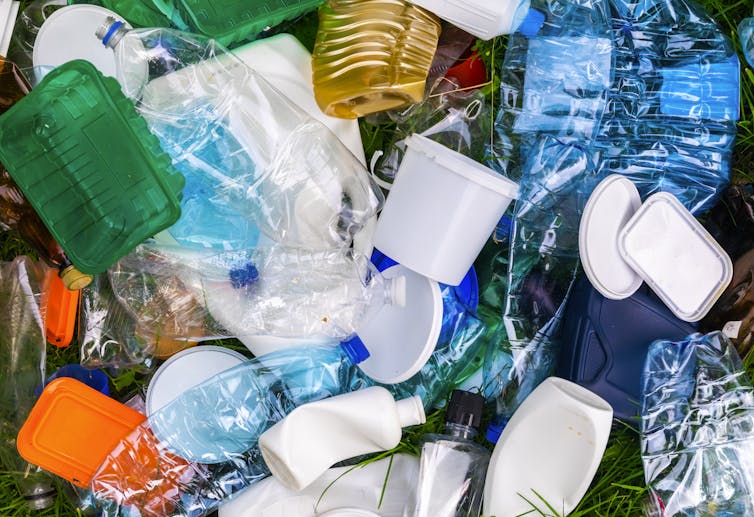
Hundreds of millions of tons of single-use plastic ends up in landfills every year, and even the small percentage of plastic that gets recycled can’t last forever. But our group of materials scientists has developed a new method for creating and deconstructing polymers that could lead to more easily recycled plastics – ones that don’t require you to carefully sort out all your recycling on trash day.
In the century since their conception, people have come to understand the enormous impacts – beneficial as well as detrimental – plastics have on human lives and the environment. As a group of polymer scientists dedicated to inventing sustainable solutions for real-world problems, we set out to tackle this issue by rethinking the way polymers are designed and making plastics with recyclability built right in.
Why use plastics, anyway?
Everyday items including milk jugs, grocery bags, takeout containers and even ropes are made from a class of polymers called polyolefins. Polyolefins make up around half of the plastics produced and disposed of every year.
These polymers are used in plastics commonly labeled as HDPE, LLDPE or PP, or by their recycling codes #2, #4 and #5, respectively. These plastics are incredibly durable because the chemical bonds that make them up are extremely stable. But in a world set up for single-use consumption, this is no longer a design feature but rather a design flaw.
Imagine if half of the plastics used today were recyclable by twice as many processes as they are now. While that wouldn’t get the recycling rate to 100%, a jump from single digits – currently around 9% – to double digits would make a big dent in the plastics produced, the plastics accumulated in the environment and their capacity for recycling and reuse.
Recycling methods we already have
Even the plastics that make it to a recycling facility can’t be reused in exactly the same way they were used before – the recycling process degrades the material, so it loses utility and value. Instead of making a plastic cup that is downgraded each time it gets recycled, manufacturers could potentially make plastics once, collect them and reuse them on and on.
Conventional recycling requires careful sorting of all the collected materials, which can be hard with so many different plastics. Here in the U.S., collection happens mainly through single stream recycling – everything from metal cans, glass bottles, cardboard boxes and plastic cups end up in the same bin. Separating paper from metal doesn’t require complex technology, but sorting a polypropylene container from a polyethylene milk jug is hard to do without the occasional mistake.

When two different plastics are mixed together during recycling, their useful properties are hugely reduced – to the point of making them useless.
But say you can recycle one of these plastics by a different method, so it doesn’t end up contaminating the recycling stream. When we mixed samples of polypropylene with a polymer we made, we were still able to depolymerize – or break down the material – and regain our building blocks without chemically affecting the polypropylene. This indicated that a contaminated waste stream could still recover its value, and the material in it could go on to be recycled, either mechanically or chemically.
Plastics we need − but more recyclable
In a study published in October 2023, our team developed a series of polymers with only two simple building blocks – one soft polymer and one hard polymer – that mimicked polyolefins but could also be chemically recycled.
Connecting two different polymers together multiple times until they form a single, long molecule creates what’s called a multiblock polymer. Just by adjusting how much of each polymer type goes into the multiblock polymer, our team created a wide range of materials with properties that spanned across polyolefin types. But creating these multiblock polymers is easier said than done.
To link these hard and soft polymers, we adapted a technique that had previously been used only on very small molecules. This method is improved relative to traditional methods of making polymers in a step-by-step fashion, developed in the 1920s, where the reactive groups on the end of the molecules need to be exactly matched.
In our method, the reactive groups are now the same as each other, meaning we didn’t have to worry about pairing the ends of each building block to make polymers that can compete with the polyolefins we already use. Using the same strategy, applied in reverse by adding hydrogen, we could disconnect the polymers back into their building blocks and easily separate them to use again.
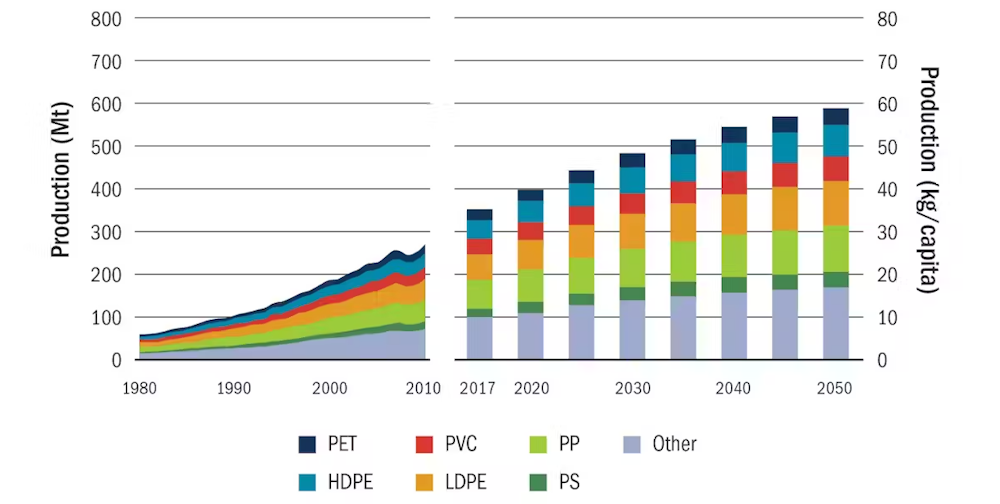
With an almost twofold increase in annual plastic use projected through 2050, the complexity and quantity of plastic recycling will only increase. It’s an important consideration when designing new materials and products.
Using just two building blocks to make plastics that have a huge variety of properties can go a long way toward reducing and streamlining the number of different plastics used to make the products we need. Instead of needing one plastic to make something pliable, another for something stiff, and a third, fourth and fifth for properties in between, we could control the behavior of plastics by just changing how much of each building block is there.
Although we’re still in the process of answering some big questions about these polymers, we believe this work is a step in the right direction toward more sustainable plastics.
We were able to create materials that mimic the properties of plastics the world relies on, and our sights are now set on creating plastic compositions that you couldn’t with existing methods.
Katherine Harry, PhD Student in Chemistry, Colorado State University and Emma Rettner, PhD Candidate in Materials Science and Engineering, Colorado State University
This article is republished from The Conversation under a Creative Commons license. Read the original article.
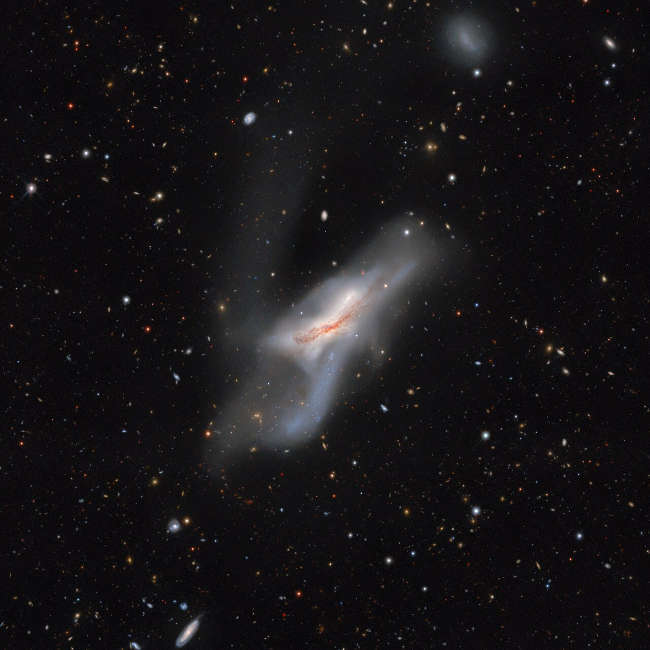
The unprecedented digital atlas includes data from NOIRLab telescopes and will be an invaluable resource for research into galaxy formation and the structure of the Universe
Astronomers have created a detailed atlas of almost 400,000 galaxies in our cosmic neighborhood.
The Siena Galaxy Atlas was compiled using data from NSF's NOIRLab telescopes, and is designed to be the pre-eminent digital galaxy atlas for large galaxies.
It’s a treasure trove of information for researchers investigating everything from galaxy formation and evolution to dark matter and gravitational waves. It’s also freely available online for the public to explore.
Astronomers have long sought to map the night skies, not only to fill in our picture of the cosmos we inhabit, but also to support further research.
Comprehensive compilations of astronomical objects serve many purposes: they can help scientists spot broad patterns across a population of objects, put new discoveries such as transient events in the context of their surroundings, and identify the best candidates for focused observations.
However, these resources must be routinely updated to reflect the continuous technological improvements of telescopes.
Now, a new atlas has been released with detailed information on over 380,000 galaxies at a greater level of accuracy than ever before, promising to be a boon to future astronomical inquiry.
The Siena Galaxy Atlas, or SGA, is a compilation of data from three surveys completed between 2014 and 2017 known as the DESI Legacy Surveys, which were carried out to identify galaxy targets for the Dark Energy Spectroscopic Instrument, or DESI, survey.
Data were collected at Cerro Tololo Inter-American Observatory (CTIO) and Kitt Peak National Observatory (KPNO), both Programs of NSF’s NOIRLab, and at the University of Arizona’s Steward Observatory.
The DESI Legacy Surveys used state-of-the-art instruments on telescopes operated by NOIRLab: the Dark Energy Camera Legacy Survey (DECaLS), carried out using the DOE-built Dark Energy Camera (DECam) on the Víctor M. Blanco 4-meter Telescope at CTIO in Chile; the Mayall z-band Legacy Survey (MzLS) with the Mosaic3 camera on the Nicholas U. Mayall 4-meter Telescope at KPNO; and the Beijing-Arizona Sky Survey (BASS) with the 90Prime camera on the Bok 2.3-meter Telescope, which is operated by Steward Observatory and hosted at KPNO.
The DESI Legacy Imaging Surveys data, as well as a queryable copy of the full Siena Galaxy Atlas, are served to the astronomical community via the Astro Data Lab science platform and Astro Data Archive at NOIRLab’s Community Science and Data Center (CSDC).
The SGA contains additional data from a survey by NASA’s Wide-field Infrared Survey Explorer (WISE) satellite that has been reprocessed by Aaron Meisner, an astronomer at NOIRLab.
These surveys captured images in optical and infrared wavelengths to chart a total area of 20,000 square degrees — nearly half of the night sky, making it among the largest galaxy surveys. Bringing this wealth of information together in one place, the SGA offers precise data on the locations, shapes and sizes of hundreds of thousands relatively nearby large galaxies. Besides the sheer number of objects recorded, the data in the SGA also achieve a new level of accuracy and it is the first such resource to provide data on the galaxies’ light profiles.
“Nearby large galaxies are important because we can study them in more detail than any other galaxies in the Universe; they are our cosmic neighbors,” notes John Moustakas, professor of physics at Siena College and SGA project leader. “Not only are they strikingly beautiful, but they also hold the key to understanding how galaxies form and evolve, including our very own Milky Way galaxy.”
The SGA builds on several centuries of efforts to chart the night skies. The iconic Catalogue des Nébuleuses et des Amas d'Étoiles (Catalogue of Nebulae and Star Clusters), published in 1774 by French astronomer Charles Messier, was a major milestone, as was the New General Catalogue of Nebulae and Clusters of Stars (NGC), published in 1888 by John Louis Emil Dreyer.
More recently, in 1991, astronomers assembled the Third Reference Catalog of Bright Galaxies (RC3). Several other valuable galaxy atlases have been published over the past two decades, but most of them draw on the photographic-plate measurements in the RC3, or are missing significant numbers of galaxies. Since the SGA uses digital images captured with highly sensitive instruments, it represents a substantial improvement in both data quality and completeness.
Arjun Dey, a NOIRLab astronomer who was involved in the project, explains: “Previous galaxy compilations have been plagued by incorrect positions, sizes and shapes of galaxies, and also contained entries which were not galaxies but stars or artifacts. The SGA cleans all this up for a large part of the sky. It also provides the best brightness measurements for galaxies, something we have not reliably had before for a sample of this size.”
This versatile resource will drive progress in numerous branches of astronomy and astrophysics by helping scientists find the best galaxy samples for targeted observation.
For example, the SGA will enhance research into how patterns of star formation vary across different galaxies, the physical processes underlying the diverse array of morphologies that galaxies display, and how the distribution of galaxies is related to how dark matter is spread across the Universe.
By acting as a map, the SGA will also help astronomers pinpoint the sources of transient signals like gravitational waves and understand the events that give rise to them.
“The SGA is going to be the pre-eminent digital galaxy atlas for large galaxies,” says Dey. However, he points out that the SGA is not just for academic researchers, it is freely available to view online for anyone wishing to get to know our corner of the Universe better. Dey adds, “In addition to its scientific utility, it has a lot of pictures of beautiful galaxies!”
"The public release of these spectacular data contained in the atlas will have a real impact not only on astronomical research, but also on the public’s ability to view and identify relatively nearby galaxies," says Chris Davis, NSF program director for NOIRLab. "Dedicated amateur astronomers will particularly love this as a go-to resource for learning more about some of the celestial targets they observe."