 How to resolve AdBlock issue?
News

Teenage drivers are at greater risk of being involved in a fatal car crash due to distractions and inexperience behind the wheel.
To help teens stay safe behind the wheel, the California Highway Patrol is offering the Start Smart teen driver safety education class to help address the dangers typically encountered by this age group.
Between federal fiscal years 2020 and 2022, there was a combined total of 21,308 fatal and injury crashes within CHP jurisdiction involving at least one teen driver between the ages of 15 and 19.
Unfortunately, fatal and injury crashes increased by nearly 10% over that time, which indicates it is essential to improve the education of teenage drivers and their parents/guardians to help enhance road safety.
Start Smart is a free two-hour class aimed at informing new drivers of the responsibilities that accompany the privilege of being a licensed California driver.
Parents or guardians are required to attend with their teenage driver as they participate in this class, which is conducted by public information officers at local CHP Area offices.
Completion of this course may lower the cost of a young driver’s vehicle insurance.
“Every decision a teen driver makes behind the wheel has the potential to impact their future and the lives of those around them,” said CHP Commissioner Sean Duryee. “The Start Smart program has been instrumental in educating new drivers and their parents/guardians in an effort to save lives.”
Parents and teenagers can register for a Start Smart class by contacting their local CHP Area office.
More information about the program and California’s provisional licensing law can be found on the free CHP Start Smart app, which is available for both iOS and Android.
This mobile app includes access to the California Driver Handbook and a trip logger to track driving time as teens prepare to obtain their driver’s license.
Funding for this program was provided by a grant from the California Office of Traffic Safety, through the National Highway Traffic Safety Administration.
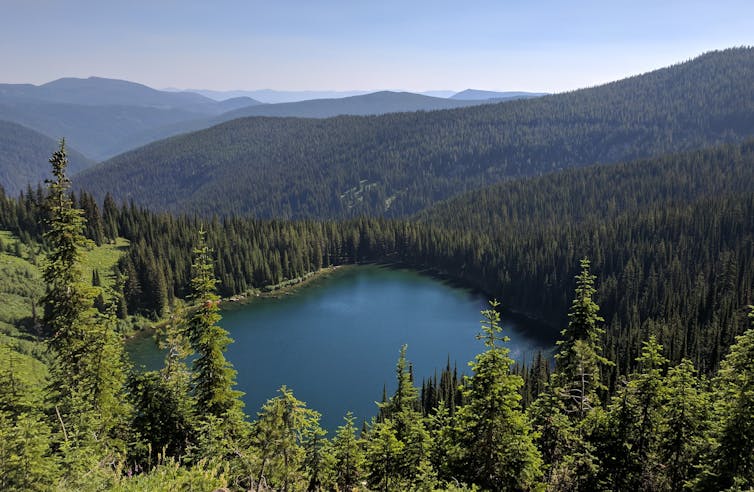
Strong winds blew across mountain slopes after a record-setting warm, dry summer. Small fires began to blow up into huge conflagrations. Towns in crisis scrambled to escape as fires bore down.
This could describe any number of recent events, in places as disparate as Colorado, California, Canada and Hawaii. But this fire disaster happened over 110 years ago in the Northern Rocky Mountains of Idaho and Montana.
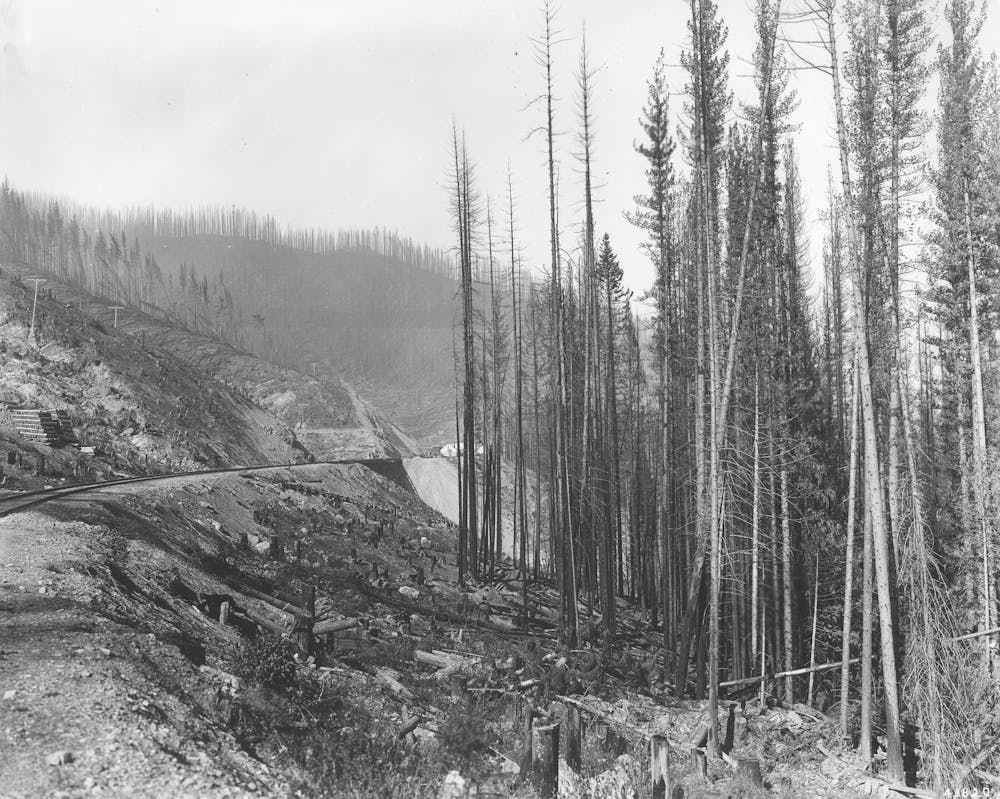
The “Big Burn” of 1910 still holds the record for the largest fire season in the Northern Rockies. Hundreds of fires burned over 3 million acres – roughly the size of Connecticut – most in just two days. The fires destroyed towns, killed 86 people and galvanized public policies committed to putting out every fire.
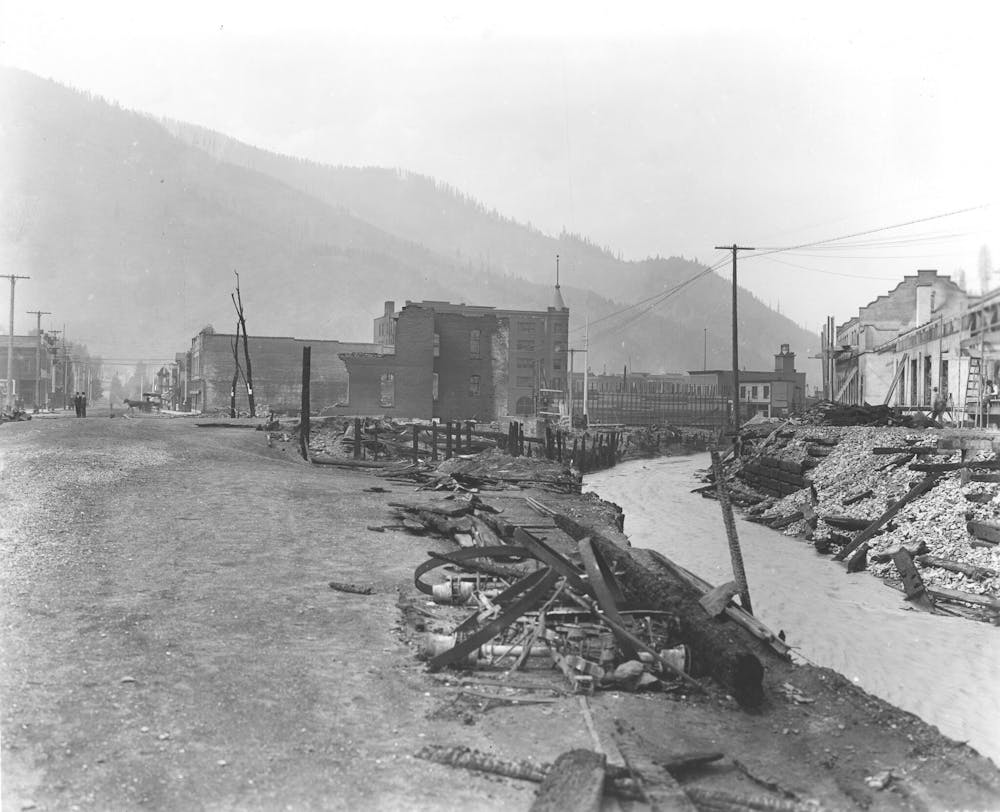
Today, as the climate warms, fire seasons like in 1910 are becoming more likely. The 2020 fire season was an example. But are extreme fire seasons like these really that unusual in the context of history? And, when fire activity begins to surpass anything experienced in thousands of years – as research suggests is happening in the Southern Rockies – what will happen to the forests?
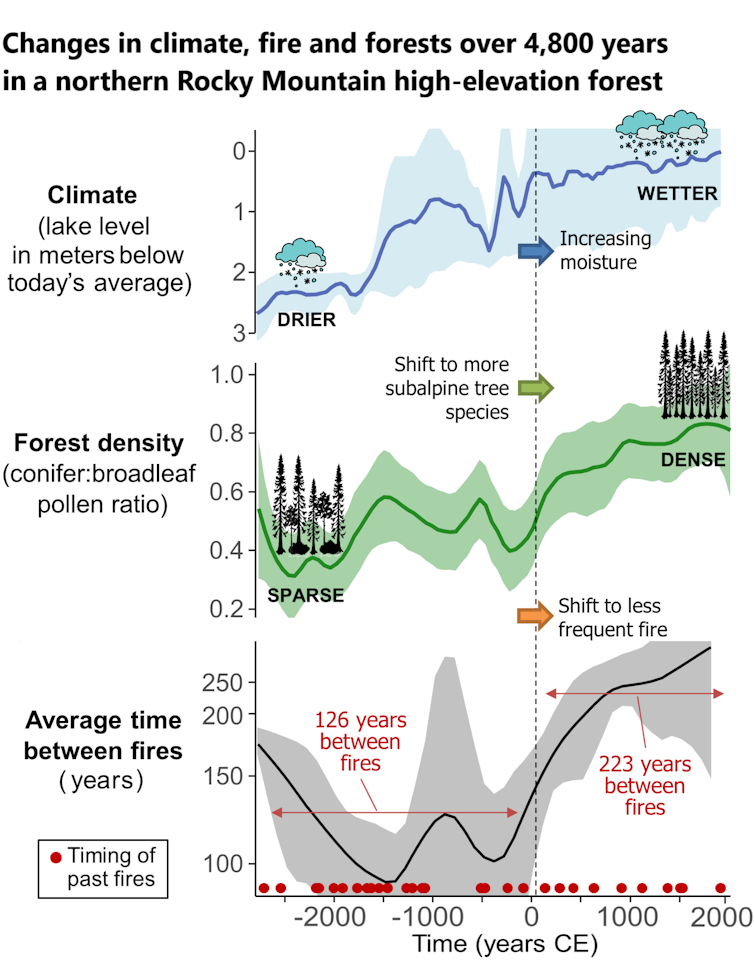
As paleoecologists, we study how and why ecosystems changed in the past. In a multiyear project, highlighted in two new publications, we tracked how often forest fires occurred in high-elevation forests in the Rocky Mountains over the past 2,500 years, how those fires varied with the climate and how they affected ecosystems. This long view provides both hopeful and concerning lessons for making sense of today’s extreme fire events and impacts on forests.
Lakes record history going back millennia
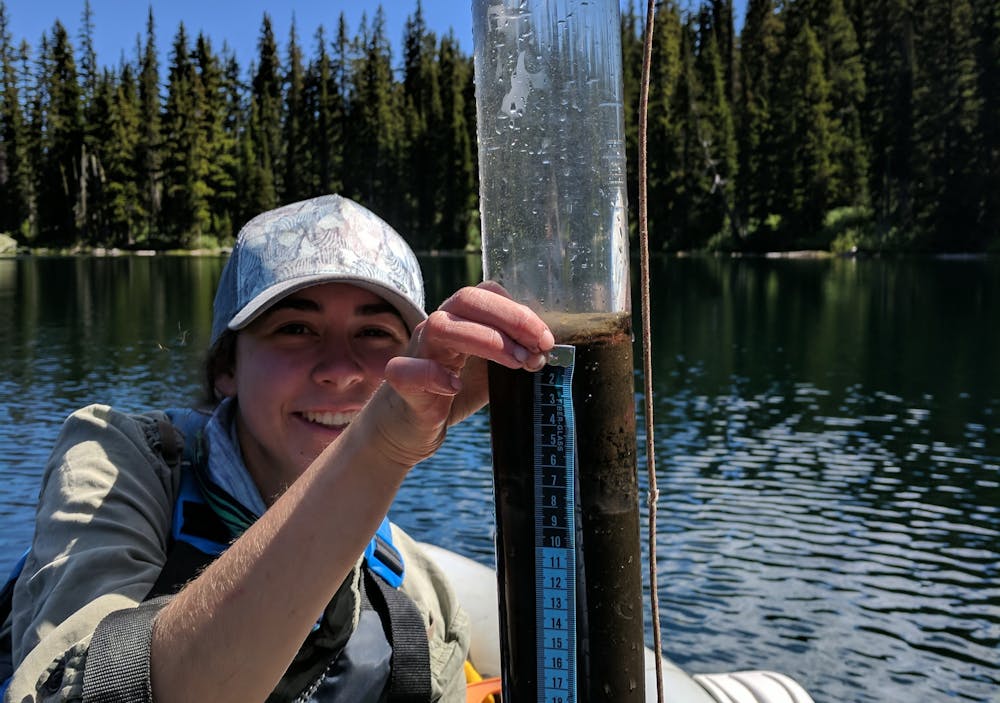
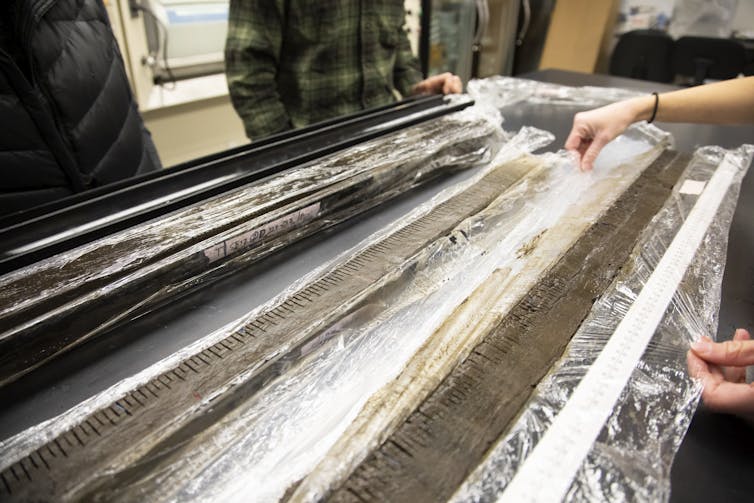
When a high-elevation forest burns, fires consume tree needles and small branches, killing most trees and lofting charcoal in the air. Some of that charcoal lands on lakes and sinks to the bottom, where it is preserved in layers as sediment accumulates.
After the fire, trees regrow and also leave evidence of their existence in the form of pollen grains that fall on the lake and sink to the bottom.
By extracting a tube of those lake sediments, like a straw pushed into a layer cake from above, we were able to measure the amounts of charcoal and pollen in each layer and reconstruct the history of fire and forest recovery around a dozen lakes across the footprint of the 1910 fires.
Lessons from Rockies’ long history with fire
The lake sediments revealed that high-elevation, or subalpine, forests in the Northern Rockies in Montana and Idaho have consistently bounced back after fires, even during periods of drier climate and more frequent burning than we saw in the 20th century.
High-elevation forests only burn about once every 100 to 250 or more years on average. We found that the amount of burning in subalpine forests of the Northern Rockies over the 20th and 21st centuries remained within the bounds of what those forests experienced over the previous 2,500 years. Even today, the Northern Rockies show resilience to wildfires, including early signs of recovery after extensive fires in 2017.
But similar research in high-elevation forests of the Southern Rockies in Colorado and Wyoming tells a different story.
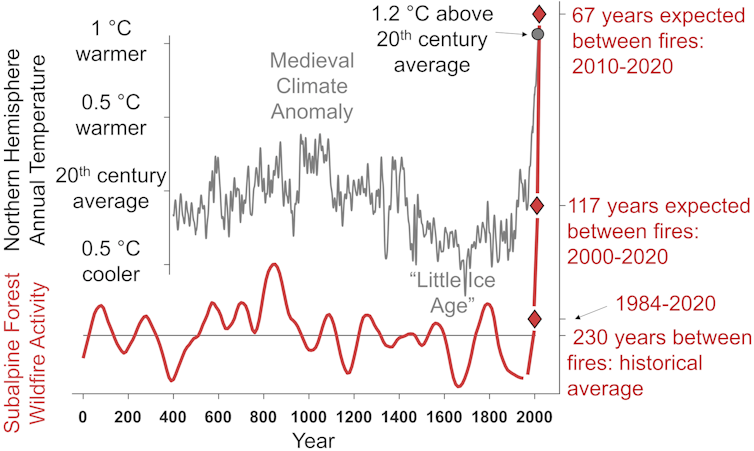
The record-setting 2020 fire season, with three of Colorado’s largest fires, helped push the rate of burning in high-elevation forests in Colorado and Wyoming into uncharted territory relative to the past 2,000 years.
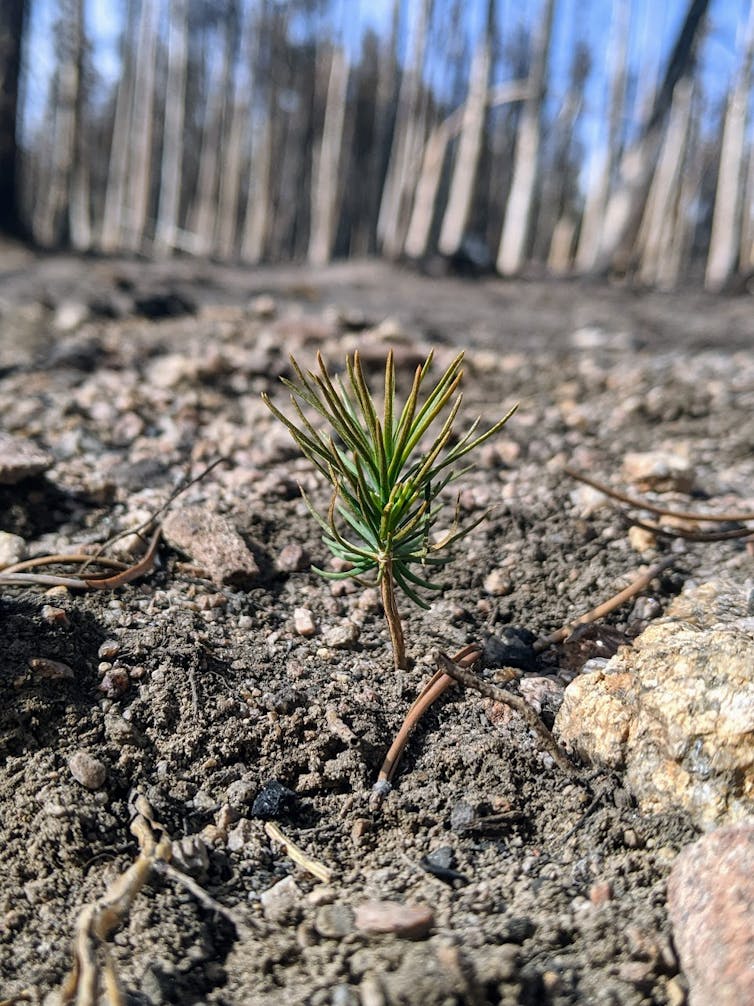
Climate change is also having bigger impacts on whether and how forests recover after wildfires in warmer, drier regions of the West, including the Southern Rockies, the Southwest and California. When fires are followed by especially warm, dry summers, seedlings can’t establish and forests struggle to regenerate. In some places, shrubby or grassy vegetation replace trees altogether.
Changes happening now in the Southern Rockies could serve as an early warning for what to expect further down the road in the Northern Rockies.
Warmer climate, greater fire activity, higher risks
Looking back thousands of years, it’s hard to ignore the consistent links between the climate and the prevalence of wildfires.
Warmer, drier springs and summers load the dice to make extensive fire seasons more likely. This was the case in 1910 in the Northern Rockies and in 2020 in the Southern Rockies.
When, where and how climate change will push the rate of burning in the rest of the Rockies into uncharted territory is harder to anticipate. The difference between 1910 and 2020 was that 1910 was followed by decades with low fire activity, whereas 2020 was part of an overall trend of increasing fire activity linked with global warming. Just one fire like 1910’s Big Burn in the coming decades, in the context of 21st-century fire activity, would push the Northern Rockies beyond any known records.
Lessons from the long view
The clock is ticking.
Extreme wildfires will become more and more likely as the climate warms, and it will be harder for forests to recover. Human activity is also raising the risk of fires starting.
The Big Burn of 1910 left a lasting impression because of the devastating impacts on lives and homes and, as in the 2020 fire season and many other recent fire disasters, because of the role humans played in igniting them.
Accidental ignitions – from downed power lines, escaped campfires, dragging chains, railroads – expand when and where fires occur, and they lead to the majority of homes lost to fires. The fire that destroyed Lahaina, Hawaii, is the most recent example.
So what can we do?
Curbing greenhouse gas emissions from vehicles, power plants and other sources can help slow warming and the impacts of climate change on wildfires, ecosystems and communities. Forest thinning and prescribed burns can alter how forests burn, protecting humans and minimizing the most severe ecological impacts.
Reframing the challenge of living with wildfire – building with fire-resistant materials, reducing accidental ignitions and increasing preparedness for extreme events – can help minimize damage while maintaining the critical role that fires have played in forests across the Rocky Mountains for millennia.
Kyra Clark-Wolf, Postdoctoral Associate in Ecology, University of Colorado Boulder and Philip Higuera, Professor of Fire Ecology, University of Montana
This article is republished from The Conversation under a Creative Commons license. Read the original article.
The CHP’s Clear Lake Area office was notified at 8:45 p.m. Tuesday of a possible injured pedestrian in the area of Highway 29 and Hofacker Lane.
Upon arrival, first responders and CHP officers located an unresponsive Hispanic male adult laying on the east shoulder of northbound Highway 29 north of Hofacker Lane, the CHP reported.
The Hispanic male adult was pronounced deceased at the scene for reasons still under investigation by CHP Northern Division, Investigative Services Unit, the CHP said.
Anyone who might have information that could assist CHP investigators is urged to contact Investigator Jesse Rodgers at 530-242-4300 or the CHP Clear Lake Area office at 707-279-0103.
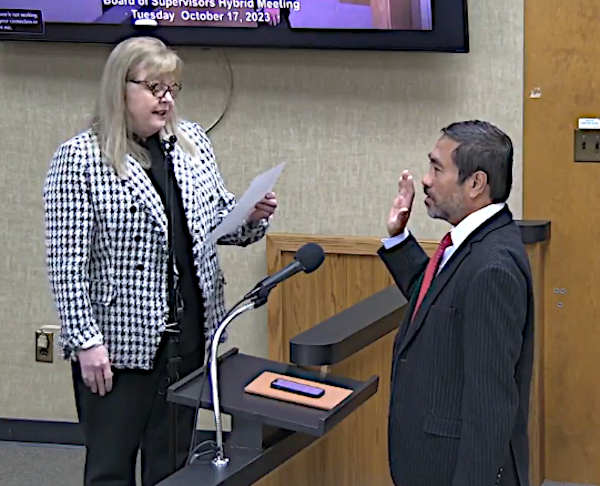
LAKE COUNTY, Calif. — Lake County’s new chief public defender took his oath of office on Tuesday.
As the Board of Supervisors looked on, County Administrative Officer Susan Parker administered the oath to Raymond Buenaventura.
Last month, the board hired Buenaventura, the mayor of Daly City, to head up the formation of a new public defender’s office.
He thanked the board and said he was humbled and grateful for the opportunity to be the county's new chief public defender.
“I take this obligation with great humility but also with great confidence that, together, I really do believe we can change and have a premier indigent defense program, a public defender’s office in this county,” Buenaventura said.
When he came into the board meeting that morning, “I felt at home,” he said.
He said he’d never seen a cat at a board meeting before. That was a reference to Lake County Animal Care and Control bringing an adoptable kitten, Raven, in her pumpkin outfit to meet the board that day.
Referring to other topics at the meeting about the community, Buenaventura said, “I’m in the right place.”
He added, “I can do a good job with your help.”
Buenaventura recounted that, during the interview process, he had asked for help. That includes asking to be invited to different communities, groups and events.
He’s said he’s already met a lot of fantastic people in the county. “It’s given me a lot of hope that we really can do something special here in Lake County.”
Buenaventura thanked the board and the community, adding, “My door will always be open.”
“We are excited and delighted that you are here and looking forward to some real change. We have a lot of confidence in you and are happy to move forward as a team,” said Board Chair Jessica Pyska.
Other board members also offered their welcome.
Supervisor Michael Green said it’s going to be a team effort to improve indigent defense in Lake County.
“This is a great day and an important starting step, but it is just that, it’s a start,” Green said.
Email Elizabeth Larson at
The council will meet at 6 p.m. Thursday, Oct. 19 in the council chambers at Clearlake City Hall, 14050 Olympic Drive.
The meeting will be broadcast live on the city's YouTube channel or the Lake County PEGTV YouTube Channel.
Community members also can participate via Zoom or can attend in person.
The agenda can be found here.
Comments and questions can be submitted in writing for City Council consideration by sending them to City Clerk Melissa Swanson at
To give the council adequate time to review your questions and comments, please submit your written comments before 4 p.m. Thursday, Oct. 19.
On the agenda is a resolution to support the Konocti County Water District’s proposed annexation of 108 acres in the Dam Road area of the city.
City Manager Alan Flora’s report to the council explained, “This annexation would eliminate the service of two districts Lower Lake Water District and the Creekside Mobile Home Park.”
Flora said the Creekside system was destroyed in the Cache Fire and Konocti County Water District has been providing service to the park via an emergency connection since the fire. Lower Lake serves the Cache Creek mobile home park, the majority of that park was lost to fire.
He said the proposed annexation would allow the water district to install a new main line along Dam Road and provide upgraded water service to the area. “This will be a significant improvement to existing infrastructure.”
In other business, the council will discuss a resolution discussing eight city-owned properties as surplus.
Also on the agenda is an introduction to October’s adoptable dogs.
On the meeting's consent agenda — items that are considered routine in nature and usually adopted on a single vote — are warrants and City Council minutes, consideration to approve Resolution No 2023-42 approving a temporary road closure for the Annual Trunk or Treat, minutes of the Sept. 13 Lake County Vector Control District Board meeting, approval of a contract for copy machines for the police department and city administration and adoption of an updated city of Clearlake Injury and Illness Prevention Plan.
Email Elizabeth Larson at
Great ShakeOut Earthquake Drills, a worldwide earthquake safety movement that began in southern California in 2008, encourages people to practice how to protect themselves during earthquakes in order to reduce injuries and even loss of life.
More than 53 million people worldwide are participating in earthquake drills in 2023, including 17.5 million people holding drills in all U.S. states and territories on International ShakeOut Day this Thursday, October 19. Many will hold their drills at 10:19 a.m. (local time).
More than 9.9 million are taking part in California alone.
In Lake County, 7,092 participants were signed up as of Tuesday evening.
That includes 6,526 in schools, 194 in local government, 167 in health care, 150 in nonprofit organizations, 20 in hotels and other lodgings, 15 in museums, libraries and parks, 13 in childcare and preschools, five individuals/families and two in state government.
On Tuesday, Board Chair Jessica Pyska said the Board of Supervisors will take part and were asked to take pictures from under their desks as part of the drill.
There is still time to be included this year, even after Oct. 19. Register to participate on any day that works for you or your organization at www.ShakeOut.org.
The series of recent devastating earthquakes in Afghanistan, plus those in Turkey and elsewhere earlier this year, are somber reminders of the importance of building earthquake-resistant structures, developing effective response procedures and capabilities, and the value of practicing self-protective actions which is the primary purpose of Great ShakeOut Earthquake Drills.
ShakeOut participants practice “Drop, Cover, and Hold On” and other recommended earthquake safety actions for a variety of situations — if you’re near a sturdy desk or table, in a stadium or theater, along the coast, driving a car, in bed, or if you have a mobility disability. Guidance for each situation is provided at www.EarthquakeCountry.org/step5. Many also practice other aspects of their emergency plans.
“ShakeOut is a way to increase community resilience at all levels,” said Mark Benthien, Global ShakeOut coordinator and outreach director for the Southern California Earthquake Center at the University of Southern California. “Earthquakes can be sudden and violent, but if we have taken steps to prepare ourselves, those around us, and the structures we live, work, and study in, we can greatly reduce their effects.”
Many participants follow the Earthquake Country Alliance’s Seven Steps to Earthquake Safety at www.EarthquakeCountry.org/sevensteps, which starts with Step 1: Secure Your Space. This means fastening furniture, TVs, cabinet door, and other items, to reduce the chance of earthquake injuries and damages caused when these items or knocked over or thrown during earthquakes.
California is the state with the greatest earthquake risk according to a study published by FEMA in April 2023. It also is the state with the most ShakeOut participants with more than 10 million expected to be registered this year. Washington State has the second-highest participation level with more than 1.3 million people. Utah is next with nearly 1 million people involved (though their drills were in April as Utah schools are not in session on ShakeOut day). The fourth largest participating state is Virginia – a reminder that as with the 2011 Mineral, VA earthquake, earthquakes can happen on the east coast too. See participation levels for regions at www.ShakeOut.org.
People in West Coast states (California, Oregon, and Washington) who have installed the MyShake app on their phone will receive a test alert at 10:19am on ShakeOut day. MyShake is one of several ways to receive the alert signal provided by the U.S. Geological Survey’s ShakeAlert system. Many cities, counties, school districts, and others are also testing their emergency communication alert systems. In addition, Washington State will conduct a test of their coastal tsunami sirens.
As part of their support for ShakeOut, the Federal Emergency Management Agency, or FEMA, has also set up an option to receive earthquake information via text messaging, including a reminder text at 10:19 a.m. local time (in Eastern, Central, Mountain, Pacific, and Alaska time zones). To opt-in, text “ShakeOut” to 43362.
For more information visit www.ShakeOut.org/resources and www.ShakeOut.org/messaging.