 How to resolve AdBlock issue?
News
A new COVID-19 variant is now estimated to make up about 20% of COVID-19 cases in the United States.
The World Health Organization (WHO) recently named the strain, JN.1, a variant of concern – meaning that the global body is monitoring the variant closely but hasn’t yet added it to its “watchlist” of high-risk strains. Still, the WHO warns the fast-spreading variant could lead to an uptick in cases during winter months as people spend more time indoors at family and group gatherings.
In California, the proportion of people testing positive for COVID-19 has been on a steady rise since November, coinciding with flu season.
We recently spoke with three UC San Francisco COVID-19 experts, Vivek Jain, MD, MAS; George Rutherford, MD, and Peter Chin-Hong, MD, to get the rundown on this COVID-19 season and the latest variant.
What are the symptoms of the new JN.1 COVID-19 variant?
Chin-Hong: The symptoms of JN.1 are thought to be similar those of other members of the Omicron family of COVID-19 variants: Typically, illness starts with a sore throat, followed by congestion and a dry cough.
People may also experience other symptoms such as a runny nose, fatigue, headache, muscle aches, fever, diarrhea and an altered sense of smell. But probably what is more important than the symptoms is who has it: A patient who is older than 75 or is immunocompromised and who has not been recently vaccinated against COVID-19 may experience more serious symptoms like difficulty breathing. Folks like these can get very ill.
How worried should we be about the new variant?
Chin-Hong: There is no evidence that the new variant causes more serious disease, hospitalizations or a higher fatality rate than other Omicron variants.
Will COVID-19 vaccines work against the new variant?
Chin-Hong: Yes. Although the vaccine was developed against another Omicron strain (XBB.1.5), studies have shown that the new COVID-19 vaccine generates a robust immune response to JN.1. I have full confidence in the new formulation of the COVID-19 vaccine for the variants that are circulating right now.
Will current COVID-19 treatments work against the new JN.1 strain?
Chin-Hong: Yes, the current slate of COVID-19 antivirals such as Paxlovid and – for hospitalized COVID-19 patients, remdesivir – are also very effective against JN.1. Remember, it’s important to take Paxlovid as soon as possible after showing symptoms of COVID-19, ideally within the first five days. You’ll need a prescription for both these medications.
Who should get a COVID-19 vaccine?
Jain: Broadly, everyone 6 months and older should get the new 2023-2024 COVID-19 vaccine. COVID-19 vaccines are very safe and lower peoples’ risk of death and hospitalization, especially those who are older or who have medical conditions.
Can I get my flu and COVID-19 vaccines at the same time?
Jain: Yes, if that’s convenient. It’s also okay to space them slightly apart.
If you’re 60 and over or in weeks 32 to 36 of pregnancy, you may also qualify for the new RSV vaccines.
How often should people be vaccinated against COVID-19?
Jain: Everyone should strongly consider staying up to date with annual COVID-19 vaccines. People should talk with their health care providers and consider factors like age, and medical conditions, including whether they are immunosuppressed, live with other people at high risk for serious COVID-19 and their COVID-19 history.
Do kids really need the COVID-19 vaccine?
Rutherford: Yes. COVID-19 was the eighth leading cause of death in the U.S. between 2021 and 2022. It’s the number one vaccine-preventable cause of death among children in the U.S.
Can I still get a COVID-19 vaccine for free?
Jain: Yes, health insurance and pharmacies will cover the cost of the new COVID-19 vaccines. People without insurance or who might face a difficult co-payment should contact their local health department for places to get free COVID-19 vaccinations. You can also check the federal government’s Bridge Access Program for free COVID-19 vaccines at thousands of locations nationwide.
Laura López González writes for the University of California, San Francisco.
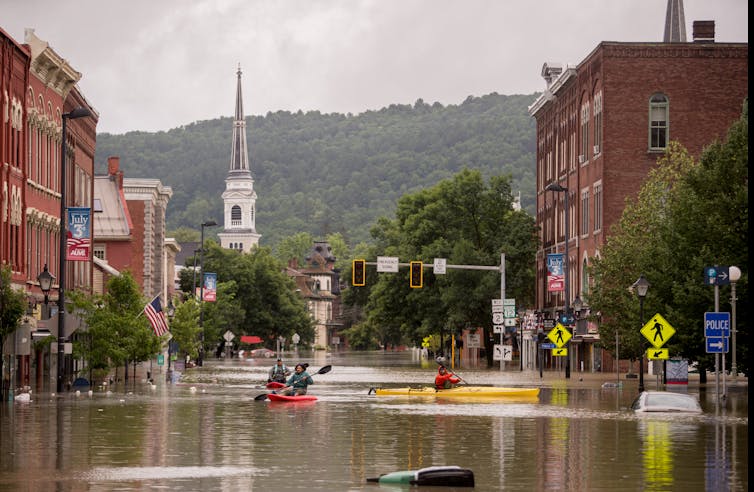
The year 2023 was marked by extraordinary heat, wildfires and weather disasters.
In the U.S., an unprecedented heat wave gripped much of Texas and the Southwest with highs well over 100 degrees Fahrenheit (37.8 Celsius) for the entire month of July.
Historic rainfall in April flooded Fort Lauderdale, Florida, with 25 inches of rain in 24 hours. A wave of severe storms in July sent water pouring into cities across Vermont and New York. Another powerful system in December swept up the Atlantic coast with hurricane-like storm surge and heavy rainfall. California faced flooding and mudslides from a series of atmospheric rivers early in the year, then was hit in August by a tropical storm – an extremely rare event there.
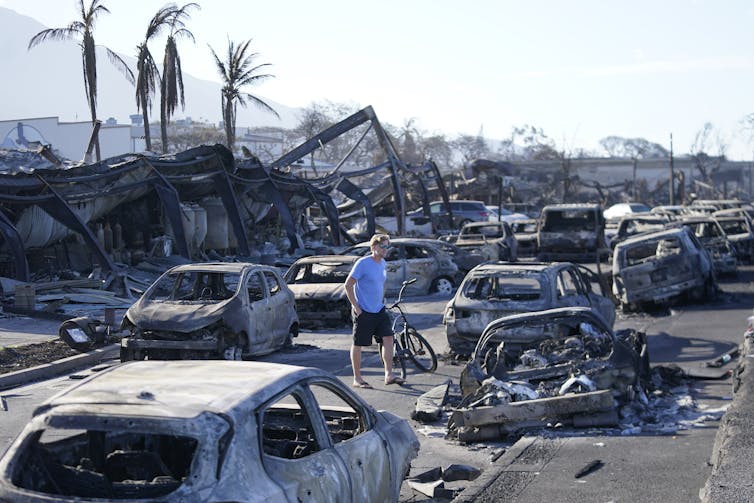
Wildfires ravaged Hawaii, Louisiana and several other states. And Canada’s worst fire season on record sent thick smoke across large parts of North America.
Globally, 2023 was the warmest year on record, and it wreaked havoc around the world. El Niño played a role, but global warming is at the root of the world’s increasing extreme weather.
So, how exactly is global warming linked to fires, storms and other disasters? I am an atmospheric scientist who studies the changing climate. Here’s what you need to know.
Dangerous heat waves and devastating wildfires
When greenhouse gases, such as carbon dioxide from vehicles and power plants, accumulate in the atmosphere, they act like a thermal blanket that warms the planet.
These gases let in high-energy solar radiation while absorbing outgoing low-energy radiation in the form of heat from the Earth. The energy imbalance at the Earth’s surface gradually increases the surface temperature of the land and oceans.
The most direct consequence of this warming is more days with abnormally high temperatures, as many countries saw in 2023.
Extreme heat waves hit large areas of North America, Europe and China, breaking many local high temperature records. Phoenix went 30 days with daily high temperatures at 110 F (43.3 C) or higher and recorded its highest minimum nighttime temperature, with temperatures on July 19 never falling below 97 F (36.1 C).
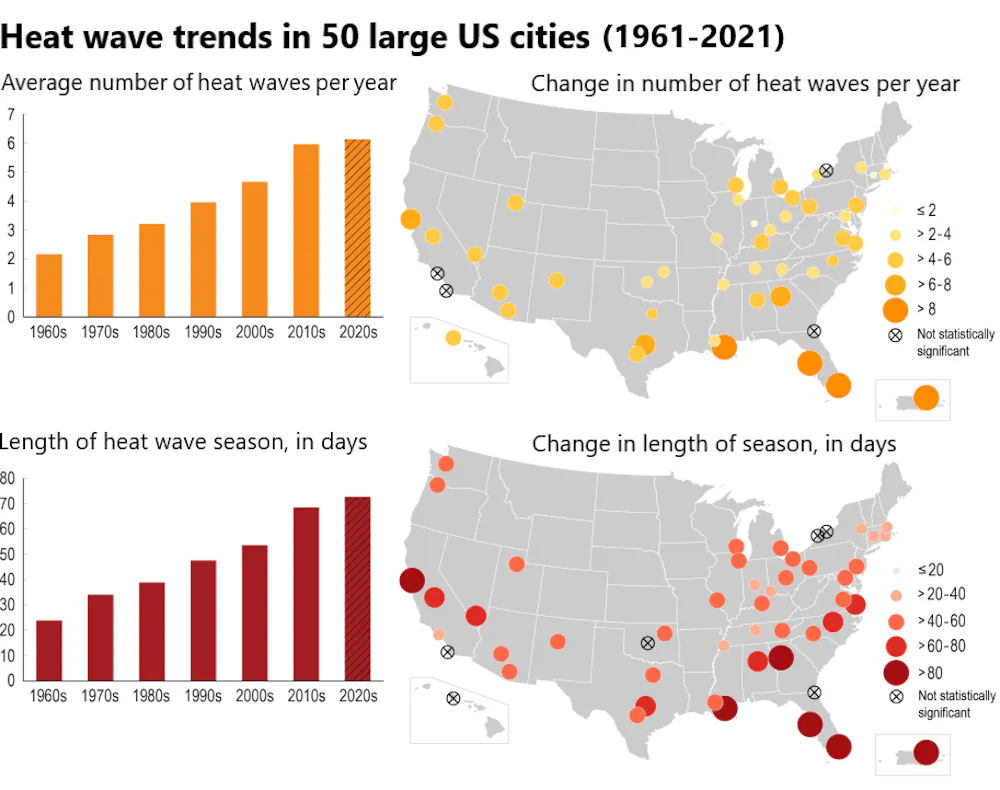
Although heat waves result from weather fluctuations, global warming has raised the baseline, making heat waves more frequent, more intense and longer-lasting.
That heat also fuels wildfires.
Increased evaporation removes more moisture from the ground, drying out soil, grasses and other organic material, which creates favorable conditions for wildfires. All it takes is a lightning strike or spark from a power line to start a blaze.
Canada lost much of its snow cover early in 2023, which allowed the ground to dry and vast fires to burn through the summer. The ground was also extremely dry in Maui in August when the city of Lahaina, Hawaii, caught fire during a windstorm and burned.
How global warming fuels extreme storms
As more heat is stored as energy in the atmosphere and oceans, it doesn’t just increase the temperature – it can also increase the amount of water vapor in the atmosphere.
When that water vapor condenses to liquid and falls as rain, it releases a large amount of energy. This is called latent heat, and it is the main fuel for all storm systems.
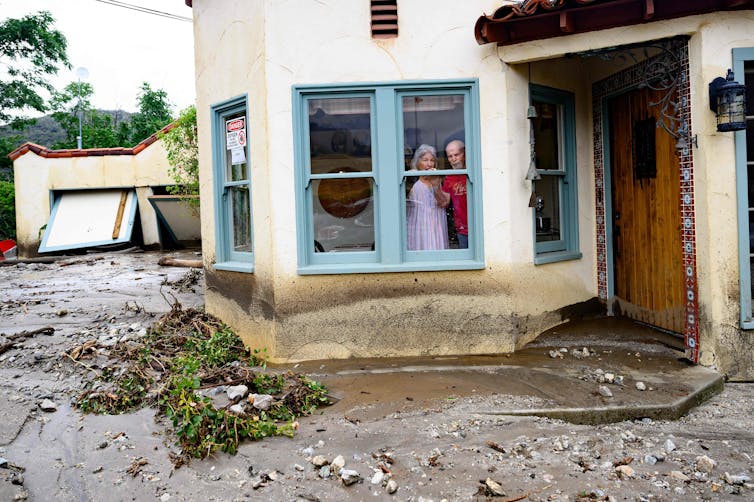
When temperatures are higher and the atmosphere has more moisture, that additional energy can fuel stronger, longer-lasting storms. This is the main reason for 2023’s record-breaking storms. Nineteen of the 25 weather and climate disasters that caused over US$1 billion in damage each through early December 2023 were severe storms, and two more were flooding that resulted from severe storms.
Tropical storms are similarly fueled by latent heat coming from warm ocean water. That is why they only form when the sea surface temperature reaches a critical level of around 80 F (27 C).
With 90% of the excess heat from global warming being absorbed by the ocean, there has been a significant increase in the global sea surface temperature, including record-breaking levels in 2023.
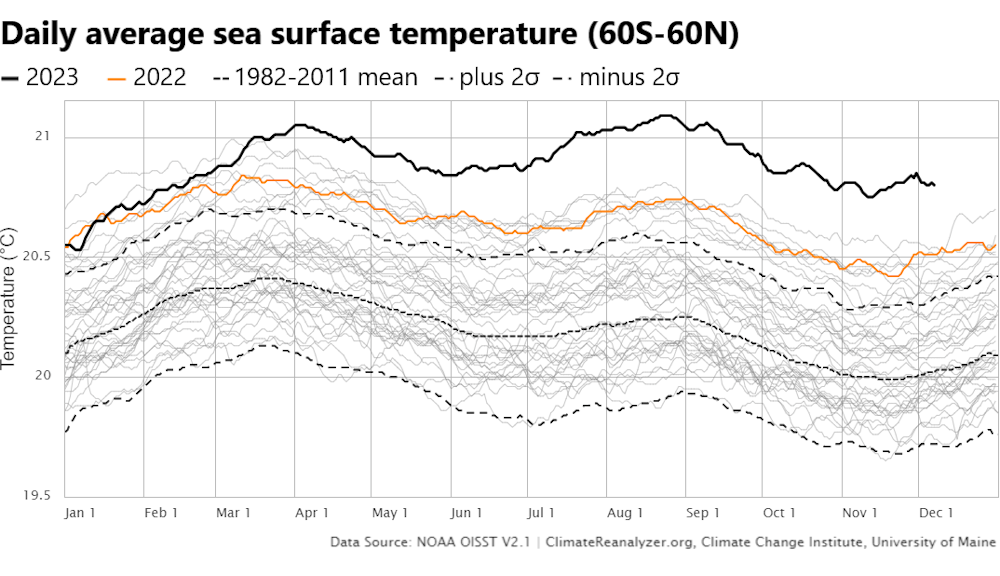
Higher sea surface temperatures can lead to stronger hurricanes and longer hurricane seasons. They can also lead to the faster intensification of hurricanes.
Hurricane Otis, which hit Acapulco, Mexico, in October 2023, was a devastating example. It exploded in strength, rapidly intensifying from a tropical storm to a destructive Category 5 hurricane in less than 24 hours. With little time to evacuate and buildings not designed to withstand a storm that powerful, more than 50 people died. The hurricane’s intensification was the second-fastest ever recorded, exceeded only by Hurricane Patricia in 2015.
A recent study found that North Atlantic tropical cyclones’ maximum intensification rates increased 28.7% between the 1971-1990 average and the 2001-2020 average. The number of storms that spun up from a Category 1 storm or weaker to a major hurricane within 36 hours more than doubled.
The Mediterranean also experienced a rare tropical-like cyclone in September 2023 that offers a warning of the magnitude of the risks ahead – and a reminder that many communities are unprepared. Storm Daniel became one of the deadliest storms of its kind when it hit Libya. Its heavy rainfall overwhelmed two dams, causing them to collapse, killing thousands of people. The heat and increased moisture over the Mediterranean made the storm possible.
Cold snaps have global warming connections, too
It might seem counterintuitive, but global warming can also contribute to cold snaps in the U.S. That’s because it alters the general circulation of Earth’s atmosphere.
The Earth’s atmosphere is constantly moving in large-scale circulation patterns in the forms of near-surface wind belts, such as the trade winds, and upper-level jet streams. These patterns are caused by the temperature difference between the polar and equatorial regions.
As the Earth warms, the polar regions are heating up more than twice as fast as the equator. This can shift weather patterns, leading to extreme events in unexpected places. Anyone who has experienced a “polar vortex event” knows how it feels when the jet stream dips southward, bringing frigid Arctic air and winter storms, despite the generally warmer winters.
In sum, a warmer world is a more violent world, with the additional heat fueling increasingly more extreme weather events.
Shuang-Ye Wu, Professor of Geology and Environmental Geosciences, University of Dayton
This article is republished from The Conversation under a Creative Commons license. Read the original article.
The board took about 10 minutes to finalize the contract with Dr. Lizette Navarette at its Dec. 14 meeting.
Navarette was named the new Woodland Community College president last month following a nationwide search that Chancellor Dr. Shouan Pan said involved several months of work.
The Yuba Community College Board oversees both Yuba Community College and Woodland Community College, the latter responsible for managing the Lake County Campus in Clearlake.
“I’m so very pleased today to recommend a fabulous leader” who has given her expertise and time to serve community colleges in California for many years, Pan said of Navarette, whose most recent position was as executive vice chancellor at the California Community College Chancellor’s Office, leading the Office of Institutional Supports and Success.
Pan recommended the board approve the contract, which is for an initial term of two and a half years, from Jan. 8, 2024, to June 30, 2026.
Navarette’s annual salary will be $208,869, plus benefits, including a $500 monthly auto allowance and a phone allowance, Pan said.
“It’s my honor and pleasure to recommend her to you for approval to be our next president for Woodland Community College,” Pan said.
Trustee Jesse Ortiz said Navarette brings experience that will benefit the district. “I’m really excited to start a new chapter at Woodland Community College under Dr. Navarette’s leadership.”
Trustee Doug Harris, whose district includes Lake County — he’s also a former instructor at the Lake County Campus — said he wanted to second Ortiz’s comment.
“I think we are exceedingly fortunate to have someone with this breadth of experience and knowledge of systemwide issues and processes,” Harris said of Navarette.
Board President Susan Alves said she hopes Navarette has her running shoes on and that they’re laced up tightly.
Community members are ready to meet Navarette and it’s an exciting time for Woodland Community College, Alves said.
The board then unanimously approved Navarette’s contract.
Navarette, who was on hand for the meeting, said she was honored to be selected.
“It is a surreal moment that someone like me could become a president of a college that helps families like mine really advance,” said Navarette, a first-generation college graduate.
She said she’s excited to work with the board, Dr. Pan, colleagues, faculty, students, staff and the community to share the vision.
“With the power of partnerships I know that we will take Woodland Community College to the next level of success. More importantly, I’m just very excited to transform lives. That’s what I know this district does,” she said.
Navarette thanked the board members for their trust and confidence.
Ahead of Navarette’s contract approval, the board had its annual organizational meeting.
Guided by Dr. Pan, board members went through the process of choosing their leadership for 2024.
The board elected Trustee Susan Alves as president for the coming year, with Trustee Richard Teagarden elected vice president and Trustee Rita Andrews selected as the board clerk.
They also approved the 2024 calendar of board meetings, with Harris advocating for holding two meetings — not just one — at the Lake County Campus during the coming year.
The Lake County meetings are generally among the best attended of the year, which board members acknowledged.
That was the case in November when community members packed the meeting room at the Lake County Campus to share their concerns with the board about the campus and the lack of resources it has received from the Woodland administration.
At the Dec. 14 meeting, the board agreed that, in addition to the Nov. 14, 2024, meeting planned to take place at the campus in Clearlake, the board also will meet at the Lake County Campus on March 14, 2024.
Email Elizabeth Larson at
The names of the two juveniles have not been released because of their ages.
The Lakeport Police Department reported that on Friday, Dec. 15, officers received a tip that there were images posted on a social media page of two juveniles who were posing with firearms.
The officers viewed the images and found them to be as reported. They showed the juveniles with common indicators of being associated with a criminal street gang, including specific items of clothing and displaying.
On that same day at approximately 1:42 p.m., Lakeport Police officers were dispatched to a report of shots fired at a residence in the 300 block of Armstrong Street — in a neighborhood located near the Lake County Fairgrounds — that was associated with the juveniles.
At the time of the officer’s response to this location, no additional shots were heard, police said.
Lakeport Police officers continued to investigate this case and gathered additional evidence that the two juveniles were in possession of firearms and were associated with criminal gang activity.
Officers applied for a search warrant for the address in the 300 block of Armstrong Street as well as two other addresses they were able to determine through their investigation that the juveniles commonly resided.
On Tuesday, Dec. 19, at approximately 10:45 a.m. before the service of the search warrant at the three locations, there was an additional shots fired call at the Armstrong Street address, police said.
Officers responded to the address and found one of the suspect juveniles leaving the location. This juvenile, a 16-year-old male out of Lakeport, had an unserved warrant for his arrest. The juvenile was arrested for his warrant at that time. No firearms were located on the juvenile when he was arrested, according to the police report
Police said the juvenile was subsequently transported to the Mendocino County Juvenile Hall by Lake County Probation.
At 1:30 p.m. that day, Lakeport Police officers, Lake County Sheriff’s detectives, Lake County Probation officers and investigators from the Lake County District Attorney’s Office responded to the three locations and simultaneously executed searches authorized under a warrant.
At the conclusion of the searches, police said two of the firearms the juveniles posed with in the images on social media were recovered as well as a box containing various rounds of ammunition.
One firearm was a Walther P22 .22 caliber pistol which had a laser pointer/flashlight attachment on it and the other was a .38 caliber revolver. The Walther P22 was found to be loaded at the time it was located. Police said there were also .22 caliber casings found at the location on Armstrong Street.
During the service of the search warrant, Lakeport Police officers received information that the other juvenile, a 17-year-old male, was somewhere in the Ukiah area. Officers contacted the Ukiah Police Department and briefed them on the nature of this case and the search warrant.
Lakeport Police officers also completed a probable cause declaration for the arrest of the other juvenile for a felony violation of being a minor in possession of a firearm.
At 5:30 p.m., Ukiah Police Officers located the other juvenile and placed them under arrest per the Lakeport Police officers’ probable cause declaration. The juvenile was also transported to the Mendocino County Juvenile Hall for booking.
Lakeport Police officers then completed a probable cause declaration for the 16-year-old who was arrested in Lakeport initially for the warrant for his arrest. The 16-year-old was charged with felony violations of being a minor in possession of a gun and negligent discharge of a firearm.
The Lakeport Police Department thanked its partners with the Lake County Sheriff’s Office, Lake County Probation Department, Lake County District Attorney’s Office and Ukiah Police Department for their assistance with this investigation and apprehension of the teen suspects.
The National Weather Service had predicted that a storm front over the region would keep the rain falling, which it has done over the last several days.
Rainfall totals in inches for the 72-hour period ending at 2 a.m. Thursday are as follows:
• Hidden Valley Lake: 3.09.
• Indian Valley Reservoir: 2.94.
• Kelseyville: 3.86.
• Lake Pillsbury: 4.66.
• Lower Lake: 4.50.
• Lyons Valley: 4.43.
• Middletown: 3.65.
• Whispering Pines: 6.40.
Thursday is expected to be clear, with a chance of rain during the day on Friday.
Saturday is forecast to be clear and sunny, with slight chances of rain on Sunday and Sunday night, Christmas Eve.
On Christmas Day and again that night, and continuing into Tuesday and Wednesday the forecast calls for still more possibility of rain.
Temperatures are expected to reach into the low 60s during the day this week, dropping into the high 30s at night.
Christmas day is forecast to see daytime temperatures in the low 50s, dipping into the low 40s on Christmas night.
Email Elizabeth Larson at
The holiday season is meant to be filled with joy, connection and celebration of rituals. Many people, however, are starkly reminded of their grief this time of year and of whom – or what – they have lost.
The added stress of the holiday season doesn’t help. Studies show that the holidays negatively affect many people’s mental health.
While COVID-19-related stressors may have lessened, the grief from change and loss that so many endured during the pandemic persists. This can cause difficult emotions to resurface when they are least expected.
I am a licensed therapist and trauma-sensitive yoga instructor. For the last 12 years, I’ve helped clients and families manage grief, depression, anxiety and complex trauma. This includes many health care workers and first responders who have recounted endless stories to me about how the pandemic increased burnout and affected their mental health and quality of life.
I developed an online program that research shows has improved their well-being. And I’ve observed firsthand how much grief and sadness can intensify during the holidays.
Post-pandemic holidays and prolonged grief
During the pandemic, family dynamics, close relationships and social connections were strained, mental health problems increased or worsened, and most people’s holiday traditions and routines were upended.
Those who lost a loved one during the pandemic may not have been able to practice rituals such as holding a memorial service, further delaying the grieving process. As a result, holiday traditions may feel more painful now for some. Time off from school or work can also trigger more intense feelings of grief and contribute to feelings of loneliness, isolation or depression.
Sometimes feelings of grief are so persistent and severe that they interfere with daily life. For the past several decades, researchers and clinicians have been grappling with how to clearly define and treat complicated grief that does not abate over time.
In March 2022, a new entry to describe complicated grief was added to the Diagnostic and Statistical Manual of Mental Disorders, or DSM, which classifies a spectrum of mental health disorders and problems to better understand people’s symptoms and experiences in order to treat them.
This newly defined condition is called prolonged grief disorder. About 10% of bereaved adults are at risk, and those rates appear to have increased in the aftermath of the pandemic.
People with prolonged grief disorder experience intense emotions, longing for the deceased, or troublesome preoccupation with memories of their loved one. Some also find it difficult to reengage socially and may feel emotionally numb. They commonly avoid reminders of their loved one and may experience a loss of identity and feel bleak about their future. These symptoms persist nearly every day for at least a month. Prolonged grief disorder can be diagnosed at least one year after a significant loss for adults and at least six months after a loss for children.
I am no stranger to complicated grief: A close friend of mine died by suicide when I was in college, and I was one of the last people he spoke to before he ended his life. This upended my sense of predictability and control in my life and left me untangling the many existential themes that suicide loss survivors often face.
How grieving alters brain chemistry
Research suggests that grief not only has negative consequences for a person’s physical health, but for brain chemistry too.
The feeling of grief and intense yearning may disrupt the neural reward systems in the brain. When bereaved individuals seek connection to their lost loved one, they are craving the chemical reward they felt before their loss when they connected with that person. These reward-seeking behaviors tend to operate on a feedback loop, functioning similar to substance addiction, and could be why some people get stuck in the despair of their grief.
One study showed an increased activation of the amygdala when showing death-related images to people who are dealing with complicated grief, compared to adults who are not grieving a loss. The amygdala, which initiates our fight or flight response for survival, is also associated with managing distress when separated from a loved one. These changes in the brain might explain the great impact prolonged grief has on someone’s life and their ability to function.
Recognizing prolonged grief disorder
Experts have developed scales to help measure symptoms of prolonged grief disorder. If you identify with some of these signs for at least one year, it may be time to reach out to a mental health professional.
Grief is not linear and doesn’t follow a timeline. It is a dynamic, evolving process that is different for everyone. There is no wrong way to grieve, so be compassionate to yourself and don’t make judgments on what you should or shouldn’t be doing.
Increasing your social supports and engaging in meaningful activities are important first steps. It is critical to address any preexisting or co-occurring mental health concerns such as anxiety, depression or post-traumatic stress.
It can be easy to confuse grief with depression, as some symptoms do overlap, but there are critical differences.
If you are experiencing symptoms of depression for longer than a few weeks and it is affecting your everyday life, work and relationships, it may be time to talk with your primary care doctor or therapist.
A sixth stage of grief
I have found that naming the stage of grief that someone is experiencing helps diminish the power it might have over them, allowing them to mourn their loss.
For decades, most clinicians and researchers have recognized five stages of grief: denial/shock, anger, depression, bargaining and acceptance.
But “accepting” your grief doesn’t sit well for many. That is why a sixth stage of grief, called “finding meaning,” adds another perspective. Honoring a loss by reflecting on its meaning and the weight of its impact can help people discover ways to move forward. Recognizing how one’s life and identity are different while making space for your grief during the holidays might be one way to soften the despair.
When my friend died by suicide, I found a deeper appreciation for what he brought into my life, soaking up the moments he would have enjoyed, in honor of him. After many years, I was able to find meaning by spreading mental health awareness. I spoke as an expert presenter for suicide prevention organizations, wrote about suicide loss and became certified to teach my local community how to respond to someone experiencing signs of mental health distress or crisis through Mental Health First Aid courses. Finding meaning is different for everyone, though.
Sometimes, adding a routine or holiday tradition can ease the pain and allow a new version of life, while still remembering your loved one. Take out that old recipe or visit your favorite restaurant you enjoyed together. You can choose to stay open to what life has to offer, while grieving and honoring your loss. This may offer new meaning to what – and who – is around you.
If you need emotional support or are in a mental health crisis, dial 988 or chat online with a crisis counselor.
Mandy Doria, Assistant Professor of Psychiatry, University of Colorado Anschutz Medical Campus
This article is republished from The Conversation under a Creative Commons license. Read the original article.