How to resolve AdBlock issue?
News
Many people are wired to seek and respond to rewards. Your brain interprets food as rewarding when you are hungry and water as rewarding when you are thirsty. But addictive substances like alcohol and drugs of abuse can overwhelm the natural reward pathways in your brain, resulting in intolerable cravings and reduced impulse control.
A popular misconception is that addiction is a result of low willpower. But an explosion of knowledge and technology in the field of molecular genetics has changed our basic understanding of addiction drastically over the past decade. The general consensus among scientists and health care professionals is that there is a strong neurobiological and genetic basis for addiction.
As a behavioral neurogeneticist leading a team investigating the molecular mechanisms of addiction, I combine neuroscience with genetics to understand how alcohol and drugs influence the brain. In the past decade, I have seen changes in our understanding of the molecular mechanisms of addiction, largely due to a better understanding of how genes are dynamically regulated in the brain. New ways of thinking about how addictions form have the potential to change how we approach treatment.
Alcohol and drugs affect brain gene activity
Each of your brain cells has your genetic code stored in long strands of DNA. For all that DNA to fit into a cell, it needs to be packed tightly. This is achieved by winding the DNA around “spools” of protein called histones. Areas where DNA is unwound contain active genes coding for proteins that serve important functions within the cell.
When gene activity changes, the proteins your cells produce also change. Such changes can range from a single neuronal connection in your brain to how you behave. This genetic choreography suggests that while your genes affect how your brain develops, which genes are turned on or off when you are learning new things is dynamic and adapts to suit your daily needs.
Recent data from animal models suggests that alcohol and drugs of abuse directly influence changes in gene expression in areas of the brain that help drive memory and reward responses.
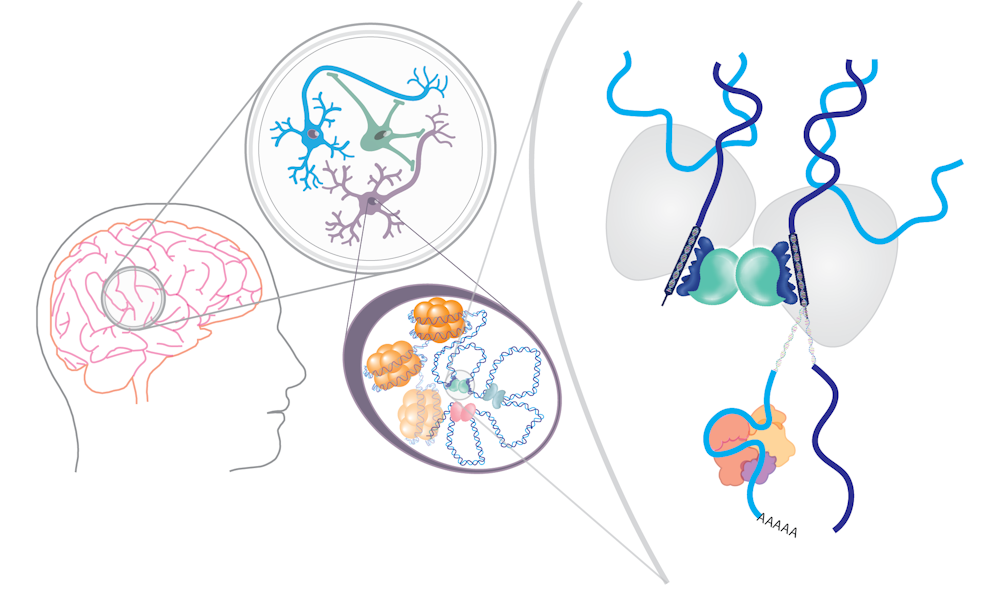
There are many ways addictive substances can change gene expression. They can alter which proteins bind to DNA to turn genes on and off and which segments of DNA are unwound. They can change the process of how DNA is read and translated into proteins, as well as alter the proteins that determine how cells use energy to function.
For example, alcohol can cause an alternative form of a gene to be expressed in the memory circuits in flies and people, resulting in changes in dopamine receptors and transcription factors involved in reward signaling and neuronal function. Similarly, cocaine can cause an alternative form of a gene to be expressed in the reward centers of mice, leading them to seek out more cocaine.
Exactly how these drugs cause changes in gene regulation is unknown. However, a direct link between alcohol consumption and changes in gene expression in mice provides a clue. A byproduct of alcohol being broken down in the liver called acetate can cross the blood-brain barrier and unwind DNA from histones in mouse memory circuits.
Alcohol, nicotine, cocaine and opioids also all activate important signaling pathways that are central regulators of metabolism. This suggests they can also affect many aspects of neuronal function and consequently affect which genes are expressed.
Changing brain gene activity with lifestyle
How addictive substances change cell function is complex. The version of a gene you’re born with can be modified in many ways before it becomes a functional protein, including exposure to alcohol and drugs. Rather than discouraging researchers, this complexity is empowering because it provides evidence that changes to gene expression in your brain aren’t permanent. They can also be altered by medications and lifestyle choices.
Many commonly prescribed medications for mental health disorders also affect gene expression. Antidepressants and mood stabilizers can change how DNA is modified and which genes are expressed. For example, a commonly prescribed drug for depression called escitalopram affects how tightly wound DNA is and can change the expression of genes important to brain plasticity.
Additionally, mRNA-based therapies can specifically change which genes are expressed to treat diseases like cancer. In the future, we may discover similar therapies for alcohol and substance use disorder. These treatments could potentially target important signaling pathways linked to addiction, altering how brain circuits function and how alcohol and drugs affect them.

Lifestyle choices can also affect gene expression in your brain, though researchers don’t yet know whether they can alter the changes induced by addictive substances.
Like alcohol and drugs, dietary changes can affect gene expression in many ways. In flies, a high sugar diet can reprogram the ability to taste sweetness by tapping into a gene expression network involved in development.
Intensive meditation, even after only one day, can also affect gene regulation in your brain through similar mechanisms. Attending a monthlong meditation retreat reduces the expression of genes that affect inflammation, and experienced meditators can reduce inflammatory genes after just one day of intensive meditation.
Work in animal models has also shown that exercise changes gene expression by altering both histones and the molecular tags directly attached to DNA. This increases the activity of genes important to the activity and plasticity of neurons, supporting the idea that exercise improves learning and memory and can decrease the risk of dementia.
From Dry January and beyond, many factors can have profound effects on your brain biology. Taking steps to reduce consumption of alcohol and drugs and picking up healthy lifestyle practices can help stabilize and bring long-lasting benefits for your physical and mental health.
Karla Kaun, Associate Professor of Neuroscience, Brown University
This article is republished from The Conversation under a Creative Commons license. Read the original article.
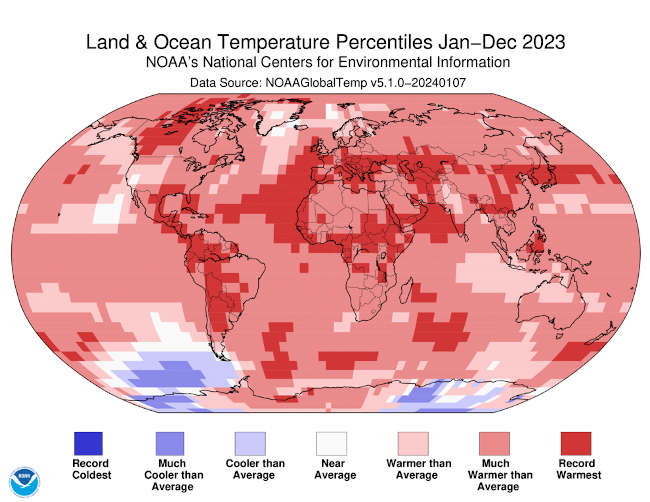
It’s official: 2023 was the planet’s warmest year on record, according to an analysis by scientists from NOAA’s National Centers for Environmental Information, or NCEI.
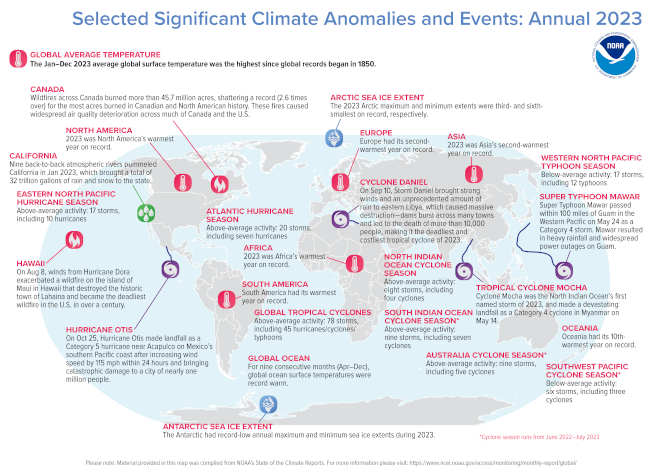
Along with the historic heat, Antarctic sea ice coverage dropped to a record low in 2023.
“After seeing the 2023 climate analysis, I have to pause and say that the findings are astounding,” said NOAA Chief Scientist Dr. Sarah Kapnick. “Not only was 2023 the warmest year in NOAA’s 174-year climate record — it was the warmest by far. A warming planet means we need to be prepared for the impacts of climate change that are happening here and now, like extreme weather events that become both more frequent and severe.
"We will continue to see records broken and extreme events grow until emissions go to zero,” Kapnick said. “Government policy can address both emissions, but also actions to reduce climate impacts by building resilience."
Earth’s average land and ocean surface temperature in 2023 was 2.12 degrees F (1.18 degrees C) above the 20th century — the highest global temperature among all years in NOAA’s 1850-2023 climate record. It also beats the next warmest year, 2016, by a record-setting margin of 0.27 of a degree F (0.15 of a degree C).
The 10 warmest years since 1850 have all occurred in the past decade. In fact, the average global temperature for 2023 exceeded the pre-industrial (1850–1900) average by 2.43 degrees F (1.35 degrees C).
Looking ahead, there is a one-in-three chance that 2024 will be warmer than 2023, and a 99% chance that 2024 will rank among the top five warmest years.
2023 as ranked by other scientific organizations
Other scientific organizations, including NASA, the Copernicus Climate Change Service and the UK Met Office have conducted separate but similar analyses that also rank 2023 as the warmest year on record.
Other notable climate findings and events
• Global ocean heat content set a new record high: The 2023 upper ocean heat content, which addresses the amount of heat stored in the upper 2,000 meters of the ocean, was the highest on record. Ocean heat content is a key climate indicator because the ocean stores 90% of the excess heat in the Earth system. The indicator has been tracked globally since 1958, and there has been a steady upward trend since approximately 1970. The five highest values have all occurred in the last five years.
• Polar sea ice was scant: The 2023 annual Antarctic sea ice extent (coverage) averaged 3.79 million square miles in 2023, the lowest on record. The maximum extent in September was 6.55 million square miles, which was the lowest by a record margin. The minimum extent in February was 690,000 square miles, which set a record low for the second consecutive year. Arctic sea ice coverage averaged 4.05 million square miles in 2023, ranking among the 10 lowest years on record. The maximum extent in March was 5.64 million square miles, which ranked fifth lowest, while the minimum extent in September was 1.63 million square miles, which ranked sixth lowest.
• December 2023 set records: Global surface temperature in December 2023 was 2.57 degrees F (1.43 degrees C) above the 20th-century average — the warmest December on record. For the ninth consecutive month, the global ocean surface temperature was also record warm. Looking regionally, North America and South America both had their warmest December on record.
This highly anticipated event, open to participants of all ages, promises an enchanting evening dedicated to fostering and celebrating the cherished bonds between generations.
This year's dance will be adorned with the theme of love, friendship and hearts — Valentine's.
Attendees can expect a night filled with music, laughter, and memories as they revel in the joy of new and long standing connections.
The event proudly features dozens of prizes generously donated by local businesses, with Lake’s Limos and Tutti Frutti sponsoring a spectacular limo ride and frozen yogurt adventure for one lucky guest and eight of their friends.
The event will be held at Kelseyville Presbyterian Church, 5340 Third St.
On the evening of Feb. 17, there will be two dances. The first dance will take place from 5:30 to 7:30 p.m., with the second dance scheduled for 8 to 10 p.m.
Tickets cost $30 for one adult and one child. Additional tickets for children or adults available for purchase.
The ticket price includes a carnation flower for each child, a professional photo shoot with a souvenir photo, and a lavish box of sweet treats and refreshments.
Purchase your tickets early. Tickets can be purchased at Studebakers Coffee and Deli located in Kelseyville or online through their Facebook page, Kelseyville Father-Daughter Dance or through Eventbrite. Act fast, as tickets sell out every year.
Join them for an unforgettable night of love, laughter and community spirit at the 20th annual Lake County Father-Daughter Dance.
The Father-Daughter Dance team is dedicated to bringing joy to the community and 100% of the proceeds from this event contribute to post-high school scholarships for students in Lake County.
For inquiries or to make a donation, please contact Allison Panella at 707-483-2383.
The proclamation explains that the Earned Income Tax Credit, or EITC, “is one of the most effective tools we have to help lift working families and their children out of poverty. Beyond providing a critical immediate boost in family income to help meet basic needs, research shows that the EITC improves the health and educational outcomes of children in families who receive it.”
It continues, “Here in California, we have not only created our own California Earned Income Tax Credit (CalEITC) – which last year provided nearly 3.5 million California filers additional resources to make ends meet and provide for their families – but significantly bolstered the program by promoting more equitable access. California expanded the CalEITC, the Young Child Tax Credit, and the Foster Youth Tax Credit to include immigrant families who file with Individual Taxpayer Identification Numbers (ITIN), individuals who file taxes but are ineligible for most federal tax benefits.
“Our state is committed to reaching all the hardworking families eligible for these important supports to help set our kids – California's future – up for success. I encourage all Californians to check if they qualify for the California Earned Income Tax Credit, Young Child Tax Credit, or Foster Youth Tax Credit by visiting ftb.ca.gov/caleitc.”

Many Americans – especially young adults – want to do work that feels meaningful. Creating meaning for oneself may be especially important as fewer workplaces provide good pay and benefits to their employees.
Those who are religious or spiritual often want to connect their faith to their work through a sense of calling. But there can be unexpected downsides for those who do so. People who say they feel “called” report better work and life satisfaction, but they may also be less likely to address workplace problems or unfair treatment when it arises.
Faith in workplaces
As scholars who study religion in the workplace, we have found that about 1 in 5 American workers agree with the statement, “I see my work as a spiritual calling.” Most of those who see their work in this way link it to religious sensibilities and practices.
Even though faith can be deeply connected to work, there are few comprehensive studies on this topic. In 2018 and again in 2021, we gathered responses from across the United States on how people see their faith in relation to their work.
Over 15,000 people representing a cross section of American adults filled out our surveys. These respondents included individuals from many different faith traditions and also those who did not follow a religious tradition. We also conducted in-depth interviews with over 250 of our survey-takers.
We found that 53% of Americans who feel called to their work are “very satisfied” with their current job compared with 39% of those who do not feel called.
Religious calling in work
The “concept of calling” has roots in Christian history, where people felt called to serve the church. More recently, calling has been extended to a possibility for any person in any job that serves the world.
There is no widely agreed-upon definition of what a modern-day spiritual calling might entail. Business scholars Mitchell Neubert and Katie Halbesleben define it as “a summons from God to approach work with a sense of purpose and a pursuit of excellence in work practices.”

Findings that relate calling to positive workplace outcomes are consistent with previous research that shows viewing work as a calling has a positive effect on worker satisfaction, mental health and well-being, including feeling one’s talents are being well used. As one respondent whom we interviewed told us, “I definitely feel more fulfilled in my work because of my faith, and vice versa. I feel like I’m being a better Christian by doing the work that I do …”
Yet, less is known about the specifics of how people see their work as a calling. Interviews we conducted found that a sense of calling provides workers with higher purpose in their work, especially when facing work that is either extremely challenging or mundane.
For example, teachers talked about dealing with the bureaucracy of state educational systems, and medical service workers discussed the daily grind of mopping floors and handling bodily waste. However, despite the challenges of their work, these people also acknowledged that they were able to get through the day-to-day aspects of their jobs because they felt spiritually called to their work.
Being called to work has downsides
There is reason to be cautious, however, in touting the advantages of viewing work as a calling without also considering the detrimental effects that can emerge.
For example, people who feel that God intended them to be in their current workplace or industry might be more disposed to stay in their current role regardless of unfair treatment or working conditions that take advantage of them, such as being underpaid or overworked. Specifically, in previous work we found that people who do feel called to their work report higher job satisfaction – even when they are experiencing discrimination – than people who do not feel called to their work.
A sense of calling may make people less likely to initiate changes to problematic workplace situations. Indeed, as we found in our research, those who view their work as a calling but also perceive discrimination in the workplace report being less likely to speak up in these situations compared with those who do not attach the same meaning to their work.
This can be especially detrimental for those of racial and religious minority groups who are more likely to experience discrimination at work in the first place. As one woman who works in government told us, “It is difficult being an African American woman in my field, so my faith allows me to step back sometimes and remove myself from the situation.”
This also shows how religion may help individuals cope with discrimination at work, but sometimes in a way that could detract from actively seeking change.
The double-edged sword
Experiencing work as a calling can be a double-edged sword. Because those who feel called to their work have a high level of commitment to their jobs, they tend to be more likely to tolerate, endure or ignore work situations that are unreasonable, inequitable or even discriminatory.

According to organizational ethics scholars Stuart Bunderson and Jeffery Thompson, workers who feel called to their jobs are “more likely to see their work as a moral duty, and to sacrifice pay, personal time and comfort for their work.” Thus, it can become easier for organizations to exploit these employees, whether they do so intentionally or unintentionally.
Having and being led by a sense of calling is also linked to financial stability. According to our data, 68% of people who do not feel called to their work agree that “the primary reason” they do the work is to make money. In comparison, 47% of those who experience a sense of calling view making money as their primary reason for working.
The discrepancy could also speak to gender, race and class privileges. In her research on the “passion principle” – the idea that Americans feel the need to follow their passion and choose jobs they find fascinating, intriguing or fulfilling – sociologist Erin Cech notes how the concept of pursuing paid work that one loves or feels called to can inadvertently foster structural and cultural inequalities. According to Cech, race and class can influence the freedom to choose their work. Not surprisingly, Cech found that white, upper-class men who did not need to worry about money as much enjoyed the most liberty to do so.
Our research also shows that when workers see their job as a spiritual calling, it can blind them to the difficulties others experience at work. They may be less able to empathize with those who feel stuck in their job because of money concerns, are unhappy or unfulfilled in their work, or are struggling to find a job.
Our surveys reveal that 60% of those who view their work as a calling agree that “anyone can find a good job if they try hard enough,” whereas only 49% of those who do not view their work as a calling concur.
Based on these findings, we suggest that leaders in organizations can help cultivate a sense of calling in workers by helping them identify their particular gifts and interests and facilitate their development along these pathways. At the same time, they can and should encourage feedback that can lead to a healthier workplace for everyone.
Elaine Howard Ecklund, Professor of Sociology and Director of The Boniuk Institute for the Study and Advancement of Religious Tolerance, Rice University; Brenton Kalinowski, PhD Candidate, Rice University, and Denise Daniels, Hudson T. Harrison Endowed Chair of Entrepreneurship, Wheaton College (Illinois)
This article is republished from The Conversation under a Creative Commons license. Read the original article.
Dogs available for adoption this week include mixes of Alaskan husky, Australian cattle dog, Australian shepherd, border collie, boxer, bulldog, chihuahua, Doberman pinscher, German shepherd, hound, Labrador retriever, pit bull, Queensland heeler, Rottweiler, shepherd and terrier.
Dogs that are adopted from Lake County Animal Care and Control are either neutered or spayed, microchipped and, if old enough, given a rabies shot and county license before being released to their new owner. License fees do not apply to residents of the cities of Lakeport or Clearlake.
Those dogs and the others shown on this page at the Lake County Animal Care and Control shelter have been cleared for adoption.
Call Lake County Animal Care and Control at 707-263-0278 or visit the shelter online for information on visiting or adopting.
The shelter is located at 4949 Helbush in Lakeport.
Email Elizabeth Larson at