 How to resolve AdBlock issue?
News
On Wednesday, the House of Representatives voted to pass H.R. 7024, the Tax Relief for American Families and Workers Act of 2024.
The bill includes Rep. Mike Thompson’s legislation with Rep. Doug LaMalfa (CA-01) to make PG&E Fire Victims Trust settlements nontaxable.
“Today’s strong bipartisan vote to provide essential tax relief to fire survivors is an important step towards recovery for those who lost homes, businesses, and loved ones in disastrous wildfires,” Thompson said Wednesday. “The Senate must swiftly consider and pass this bill so that our fire survivors receive the tax relief they desperately need.”
“Fire survivors have waited too long for certainty regarding the settlement with PG&E,” said LaMalfa. “To have to pay a huge portion to the government because the IRS deemed disaster aid as income adds insult to injury, especially paying the income tax on the lawyers’ fees. My staff and I have worked diligently on this initiative for many months to finally see it come to fruition. I thank Ways and Means Chairman Smith for negotiating this deal, and Speaker Johnson for getting it to the House Floor for a vote expeditiously. The Senate needs to act quickly as the new tax period will be upon us soon.”
“We are grateful for the leadership of Rep. Mike Thompson in spearheading tax justice for fire victims. Rep. Thompson has been a fierce supporter of fire victims since our devastating megafire disaster in October of 2017. Rep. Thompson's ability to work across the aisle with Rep. LaMalfa to get this over the line in the House is a testament to the critical importance to thousands of families," said Jennifer Gray Thompson, founder and CEO of After the Fire USA.
She added, “This bill is the most important legislation ever passed for fire victims, affecting hundreds of thousands of disaster survivors and correcting a grave error in the tax code. Rep. Thompson's commitment to fire victims and bipartisanship on this issue is deeply appreciated by megafire victims at home and across the country. After the Fire USA is proud to work with Rep. Thompson in service to fire victims everywhere."
The bill now goes to the Senate for a vote before going to President Joe Biden’s desk for his signature.
Thompson represents California’s Fourth Congressional District, which includes all or part of Lake, Napa, Solano, Sonoma and Yolo counties.
The bill includes Rep. Mike Thompson’s legislation with Rep. Doug LaMalfa (CA-01) to make PG&E Fire Victims Trust settlements nontaxable.
“Today’s strong bipartisan vote to provide essential tax relief to fire survivors is an important step towards recovery for those who lost homes, businesses, and loved ones in disastrous wildfires,” Thompson said Wednesday. “The Senate must swiftly consider and pass this bill so that our fire survivors receive the tax relief they desperately need.”
“Fire survivors have waited too long for certainty regarding the settlement with PG&E,” said LaMalfa. “To have to pay a huge portion to the government because the IRS deemed disaster aid as income adds insult to injury, especially paying the income tax on the lawyers’ fees. My staff and I have worked diligently on this initiative for many months to finally see it come to fruition. I thank Ways and Means Chairman Smith for negotiating this deal, and Speaker Johnson for getting it to the House Floor for a vote expeditiously. The Senate needs to act quickly as the new tax period will be upon us soon.”
“We are grateful for the leadership of Rep. Mike Thompson in spearheading tax justice for fire victims. Rep. Thompson has been a fierce supporter of fire victims since our devastating megafire disaster in October of 2017. Rep. Thompson's ability to work across the aisle with Rep. LaMalfa to get this over the line in the House is a testament to the critical importance to thousands of families," said Jennifer Gray Thompson, founder and CEO of After the Fire USA.
She added, “This bill is the most important legislation ever passed for fire victims, affecting hundreds of thousands of disaster survivors and correcting a grave error in the tax code. Rep. Thompson's commitment to fire victims and bipartisanship on this issue is deeply appreciated by megafire victims at home and across the country. After the Fire USA is proud to work with Rep. Thompson in service to fire victims everywhere."
The bill now goes to the Senate for a vote before going to President Joe Biden’s desk for his signature.
Thompson represents California’s Fourth Congressional District, which includes all or part of Lake, Napa, Solano, Sonoma and Yolo counties.
The Assembly has approved a bill establishing the Tribal Cogovernance and Comanagement of Ancestral Lands and Waters Act to encourage the state to create agreements with tribes to share responsibility and partnership in resource management conservation within a tribe’s lands and waters.
Assemblymember James C. Ramos (D-San Bernardino) introduced the measure, AB 1284, which will now head to the Senate.
“Under current law the California Natural Resource Agency is not required to work with tribal communities even though the state’s First People have managed the land and its resources for centuries,” Ramos said. “Tribes are committed to the health and safety of delicate ecosystems and a tradition of responsibility and stewardship.”
AB 1284 would permit and encourage the Natural Resource Agency to engage in government-to-government negotiations with federally recognized tribal communities to advance state goals regarding natural resource management.
In 2011, Gov. Jerry Brown signed Executive Order B-10-11 which reaffirmed California’s recognition of tribal communities as sovereigns of their own territory and people and as citizens of the state.
It also committed the state to foster and sustain government-to-government relationships with tribal communities to address areas of mutual concern and to have meaningful consultations.
“True co-governance and management is shared decision-making from the very start. It is time for tribes and the Resources Agency to be real partners in combating climate change and protecting biodiversity and our natural and cultural resources. It is time to return the management of tribal ancestral lands and waters to California’s first peoples. AB 1284 is our way forward,” said Resighini Rancheria Tribal Chairperson Fawn C. Murphy in a letter expressing support for the proposal.
AB 1284 is sponsored by Resighini Rancheria and Tolowa Dee-Ni’ Nation. It is also supported by the Natural California Tribal Chairpersons Association, Jamui Indian Village of California, Elk Valley Rancheria, Cher-Ae Heights Indian Community of the Trinidad Rancheria, Ocean Conservancy, the California State Parks Association and Pew Charitable Trusts.
Assemblymember James C. Ramos (D-San Bernardino) introduced the measure, AB 1284, which will now head to the Senate.
“Under current law the California Natural Resource Agency is not required to work with tribal communities even though the state’s First People have managed the land and its resources for centuries,” Ramos said. “Tribes are committed to the health and safety of delicate ecosystems and a tradition of responsibility and stewardship.”
AB 1284 would permit and encourage the Natural Resource Agency to engage in government-to-government negotiations with federally recognized tribal communities to advance state goals regarding natural resource management.
In 2011, Gov. Jerry Brown signed Executive Order B-10-11 which reaffirmed California’s recognition of tribal communities as sovereigns of their own territory and people and as citizens of the state.
It also committed the state to foster and sustain government-to-government relationships with tribal communities to address areas of mutual concern and to have meaningful consultations.
“True co-governance and management is shared decision-making from the very start. It is time for tribes and the Resources Agency to be real partners in combating climate change and protecting biodiversity and our natural and cultural resources. It is time to return the management of tribal ancestral lands and waters to California’s first peoples. AB 1284 is our way forward,” said Resighini Rancheria Tribal Chairperson Fawn C. Murphy in a letter expressing support for the proposal.
AB 1284 is sponsored by Resighini Rancheria and Tolowa Dee-Ni’ Nation. It is also supported by the Natural California Tribal Chairpersons Association, Jamui Indian Village of California, Elk Valley Rancheria, Cher-Ae Heights Indian Community of the Trinidad Rancheria, Ocean Conservancy, the California State Parks Association and Pew Charitable Trusts.
CLEARLAKE, Calif. — The Clearlake City Council will consider whether to end virtual public input at city meetings due to concerns about inappropriate comments.
The council will meet at 6 p.m. Thursday, Feb. 1, in the council chambers at Clearlake City Hall, 14050 Olympic Drive.
The meeting will be broadcast live on the city's YouTube channel or the Lake County PEGTV YouTube Channel.
Community members also can participate via Zoom.
The agenda can be found here.
On Thursday, the council will have a discussion with staff about the possibility of discontinuing virtual public comments at city meetings, a measure which was instituted in 2020 in response to the COVID-19 pandemic.
City Manager Alan Flora’s report said the emergency orders that allowed these measures were rolled back and virtual participation by City Council, commission members and others is no longer allowed, “except under very specific circumstances.”
Flora continued, “Many jurisdictions, including Clearlake, have continued the use of Zoom to allow more flexibility for public comment. Beginning largely in the fall of 2023 many jurisdictions eliminated a virtual option for public input due to the rise in inappropriate and racist comments at public meetings.”
At its Jan. 18 meeting, the council experienced the same when three individuals gave public comment through Zoom — with their cameras off and, it’s believed, under assumed names — that were antisemitic and racist, and had nothing to do with city business items on the agenda.
“Staff would like to discuss the discontinuation of allowing public comment on City business virtually. Staff recommend the Council continue to allow the use of Zoom for City consultants and contractors as appropriate,” Flora wrote.
Also on Thursday, the council will offer a proclamation declaring February 2024 as Black History Month and a presentation of the Clearlake Police Department's Annual Report.
Under other items of business, the council will consider authorizing a $20,000 amendment to the purchase contract with National Food Equipment for installation of a freezer as part of the Senior Center Kitchen Remodel Project.
On the meeting's consent agenda — items that are considered routine in nature and usually adopted on a single vote — are warrants, authorization of an amendment of contract with ProEx Construction for the Senior Center Kitchen Remodel Project in the amount of $20,000, and adoption of a resolution and approval of Mayor David Claffey's appointments of Vice Mayor Joyce Overton and Councilmember Russell Perdock as members.
The council also will hold a closed session following the public portion of the meeting to discuss property negotiations for 14775 Burns Valley Road and a case of anticipated litigation.
Email Elizabeth Larson atThis email address is being protected from spambots. You need JavaScript enabled to view it. . Follow her on Twitter, @ERLarson, or Lake County News, @LakeCoNews.
The council will meet at 6 p.m. Thursday, Feb. 1, in the council chambers at Clearlake City Hall, 14050 Olympic Drive.
The meeting will be broadcast live on the city's YouTube channel or the Lake County PEGTV YouTube Channel.
Community members also can participate via Zoom.
The agenda can be found here.
On Thursday, the council will have a discussion with staff about the possibility of discontinuing virtual public comments at city meetings, a measure which was instituted in 2020 in response to the COVID-19 pandemic.
City Manager Alan Flora’s report said the emergency orders that allowed these measures were rolled back and virtual participation by City Council, commission members and others is no longer allowed, “except under very specific circumstances.”
Flora continued, “Many jurisdictions, including Clearlake, have continued the use of Zoom to allow more flexibility for public comment. Beginning largely in the fall of 2023 many jurisdictions eliminated a virtual option for public input due to the rise in inappropriate and racist comments at public meetings.”
At its Jan. 18 meeting, the council experienced the same when three individuals gave public comment through Zoom — with their cameras off and, it’s believed, under assumed names — that were antisemitic and racist, and had nothing to do with city business items on the agenda.
“Staff would like to discuss the discontinuation of allowing public comment on City business virtually. Staff recommend the Council continue to allow the use of Zoom for City consultants and contractors as appropriate,” Flora wrote.
Also on Thursday, the council will offer a proclamation declaring February 2024 as Black History Month and a presentation of the Clearlake Police Department's Annual Report.
Under other items of business, the council will consider authorizing a $20,000 amendment to the purchase contract with National Food Equipment for installation of a freezer as part of the Senior Center Kitchen Remodel Project.
On the meeting's consent agenda — items that are considered routine in nature and usually adopted on a single vote — are warrants, authorization of an amendment of contract with ProEx Construction for the Senior Center Kitchen Remodel Project in the amount of $20,000, and adoption of a resolution and approval of Mayor David Claffey's appointments of Vice Mayor Joyce Overton and Councilmember Russell Perdock as members.
The council also will hold a closed session following the public portion of the meeting to discuss property negotiations for 14775 Burns Valley Road and a case of anticipated litigation.
Email Elizabeth Larson at
California is mobilizing a whole-of-government response to a series of potentially dangerous incoming storms in order to keep communities safe.
Beginning Tuesday evening, a series of storms began to hit the state and will continue for the next 10 days.
Forecasters said to expect significant rain, high winds, deep snow as well as potential flash flooding and power outages.
The Federal Emergency Management Agency reported that it is monitoring two atmospheric river storms heading towards the West Coast and is urging Californians to pay attention to the evolving forecast, listen to instructions from local authorities and evacuate immediately if told to do so.
Lake County is under a wind advisory on Wednesday and a flood watch on both Wednesday and Thursday.
At the direction of Gov. Gavin Newsom, the State Operations Center in Mather is being activated to coordinate a unified response to these storms across state, local and federal agencies.
The governor has also directed the California Governor’s Office of Emergency Services, or Cal OES, to lead an early, proactive push to preposition state personnel and equipment into the communities most at risk of damage before the worst of the storms arrive.
The state is also taking action to prepare for potential flooding by activating the Flood Operations Center for increased coordination and utilizing California’s spillways where necessary.
The National Weather Service said a significant series of weather systems will impact the state starting this week, bringing with them moderate to heavy rainfall, accumulating mountain snow and gusty winds of 60 to 70 miles per hour.
Precipitation will begin across far Northern California on Tuesday, spreading into the rest of the state Wednesday, Thursday and Friday.
This weather pattern will continue in the next few weeks, with above normal precipitation likely statewide, especially across Southern California.
“The state is working around the clock with our local partners to deploy life-saving equipment and resources statewide. With more storms on the horizon, we’ll continue to mobilize every available resource to protect Californians.”
The state is utilizing significant staffing and equipment resource investments made by the Governor in recent years to bolster emergency response capacity.
Among the agencies who are actively working on storm response efforts are: Cal OES, the Department of Water Resources, California Department of Transportation, the California Highway Patrol, California Department of Forestry and Fire Protection, California Conservation Corps, California Department of Social Services and the California National Guard.
Five things you can do to stay safer
Stay connected. Californians are reminded to dial 311 to get help or ask questions. If you have a critical emergency, call 911. Stay informed by signing up for emergency alerts including warnings and evacuation notices. Go to CalAlerts.org to sign up to receive alerts from your county officials. Check in with loved ones and neighbors.
Get your information from trusted sources. During a disaster, it's critical to have accurate information. Check state and local government or emergency management websites and social media accounts for trusted information specific to your area. Local news outlets and meteorologists are also a good source of information. Be wary of posts from unknown sources on social platforms or from online ‘experts’ without credentials.
Prepare for high winds. Before a high wind event: remove any dead trees or overhanging branches near structures, remove loose roofing material, bring in unsecured objects from patios and balconies, secure outdoor objects that could blow away, shutter windows securely and brace outside doors. During a high wind event: take cover next to a building or under shelter, stay away from windows, stay clear of roadways and train tracks, avoid elevated areas such as roofs, watch for flying debris.
Travel safely. Avoid non-essential travel during the peak of the storm expected Sunday and Monday. If you must drive, download the QuickMap app or visit QuickMap (ca.gov) to learn up-to-the-minute information on road conditions, traffic, closures, and more. Do not walk, swim or drive through flood waters. Turn Around, Don’t Drown! Remember, just six inches of moving water can knock you down, and one foot of moving water can sweep your vehicle away.
Be ready in case of power outages. Take inventory of the items you need that rely on electricity. Keep your devices charged. Plan for batteries and other alternative power sources to meet your needs if the power goes out such as a portable charger or power bank. Have flashlights for every household member. Also, plan accordingly for the potential of water outages.
Get more tips here.
Additional resources
Storm Season Safety Guide: the state is sharing multilingual resources, deploying a network of community-based organizations through the Listos California campaign, and highlighting other work underway to protect at-risk communities this rainy season.
Prepare yourself through texts: Californians can sign up for a 5-lesson text message course through Listos California on what to do before, during and after floods, high winds, debris flows and other storm impacts. This course is available in English, Spanish, Hmong and Punjabi. Text “CAWINTER” to 20202 via SMS to sign up.
Visit the National Weather Service for current weather patterns in your area.
Beginning Tuesday evening, a series of storms began to hit the state and will continue for the next 10 days.
Forecasters said to expect significant rain, high winds, deep snow as well as potential flash flooding and power outages.
The Federal Emergency Management Agency reported that it is monitoring two atmospheric river storms heading towards the West Coast and is urging Californians to pay attention to the evolving forecast, listen to instructions from local authorities and evacuate immediately if told to do so.
Lake County is under a wind advisory on Wednesday and a flood watch on both Wednesday and Thursday.
At the direction of Gov. Gavin Newsom, the State Operations Center in Mather is being activated to coordinate a unified response to these storms across state, local and federal agencies.
The governor has also directed the California Governor’s Office of Emergency Services, or Cal OES, to lead an early, proactive push to preposition state personnel and equipment into the communities most at risk of damage before the worst of the storms arrive.
The state is also taking action to prepare for potential flooding by activating the Flood Operations Center for increased coordination and utilizing California’s spillways where necessary.
The National Weather Service said a significant series of weather systems will impact the state starting this week, bringing with them moderate to heavy rainfall, accumulating mountain snow and gusty winds of 60 to 70 miles per hour.
Precipitation will begin across far Northern California on Tuesday, spreading into the rest of the state Wednesday, Thursday and Friday.
This weather pattern will continue in the next few weeks, with above normal precipitation likely statewide, especially across Southern California.
“The state is working around the clock with our local partners to deploy life-saving equipment and resources statewide. With more storms on the horizon, we’ll continue to mobilize every available resource to protect Californians.”
The state is utilizing significant staffing and equipment resource investments made by the Governor in recent years to bolster emergency response capacity.
Among the agencies who are actively working on storm response efforts are: Cal OES, the Department of Water Resources, California Department of Transportation, the California Highway Patrol, California Department of Forestry and Fire Protection, California Conservation Corps, California Department of Social Services and the California National Guard.
Five things you can do to stay safer
Stay connected. Californians are reminded to dial 311 to get help or ask questions. If you have a critical emergency, call 911. Stay informed by signing up for emergency alerts including warnings and evacuation notices. Go to CalAlerts.org to sign up to receive alerts from your county officials. Check in with loved ones and neighbors.
Get your information from trusted sources. During a disaster, it's critical to have accurate information. Check state and local government or emergency management websites and social media accounts for trusted information specific to your area. Local news outlets and meteorologists are also a good source of information. Be wary of posts from unknown sources on social platforms or from online ‘experts’ without credentials.
Prepare for high winds. Before a high wind event: remove any dead trees or overhanging branches near structures, remove loose roofing material, bring in unsecured objects from patios and balconies, secure outdoor objects that could blow away, shutter windows securely and brace outside doors. During a high wind event: take cover next to a building or under shelter, stay away from windows, stay clear of roadways and train tracks, avoid elevated areas such as roofs, watch for flying debris.
Travel safely. Avoid non-essential travel during the peak of the storm expected Sunday and Monday. If you must drive, download the QuickMap app or visit QuickMap (ca.gov) to learn up-to-the-minute information on road conditions, traffic, closures, and more. Do not walk, swim or drive through flood waters. Turn Around, Don’t Drown! Remember, just six inches of moving water can knock you down, and one foot of moving water can sweep your vehicle away.
Be ready in case of power outages. Take inventory of the items you need that rely on electricity. Keep your devices charged. Plan for batteries and other alternative power sources to meet your needs if the power goes out such as a portable charger or power bank. Have flashlights for every household member. Also, plan accordingly for the potential of water outages.
Get more tips here.
Additional resources
Storm Season Safety Guide: the state is sharing multilingual resources, deploying a network of community-based organizations through the Listos California campaign, and highlighting other work underway to protect at-risk communities this rainy season.
Prepare yourself through texts: Californians can sign up for a 5-lesson text message course through Listos California on what to do before, during and after floods, high winds, debris flows and other storm impacts. This course is available in English, Spanish, Hmong and Punjabi. Text “CAWINTER” to 20202 via SMS to sign up.
Visit the National Weather Service for current weather patterns in your area.
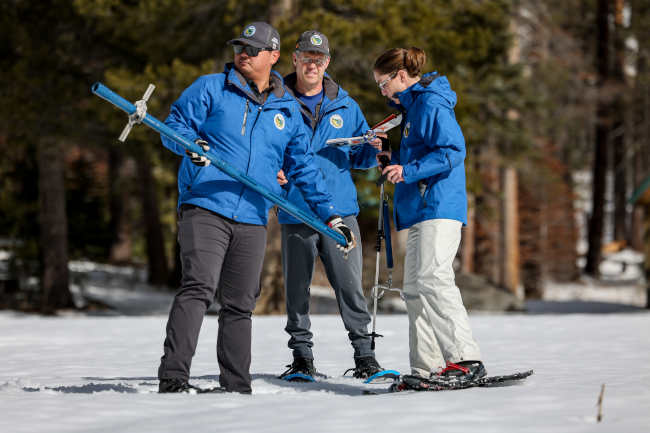
NORTHERN CALIFORNIA — California’s snowpack is improving thanks to recent storms, but still below the seasonal average.
The Department of Water Resources on Tuesday conducted the second snow survey of the season at Phillips Station.
The manual survey recorded 29 inches of snow depth and a snow water equivalent of 10 inches, which is 58% of average for this location.
The snow water equivalent measures the amount of water contained in the snowpack and is a key component of DWR’s water supply forecast.
Tuesday’s results reflect a modest increase in the snowpack since Jan. 1, but overall conditions are still far below normal.
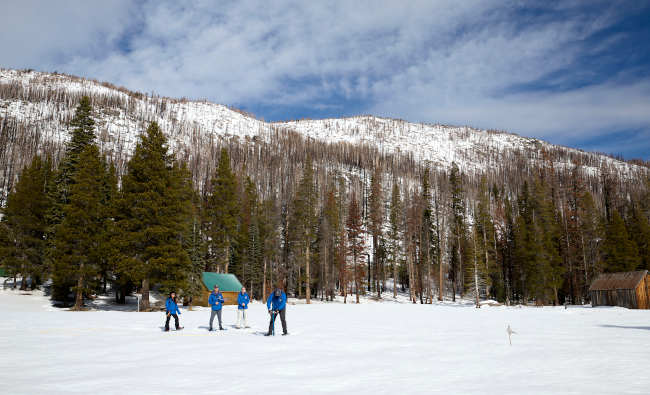
DWR’s electronic readings from 130 stations placed throughout the state indicate that the statewide snowpack’s snow water equivalent is 8.4 inches, or 52% of average for this date, an improvement from just 28% of average on Jan. 1. One year ago, the snowpack statewide was 214% of average on Feb. 1.
“This year’s El Niño has delivered below average precipitation and an even smaller snowpack,” said DWR Director Karla Nemeth. “Californians must prepare for all possible conditions during the remaining months of the rainy season.”
Despite additional precipitation in January, many storms so far this year have been warmer than average, producing rain rather than snow at higher elevations.
Overall statewide precipitation is 82% of average for this date. Last year’s snowpack was aided by both above average precipitation and below average temperatures, which created a historic snowpack and improved reservoir storage statewide, which is still above average. Lake Oroville, the State Water Project’s largest reservoir, is currently 76% of average.
“Despite strong El Niño conditions in the Pacific Ocean, a high-pressure system and several other climate factors have led to below average conditions so far and most storm impacts have been focused along the coastal regions,” said Dr. Michael Anderson, state Climatologist with the Department of Water Resources. “Many of these storms have also been warmer than average and produced more rain and less snow, a far cry from last year’s near-record snowpack and once again demonstrating how California can swing from one extreme to another.”
Even though this winter has provided below average precipitation overall, it can only take one storm to produce severe flooding in the right circumstances.
Communities in San Diego, the Bay Area and along the North Coast have already experienced flooding impacts this winter, highlighting the need to always be prepared for flood risk.
DWR and the Joint State-Federal Flood Operations Center have been working with communities and emergency response agencies to coordinate flood response and provide training to prepare for flooding.
All Californians should follow three basic steps to plan for possible floods:
Be aware of your risk – know whether your home is downslope of a burn area or in a floodplain; pay attention to weather forecasts; listen to local authorities.
Be prepared – always have an emergency evacuation kit ready; be ready to evacuate early; have a plan for where you will go in an emergency.
Take action – subscribe to your local emergency providers to get updated information. If local authorities issue an evacuation order, do not delay, follow local guidelines for evacuation and never attempt to drive through a flooded roadway.
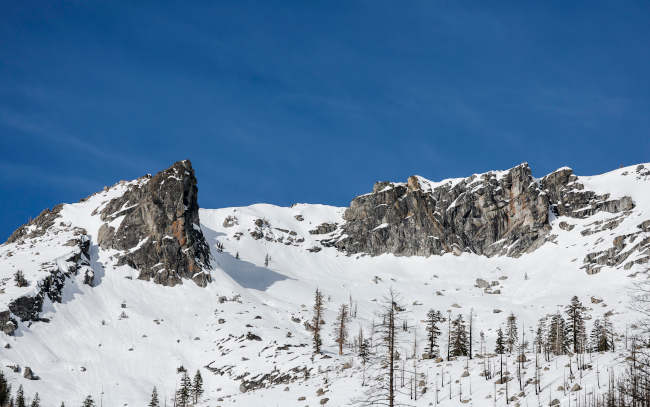
On average, the Sierra snowpack supplies about 30 percent of California’s water needs. Its natural ability to store water is why the Sierra snowpack is often referred to as California's “frozen reservoir.”
Data from these snow surveys and forecasts produced by DWR’s Snow Surveys and Water Supply Forecasting Unit are important factors in determining how DWR manages the state’s water resources.
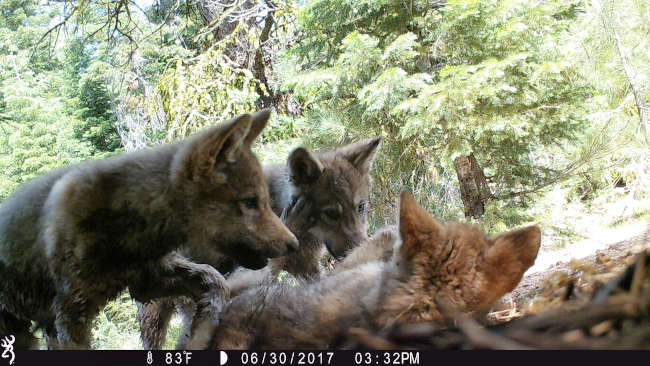
NORTHERN CALIFORNIA — The California Department of Fish and Wildlife reported late Monday that it has named two new wolf packs that were confirmed in the state last summer.
The newly named wolf families are the Beyem Seyo pack in Plumas County and the Harvey pack in Lassen County.
Another of 2023’s newly discovered packs, the Yowlumni pack, ranges in Tulare County and was named in December.
“These awe-inspiring animals continue to show us that California’s wild landscapes are great habitat for wolves and that they’ll find their way here,” said Amaroq Weiss, a senior wolf advocate at the Center for Biological Diversity. “Wolves belong in our state, and we should do everything we can to ensure they thrive.”
The department’s quarterly report covered known wolf information from August through October 2023. It reported that the state has five wolf packs plus several groups of wolves, including new individuals and groups in four northeastern California counties.
The new report noted the continued existence of the Lassen pack in Lassen County, the Whaleback pack in Siskiyou County and a group of two or three wolves in Tehama County. Another group of three wolves was documented ranging in Sierra and Nevada counties, and individual wolves have been sighted in Modoc County. A previously known wolf family in Plumas County, the Beckwourth pack, is thought to no longer exist.
Based on the department’s count, California is currently home to around 45 wolves including adults, yearlings and pups of the year.
The Beyem Seyo pack has at least two adults and six pups; the Harvey pack has at least two adults and one pup; the Lassen pack has a minimum two adults, five yearlings, and three pups; the Whaleback pack is composed of at least two adults, one yearling, and eight pups; the Yowlumni pack consists of two adults and six pups; and the two unnamed groups of wolves include a group of two to three wolves in Tehama County and a group of three wolves in Sierra and Nevada counties.
“I feel so fortunate to bear witness to the return of these top-level carnivores to California,” said Weiss. “Not only are wolves essential to healthy, wild nature, they also have for thousands of years been integral to the human spirit and imagination and a symbol of our connection to the wild.”
The first wolf in nearly a century to make California part of his range was OR-7, a radio-collared wolf from Oregon that entered California in late 2011. OR-7 traveled across seven northeastern counties in California before returning to southwestern Oregon, where he found a mate and settled down, forming the Rogue pack.
Several of OR-7’s offspring have since come to California and established packs. Those include the original breeding male of the Lassen pack and the breeding female of the Yowlumne pack residing in Tulare County. The Shasta pack, California’s first confirmed wolf pack in nearly 100 years, was discovered in 2015 but disappeared a few months later.
The gray wolf (Canis lupus) is native to California but was driven to extinction in the state by the mid-1920s. After OR-7 left Oregon for California, the Center and allies successfully petitioned the state to fully protect wolves under California’s endangered species act. Wolves are also federally protected in California under the federal Endangered Species Act. It is illegal to intentionally kill any wolves in the state.