 How to resolve AdBlock issue?
News
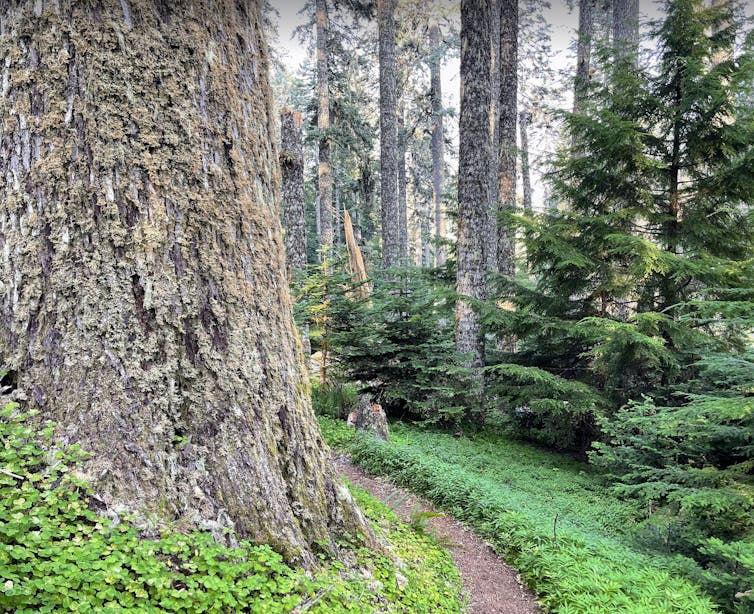
Forests are an essential part of Earth’s operating system. They reduce the buildup of heat-trapping carbon dioxide in the atmosphere from fossil fuel combustion, deforestation and land degradation by 30% each year. This slows global temperature increases and the resulting changes to the climate. In the U.S., forests take up 12% of the nation’s greenhouse gas emissions annually and store the carbon long term in trees and soils.
Mature and old-growth forests, with larger trees than younger forests, play an outsized role in accumulating carbon and keeping it out of the atmosphere. These forests are especially resistant to wildfires and other natural disturbances as the climate warms.
Most forests in the continental U.S. have been harvested multiple times. Today, just 3.9% of timberlands across the U.S., in public and private hands, are over 100 years old, and most of these areas hold relatively little carbon compared with their potential.
The Biden administration is moving to improve protection for old-growth and mature forests on federal land, which we see as a welcome step. But this involves regulatory changes that will likely take several years to complete. Meanwhile, existing forest management plans that allow logging of these important old, large trees remain in place.
As scientists who have spent decades studying forest ecosystems and the effects of climate change, we believe that it is essential to start protecting carbon storage in these forests. In our view, there is ample scientific evidence to justify an immediate moratorium on logging mature and old-growth forests on federal lands.
Federal action to protect mature and old-growth forests
A week after his inauguration in 2021, President Joe Biden issued an executive order that set a goal of conserving at least 30% of U.S. lands and waters by 2030 to address what the order called “a profound climate crisis.” In 2022, Biden recognized the climate importance of mature and old-growth forests for a healthy climate and called for conserving them on federal lands.
Most recently, in December 2023, the U.S. Forest Service announced that it was evaluating the effects of amending management plans for 128 U.S. national forests to better protect mature and old-growth stands – the first time any administration has taken this kind of action.
These actions seek to make existing old-growth forests more resilient; preserve ecological benefits that they provide, such as habitat for threatened and endangered species; establish new areas where old-growth conditions can develop; and monitor the forests’ condition over time. The amended national forest management plans also would prohibit logging old-growth trees for mainly economic purposes – that is, producing timber. Harvesting trees would be permitted for other reasons, such as thinning to reduce fire severity in hot, dry regions where fires occur more frequently.
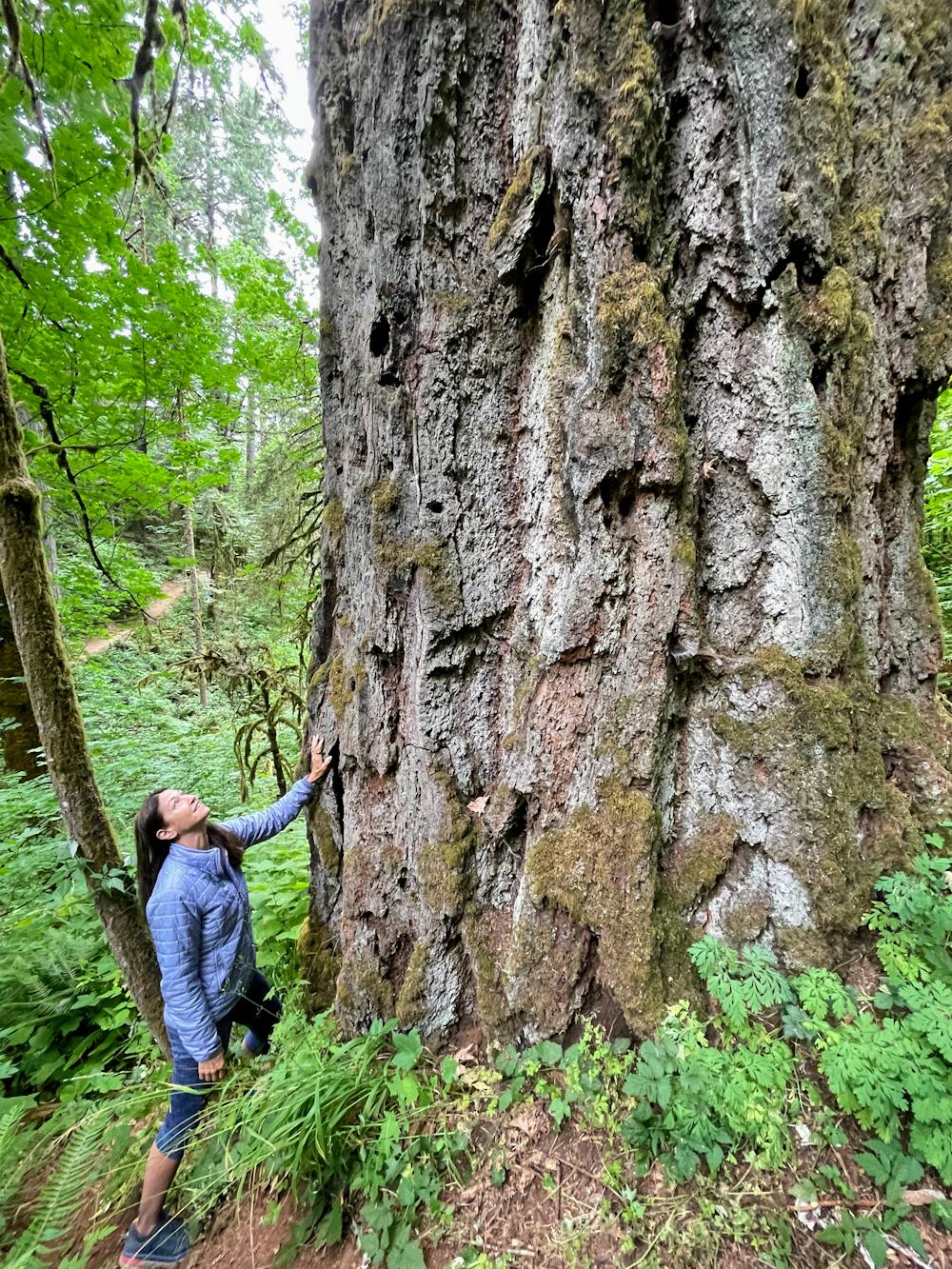
Remarkably, however, logging is hardly considered in the Forest Service’s initial analysis, although studies show that it causes greater carbon losses than wildfires and pest infestations.
In one analysis across 11 western U.S. states, researchers calculated total aboveground tree carbon loss from logging, beetle infestations and fire between 2003 and 2012 and found that logging accounted for half of it. Across the states of California, Oregon and Washington, harvest-related carbon emissions between 2001 and 2016 averaged five times the emissions from wildfires.
A 2016 study found that nationwide, between 2006 and 2010, total carbon emissions from logging were comparable to emissions from all U.S. coal plants, or to direct emissions from the entire building sector.

Logging pressure
Federal lands are used for multiple purposes, including biodiversity and water quality protection, recreation, mining, grazing and timber production. Sometimes, these uses can conflict with one another – for example, conservation and logging..
Legal mandates to manage land for multiple uses do not explicitly consider climate change, and federal agencies have not consistently factored climate change science into their plans. Early in 2023, however, the White House Council on Environmental Quality directed federal agencies to consider the effects of climate change when they propose major federal actions that significantly affect the environment.
Multiple large logging projects on public land clearly qualify as major federal actions, but many thousands of acres have been legally exempted from such analysis.
Across the western U.S., just 20% of relatively high-carbon forests, mostly on federal lands, are protected from logging and mining. A study in the lower 48 states found that 76% of mature and old-growth forests on federal lands are vulnerable to logging. Harvesting these forests would release about half of their aboveground tree carbon into the atmosphere within one or two decades.
An analysis of 152 national forests across North America found that five forests in the Pacific Northwest had the highest carbon densities, but just 10% to 20% of these lands were protected at the highest levels. The majority of national forest area that is mature and old growth is not protected from logging, and current management plans include logging of some of the largest trees still standing.
Letting old trees grow
Conserving forests is one of the most effective and lowest-cost options for managing atmospheric carbon dioxide, and mature and old-growth forests do this job most effectively. Protecting and expanding them does not require expensive or complex energy-consuming technologies, unlike some other proposed climate solutions.
Allowing mature and old-growth forests to continue growing will remove from the air and store the largest amount of atmospheric carbon in the critical decades ahead. The sooner logging of these forests ceases, the more climate protection they can provide.
Richard Birdsey, a former U.S. Forest Service carbon and climate scientist and current senior scientist at the Woodwell Climate Research Center, contributed to this article.
This is an update of an article originally published on March 2, 2023.
Beverly Law, Professor Emeritus of Global Change Biology and Terrestrial Systems Science, Oregon State University and William Moomaw, Professor Emeritus of International Environmental Policy, Tufts University
This article is republished from The Conversation under a Creative Commons license. Read the original article.
At its Jan. 16 meeting, the council unanimously approved an agreement with Bob Hall and Associates to conduct an executive recruitment to find the successor for Chief Brad Rasmussen, who intends to retire later this year.
The $27,000 agreement was approved along with a budget amendment to allow for the expenditure.
Last spring, Rasmussen announced his plans to retire at the same time as he revealed his intention to run for District 4 supervisor. He’s now in the midst of a four-way race that also includes Scott Barnett, Laura McAndrews Sammel and Chris Read.
Administrative Services Director/City Clerk Kelly Buendia told the council that after Rasmussen’s announcement, staff discussed the recruitment and decided that it “quickly gets out of our scope,” and that “hiring an executive recruiting firm makes most sense in our opinion.”
Her written report explained that the firms were asked to “conduct a comprehensive outreach campaign aimed at producing the highest quality candidate pool; coordinate the interview selection process; assist in compensation negotiations and conduct a POST-level background investigation.”
Buendia reported that the city issued a request for quote and qualifications and received five proposals to do the work.
A selection committee that included Buendia, Rasmussen, City Manager Kevin Ingram and Assistant City Manager Nick Walker interviewed the top three firms and decided that Bob Hall and Associates was the best overall fit for the city, demonstrating the strongest law enforcement experience and credentials.
“They also exhibited experience in understanding and working with the challenges of small agencies,” Buendia’s report explained.
Buendia said Bob Hall and Associates’ bid was in the middle of the amounts proposed by the other firms.
Todd Freitas of the Lakeport Police Officer’s Association said he believed the city has a very good vision for how to move forward. He also noted that the contract amount will cover the background investigation cost.
Freitas lauded Rasmussen for doing “a very good job of running the ship over the years.”
He credited the police department’s strong staffing position to current police administration, adding, “We hope that this hiring firm will assist us in continuing that vision in the leadership.”
Councilwoman Kim Costa moved to approve the agreement, with Councilman Brandon Disney seconding and the council voting 5-0.
The contract commences on Feb. 1 and continues until Jan. 31, 2025. It will be overseen by Buendia.
Rasmussen has been chief since May of 2011, and was promoted to the position from within the police department’s ranks after the departure of Chief Kevin Burke, whose hire resulted after a recruitment begun in 2005 when Chief Tom Engstrom retired.
Email Elizabeth Larson at
The partnership, called the Hometown Wildfire Safety Collaboration, provides financial support for local fuel reduction projects, a dynamic Community Wildfire Protection Plan specific to Lake County and an environmentally friendly biomass usage program.
“We are very proud of the Hometown Wildfire Safety Collaborative, which leverages the strengths of many organizations — each with unique skills and areas of focus — that together are dedicated to building capacity and improving wildfire resilience in Lake County. Through partnership and innovation, the work executed by this Collaborative will reduce the threat of wildfire and keep our hometowns safer,” said Dave Canny, vice president for PG&E’s North Coast Region.
PG&E launched the collaborative in the fall of 2023 with a $500,000 grant to the Clear Lake Environmental Research Center, or CLERC, allowing them to expand its existing fuel reduction partnership with the Northshore Fire Protection District.
The grant has allowed Northshore Fire to increase the size of its crew and stabilize wages so that they can better respond to the vegetation management needs in the area.
Since September, Northshore Fire has completed several local wildfire safety projects, many of which are focused on creating defensible space between dwellings and vegetation.
A particular area of focus for Northshore Fire is vegetation management work around some of Lake County’s elderly and assisted living facilities that may not have the resources to execute the wildfire safety work themselves.
In addition to the wildfire safety work, PG&E grant will also help fund a dynamic Community Wildfire Protection Plan, or CWPP, that outlines community-specific wildfire resilience analytics for all of Lake County.
This component of the partnership utilizes computer modeling to predict wildfire pathways to inform community discussions on the most effective and strategic locations for fuel reduction projects.
This science-based approach to identifying project areas could eventually serve as the county-wide CWPP project list for Lake County.
The final component of the partnership focuses on biomass utilization. This wood management partnership uses a carbonator to collectively reduce the cost of managing wood waste, and create biochar, a climate-positive wood product, to be deployed in Lake County at strategic locations.
The Hometown Wildfire Safety Collaborative Partnership members include PG&E, the Clear Lake Environmental Research Center, Northshore Fire Protection District, Lake County Fire Chiefs Association, California Fire Chiefs Association, Gordon and Betty Moore Foundation, US Forest Service and CalFire.
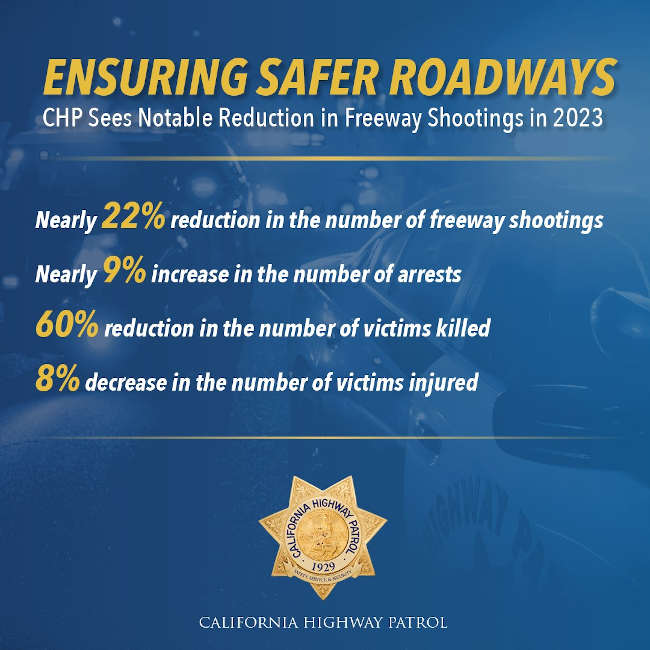
In a significant milestone for public safety, the California Highway Patrol documented a substantial reduction in the number of freeway shootings across the state.
The number of confirmed freeway shootings in California dropped from 349 to 274 last year — a reduction of more than 21% from the previous year and a 38% reduction from 2021.
In addition to the reduction in the number of freeway shootings, CHP data confirms the number of victims killed and injured in highway violence incidents also decreased.
Last year there were four people killed in freeways shootings, which is a 60% reduction from 2022.
Additionally, there was an 8% reduction in the number of people injured — from 74 to 68 last year.
Reflecting the good work that contributed to these reductions, the number of arrests by the CHP in freeways shootings increased nearly 9% from 2022.
“While this downward trend marks progress, let's be clear: one life lost by gun violence is one too many. California will remain relentless in our pursuit to improve public safety, reduce gun violence, and invest in smart crime-fighting strategies that deliver real results,” said Gov. Gavin Newsom.
“Freeway shootings are serious crimes, and the CHP actively investigates every incident of highway violence,” said CHP Commissioner Sean Duryee. “This accomplishment reflects our unwavering commitment to ensuring the safety of our highways throughout California and fostering an environment where motorists can travel without fear.”
If you are driving on the freeway and a shooting takes place near you, you should remain calm, be a good witness and note any details such as vehicle descriptions and license plate numbers.
Maintain a safe distance from the suspect, and call 9-1-1 if possible, to report the incident and your current location.
Gov. Newsom established CHP’s Highway Violence Task Force to address the rise of violent crimes occurring on state highways, which surged nationally during the pandemic. At their peak in California in 2021, 447 shootings resulted in 16 deaths and 88 injuries. The new data show a 38% reduction in shootings and a 75% reduction in deaths compared to those pandemic highs.
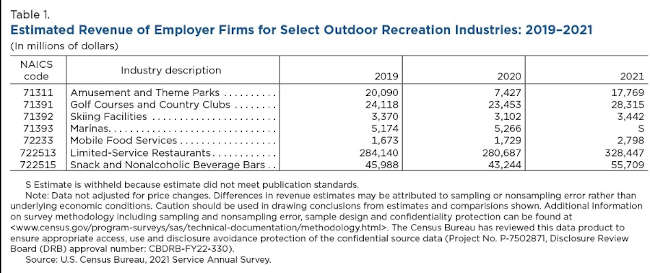
The U.S. Census Bureau’s Service Annual Survey, or SAS, provides a detailed look at estimated revenue of employer firms for select indoor and outdoor recreation industries affected by COVID-19 and a glimpse into their recovery.
Many fitness, recreation and other social activities moved outdoors when the pandemic began in 2020.
An estimated 7.1 million more Americans enjoyed an outdoor activity in 2020 — the first year of the pandemic — than in 2019, according to the Outdoor Industry Association’s 2021 Outdoor Participation Trends Report.
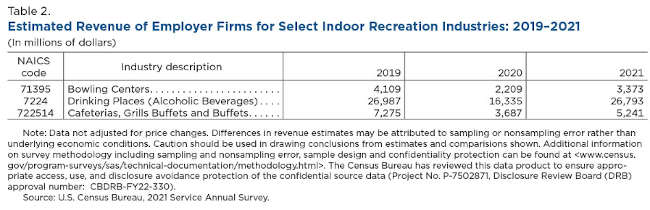
Estimated revenues of select industries related to indoor recreation rebounded from 2020 to 2021 but have yet to return to their 2019 levels.
In 2021, 164.2 million Americans participated in an outdoor activity, a 6.9% increase since 2019.
While outdoor recreation participation increased, revenue of select industries related to outdoor recreation also grew from 2019 to 2021, according to SAS data.
Estimated revenues of select industries related to indoor recreation rebounded from 2020 to 2021 but have yet to return to their 2019 levels.
Impact of pandemic on recreation
Even some industries that were predominantly enjoyed outdoors experienced decreases in revenue for employer firms in 2020.
Golf Courses and Country Clubs in 2020 saw a 2.8% decrease in estimated revenue for employer firms, from $24.1 billion in 2019 to $23.5 billion in 2020.
Not surprisingly, some industries with employer firms that required indoor participation experienced significant revenue drops in 2020.
For example, Bowling Centers’ revenue dropped 46.2% (from $4.1 billion in 2019 to $2.2 billion in 2020), and Cafeterias, Grill Buffets, and Buffets’ revenue declined 49.3% (from $7.3 billion in 2019 to $3.7 billion in 2020).
Although Amusement and Theme Parks are outdoor venues, their estimated revenue dropped 63.0%, from $20.1 billion in 2019 to $7.4 billion in 2020 due to pandemic-related closures.
Road to recovery: Revenue changes in 2021
While select recreation industries experienced double-digit percent decreases in revenues in 2020, they experienced double-digit percent increases in 2021.
Most notably, Amusement and Theme Parks’ revenue spiked 139.2%, from $7.4 billion in 2020 to $17.8 billion in 2021.
Drinking Places (Alcoholic Beverages) and Bowling Centers also experienced an increase in revenue of 64.0% and 52.7%, respectively.
Still, 2021 revenue for some industries did not fully rebound to the pre-pandemic levels of 2019.
Revenue earned by Amusement and Theme Parks in 2021 ($17.8 billion) was down 11.6% from $20.1 billion in 2019. Cafeterias, Grill Buffets and Buffets revenue in 2021 was $5.2 billion, up from $3.7 billion in 2020 but down 28.0% from $7.3 billion in 2019.
Some outdoor-based industries, however, exceeded 2019 revenue numbers. Mobile Food Services’ 2021 revenue ($2.8 billion) was 67.2% higher than in 2019 ($1.7 billion). Similarly, revenue earned by Golf Courses and Country Clubs in 2021 ($28.3 billion) was 17.4% higher than in 2019 ($24.1 billion).
The increase in outdoor activity is also reflected in the nation’s Gross Domestic Product. According to the Bureau of Economic Analysis, inflation-adjusted GDP for the outdoor recreation economy increased 18.9% in 2021, compared to a 5.9% for the overall U.S. economy.
The latest SAS in 2021 includes estimates and accompanying measures of sampling variability and sheds light on additional industries like those outlined in this article.
Maria Villarreal is a survey statistician in the Census Bureau’s Accommodations, Entertainment and Consumer Services Branch of the Economy-Wide Statistics Division.
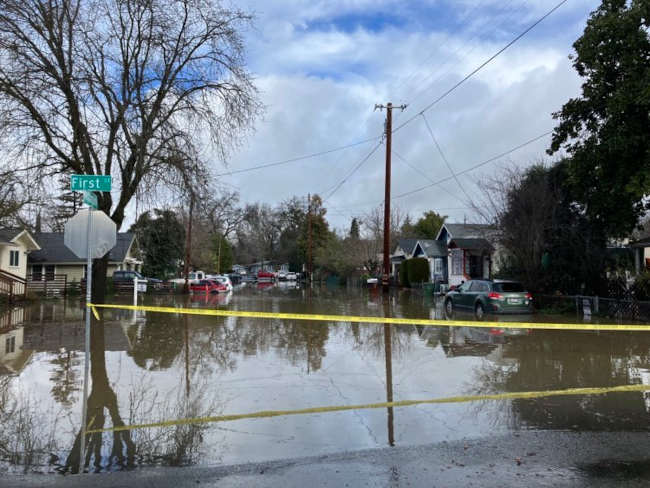
LAKE COUNTY, Calif. — Following the weekend’s heavy rain, flooding was reported by residents of Upper Lake on Monday.
The area around First and Washington streets in Upper Lake was taped off on Monday due to water going over the road.
That location also experienced flooding in 2023.
Flooding also was reported in Scotts Valley on Monday.
In response to questions from Lake County News, Public Works Director Scott De Leon confirmed that the area along Washington Street in Upper Lake experienced flooding from the overnight rainfall, with the worst area being between First and Second streets on the west side of Clover Creek. He said the area on Washington Street south of First Street also had some minor flooding.
De Leon said debris in the original channel of Clover Creek between First and Second streets is contributing to the situation.
“There is a large wood jam consisting of several large trees, limbs and berries, and from what we can see, it appears the flows hit that debris jam and got pushed over the private levees,” he said.
Lake County News received reports that one of the levee's diversion gates has been broken for months and couldn’t be closed to stop the flow.
De Leon acknowledged that one of the gates is damaged, but he said, “the damage prevents the gate from completely opening – not closing – and that gate is closed. The diversion structure actually has 5 culverts, two with gates and the other three have steel plates covering them to reduce flows. Based on our inspection today, the Clover Creek channel downstream of the diversion structure carried the flows, and it was the debris jam that created the problem.”
He said his county road department staff worked with the Northshore Fire Department to place pumps to help drain the area, “which according to staff was effective.”
By the end of the day Monday there was approximately 6 inches of water on Washington near First Street, with the rest of the street clear, De Leon said.
“Water Resources staff will be evaluating the wood jam to see if any of the outside contractors currently in the county performing vegetation management can tackle it,” he said. “This is all private property, so county crews can’t perform the work, but we are trying to utilize whatever resources we have available to help the situation.”
Email Elizabeth Larson at