 How to resolve AdBlock issue?
News
The reserved life estate is an example. You retain the use of the property during the remainder of your lifetime while giving the property away. Let’s examine the life estate.
One may transfer his or her real property (while alive) and keep the right to use, live-in and rent the same property for the rest of one’s lifetime. The gift is completed (irrevocable) when made. And so, like any other lifetime gift, avoids probate at one’s death.
While alive, the life estate owner remains responsible for the property’s upkeep and paying the real property taxes. The grantee who takes subject to the reserved life estate, i.e., the “remainderman,” has a vested legal ownership right.
If the remainderman predeceases the life tenant then that vested ownership remains part of his or her estate, or part of a living trust estate if conveyed by the remainderman into a probate avoidance living trust, and passes to his or her heirs or beneficiaries.
No reassessment of real property taxes occurs during the life tenant’s life. If the remainderman is a surviving child or spouse then the applicable exclusion prevents subsequent reassessment for property taxes.
Nowadays, the life estate has lost much of its usefulness and appeal due to the advantages of the living trust. But, in certain situations the life estate can provide a better solution.
Most importantly, under current law, a person receiving Medi-Cal can transfer his or her home subject to a retained life estate. Doing so will avoid Medi-Cal estate recovery against the transferred home after death, under present law.
When the life estate terminates Medi-Cal cannot recover against the home because ownership was transferred during life; typically to the surviving children.
If one knows, as close to an absolute certainty as is humanly possible, that he or she will continue to live in his or her residence till death; that he or she will not change his or her mind about who should inherit the house; that he or she will not need to tap into an equity line of credit on the house, or a reverse mortgage, to supplement his or her income; and that transferring ownership outright to the intended beneficiaries will not have negative implications for them in the future; then transferring the home subject to a retained life estate may be desirable as a simpler and less costly solution than the living trust.
Unfortunately, such absolute certainty is seldom possible.
Typically, the living trust approach is far superior to the retained life estate because of its flexibility. The trust approach is much more flexible and forgiving because a living trust allows the following major options (not found in the retained life estate approach): selling the home if necessary or desirable (e.g., relocating); using the equity in the residence to live-on; and changing who inherits the house, and under what terms, as family circumstances evolve.
In sum, under existing law, the reserved life estate is sometimes relevant as an important Medi-Cal planning tool, but it is not typically a desirable estate planning tool, given the flexibility of the living trust.
The decision to use any estate planning approach requires careful examination of one’s own particular circumstances and objectives.
This should be done in consultation with a qualified estate planning attorney who can evaluate and advise as to different available options, and who can properly implement any chosen solution.
Dennis A. Fordham, attorney (LL.M. tax studies), is a State Bar Certified Specialist in Estate Planning, Probate and Trust Law. His office is at 55 First St., Lakeport, California. Dennis can be reached by e-mail at
Follow Lake County News on Twitter at http://twitter.com/LakeCoNews , on Facebook at http://www.facebook.com/pages/Lake-County-News/143156775604?ref=mf and on YouTube at http://www.youtube.com/user/LakeCoNews .
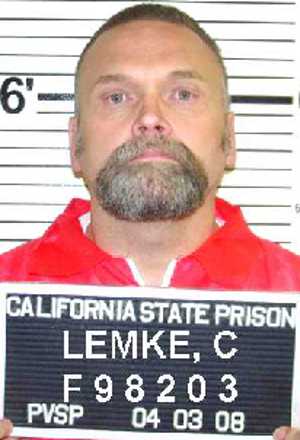
LAKE COUNTY, Calif. – In a first-of-its-kind decision, the Board of Parole Hearings on Wednesday approved the medical parole of a former Lake County man sentenced to 68 years in prison for a third strike case involving the home invasion robbery of an elderly couple.
The Board of Parole Hearings found that 48-year-old Craig Alvin Lemke was not a safety risk due to his “greatly impaired medical condition,” according to California Department of Corrections and Rehabilitation spokesman Luis Patino.
Patino said the board has up to 120 days to review Lemke's case and can change or reverse the decision at any time during that period. However, Patino added that the board plans an expedited review of the decision in light of the medical parole hearing's unique circumstances.
Lake County Chief Deputy District Attorney Richard Hinchcliff, who prosecuted Lemke and traveled to Pleasant Valley State Prison near Coalinga on Wednesday to argue against the medical parole, called the situation “a farce.”
Lemke “has left a path of victims his entire life,” and has never shown anyone any compassion, Hinchcliff said.
Hinchcliff also believes the medical parole statute is unconstitutional, as he said it directly contradicts aspects of the voter-approved “three strikes law,” a constitutional amendment meant to increase prison sentences for offenders convicted of multiple, serious felonies.
Nancy Kincaid, spokesperson for the California Prison Health Care Services, said the medical parole cases currently proposed are estimated to save the state's prison system $10 million in the first year, with the care of some inmates costing as much as $1.5 million a year.
She said she could not disclose the particular's of Lemke's case, nor the amount of money his care costs the state, due to privacy requirements.
Lemke was the second California prison inmate to be considered for medical parole but the first to be granted release under the auspices of SB 1399, authored by state Sen. Mark Leno (D-San Francisco).
The bill, which Leno said is meant to save the state prison system millions of dollars in medical care, was passed last year by the state Legislature and signed in September 2010 by then-Gov. Arnold Schwarzenegger.
Leno's bill provides for the medical parole of prisoners who are “permanently medically incapacitated with a medical condition that renders him or her permanently unable to perform activities of basic daily living, and results in the prisoner requiring 24-hour care.”
It requires prisoner release in such circumstances if the Board of Parole Hearings determines that the conditions under which the prisoner would be released would not “reasonably” pose a threat to public safety.
Prisoners sentenced to life without the possibility of parole or who have received death sentences aren't eligible for medical parole under the bill.
A violent history
Lemke, who has a lengthy criminal record going back to the early 1980s, was sentenced by Judge Stephen Hedstrom to 68 years to life in state prison in November 2007 for the February 2006 home invasion robbery of an elderly Lower Lake couple.
According to case records, on the night of Feb. 12, 2006, Lemke and Joe Moncivaiz Jr. went to the home of the elderly couple, who Lemke knew, and got the 90-year-old man to open the door on the pretext that they had run out of gas and needed to borrow some.
The two men, dressed in dark clothing and skeleton masks, then rushed the elderly male victim and threw him to the floor, tying his hands with electrical tape.
The 71-year-old female heard noises, came out of her bedroom, was grabbed and had her wrists and ankles tied with plastic ties, and was told she would be killed if she made any noise, according to case records.
The two men then proceeded to destroy phone lines and ransack the house, taking $2,000, six rifles and a bag with ammunition, although case records noted they left the rifles at the end of the driveway because it was too much to carry.
At a three-and-a-half-week-long trial, Lemke took the stand and denied being at the crime scene. But his denials didn't convince a jury, who convicted him of two counts of first degree home invasion robbery, first degree burglary, three counts of elder abuse, grand theft of firearms, two on-bail enhancements, two strikes and other enhancements, leading to his 68-year sentence and a minimum eligible parole date of July 1, 2071, Hinchcliff said.
Hinchcliff said that Lemke effectively received a life sentence where he would have died in prison if legislators hadn't enacted the medical parole statute.
Lemke's previous criminal history, stretching back to 1981, included cases involving resisting arrest, possession of a sawed off shotgun, drunk in public and driving under the influence, petty theft, methamphetamine sales, burglary, vehicle theft and violation of parole.
In two separate cases from 1990, he was charged with assaulting his 77-year-old grandmother and stealing checks from her to support his heroin habit, with both cases being dismissed for a plea in another case, according to arrest records.
In April 1994 he was sentenced to seven years in prison for robbery and threatening to dissuade a witness in a case that was his first home invasion robbery.
In that case he and an accomplice held a man and his 15-year-old son at gunpoint, tied them up, ransacked their home and threatened to fire bomb the residence if they called police.
Arguing before the state board
Kincaid said the recommendation for medical parole comes from the state's prison doctors who don't have access to an inmate's criminal records and wouldn't therefore know the issues surrounding an inmate's incarceration unless the inmate volunteers it.
She said there's a “very hard wall” between the medical and the custodial sides for a reason. “The medical professionals, you want them focused on delivering medicine,” and not being influenced by concerns about the inmates' records, Kincaid explained.
While the prison doctors make the recommendation based on medical condition, the Department of Corrections and Rehabilitation and Board of Parole Hearings must conduct the safety evaluation, Kincaid said.
Due to federal medical privacy rules and the fact that Lemke hadn't signed a waiver to disclose his medical condition, Hinchcliff said he wasn't given any information by prison officials about Lemke's health issues in order to prepare for the Wednesday hearing.
However, when Hinchcliff arrived to argue against the release on Wednesday, Lemke had signed a waiver which disclosed that, since June 11, 2010, he has been in a hospital outside of the prison, suffering from a variety of health issues that have left him incapacitated and requiring 24-hour care.
During the time Lemke has been hospitalized, two prison guards have been stationed to watch him, at an annual cost of $750,000, said Hinchcliff, who argued before the board that if Lemke was indeed so medically incapacitated he shouldn't have required round-the-clock guards.
Hinchcliff said he understood that the requirement for a minimum of two guards was written into the state prison guards' latest contract with the Gov. Brown. He said the state could have cut costs by eliminating that requirement, but suggested the state won't stand up to the power prison guard union.
Hinchcliff said the hearing lasted two and a half hours, and included him, two Board of Parole Hearings commissioner's and Lemke's attorney.
He said the hearing lasted longer than expected because the commissioners spent a considerable amount of time on the phone with Board of Parole Hearings legal counsel “due to the uniqueness of the hearing and the fact they were wading into new legal waters.”
Hinchcliff gave the commissioners a letter from the daughter of the male robbery victim from February 2006, asking that parole be denied.
“I also argued there were other ways to solve the financial issue that is at the heart of the medical parole statute, without going through the legal formality of granting parole,” Hinchcliff said. “However, there was little that could be done because the release is mandatory under the statute where the inmate meets the designated criteria for release.”
Prison doctors reported that Lemke's prognosis is poor but he could live several more years, said Hinchcliff.
Hinchcliff said Lemke won't come back to Lake County, but is being paroled to the bed where he has been for a year.
“The terms are, if he ever gets better, he goes back into prison,” said Hinchcliff.
Officials can't divulge Lemke's whereabouts because of privacy law. Speaking generally due to privacy requirements, Kincaid said, “Any inmate who is on medical parole, who is in an outside facility, would likely stay in that outside facility.”
She said it depends on the individual, but in some cases, inmates can even be released to family members if it's deemed appropriate.
Hinchcliff disputed the idea that releasing Lemke from prison actually saves taxpayers money, pointing out that now federal Medicare funds, rather than simply state resources, also will be tapped to cover Lemke's care.
“They're not saving the taxpayers a dime because we're just paying out of our left pocket instead of our right pocket,” he said.
Contradicting the three strikes law
Hinchcliff said that the three strikes law sets down requirements that Leno's bill contradicts.
The three strikes law “specifically says that the person has to be sent to prison. There is no alternative,” including county jails, work camps or other facilities, he said.
Leno's bill, which wasn't approved by a two-thirds majority vote of the Legislature and wasn't a voter initiative, is changing that, Hinchcliff said.
The three strikes law also is meant to result in “terms proportionate to the seriousness of the offense with provisions for uniformity of sentences.”
According to Hinchcliff, releasing an inmate 64 years early while others have to serve their full term does not result in uniformity of sentences but rather a term that is extremely disproportionate to the seriousness of the offense, and emasculates the legislatively established purpose of imprisonment, which is punishment.
On Thursday, a day after granting Lemke medical parole, the Board of Parole Hearings held a third medical parole hearing at North Kern State Prison, granting release to inmate Juan Garcia Sandoval, who did not sign a waiver on his condition, requiring the board to discuss his health issues in private, according to a statement issued by Patino.
Patino reported that Sandoval was in prison on a first-degree murder conviction, and had been sentenced to a 27-year term.
E-mail Elizabeth Larson at
SACRAMENTO – California Attorney General Kamala Harris on Thursday announced the results of a statewide sweep in which 1,209 firearms were seized from individuals legally barred from possessing them, including persons determined to be mentally unstable and those with active restraining orders.
The six-week sweep garnered three times as many firearms as were seized in 2007 when the last statewide sweep was conducted.
Harris made the announcement at the third in a series of region-by-region zone meetings for members of the law enforcement community.
“Seizing guns from felons, gang members and other prohibited persons is the kind of smart, proactive law enforcement that makes a difference in the everyday lives of Californians,” said Harris. “We are all safer thanks to the sworn officers who carried out this sweep and I am committed to strengthening this program.”
In the recently concluded sweep – the second statewide APPS effort – 99 agents from the Department of Justice seized 1,209 firearms from individuals prohibited from owning or possessing firearms. Agents also seized 155,731 rounds of ammunition and two grenades.
To clear the APPS backlog of approximately 34,000 handguns, Harris is the sponsor of Senate Bill 819, which would revise the penal code to expand the use of existing regulatory fees collected by gun dealers to allow the state Department of Justice to use fee revenue to pay for the APPS program.
The bill would also allow the DOJ to seek to hire new agents, and offer training to local law enforcement agencies in support of the APPS program.
“SB 819 addresses a troubling blind spot in our current enforcement of existing firearms laws,” said Sen. Mark Leno, D-San Francisco, author of SB 819.
“Innocent lives have already been lost because we allow guns to be in the hands of known criminals, gang members and people who have serious mental illnesses,” Leno said. “Increased confiscation of these unlawfully-possessed firearms will help prevent future crimes and result in cost savings to the state due to avoided prosecution and incarceration.”
As part of Thursday's meeting, the assembled police officers and sheriffs received an overview on the APPS program and the ways in which local agencies can assist to keep firearms out of the hands of those prohibited from possessing them.
Experts from the Department of Justice also briefed the law enforcement leaders on the attorney general's new Mortgage Fraud Strike Force and, with experts from the California Department of Corrections, provided local law enforcement with the latest intelligence detailing how transnational gangs have integrated their operations across California communities and from inside our prisons.
Sacramento County Sheriff Scott Jones hosted Thursday's meeting.
“In today's economic reality, it is more important than ever to work together to find new solutions to common problems,” said Sheriff Jones. “We need to share ideas, manpower, intelligence and energy to continue to make headway in the fight against crime.”
The Zone IV meeting was attended by law enforcement from Alpine, Amador, Calaveras, El Dorado, Nevada, Placer, Sacramento, San Joaquin, Stanislaus, Tuolumne and Yolo counties.
Harris also presented awards to nine individuals in recognition of their deep commitment to serving and protecting their communities. The sworn officers who received the Attorney General Awards demonstrated uncommon bravery and ingenuity.
The zone meetings – and the renewed focus on the APPS program – are part of a series of targeted law enforcement programs designed to reduce the reach of transnational gangs trafficking in guns, drugs and human beings across California.
Thursday's meeting follows closely on the heels of a series of major gang takedowns, including the arrests of 101 individuals in the Central Valley.
Follow Lake County News on Twitter at http://twitter.com/LakeCoNews, on Tumblr at www.lakeconews.tumblr.com, on Facebook at http://www.facebook.com/pages/Lake-County-News/143156775604?ref=mf and on YouTube at http://www.youtube.com/user/LakeCoNews .
Samuel Douglas Murphy, 26, of Cobb, was the victim of the crash, according to Capt. James Bauman of the Lake County Sheriff's Office, which handled the coroner's case.
According to a California Highway Patrol report, the crash occurred just after 7:30 p.m. Tuesday, June 14.
Murphy was riding a Yamaha ATV alone and without a helmet, traveling northbound on Gifford Springs Road south of Tanya Terrace, at an undetermined high rate of speed, the CHP reported.
He was traveling uphill and drove straight through a right curve in the road. The CHP said Murphy went off the roadway and collided with a cluster of trees along the east shoulder.
Murphy sustained fatal injuries as a result of the collision and was pronounced dead at the scene, the CHP said.
The CHP report said alcohol is believed to have been a factor in the collision.
Officer Adam Garcia is investigating the incident.
Follow Lake County News on Twitter at http://twitter.com/LakeCoNews , on Facebook at http://www.facebook.com/pages/Lake-County-News/143156775604?ref=mf , on Tumblr at http://lakeconews.tumblr.com/ and on YouTube at http://www.youtube.com/user/LakeCoNews .
It may be broad daylight in Lake County, but you can see live action of a lunar eclipse online now. The final hour begins at 2 p.m. Pacific Time.
Education
Health
Business
Obituaries
Veterans
Recreation
Religion
Arts & Life
Government & Politics