 How to resolve AdBlock issue?
News
The doublewide mobile home with added on structures, located on Carson Way, was fully involved by the time Northshore Fire Protection District firefighters arrived on scene at about 3:30 a.m. Monday, according to Deputy Chief Pat Brown.
Brown said Northshore Fire responded with three engines, one water tender and two chiefs.
The fire was knocked down within about 45 minutes, with all units clearing the scene following mop up at 7:30 a.m., he said.
At that point, the scene was handed over to Lake County Code Enforcement officers, Brown said, adding the structure was a total loss.
Brown said the mobile home had been vacant and a trouble spot for some time. There was no power or water to the home, he added.
The cause is under investigation, he said.
He estimated the total loss at $80,000.
E-mail Elizabeth Larson at
The teen, whose name was not released due to his age, was arrested for attempted murder and booked into the Mendocino County Juvenile Hall, with bail set at $250,000, according to Capt. Kurt Smallcomb of the Mendocino County Sheriff's Office.
On Sunday, June 19, at 6:30 p.m. Mendocino County Sheriff's Office deputies were contacted at the Ukiah office by a 44-year-old woman who advised them that her teenage son attempted to kill her. She brought the teen with her to the sheriff's office lobby, Smallcomb said.
During the interview with the woman, deputies learned that she had discovered her son had been acting out lately, and had stolen from her, created a fake Web account on an adult Web site and taken her vehicle without permission, Smallcomb said.
He said the victim stated she started to discipline the teen by taking away certain privileges, such as not allowing him computer use or playing sports at school.
The woman told deputies that at 7 a.m. Sunday she awoke, made a cup of coffee and spoke with friends on the phone, according to Smallcomb's report.
Smallcomb said she reported leaving her coffee on the counter for a short time before returning to drink it. The victim stated when she took a sip of the coffee she immediately knew someone had put something caustic in it because of the chemical taste it had.
The woman confronted her son but he denied any knowledge on putting anything in it. Smallcomb said the woman reported discovering open bottle of Drano nearby and determined that's what was put in her coffee.
The victim contacted the poison control center and then went to Ukiah Valley Medical Center where Smallcomb said she was treated for her injuries and released.
Later in the day, the 15-year-old male admitted pouring Drano into his mother's coffee cup because he was angry with her for taking away his sports and computer activities. Smallcomb said the male juvenile suspect stated he would either kill himself or his mother if he had the chance again.
The juvenile suspect was arrested without incident, transported and booked into the Mendocino County Juvenile Hall.
Follow Lake County News on Twitter at http://twitter.com/LakeCoNews, on Tumblr at www.lakeconews.tumblr.com, on Facebook at http://www.facebook.com/pages/Lake-County-News/143156775604?ref=mf and on YouTube at http://www.youtube.com/user/LakeCoNews .

ATLANTA – A steady reduction in overall cancer death rates translates to the avoidance of about 898,000 deaths from cancer between 1990 and 2007, according to the latest statistics from the American Cancer Society.
“The nearly 900,000 cancer deaths avoided over a 17-year period stand in stark contrast to the repeated claim that cancer death rates have not budged,” said John R. Seffrin, Ph.D., chief executive officer of the American Cancer Society and its advocacy affiliate, the American Cancer Society Cancer Action Network (ACS CAN). “Nonetheless, we refuse to be satisfied, and are committed to doing whatever it takes, not only to ensure cancer death rates continue to drop, but to accelerate the decline.”
However, the report, “Cancer Statistics 2011,” and its companion consumer publication “Cancer Facts & Figures 2011” find that progress has not benefited all segments of the population equally.
A special section of the report finds cancer death rates for individuals with the least education are more than twice those of the most educated and that closing that gap could have prevented 37 percent – or 60,370 – of the premature cancer deaths that occurred in 2007 in people ages 25-64 years.
Each year, the American Cancer Society estimates the numbers of new cancer cases and deaths expected in the United States in the current year and compiles the most recent data on cancer incidence, mortality, and survival based on incidence data from the National Cancer Institute, Centers for Disease Control and Prevention, and the North American Association of Central Cancer Registries, and mortality data from the National Center for Health Statistics.
A total of 1,596,670 new cancer cases and 571,950 deaths from cancer are projected to occur in the U.S. In 2011.
Overall cancer incidence rates were stable in men in the most recent time period after decreasing by 1.9 percent per year from 2001 to 2005; in women, incidence rates have been declining by 0.6 percent annually since 1998.
Overall cancer death rates, which have been dropping since the early 1990s, continued to decrease in all racial/ethnic groups in both men and women since 1998 with the exception of American Indian/Alaska Native women, among whom rates were stable.
African American and Hispanic men showed the largest annual decreases in cancer death rates during this time period, 2.6 percent and 2.5 percent, respectively. Lung cancer death rates showed a significant decline in women after continuously increasing since the 1930s.
Other highlights of the report include:
– Among men, cancers of the prostate, lung and bronchus, and colorectum account for more than half (about 52%) of all newly diagnosed cancers. Prostate cancer alone accounts for 29 percent (240,890) of incident cases.
– The three most commonly diagnosed types of cancer among women in 2011 are breast, lung and bronchus, and colorectum, accounting for about 53 percent of estimated cancer cases in women. Breast cancer alone is expected to account for 30 percent (230,480) of all new cancer cases among women.
– The lifetime probability of being diagnosed with an invasive cancer is higher for men than women.
– It is estimated that about 571,950 Americans will die from cancer.
– Cancers of the lung and bronchus, prostate, and colorectum in men, and cancers of the lung and bronchus, breast, and colorectum in women continue to be the most common causes of cancer death.
– Lung cancer is expected to account for 26% of all cancer deaths among women.
– The lung cancer mortality rate in women has finally begun to decline, more than a decade later than the decline began in men. The lag in lung cancer trends in women compared with men reflects a later uptake of cigarette smoking in women, among whom smoking peaked about 20 years later than in men.
– Recent rapid declines in colorectal cancer incidence rates largely reflect increases in screening that can detect and remove precancerous growths.
– The overall cancer death rate decreased by 1.9 percent per year from 2001-2007 in males and by 1.5 percent in females from 2002-2007, greater declines than those seen in the 1990s.
– Between 1990-91 and 2007, cancer death rates decreased by 22.2 percent in men and by 13.9 percent in women.
– Mortality rates have continued to decrease for colorectum, female breast and prostate cancer.
– Among men, the reduction in death rates for lung, prostate and colorectal cancers account for nearly 80 percent of the total decrease in the cancer death rate, while among women, a reduction in death rates for breast and colorectal cancers account for almost 60 percent of the decrease.
The reports feature a special section on the impact of eliminating disparities on cancer deaths. Level of education is often used as a marker of socioeconomic status.
In 2007, cancer death rates in the least educated segment of the population were 2.6 times higher than those in the most educated. This disparity was largest for lung cancer, for which the death rate was five times higher in the least educated than for the most educated.
Differences in lung cancer death rates reflect the striking gradient in smoking prevalence by level of education; 31 percent of men with 12 or fewer years of education are current smokers, compared to 12 percent of college graduates and 5 percent of men with graduate degrees.
The special section also estimated the numbers of potential premature cancer deaths that could be avoided in the absence of socioeconomic and/or racial disparities.
If all adults ages 25 to 64 in the United States in 2007 had the cancer death rate of the most educated non-Hispanic whites, 37 percent – or 60,370 out of 164,190 – premature cancer deaths could potentially have been avoided.
For African Americans, closing the gap between death rates among the most and least educated could potentially avert twice as many premature cancer deaths as eliminating racial disparities between blacks and whites, underscoring the preponderance of poverty in cancer disparities across all segments of the population.
The annual reports have become critical tools for scientists, public health experts, and policymakers in assessing the current burden of cancer. These estimates are some of the most widely quoted cancer statistics in the world.
The Society’s leading team of epidemiologic researchers, in collaboration with scientists from the National Cancer Institute, compiles and analyzes incidence and mortality data to estimate the number of new cancer cases and deaths for the current year nationwide and in individual states.
The expected numbers of new cancer cases and cancer deaths should be interpreted with caution because these estimates are based on statistical models and may vary considerably from year to year, the American Cancer Society said.
Not all changes in cancer trends can be captured by modeling techniques and sometimes the model may be too sensitive to recent trends, resulting in over- or under-estimates.
For these reasons, the estimates should not be compared from year-to-year to determine trends; age-standardized cancer incidence and death rates are the best way to monitor changes in cancer occurrence and death.
Despite these limitations, the American Cancer Society’s estimates of the number of new cancer cases and deaths in the current year provide reasonably accurate estimates of the burden of new cancer cases and deaths in the United States.
Such estimates will assist in continuing efforts to reduce the public health burden of cancer, the group said.
Follow Lake County News on Twitter at http://twitter.com/LakeCoNews, on Tumblr at www.lakeconews.tumblr.com, on Facebook at http://www.facebook.com/pages/Lake-County-News/143156775604?ref=mf and on YouTube at http://www.youtube.com/user/LakeCoNews .
Interim Clearlake Police Chief Craig Clausen said in an early Sunday morning statement that his officers were dispatched to a “shots fired” call in the 14000 block of Lakeshore Drive at about 10:50 p.m. Saturday. Radio reports indicated the closest cross street to the shooting site was Kabal Street.
Clausen said when officers arrived at the scene they discovered several victims with apparent gunshot wounds.
One of the victims later died, according to Clausen, while three others were flown to out-of-county hospitals for treatment of their injuries.
A family member posted on Lake County News' Facebook page that the shooting victim who died was a 4-year-old child, with his mother, father and another relative also wounded.
Radio reports had indicated that at least one suspect in the shooting had been detained near the scene shortly afterward.
The suspects, based on Facebook posts by family and friends of the victims, were said to be a group of young Clearlake men with Norteno gang affiliations.
However, Clausen did not release the names of the victims or the alleged suspects early Sunday, noting that more information would be released as soon as police were able to do so.
There also has been reports posted on the Lake County News Facebook page that police officers had possibly been hurt in the incident, but Sgt. Tom Clements told Lake County News early Sunday that no officers had been injured.
During the night Clearlake Police Department officers secured multiple scenes in preparation of issuance of search warrants, and were assisted in the investigation by the Lake County District Attorney’s Investigation Unit, Clausen said.
The Clearlake Police Department also received assistance from other agencies around the county as the night unfolded.
The California Highway Patrol sent officers to the area, and sheriff's deputies were called in to help back up the police in responding to other calls, based on radio traffic.
Likewise, Lake County Fire Protection District, based in Clearlake, was assisted by medic units from Northshore Fire, Kelseyville Fire and Cal Fire's South Lake County units in responding to transport victims from the scene to St. Helena Hospital Clearlake as well as to a helicopter landing zone at Ray's Food Place on Dam Road.
For several hours following the shootings REACH and Cal Star helicopters came and went from the city in order to transport the victims to hospitals around the region, including Santa Rosa Memorial and UC Davis Medical Center.
Police are asking anyone with information about the case to contact Sgt. Clements at 707-994-8251. Callers may remain anonymous.
E-mail Elizabeth Larson at
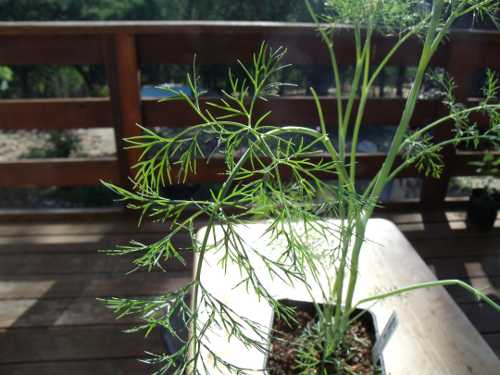
A backyard herb garden is slowly taking shape at my home.
Throughout the last month, a variety of fragrant starts have found their way into terra cotta dwellings on my deck or patio. Little by little, the garden – such as it is – is growing, both in height and breadth.
Its latest addition is a healthy little dill plant, though “little” is a relative term. Compared to the young starts of other herbs such as basil, mint or thyme, it’s fairly tall, with feathery-leaved arms waving in the breeze, looking loftily down on its shorter herbal brethren.
Some dill plants grow to an impressive height of more than five feet; however, three feet or so is a more typical size. Dill attracts bees to the garden and is often used as a magnet for beneficial insects in companion plantings with vegetables.
Dill, hearty and resilient, is known for reseeding and spreading throughout a garden.
Dill flowers are umbels, meaning many stalks emanate from a common stem, each with a flower at its tip. Together they form a large, round, flat-topped yellow bloom about six inches across.
Dill’s feathery foliage may be harvested beginning in spring and throughout the summer. The blooming season for dill is generally from July through September, and seeds are harvested when the flowers mature.
With both the foliage and seeds used in cuisine, dill leaves are sometimes called “dill weed” to differentiate it from the seeds of the plant.
Dill is native to southern Russia, western Asian (India, for example) and the Mediterranean region of southern Europe and North Africa. It’s popular as a seasoning in the cuisines of these regions, in addition to northern and central Europe (think Scandinavia and Germany), the Middle East (particularly Iran) and Southeast Asia (specifically Laos, though parts of northern Thailand and areas of Vietnam utilize it).
In Southeast Asia, dill is known in English as Laotian coriander, and is typically used with seafood in that country, such as with fish steamed in banana leaves or in seafood curries.
Similarly, in Scandinavia, dill is used to flavor gravlax, a cured salmon dish. Dill, along with salt, sugar and coarse black pepper, coat the fish as it’s curing, a process that’s done over a few days in the fridge while the salmon is wrapped and weighted. Thin slices of gravlax make a slightly sweet and salty appetizer, often paired with hearty rye bread, mustard and cucumber.
Dill, both the leaves and seeds, are used as pickling spices. Dill pickles made from cucumbers preserved in brine and dill are enjoyed throughout Europe and North America; however, dill is also used as a pickling spice in Arabic countries, where the term for dill translates as “cricket eye.”
The root of the English word for dill is not quite as colorful, though it has a practical meaning. It comes from the Norse word “dilla,” which means “to lull,” appropriate because of its calming effect on the muscles, particularly those of the digestive tract. It’s been used for centuries in teas and other remedies as a curative for digestive problems.
In India, dill is used in “mukhwas,” an after-meal digestive aid, and in medieval Europe, Charlemagne is said to have made dill seeds available on his banquet tables as a carminative (an anti-flatulence agent) for his guests. Gripe water, a remedy for colicky babies, has dill seed as an ingredient.
The ancient Greeks considered dill a sign of wealth, even burning the oil to display status.
Hippocrates, a physician in that society, recommended dill for cleaning the mouth. His recipe reads more like an after dinner drink than a cleanser, however: “Clean teeth with a ball of wool dipped in honey and rinse with 1 teaspoon of dill seed boiled in 1/2 cup of white wine.”
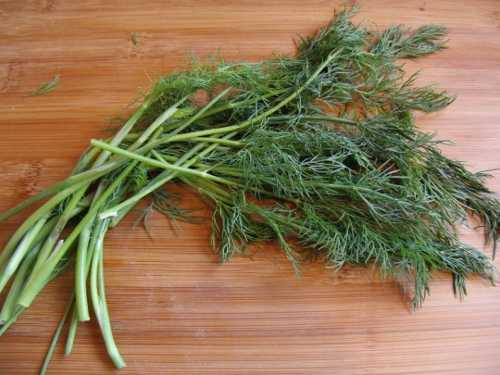
Whenever possible, use fresh dill leaves, rather than dried, as the flavor and fragrance of the fresh, feathery fronds are superior. Because the flavor of fresh dill breaks down in cooking, add it at the last minute. It is recommended that dill be snipped with scissors, rather than chopped with a knife, to preserve its delicate flavor.
Fresh dill should be stored in the fridge, either with its stems placed in water or wrapped in a damp paper towel. Dill can be frozen, either whole or chopped, in an airtight container. Some people keep whole dill fronds in zipper locked bags in the freezer, pulling them out to snip off just enough dill for a recipe and then returning them to the freezer.
Dried dill seeds will stay fresh for about six months if kept in an airtight container (preferably glass) in a cool, dry, dark place.
Both the seeds and leaves contain calcium, iron and manganese; in fact, a tablespoon of dill seeds contains as much calcium as one-third of a cup of milk. Dill is considered a good source of fiber.
Dill has anti-bacterial properties due to the volatile oil present in the plant. As well, the activity of its volatile oils qualify it as a “chemoprotective” food (much like parsley) that can help neutralize particular types of carcinogens, such as smoke from charcoal grills, cigarettes and the like.
In addition to pickling, dill seeds are used to flavor breads, like the caraway seeds to which they’re often compared. The seeds have a stronger flavor than the leaves.
Fresh dill leaves make a wonderful sauce for fish or asparagus when combined with mayonnaise, yogurt or sour cream and flavored with fresh lemon juice.
Dill is a main flavor component of beet borscht, Russia’s signature soup and a favorite in Eastern European countries. I especially love borscht served hot with a dollop of thick Greek yogurt or sour cream and freshly-snipped dill.
Fresh dill adds brightness to scrambled eggs, omelets, egg salads and stuffed eggs. I like using it in sandwiches, such as with tuna or fresh garden tomatoes.
Cucumbers and dill are made for each other, as are dill and tomatoes. When these companionable vegetables are pulled from summer gardens, make a salad, simply dressed with olive oil, a splash of red wine vinegar and fresh dill.
Combining cucumber, yogurt and fresh dill makes for a cooling summer salad. When the cucumber is diced finely, an Indian- or Greek-inspired dip or sauce is created.
You may be wondering why I didn’t mention dill and potatoes, another classic combo, especially in cold potato salads. Perhaps you could say I saved the best for last.
I made a red potato salad with dill this evening for dinner, and I made note of the proportions of each component so I could fashion it into a recipe for you. My version of this classic salad, simple yet tasty, is below. Enjoy!
Dilled red potato salad
2 pounds or more small red potatoes
3-4 scallions, white and green parts thinly sliced
Approximately ¼ cup snipped fresh dill (or less to taste)
½ cup sour cream
½ cup mayonnaise
1 tablespoon white wine vinegar
Salt and pepper to taste
Wash potatoes and remove eyes. (Do not peel.) Cut them into bite sized pieces and cook until just tender in salted, boiling water. Drain and plunge into ice water bath to stop cooking process.
Combine sour cream, mayonnaise, vinegar, dill and scallions and blend well. Adjust seasonings, adding salt and pepper to taste.
Drain potatoes and put in a serving bowl. Pour sour cream dressing over them, gently folding potatoes into dressing to coat all pieces well.
Makes six to eight servings.
Recipe by Esther Oertel.
Esther Oertel, the “Veggie Girl,” is a culinary coach and educator and is passionate about local produce. Oertel teaches culinary classes at Chic Le Chef in Hidden Valley Lake, Calif., and The Kitchen Gallery in Lakeport, Calif., and gives private cooking lessons. She welcomes your questions and comments; e-mail her at
Follow Lake County News on Twitter at http://twitter.com/LakeCoNews , on Facebook at http://www.facebook.com/pages/Lake-County-News/143156775604?ref=mf , on Tumblr at http://lakeconews.tumblr.com/ and on YouTube at http://www.youtube.com/user/LakeCoNews .

Education
Health
Business
Obituaries
Veterans
Recreation
Religion
Arts & Life
Government & Politics