How to resolve AdBlock issue?
Refresh this page
How to resolve AdBlock issue?
Refresh this page
Lake County News,California
  • Home
    • Registration Form
  • News
    • Education
    • Veterans
    • Community
      • Obituaries
      • Letters
      • Commentary
    • Police Logs
    • Business
    • Recreation
    • Health
    • Religion
    • Legals
    • Arts & Life
    • Regional
  • Calendar
  • Contact us
    • FAQs
    • Phones, E-Mail
    • Subscribe
  • Advertise Here
  • Login

News

State unemployment up slightly in August; Lake County rate remains flat

LAKE COUNTY, Calif. — California’s jobless rate edged up slightly in August, while Lake County’s rate remained flat.

The California Employment Development Department, or EDD, said the state’s employers added 6,800 nonfarm payroll jobs in August while the unemployment rate moved to 5.3% after three consecutive months at 5.2%.

In Lake County, unemployment in August remained at 6.1% for the second month in a row, according to the report. Lake County’s jobless rate was 5.7% in June and 5.6% in August 2023.

On the national level, the Bureau of Labor Statistics reported that the unemployment dropped slightly in August, coming in at 4.2%, compared to 4.3% in July. The August 2023 nationwide jobless rate was 3.8%.

Total nonfarm jobs in California’s 11 major industries amounted to 18,091,000 in August, which the EDD said was a net gain of 6,800 from July. This followed an upward revised (+8,800) month-over gain of 29,900 jobs in July.

The report said total nonfarm jobs increased by 287,100 (a 1.6% increase) from August 2023 to August 2024 — which averages out to 23,925 jobs gained per month in that one-year period — compared to the U.S. annual gain of 2,358,000 jobs (a 1.5% increase).

On the state and local levels, the EDD reported the following numbers.

Employed: The number of Californians employed in August was 18,362,700, an increase of 8,700 persons from July’s total of 18,354,000, but down 27,800 from the employment total in August 2023. In Lake County, 27,160 were employed in August, compared to 26,690 in July and 27,420 in August 2023.

Unemployed: The number of unemployed Californians was 1,020,000 in August, an increase of 11,300 over the month and up 83,900 in comparison to August 2023. In Lake County, those who were unemployed totaled 1,760, compared to 1,730 in July and 1,620 the previous August.

Total farm jobs: The number of jobs in California’s agriculture industry decreased from July by 1,100 to a total of 416,500 jobs in August. The agriculture industry had 8,900 more farm jobs in August 2024 than it did in August of last year. In Lake County, farm jobs in August 2024 totaled 980, the same number as the previous August; farm jobs totaled 1,000 in July.

Five of California's 11 industry sectors gained jobs in August: Those industries were leisure and hospitality (+6,800), private education and health services (+4,900), other services (+3,900), professional and business services (+3,800); and trade, transportation and utilities (+2,900). For comparison, in Lake County, job sectors with growth were government, 350 jobs; durable goods, 10 jobs; and private education and health services, 10 jobs.

Sectors with job losses: On the state level, the information sector (-5,100) posted the largest job loss, partly due to losses in the motion picture and video production industry as it restructures after last year’s strike. Other sectors showing losses statewide were manufacturing (-4,700); construction (-3,300), government (-2,200) and mining and logging (-100). For Lake County, job losses came in total farm (-20); trade, transportation and utilities (-20); total private (-10); private service providing (-10); and professional and business services (-10).

In August, Lake County’s jobless rate ranked it No. 37 out of California’s 58 counties.

Lake’s neighboring county jobless rates and ranks were: Colusa, 9.2%, No. 56; Glenn, 6.8%, No. 45; Mendocino, 5.2%, No. 19; Napa, 4.3%, No. 6; Sonoma, 4.5%, No. 8; and Yolo, 5.4%, No. 25.

In related data that the EDD said figures into the state’s unemployment rate, there were 382,640 people certifying for Unemployment Insurance benefits during the August 2024 sample week. That compares to 400,294 people in July and 394,757 people in August 2023.

Concurrently, 39,023 initial claims were processed in the August 2024 sample week, which was a month-over decrease of 2,903 claims from July, but a year-over increase of 1,049 claims from August 2023, the EDD reported.

Email Elizabeth Larson at This email address is being protected from spambots. You need JavaScript enabled to view it.. Follow her on Twitter, @ERLarson, or Lake County News, @LakeCoNews.

Supervisors to consider final 2024-25 fiscal year budget, Spring Valley rate increase

LAKE COUNTY, Calif. — The Board of Supervisors is set to consider approval of the final budget for the 2024-25 fiscal year and consider a water rate hike for Spring Valley residents.

The‌ ‌board will meet beginning ‌at‌ ‌9‌ ‌a.m. Tuesday, Sept. 24, in the board chambers on the first floor of the Lake County Courthouse, 255 N. Forbes St., Lakeport.

The‌ ‌meeting‌ ‌can‌ ‌be‌ ‌watched‌ ‌live‌ ‌on‌ ‌Channel‌ ‌8, ‌online‌ ‌at‌ ‌https://countyoflake.legistar.com/Calendar.aspx‌‌ and‌ ‌on‌ ‌the‌ ‌county’s‌ ‌Facebook‌ ‌page. ‌Accompanying‌ ‌board‌ ‌documents, ‌the‌ ‌agenda‌ ‌and‌ ‌archived‌ ‌board‌ ‌meeting‌ ‌videos‌ ‌also‌ ‌are‌ ‌available‌ ‌at‌ ‌that‌ ‌link. ‌ ‌

To‌ ‌participate‌ ‌in‌ ‌real-time, ‌join‌ ‌the‌ ‌Zoom‌ ‌meeting‌ ‌by‌ ‌clicking‌ ‌this‌ ‌link‌. ‌ ‌

The‌ ‌meeting‌ ‌ID‌ ‌is‌ 865 3354 4962, ‌pass code 726865.‌ ‌The meeting also can be accessed via one tap mobile at +16694449171,,86533544962#,,,,*726865#. The meeting can also be accessed via phone at 669 900 6833.

At 10:30 a.m., the supervisors will hold a public hearing to consider the final recommended budget for fiscal year 2024-25 for the county of Lake and special districts governed by the Board of Supervisors.

The county’s proposed appropriations for the coming fiscal year total $407,134,710.

Also on Tuesday, at 2 p.m., the board will hold another public hearing — continued from Sept. 10 — to consider raising water rates for County Service Area No. 2 – Spring Valley Lakes.

The full agenda follows.

CONSENT AGENDA

5.1: Adopt proclamation declaring September 27, 2024, as Native American Day in Lake County.

5.2: Approve continuation of emergency proclamation declaring a shelter crisis in the county of Lake.

5.3: Approve continuation of proclamation of the existence of a local emergency due to pervasive tree mortality.

5.4: Approve continuation of proclamation declaring a Clear Lake hitch emergency.

5.5: Approve continuation of local emergency by the Lake County Sheriff/OES director for the 2024 late January, early February winter storms.

5.6: Approve continuation of proclamation of a local health emergency by the Lake County Health officer for the Boyles Fire.

5.7: Approve continuation of a local emergency by the Lake County Sheriff/OES director for the 2024 Boyles Fire.

5.8: Approve Amendment No. 2 to the agreement between the county of Lake and Crisis Support Services of Alameda County for after-hours crisis support services in the amount of $90,201.12 for fiscal year 2023-24, and authorize the chair to sign.

5.9: Approve the Community Development Department to apply for the U.S. Department of Housing and Urban Development PRO Housing Grant, and authorize the deputy community development administrator to sign.

5.10: Approve advanced salary step appointment of Cheryl Bennett to registered environmental health specialist senior, and approve advanced salary step appointment for environmental health specialist senior for Marc Benchimol.

5.11: Approve the agreement with the city of Clearlake for a road maintenance program for 40th Avenue, Davis Avenue, and Moss Avenue for fiscal year 2024-25 through fiscal year 2028-29, and authorize the chair to sign.

TIMED ITEMS

6.2, 9:03 a.m.: Pet of the Week.

6.3, 9:05 a.m.: Presentation of proclamation declaring Sept. 27, 2024, as Native American Day in Lake County.

6.4, 9:10 a.m.: Presentation of the Semi-Annual Employee Service Awards for the County of Lake to recognize years of service.

6.5, 9:45 a.m.: Hearing, consideration of excess proceeds claim TDLS 160 – APN 039-465-540.

6.6, 10:15 a.m.: Consideration of an update on approved projects and proposed modifications to American Rescue Plan Act (ARPA)/State and Local Fiscal Recovery Funds (SLFRF) funding allocations.

6.7, 10:30 a.m.: Public hearing, consideration of the final recommended budget for fiscal year 2024-25 for the county of Lake and special districts governed by the Board of Supervisors.

6.8, 1 p.m.: Consideration of a resolution amending the master fee schedule for services rendered by county departments.

6.9, 1:45 p.m.: Sitting as the Board of Directors, Lake County Watershed Protection District, consideration of reallocation of District 4 discretionary cannabis tax funds for advance planning in the Scotts Valley and Highland Springs watersheds.

6.10, 2 p.m.: Continued from Sept. 10, public hearing, consideration of an ordinance amending Section 1.1.A of Ordinance No. 2945 increasing the charges and fees for County Service Area No. 2 – Spring Valley Lakes.

6.11, 2:30 p.m.: Consideration of memorandum of understanding between the county of Lake and Lake County Community Foundation to streamline the process of receiving and administering disaster funds.

UNTIMED ITEMS

7.2: Consideration of the agreement between the County of Lake and the Lake County Office of Education for the Safe Schools Healthy Students Program for school-based specialty mental health services in the amount of $500,000 for fiscal year 2024-25.

7.3: Consideration of the agreement between the County of Lake and Drug Medi-Cal service provider Redwood Community Services Inc. for ASAM Level 1.0, 2.1, and 3.1 services in the amount of $1,000,000 for fiscal years 2024-2027.

7.4: Sitting as the Board of Directors, Lake County Watershed Protection District, Consideration of three joint funding agreements with the U.S. Geological Survey, U.S. Department of the Interior for stream monitoring in Kelsey, Clover and Scotts Creek, for a total amount not to exceed $138,170, and authorize the water resources director to sign.

7.5: Consideration of Change Order No. 3, Middletown Multi-Use Path Improvements Project, State Project No. ATPL-5914(102), Bid No. 22-05, in the amount of $247,258.81 for a total contract amount of $1,408,959.29, and authorize the chair to sign.

CLOSED SESSION

8.1: Closed session, conference with labor negotiator: (a) County negotiators: S. Carter, P. Samac, and D. Gearhart; (b) Employee organizations: LCEA and management employees.

8.2: Closed session, sitting as the Lake County Air Quality Management District Board of Directors – Conference with labor negotiator: (a) County negotiators: S. Carter, P. Samac, and D. Gearhart; (b) Employee organizations: LCEA and management employees.

Email Elizabeth Larson at This email address is being protected from spambots. You need JavaScript enabled to view it.. Follow her on Twitter, @ERLarson, or Lake County News, @LakeCoNews.

What the jet stream and climate change had to do with the hottest summer on record − remember all those heat domes?


Summer 2024 was officially the Northern Hemisphere’s hottest on record. In the United States, fierce heat waves seemed to hit somewhere almost every day.

Phoenix reached 100 degrees for more than 100 days straight. The 2024 Olympic Games started in the midst of a long-running heat wave in Europe that included the three hottest days on record globally, July 21-23. August was Earth’s hottest month in the National Oceanic and Atmospheric Administration’s 175-year record.

Overall, the global average temperature was 2.74 degrees Fahrenheit (1.52 degrees Celsius) above the 20th-century average.

That might seem small, but temperature increases associated with human-induced climate change do not manifest as small, even increases everywhere on the planet. Rather, they result in more frequent and severe episodes of heat waves, as the world saw in 2024.

The most severe and persistent heat waves are often associated with an atmospheric pattern called a heat dome. As an atmospheric scientist, I study weather patterns and the changing climate. Here’s how heat domes, the jet stream and climate change influence summer heat waves and the record-hot summer of 2024.

What the jet stream has to do with heat domes

If you listened to weather forecasts during the summer of 2024, you probably heard the term “heat dome” a lot.

A heat dome is a persistent high-pressure system over a large area. A high-pressure system is created by sinking air. As air sinks, it warms up, decreasing relative humidity and leaving sunny weather. The high pressure also serves as a lid that keeps hot air on the surface from rising and dissipating. The resulting heat dome can persist for days or even weeks.

The longer a heat dome lingers, the more heat will build up, creating sweltering conditions for the people on the ground.
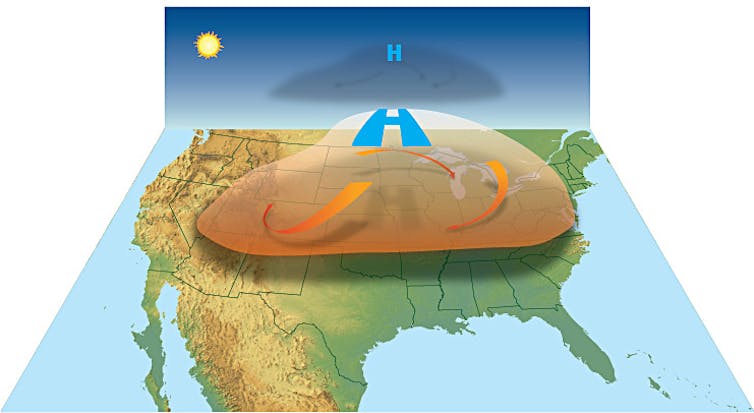
A 3D image of the US showing a heat dome above it.
High pressure in the middle layers of the atmosphere acts as a dome or cap, allowing heat to build up at the Earth’s surface. NOAA

How long these heat domes stick around has a lot to do with the jet stream.

The jet stream is a narrow band of strong winds in the upper atmosphere, about 30,000 feet above sea level. It moves from west to east due to the Earth’s rotation. The strong winds are a result of the sharp temperature difference where the warm tropical air meets the cold polar air from the north in the mid-latitudes.

The jet stream does not flow along a straight path. Rather, it meanders to the north and south in a wavy pattern. These giant meanders are known as the Rossby waves, and they have a major influence on weather.
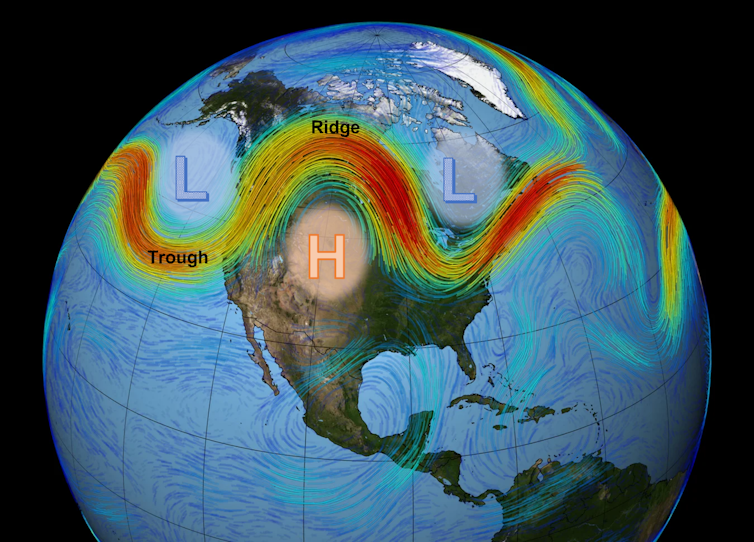
An illustration shows how ridges create high pressure to the south of them and troughs create low pressure to the north of them.
Ridges and troughs created as the jet stream meanders through the mid-latitudes create high (H) and low (L) pressure systems. Reds indicate the fastest winds. NASA/Goddard Space Flight Center Scientific Visualization Studio

Where the jet stream arcs northward, forming a ridge, it creates a high-pressure system south of the wave. Where the jet stream dips southward, forming a trough, it creates a low-pressure system north of the jet stream. A low-pressure system contains rising air in the center, which cools and tends to generate precipitation and storms.

Most of our weather is modulated by the position and characteristics of the jet stream.

How climate change affects the jet stream

The jet stream, or any wind, is the result of differences in surface temperature.

In simple terms, warm air rises, creating low pressure, and cold air sinks, creating high pressure. Wind is the movement of the air from high to low pressure. Greater differences in temperature produce stronger winds.

For the Earth as a whole, warm air rises near the equator, and cold air sinks near the poles. The temperature difference between the equator and the pole determines the strength of the jet stream in each hemisphere.

However, that temperature difference has been changing, particularly in the Northern Hemisphere. The Arctic region has been warming about three times faster than the global average. This phenomenon, known as Arctic amplification, is largely caused by the melting of Arctic sea ice, which allows the exposed dark water to absorb more of the Sun’s radiation and heat up faster.

Because the Arctic is warming faster than the tropics, the temperature difference between the two regions is lessened. And that slows the jet stream.

As the jet stream slows, it tends to meander more, causing bigger waves. The bigger waves create larger high-pressure systems. These can often be blocked by the deep low-pressure systems on both sides, causing the high-pressure system to sit over a large area for a long period of time.
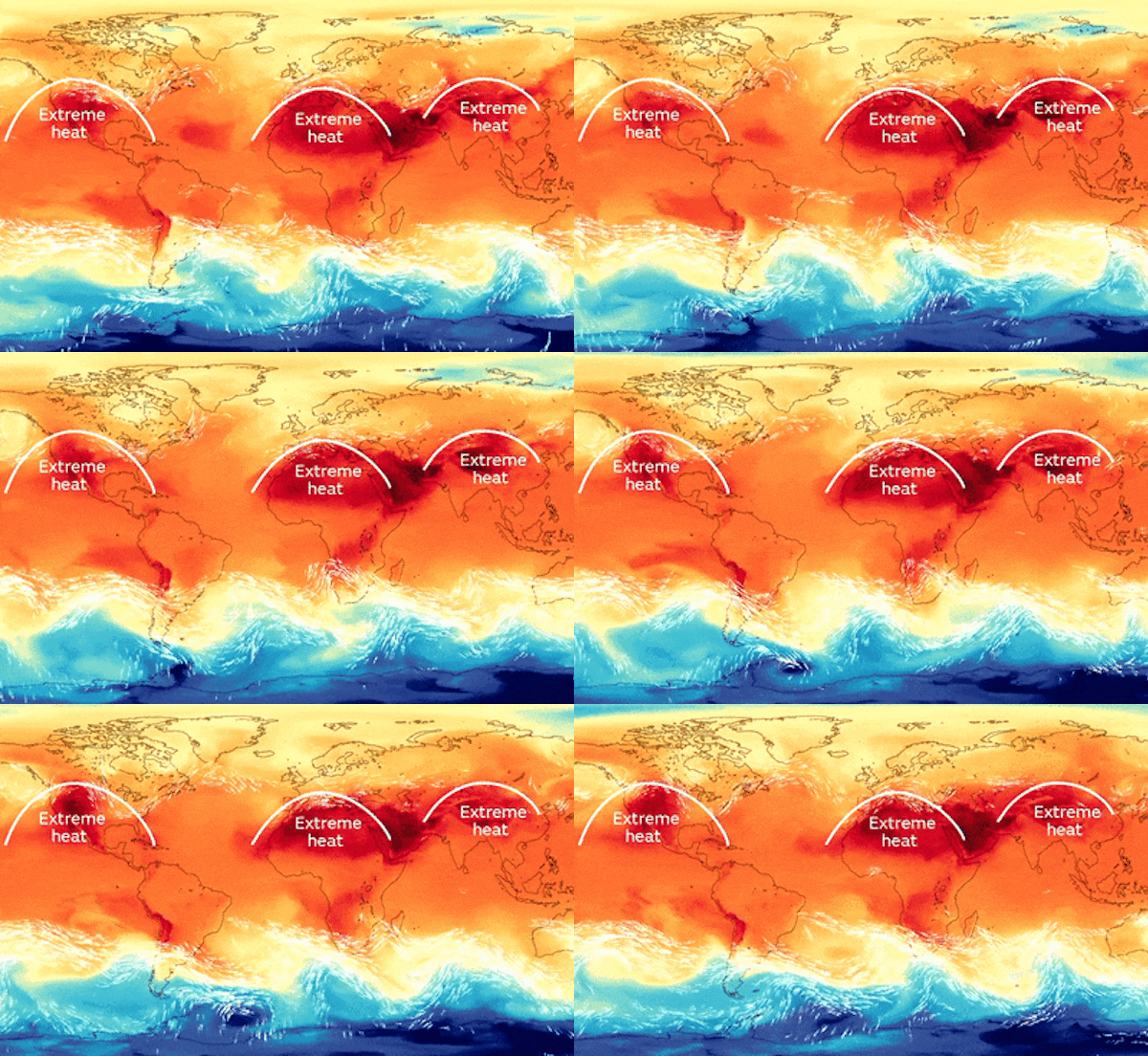
A stagnant polar jet stream can trapped heat over parts of North America, Europe and Asia at the same time. This example happened in July 2023. UK Met Office

Typically, waves in the jet stream pass through the continental United States in around three to five days. When blocking occurs, however, the high-pressure system could stagnate for days to weeks. This allows the heat to build up underneath, leading to blistering heat waves.

Since the jet stream circles around the globe, stagnating waves could occur in multiple places, leading to simultaneous heat waves at the mid-latitude around the world. That happened in 2024, with long-lasting heat waves in Europe, North America, Central Asia and China.

Jet stream behavior affects winter, too

The same meandering behavior of the jet stream also plays a role in extreme winter weather. That includes the southward intrusion of frigid polar air from the polar vortex and conditions for severe winter storms.

Many of these atmospheric changes, driven by human-caused global warming, have significant impacts on people’s health, property and ecosystems around the world.The Conversation

Shuang-Ye Wu, Professor of Geology and Environmental Geosciences, University of Dayton

This article is republished from The Conversation under a Creative Commons license. Read the original article.

California’s Youth Empowerment Commission launches to tackle key issues facing young people across the state

The newly formed Youth Empowerment Commission held its inaugural meeting in Oakland on Thursday yesterday evening, marking the official launch of an initiative to engage youth in the development of policy and legislative solutions to some of the most pressing issues facing young people in California today, including homelessness, education and mental health.

The commission, formed pursuant to AB 46, is composed of 13 voting commissioners between the ages of 14 and 25, with 11 members appointed by the governor, one at-large member appointed by the Senate Committee on Rules, and one at-large member appointed by the Speaker of the Assembly, along with several ex officio, nonvoting members from various geographic regions of the state.

Members were sworn in on Sept. 18.

The commission aims to provide ​recommendations for innovative solutions that reflect the real-world experiences of youth and to champion policies that promote the well-being of all young people, especially those in disadvantaged communities.

Commission members will be dedicated to amplifying youth voices in policy making on issues affecting young people.

“This is an exciting step forward in empowering our youth to be active participants in shaping their future. By bringing youth to the table, we are ​ensuring that the solutions we develop are grounded in their lived experiences. Whether it's addressing homelessness, improving our education system, or tackling the mental health crisis, this commission will play a key role in crafting policies that reflect the needs and aspirations of our state's youth,” said Thomisha Wallace, executive director of the Youth Empowerment Commission.

During the commission’s first meeting last week, members elected Wednesday Pope of Superior as chair and Aidan Lin-Tostado of San Diego  as vice chair and discussed their goals for the year ahead.

The commission will focus on several core areas, including:

• ​Reducing ​homelessness;
• Access to quality ​education​ and opportunity;
• ​Addressing ​mental health​ challenges​.

The Youth Empowerment Commission is committed to collaboration with state lawmakers, educators, mental health professionals, and nonprofit organizations to bring about meaningful change.

The commission’s recommendations will serve as the foundation for future policy proposals and legislative action.

For more information on the Youth Empowerment Commission, including its leadership and members, visit https://youthempowerment.ca.gov/.

Creating healthy habitat for hitch

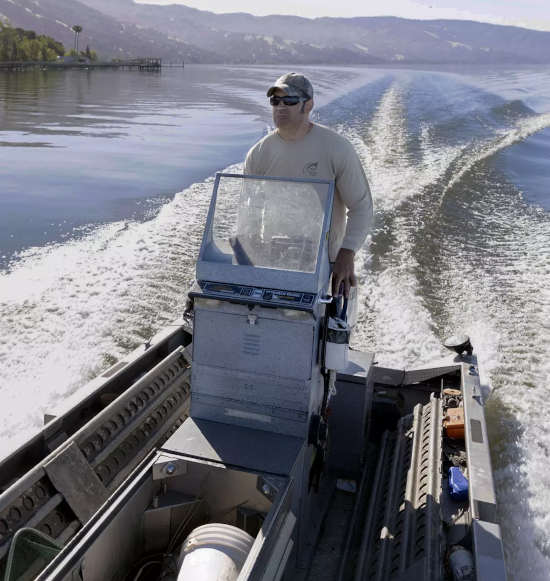
Clear Lake hitch in Clear Lake in June 2024. Credit: John Heil/USFWS.

Partnerships with tribe, state, others, critical to efforts

Recovering populations of Clear Lake hitch isn’t just a goal for the Robinson Rancheria Pomo Indians of California; it’s critical to their culture and way of life.

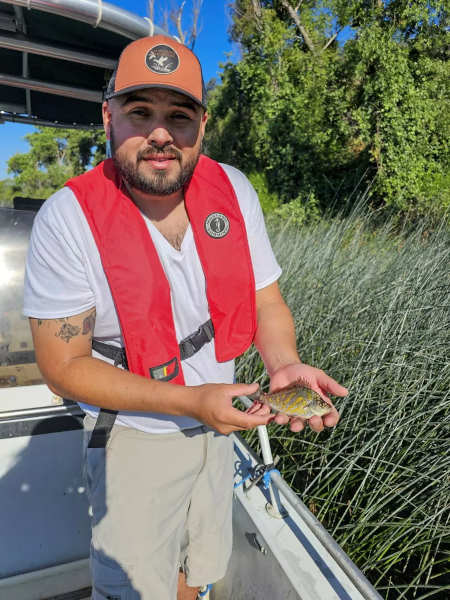
Luis Santana, a fish biologist with Robinson Rancheria explains the importance of this species as subsistence to the tribe with his own personal challenge to eat what is genetically good for his body.

“My ancestors are from central Mexico, and so when I did my genetic analysis on what I should be eating it came back — venison, a lot of zucchini and a lot of berries, and I do eat that stuff, but not often enough,” he said.

While historically a form of subsistence, Santana acknowledged the multiple cultural benefits of the fish to the tribe. “Getting back to more fish would obviously help because it’s a lot healthier and better for the people, but what I’d like to emphasize is how critical our efforts are now and in the future to preserving the hitch for future generations for the mental and spiritual benefits to the tribe.”

Luis Santana, biologist with the Robinson Rancheria tribe holds a tule perch. Photo courtesy of the Robinson Rancheria tribe.

The importance of Clear Lake hitch to local tribes has given momentum to recent efforts to increase the populations of this native fish through several habitat restoration efforts. These efforts take cooperation, collaboration and, of course, funding.

According to Jerrod Sellers, a fish and wildlife biologist with the U.S. Fish and Wildlife Service’s Sacramento office, there is hope that improving habitat for the fish can also help improve the health of the lake.

“The hitch is the canary in the coal mine for Clear Lake,” he said.“My role is to work with all partners, including the Tribes, to look at the science and make recommendations on habitat restoration projects or data collection efforts that could help the hitch.”

Working with partners to implement habitat restoration projects, such as the project at Scott’s Creek, is critical to making a difference, per California Department of Fish and Wildlife biologist Ben Ewing.

Jerrod Sellers, fish and wildlife biologist with the U.S. Fish and Wildlife Service’s Sacramento office. Credit: John Heil/USFWS.

“Partnerships are very important — the number one priority — because there's strength in numbers,” said Ewing who covers Amador, Calaveras, Alpine and Lake counties.“It's a huge undertaking. The more people who can help and contribute knowledge and time to projects is priceless.”

Projects that restore the floodplain, create additional habitat and bring back native vegetation can improve spawning conditions for the hitch.

“The hitch need the right habitat in the tributary channel to spawn,” Sellers said.

One such partnership project that has received funding is the Tejada Ranch Habitat Management Project, a National Fish Passage Program project funded through the Bipartisan Infrastructure Law to modify channels on a stream bank and remove deposited debris. This work aims to help larval hitch reach Clear Lake or refugial pools until there is enough flow in the tributaries to move them into the lake.

“This effort showcases a really great partnership effort with the Service, the Robinson Rancheria Tribe and a private landowner,” said Alex Jones, a Fish and Aquatic Conservation biologist and Culvert Aquatic Organism Passage Coordinator with the Service. “We hope this will help us build momentum for other local landowners to see the great work done and want to improve hitch habitat on their land.”

Ben Ewing, a California Department of Fish and Wildlife biologist. Credit: John Heil/USFWS.

Ultimately, the partners hope this work will reduce the number of hitch stranded in isolated pools when tributaries rapidly dry up during spawning season.

Over the past few years, Santana and his team have rescued hundreds of stranded fish and returned them to the lake. With this restoration project, the fish will be able to follow their natural life cycle to migrate up the tributaries and then return to the lake after spawning.

In addition to benefits directly to the fish, this project will also reduce the issue of the streambank encroachment onto private land.

Santana and partners teamed up with the Habematolel Pomo of Upper Lake on another restoration project to clear non-native blackberries and other invasive plant species from a tributary that the hitch use for spawning. “As you clear the invasive plants, the native plants come back,” he said. “Once natives come back thick and plentiful, then we’ve done our job at that site.”

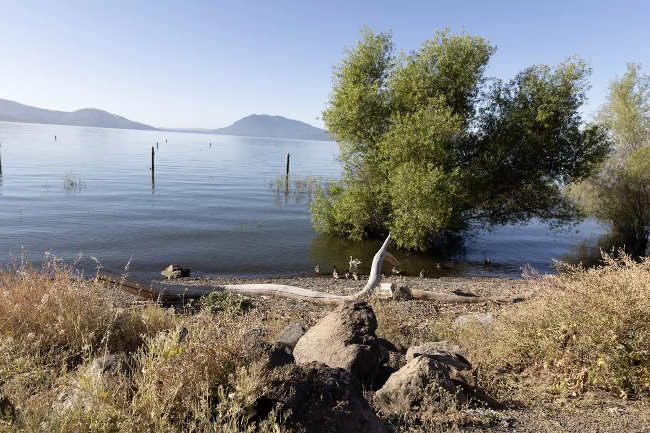
Clear Lake in June 2024. Credit: John Heil/USFWS.


Along those same lines, invasive fish species such as carp and goldfish are also problematic. “We can no longer just focus on the lake. We have to look at the ponds and lakes upstream, too,” said Santana.

“Hitch are really important to me. I love fish — it’s what I built my career around. So, if I can save hitch here and give back to the community who raised me, that’s great.”

John Heil works for the United States Fish and Wildlife Service.


Clear Lake hitch in Clear Lake in June 2024. Credit: John Heil/USFWS.

Preventive care is free by law, but many Americans get incorrectly billed − especially if you’re poor, a person of color or don’t have a college degree


Unexpected bills for preventive care can worsen existing racial and socioeconomic health disparities. Maskot/Getty Images

Even though preventive care is supposed to be free by law for millions of Americans thanks to the Affordable Care Act, many don’t receive recommended preventive services, especially racial and ethnic minorities and other at-risk patient groups.

The Affordable Care Act exempted preventive services from patient cost-sharing for large chunks of the population. This means that if you receive preventive screening and have private insurance, including through the ACA Marketplace, there should be no copay at time of service, and you shouldn’t get a bill later on. Easy enough, right?

Wrong. Our team of health economists has shown that patients spend millions of dollars every year on unexpected bills for preventive care. The main reason for this is that no specific regulations were put in place to determine exactly which services should be exempted, or for whom, or how often. This omission has left many people on the hook to pay for valuable health care they thought would be free.

Now, in our recently published research in the journal JAMA Network Open, we’ve found that the burden of paying for what should be free preventive care disproportionately falls on some patient groups.

Close-up of hand filling out health insurnace claim form with a pen
Which health care services should be exempted from cost-sharing often isn’t clear. Tetra Images/Getty Images

Inequitable claim denials

Looking at data from over 1.5 million patients, our study demonstrates that insurers deny preventive claims for patients from marginalized communities at higher rates than for those from majority groups.

For example, low-income patients were 43% more likely than high-income patients to have their claims denied. In addition, Asian, Hispanic and non-Hispanic Black patients were each roughly twice as likely as non-Hispanic white patients to have claims denied.

Not only were these patients denied routine benefits, but they also saw large differences in rates of billing errors. For example, patients with a high school diploma or less experienced denials due to this kind of billing error almost twice as often than patients with college degrees. All of these services should have been covered by an insurer.

Research on preventive care access is commonly based only on claims data, which doesn’t typically have information on patient demographics. This lack limits a study’s ability to detect differences across patient groups. Our study, however, uses a combination of linked claims data, remittance data containing information on why claims were denied and whether they were resubmitted, and demographic data from self-reports, purchase transactions and voter registries. Together, this richer dataset allowed us to examine differences in denials based on race and ethnicity, education and income, including reasons why patients were denied care.

Preventive care is essential

Equitable access to preventive health care is about more than just physicals, although those are important, too. Preventive health care includes key screenings for cancers, cardiovascular disease and diabetes, access to contraceptives, and mental health checkups, among other services. Ensuring that insurers provide equal coverage for these services for all patients is important to improve health outcomes and quality of life for everyone while reducing future health care costs.

Our results paint a picture of the kinds of hurdles patients face when they seek health screenings. Patients from underrepresented groups were not only more likely to be told their care wouldn’t be covered. They were also more likely to have their claims processed incorrectly, leading to more frequent denials and, ultimately, larger medical bills.

Few patients appeal claim denials, even though rejections may be unjustified.

Unexpected bills can affect both a patient’s current health and their future use of health care services. These hurdles can exacerbate an already tenuous trust in a fragmented health care system, making patients less likely to return for follow-up screenings.

Stacked coverage denials for patients who live with multiple marginalized identities or who are less able to advocate for themselves can further entrench racial and socioeconomic inequities.

Ensuring equitable access

Our study paints a compelling picture of where different patients may face hurdles for getting preventive care, but more research is necessary to identify how to ensure equitable access.

As our study looked only at preventive services, we will also need to see how our findings generalize to other forms of health care. More research is also needed to understand how other vulnerable patient groups, such as LGBTQ+ patients or patients with multiple chronic conditions, fare when trying to access care.

Our team is currently studying how actual bills for care differ across patient groups and how patients respond when bills arrive. In our study, more than two-thirds of denied claims were never resubmitted to insurers, meaning that many billing errors go uncorrected at patients’ expense.

Equitable policy on multiple fronts can help rectify the way preventive care is inconsistently and inequitably provided. These include uniform coverage of preventive care by insurers, standardized billing practices for physicians and improved means for patients to advocate for themselves. This can help ensure that everyone has appropriate access to lifesaving health care.The Conversation

Alex Hoagland, Assistant Professor of Health Economics, University of Toronto and Michal Horný, Assistant Professor of Health Policy and Management, UMass Amherst

This article is republished from The Conversation under a Creative Commons license. Read the original article.

  • 357
  • 358
  • 359
  • 360
  • 361
  • 362
  • 363
  • 364
  • 365
  • 366

Community

  • Lake County Wine Alliance offers sponsor update; beneficiary applications open 

  • Mendocino National Forest announces seasonal hiring for upcoming field season

Public Safety

  • Lakeport Police logs: Thursday, Jan. 15

  • Lakeport Police logs: Wednesday, Jan. 14

Education

  • Woodland Community College receives maximum eight-year reaffirmation of accreditation from ACCJC

  • SNHU announces Fall 2025 President's List

Health

  • California ranks 24th in America’s Health Rankings Annual Report from United Health Foundation

  • Healthy blood donors especially vital during active flu season

Business

  • Two Lake County Mediacom employees earn company’s top service awards

  • Redwood Credit Union launches holiday gift and porch-to-pantry food drives

Obituaries

  • Rufino ‘Ray’ Pato

  • Patty Lee Smith

Opinion & Letters

  • The benefits of music for students

  • How to ease the burden of high electric bills

Veterans

  • CalVet and CSU Long Beach team up to improve data collection related to veteran suicides

  • A ‘Big Step Forward’ for Gulf War Veterans

Recreation

  • Wet weather trail closure in effect on Upper Lake Ranger District

  • Mendocino National Forest seeking public input on OHV grant applications

  • State Parks announces 2026 Anderson Marsh nature walk schedule 

  • BLM lifts seasonal fire restrictions in central California

Religion

  • Kelseyville Presbyterian to host Ash Wednesday service and Lenten dinner Feb. 18

  • Kelseyville Presbyterian Church to hold ‘Longest Night’ service Dec. 21

Arts & Life

  • Auditions announced for original musical ‘Even In Shadow’ set for March 21 and 28

  • ‘The Rip’ action heist; ‘Steal’ grounded in a crime thriller

Government & Politics

  • Lake County Democrats issue endorsements in local races for the June California Primary

  • County negotiates money-saving power purchase agreement

Legals

  • March 3 hearing on ordinance amending code for commercial cannabis uses

  • Feb. 12 public hearing on resolution to establish standards for agricultural roads

How to resolve AdBlock issue?
Refresh this page