How to resolve AdBlock issue?
Refresh this page
How to resolve AdBlock issue?
Refresh this page
Lake County News,California
  • Home
    • Registration Form
  • News
    • Education
    • Veterans
    • Community
      • Obituaries
      • Letters
      • Commentary
    • Police Logs
    • Business
    • Recreation
    • Health
    • Religion
    • Legals
    • Arts & Life
    • Regional
  • Calendar
  • Contact us
    • FAQs
    • Phones, E-Mail
    • Subscribe
  • Advertise Here
  • Login

News

State launches new initiative to mobilize one million Californians for climate action

During Climate Week, Gov. Gavin Newsom has announced a new state initiative to mobilize one million Californians to take climate action at home and in their neighborhoods to help build resilient communities.

California’s Climate Action Counts initiative aims to educate and inspire people to reimagine the power of volunteerism by taking impactful, everyday actions in their communities.

“Every day, Californians are taking small actions that collectively are helping us create a better world for our kids and grandkids. From saving water and planting trees to taking public transit and being disaster ready – we’re all in this together,” said Gov. Newsom. “The Climate Action Counts campaign will empower Californians to be a part of something big and impactful – making all of our climate action truly count.”

The campaign highlights 10 priority actions and encourages participants to take the pledge to action.

Those taking the pledge join hundreds of California Climate Action Corps fellows in efforts to combat the effects of climate change.

• Reduce waste: Donate, upcycle and thrift.

• Compost food scraps: Toss in your green bin or compost in your yard.

• Support local farmers: Shop at local farmers markets or join a CSA (Community Supported Agriculture).

• Green your ride: Walk, bike, use public transit, carpool whenever you can — or consider a zero-emission vehicle.

• Get planting: Plant trees and native plants or start a community garden.

• Be disaster ready: Be prepared for wildfire and extreme heat.

• Save energy, water and money: Use a smart thermostat, conserve water and capture savings.

• Discover nature: Enjoy nature at your local parks and trails.

• Tell a friend: Encourage your friends and family to take part in Climate Action Counts.

• Get connected: Sign up to serve or volunteer in your community!

Campaign partners span cities, colleges and universities, state agencies, community-based organizations, business and climate leaders, including the cities of Long Beach, Riverside and Sacramento, California Community Colleges, University of California, California State University, California Natural Resources Agency, CalRecycle, California ReLeaf, Sierra Club, Jane Goodall Institute and Patagonia.

“This campaign will inspire hope — showing when it comes to the climate crisis, we are not powerless,” said California Chief Service Officer Josh Fryday. “We are calling on one million Californians to take simple, everyday actions for collective impact.”

“The best solutions to the climate crisis come from the grassroots,” said Corley Kenna, vice president of communications and public policy at Patagonia. “We’re partnering with the Climate Action Counts campaign to help one million Californians build thriving communities while protecting the natural world. Everyone has a role to play in this movement.”

As a part of California’s comprehensive strategy to address the climate crisis, Gov. Newsom created the California Climate Action Corps in 2020 — the nation’s first state-level service and volunteer program focused on combating climate change.

Since then, numerous states have adopted California’s model to establish their own Climate Corps.

Can you trust companies that say their plastic products are recyclable? US regulators may crack down on deceptive claims


Keurig, maker of K-Cup single-use coffee pods, was recently fined for claiming the pods were recyclable. Dixie D. Vereen/For The Washington Post, via Getty Images

Plastic is a fast-growing segment of U.S. municipal solid waste, and most of it ends up in the environment. Just 9% of plastic collected in municipal solid waste was recycled as of 2018, the most recent year for which national data is available. The rest was burned in waste-to-energy plants or buried in landfills.

Manufacturers assert that better recycling is the optimal way to reduce plastic pollution. But critics argue that the industry often exaggerates how readily items can actually be recycled. In September 2024, beverage company Keurig Dr Pepper was fined US$1.5 million for inaccurately claiming that its K-Cup coffee pods were recyclable after two large recycling companies said they could not process the cups. California is suing ExxonMobil, accusing the company of falsely promoting plastic products as recyclable.

Environmental law scholar Patrick Parenteau explains why claims about recyclability have confused consumers, and how forthcoming guidelines from the U.S. Federal Trade Commission may address this problem.

Why do manufacturers need guidance on what ‘recyclable’ means?

Stating that a product is recyclable means that it can be collected, separated or otherwise recovered from the waste stream for reuse or in the manufacture of other products. But defining exactly what that means is difficult for several reasons:

  • Different U.S. states have different recycling regulations and guidelines, which can affect what is considered recyclable in a given location.

  • The availability and quality of recycling infrastructure also varies from place to place. Even if a product technically is recyclable, a local recycling facility may not be able to accept it because its equipment can’t process it.

  • If no market demand for the recycled material exists, recycling companies may be unlikely to accept it.

Most plastic goods that consumers put in their recycle bins aren’t recycled, despite the “chasing arrow” label. Critics say manufacturers have deceived the public to avert plastic bans.

What is the Federal Trade Commission’s role?

Public concern about plastic pollution has skyrocketed in recent years. A 2020 survey found that globally, 91% of consumers were concerned about plastic waste.

Once plastic enters the environment, it can take 1,000 years or more to decompose, depending on environmental conditions. Exposure through ingestion, inhalation or in drinking water poses potential risks to human health and wildlife.

The Federal Trade Commission’s role is to protect the public from deceptive or unfair business practices and unfair methods of competition. Every year, it brings hundreds of cases against individuals and companies for violating consumer protection and competition laws. These cases can involve fraud, scams, identity theft, false advertising, privacy violations, anticompetitive behavior and more.

The FTC publishes references called the Green Guides, which are designed to help marketers avoid making environmental claims that mislead consumers. The guides were first issued in 1992 and were revised in 1996, 1998 and 2012. While the guides themselves are not enforceable, the commission can use them to prove that a claim is deceptive, in violation of federal law.

The guidance they provide includes:

  • General principles that apply to all environmental marketing claims

  • How consumers are likely to interpret claims, and how marketers can substantiate these claims

  • How marketers can qualify their claims to avoid deceiving consumers

The agency monitors environmentally themed marketing for potentially deceptive claims and evaluates compliance with the FTC Act of 1914 by reference to the Green Guides. Marketing inconsistent with the Green Guides may be considered unfair or deceptive under Section 5 of the FTC Act.

Courts also refer to the Green Guides when they evaluate claims for false advertising in private litigation.

Currently, the Green Guides state that marketers should qualify claims that products are recyclable when recycling facilities are not available to at least 60% of consumers or communities where a product is sold.

How is the agency addressing recyclability claims?

The FTC is reviewing the Green Guides and issued a request for public comment on the guides in late 2022. In May 2023, the agency convened a workshop called Talking Trash at the FTC: Recycling Claims and the Green Guides.

This meeting focused on the 60% processing threshold for recyclability claims. It also addressed potential confusion created by the “chasing arrows” recycling symbol, which often identifies the type of plastic resin used in a product, using the numbers 1 through 7.

Many critics argue that consumers may see the symbol and assume that a product is recyclable, even though municipal recycling programs are not widely available for some types of resins. Other labels use a version of the symbol for products such as single-use grocery bags that aren’t accepted in most curbside recycling programs but can be dropped off at designated stores for recycling.

The FTC has sought public comments on specific characteristics that make products recyclable. It also has asked whether unqualified recyclability claims should be made when recycling facilities are available to a “substantial majority” of consumers or communities where the item is sold – even if the item is not ultimately recycled due to market demand, budgetary constraints or other factors.

What are companies and environmental advocates saying?

Organizations representing environmental interests, recycling businesses and the waste and packaging industries have offered numerous suggestions for updating the Green Guides. For example:

  • The U.S. Environmental Protection Agency urged the FTC to increase its threshold for recyclability claims beyond the current 60% rate. The EPA said that products and packaging “should not be considered recyclable without strong end markets in which they can reliably be sold for a price higher than the cost of disposal.” It also recommended requiring companies’ recyclability claims to be reviewed and certified by outside experts.

  • The Consumer Brands Association, which represents the U.S. Chamber of Commerce, the Plastics Industry Association and other commercial interests, called for more research into public understanding of environmental marketing claims. To help companies avoid making deceptive advertising claims, it urged the FTC to provide more detailed explanations, with examples of acceptable marketing.

  • The Association of Plastic Recyclers encouraged the FTC to increase enforcement against deceptive unqualified claims of both recyclability and recycled content. It recommended providing stronger, more prescriptive guidance; publicizing specific examples from the marketplace of deceptive representations; and sending warning letters when companies appear to be making unsubstantiated claims. It also asked the FTC to maintain its current recyclability claim threshold at 60% and to update the Green Guides again within five years instead of 10.

  • A coalition of environmental groups, including Greenpeace USA and the Center for Biological Diversity, urged the commission to codify the Green Guides into binding rules. They also argued that for goods that require in-store drop-off, companies should have to prove that processors can capture and recycle at least 75% of the material.

The FTC has not set a date for publishing a final version of the revised Green Guides. All eyes will be on the agency to see how far it is willing to go to police recycling claims by manufacturers in this $90 billion U.S. industry.The Conversation

Patrick Parenteau, Professor of Law Emeritus, Vermont Law & Graduate School

This article is republished from The Conversation under a Creative Commons license. Read the original article.


Flags in Lakeport lowered to honor Onorato

From left, Brad Onorato and Congressman Mike Thompson. Courtesy photo.

LAKEPORT, Calif. — The city of Lakeport is honoring a longtime public servant for his efforts to make Lake County a better place.

On Monday, officials lowered all flags on city buildings and facilities in honor of the life and service of Brad Onorato, deputy chief of staff to Congressman Mike Thompson.

The flags will remain lowered on Tuesday as well, the city reported.

Onorato died on Sept. 19 at the age of 66 after a long battle with cancer.

Onorato was a steadfast advocate for the Lakeport and Lake County communities, known for his approachability, vast knowledge, good humor and unwavering commitment to tackling even the most challenging issues.

“Brad could be counted on to be one of the first people to reach out to City officials and staff in all emergencies, large and small,” said City Manager Kevin Ingram. “He was always there for Lakeport, addressing concerns with compassion and a focus on how the community might be impacted by decisions. The world needs more people like Brad in it.”

Lakeport Mayor Michael Froio expressed his condolences, “I’m so sorry to hear about the passing of Brad Onorato. He was such a kind man and a very good listener. My heart goes out to his family, friends and the people he served so well. He will be missed.”

Onorato was an essential member of Thompson’s Senate and Congressional teams for 34 years, serving the people of Lake County with compassion and dedication.

His contribution to public service will be remembered fondly by all in Lakeport who had the privilege of working with him.

The City of Lakeport joins Congressman Thompson, the Onorato family and the greater community in mourning the loss of a great public servant and friend.

Details for a memorial service will be shared at a later date by Thompson’s office.

Dodd tribal compacts bill signed; Elem Colony among tribes covered by measure

LAKE COUNTY, Calif. — Gov. Gavin Newsom has signed measures by Sen. Bill Dodd (D-Napa) to ratify key intergovernmental agreements between the state and seven Native American tribes — including one from Lake County — for the purposes of gaming.

“These compacts help enhance economic stability and self-sufficiency among California’s first people while providing revenue and good-paying jobs for thousands of others across our state,” Sen. Dodd said. “It’s a win for everyone and I thank Gov. Newsom for his support.”

The Federal Indian Gaming Regulatory Act of 1988 provides for the negotiation and execution of tribal-state gaming compacts for authorizing certain types of gaming on Indian lands.

The California Constitution authorizes the governor to negotiate and conclude those compacts, subject to ratification by the Legislature. The agreements would take effect immediately.

These compacts will provide tens of millions of dollars in revenue to local communities, funding wildfire prevention efforts and assisting nongaming tribes with critical services, from health care and education to infrastructure and preservation of tribal lands, Dodd’s office reported.

Senate Bill 931 was approved by the Assembly and Senate before the governor signed it. It applies to the following tribes:

• The Campo Band of Diegueno Mission Indians of the Campo Indian Reservation;
• The La Posta Band of Diegueno Mission Indians of the La Posta Indian Reservation;
• The Timbisha Shoshone Tribe; and
• The Elem Indian Colony of Pomo Indians of the Sulphur Bank Rancheria, based on 50 acres near Clearlake Oaks in Lake County.

Also, the bill amends compacts with the following tribes:

• Augustine Band of Cahuilla Indians;
• The Picayune Rancheria of Chukchansi Indians; and
• The Cher-Ae Heights Indian Community of the Trinidad Rancheria.

Regarding Elem Colony, Dodd’s office said the compact provides what the tribe can do in terms of gaming operations, but they can decide if and when to build that out.

Elem reportedly has plans for a casino in the future but the tribe currently is focused on building a travel center in Clearlake.

The Senate Floor Analysis on SB 931 explains that the compact with Elem authorizes the tribe to operate a maximum of 349 slot machines at no more than two gaming facilities located on eligible Indian lands held in trust for the tribe and located within the boundaries of the tribe’s reservation.

Governor signs legislation to limit the use of smartphones during school hours

Building on his calls for school districts to restrict the use of smartphones on school campuses, Gov. Gavin Newsom on Monday signed Assembly Bill 3216, the Phone-Free School Act, to require every school district, charter school and county office of education to adopt a policy limiting or prohibiting the use of smartphones by July 1, 2026.

Authored by Assemblymembers Josh Hoover, David Alvarez, Josh Lowenthal and Al Muratsuchi, the bipartisan legislation will support the mental health, academic success and social wellbeing of California’s students.

“We know that excessive smartphone use increases anxiety, depression, and other mental health issues — but we have the power to intervene. This new law will help students focus on academics, social development, and the world in front of them, not their screens, when they’re in school,” Gov. Gavin Newsom.

“Reducing phone use in schools is essential for minimizing digital distractions and making space for stronger and more meaningful in-person connections. AB 3216 isn’t only about classroom instruction, it’s about protecting the mental health and social and emotional well-being of California’s kids,” said First Partner Jennifer Siebel Newsom.

In 2019, Gov. Newsom signed AB 272 (Muratsuchi) into law, which specified that school districts have the authority to regulate the use of smartphones during school hours. This legislation was considered a crucial first step in efforts to minimize distractions and foster a more conducive environment for our students to learn.

In June, the governor announced efforts to restrict the use of smartphones during the school day.

The development of the policies will involve significant stakeholder participation to ensure they are responsive to the unique needs and desires of the local students, parents and educators and must allow students to use their phones in the case of an emergency, or in response to a perceived threat of danger, or as allowed by a teacher, administrator, doctor or the student’s individualized education program.

Why this matters

Excessive smartphone use among youth is linked to increased anxiety, depression, and other mental health issues. A recent Pew Research Center survey found that 72% of high school and 33% of middle school teachers report cell phone distractions as a major problem.

Common Sense Media found that 97% of students use their phones during the school day for a median of 43 minutes. Combined with the U.S. Surgeon General’s warning about the risks of social media, it is urgent to provide reasonable guardrails for smartphone use in schools.

Supporting smartphone free classrooms

Assemblyman Josh Hoover: "I appreciate the leadership of Governor Newsom and our bipartisan coalition of legislators that worked together to make the Phone-Free Schools Act a reality. AB 3216 is a major victory for protecting and improving the mental health and academic outcomes of students across California,” said Assemblyman Josh Hoover. “Research continues to demonstrate the potential harms of smartphone use among children. The growing use of these devices in a child’s everyday life can contribute to lower test scores, anxiety, depression, and even suicide. I am proud our state is taking action to limit the use of smartphones during the school day and protect kids from these harms.”

Assemblymember Al Muratsuchi, chair of the Assembly Education Committee: “I thank the Governor for signing AB 3216. California school districts should place limits on student smartphone use on campus during school hours, unless approved by teachers or administrators for academic, emergency, or other purposes. In 2019, I authored Assembly Bill 272, to encourage school districts to consider such limits. Since then, growing research shows excessive smartphone use not only interfering with learning but also contributing to teenage anxiety, depression, and cyberbullying. All school districts should develop their own appropriate policy to balance appropriate student use of smartphones at school with curbing the impact of excessive smartphone use on a student’s educational, social, and emotional well-being.”

State Superintendent of Public Instruction Tony Thurmond: “AB 3216 represents an important opportunity to address the mental health of our students by restricting smartphones in schools. I have directly engaged with our students, parents, and educators as we have explored the need for this important change. I will continue to make sure that we hear the voices of our young people, their families, and our hardworking school staff as we implement smartphone restrictions across the state.”

Statewide efforts to support youth mental health

California is transforming its entire mental health and substance use disorder system, with a special focus on youth.

For the youngest Californians, Gov. Newsom developed the Master Plan for Kids’ Mental Health to provide every Californian aged 0-25 with increased access to mental health and substance use disorder supports.

The Master Plan also includes the Children and Youth Behavioral Health Initiative, a historic investment by the state of California that takes a “whole child” approach to address the factors that contribute to the mental health and well-being of our children and youth.

TRUTH in Labeling Act would heighten the warning for shoppers looking to cut sugar, salt and saturated fat intake


Only about 40% of consumers frequently read the nutrition label. demaerre/iStock via Getty Images Plus

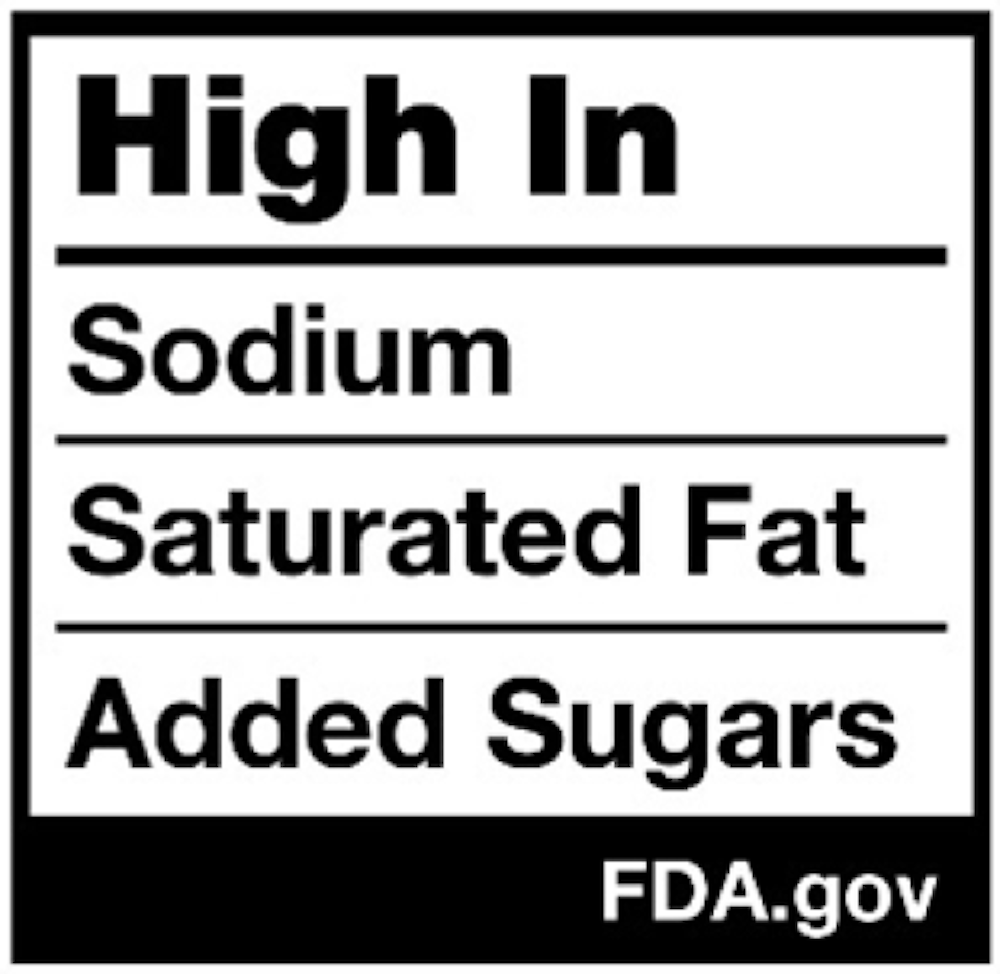
A bill known as the TRUTH in Labeling Act has been sitting before Congress since late 2023. If passed, it would require U.S. food manufacturers to add a second nutrition label to the front of product packages, in addition to the ones currently found on the back or side panel. It would also require the label to highlight any potentially unhealthy ingredients in the product, such as the amount of sugar, sodium and saturated fat it contains.

The proposed legislation would provide consumers with a standardized, easy-to-read and quick way to decide whether a product is a healthy choice. Should the bill, which is still in committee, become law, the front-of-package label would be regulated by the U.S. Food and Drug Administration.

The current nutrition facts label, typically featuring more detailed nutritional information and found on a product’s side panel, would remain unchanged.

Consuming more vitamin D, calcium, iron and potassium can reduce the risks of osteoporosis, anemia and hypertension.

As a food safety extension specialist who works with farmers, entrepreneurs, manufacturers and the government to help bring healthy food to shoppers, I believe that consistent front-of-package labeling would greatly benefit consumers by offering a straightforward way to compare multiple products, helping them make more informed choices.

Even if passed, it will take time for the FDA to interpret the law and standardize the design and format. And it might be years before all food manufacturers are required to use the new label. In the meantime, more than 175 million Americans are overweight or obese, and with each passing day, that number grows.

Why the change?

The newly proposed legislation is the latest effort by lawmakers to educate the public about smart food choices. Congress began requiring standardized nutrition labels on food packages through the Nutrition Labeling and Education Act of 1990.

A black-and-white nutritional graphic that shows the sodium, saturated fat and added sugar content of a product is
The FDA has not made a final decision on the front-of-product label’s content and look, but it is testing a variety of designs, including this one. FDA

But in the 34 years since that first label appeared, the obesity rate has more than tripled; 40% of Americans are now obese. Another 31% are overweight, and diet-related chronic illnesses, including heart disease, stroke, cancer, hypertension and Type 2 diabetes are rampant. About 60% of U.S. adults – 130 million people – have at least one of these chronic illnesses.

All of these diseases are associated with consuming too much sugar, sodium or saturated fat – three key ingredients the front label will focus on.

Labels help shoppers make better choices

There’s another reason to require a second, easy-to-notice, easy-to-comprehend label. Only about 40% of Americans frequently read the existing nutrition facts label; some shoppers say they don’t understand it. A simpler label with a more direct message might help those consumers. In fact, some studies suggest front-of-package labels do assist shoppers in making smart choices.

Research shows that those who frequently read the current label tend to have healthier diets than those who don’t. For example, frequent readers are almost four times more likely than rare readers to meet the recommended daily fiber intake.

Now the bad news: Even the frequent readers met their fiber goals only about 13% of the time. That isn’t good, but it’s an improvement over the rare readers, who meet their goals a paltry 3.7% of the time.

For the record, the daily recommendation for fiber is 25 grams for women and 38 for men under 50; its slightly less for those over 50.

The existing nutrition facts label.
This is what the current nutrition facts label looks like. Note the serving size for this particular product is two-thirds of a cup. So if you have a 1-cup serving, you need to add 50% more to all the values listed below the serving size, including calories, fat and saturated fat. FDA

Some foods still exempt

It’s possible you’ve already seen some front-of-package nutritional labels on food products. But these labels are not regulated by the government. Known as the “facts-up-front” labeling system, it’s strictly voluntary and a choice of the individual food manufacturer, with label designs and formats provided by the Consumer Brands Association, a trade association representing the food industry. Only a small number of manufacturers have chosen to put these labels on their products.

That said, more research is needed to know how long-term behavior may change due to front-of-package labeling. But at least one food safety advocacy organization, while supportive of front-of-package labels, says the trade association’s facts-up-front system is less than optimal.

Even if the TRUTH in Labeling Act passes as currently written, some foods could remain exempt from the nutritional label requirement, including fish, coffee, tea and spices.

There is one caveat, however. If any product makes a nutritional or health claim on its package – including those that are normally exempt – then a nutrition facts label must be on it.The Conversation

Kimberly Baker, Food Systems and Safety Program Team Director, Clemson University

This article is republished from The Conversation under a Creative Commons license. Read the original article.
With rising rates of obesity in the U.S. and increasing attention being paid to the health harms of processed foods, it’s clear that far more could be done to help consumers make healthy food choices.
  • 356
  • 357
  • 358
  • 359
  • 360
  • 361
  • 362
  • 363
  • 364
  • 365

Community

  • Lake County Wine Alliance offers sponsor update; beneficiary applications open 

  • Mendocino National Forest announces seasonal hiring for upcoming field season

Public Safety

  • Lakeport Police logs: Thursday, Jan. 15

  • Lakeport Police logs: Wednesday, Jan. 14

Education

  • Woodland Community College receives maximum eight-year reaffirmation of accreditation from ACCJC

  • SNHU announces Fall 2025 President's List

Health

  • California ranks 24th in America’s Health Rankings Annual Report from United Health Foundation

  • Healthy blood donors especially vital during active flu season

Business

  • Two Lake County Mediacom employees earn company’s top service awards

  • Redwood Credit Union launches holiday gift and porch-to-pantry food drives

Obituaries

  • Rufino ‘Ray’ Pato

  • Patty Lee Smith

Opinion & Letters

  • The benefits of music for students

  • How to ease the burden of high electric bills

Veterans

  • CalVet and CSU Long Beach team up to improve data collection related to veteran suicides

  • A ‘Big Step Forward’ for Gulf War Veterans

Recreation

  • Wet weather trail closure in effect on Upper Lake Ranger District

  • Mendocino National Forest seeking public input on OHV grant applications

  • State Parks announces 2026 Anderson Marsh nature walk schedule 

  • BLM lifts seasonal fire restrictions in central California

Religion

  • Kelseyville Presbyterian to host Ash Wednesday service and Lenten dinner Feb. 18

  • Kelseyville Presbyterian Church to hold ‘Longest Night’ service Dec. 21

Arts & Life

  • Auditions announced for original musical ‘Even In Shadow’ set for March 21 and 28

  • ‘The Rip’ action heist; ‘Steal’ grounded in a crime thriller

Government & Politics

  • Lake County Democrats issue endorsements in local races for the June California Primary

  • County negotiates money-saving power purchase agreement

Legals

  • March 3 hearing on ordinance amending code for commercial cannabis uses

  • Feb. 12 public hearing on resolution to establish standards for agricultural roads

How to resolve AdBlock issue?
Refresh this page