 How to resolve AdBlock issue?
News
LAKE COUNTY, Calif. – The state Board of Parole Hearings this week once again denied parole to a man convicted of a 1990 Clearlake Park murder.
Parole was denied to convicted murderer Kevin Coy Iloff, 49, following a hearing this past Tuesday, according to Lake County Chief Deputy District Attorney Richard Hinchcliff, who attended the lifer hearing at California State Prison in Corcoran to argue against Iloff’s release.
Iloff has had three previous parole hearings, Hinchcliff reported.
Hinchcliff said Iloff pleaded guilty in December 1990 to the second degree murder of Thomas Conatser and use of a knife, and was sentenced by Judge Robert L. Crone Jr. to 16 years to life in prison on Dec. 21, 1990.
Iloff originally was prosecuted by then-Deputy District Attorney Andrew Blum – now a Lake County Superior Court judge – and was represented by Mitchell Hauptman. Iloff’s minimum eligible parole date was March 14, 2004, Hinchcliff said.
According to investigation reports, Iloff had been involved in a common law relationship with a woman with whom he had two children, and they had been separated for a few days because of Iloff’s chronic drug use.
On Sept. 22, 1990, the woman was spending the night with the 28-year-old victim, Thomas Conatser, at a home on Fourth Street in Clearlake Park.
At the time of the murder, one of Conatser's children was sleeping in the same bed as Conatser and the woman, and Conatser's other child and the woman’s two children were asleep in another room.
At 4 a.m. Iloff jimmied the lock to the door, entered the house and the bedroom, and stabbed Conatser under the left arm pit while everyone was asleep.
After Iloff stabbed Conatser, he told the woman, “I stuck him, don’t call the cops,” and threatened to kill her, too. He then fled the scene and caught a ride back to Vallejo.
While an investigator from the Clearlake Police Department was at the murder scene with the woman, Iloff called the woman and told her, “If you give me up, I’ll do you like I did him.”
A friend of Iloff told investigators that Iloff boasted that if the victim wasn’t dead that he would come back and finish him off.
Iloff told another person that he had grabbed the victim by the hair and said, “Wake up, I want you to see who is going to kill you.” Iloff then fled to Reno, where he was arrested five days later.
During Iloff’s time in prison he has had 22 disciplinary actions, including fighting, possession of alcohol, refusal to follow orders, assaulting other inmates, threatening a corrections officer and participating in a riot.
In 1999 Iloff was convicted of attempted murder of another inmate while he was incarcerated at Pelican Bay State Prison.
As a result of that conviction Iloff was sentenced to an additional consecutive five years in prison that he will have to serve if he is granted parole for the murder of Conatser, Hinchcliff said.
At his initial parole hearing in 2003, which Hinchcliff also attended, Iloff got into a heated exchange with the parole commissioners and refused to attend the hearing. He has since had two other parole hearings scheduled.
At the parole hearing on Tuesday, Conatser’s brother as well as Conatser's two sons – who were asleep in the house at the time of the murder – were present to ask that Iloff's parole be denied, according to Hinchcliff.
Hinchcliff asked the Board of Prison Hearings commissioners to deny Iloff’s parole on the ground that he still presented an unreasonable risk of danger to the public if released.
In addition, Hinchcliff argued that Iloff had failed to sufficiently participate in prison rehabilitation programs that would alleviate the danger to the public resulting from his release.
Hinchcliff said the Board of Prison Hearings commissioners agreed and issued a three-year denial of parole.
Iloff’s next parole hearing will be in 2017, Hinchcliff reported.
NORTH COAST, Calif. – A previously convicted abalone poacher is facing a lengthy prison sentence after pleading guilty to new poaching charges.
Dung Van Nguyen, 41, of Sacramento was charged with poaching abalone along the Mendocino coast and selling them for personal profit.
On Sept. 11, Nguyen appeared in the Mendocino County Superior Court and pled guilty to one felony count of forging an abalone report card and one misdemeanor count of taking abalone for commercial purposes.
Nguyen is a repeat offender with multiple convictions for similar poaching crimes. As a condition of his plea, he will be required to return to the court for sentencing on Nov. 11, where he will be remanded into custody.
The conditions of his sentence will include 32 months in state prison, a fine of $15,000 and a lifetime revocation of his fishing license.
Wildlife officers observed Nguyen take at least 35 abalone in 2013, which is 17 in excess of the annual limit.
The case was investigated by the California Department of Fish and Wildlife (CDFW) Special Operations Unit, a unique team of officers tasked with investigating persons involved in the black market sales of California’s fish and wildlife resources.
“Our team exists to stop people from stealing the state’s fish and wildlife for profit, and to stop people like Nguyen from engaging in this type of behavior,” said Capt. Nathaniel Arnold, head of the Special Operations Unit.
Tim Stoen, the Mendocino County deputy district attorney who prosecuted the case, said, “I commend the hard work of the department’s Special Operations Unit on this case.”
CDFW appreciates the effort of the vast majority of abalone divers who comply with the regulations, particularly the use of the abalone report card, which was an integral part of successful prosecution in this case. Their cooperation helps to keep the fishery healthy and sustainable for future generations.
State officials confirmed that a mountain lion killed this week was the same animal that attacked a child last weekend.
The California Department of Fish and Wildlife (CDFW) has completed forensics testing of the mountain lion killed by wildlife officials in Cupertino on Wednesday, Sept. 10.
Test results from the department’s Wildlife Forensics Lab confirmed this was the same lion that attacked a 6-year-old boy on Sunday, Sept. 7.
The animal also tested negative for rabies through the UC Davis California Animal Health and Food Safety Laboratory.
DNA testing was necessary to confirm the lion dispatched by authorities was indeed the one they sought. Mountain lion saliva samples gathered from the boy’s shirt after the attack were a perfect match to the DNA taken from the lion.
The male cat was 74 pounds, about 2 years old and healthy.
The lion was killed with a rifle shot near the Picchetti Ranch Zinfandel Trail.
Two families were hiking on a marked trail in that area on Sept. 7 when the mountain lion attacked one of the children, officials said.
According to the adults in the group, the 6-year-old boy was walking only 10 feet in front of the others, when the mountain lion jumped from a hidden position and attacked him.
The boy was transported to the hospital with serious but non-life threatening puncture wounds and released the next day.
Wildlife experts went to the scene of the attack and picked up the cat’s scent. After three days of investigating within a one-mile radius from the attack site, the experts and specialized tracking dogs found a cat and treed it approximately130 yards from the attack site.
The cat was about 70 feet up in the tree and tranquilizing it was not a reasonable option and the fall would have killed it anyway.
The cat displayed unusually aggressive behavior while treed, crouching and fixating on a wildlife officer.
The fact that it was so close to the attack site, coupled with the territorial behavior, indicated to officials that this likely was a local lion involved in the incident as opposed to one that was passing through the area.
No one at the department wanted to destroy this animal but protecting public safety is a first and foremost priority. Relocation of mountain lions is evaluated on a case-by-case basis. In this instance, the lion was not eligible because it had attacked a human.
An estimated 4,000 to 6,000 mountain lions live in California. Typically they avoid interaction with humans, and attacks like the one that occurred Sunday are very rare.
CDFW’s mountain lion policy includes non-lethal and relocation options, but prioritizes public safety in the event of attacks or threats on humans.
Established in the 1950s, CDFW's Wildlife Forensics Laboratory uses forensic science procedures to examine and analyze physical evidence of wildlife attacks on humans, as well as evidence seized by wildlife officers in criminal cases.
For information about how to stay safe when living or recreating in mountain lion territory, please visit www.dfg.ca.gov/keepmewild/lion.html .
Fire is inanimate, yet anyone staring into a flame could be excused for thinking otherwise: Fire dances and swirls.
It reproduces, consumes matter, and produces waste. It adapts to its environment. It needs oxygen to survive.
In short, fire is uncannily lifelike.
Nowhere is this more true than onboard a spaceship.
Unlike flames on Earth, which have a tear-drop shape caused by buoyant air rising in a gravitational field, flames in space curl themselves into tiny balls. Untethered by gravity, they flit around as if they have minds of their own.
More than one astronaut conducting experiments for researchers on Earth below has been struck by the way flameballs roam their test chambers in a lifelike search for oxygen and fuel.
Biologists confirm that fire is not alive. Nevertheless, on August 21st, astronaut Reid Wiseman on the International Space Station witnessed some of the best mimicry yet.
“It was a jellyfish of fire,” he tweeted to Earth along with a video.
Wiseman was running an experiment called FLEX-2, short for Flame Extinguishment Experiment 2.
The goal of the research is to learn how fires burn in microgravity and, moreover, how to put them out.
It's a basic safety issue: If fire ever breaks out onboard a spacecraft, astronauts need to be able to control it.
Understanding the physics of flameballs is crucial to zero-G firefighting.
“Combustion in microgravity is both strange and wonderful,” said Forman Williams, the PI of FLEX-2 from UC San Diego. “The 'jellyfish' phenomenon Wiseman witnessed is a great example.”
He points out some of the key elements of the video:
“Near the beginning we see two needles dispensing a droplet mixture of heptane and iso-octane between two igniters. The fuel is ignited … then the lights go out so we can see what happens next.”
“The flame forms a blue spherical shell 15 to 20 mm in diameter around the fuel. Inside that spherical flame we see some bright yellow hot spots. Those are made of soot.”
Heptane produces a lot of soot as it burns, he explains. Consisting mainly of carbon with a sprinkling of hydrogen, soot burns hot, around 2000 degrees K, and glows brightly as a result.
“Several globules of burning soot can be seen inside the sphere,” he continues. “At one point, a blob of soot punctures the flame-sphere and exits. The soot that exits fades away as it burns out.”
There is also an S-shaped object inside the sphere. “That is another soot structure,” he says.
The “jellyfish phase” is closely linked to the production of soot. Combustion products from the spherical flame drift back down onto the fuel droplet.
Because sooty material deposited on the droplet is not perfectly homogeneous, “we can get a disruptive burning event,” said Forman.
In other words, soot on the surface of the fuel droplet catches fire, resulting in a lopsided explosion.
Remarkably, none of this is new to Forman, who has been researching combustion physics since the beginning of the Space Age.
“We first saw these disruptive burning events in labs and microgravity drop towers more than 40 years ago,” he said. “The space station is great because the orbiting lab allows us to study them in great detail.”
“Tom Avedisian at Cornell is leading this particular study,” Forman said. “We're learning about droplet burning rates, the soot production process, and how soot agglomerates inside the flame.”
At the end of Wiseman's video, the soot ignites in a final explosion. That’s how the fire put itself out.
“It was a warp-drive finish,” said Wiseman.
For more amazing tweets from the ISS, follow Wiseman @astro_reid.
Dr. Tony Phillips works for the National Aeronautics and Space Administration.

LAKEPORT, Calif. – The Ladies of the Lake Quilt Guild presents Colleen Granger as the “featured quilter” at the guild’s 13th annual Falling Leaves Quilt Show.
The show takes place from 10 a.m. to 5 p.m. Saturday, Oct. 4, and 10 a.m. to 4 p.m. Sunday, Oct. 5, at the Lake County Fairgrounds, 401 Martin St. in Lakeport.
Granger works with an assortment of designs both traditional and contemporary.
Her “Bodacious” group starts with a traditional-looking design and kicks it up with eye-catching colors and asymmetrical lines. The spinning patterns and colors in Her “Kaleido-quickies” and “Circle Quilts” dazzle the eye.
“As an instructor and designer it is my goal to break projects down to their easiest form of construction so that everyone can be successful,” Granger said. “While I am sure that I am not one hundred percent, I do strive to make my books and projects easy to construct, but to make them look difficult.”
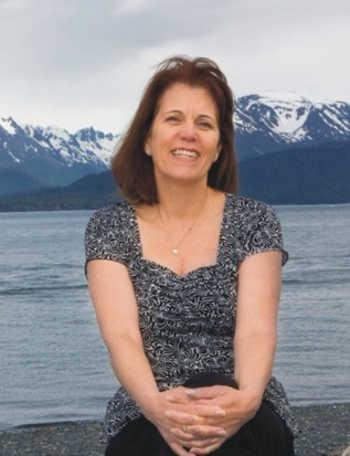
She will be present Saturday and Sunday to talk with guests and present demonstrations at the quilt show.
Granger’s designs and books can be found on her Web site, www.sewlittletimequilting.com .
The Falling Leaves Quilt Show will feature about 200 quilts from minis a few inches across to king-size bedcovers executed in a variety of techniques and in all colors of the spectrum.
Other attractions will be the Country Store Boutique, a vendor mall, quilting demonstrations, themed gift baskets and an opportunity quilt. Angelina’s Bakery will cater lunch Saturday and Sunday.
For more information contact show co-chairs Jane Alameda at 707-263-3831 or Martha DeLeon at 707-263-0693.
More information can be found at http://www.LLQG.org/quilt-show.html .
An appropriate and correctly installed child passenger safety seat may be the one thing that makes the difference between life and death for a child involved in a traffic collision.
In 2012, 45 percent of all California children under the age of eight who were killed in a collision were not properly restrained. That total reflects a significant increase from the previous year.
To help raise awareness of the importance of these lifesaving devices for children, the California Highway Patrol will observe National Child Passenger Safety Week, Sept. 14 to 20.
Throughout the week, CHP offices will be conducting child safety seat events statewide.
“Protecting a child is a parent’s primary responsibility,” said CHP Commissioner Joe Farrow. “No child should die in a collision or suffer serious injury because they were not properly restrained. As a parent or guardian, a child’s survival may depend on you.”
According to the National Highway Traffic Safety Administration (NHTSA), collisions are the leading cause of death for children 1 to 13 years old.
The CHP’s Statewide Integrated Traffic Records System data indicates that 60 children, 13 years of age or younger, were killed in collisions in California in 2012. Approximately 43 percent of those children were not safely secured in the vehicle.
California law requires that a child be properly restrained in an appropriate child safety seat in the back seat until they are 8 years old. A child who is 8 years, and 4 feet, 9 inches or taller may ride in the back seat with a lap/shoulder belt.
“We want to help you do all you can to best protect your child in your car. During Child Passenger Safety Week, we are encouraging all parents and caregivers to have their car seat checked by a certified technician,” said Rhonda Craft, director of the California Office of Traffic Safety. “When it comes to the safety of your child, there is no room for mistakes. A car seat checkup will ensure that your child is safely and securely buckled in your car.”
The CHP and OTS recommend the following safety tips for proper car seat selection and installation:
– Select a car seat based on your child’s age and size, choose a seat that fits in your vehicle, and use it every time.
– Always refer to your specific car seat manufacturer’s instructions; read the vehicle owner’s manual on how to install the car seat using the seat belt or LATCH system and check height and weight limits.
– To maximize safety, keep your child in the car seat for as long as possible, as long as the child fits within the manufacturer’s height and weight requirements.
– Keep your child in the back seat at least through age 12.
For more information or a free inspection of your child safety seat, contact the CHP office nearest you to make an appointment with a certified child passenger safety technician.
The CHP's Clear Lake Area office can be reached at telephone 707-279-0103.
The mission of the California Highway Patrol is to provide the highest level of safety, service, and security to the people of California.