 How to resolve AdBlock issue?
News
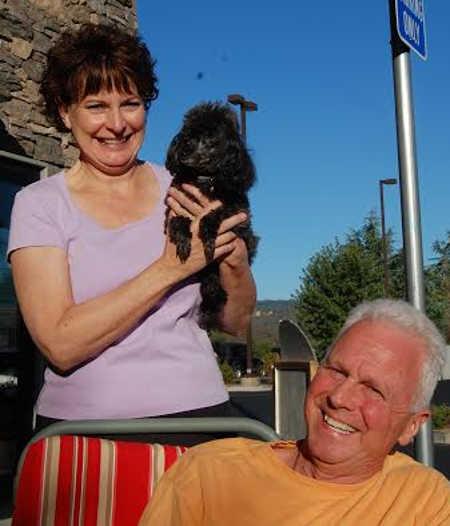
HIDDEN VALLEY LAKE, Calif. – It was 3 in the morning on a Pennsylvania highway when Charlie Breidenfield saw the flashing red light in his rear view mirror.
So he eased up on the accelerator and backed off the Ferrari’s speed by 40 miles per hour to 100 miles per hour.
Then he stopped and engaged the state police officer in a chat about the virtues of the car before receiving a ticket.
Breidenfield had lead-footed exotic European cars at such speeds before because (1) he wanted to test-drive them before he and his younger brother Bill, who were partners in a business, sold them and (2) he didn’t give a damn.
Why should he? Sometime in the future he knew that he would succumb to a condition in which he could not speak, swallow or even breathe.
“I had no fear. That’s why I drove like a lunatic,” Breidenfield said. “I’d do anything. I tried everything, just raised hell. I never worried about tomorrow because I figured sooner or later I’m going to get Lou Gehrig’s disease.”
This was a more-than-reasonable assumption for Breidenfield. As certain as sundown.
That is the cold reality for Lou Gehrig's disease – amyotrophic lateral sclerosis, or ALS – which currently is the beneficiary of a fundraising program sweeping the nation that involves pouring a bucket of ice and water over someone’s head.
A study released earlier this year by the Centers for Disease Control and Prevention estimated that, while deadly, Lou Gehrig's disease still remains rare in the general population. For the period from Oct. 19, 2010, to Dec. 31, 2011, there were approximately 12,187 people in the United States identified by the National ALS Registry as has having the disease.
However, for Breidenfield and his family, the disease has appeared with frightening frequency.
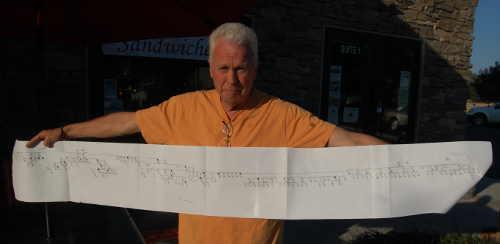
The reality for Breidenfield and his family is a chart created in 1993 to track its genealogy and deaths resulting from the ALS that Breidenfield and the rest of his family have come to know as “the family disease.” For a good and substantial reason.
“The people’s names in black are the ones in our family who died from it,” said Breidenfield as he unfolds his chart. “There are 111 that we know of.”
Or, about one out of every three names on the chart.
Generations on the chart, Breidenfield said, date back to the 1860s when his great-great-grandmother, Anna Herman, came to America from Berlin and married into a family named Reich.
It is believed that Anna Herman Reich introduced the condition – then known as Pott's disease-- to the first American generation of Breidenfield's ancestors.
“Doctors will say it’s 50-50 (fatal), but doctors are lousy on odds. The majority that I found – like in my father’s generation – died from it,” said Breidenfield. “During my grandfather’s generation there was only one who didn’t die from it.”
Devastating a family
For the past half-century ALS has been called “Lou Gehrig’s disease,” named for Babe Ruth’s iron-man teammate who was an ALS victim in 1941, two years after he played his final game for the New York Yankees.
In Europe ALS is still known as Charcot disease, named for the pioneering and preeminent 19th century French neurologist Jean-Martin Charcot.
By whatever name, it is caused by a dominant – and for the most part dooming – gene, a genetic time bomb that makes people prisoners in their own bodies and kills them in as little as two years.
“You only need one person with a gene mutation to spread it to the next generation,” said Breidenfield.
For that reason, he and Donna, his wife of 24 years, elected not to have children. The two have lived in California – most recently in Hidden Valley Lake – for the past 11 years after coming here from Michigan.
Within the past couple of years, Breidenfield learned of another branch of the family that he hadn’t realized existed when a cousin called him from Long Island.
She told Breidenfield she was in a wheelchair and a half-dozen members of her branch of the family, including her mother, died from Lou Gehrig’s disease.
Then another cousin – this one living just outside Philadelphia – contacted him to tell him about six of his relatives who were Lou Gehrig's disease victims.
In his immediate family, Breidenfield lost older and younger brothers and his father to ALS. His grandfather died as a result of the disease at age 46, his father was 67 when he died.
Charlie Breidenfield's older brother John would succumb to the disease at age 66. His younger brother Bill, an aspiring actor, was on a ventilator for 12 years before dying at age 42. Bill’s death and the death of their father, John, were separated only by a few weeks. Both died literally in Charlie Breidenfield’s arms.
Back up a few years to the top of the stairs in the Breidenfield family home in Michigan where Charlie Breidenfield, not 5 five years old, and his brother, John, older by two years, sat and for the first time learned about the debilitating neurological disorder that would take on such importance in their lives.
At the time, 1954, they were listening to their father in a long-distance, late-night phone call with one of their favorite aunts, talking about how another aunt, then suffering from Lou Gehrig’s disease, would not make it through the summer.
“I was devastated,” Breidenfield said.
Groundbreaking research
The most incredible part of Breidenfield’s story is that medical researchers have traced the ALS gene mutation he carries – a marker on the Y chromosome – back through 93 generations. That's 2,000 years on the Common Era calendar.
The worldwide study has established that Breidenfield is a member of the third largest family in which the ALS gene – known scientifically as A4V-SOD1 – has been a dominant factor.
It recently was estimated that the A4V mutation occurred 540 generations – or 12,000 years – ago. Researchers conclude that the mutation was carried by the Asian ancestors of American Indians who reached the Americas via the Bering Strait land bridge.
Even so, ALS is not primarily a familial disease. Researchers say 90 percent of the mortalities caused by the gene are sporadic.
Breidenfield has spent interminable hours and funds in his effort to combat and survive with ALS.
Twice a month he makes contact with neurologist Dr. Teepu Siddique of Northwestern University, who along with Dr. Robert Brown of Harvard discovered the first ALS mutant gene more than 20 years ago.
The major news media – including Tom Brokaw of NBC and CNN – heralded Siddique’s discovery, which Siddique said at the time “is the first time we’ve found a cause and identified what may lead to a to a treatment.”
With a treatment of choice still to be found, Breidenfield has adopted his own system of medication. Every hour on the hour he consumes a variation of compounds that presumably have warded off the disease.
“I’ve come a long distance from where I was,” he said. “Late in 2011 and early 2012 I was in a whole lot of pain. My brother John, who didn’t come back from it, was pretty sure that I was on the same road as he was.”
His brother John died at age 66. Charlie Breidenfield’s 65th birthday is in November.
“We got to the point where we were almost identical in what was happening to us,” Breidenfield said. “He had lost 18 pounds of muscle off his legs and was using a cane and I knew I was real close to needing a cane or not walking.”
Tragic as his brother’s death was, Breidenfield was motivated by it.
“It drove me like mad,” said Breidenfield. “After dinner I would sit down and stay on a computer until I blacked out. Now, I feel blessed that I can do as much as I can.”
In the time since his older brother’s death, Breidenfield has busied himself in an interminable search for medicines that can aid a Lou Gehrig’s victim. He also attempts to contact other victims.
He estimates he has tried or reviewed more than 100 compounds with mixed results. He has written to hundreds of other ALS victims including Hall of Fame and former Oakland A’s pitcher Jim (“Catfish”) Hunter who died, a victim of ALS, in 1999.
Most likely because Breidenfield is not a doctor, indeed not even a licensed practitioner, hardly anyone takes him serious in his effort to share information.
“Nobody responds,” he said sadly, “They’ll just say ‘who the hell’s Charlie Breidenfield?’ Until you see the clip from Tom Brokaw you‘d think I was just another bull-----er like you find on the next bar stool.”
He estimates he’s sent out hundreds of unanswered letters to ALS victims. Some of the victims, he believes, cling to the hope that, “If I change my name it will all go away.”
Universities and drug companies react in a entirely different way to Breidenfield's calls.
“When I call them and identify myself they know right away they’re talking to someone who knows what’s going on,” he said.
Breidenfield, along with his sister Pam, has also spent countless hours tracing his ancestry.
“I don’t know how many times I’ve gone through the family graveyard in Philadelphia,” he said. “I also went to a 200-year-old funeral parlor to find some family members and I’ve spent a lot of time digging up dead bodies – not really digging them up, but finding paperwork regarding relatives who died from Lou Gehrig’s disease.”
Donna Breidenfield has had to watch her husband struggle with the effects of ALS and gamely wage his battle against it.
“He’ll have very good days and very bad days,” she said. “The trouble is when I see him having a bad day I feel I can‘t control anything. I’m just helpless at that point.
“It can be very stressful,” she continued. “Two years ago there was a point where he couldn’t get in or out of the car, he was dropping a lot of things, tripping over things, didn’t do much and had no energy.”
In terms of the battle to find a cure for Lou Gehrig’s disease, Charlie Breidenfield is indeed somebody.
“I asked Dr. Teepu a year ago how many (ALS-) involved family members talk to him like I do. Turns out I’m the only (ALS victim) who works with him and talks with him about what he’s found,” Breidenfield said.
A moment after Breidenfield said that the phone at his Hidden Valley Lake home rang. It was Siddique returning a call.
“How important was my family in finding the gene mutation?” Breidenfield asked him.
“It was very important,” Siddique replied.
Email John Lindblom at
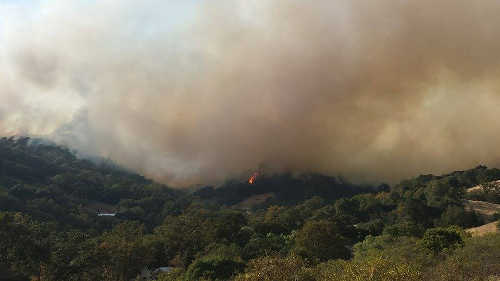
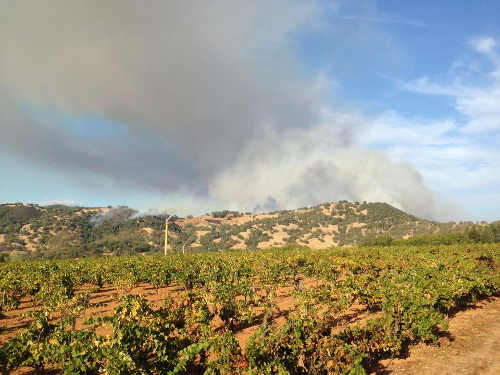
NORTH COAST, Calif. – A fast-moving fire in Mendocino County destroyed several structures and led to evacuations Saturday.
The Black Fire was first reported just before 4 p.m. on Black Bart Trail, north of Lake Mendocino and between Redwood Valley and Potter Valley, according to Cal Fire.
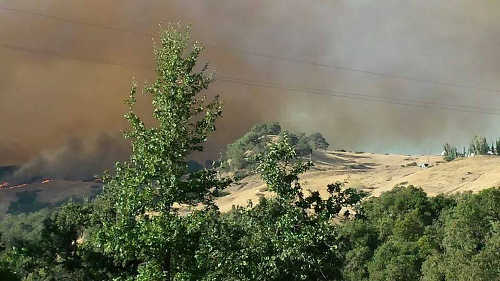
The fire sent up a large, dark plume of smoke that could be seen on Lake County's Northshore.
By nightfall Cal Fire confirmed that the fire had burned 125 acres, with radio reports indicating later in the evening that 150 or more acres were burned, with several houses also lost.
The Mendocino County Sheriff's Office issued an emergency notification to residents from Hell's Delight Canyon and northeast towards Potter Valley at around 5:30 p.m. Saturday notifying them of mandatory evacuations.
An emergency evacuation shelter was set up at Eagle Peak Middle School, located at 8601 West Road in Redwood Valley, sheriff's officials reported.
Officials asked for people to stay out of the fire area while firefighters and other emergency crews are working.
Information about the cause of the fire was not immediately available.
Email Elizabeth Larson at
LAKE COUNTY, Calif. – Lake County Animal Care and Control this week has several big dogs needing loving homes.
This week's dogs are mixes of basset hound, boxer, Labrador Retriever, pit bull and Welsh Corgi.
Dogs that are adopted from Lake County Animal Care and Control are either neutered or spayed, microchipped and, if old enough, given a rabies shot and county license before being released to their new owner. License fees do not apply to residents of the cities of Lakeport or Clearlake.
If you're looking for a new companion, visit the shelter. There are many great pets hoping you'll choose them.
In addition to the animals featured here, all adoptable animals in Lake County can be seen here: http://bit.ly/Z6xHMb .
The following dogs at the Lake County Animal Care and Control shelter have been cleared for adoption (additional dogs on the animal control Web site not listed are still “on hold”).
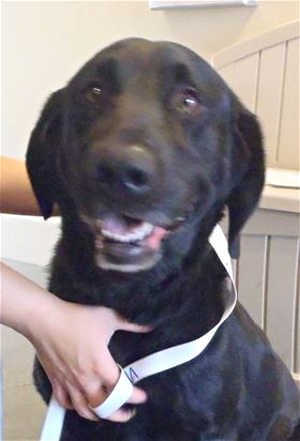
Male Labrador Retriever mix
This male Labrador Retriever mix is looking for a special home.
He is undergoing treatment for heartworm, and his neutering surgery was paid for by a donor. He therefore has a low adoption fee.
Shelter staff said he is good with other dogs and cats, and would be a good fit in a family with children age 7 and above or a single family. He loves to play fetch with two balls.
He is in kennel No. 8, ID No. 578.

'Aces'
“Aces” is a female pit bull terrier mix.
She has a short coat with beautiful markings.
Information was not posted on her age or if she has been altered.
She is in kennel No. 24, ID No. 573.
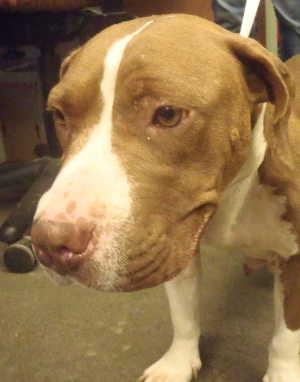
'Momma'
“Momma” is a basset hound pit bull terrier mix.
Shelter staff said she is a very sweet dog that came in with puppies that are now big enough to be on their own.
She loves to be with people and would make a great family companion.
Momma is in kennel No. 25, ID No. 574.
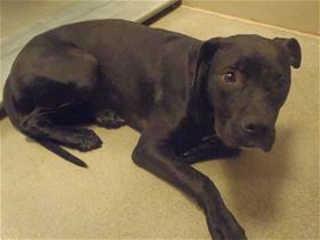
Boxer-pit bull mix
Shelter staff said this female boxer-pit bull mix is a very mellow, sweet dog who is good with other dogs.
She would fit well in most household situations with children age 10 and over.
She's in kennel No. 27, ID No. 559.

'Hank'
“Hank” is a male pit bull terrier mix.
Shelter staff said he is great with other dogs. He is very playful but calms down quickly.
He needs training with basic manners but he is a quick learner and would make a good family pet for a family with children age 5 and above.
Hank is in kennel No. 28, ID No. 554.
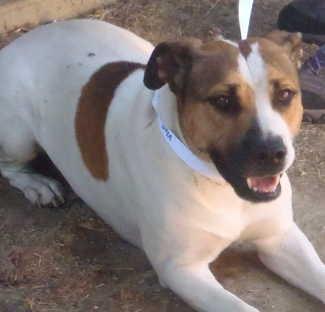
Welsh Corgi mix
This male dog is a mix of Welsh Corgi and pit bull terrier.
He is in kennel No. 30, ID No. 672.
To fill out an adoption application online visit http://www.co.lake.ca.us/Government/Directory/Animal_Care_And_Control/Adopt/Dog___Cat_Adoption_Application.htm .
Lake County Animal Care and Control is located at 4949 Helbush in Lakeport, next to the Hill Road Correctional Facility.
Office hours are Monday through Friday, 8 a.m. to 5 p.m., and 1 p.m. to 3 p.m., Saturday. The shelter is open from 10:30 a.m. to 4:30 p.m. Monday through Friday and on Saturday from 1 p.m. to 3 p.m.
Visit the shelter online at http://www.co.lake.ca.us/Government/Directory/Animal_Care_And_Control.htm .
For more information call Lake County Animal Care and Control at 707-263-0278.
Email Elizabeth Larson at

NASA's Mars Curiosity rover has reached the Red Planet's Mount Sharp, a Mount-Rainier-size mountain at the center of the vast Gale Crater and the rover mission's long-term prime destination.
“Curiosity now will begin a new chapter from an already outstanding introduction to the world,” said Jim Green, director of NASA's Planetary Science Division at NASA Headquarters in Washington. “After a historic and innovative landing along with its successful science discoveries, the scientific sequel is upon us.”
Curiosity's trek up the mountain will begin with an examination of the mountain's lower slopes.
The rover is starting this process at an entry point near an outcrop called Pahrump Hills, rather than continuing on to the previously-planned, further entry point known as Murray Buttes.
Both entry points lay along a boundary where the southern base layer of the mountain meets crater-floor deposits washed down from the crater's northern rim.
“It has been a long but historic journey to this Martian mountain,” said Curiosity Project Scientist John Grotzinger of the California Institute of Technology in Pasadena. “The nature of the terrain at Pahrump Hills and just beyond it is a better place than Murray Buttes to learn about the significance of this contact. The exposures at the contact are better due to greater topographic relief.”
The decision to head uphill sooner, instead of continuing to Murray Buttes, also draws from improved understanding of the region's geography provided by the rover's examinations of several outcrops during the past year.
Curiosity currently is positioned at the base of the mountain along a pale, distinctive geological feature called the Murray formation.
Compared to neighboring crater-floor terrain, the rock of the Murray formation is softer and does not preserve impact scars, as well. As viewed from orbit, it is not as well-layered as other units at the base of Mount Sharp.
Curiosity made its first close-up study last month of two Murray formation outcrops, both revealing notable differences from the terrain explored by Curiosity during the past year.
The first outcrop, called Bonanza King, proved too unstable for drilling, but was examined by the rover's instruments and determined to have high silicon content. A second outcrop, examined with the rover's telephoto Mast Camera, revealed a fine-grained, platy surface laced with sulfate-filled veins.
While some of these terrain differences are not apparent in observations made by NASA's Mars orbiters, the rover team still relies heavily on images taken by the agency's Mars Reconnaissance Orbiter (MRO) to plan Curiosity's travel routes and locations for study.
For example, MRO images helped the rover team locate mesas that are over 60 feet (18 meters) tall in an area of terrain shortly beyond Pahrump Hills, which reveal an exposure of the Murray formation uphill and toward the south.
The team plans to use Curiosity's drill to acquire a sample from this site for analysis by instruments inside the rover. The site lies at the southern end of a valley Curiosity will enter this week from the north.
Though this valley has a sandy floor the length of two football fields, the team expects it will be an easier trek than the sandy-floored Hidden Valley, where last month Curiosity's wheels slipped too much for safe crossing.
Curiosity reached its current location after its route was modified earlier this year in response to excessive wheel wear.
In late 2013, the team realized a region of Martian terrain littered with sharp, embedded rocks was poking holes in four of the rover's six wheels. This damage accelerated the rate of wear and tear beyond that for which the rover team had planned. In response, the team altered the rover's route to a milder terrain, bringing the rover farther south, toward the base of Mount Sharp.
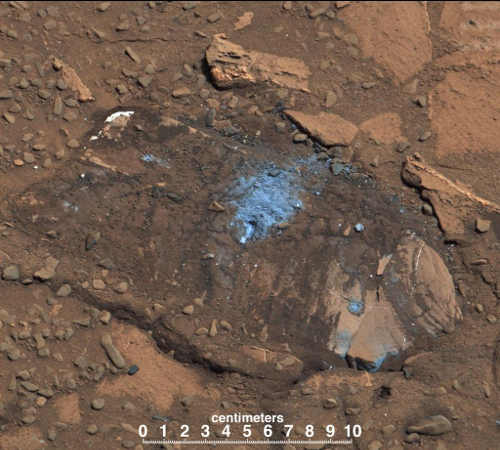
“The wheels issue contributed to taking the rover farther south sooner than planned, but it is not a factor in the science-driven decision to start ascending here rather than continuing to Murray Buttes first,” said Jennifer Trosper, Curiosity Deputy Project Manager at NASA's Jet Propulsion Laboratory in Pasadena, California. “We have been driving hard for many months to reach the entry point to Mount Sharp,” Trosper said. “Now that we've made it, we'll be adjusting the operations style from a priority on driving to a priority on conducting the investigations needed at each layer of the mountain.”
After landing inside Gale Crater in August 2012, Curiosity fulfilled in its first year of operations its major science goal of determining whether Mars ever offered environmental conditions favorable for microbial life.
Clay-bearing sedimentary rocks on the crater floor, in an area called Yellowknife Bay, yielded evidence of a lakebed environment billions of years ago that offered fresh water, all of the key elemental ingredients for life, and a chemical source of energy for microbes.
NASA's Mars Science Laboratory Project continues to use Curiosity to assess ancient habitable environments and major changes in Martian environmental conditions.
The destinations on Mount Sharp offer a series of geological layers that recorded different chapters in the environmental evolution of Mars.
The Mars Exploration Rover Project is one element of NASA's ongoing preparation for a human mission to the Red Planet in the 2030s. JPL built Curiosity and manages the project and MRO for NASA's Science Mission Directorate in Washington.
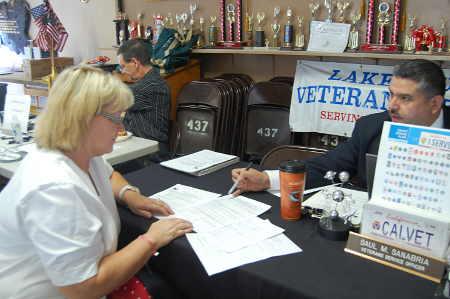
CLEARLAKE, Calif. – Veterans of all ages came out to a special event this week to learn about the unique services available to them.
Approximately 154 Lake County veterans attended the first Stand Down/Homeless Veteran’s Resource Fair for Lake and Mendocino County veterans at the American Legion Post 437 in Clearlake on Wednesday and Thursday, according to United Veterans Council President Frank Parker.
Bob Penny, the county's retired veteran service officer and a volunteer at the stand down, said organizers had estimated that about 120 veterans would attend.
“This turnout has been awesome,” Penny said.
The term “stand down” refers to a suspension and relaxation from the alert state of readiness for the military.
“The purpose of this event is to bring in all the veterans from Lake and Mendocino counties and we invited veterans in Sonoma County,” said another event volunteer, Jim Yates. “There are a lot of homeless veterans out there and these resources can provide for them, like The Bridge. They help so many homeless people, not just veterans.”
One of the veterans who attended the two-day event was John Blocker.
Blocker will never be the same as he was when he came home after soldiering in the Gulf War crisis back in the early 1990s.
But, if he could, he would do the same if he heard his country’s call, even though when he came back from Iraq and the Gulf War he had multiple injuries and post traumatic stress disorder, or PTSD. Those injuries were the result of friendly fire.
“I believe in the right to be free,” said Blocker, a tall U.S. Army veteran who needs a stake to walk and has the face of a warrior. “If there’s a threat against that anywhere in the world it needs to be addressed. If someone says I’m going to come over to your house and I’m going to bring bodily harm to you, wouldn’t you go to try to protect that (your home)?’”
The two-county, two-day event in Clearlake was one of many stand downs held up and down California.
The resource fair featured 35 different agencies that offered goods, aids and services to the vets, among them the homeless and at-risk individuals.
Organizations on hand to help veterans included Vet Connect; Veterans Affairs; Alcohol and Other Drug Services, or AODS; The Tooth Travelers of Placerville, a mobile dental services unit that contracts with the VA to provide general dental care, and which has participated in several stand down events throughout California; Sutter Lakeside Hospital's mobile health services unit; the Area Agency on Aging; and In-Home Supportive Services, among others.
Parker offered a special thanks to Lake Transit Authority staff for putting together all the hygiene kits for the veterans.
Heather Olds, a social worker with Veterans Affairs' Clearlake clinic site, said they receive a lot of requests for assistance with transportation and in-home support.
“We have quite an elderly veteran population here in Lake County,” Olds said. “A lot of veterans move here to retire and their families live elsewhere.”
Olds said there also is an effort under way to provide transitional housing to local veterans who need it.
AODS representative Rick Sullivan said a lot of veterans struggle with substance abuse and AODS can connect them with services and help with rehabilitation through VA referrals.
Sutter Lakeside's mobile health services unit primarily provided blood pressure and glucose checks, as well as health information, during the stand down, according to nurse Debbie Allen.
Allen explained that the mobile unit can provide the same services as any clinic site “for people who many not have transportation, can't make it to the clinic or just have a phobia about going to the doctor's office.”
She said it operates in designated locations in a different part of the county each day and participates in several community events in conjunction with service providing agencies, including schools.
“Our main role is to serve the people in the community just like a regular doctor would and provide easy access to medical care,” Allen said.
Physician assistant Brad Greaves said the mobile health services unit program bridges the gap caused by transportation limitations in the county. The program also is adaptable and continues to adjust according to the needs of the community.
“Whatever the community needs, we can adapt the program,” Greaves said.
Micki Dolby of the Area Agency on Aging said one of the most helpful aspects of the event was being able to direct veterans to another service provider present a couple tables away.
She said the resource directory provided by the agency also was well received. “Our resource directory has so much information in it. If we didn't know everything about a service, we are able to point them in the right direction in Lake and Mendocino counties.”
Veteran Don Clay of Upper Lake read Lake County News' Thursday story about the stand down and came to event.
Clay, with a laugh, noted that he received “too much information” about the services available.
“Most of this I will be passing on to other people,” he said, adding he planned to talk about the event with other veterans on the Friday bus trip to the VA's medical center at Fort Miley in San Francisco.
For Blocker, the stand down provided a rare day away from his customary surroundings.
“This is my biggest outing and that’s because of the veterans – so I can feel OK here,” he confessed. “Anywhere else I’d have problems.”
Blocker, who says that his PTSD is severe, grew up in the eastern United States. “Then I came out to California, got married three times, and the third one stuck by my side and said, ‘You need to go to the VA.'”
Blocker enlisted in a peacetime Army in 1989. And then suddenly he was involved in a war.
“I ended up going to war because it broke out in Iraq,” he said. “But if I had it all to do over I would do it again.”
George Thompson, a veteran and volunteer with Vet Connect, attended to exit forms, which he said provided guests with an opportunity to comment. He said many comments identified a need for increased public notification efforts.
Thompson pointed out that there are ongoing opportunities for veterans to get the assistance they need.
“You don't have to wait for a 'stand down' event. Veterans can access their resources through Vet Connect every month,” said Thompson.
Vet Connect offers information and support to veterans on the second Wednesday of the month at 9 a.m. in Clearlake at the American Legion Hall Post 437, 14770 Austin Road; and on the third Wednesday of the month at 9 a.m. at Umpqua Bank in Lakeport, 805 11th St.
Email John Lindblom at
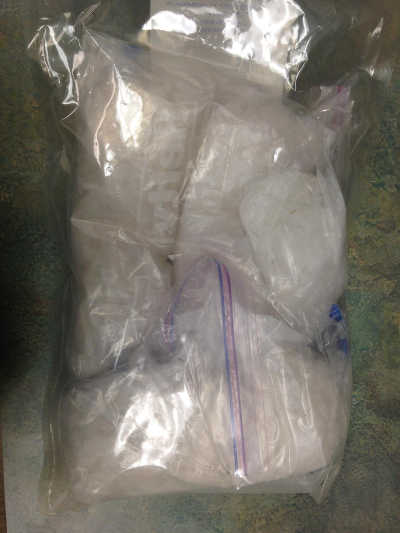
MIDDLETOWN, Calif. – An ongoing investigation involving federal and local law enforcement officials led this week to the arrest of a Santa Rosa man and the seizure of three pounds of methamphetamine.
Hugoberto Quintanilla, 34, was arrested following a Tuesday morning search warrant service in Middletown, according to Lt. Steve Brooks of the Lake County Sheriff's Office.
Brooks said the Lake County Sheriff’s Office assisted the Drug Enforcement Administration with the service of federal search warrants and arrest warrants in Middletown, Santa Rosa and Petaluma.
He said the service of the federal search warrants and arrest warrants was the culmination of a six-month joint investigation related to the importation and trafficking of methamphetamine into Lake County.
At 10:30 a.m. Tuesday DEA agents and members of the Sheriff’s Narcotics Task Force responded to an address in the 15000 block of Main Street in Middletown to serve a search warrant, Brooks said.
During the search three pounds of methamphetamine was located and seized, according to Brooks.
At that time, Quintanilla was arrested for possession and distribution of methamphetamine. Brooks said Quintanilla later was transported to a federal holding facility in San Francisco.
One additional suspect was arrested during the service of search warrants in Santa Rosa and Petaluma, Brooks said.
The Sheriff’s Narcotics Task Force can be reached through its anonymous tip line at 707-263-3663.