 How to resolve AdBlock issue?
News
LAKE COUNTY, Calif. – After a summer of good water quality, cyanobacteria blooms were observed in multiple locations around Clear Lake starting in September.
Recent complaints about taste and odor of drinking water raised customer concerns about safety.
To be certain that Lake County citizens are being supplied with safe drinking water, local community water companies, in cooperation with California’s Drinking Water Program and with help from the Elem and Big Valley environmental directors, conducted voluntary testing on Sept. 15 of raw and finished water.
Finished water is what is delivered to customers’ homes.
The water was tested for microcystins, the most common cyanotoxin of concern to drinking water systems. Testing for cyanotoxins is not currently required by regulations.
According to Lake County Health Officer, Dr. Karen Tait, “The results are reassuring.”
All four locations that were tested – City of Lakeport, Highlands Water Co., Clearlake Oaks Water Co. and Konocti County Water District – measured “nondetectable” for microcystins in finished water.
Water tested around the shorelines of Austin Park, Sulfur Bank Mine Beach and in Clearlake Oaks all showed levels of microcystins well above levels considered safe for direct contact recreational activities.
As a result, “Warning” signs will be posted in those areas to caution the public to stay out of the water and to not allow pets to swim in those areas or come into contact with mats and algal scum that accumulates on the shore.
The cyanotoxins levels appear highest in areas where the water has visible surface scum, foam and mats.
“Even though we are very concerned about the health risks of coming into contact with the high microcystin levels in the recreational locations identified, it appears that those dangerous levels quickly drop off further away from the shore,” Tait said.
Testing along the shoreline in Lucerne revealed much lower levels of microcystin. Therefore, there will be no additional warning signs posted in that area.
A multiagency task force to review current data related to the cyanobacterial blooms was convened this week by the Elem Colony and Big Valley Rancheria environmental health directors. Participation included multiple county and state departments and agencies.
The goal of the group is to coordinate approaches, share information, and develop written plans for the future.
“We are fortunate to have such active participation of so many agencies, particularly the state Drinking Water program and local tribes. Although this has been a difficult year for us, we are benefiting from increased collaboration of so many agencies and departments,” said Dr. Tait. “We expect that conditions should improve with wetter and cooler weather.”
A variety of local businesses in Lake County are distributing informational postcards about cyanobacteria, entitled “Living with a Natural Lake.”
Do’s and don’ts to stay safe and healthy around cyanobacteria blooms are included in the postcard. It also provides information on how to distinguish cyanobacteria blooms from the harmless aquatic plants that grow on Clear Lake.
More information about cyanobacteria can be found at http://www.co.lake.ca.us/Government/Directory/Environmental_Health/Blue-Green_Algae.htm and http://www.cdph.ca.gov/healthinfo/environhealth/water/pages/bluegreenalgae.aspx .
LAKE COUNTY, Calif. – In August Lake County enjoyed a sizable drop in unemployment, which placed the local jobless rate at the lowest level in nearly seven years.
The California Employment Development Department on Friday released its latest report on unemployment, which showed that Lake County's August rate was 8.9 percent, down from a revised 9.7 percent in July and below the year-ago estimate of 10.8 percent.
Lake County's August rate is the lowest since October 2007, when unemployment locally was 8 percent.
Unemployment statewide was unchanged in August, remaining at 7.4 percent, while showing an improvement over the August 2013 rate of 8.9 percent, the report showed.
The US Bureau of Labor Statistics said the nationwide unemployment rate was at 6.1 percent in August, down from 6.2 percent in July and 7.2 percent in August 2013.
The Employment Development Department's report said nonfarm jobs in California totaled 15,539,600 in August, an increase of 44,200 jobs over the month, according to a survey of 58,000 California businesses that measures jobs in the economy.
The year-over-year change, August 2013 to August 2014, showed an increase of 313,900
jobs – up by 2.1 percent – according to the report.
At the same time, a federal survey of 5,500 California households showed an increase in the number of employed people.
That survey estimated the number of Californians holding jobs in August was 17,224,000, an increase of 16,000 from July 2014, and up 292,000 from the employment total in August of last year.
The number of people unemployed in California was 1,374,000 – up by 1,000 over the month, but down by 287,000 compared with August of last year, the report showed.
The Employment Development Department report on payroll employment – wage and salary jobs – in the nonfarm industries of California totaled 15,539,600 in August, a net gain of 44,200 jobs since the July survey, which the agency said followed a gain of 31,500 jobs in July.
A look at statewide job growth, declines
Across the state, nine industry categories – mining and logging; construction; manufacturing; financial activities; professional and business services; educational and health services; leisure and hospitality; other services; and government – added jobs over the month, gaining 52,500 jobs. Construction posted the largest increase over the month, adding 13,600 jobs, the report showed.
Two categories – trade, transportation and utilities and information – reported job declines over the month, down 8,300 jobs. The Employment Development Department said trade, transportation and utilities posted the largest decrease over the month, down 8,000 jobs.
In a year-over-year comparison – from August 2013 to August 2014 – nonfarm payroll employment in California increased by 313,900 jobs, up 2.1 percent, the report showed.
The report said nine categories – mining and logging; construction; trade, transportation and utilities; information; professional and business services; educational and health services; leisure and hospitality; other services; and government – posted job gains over the year, adding 322,800 jobs.
Professional and business services posted the largest gains on a numerical basis, adding 93,000 jobs, a 4-percent increase. Construction posted the largest gains on a percentage basis, up 5.6 percent, adding 35,600 jobs, based on the report.
Two categories – manufacturing and financial activities – posted job declines over the year, down 8,900 jobs. The report showed that financial activities posted the largest declines on both a numerical and percentage basis, down 7,400 jobs, a 0.9-percent decrease.
Farming accounts for big increase in jobs
In August, Lake County's statewide unemployment rate caused it to be ranked at No. 40.
Lake County's civilian workforce totaled 27,500 people in August, up from 26,840 the previous month but down from 27,720 in August 2013, according to Employment Development Department data.
County residents without jobs in August totaled 2,450, down from 2,600 in July and 2,990 in August 2013, the state reported.
Marin County remained in first place for the lowest unemployment rate, 4.2 percent, while Imperial's 25.1 percent rate gained it the worst ranking in the state.
Lake's neighboring counties ranked as follows in August, according to the Employment Development Department: Colusa, No. 57, 12 percent; Glenn, No. 47, 9.9 percent; Mendocino, No. 12, 6.1 percent; Napa, No. 4, 4.8 percent; Sonoma, No. 5, 5.4 percent; and Yolo, No. 21, 6.8 percent.
In Lake County, “total farm” jobs increased by 19.6 percent, or 320 jobs, in August, thanks to the summer farming season.
Under the “total nonfarm” category, there was a 1.8-percent increase in August. Top total nonfarm subcategories that showed improvement in August included mining, logging and construction, 7.9 percent; local government, 7.8 percent and federal government, 6.3 percent.
The largest declines were seen in information, -6.3 percent; manufacturing, -3.6 percent; financial activities, -2.4 percent; and other services, -2.1 percent.
In other employment news, the Employment Development Department said there were 411,005 people receiving regular Unemployment Insurance benefits during the August survey week, compared with 426,224 in July and 465,922 in August 2013.
Also in August, new claims for Unemployment Insurance were 47,640 in August 2014, compared with
56,565 in July and 48,747 in August of last year.
Email Elizabeth Larson at

KELSEYVILLE, Calif. – The Moore Family Winery will host a fundraiser to benefit the Seagrave family on Thursday, Oct. 2.
The event will begin at 5 p.m. at the winery, located at 11990 Bottle Rock Road in Kelseyville.
Forrest Seagrave, 33, was shot and fatally wounded during an attempted robbery in Kelseyville in January 2013.
The proceeds of the Oct. 2 event will be used to raise funds needed for Seagrave's family to attend the trial of the suspect charged with the murder, Jonathan Antonio Mota of Kelseyville. A story about Mota's federal indictment can be found at http://bit.ly/1mmTku4 .
Mota's prosecution is being handled by the US Attorney's Office. As a result, the trial is scheduled to be held in San Francisco – the second most expensive city in the nation – next year.
The fundraiser will feature wine, the repertoire of David Neft, a barbecue meal featuring grillmasters Sheriff-elect Brian Martin and District 5 Supervisor Rob Brown, and magnificent treasures that you can bid on during the live auction.
Dinner will be served at 6 p.m. with a live auction to begin at 7 p.m.
The cost is $50 per person.
Seating is limited.
Tickets are only available at http://www.moorefamilywinery.com/events/ .
For those who cannot attend the event but would like to donate, an online fundraiser to pay for the family's trip to the trial can be found at http://www.gofundme.com/forrestseagrave .
The online fundraiser, as of early Saturday, had brought in $3,790 of the family's $15,000 goal.
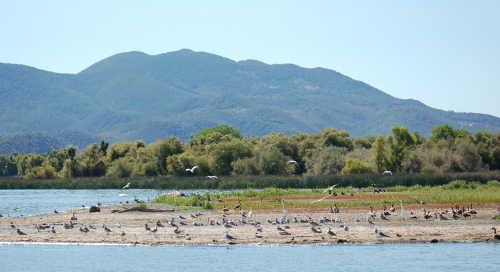
UPPER LAKE, Calif. – The Lake County Land Trust will be celebrating its 20th anniversary as part of its annual dinner, slated for Oct. 11 at the Lodge at Blue Lakes.
The trust is welcoming Congressman Mike Thompson as guest speaker.
The Lake County Land Trust was officially founded as a nonprofit 501 (c) (3) organization in 1994. Since then, the Land Trust has played a vital role in conservation efforts in Lake County.
The Land Trust now owns and operates the Rodman Preserve on the north end of Clear Lake, spearheaded the purchase and preservation of the Black Forest on the slopes of Mt. Konocti, owns and manages the Rabbit Hill Park in Middletown and is partnering with The Nature Conservancy in managing the Boggs Lake Preserve on Mt. Hannah.
One of the most exciting projects the Land Trust is currently involved with is dubbed the Big Valley Wetlands Preservation Project.
This project focuses on preservation of the remaining unprotected wetlands on the shoreline of Clear Lake, spanning from Clear Lake State Park to south Lakeport.
A conceptual area protection plan for this area, spearheaded by the Land Trust, has recently received approval from the California Department of Fish and Wildlife, making the trust eligible to receive funding from the State Wildlife Conservation Board to purchase property and conservation easements in this area.
The Land Trust currently has an option on one 30 acre parcel and has successfully raised almost $100,000 towards the purchase price of this beautiful piece of lakefront property.
In addition, the Land Trust recently has begun negotiations for the purchase of another parcel adjacent to its current optioned property for a total of 74 acres of lakefront and near-shore habitat.
The Lake County Land Trust will be celebrating its past achievements and current efforts as part of its 20th anniversary celebration at the annual benefit dinner.
The dinner is a fundraiser and features live music, Lake County wines, and a fabulous silent auction. Tickets cost $70 per person and include wine.
This year the event will start at 3 p.m. but guests are invited to come even earlier to relax and enjoy a beverage on the deck at The Lodge at Blue Lakes.
Participants also are encouraged to stay at the lodge; reservations can be made by calling The Lodge at Blue Lakes at 707-275-2181.
A discounted room rate will be given to those who are attending the Land Trust dinner – so don’t forget to mention that you are part of the Land Trust event – and in addition, Peter and Maryann Schmid, owners of the Lodge, will donate 10 percent of the room cost to the Land Trust.
Dinner reservations must be made separately by calling 707-262-0707 or emailing
Reservations will be confirmed once payment for the dinner has been received.
For information about the Lake County Land Trust, visit www.lakecountylandtrust.org or call 707-262-0707.
On Wednesday morning, Oct. 8, not long before sunrise, the bright full Moon over North America will turn a lovely shade of celestial red.
It's a lunar eclipse – visible from all parts of the USA.
“It promises to be a stunning sight, even from the most light polluted cities,” said NASA's longtime eclipse expert Fred Espenak. “I encourage everyone, especially families with curious children, to go out and enjoy the event.”
From the east coast of North America, totality begins at 6:25 a.m. Eastern Time.
The moon will be hanging low over the western horizon, probably swollen by the famous moon illusion into a seemingly-giant red orb, briefly visible before daybreak.
West Coast observers are even better positioned. The moon will be high in the sky as totality slowly plays out between 3:25 a.m. and 4:24 a.m. Pacific Time.
During a lunar eclipse, the Moon passes deep inside the shadow of our planet, a location that bathes the the face of the Moon in a coppery light.
A quick trip to the Moon explains the color: Imagine yourself standing on a dusty lunar plain looking up at the sky.
Overhead hangs Earth, nightside down, completely hiding the sun behind it. The eclipse is underway.
You might expect Earth seen in this way to be utterly dark, but it's not. The rim of the planet is on fire!
As you scan your eye around Earth's circumference, you're seeing every sunrise and every sunset in the world, all of them, all at once.
This incredible light beams into the heart of Earth's shadow, filling it with a coppery glow and transforming the Moon into a great red orb.
However, red is not the only color. Many observers of lunar eclipses also report seeing a band of turquoise.
The source of the turquoise is ozone. Atmospheric scientist Richard Keen of the University of Colorado explained, “During a lunar eclipse, most of the light illuminating the moon passes through the stratosphere where it is reddened by scattering. However, light passing through the upper stratosphere penetrates the ozone layer, which absorbs red light and actually makes the passing light ray bluer.”
This can be seen, he said, as a soft blue fringe around the red core of Earth's shadow.
To catch the turquoise on Oct. 8, he advised, “look during the first and last minutes of totality. The turquoise rim is best seen in binoculars or a small telescope.”
The depth and hue of lunar eclipse colors depends a lot on the dustiness of the stratosphere. When volcanoes erupt and chock the stratosphere with aerosols, lunar eclipses can turn such a deep red that the Moon looks almost black.
That's not the case this time, however.
“Despite some recent eruptions that look spectacular from the ground, there have been no large injections of volcanic gases into the stratosphere,” said Keen. “In the absence of volcanic effects, I expect a rather normal reddish-orange lunar eclipse similar in appearance to last April's eclipse.”
In other words, this is going to be good.
Espenak noted that “the total lunar eclipse of Oct. 8 is the second of four consecutive total lunar eclipses. Such a set of total eclipses is known as a tetrad.”
The next eclipse in the tetrad is six months from now, in April 2015.
“Don't wait,” he urged.
Mark your calendar for Oct. 8, wake up early and enjoy the show.
Dr. Tony Phillips works for the National Aeronautics and Space Administration.
CLEARLAKE OAKS, Calif. – On Thursday the Clearlake Oaks County Water District Board directed staff to bring back a draft ordinance that would increase compensation for meeting attendance, but voted against a proposal to give board members health insurance.
About 50 people attended the meeting, held Thursday afternoon at the Live Oak Senior Center rather than the district's headquarters due to the need for more space.
Increased compensation or health insurance for board members initially was proposed at the board's August meeting.
The board considered raising the compensation for meetings to $100, for a maximum monthly compensation of $600 per board member. Currently, board members get $25 for a special meeting or $50 for a regular meeting.
Alternately, the board members would be offered full health insurance – medical, dental, vision and employee assistance program – at a monthly cost to the district of $679 per board member, or dental, vision and the employee assistance program only for $76.
Board members, under the original proposal, could have one or the other, but not both compensation and insurance. Insurance also wouldn't be covered for family members. It was for board members alone, during the duration of their terms.
The proposal was estimated to cost the district $40,000 a year, a more than tenfold increase over what is paid out currently to board members for attending meetings.
Board President Iris Hudson said that total expenditures for board members' pay totaled $3,700 in 2011; $3,125 in 2012; $3,175 in 2013; and for the year to date, $2,725. That's a four-year total of $12,725.
Actually voting to make those changes could not take place on Thursday, as the board – which had asked County Counsel Anita Grant for legal guidance on how to handle the proposal – found that a public hearing hadn't been properly noticed according to legal guidelines.
Increasing board member compensation also can't be done simply by motion, but requires an ordinance be prepared, which hadn't been done, Hudson explained.
In the end, after hearing from a number of concerned ratepayers, the board majority directed staff to come back with a draft ordinance giving board members $100 per meeting, capped at two meetings per month, but to forgo the health insurance proposal.
Researching past practice
Board member Richard Kuehn handed out to audience members copies of the district's Ordinance No. 45, passed Feb. 19, 1997.
Based on California Water Code, the ordinance gave each board member $100 per day for each day's attendance at board meetings, “or for each day's service rendered as a member of the Board by request of the Board,” not to exceed six days in any calendar month.
Ordinance No. 45, Kuehn said, doesn't appear to have been rescinded, based on staff research.
However, for some years board members haven't received that amount. In January 2010, the board – which then also was receiving $50 per regular meeting – directed the district's general manager to draft an ordinance which would rescind Ordinance No. 45, set a cap on the amount of compensation and state that, from that point on, compensation would be established by resolution.
However, district staff never brought back the ordinance – along with a resolution to put a limit on the compensation amount – as directed by the board.
During public comment, close to 20 community members spoke to the board about the proposal, most of them coming down against any increase in compensation or benefits. A small group favored giving the board a small raise, but not insurance.
Others felt the discussion was premature. With the district preparing to begin grant-funded studies of its infrastructure needs, it was suggested that the board should hold off and instead put its money toward system repairs.
Kuehn told the group that the increased compensation and benefits were needed to attract potential board members, with candidates having been in short supply in recent years.
However, for the most part, those who spoke disagreed with that viewpoint, noting that many local groups – including the board overseeing the senior center where the meeting took place – had volunteers who worked for free.
Judy Barnes said she disagreed with the suggestion that health benefits or larger stipends would attract better board candidates.
“I wonder why we're even talking about this when we have millions of dollars of infrastructure repairs needed,” Barnes said.
Board urged to spend district's money wisely
Chuck Lamb said 45 percent of the water the district produces is going into the ground and a water tank may need to be replaced. There also are miles of cement asbestos water mains that are well beyond their 50-year service life and are crumbling, which he said is why there are leaks.
From a business standpoint, when facing millions of dollars in repair work, “You dig your heels in tight and you spend money wisely,” said Lamb, who suggested that the $40,000 that was proposed to be spent on benefits and insurance could do a lot for repairs.
Lamb suggested that the kind of pay and benefits proposed would attract people whose first priority would be to get compensated, with the district and the community being the second priority.
Kuehn, in response to Lamb's comments, said the board oversees an organization with a large amount of money – the annual budget is about $2.2 million – and monitoring the district's operations takes analytical thinking, time, effort and work.
“My skills save you so much more money than $40,000, than $400,000,” said Kuehn, who added that he has not taken any compensation during his time on the board.
Longtime resident Dennis Pluth, who remembered the community before the water company, said the district has truly improved water quality, adding it's the best water around the lake.
Pluth himself was a board member in 1982, noting it was a hard job. “We worked long, hard hours.”
He said he thought the board's members deserved to be compensated, but didn't want to offer insurance. Instead, he said they could use the cash they receive to pay for benefit.
Jim Steele, who along with wife Olga is a former district board member, said he didn't believe offering board members more compensation would have changed any of the problems the district experienced several years ago. He said he felt the board was “wrongheaded” on the proposal.
Bill Rett told the board that insurance was not the route taken by most nonprofit entities in offering compensation. He said 98 percent of boards don't compensate outside of small stipends.
“If compensating board members was a good idea, wouldn't you think the majority of nonprofit organizations would do so?” Rett asked.
Board member Judy Heeszel moved to direct staff to draft an ordinance to rescind Ordinance No. 45 and draft a new ordinance for director compensation that would institute a $100 total for each meeting, to be capped at two per month.
The motion passed 3-2, with Heeszel, Hudson and Robert Kiser voting yes, and Kuehn and Dena Barron voting no.
Kuehn moved to carry forward the consideration of offering board members insurance to the October meeting, with Barron seconding.
However, the board majority – Heeszel, Hudson and Kiser – voted no, with Barron and Kuehn giving the yes votes.
Email Elizabeth Larson at