 How to resolve AdBlock issue?
News
KELSEYVILLE, Calif. – Lake County's young drivers are encouraged to sign up for a special class offered by the California Highway Patrol that aims to educate them about their responsibilities behind the wheel.
The first “Start Smart” class of 2015 will be held from 6 to 8 p.m. this Saturday, Jan. 31, at the CHP's Clear Lake Area office, located at 5700 Live Oak Drive in Kelseyville.
The CHP is offering the free traffic safety class for newly licensed and teenage drivers and their parents or guardians.
The Start Smart program is aimed at helping newly licensed and future licensed teenage drivers understand the critical responsibilities of driving and to understand that accidents happen, but collisions are 100-percent preventable, the CHP reported.
The leading cause of death for Americans 15 to 20 years old is motor vehicle collisions, according to the National Highway Traffic Safety Administration.
“Young drivers, particularly 16- and 17-year-olds, have high fatal crash rates because of limited driving experience and immaturity that often result in high-risk behavior behind the wheel,” the National Highway Traffic Safety Administration reported.
In a report to Congress, the National Highway Traffic Safety Administration explained that “teen drivers, due to a combination of immaturity and inexperience, have a higher propensity for risk-taking behaviors than do older and more experienced drivers. Research and crash data tell us that teen drivers are less likely to buckle up, and more likely to speed or drive too fast for prevailing conditions.”
In addition, the report explained that other factors that teen novice drivers at greater risk of crash involvement include driving late at night, driving while impaired by alcohol and driving in the presence of teenage passengers.
The CHP's goal in the Start Smart classes is to reduce the death rate among young drivers as the result of collisions.
Start Smart is designed to provide an interactive safe driving awareness class which will illustrate how poor choices behind the wheel of a car can affect the lives of numerous people, the CHP said.
The program also focuses on responsibilities of newly licensed drivers, responsibilities of parents/guardians and, collision avoidance techniques, according to the CHP.
“The CHP is committed to mitigating traffic collisions involving young, inexperienced drivers, because they are preventable.” said Lt. Hector Paredes, commander of the Clear Lake Area office. “Start Smart is an excellent program that promotes safe driving for young new drivers.”
Paredes told Lake County News that he wants to expand the Start Smart program and improve its effectiveness, possibly tying it at some point in the future to a court diversion program for driving infractions for young people.
He'd also like to work with local high schools to promote traffic safety.
Although high schools as a rule no longer have driver education courses, it’s Paredes’ view that the schools have a strong interest in their students being safe on the road.
Space is limited for the Jan. 31 Start Smart class. For more information or reservations, call CHP Officer Kory Reynolds at 707-279-0103.
Email Elizabeth Larson at
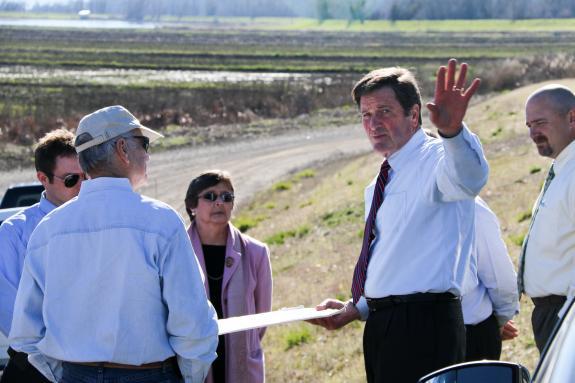
LAKE COUNTY, Calif. – On Friday, Congressman John Garamendi (D-Fairfield, CA) held a series of meetings and site visits in Lake County.
The meetings focused on Lake County’s unique water needs, the value of nonprofits in the community, and issues of importance to seniors, students and educators.
“Lake County is a gem in the Third District. It’s a dynamic community with much potential, but pollution and the risk of invasive species in Clear Lake and the watersheds hold this region back,” Garamendi said. “Our meetings on water issues were productive, and it was good to hear from students and seniors about the issues that they care about. I look forward to bringing the issues we discussed to Washington.”
The morning began with a conversation at Marymount California University on water resource issues facing Lake County, including the impact of invasive species, water quality, and the need for federal and state partnerships to improve water conditions, particularly in Clear Lake.
Following this conversation, Garamendi, a former deputy secretary of the U.S. Interior Department, joined several local officials and experts for a site tour of the Middle Creek Restoration Project, which would reconnect reclaimed lands to their natural wetland state thereby improving the watershed’s health and Clear Lake’s water quality.
The conversation included Lake County Supervisor Anthony Farrington, Lake County Supervisor Jim Steele, Lake County Special Districts Administrator Mark Dellinger, Lake County Public Works Director Scott De Leon, Lake County Community Development Department Director Richard Coel, Lake County Administrative Officer Matt Perry and Lake County Senior Administrative Analyst Jill Ruzicka.
After the site tour, Garamendi visited a homeowner in Lucerne whose roof was damaged during a major storm.
After she reached out to Garamendi’s office, a Garamendi staffer connected her to Hammers for Hope, a nonprofit program organized by Calpine. They subsequently repaired the roof.
Garamendi talked about the importance of preserving funding for federal grants to help worthy nonprofits that are transforming lives for the better.
Garamendi then returned to Marymount California University to meet with college representatives and student leaders from several regional institutions of higher learning, including Marymount, the Clear Lake Campus of Yuba College, and the Lakeport campus of Mendocino College.
They emphasized the importance of career development and opportunities available to them to pursue four-year degrees.
One representative described the regional schools as “education for people that life happened to,” pointing out that many local college students have worked in the private sector for years before deciding to resume their education.
Garamendi pledged to continue supporting education funding and financial aid in Congress.
The Lake County work day ended at the Live Oak Senior Center in Clearlake Oaks. There, Garamendi met with more than 50 seniors and community members for an hourlong conversation on issues important to them.
Topics addressed included the state of America’s shipping industry, investments in water improvements and roads, the cleanliness of Clear Lake, ways to address poverty and homelessness, Lucerne’s privately owned water system, the need to close Guantanamo Bay, the latest on the Affordable Care Act, the need for war authorization and the security threat posed by ISIL.
LAKE COUNTY, Calif. – A weak weather system moving northward from Baja California may bring some small rain amounts to Northern California on Tuesday.
The National Weather Service's forecast for Lake County predicts a 20-percent chance of rain during the day and the night on Tuesday, with less than a tenth of an inch of rain possible.
Altogether, forecasters are predicting a minute 0.03 of an inch for Lake County as a result of the system.
Tuesday is forecast to be mostly cloudy, with light winds, according to the National Weather Service.
The remainder of the week is expected to have mostly sunny and clear weather, with daytime temperatures ranging up in the high 60s and nighttime temperatures in the high 40s, the forecast said.
The National Weather Service reported that many areas around Northern California are registering precipitation amounts for this month that put them below the driest January on record.
The US Drought Monitor's latest report, released on Jan. 22, puts Lake County in the “extreme drought” category, along with about half of the rest of the state, while another large swath of California remains in the “exceptional drought” range.
Email Elizabeth Larson at
NORTHERN CALIFORNIA – California Department of Water Resources (DWR) snow surveyors are likely to encounter above-normal temperatures and below-normal snowpack when they conduct their second survey of the wet season on Jan. 29.
California’s drought, now in its fourth year, is characterized by both a lack of precipitation and much warmer than normal temperatures.
Calendar year 2014 was the warmest ever in California since record-keeping began in the 1800s. The early-December storms blew in on warm weather, and the snowpack – which satisfies 30 percent of California’s water needs in normal years – is far below its average water content in late January.
DWR’s first manual survey of this season, conducted on Dec. 30 at the traditional site near Echo Summit on Highway 50 east of Sacramento, found just 4 inches of snow water equivalent, only 33 percent of average for that snow course on that date.
Statewide, the snow water equivalent was 50 percent of the multi-year average for Dec. 30.
That average has shrunk in the past month as above-normal temperatures have prevailed, not only on California’s coast and in the Central Valley but in the mountains as well.
The statewide snow water equivalent on Monday, as calculated using more than 100 sensors in the Sierra Nevada Range, is 4.3 inches, just 27 percent of normal for this date.
LAKE COUNTY, Calif. – Once again this week Lake County Animal Care and Control has a kennel full of dogs needing new homes.
Breeds ranging from Chihuahua and Pomeranian to Labrador Retriever and German Shepherd are available upon an approved application.
Dogs that are adopted from Lake County Animal Care and Control are either neutered or spayed, microchipped and, if old enough, given a rabies shot and county license before being released to their new owner. License fees do not apply to residents of the cities of Lakeport or Clearlake.
If you're looking for a new companion, visit the shelter. There are many great pets hoping you'll choose them.
In addition to the animals featured here, all adoptable animals in Lake County can be seen here: http://bit.ly/Z6xHMb .
The following dogs at the Lake County Animal Care and Control shelter have been cleared for adoption (additional dogs on the animal control Web site not listed are still “on hold”).

'Joseph'
“Joseph” is a male Chihuahua mix with a short brown coat and big ears.
He's in kennel No. 3, ID No. 1609.
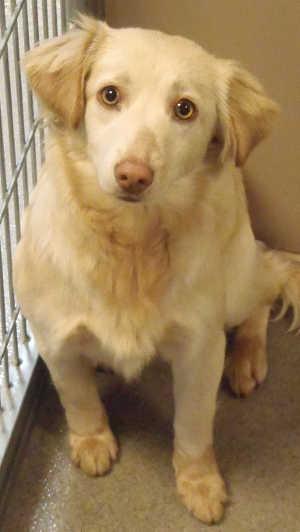
Female Pomeranian mix
This female Pomeranian mix has a medium-length white coat.
She's in kennel No. 4, ID No. 1619.
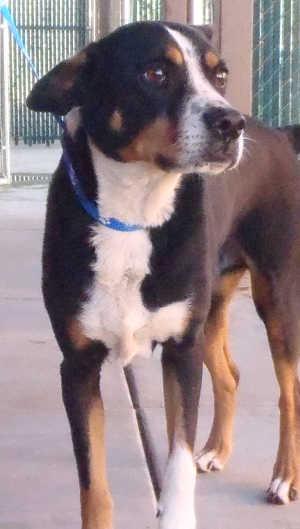
'Snoopy'
“Snoopy” is a male shepherd mix with a short tricolor coat.
He's in kennel No. 12, ID No. 1650.
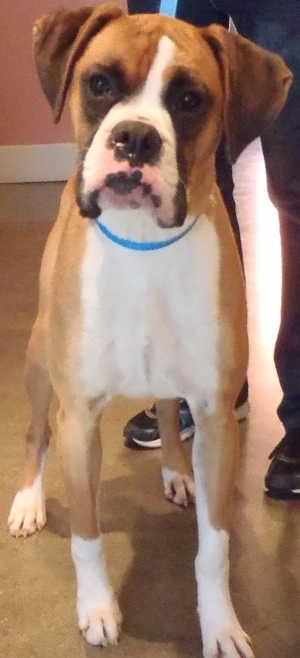
Boxer mix
This young female boxer mix has a short tan and white coat.
She's in kennel No. 13, ID No. 1649.

Pit bull mix
This female pit bull terrier mix has a short black coat.
She's in kennel No. 16, ID No. 1380.

'Rascal'
“Rascal” is a terrier-Chihuahua mix.
He has a short black and white coat.
He's in kennel No. 25a, ID No. 1430.

'Copper'
“Copper” is a male terrier mix.
He has a short brown and white coat.
Copper is in kennel No. 25b, ID No. 1429.

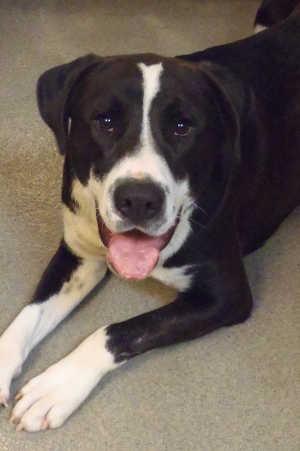
Great Dane mix
This male Great Dane mix has a black and white coat.
He's in kennel No. 26, ID No. 1582.
Great Dane mix
This male Great Dane mix has a black and white coat.
He's in kennel No. 27, ID No. 1581.
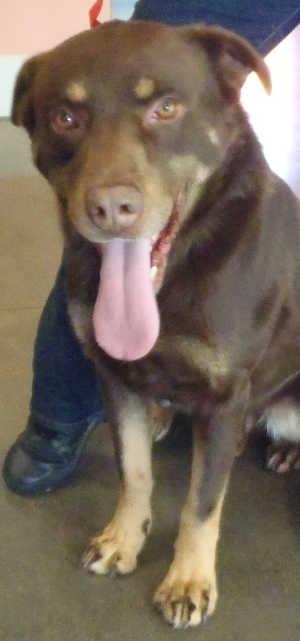
Labrador Retriever mix
This male Labrador Retriever mix has a short tan and brown coat.
He's in kennel No. 28, ID No. 1577.

Border collie mix
This male border collie mix has a medium-length black coat with white markings.
He's in kennel No. 29, ID No. 1517.
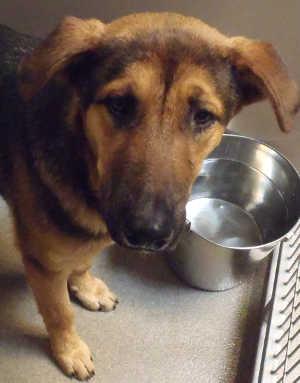
German Shepherd mix
This male German Shepherd mix has a black and tan coat.
He's in kennel No. 32, ID No. 1623.
To fill out an adoption application online visit http://www.co.lake.ca.us/Government/Directory/Animal_Care_And_Control/Adopt/Dog___Cat_Adoption_Application.htm .
Lake County Animal Care and Control is located at 4949 Helbush in Lakeport, next to the Hill Road Correctional Facility.
Office hours are Monday through Friday, 11 a.m. to 5 p.m., and 11 a.m. to 3 p.m., Saturday. The shelter is open from 11 a.m. to 4 p.m. Monday through Friday and on Saturday from 11 a.m. to 3 p.m.
Visit the shelter online at http://www.co.lake.ca.us/Government/Directory/Animal_Care_And_Control.htm .
For more information call Lake County Animal Care and Control at 707-263-0278.
Email Elizabeth Larson at
Historical California vegetation data that more than once dodged the dumpster have now proved their true value, documenting that a changing forest structure seen in the Sierra Nevada has actually happened statewide over the past 90 years.
A team of scientists from the University of California, Berkeley, UC Davis and the U.S. Geological Survey compared unique forest surveys collected by UC Berkeley alumnus Albert Wieslander in the 1920s and 1930s with recent U.S. Forest Service data to show that the decline of large trees and increase in the density of smaller trees is not unique to the state’s mountains.
“Older, larger trees are declining because of disease, drought, logging and other factors, but what stands out is that this decline is statewide,” said study leader Patrick McIntyre, who began the research while a postdoctoral fellow at UC Berkeley and now manages biodiversity data for the California Department of Fish and Wildlife. “Forests are becoming dominated by smaller, more densely packed trees, and oaks are becoming more dominant as pines decline.”
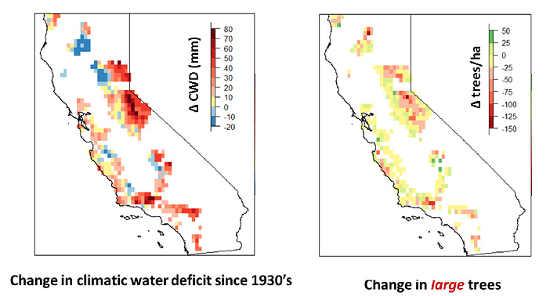
The authors found that the density of large trees declined in all regions of California, with declines up to 50 percent in the Sierra Nevada highlands, the south and central coast ranges and Northern California.
“Based on our data, water stress helps to explain the decline of large trees,” McIntyre said. “Areas experiencing declines in large-tree density also experienced increased water stress since the 1930s.”
The increased density of smaller trees is usually attributed to fire suppression statewide, he noted.
Scientists debate the cause of the decline of larger trees, which has been observed in other parts of the world as well, but many suspect that larger trees need more water than smaller trees to withstand droughts and disease.
Co-author David Ackerly, a professor of integrative biology, said that stressed forests and the loss of large trees could exacerbate the global carbon situation, especially since many are hoping that forests will soak up more and more fossil fuel emissions.
“There’s no question that if you are losing large trees, you are losing the standing carbon in the forest,” he said. “Loss of these big trees and the impact of drought stress become a big concern going forward in terms of its impact on the carbon cycle; they can turn a carbon sink into a source of carbon released to the atmosphere.”
The results may help forecast future forest responses to climate change, and in particular suggest that increased temperatures and changing water availability may lead to large-scale changes in forest composition throughout western North America.
The study was published online last week in the early edition of the Proceedings of the National Academy of Sciences.
Oaks taking over California forests
One change the study observed occurs repeatedly throughout California’s history, as documented by paleoclimatic records in pollen, McIntyre said. Oaks are becoming more prevalent, replacing pines. Pines tend to dominate during cooler, wetter periods.
“Our study shows that areas of greater water stress tend to be dominated more by oaks than by pines, a signal we see despite variation in logging and fire around the state,” McIntyre said.
The study might never have happened if Wieslander’s data, stored both in Sacramento and at Berkeley, had not been saved several times from the trash bin, said co-author Maggi Kelly, UC Berkeley cooperative extension specialist and a professor of environmental science policy and management (ESPM).
Wieslander acquired the vegetation data while he worked for the California Forest Experiment Station, a Berkeley outpost of the U.S. Forest Service and the forerunner of UC Berkeley’s Department of Forestry, now part of ESPM.
“This is really an astonishingly broad and detailed depiction of vegetation in California at that time and it’s important that through its nearly 100-year life it has almost been lost a number of times,” she said. “Patrick’s is one of the largest and most comprehensive looks at this historic data set in comparison to comparable contemporary data.”
Most of the plots, maps and photos have been digitized thanks to efforts by Kelly, co-author James Thorne of UC Davis and campus librarians who saw future value in the data.
Digitization and the study were funded by the Keck Foundation through the Berkeley Initiative on Global Change Biology (BiGCB), as part of an ongoing effort to create an ecological informatics engine, or EcoEngine, for analyzing historical digitized data relating to ecological change.
“All these records are now brought together in digital form in the EcoEngine, which will allow more people to plumb the data and ask more questions, such as, What about logging? What do the photographic records show?” Kelly said. “We need to remember that there are a lot of valuable collections of data that we can use to make inferences about the future.”
Other co-authors are Christopher Dolanc of UC Davis and Alan and Lorraine Flint of the USGS California Water Science Center in Sacramento.
Robert Sanders writes for the UC Berkeley News Center.