 How to resolve AdBlock issue?
News
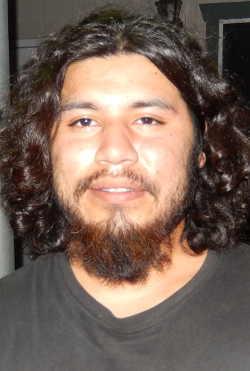
LAKEPORT, Calif. – On Friday, following an intensive investigation, police located a 15-year-old Lakeport girl who had gone missing the previous afternoon at a home in Glenn County.
Kirsten Layton, 15, was located Friday evening at an Elk Creek residence, according to acting Sgt. Michael Sobieraj of the Lakeport Police Department.
Just before 7:30 p.m. Thursday, Lakeport Police officers were dispatched to N. High Street in Lakeport on the report of the missing 15-year-old, Sobieraj said.
Officers responded, gathered information and began a search of local areas where Kirsten Layton had been associated, he said.
After not immediately locating her, the Lakeport Police Department said the girl was entered into the Missing and Unidentified Person’s System, a NIXLE alert was sent as was an ABNet broadcast in the Critical Reach to Law Enforcement system.
The case has been an intensive, nonstop investigation after police obtained information that Layton may have been with a 22-year-old male who was not known to local officials and who was possibly in the Glenn County area, Sobieraj said.
On Friday, Sobieraj said the Lakeport Police Department received information that the missing girl had contacted her parents by telephone, stating she was in the Redding area.
Lakeport Police traced the telephone number to an area in Elk Creek, with a male identified as Bradley Burrows who was associated with the telephone number. Sobieraj said Burrows was known by Glenn County officials to be living on the Grindstone Rancheria in Elk Creek.
At approximately 7:38 p.m. Friday, Lakeport Police – with the assistance of the Willows area California Highway Patrol and the Glenn County Sheriff’s Office – located Layton at the Burrows residence in Elk Creek, Sobieraj said.
Sobieraj said Burrows was arrested without incident for felony child concealment and the girl was transported back to her parents in Lakeport.
All indications are that the juvenile had gone with Burrows voluntarily and that she was not the victim of any foul play, according to Sobieraj.
The Lakeport Police Department thanked the community for the help and information leading to the safe return of the Layton.
Chief of Police Brad Rasmussen also thanked the officers of the Lakeport Police Department for their dedication to our community, the Willows area CHP, the Glenn County Sheriff’s Office, the Butte County Sheriff’s Office and the Sacramento Office of the Federal Bureau of Investigation for their assistance in closing this case.
NORTHERN CALIFORNIA – The absence of precipitation in January, normally California’s wettest month, has combined with warmer-than-average temperatures to produce a dismally meager snowpack for a drought-stricken state.
The California Department of Water Resources on Thursday conducted its second manual snow survey of the season.
The survey found a snow water equivalent of just 2.3 inches in the scant snowpack near Echo summit, approximately 90 miles east of Sacramento. That is just 12 percent of the long-term average for this time of year at that particular snow course.
Statewide, the snow water equivalent as measured by more than 100 sensors was 4 inches on Friday, or 25 percent of the historical average.
That’s down from Dec. 30, when the Department of Water Resources conducted the winter’s first manual survey; the statewide snow water equivalent was 50 percent of that date’s long-term average.
The Department of Water Resources has measured the winter snowpack’s water content for decades.
In normal years, the snowpack supplies about 30 percent of California’s water needs as it melts in the spring and early summer.
The greater the snowpack water content, the greater the likelihood California’s reservoirs will receive ample runoff to meet the state’s water demand in the summer and fall.
Thursday's manual snow survey made it likely that California’s drought will run through a fourth consecutive year.
Department of Water Resources managers said heavy precipitation and cooler temperatures in the next three months would be required for the snowpack to build and give Californians hope for beginning to recover from drought this year.
After December storms delivered above-normal precipitation in the northern Sierra, virtually no rain has fallen there in the past month, and even less has been recorded in Central California.
The eight-station index in the northern mountains was at 146 percent of normal after those storms but now is only 88 percent of normal. Just a few tenths of an inch of rain have fallen there since Christmas. The San Joaquin five-station precipitation index is at 46 percent of normal.
The state’s major water supply reservoirs reflect that meager precipitation record.
Lake Oroville in Butte County, the State Water Project’s (SWP) principal reservoir, now holds 41 percent of its 3.5 million acre-foot capacity (62 percent of its historical average for the date).
Shasta Lake north of Redding, California’s and the federal Central Valley Project’s (CVP) largest reservoir, is at 44 percent of its 4.5 million acre-foot capacity and 65 percent of its historical average.
San Luis Reservoir, a critical south-of-Delta pool for both the SWP and CVP, is faring better due to recent water deliveries to the reservoir as a component of the agencies’ drought management strategy. San Luis holds 53 percent of its 2 million acre-foot capacity (68 percent of normal for the date).
State Climatologist Michael Anderson has said that to have a chance at ending the drought, California would have to record precipitation that is at least 150 percent of normal by the end of the water year on Sept. 30, or 75 inches as measured by the eight-station index. As of today, only 23.1 inches have been recorded at the stations.
NORTHERN CALIFORNIA – State and local public health and hospital officials have confirmed that the patient transported by specialized ambulance and admitted to UC Davis Medical Center early Thursday who exhibited symptoms consistent with a viral illness including Ebola, and with a history of travel to an Ebola-affected country, has tested negative for the Ebola virus.
“We will continue to work together with the Centers for Disease Control and Prevention (CDC), along with hospitals and local health departments across California to quickly identify individuals who could potentially be at risk of Ebola, and take quick action in order to protect the health and safety of all California residents,” said California Department of Public Health State Epidemiologist and Deputy Director, Center for Infectious Diseases, Dr. Gil Chavez.
“The expediency of this investigation also preserves resources and allows staff to resume other investigations,” said Sacramento County Health Officer Dr. Olivia Kasirye.
The test for Ebola done by the Sacramento County Public Health Laboratory came back negative Thursday night.
“The patient remains in good condition and we will continue to provide ongoing medical care,” said J. Douglas Kirk, Chief Medical Officer at UC Davis Medical Center.
At this time, there have been no confirmed cases of Ebola in California and there is no threat to the general public.
Ebola symptoms may appear anywhere between two to 21 days after exposure and include a fever, muscle pain, weakness, diarrhea, vomiting, abdominal pain and lack of appetite.
Travelers from Africa may experience flu-like or GI symptoms due to malaria or other non-Ebola associated diseases.
For more information, visit http://cdph.ca.gov/programs/cder/Pages/Ebola.aspx .
The next time you pour yourself a glass of water, pause before you drink it.
First, swirl the clear liquid around the glass. Gently slosh it back and forth. Tap the glass on the tabletop, and watch the patterns that form on the surface.
Now imagine the same exercise … in zero gravity. Would the waves and ripples look the same? Would the liquid slosh more, or less? Faster, or slower?
NASA engineers spend a surprising amount of time asking themselves these same questions.
Their interest centers not on water glasses, but rather on fuel tanks. NASA's most powerful rockets use liquid fuel, and when these rockets blast off, the propellants slosh around.
Scientists have a good idea how liquids slosh in normal Earth gravity where the weight and viscosity of the liquid rule its dynamics.
Deep space is different, however. Weightless propellants are guided by surface tension and capillary effects. Far from Earth, they could slosh and froth in unexpected ways.
“Modern computer models try to predict how liquid moves inside a propellant tank,” said Brandon Marsell of NASA's Fluid Group at the Kennedy Space Center. “Most of the models we have were validated under 1 g conditions on Earth. None have been validated in microgravity.”
“The International Space Station provides the perfect environment to conduct liquid behavior studies in microgravity,” said the principal investigator, Paul Schallhorn also at Kennedy. “So we have designed an experiment that simulates how rocket fuels move around inside their tanks.”
Built by Professor Dan Kirk and colleagues at the Florida Institute of Technology, SPHERES-Slosh is, essentially, a fluid chamber grappled by a pair of bowling ball-sized robots.
The two SPHERES (a product of the Space Systems Laboratory at MIT) were already onboard the space station when the Slosh chamber arrived in February 2014.
Together, the robots move the chamber back and forth to mimic common spacecraft maneuvers such as the “BBQ roll,” attitude adjustments and engine shut-downs.
In 2014, astronauts supervised the robots as they made three test runs using chambers 20 percent and 40 percent filled with fluid – much like a partially-spent fuel tank.
“We use water mixed with a bit of green food coloring,” said Schallhorn.
Why water?
“For one thing, it is a safe fluid for the space station. Water is on the approved list of fluids we can send to the station,” he explained. “Also, its viscosity is similar to hydrazine, a propellant used by satellites; and its density is similar to liquid oxygen, an important cryogenic propellant.”
During the experiments, which can last as long as six hours, cameras, gyros and accelerometers record the motions of the water.
“We are getting great data,” said Marsell. “So far, our computer models on Earth have done a good job predicting wave motions inside the chamber.”
But there is a mystery ...
“It has to do with bubbles,” said Schallhorn. “The way bubbles form and interact inside the chamber is surprising – and not predicted by our models. We were taken off guard with what we saw in the data.”
The bubbling and frothing of shaken fuels is cutting-edge research in fluid dynamics, and SPHERE-Slosh is showing that it may be very important.
Jacob Roth of the Fluids Group at KSC adds, “this is something we plan to investigate further. Who knows? It might just shake up our understanding of fluids in space.”
Dr. Tony Phillips works for the National Aeronautics and Space Administration.
LAKEPORT, Calif. – The trial of two men accused of taking part in a June 2013 home invasion robbery and shooting at a Clearlake Oaks home is under way.
Dion Andre Davis II, 27, and his half-brother, Gregory Pierre Elarms, 30, are on trial for the June 26, 2013, robbery at the home of Ronnie and Janeane Bogner, during which their adult son, Jacob, was pistol-whipped and shot in the leg.
Charges against the two men include robbery, burglary, assault with a firearm on Jacob Bogner and on Lt. Tim Celli of the Clearlake Police Department, car theft, theft, vandalism and conspiracy. Davis, who is alleged to have been the gunman, also is charged with attempted murder.
Tyler Christopher Gallon and Sean Douglas Foss of Clearlake, and San Franciscan Jenaya Drevelyn Jelinek also were arrested in the case. Foss and Gallon have yet to stand trial and Jelinek pleaded out to lesser charges.
Jelinek is among the witnesses that have been presented so far in the trial, in which opening statements and testimony began on Jan. 22. Janeane Bogner also testified in the first two days of trial, with Jacob Bogner beginning his testimony on Friday.
Thursday was the third day of testimony, with retired Placer County Judge James Garbolino handling the case. All of the local superior court judges have recused themselves due to knowing the Bogners.
District Attorney Don Anderson is handling the prosecution of the case, the early stages of which was carried out in criminal grand jury proceedings, which resulted in the indictments of Davis and Elarms. Anderson's co-counsel is Deputy District Attorney Daniel Flesch.
Representing Davis and Elarms are defense attorneys Bill Conwell and Doug Ferguson, respectively.
On Thursday morning, Jacob Bogner was back on the stand, with Conwell questioning him about inconsistencies in statements he made to the criminal grand jury. Specifically, Conwell questioned Bogner about whether he had been able to identify Davis from a police line up or from a Lake County News article about the first four arrests in the case that he saw online while hospitalized.
“I believe I did both,” said Bogner, who also recalled sheriff's Det. Doug Dahmen showing him a photo lineup on July 2.
When Conwell continued to press Bogner about remembering past statements, Garbolino interrupted, pointing out, “His lack of memory today to what he said previously is not relevant.”
After he was shot, Bogner was transported by air ambulance to Enloe Hospital in Chico. There, a Chico Police officer did a courtesy report, conducting a recorded interview with Bogner.
Conwell asked him if he remembered being questioned at that time, with Bogner saying, “somewhat.”
He was also asked about previous statements about what his assailant looked like and the Glock pistol used to shoot him, which he had said didn't have an extended magazine. Bogner said he didn't recall making some of the statements.
Conwell was allowed to play audio of Bogner's recorded interview with Chico Police, passing out transcripts to jurors, who initially had trouble hearing the recordings or matching them to the typed documents.
There was a moment of levity at one point in the proceedings, when Bogner said in response to one of Conwell's questions that it was “leading.” Garbolino said Conwell was allowed to ask such questions.
Detective questioned about investigation
Dahmen, who has been with the Lake County Sheriff's Office for two years, recounted following up with the Bogners – along with Det. Eric Keener – in July 2013 at their home.
During questioning, Dahmen initially did not remember showing Jacob Bogner a photo lineup at that time, and also acknowledged that neither he nor Keener – due to a mix up – had recorded the interview with Janeane Bogner, as is the procedure for their department.
Dahmen said that Jacob Bogner was adamant – after seeing Davis' picture in the news article – that he was his assailant. “He was dead set on that was the individual who was in his house that morning.”
Davis' picture, however, was not included in the photo lineup shown to Jacob Bogner that day, Dahmen said.
When Janeane Bogner was shown photo lineups that day, she picked out the photo of Dexter Currington of San Francisco, who would be arrested in September 2013 in connection to the case and exonerated in March 2014 after he and his attorney proved his alibi.
Dahmen said he interviewed Currington at the Lake County Jail on Sept. 18, 2013. During the half-hour interview, Currington gave Dahmen information that could potentially have cleared him.
However, Dahmen would admit under questioning that he failed to fully follow up on the potentially exculpatory evidence.
He had contacted a youth clinic that Currington mentioned and spoken to a woman who was going to provide him information. Dahmen said he never heard back from her, nor did he follow up with her.
Asked why he didn't, Dahmen responded, “To be honest, I don't know.”
Currington had given Dahmen two alibi witnesses, and had told Dahmen that he had been helping a friend move on the day of the home invasion. However, Dahmen made no attempt to track down those people.
He also didn't write a report about the Currington interview until March of 2014 – six months later – which he acknowledged was not a normal amount of time to complete such a report.
Dahmen said he completed the report after it was brought to his attention by his sergeant that he hadn't written it. He said he hadn't followed up due to his caseload. “I forgot about it, to be honest with you.”
Conwell asked Dahmen if he had told Currington that he was just as interested in finding someone innocent as guilty. Dahmen said yes.
“In this case, you didn't do that, did you?” Conwell asked.
“Not intentionally, no,” Dahmen said.
Law enforcement officers recount the scene
Also appearing on the stand on Thursday were sheriff's Deputy Brian Rochester and Det. Jerry Pfann.
Rochester responded to the report of the home invasion and was one of the first deputies on scene, finding a nearly hysterical Janeane Bogner outside of the home, telling him her son had possibly been shot.
Rochester said deputies searched the residence to make sure the scene was clear so medics could come in and take care of Jacob Bogner, who they found seated in a chair in his bedroom, with a gunshot wound above his left knee.
Pfann described his work to process the scene. “It was very chaotic when I first arrived,” he said, explaining that it took him awhile to figure out what was happening and how to proceed. Once he begins processing a scene, he takes full control of it, he said.
He described several picture exhibits that Anderson showed on a projector, including a Smith and Wesson shell found near Jacob Bogner's bedroom. There also were pictures of the home's damaged front door and the young man's bedroom door, both showing signs of having been forced.
Clearlake Police Lt. Tim Celli also testified about his dangerous encounter with the suspects that day.
Celli, who was in an unmarked police car, got a be on the lookout for a white Cadillac along with a small Chevy sedan in connection to the home invasion.
He said he wasn't clear at that point that the vehicle being sought was a sedan or an Escalade. It would be the latter – the suspects had taken Janeane Bogner's 2002 white Cadillac Escalade.
On Sulphur Bank Road Celli spotted a white Cadillac sedan followed by two other vehicles traveling in the opposite lane coming toward him. The third vehicle in line was a Chevy Malibu with a paper license plate on the back.
He turned around and began following the Chevy, which turned onto 13th Street. Once he was sure he had backup in the area – he saw Police Chief Craig Clausen responding – Celli turned on his lights and sirens, and the Chevy sped up to between 50 and 60 miles per hour, more than twice the speed limit in the residential area.
The vehicle continued onto 16th Street, where it stopped. All of the suspects ran into a wooded city lot, sprinting away from the car on different paths. Celli arrived and when he got there he said he heard gunshots coming from an area in front of him.
“I recall hearing at least three shots,” at which point he sought cover, he said.
Celli didn't, however, return fire, as he wasn't sure where the shots were coming from and he was concerned about nearby residences. “I wasn't clear on my backdrop.”
When Clausen arrived, he and Celli went back to the Chevy and ordered the driver, who was still in the vehicle, to show her hands. When Celli opened the door and pulled her out, he found Jelinek.
At that point the vehicle, which was on a downhill slope, began to roll. Celli reached in and tried to stomp on the brake, but the car didn't stop.
He said it continued downhill, dragging him quite a ways before he was able to pull himself into the vehicle and force it into gear. Celli suffered a torn groin and Clausen later ordered him to go to the doctor.
Ronnie Bogner describes connection to a suspect
Toward the end of the day, Ronnie Bogner took the stand.
He recounted that on the morning of the home invasion he was out on calls for his business, Weed Tech, and was heading through Lucerne when he got a call from his wife, “who was quite distraught.”
Bogner immediately went home. When he arrived, he walked through his home and noticed that two older .22-caliber pistols had been taken. He also watched as they brought his son out on a gurney.
“He was talking so I figured he must be OK,” Bogner said.
Law enforcement would later ask him to respond to 16th Street in Clearlake Park, where the handguns were recovered.
Asked if he knew one of the men arrested in the case, Sean Foss, he explained how his business – which offers servings including clearing lots and spraying weeds – employed Foss for a short time in the summer of 2012.
Bogner said he had never really said anything more than “good morning” to Foss, who hadn't been into his home but had been up the driveway to the barn and yard area. He said one of his foremen fired Foss not long after he had been hired.
The last witness of the day was sheriff's Det. Todd Dunia, who testified about the discovery of Janeane Bogner's Cadillac Escalade down an embankment along Sulphur Bank Road, about a mile and a half from Highway 20.
Testimony is due to continue on Friday.
Anderson anticipates the trial will continue until late February.
Email Elizabeth Larson at
The Super Bowl is one of the most celebrated sporting events in the world. As the most anticipated sporting event of the year, it is an opportunity for family, friends, and fans to gather together, celebrate and root for their favorite team.
However, the celebration can quickly turn to tragedy when partygoers exercise poor judgment and fail to designate a nondrinking driver.
The California Highway Patrol (CHP) joins with the U.S. Department of Transportation, National Highway Traffic Safety Administration, the National Football League, and TEAM (Techniques for Effective Alcohol Management) for the Fans Don’t Let Fans Drive Drunk campaign, which encourages people to make plans ahead of time that will prevent them from getting behind the wheel of a vehicle after drinking.
“Drunk driving is an act that is completely preventable,” said CHP Commissioner Joe Farrow. “All it takes is a little bit of planning to prevent a tragedy. We want Californians to remember that drinking and getting behind the wheel is a choice. If you choose to drink, do not drive, it is that simple.”
According to the CHP’s Statewide Integrated Traffic Records System, alcohol was involved in nearly 225 collisions on Super Bowl Sunday 2012 (the most recent year that finalized collision data is available).
Out of the 225 collisions, eight resulted in death and 79 resulted in injuries throughout California.
The CHP will work with law enforcement agencies throughout the state to discourage the public from driving under the influence (DUI), and to try to remove those drivers who are impaired before they injure or kill themselves or others.
During the same Super Bowl Sunday in 2012, 422 people were arrested on California’s roadways by the CHP for DUI.
The public is also encouraged to be a team player by calling 911 if they suspect a drunk driver. Callers should be prepared to provide the vehicle’s description, license plate number, location and direction of travel.