 How to resolve AdBlock issue?
News
“The real difficulty about vulcanism is not to see how it can start, but how it can stop.” – Sir Harold Jeffreys, “Earthquakes and Mountains”
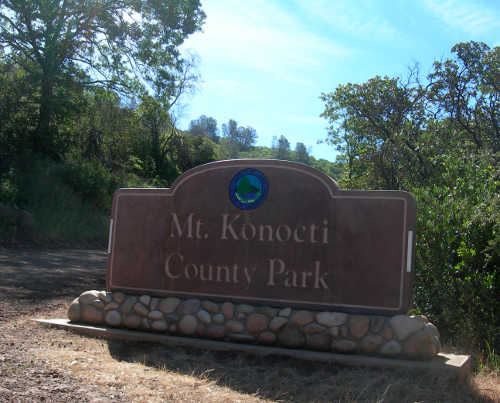
Our dramatic volcano, Mount Konocti, is now included into one of our newest county parks, Mount Konocti County Park.
It rests in the center of Lake County. Its highest peak stands at an elevation of 4,305 feet and is set amongst the California Coast Ranges.
This ancient volcano is dormant, and is set along the Pacific Ring of Fire. It dates back to the Pliocene era, and it is believed by geologists to have erupted about 350,000 years ago, with the latest eruptions having occurred at around 10,000 years ago.
There is a United States Government Survey (USGS) study of the volcanoes in the United States.
According to the USGS Volcano Hazards Program Web site at http://volcanoes.usgs.gov/publications/2009/nvews.php , the National Volcano Early Warning System was created on a national level to monitor our country's 169 “young” volcanoes.
Mount Konocti sits in the Clear Lake Volcanic Field, and includes The Geysers geothermal field.
Mount Konocti is considered young, geologically. It is believed that the young volcanoes pose a danger due to the location of nearby communities and the potential that young volcanoes have to erupt.
The USGS Web site is broken down to regions, with categories of “Highest Priority” and “High Priority,” with the Clear Lake Volcanics Field listed as “High Priority” to monitor.
Mount Konocti's cultural and historic values are immense, and this lava dome has much to teach us.
Mount Konocti County Park is located just outside of Kelseyville. To get to the park, turn off at Konocti Road, drive past the park entrance for about three miles to the parking lots to begin your hike.
The ascent is gradual at first, and leads you over an easement road through a privately owned walnut orchard. The hike is 3 miles up, but the descent does not seem as long!
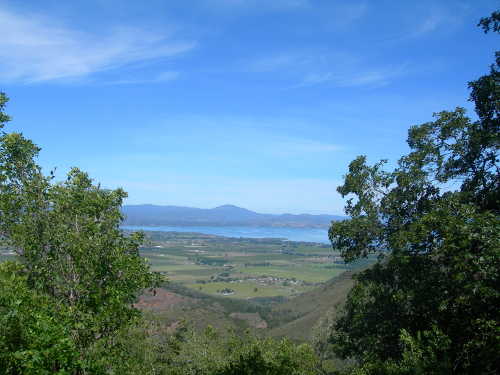
Next, the peak that greets you is Clark Peak, with an elevation of 2,850 feet. As you hike up, you will be rewarded with fabulous vistas of Clear Lake. There are sturdy benches placed along the trail to relax and enjoy the sights and sounds.
If you trek on, and select the right-hand tine of the fork in the road you'll meet Wright Peak, which is 3,489 feet in elevation.
The terrain changes now to a canyon oak forest, with some of its forest family holding the distinction of living to the five-century mark. The oaks have also been called “maul oaks,” as their wood was once used for axe handles.
Not far ahead is the remnants of a 1903 pioneer cabin which once belong to Mary Downen. She chose to homestead on Mount Konocti because it was a quiet and picturesque place to live.
The trails are lined with a myriad of picture-perfect wildflowers in the springtime. You can see Indian Paintbrush, lilac, morning glory and poppies among many, many others.
If you can take your eyes off the impressive views, you'll learn much about our local history and geology from the educational interpretive panels designed by tireless volunteer and former State Park's ranger, Tom Nixon and Lake County Museum Curator Linda Lake. The graphic artist for the panels was Gerri Groody.
You will learn that Mount Konocti contains five distinguishing peaks: the aforementioned Wright Peak, Howard Peak, at 4,286 feet, South Peak, which is 4,286 feet, Buckingham Peak, 3,967 feet and Clark Peak, which is 2,880 feet in elevation.
Archaeologists studying Mount Konocti have determined that Pomo and Wappo Indians lived nearby more than 11,000 years ago.
The mountain was not lived upon by them, however, as it was, and is still considered a sacred site.
For more information on hiking in Mount Konocti County Park, visit the award-winning Konocti Regional Trails Web site at http://konoctitrails.com/trails/mt-konocti-county-park/wright-peak-summit-trail/ .
Kathleen Scavone, M.A., is an educator, potter, writer and author of “Anderson Marsh State Historic Park: A Walking History, Prehistory, Flora, and Fauna Tour of a California State Park” and “Native Americans of Lake County.” She also writes for NASA and JPL as one of their “Solar System Ambassadors.” She was selected “Lake County Teacher of the Year, 1998-99” by the Lake County Office of Education, and chosen as one of 10 state finalists the same year by the California Department of Education.

LAKE COUNTY, Calif. – Lake County Animal Care and Control has a full kennel this week of big working dogs and some lap dogs, too.
Dogs up for adoption this week include mixes of Australian Shepherd, boxer, cattle dog, Chihuahua, flat-coated retriever, Jack Russell terrier, Labrador Retriever, McNab, pit bull, Schipperke and terrier.
Dogs that are adopted from Lake County Animal Care and Control are either neutered or spayed, microchipped and, if old enough, given a rabies shot and county license before being released to their new owner. License fees do not apply to residents of the cities of Lakeport or Clearlake.
If you're looking for a new companion, visit the shelter. There are many great pets hoping you'll choose them.
In addition to the animals featured here, all adoptable animals in Lake County can be seen here: http://bit.ly/Z6xHMb .
The following dogs at the Lake County Animal Care and Control shelter have been cleared for adoption (additional dogs on the animal control Web site not listed are still “on hold”).

'Tippy'
“Tippy” is a female Australian Shepherd.
Shelter staff said they do not know her background, but she needs a home with women only, as she is very afraid of men.
Tippy is good with other dogs and has been fine with mellow children.
Find Tippy in kennel No. 1, ID No. 2142.

'Pokey'
“Pokey” is a terrier-Schipperke mix.
Shelter staff said Pokey is very social and friendly, and has a great personality. He loves to play with toys and is great with other dogs.
Pokey is in kennel No. 2, ID No. 2054.

'Barney'
“Barney” is a Jack Russell Terrier-Chihuahua mix with a short brown and tan coat.
Shelter staff said Barney is shy at first but is very nice once he warms up. They said he would be good for an older couple, or somebody who doesn't have any children.
He's in kennel No. 3, ID No. 2051.

'Molly'
“Molly” is a boxer-pit bull mix with a short black coat with white markings.
Shelter staff said she's a very mellow, sweet dog, and is good with other dogs.
They said she should fit well in most household situations with children age 3 and above. She needs a very secure yard.
She's in kennel No. 4, ID No. 559.

Labrador Retriever-cattle dog mix
This male Labrador Retriever-cattle dog mix has a short tan and white coat.
He's in kennel No. 5, ID No. 2227.

Boxer-McNab mix
This male Boxer-McNab mix has a dark brown and white coat.
He's in kennel No. 6, ID No. 2129.

Male Chihuahua mix
This male Chihuahua mix has a short buff-colored coat.
He's in kennel No. 9, ID No. 2064.

Male pit bull terrier mix
This male pit bull terrier mix has a short gray and white coat.
Shelter staff calls him a “big squishy guy” who is very gentle. They believe he would be fine with children.
He has no food aggression, gets along with other dogs both male and female, and is very appropriate in every way.
The shelter is looking for that special "pitty" lover to take him home and care for him.
He's in kennel No. 13, ID No. 2035.

Female pit bull mix
This female pit bull mix has a short gray and white coat.
She's in kennel No. 14, ID No. 2231.

Male pit bull mix
This male pit bull mix has a short dark brown and white coat.
Shelter staff said he is pretty well behaved with a moderate to low energy level.
They said he has been through a lot he appears to have been dumped in the middle of nowhere; when he arrived he was full of punctures all on his legs, possibly from a dog fight.
Despite all of that, shelter staff said he is very social and friendly with dogs.
He's in kennel No. 15, ID No. 2094.

'Butch'
“Butch” is a male flat-coated retriever mix.
Shelter staff said he is heartworm-positive so he will need treatment.
They said he is a great dog, and is good with female dogs large and small, as he lived with a small female. He does not do well with dominant males, but submissive males are OK.
Butch is in kennel No. 16, ID No. 2113.

'Boots'
“Boots” is a handsome male pit bull terrier mix with a black and white coat.
He's in kennel No. 31, ID No. 2228.

Female pit bull mix
This female pit bull mix has a short gray and white coat.
She's in kennel No. 34, ID No. 2224.
To fill out an adoption application online visit http://www.co.lake.ca.us/Government/Directory/Animal_Care_And_Control/Adopt/Dog___Cat_Adoption_Application.htm .
Lake County Animal Care and Control is located at 4949 Helbush in Lakeport, next to the Hill Road Correctional Facility.
Office hours are Monday through Friday, 11 a.m. to 5 p.m., and 11 a.m. to 3 p.m., Saturday. The shelter is open from 11 a.m. to 4 p.m. Monday through Friday and on Saturday from 11 a.m. to 3 p.m.
Visit the shelter online at http://www.co.lake.ca.us/Government/Directory/Animal_Care_And_Control.htm .
For more information call Lake County Animal Care and Control at 707-263-0278.
Email Elizabeth Larson at
A detailed study of marine animals that died out over the past 23 million years can help identify which animals and ocean ecosystems may be most at risk of extinction today, according to an international team of paleontologists and ecologists.
In a paper to be published in the May 1 issue of the journal Science, researchers from the University of California, Berkeley, and other institutions report that worldwide patterns of extinction remained remarkably similar over this period, with the same groups of animals showing similar rates of extinction throughout and with a consistent set of characteristics associated with elevated extinction risk.
The researchers then used these past global extinction patterns as a baseline to predict which ocean areas and marine organisms would be most at risk today without the added threat of human-caused habitat destruction, overfishing, pollution and ocean acidification.
Finally, the authors combined this natural or ‘intrinsic’ extinction risk with current threats from humans and climate change to obtain a global map of potential future hotspots of extinction risk.
“Our goal was to diagnose which species are vulnerable in the modern world, using the past as a guide,” said lead author Seth Finnegan, an assistant professor of integrative biology at UC Berkeley. “We believe the past can inform the way we plan our conservation efforts. However, there is a lot more work that needs to be done to understand the causes underlying these patterns and their policy implications.”
“It’s very difficult to detect extinctions in the modern oceans, but fossils can help fill in the gaps,” added co-author and conservation biologist Sean Anderson, a postdoctoral researcher at Simon Fraser University in Burnaby, British Columbia. “Our findings can help prioritize areas and species that might be at greater risk of extinction and that might require extra attention, conservation or management.”
Marine extinctions with and without humans
The study found that animals with small geographic ranges are most at risk of extinction, Finnegan said. In addition, some groups tend to be more extinction-prone than others.
Or example, in the fossil record, whales, dolphins and seals show higher risk of extinction than sharks or invertebrates such as corals. Clams and mussels – so-called bivalves – had about one-tenth the extinction risk of mammals.
The authors used these patterns from the fossil record to assess the natural extinction risk of animals living in the oceans today.
Comparing these patterns with areas where human activities such as fishing impact the oceans revealed areas that may be particularly sensitive.
These areas included high- biodiversity regions of the tropics such as the Indo-Pacific and the Caribbean, as well as regions such as Antarctica that harbor many unique species.
“The implications of these patterns for the future of coastal marine ecosystems will depend on how natural risk and current threats interact,” said co-author Paul Harnik, an assistant professor of geosciences at Franklin and Marshall College in Lancaster, Pennsylvania. “”By understanding these patterns in the past, we hope to provide a framework for understanding global change.”
Bridging the gap
The analysis grew out of a series of meetings at the National Evolutionary Synthesis Center in Durham, North Carolina, which is funded by the National Science Foundation.
The team agreed on the need to bridge the gap between the fossil record of marine animal extinction and what modern-day biologists are finding as they explore living ocean ecosystems.
The group focused on the past 23 million years when the planet looked largely the same as today: The continents were arranged similarly, and most of the same major taxonomic groups, from whales and seals to clams, snails and sea urchins, existed.
However, this time interval encompassed dramatic changes in Earth’s climate. The group determined that patterns of extinction risk were consistent despite this variability – suggesting that the fossil record can provide a valuable pre-human baseline for considering current threats to marine biodiversity.
“Climate change and human activities are impacting groups of animals that have a long history, and studying that history can help us condition our expectations for how they might respond today,” Finnegan said.
Other co-authors are from the United Nations Environment Program World Conservation Monitoring Center and the Computational Science Laboratory of Microsoft Research in Cambridge, the United Kingdom; Dalhousie University in Nova Scotia, Canada; the University of Massachusetts in Boston; Mount Allison University in New Brunswick, Canada; the University of Oslo in Norway; the College of William and Mary in Williamsburg, Virginia; the University of Washington in Seattle; the Smithsonian Tropical Research Institute in Panamá; and the University of Queensland in St. Lucia, Australia.
Robert Sanders writes for the UC Berkeley News Center.

One day, when humans go to Mars, they might find that, occasionally, the Red Planet has green skies.
In late December 2014, NASA's MAVEN spacecraft detected evidence of widespread auroras in Mars's northern hemisphere.
The “Christmas Lights,” as researchers called them, circled the globe and descended so close to the Martian equator that, if the lights had occurred on Earth, they would have been over places like Florida and Texas.
“It really is amazing,” said Nick Schneider who leads MAVEN's Imaging Ultraviolet Spectrograph (IUVS) instrument team at the University of Colorado. “Auroras on Mars appear to be more wide ranging than we ever imagined.”
This isn't the first time a spacecraft has detected auroras on Mars. Ten years ago, the European Space Agency's Mars Express found an ultraviolet glow coming from “magnetic umbrellas” in the southern hemisphere.
Unlike Earth, Mars does not have a global magnetic field that envelops the entire planet. Instead, Mars has umbrella-shaped magnetic fields that sprout out of the ground like mushrooms, here and there, but mainly in the southern hemisphere. These umbrellas are remnants of an ancient global field that decayed billions of years ago.
“The canopies of the patchwork umbrellas are where we expect to find Martian auroras,” said Schneider. “But MAVEN is seeing them outside these umbrellas, so this is something new.”
Auroras occur, both on Earth and Mars, when energetic particles from space rain down on the upper atmosphere.
On Earth, these particles are guided toward the poles by our planet's global magnetic field. That's why auroras are seen most often around the Arctic and Antarctic.
On Mars, there is no organized planetary magnetic field to guide the particles north and south – so they can go anywhere.
“The particles seem to precipitate into the atmosphere anywhere they want,” said Schneider. “Magnetic fields in the solar wind drape across Mars, even into the atmosphere, and the charged particles just follow those field lines down into the atmosphere.”
According to the MAVEN data, solar particles that caused the “Christmas lights” penetrated deeply into the Martian atmosphere – sparking auroras less than 100 km from the surface. That's lower than auroras on Earth, which range from 100 km to 500 km high.
Like Mars Express 10 years ago, MAVEN has an ultraviolet camera, so it is not seeing the same thing as human eyes. What would a human see?
Schneider isn't certain. “We’re still doing the physics,” he said, “but we have some educated guesses.”
Although the Martian atmosphere is primarily CO2, it does contain some oxygen – and that is key to the color of the auroras. Excited oxygen atoms in the Martian atmosphere would likely produce green light.
“A diffuse green glow seems quite possible in the Mars sky, at least when the Sun is throwing off energetic particles,” said Schneider.
MAVEN arrived at Mars in Sept. 2014 on a mission to investigate a planetary mystery: Billions of years ago, Mars was blanketed by layer of air massive enough to warm the planet and allow liquid water to flow on its surface. Life could have thrived in such an environment.
Today, however, only a tiny fraction of that ancient air remains, leaving Mars a desiccated wasteland.
Where did the Martian atmosphere go?
A favorite theory is solar wind erosion. Because Mars no longer has a global magnetic field to protect it, solar wind might strip away material from the upper layers of the atmosphere. Watching the auroras could help MAVEN mission scientists learn more about this process.
“Plus,” said Schneider, who is looking forward to future data. “I just love auroras.”
Dr. Tony Phillips works for the National Aeronautics and Space Administration.

LAKEPORT, Calif. – The Lakeport Fire Protection District received a large donation this week that will help update critical equipment.
At its Tuesday meeting, the district's board of directors accepted a check for $26,000 from the Lakeport Volunteer Firefighters Association.
The Lakeport Volunteer Firefighters Association has a long and proud history of supporting the fire district through fundraising, primarily the association’s annual dinner dance auction held each October.
Proceeds from this extremely popular annual event go toward supporting the district and the association’s Matt Black Memorial Scholarship Fund.
This year’s $26,000 donation is being used by the district to upgrade breathing apparatus to provide improved safety and functionality for firefighters when they are working in hazardous environments.
Fire Chief Doug Hutchison told Lake County News that the funds will cover 30 complete breathing apparatus units, each with an additional air cylinder, 10 additional masks, two rapid intervention crew kits and upgrades to the air cascade truck to be able to fill the new high pressure bottles.
California continued its climb up the ranks of bike-friendly states, moving up to eighth in the nation according to the annual list compiled by the League of American Bicyclists.
With the release of its 2015 rankings, the League’s assessment of California shows continued improvement for the Golden State, which was rated at ninth and 19th in 2014 and 2013, respectively.
Ratings were based on overall scores added up from five categories: legislation/enforcement, policies/programs, infrastructure/funding, education/encouragement and evaluation/planning.
The rankings come on the heels of a multi-tiered effort by Caltrans to increase options for bicyclists as part of its approach to multimodal transportation.
“Bicycling is fast becoming a key component of California’s transportation system, and we’ll continue to make improvements to keep it accessible and safe for the millions of cyclists that use it every day,” said Caltrans Director Malcolm Dougherty. “These rankings reflect our continued commitment to improve our cycling facilities and encourage active transportation.”
In its recently released Strategic Plan, Caltrans included a goal of tripling the frequency of cycling. Caltrans also will add bike-friendly features to streets as part of its Complete Streets Implementation Action Plan.
California and bicyclists had a benchmark year in 2014, as well.
The California Transportation Commission allocated more than $360 million for locally administered Active Transportation Program, or ATP, projects, with 2015 ATP grants expected to total even more in direct funding for local projects.
In 2014, Caltrans also officially endorsed the street design guidelines of the North American City Transportation Official, which includes augmented features for bicyclists and pedestrians.
Earlier this month, Caltrans awarded $9.8 million in Sustainable Transportation Planning Grants to support cities, counties, agencies and transit operators in their efforts to integrate transit, bicycling and walking into their local transportation plans.
Several of these grants included planning for bicycle and pedestrian paths and for connectivity of multimodal options such as light rail, bus service to biking or walking.