 How to resolve AdBlock issue?
News
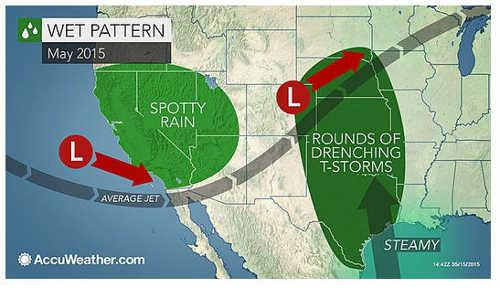
ACCUWEATHER GLOBAL WEATHER CENTER – AccuWeather reports an El Niño pattern has been contributing to drought-busting rain in Texas and the southern Plains, and California may be next up for much-needed rain during the winter of 2015-16.
El Niño, which began during the past winter, occurs when ocean water temperatures climb above normal across the central and eastern Pacific, centered around the equator.
According to AccuWeather Meteorologist Ben Noll, along with impacting weather patterns around the globe, an El Niño tends to bring significant rain to the southern part of the United States.
“The pattern of El Niño strengthens the southern storm track across the U.S., especially during the winter, spring and autumn months of the year,” Noll said.
How stormy the pattern becomes is generally associated with the strength of El Niño.
“Currently, we have a relatively weak El Niño in progress, but we expect it to become moderate to strong progressing this coming fall and winter,” Noll said.
The weak El Niño has been significant enough to contribute to heavy rainfall in a large part of Texas and the southern Plains and sporadic rainfall in California this spring.
“During an El Niño pattern, we tend to get a number of storms in the upper atmosphere that pump moisture into Texas and parts of the Plains,” Noll said.
These systems bring multiple rounds of drenching showers and severe thunderstorms.
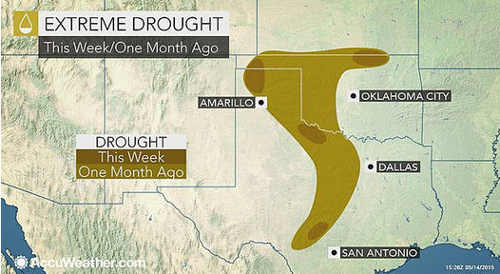
Portions of Texas have been experiencing severe to exceptional drought since 2012. The extent of drought over Texas and the southern Plains has been shrinking substantially this spring with some locations receiving two to three times their entire May rainfall during the first two weeks of the month.
As the pattern adjusts during the summer, drenching downpours will continue in coastal and northeastern Texas and will expand to more of the Southeast and the lower part of the mid-Atlantic.
Part of Southern California has received drenching rain from the pattern already. Two significant storms have swung through during the first half of May.
San Diego has received more than 2 inches of rain this month, when a typical May brings only about 0.10 of an inch. During late Thursday evening, 1.30 inches of rain fell in one hour.
On average, the bulk of California's rain falls from November to March, when heavy snow falls on the Sierra Nevada and the ridges in the south.
Despite the recent rains in part of Southern California, other areas of the state have received very little or no rain during May, including Sacramento and San Francisco.
While above average, areas from Los Angeles to Riverside and Fresno have received only about 0.50 of an inch of rain thus far this month.
Much more rain and mountain snow is needed across the state on a regular basis to break the drought. Rain is unlikely to swarm over the state from the late spring to the fall, even with an El Niño in progress.
However, as long as El Niño continues into the fall and winter, there is some hope for significant rainfall in California, Noll stated.
One of the strongest El Niño's on record occurred during the winter of 1997-98, when an average of 20-30 inches of rain fell on California with yards of snow in the Sierra.
A consequence to a strong El Niño during the winter season could lead to powerful storms with not only drenching rain, but also the risk of flooding and mudslides.
Rainfall from the El Niño pattern is likely to diminish during the summer months.
“While we can see a couple more significant upper-level storms through the end of the month, these are likely to become significantly weaker moving forward into June,” Noll said.
With a long summer season ahead, evaporation rates will far exceed the rainfall that has fallen or will fall over the next several weeks. As a result, no significant drought relief is likely for California through the summer.
According to AccuWeather Chief Long Range Meteorologist Paul Pastelok, “Drought will worsen and especially farther north into California and the Northwest this summer.”
Prior to the winter, the risk of thunderstorms with dry lightning will increase, should the pattern of weak storms continue. A small amount of rain will only spur on the growth of shrub brush, known as chaparral broom.
The chaparral then dries out during the summer and early fall and would provide more dry fuel for wildfires, prior to the winter rain and snow.
Alex Sosnowki is an expert meteorologist for www.AccuWeather.com .
On Earth, the fastest runners can finish a marathon in hours. On Mars it takes about 11 years.
On Tuesday, March 24, NASA’s Mars rover Opportunity completed its first Red Planet marathon – 26.219 miles – with a finish time of roughly 11 years and two months.
“This mission isn't about setting distance records; it's about making scientific discoveries,” said Steve Squyres, Opportunity principal investigator at Cornell University. “Still, running a marathon on Mars feels pretty cool.”
Runner-author Hal Higdon once said, “The marathon never ceases to be a race of joy, a race of wonder.” That goes double for a marathon on another world where every mile promises a new discovery.
Opportunity’s mission is to search for signs of ancient water. Today the Red Planet has a breathtakingly thin atmosphere, with conditions deadly to almost every known form of life on Earth.
Billions of years ago, however, things might have been different. Many researchers believe that Mars was once warmer, wetter, and friendlier to potential Martian life. Opportunity's job is to search for clues to that ancient time.
Like many long-distance runners, Opportunity likes to “take it slow.”
On a typical drive day, the rover travels only 50 to 100 meters. This gives the rover time to safely traverse the rocky terrain, pause and look for the unknown. True to form, the long-lived rover surpassed the marathon mark during a drive of only 46.9 meters or 154 feet.
“When Opportunity landed on Mars 11 years ago, no one imagined this vehicle surviving a Martian winter, let alone completing a marathon,” said Mars Exploration Rover Project Manager John Callas of JPL. To celebrate, the Mars rover team at JPL held a marathon-length relay race.
For Opportunity, just getting to the starting line was epic: “This particular marathoner had to fly about 283 million miles across space before being unceremoniously drop-bounced on the Martian surface in 2004,” recalls Ray Arvidson, a member of the Opportunity science team from Washington University.
Opportunity first uncovered signs of water in deposits near the landing site in Eagle Crater. There were rocks that seemed to have formed in an ancient shallow lake, albeit too acidic for life.
Next, mission planners set their sights on Endeavour Crater – an enormous pit 14 miles wide and hundreds of meters deep.
Endeavour's depth would offer a look farther back into the history of Mars, to a time when the water was possibly less acidic.
The marathon route crossing Mars’ Meridiani plain to Endeavour was a daring trek – with no aid stations anywhere.
Raging dust storms reduced the rover's solar power so much that Opportunity almost entered the “sleep of death”; soft, sandy, wind-blown ripples trapped the rover's wheels, and there was an injury: a failure in Opportunity's right front steering actuator, which made running forward tricky. Ever resourceful, the rover ran part of its race backwards.
When the marathoner reached Endeavour Crater in August 2011, things got interesting.
“Endeavour is surrounded by fractured sedimentary rock, and the cracks are filled with gypsum,” says Arvidson. “Gypsum forms when groundwater comes up and fills cracks in the ground, so this was good evidence for liquid water.”
Moreover, the gypsum veins were likely formed in conditions less acidic and possibly more hospitable to life: Jackpot!
What’s next? Opportunity is still going strong as it heads for a gap in the rim of Endeavour Crater where the rover will explore clay deposits for more signs of ancient water. The gap is called – you guessed it – “Marathon Valley.”
Martian ultra-marathon, anyone?
Dr. Tony Phillips works for the National Aeronautics and Space Administration.
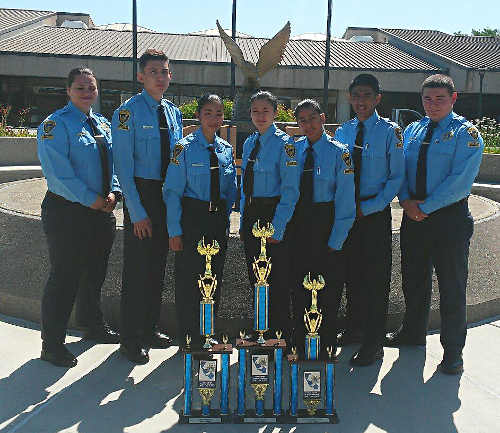
LAKE COUNTY, Calif. – California Highway Patrol Explorers from the CHP Clear Lake Area Explorer Post 151 competed in the State Capital Explorer Challenge on May 2 at the CHP Academy in West Sacramento.
Explorer Post 151 was one of 50 teams that competed.
Teams were comprised of 26 different posts representing the CHP from throughout the state and 24 different posts representing allied police agencies from El Centro to Eureka.
The teams competed in 15 different scenarios from domestic violence to mental illness, and from active shooter to DUI.
Teams also had to perform building searches, complete an obstacle course and take a written test.
Explorer Post 151 won first place in the intoxicated subject in public scenario, second place in the obstacle course and fourth place in the officer needs assistance scenario.
The mission of the CHP Explorer Program is to develop young individuals into responsible and productive citizens through discipline and a commitment to serve their community.
The motto of the Explorer Program is “Learning to serve the public with dedication and commitment.”
“The CHP’s Explorers are young people who learn the value of community service through an organization that leads with integrity, dedication, and professionalism. It’s a program that teaches teens discipline and aids in preparing them for law enforcement careers and life,” said Clear Lake Area Commander Lt. Hector Paredes.
The minimum requirements to become an Explorer are:
– Be between 15 and 21 years of age;
– Have an interest in law enforcement;
– Have at least a 2.0 grade point average;
– No drug or alcohol use;
– Have good citizenship;
– Have no felony convictions.
If you know anyone who would like to become a CHP Explorer please contact Officer Kory Reynolds at 707-279-0103.
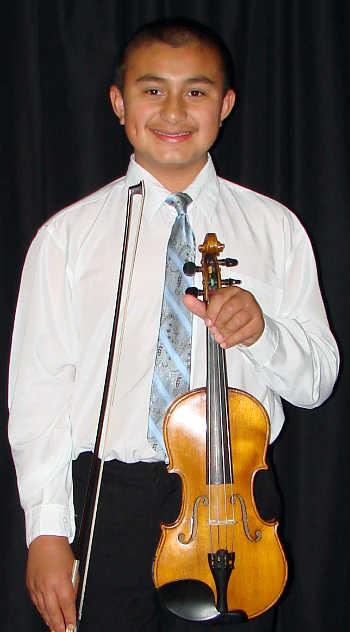
LAKE COUNTY, Calif. – Rafael Contreras, an 11-year-old fiddler from Lower Lake, won first place in the twin fiddle class at the recent Cloverdale Old Time Fiddle Festival.
Rafael was the only youth participant competing against adults in that class, and the competition was tough.
His partner in the twin class was his fiddle teacher, Andi Skelton from Kelseyville.
The contest is sponsored in part by the California State Fiddlers Association and contestants travel from all parts of California and beyond.
Rafael also entered a class in which he had to compete with much older players. He won his age group classes the last three years in a row, and the rules state that he has to step up to the next age group, so he was competing against 13- to 17-year-old fiddlers.
He won 4th place in that class out of about 15 entrants, so he took home 2 medals and lots of prize money that day.
Other fiddlers representing Lake County at the contest were Andi Skelton, who placed third in senior and waltz divisions, and Sue Condit who also placed in the top 5 in the twin fiddle category. Local guitarist Don Coffin won fourth in the accompanist category.
Rafael is very active in his school and community. He is a key member of the Konocti Fiddle Club under the direction of Skelton, and in the first violin section of the Lake County Symphony Association Youth Orchestra under the direction Condit.
The Youth Orchestra is presenting a Spring Concert at the Soper Reese Theatre in Lakeport on June 7.
Rafael also plays the viola, and plays guitar in the Little Kids Rock group, a class before school with teacher, Bill Bordisso.
He attends Lower Lake Elementary, and has been on the Principal’s List for the past two trimesters.
This busy young man also participates in the Konocti Klogging Kids, an after school clogging class with Ms. John, and is a member of the Cobb 4-H Club and holds the office of treasurer.
As a member of the California State Old Time Fiddle Association District 10 – which encompasses three northern counties – Rafael and his brother, Christian, on percussion, appeared with that group in an educational school assembly recently in Calpella.
They also will appear at the Bluegrass Jamboree Concert at the Soper Reese Theatre in September.
The California Department of Fish and Wildlife (CDFW) recognizes the 10th National Endangered Species Day with a focused environmental concern.
The purpose of the Endangered Species Act is to conserve imperiled species and the ecosystems upon which they depend to prevent extinction.
Special activities are scheduled at the zoos in San Diego, Santa Ana, Los Angeles and San Francisco, at Yosemite National Park, San Diego National Wildlife Refuge, San Diego Botanic Gardens, Cabrillo Marine Aquarium in San Pedro, Buena Vista Audubon Society Nature Center, San Francisco Zoo and Sacramento's Beach Lake Park. Visit www.endangeredspeciesday.org to learn more.
California, with all its geographic variety, has tremendous biological diversity. The state supports more than 5,000 native plants and more than 1,000 native animal species.
At least one third of the plants and two thirds of the animals here are endemic species that occur nowhere else in the world.
Of all these species, more than 300 are designated by the state as rare, threatened or endangered. There are 133 species listed under the federal Endangered Species Act in California.
Loss of habitat, water management conflicts, invasive species, poaching and climate change are the greatest threats to their long-term survival.
The combination of wildfires and extreme drought conditions in most of the state add to the pressures on our already-stressed wild plants and animals.
CDFW is paying special attention to priority listed species and other sensitive native wildlife that are in areas most severely affected by the drought.
Emergency drought funds support projects that transferred water to critical fish and wildlife populations that might not have survived the continuing severe dry conditions without it.
Examples of actions taken last year include the flooding of wetland habitats for giant garter snakes in State Wildlife Areas and the relocation of stranded salmon and steelhead.
CDFW is establishing fish and wildlife stressor monitoring to assess the drought's effects and identify key support projects for high-priority listed species such as Amargosa vole, tri-colored blackbird, salmon and species that occur in the San Joaquin Valley.
One endangered plant is Butte County meadowfoam (Limnanthes floccosa ssp. californica), a small annual plant that only occurs at the bottom of rocky vernal pools in Butte County.
The species has been protected at CDFW's Stone Ridge and North Table Mountain Ecological Reserves, and although several thousand plants were observed at Stone Ridge this year, only 107 plants were counted at North Table Mountain, which is open to the public and offers fantastic spring wildflower viewing.
Endangered Species Day was started in 2006 by the U.S. Senate to raise awareness of and celebrate these disappearing plant and animal species, and draw attention to successful recovery programs and opportunities for the public to get involved.
It also honors the people who uphold the legacy of the Act while inspiring the next generation of conservation leaders.
To learn more about CDFW's drought-related actions to protect California's fish and wildlife, visit www.wildlife.ca.gov/drought .
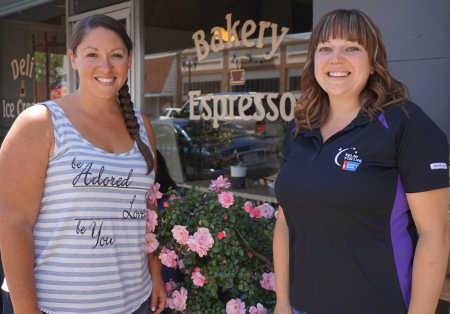
LAKEPORT, Calif. – This weekend people from all over Lake County will come together to participate in the American Cancer Society’s annual Relay for Life event on the Clear Lake High School track.
The relay will begin at 10 a.m. Saturday and continue until 10 a.m. Sunday at the high school, located at 350 Lange St. in Lakeport.
When the 24-hour relay comes around every year most people may think of a run or a walk – imagining numbers on jerseys with cancer ribbons and sweat.
“It’s always misunderstood,” said Racheal Harmon, an American Cancer Society staff partner with Relay for Life. “People are always like, ‘Oh, I’m not a runner!’ and that’s our hardest part. We’re a nonprofit. We’re trying to get our services out there.”
You can sweat if you want to, though. This year, Harmon said, a cancer survivor plans to run 52 miles around the track for all 52 years that he’s lived.
“It’s a family event,” said event lead Danyelle Johnson. “People get crazy and they dress up.”
There will be a tug-of-war, a midnight 5 kilometer glow run (think of dozens of people decked out in glow-in-the-dark neon jewelry), a newspaper and duct tape fashion show, an iPad mini raffle, and a bounce house for the children in the kid zone, along with a scavenger hunt.
Most people walk a few laps in honor of a loved one. Others show up to share in the many themed games and festivities that are there for everyone.
The day will be kicked off with a survivor walk-themed purple power hour, the universal color of all cancer awareness.
While the fun activities bring a lighthearted atmosphere to the family friendly booths, platforms and tents, at the heart of it all is the reality of the impact that cancer has had on many of the people there.
“You don’t realize how much it affects you until you’re there,” said Johnson.
With that deeply personal impact at its heart, Lake County's Relay for Life event has become particularly effective in the fundraising needed to fight cancer.
According to data from 2014 provided by the American Cancer Society, at $71,418, the Lake County relay raised more than double the San Francisco Marina and Sunset districts combined, two of the wealthiest and the only districts to host a relay in the city.
Recognizing cancer's personal impact
Whether they are survivors themselves, have recently or long lost a loved one or are there in support of someone who is facing the terrifying uncertainty that is cancer, Lake County Relay for Lifers know cancer.
Harmon became involved with relay for life in 2007 after a close friend lost both of her parents to cancer within months.
“I started for her,” Harmon said. “And then I’m like, wait a minute, my dad has cancer, my stepdad has cancer … I’m thinking I haven’t been touched and you go to the relay and it hits you.”
Now Harmon works full-time for the American Cancer Society and acts as a liaison with Relay for Life volunteers every year for the event as a staff partner.
Johnson started volunteering on the event lead team in 2008 after she learned that her grandmother was diagnosed with cancer.
She said the relay is special to her for more than one reason. “You’re honoring them [loved ones] but at the same time you’re raising money to prevent it [cancer].”
So the benefits of attending are sometimes two- or three-fold for attendees. They have the chance to show support while the money raised goes toward research, programs and services, many of which are free.
The relay also helps highlight American Cancer Society services, such as the lesser-known “Look Good Feel Better” program.
The program educates men, women and teens about the symptoms they may experience in treatment while teaching them beauty and lifestyle techniques they can use during their transition.
Program manager Elizabeth Turney said it’s an underattended program even though it’s free and local. She believes that more people would use the service if they knew it was there.
“People love it, they just love it,” she said. “There’s a huge difference between when they first come in and when they leave two hours later.”
Representatives from Pantene Beautiful Lengths will be at the relay as well. Attendees who want a haircut can donate their lengthy locks to be made into wigs for people who have suffered hair loss from chemotherapy. You’ll have to be able to spare at least eight inches off the top if you want to participate.
“I’m having mine done,” said Johnson, stroking her lengthy braid with a smile. “It takes eight separate donations to make one wig.”
Light and remembrance
The star of the relay event is the luminaria ceremony, which takes place at 9 p.m. Saturday after the day’s activities.
“If there’s one ceremony you want to be at, it’s that one,” said Johnson.
Participants bring decorated purple paper bags that represent someone who did not survive their battle with cancer. Candles are lit in the bags, which then light up the track as a slideshow plays pictures of those that are lost.
For newcomers, Harmon said, “This could be very healing or it could be very difficult.”
Harmon shared an anecdote about a group of people who came to honor the loss of a friend who was a Lake County local.
“Now it’s like their family reunion every year,” she said. “They all come from southern California here to the event to honor him.”
And that’s what makes the Lake County Relay so different from others that will be going on statewide this weekend.
In cities like San Francisco, the big givers are primarily corporate businesses, which are there for the publicity. For Lake County Relay for Lifers, it’s much more personal.
Sophia LaRosa, senior manager at the American Cancer Society, said that what makes the Lake County community so unique compared to other Relay for Life events is the number of people affected by cancer.
“Lake County is very generous,” LaRosa said. “It’s more hit by cancer than other areas in California.”
The goal for all Relay for Life events is the same: to raise awareness and funding for the services and education provided by the American Cancer Society to those battling cancer, and for research.
The American Cancer Society remains the largest funder of cancer research in the United States.
Ultimately, its goal is to see cancer come to an end.
“Eventually, someday hopefully, we’ll have a cure,” Johnson said.
For more information visit www.relayforlife.org/lakecountyca or visit the Lake County Relay for Life Facebook page for a detailed schedule of featured activities.
To have pictures of loved ones displayed in the luminaria ceremony slideshow email
Email Shari Shepard at