 How to resolve AdBlock issue?
News
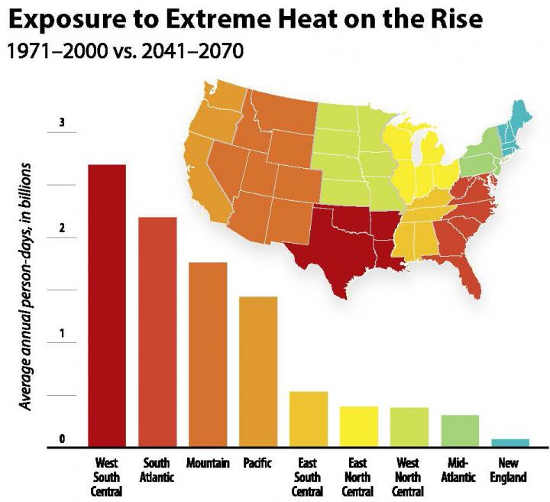
U.S. residents' exposure to extreme heat could increase four- to six-fold by mid-century, due to both a warming climate and a population that's growing especially fast in the hottest regions of the country, according to new research.
The study, by researchers at the National Center for Atmospheric Research (NCAR) and the City University of New York (CUNY), highlights the importance of considering societal changes when trying to determine future climate impacts.
“Both population change and climate change matter,” said NCAR scientist Brian O'Neill, one of the study's co-authors. “If you want to know how heat waves will affect health in the future, you have to consider both.”
Extreme heat kills more people in the United States than any other weather-related event, and scientists generally expect the number of deadly heat waves to increase as the climate warms.
The new study, published May 18 in the journal Nature Climate Change, finds that the overall exposure of Americans to these future heat waves would be vastly underestimated if the role of population changes were ignored.
The total number of people exposed to extreme heat is expected to increase the most in cities across the country's southern reaches, including Atlanta, Charlotte, Dallas, Houston, Oklahoma City, Phoenix, Tampa, and San Antonio.
The research was funded by the National Science Foundation, which is NCAR's sponsor, and the U.S. Department of Energy.
Climate, population and how they interact
For the study, the research team used 11 different high-resolution simulations of future temperatures across the United States between 2041 and 2070, assuming no major reductions in greenhouse gas emissions.
The simulations were produced with a suite of global and regional climate models as part of the North American Regional Climate Change Assessment Program.
Using a newly developed demographic model, the scientists also studied how the U.S. population is expected to grow and shift regionally during the same time period, assuming current migration trends within the country continue.
Total exposure to extreme heat was calculated in “person-days” by multiplying the number of days when the temperature is expected to hit at least 95 degrees by the number of people who are projected to live in the areas where extreme heat is occurring.
The results are that the average annual exposure to extreme heat in the United States during the study period is expected to be between 10 and 14 billion person-days, compared to an annual average of 2.3 billion person-days between 1971 and 2000.
Of that increase, roughly a third is due solely to the warming climate (the increase in exposure to extreme heat that would be expected even if the population remained unchanged).
Another third is due solely to population change (the increase in exposure that would be expected if climate remained unchanged but the population continued to grow and people continued to moved to warmer places).
The final third is due to the interaction between the two (the increase in exposure expected because the population is growing fastest in places that are also getting hotter).
“We asked, 'Where are the people moving? Where are the climate hot spots? How do those two things interact?'” said NCAR scientist Linda Mearns, also a study co-author. “When we looked at the country as a whole, we found that each factor had relatively equal effect.”
At a regional scale, the picture is different. In some areas of the country, climate change packs a bigger punch than population growth and vice versa.
For example, in the U.S. Mountain region – defined by the Census Bureau as the area stretching from Montana and Idaho south to Arizona and New Mexico – the impact of a growing population significantly outstrips the impact of a warming climate.
But the opposite is true in the South Atlantic region, which encompasses the area from West Virginia and Maryland south through Florida.
Exposure versus vulnerability
Regardless of the relative role that population or climate plays, some increase in total exposure to extreme heat is expected in every region of the continental United States.
Even so, the study authors caution that exposure is not necessarily the same thing as vulnerability.
“Our study does not say how vulnerable or not people might be in the future,” O'Neill said. “We show that heat exposure will go up, but we don't know how many of the people exposed will or won't have air conditioners or easy access to public health centers, for example.”
The authors also hope the study will inspire other researchers to more frequently incorporate social factors, such as population change, into studies of climate change impacts.
“There has been so much written regarding the potential impacts of climate change, particularly as they relate to physical climate extremes,” said Bryan Jones, a postdoctoral researcher at the CUNY Institute for Demographic Research and lead author of the study. “However, it is how people experience these extremes that will ultimately shape the broader public perception of climate change.”
LOWER LAKE, Calif. – In 1982 the state of California acquired more than 870 acres – which later swelled to 1,065 acres – in Lower Lake as the result of dedicated archaeologist Dr. John Parker and others who worked to preserve this beautiful slice of Lake County.
In 1976, under the guidance of Sonoma State University Professor Dr. David Frederickson, Parker performed an intensive archaeological survey of the Anderson Marsh area.
After a year of red tape and tremendous effort on Parker's part, Anderson Marsh was officially classified as an Archaeological District and listed on the National Register of Historic Places in 1977.
Archaeologists studying the Clear lake basin where Anderson Marsh State Historic Park is located focused on the region's American Indian technology, settlement patterns and population.
Time periods for each of the criteria were determined in part by utilizing artifact typologies and obsidian hydration dating techniques.
It has been determined that the Southeastern Pomo Indians, the furthest inland of the seven recognized Pomo language groups, lived in this area more than 12,000 years ago. There are dozens of known archaeological sites in Anderson Marsh.
Another archaeologist who has done extensive work at Anderson Marsh is Michael Newland, M.A, RPA, who is past president for the Society for California Archaeology and is staff archaeologist at the Anthropological Studies Center at Sonoma State University in Rohnert Park.
When asked the differences in the processes to determine the age of artifacts, such as carbon dating and the obsidian hydration method, he said, “Right now, floating around the atmosphere, is radioactive carbon, C14. These are naturally occurring isotopes, created by cosmic rays hitting our atmosphere. Plants take these isotopes in when they pull CO2 out the air during photosynthesis. When animals eat the plants, the C14 starts to decay at a known rate.
“Scientists have a process where they can measure how much C14 is left compared to the regular, stable carbon, and since you know how long it takes for it to decay, you can figure out how long ago something stopped taking in C14 – in other words, when it died.
“It's what's called an absolute date in archaeology – it gives you a fixed date in time, that's not dependent on anything else you might find at the site or any other similar types of artifacts.
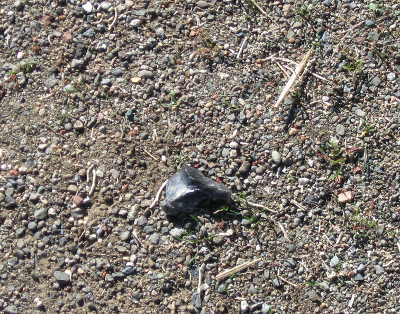
“Obsidian hydration band analysis works a little differently. When obsidian breaks, it begins to absorb air out of the atmosphere. It does so at a generally constant rate, and it changes the color and transparency of the obsidian slightly. Each different type of obsidian has a slightly different rate – Mount Konocti obsidian is different from Borax Lake, which is different from Coso obsidian, and so on.
“When a native person made a spear point, knife, or arrowhead hundreds or thousands of years ago, they chipped and fashioned obsidian for their tools. It you take one of their tools, or one of the flakes left over from creating the tools, and take a thin sliver out of it, you can place that piece under a microscope, measure how much water has been absorbed, and estimate roughly how old it is.
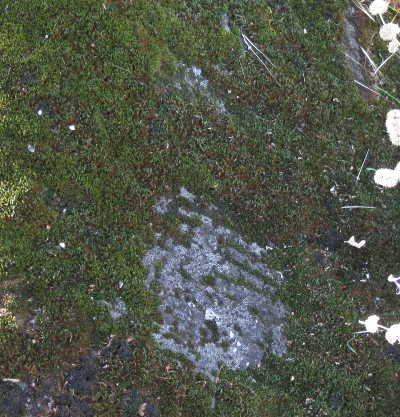
There are a lot of variables – air temperature and moisture, exposure to fire, erosion – and in general obsidian artifacts were compared to each other: this piece has absorbed 3 microns, so it must be older than this other piece, which has only absorbed 2 microns. This is called relative dating, when artifacts are dated in relation with each other,” he concluded.
For more information visit Anderson Marsh Interpretive Association, http://andersonmarsh.org/ ; Dr. John Parker's Wolf Creek Archaeology page, http://www.wolfcreekarcheology.com/ ; and the Society for California Archaeology, http://scahome.org/ .
Kathleen Scavone, M.A., is an educator, potter, writer and author of “Anderson Marsh State Historic Park: A Walking History, Prehistory, Flora, and Fauna Tour of a California State Park” and “Native Americans of Lake County.” She also writes for NASA and JPL as one of their “Solar System Ambassadors.” She was selected “Lake County Teacher of the Year, 1998-99” by the Lake County Office of Education, and chosen as one of 10 state finalists the same year by the California Department of Education.
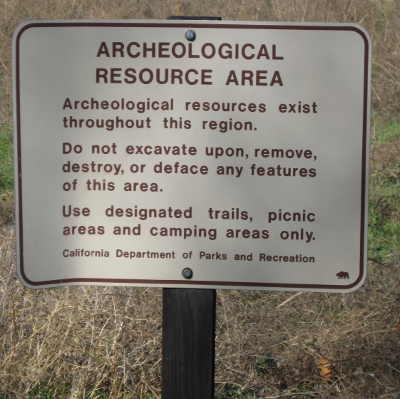
LAKE COUNTY, Calif. – Lake County Animal Care and Control this week is featuring another group of mostly big dogs who are ready for new homes.
Dogs up for adoption this week include mixes of Australian Shepherd, boxer, cattle dog, Chihuahua, Jack Russell terrier, Labrador Retriever, mastiff, pit bull and terrier.
Dogs that are adopted from Lake County Animal Care and Control are either neutered or spayed, microchipped and, if old enough, given a rabies shot and county license before being released to their new owner. License fees do not apply to residents of the cities of Lakeport or Clearlake.
If you're looking for a new companion, visit the shelter. There are many great pets hoping you'll choose them.
In addition to the animals featured here, all adoptable animals in Lake County can be seen here: http://bit.ly/Z6xHMb .
The following dogs at the Lake County Animal Care and Control shelter have been cleared for adoption (additional dogs on the animal control Web site not listed are still “on hold”).

'Barney'
“Barney” is a Jack Russell Terrier-Chihuahua mix with a short brown and tan coat.
Shelter staff said Barney is shy at first but is very nice once he warms up. They said he would be good for an older couple, or somebody who doesn't have any children.
He's in kennel No. 3, ID No. 2051.
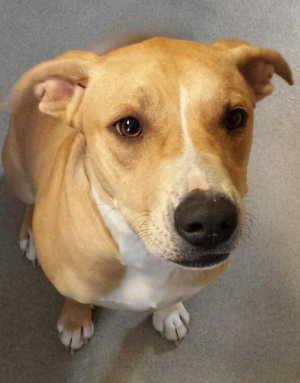
Labrador Retriever-cattle dog mix
This male Labrador Retriever-cattle dog mix has a short tan and white coat.
He's in kennel No. 5, ID No. 2227.
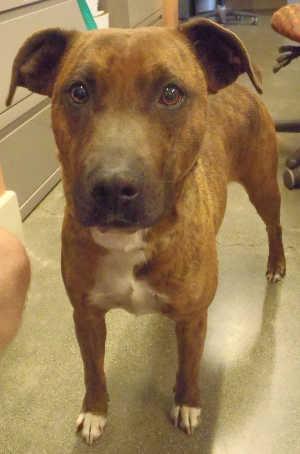
Female pit bull mix
This female pit bull terrier mix has a short brown brindle and white coat.
She's in kennel No. 7, ID No. 2241.
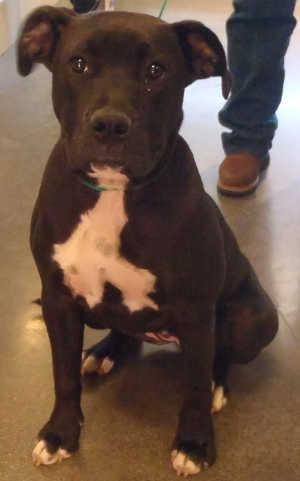
'Daisey'
“Daisey” is a female boxer and pit bull terrier mix.
She has a short black and white coat.
Daisey is in kennel No. 10, ID No. 2242.

Male pit bull terrier mix
This male pit bull terrier mix has a short gray coat and a friendly face.
He's in kennel No. 11, ID No. 2269.
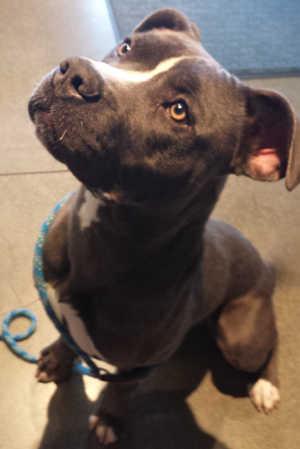
Male pit bull terrier mix
This male pit bull terrier mix has a short gray and white coat.
Shelter staff calls him a “big squishy guy” who is very gentle. They believe he would be fine with children.
He has no food aggression, gets along with other dogs both male and female, and is very appropriate in every way.
The shelter is looking for that special "pitty" lover to take him home and care for him.
He's in kennel No. 13, ID No. 2035.

Male pit bull mix
This male pit bull mix has a short dark brown and white coat.
Shelter staff said he is pretty well behaved with a moderate to low energy level.
They said he has been through a lot he appears to have been dumped in the middle of nowhere; when he arrived he was full of punctures all on his legs, possibly from a dog fight.
Despite all of that, shelter staff said he is very social and friendly with dogs.
He's in kennel No. 15, ID No. 2094.

Chihuahua-terrier mix
This female Chihuahua-terrier mix has a short tan coat.
She's in kennel No. 17, ID No. 2237.

'Abu'
“Abu” is a male mastiff-pit bull terrier mix.
He has a short brown and white coat.
Abu is in kennel No. 24A, ID No. 2218.

'Panda'
“Panda” is a young female mastiff-pit bull terrier mix.
She has a short dark brown coat with white markings.
She's in kennel No. 24b, ID No. 2219.
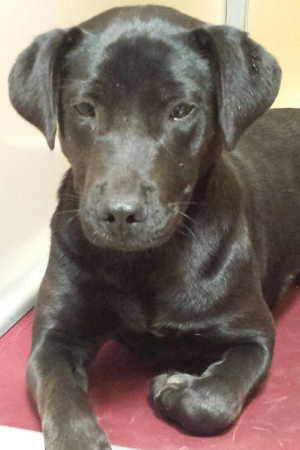
Labrador Retriever mix
This young female Labrador Retriever mix has a short black coat.
She's in kennel No. 32, ID No. 2256.
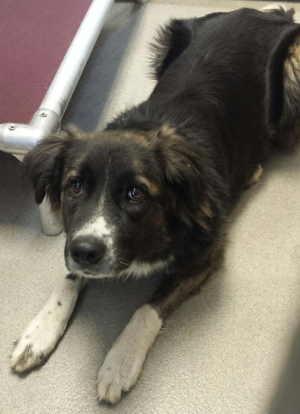
'Tippy'
“Tippy” is a female Australian Shepherd.
Shelter staff said they do not know her background, but she needs a home with women only, as she is very afraid of men.
Tippy is good with other dogs and has been fine with mellow children.
She is being fostered; ID No. 2142.
To fill out an adoption application online visit http://www.co.lake.ca.us/Government/Directory/Animal_Care_And_Control/Adopt/Dog___Cat_Adoption_Application.htm .
Lake County Animal Care and Control is located at 4949 Helbush in Lakeport, next to the Hill Road Correctional Facility.
Office hours are Monday through Friday, 11 a.m. to 5 p.m., and 11 a.m. to 3 p.m., Saturday. The shelter is open from 11 a.m. to 4 p.m. Monday through Friday and on Saturday from 11 a.m. to 3 p.m.
Visit the shelter online at http://www.co.lake.ca.us/Government/Directory/Animal_Care_And_Control.htm .
For more information call Lake County Animal Care and Control at 707-263-0278.
Email Elizabeth Larson at

The upcoming Pluto flyby, once billed as the “first trip to the last planet,” is actually the first visit to an entirely new class of worlds, says planetary scientist William McKinnon.
After an epic journey across the breadth of the solar system, NASA’s New Horizons spacecraft is finally nearing its destination: the Pluto system, a staggering 3 billion miles from Earth.
In December, after a journey of nine years, the spacecraft was brought out of hibernation for the last time in preparation for its rendezvous with the dwarf planet the week of July 12.
Asked if he is excited, William McKinnon, PhD, a planetary scientist in arts and sciences at Washington University in St. Louis who is a co-investigator on the science team of New Horizons, said, “How can I answer that question? We’ve been trying to do this for 25 years, and now it’s all of a sudden happening. It kind of seems a little unreal. Like, is this really happening?”
The last such “first encounter” with a planet was in 1989, when Voyager 2 took a look at Neptune on its way out of the solar system. Half the people in the United States are too young to remember that flyby.
“Old-timers like me remember these first encounters and how fascinating they were,” McKinnon said. “I can remember looking at the newspaper as a boy on the floor of my parents’ living room at the first pictures of Mars sent from Mariner 4, which were grainy and showed craters.
“Something of a disappointment; nobody waving,” he said, with characteristic deadpan humor.
“But all of the first encounters with the giant planets and their satellites were really fascinating,” he said. “The sheer strangeness of these places, which became real worlds once we could see them, was fascinating to me. So this first encounter will be fun.”
But a first encounter with what?
When New Horizons was launched, Pluto was called a planet and Charon was Pluto’s only known moon. In 2006, Pluto was reclassified as a dwarf planet, and the Hubble Telescope has since found four more moons orbiting Pluto: Nix, Hydra, Kerberos and Styx.

What happened?
“In the 1980s, light-sensitive, charge-coupled detectors (CCDs) came over from the military and they could see much fainter objects than chemically sensitized photographic plates,” McKinnon said. In 1992, using a CCD attached to a telescope, astronomers David Jewitt and Jane Luu discovered the first Kuiper Belt object. Six months later they found another one. “Then everyone ran to the telescope,” McKinnon said.
Today there are more than 2,000 catalogued bodies in the Kuiper Belt, including several that qualify as dwarf planets.
“That’s enough that we can see the structure of the belt,” McKinnon said. “And the best – maybe the only – way to explain that structure is to revise our notion of how the planets coalesced and settled into their orbits.
“We were all taught, or assumed for simplicity, that the giant planets in the outer solar system formed more or less where they are and sat there for the rest of time,” McKinnon said. “But people who made models of the gas giants forming couldn’t make them sit still because there’s too much exchange of energy and momentum among them and smaller bodies.”
In 2005, an international group of astronomers working in Nice, France, proposed that the giant planets originally formed much closer to Jupiter, the gas giant closest to the sun, but then moved outward, eventually hitting a mutual gravitational sweet spot that sent Neptune rocketing into the belt of planetesimals (bits and pieces of planetary stuff) that ringed the solar system.
The errant Neptune threw the belt into chaos. It locked some of the bodies into orbital resonances with itself and, with the aid of the other giant planets, hurled most of them out of the solar system, or caused them to collide with one another or one of the planets, including Earth.
When the dust settled, the orbital resonances formed the inner and outer boundaries of a depopulated belt of stable orbits.
“Today when you make detailed computer models of the solar system’s formation,” McKinnon said, “you get something that actually looks like the Kuiper Belt today.”
So our understanding of Pluto has been completely revised while New Horizons has been speeding toward its rendezvous.
The ninth planet by 20th-century reckoning has become the first of a new, third class of planets in the 21st century, transforming our understanding of how the solar system formed.
Big deeds for a small planet.
Diana Lutz is senior news director for science at Washington University in St. Louis.
LAKEPORT, Calif. – A young Lakeport woman died from injuries she received late Friday night when the vehicle she was riding in hit a utility pole, with the driver of the car arrested for driving under the influence.
The name of the 19-year-old Lakeport woman was not released pending notification of family, according to a Saturday report from the California Highway Patrol's Clear Lake Area office.
The CHP identified the driver as 21-year-old Nicholas Ivicevich, also of Lakeport.
The crash occurred at 10 p.m. Friday on Park Way north of Lakeshore Boulevard in Lakeport, the CHP's report said.
Ivicevich was driving his 1997 Honda Civic southbound on Park Way at an unknown speed when he lost control of the Honda as he rounded a right-hand curve. The CHP said the vehicle went off the roadway and hit a utility pole.
Due to the force of the crash, Ivicevich's female passenger suffered major injuries and had to be extricated using the Jaws of Life, the CHP said.
Medical personnel transported the woman to Sutter Lakeside Hospital, where she was pronounced deceased, according to the CHP.
The CHP said alcohol appeared to be a factor in the crash, and Ivicevich was arrested at the scene for felony driving under the influence.
Ivicevich also suffered major injuries including broken ribs and a lacerated liver, and the CHP said he later was flown to an out-of-county hospital by a REACH air ambulance.
Both Ivicevich and his passenger were wearing their seat belts, the CHP said.
CHP Officer Ryan Erickson is leading the crash investigation.
Email Elizabeth Larson at
LAKE COUNTY, Calif. – Special commemorative events and ceremonies are planned around Lake County on Monday in honor of Memorial Day.
Once again this year the Avenue of Flags Association will display the flags of fallen veterans at cemeteries around Lake County, according to association Vice President Dean Gotham.
Gotham said association members – with the help of local volunteers – will install the flagpoles and mount the large flags along the avenues of county cemeteries.
The flags that are featured in the Avenue of Flags once draped the casket of a fallen veteran.
Upon the completion of the interment ceremony, the family is presented the flag. The family has the option of donating the use of the veterans’ burial flag to the Lake County Veterans Memorial- Avenue of Flags Association.
On Memorial Day and Veterans Day the flags are flown to commemorate the memory of veterans who defended our country.
Gotham said the Avenue of Flags will be presented at the Hartley Cemetery in Lakeport, Upper Lake Cemetery, Kelseyville Cemetery and Lower Lake Cemetery.
Installation of flagpoles and flags will begin at 7 a.m., weather permitting, with flags and flagpoles to be taken down at 4 p.m. Gotham said volunteers would be appreciated at all locations.
Further information is available from the following representatives: Upper Lake, Byron Green at 707-275-9515; Lower Lake, Dave Schober at 707-533-5843; Kelseyville, Paul Harris at 707-279-1115; and Hartley Cemetery in Lakeport, Dean Gotham at 707-350-1159.
Also on Monday, the Middletown Cemetery District will hold Memorial Day services beginning at 9 a.m. on the cemetery grounds, 16357 Butts Canyon Road.
The community is invited to join the services at the Mary Hardesty Building, on the top of the hill, for the festivities and refreshments. Parking will be available there.
The ceremonies will include colorful flowered wreaths, made by the floral design class from the Middletown High School, which will be presented in honor of the veterans.
The 4-H club is in charge of the flag ceremony, and Girl Scouts Troop 10676 will help with wreath placement and programs, and will place the flags on the 203 veterans' graves.
District 1 Supervisor Jim Comstock, a Vietnam veteran, will be the guest speaker and will read the names of the veterans buried in the Middletown Cemetery.
Tribal Chair Jose Simon III will read the veterans' names for the Middletown Rancheria Band of Pomo Indians.
Linda Diehl-Darms, a trustee of the Middletown Cemetery District, will act as mistress of ceremonies.
Voris Brumfield will offer the invocation, with Pastor Claudia Listman of the Middletown Community United Methodist Church to give the benediction.
Buglers Boyd Green and Bill Vann will perform the church call and “Taps,” and the Military Funeral Honors Team of Lake County will offer the 21-gun salute.
The group will be ushered in by the Patriot Guard Riders.
David Neft will provide the sound and keyboard accompanying Kathleen Escude vocalist.
The Lion’s Club provides the chairs and helps with set up on this special day.
Community members are encouraged to attend this important event to honor our veterans.