 How to resolve AdBlock issue?
News
UPPER LAKE, Calif. – The streets of Upper Lake were crowded with cowboys, kids and families on Saturday as the town celebrated its Western heritage.
The annual Wild West Day took over the town on Saturday, offering a pancake breakfast, ice cream social, beard and bonnet contests, shootout reenactments, music and more.
For a sampling of the day's fun, see the video above by John Jensen of Lake County News.
LAKE COUNTY, Calif. – Lake County Animal Care and Control is offering another wide variety of dogs to new homes this week.
This week's dogs feature mixes of Airedale, Australian Shepherd, border collie, boxer, cattle dog, Chihuahua, fox terrier, Jack Russell terrier, Labrador Retriever, pit bull, Schnauzer, shepherd and terrier.
Dogs that are adopted from Lake County Animal Care and Control are either neutered or spayed, microchipped and, if old enough, given a rabies shot and county license before being released to their new owner. License fees do not apply to residents of the cities of Lakeport or Clearlake.
If you're looking for a new companion, visit the shelter. There are many great pets hoping you'll choose them.
In addition to the animals featured here, all adoptable animals in Lake County can be seen here: http://bit.ly/Z6xHMb .
The following dogs at the Lake County Animal Care and Control shelter have been cleared for adoption (additional dogs on the animal control Web site not listed are still “on hold”).
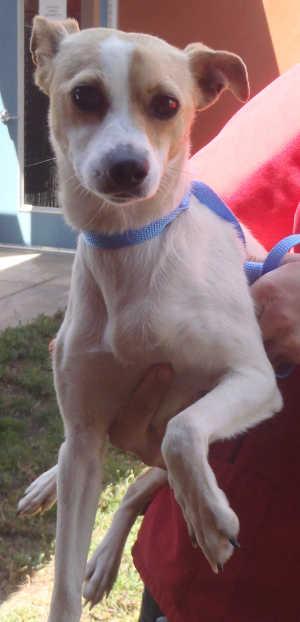
Chihuahua-fox terrier mix
This male Chihuahua-fox terrier mix has a short tan and white coat.
He's in kennel No. 2, ID No. 2304.

Chihuahua-terrier mix
This female Chihuahua-terrier mix has a short tan coat.
She's in kennel No. 2, ID No. 2237.
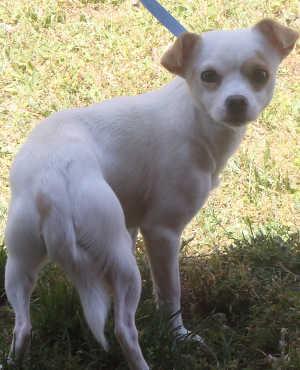
Male Chihuahua mix
This male Chihuahua mix has a short white coat.
He's in kennel No. 4, ID No. 2321.
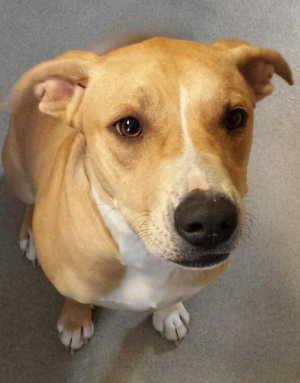
Labrador Retriever-cattle dog mix
This male Labrador Retriever-cattle dog mix has a short tan and white coat.
He's in kennel No. 5, ID No. 2227.
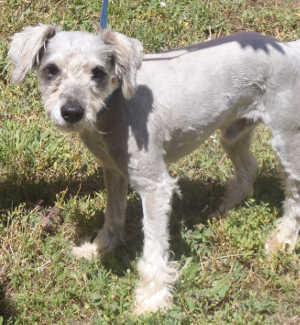
Male Schnauzer mix
This male Schnauzer mix has a clipped gray coat.
He's in kennel No. 6, ID No. 2331.
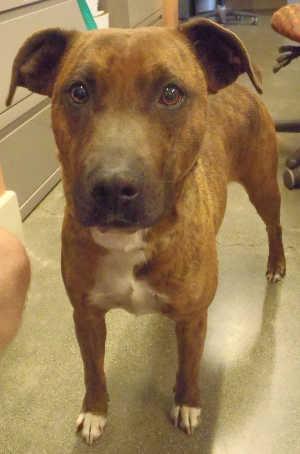
Female pit bull mix
This female pit bull terrier mix has a short brown brindle and white coat.
Shelter staff said she has no food aggression and would be fine with children ages 7 and older. She is not good with cats, but she would be great with other dogs, male or female.
They said that, overall, she is a wonderful and loving girl.
She's in kennel No. 7, ID No. 2241.
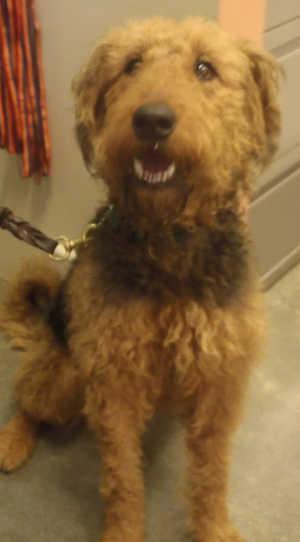
'Zoe'
“Zoe” is a female Airedale terrier with a curly black and tan coat.
Shelter staff said Zoe is shy but sweet. She shows no food aggression and would be fine with other dogs. They do not recommend she go to a home where there are cats or other small animals.
Find her in kennel No. 10, ID No. 2364.
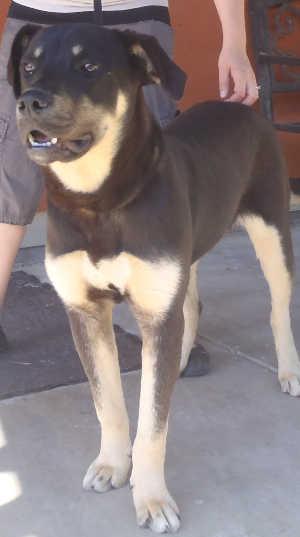
Labrador Retriever mix
This male Labrador Retriever mix has a short black and tan coat.
He's in kennel No. 11, ID No. 2367.

'Amadeus'
“Amadeus” is a male Chihuahua mix with a short tan coat.
He's in kennel No. 12, ID No. 2208.
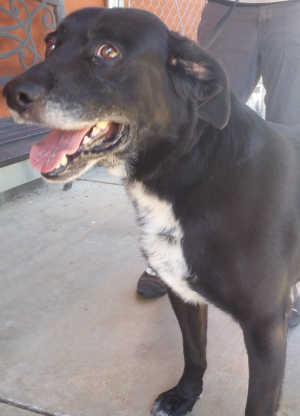
Labrador Retriever-border collie mix
This male Labrador Retriever-border collie mix has a short black coat with white markings.
He's in kennel No. 14, ID No. 2301.
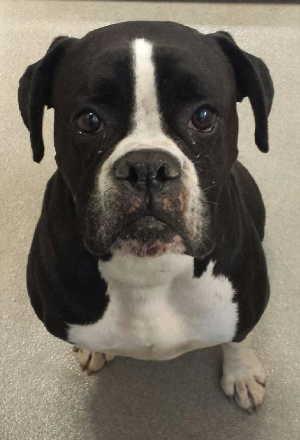
'Diesel'
“Diesel” is a boxer mix with a short black and white coat.
Shelter staff said Diesel needs a home with no livestock or farm animals, but seems fine with cats.
He's in kennel No. 16, ID No. 2270.
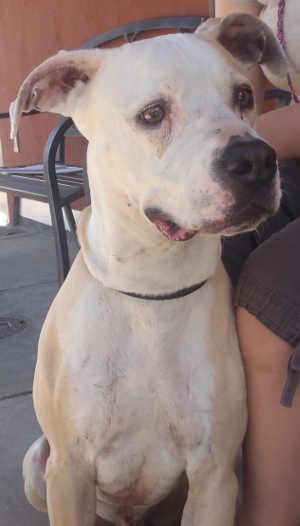
'Dozer'
“Dozer” is a male pit bull terrier mix.
He has a short white and buff-colored coat.
Find Dozer in kennel No. 27, ID No. 2377.
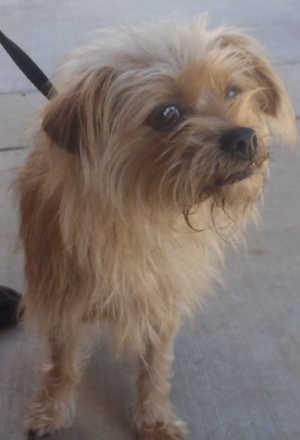
Terrier mix
This female terrier mix has a medium-length brown coat.
She's in kennel No. 28, ID No. 2378.

'Mimi'
“Mimi” is a Chihuahua mix.
She has a short white and tan coat.
Mimi is in kennel No. 30, ID No. 2055.
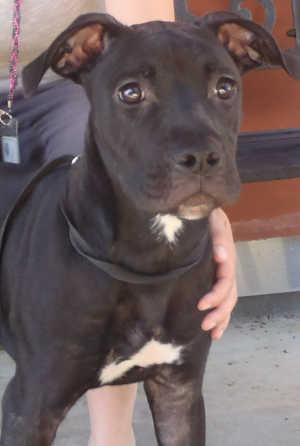
'Roxy'
“Roxy” is a young boxer-pit bull terrier mix.
She has a short black coat with white markings.
She's in kennel No. 31, ID No. 2368.
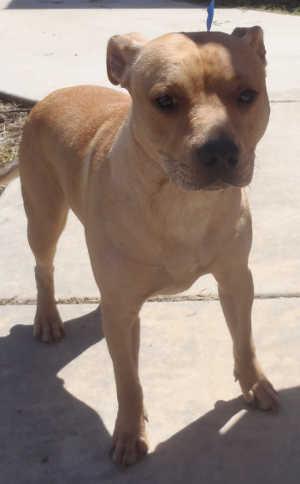
Pit bull-shepherd mix
This male pit bull-shepherd mix has a short tan coat.
He's in kennel No. 32a, ID No. 2334.
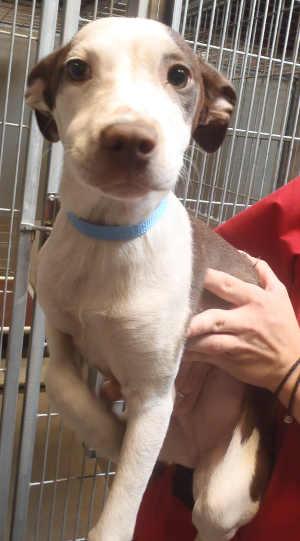
Terrier mix
This female terrier mix has a short white and brown coat.
She's in kennel No. 32b, ID No. 2335.
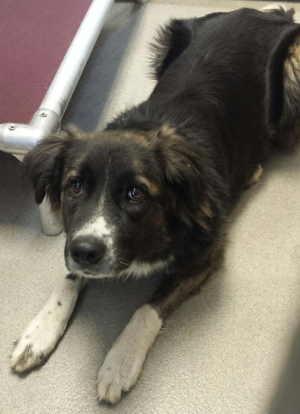
'Tippy'
“Tippy” is a female Australian Shepherd.
Shelter staff said they do not know her background, but she needs a home with women only, as she is very afraid of men.
Tippy is good with other dogs and has been fine with mellow children.
She is being fostered; ID No. 2142.
To fill out an adoption application online visit http://www.co.lake.ca.us/Government/Directory/Animal_Care_And_Control/Adopt/Dog___Cat_Adoption_Application.htm .
Lake County Animal Care and Control is located at 4949 Helbush in Lakeport, next to the Hill Road Correctional Facility.
Office hours are Monday through Friday, 11 a.m. to 5 p.m., and 11 a.m. to 3 p.m., Saturday. The shelter is open from 11 a.m. to 4 p.m. Monday through Friday and on Saturday from 11 a.m. to 3 p.m.
Visit the shelter online at http://www.co.lake.ca.us/Government/Directory/Animal_Care_And_Control.htm .
For more information call Lake County Animal Care and Control at 707-263-0278.
Email Elizabeth Larson at
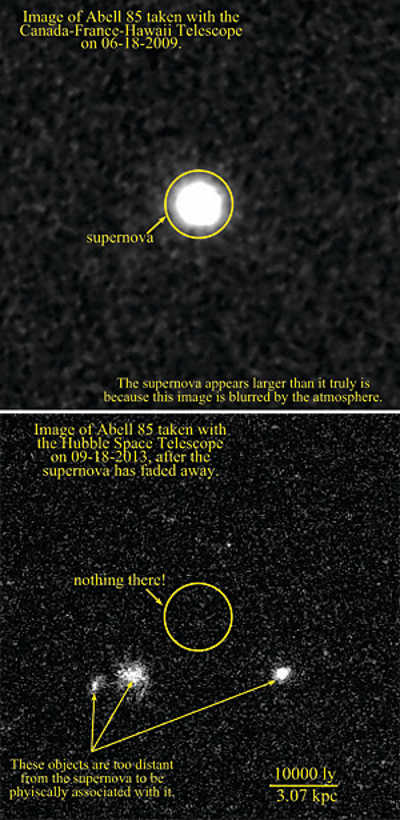
Sharp images obtained by the Hubble Space Telescope confirm that three supernovae discovered several years ago exploded in the dark emptiness of intergalactic space, having been flung from their home galaxies millions or billions of years earlier.
Most supernovae are found inside galaxies containing hundreds of billions of stars, one of which might explode per century per galaxy.
These lonely supernovae, however, were found between galaxies in three large clusters of several thousand galaxies each.
The stars’ nearest neighbors were probably 300 light years away, nearly 100 times farther than our sun’s nearest stellar neighbor, Proxima Centauri, 4.24 light years distant.
Such rare solitary supernovae provide an important clue to what exists in the vast empty spaces between galaxies, and can help astronomers understand how galaxy clusters formed and evolved throughout the history of the universe.
The solitary worlds reminded study leader Melissa Graham, a University of California, Berkeley, postdoctoral fellow and avid sci-fi fan, of the fictional star Thrial, which, in the Iain Banks novel “Against a Dark Background,” lies a million light years from any other star. One of its inhabited planets, Golter, has a nearly starless night sky.
Any planets around these intracluster stars – all old and compact stars that exploded in what are called Type Ia supernovae – were no doubt obliterated by the explosions, but they, like Golter, would have had a night sky depleted of bright stars, Graham said. The density of intracluster stars is about one-millionth what we see from Earth.
“It would have been a fairly dark background indeed,” she said, "populated only by the occasional faint and fuzzy blobs of the nearest and brightest cluster galaxies."
Graham and her colleagues – David Sand of Texas Tech University in Lubbock, Dennis Zaritsky of the University of Arizona in Tucson and Chris Pritchet of the University of Victoria in British Columbia – will report their analysis of the three stars in a paper to be presented Friday, June 5, at a conference on supernovae at North Carolina State University in Raleigh. Their paper has also been accepted by the Astrophysical Journal.
Clusters of thousands of galaxies
The new study confirms the discovery between 2008 and 2010 of three apparently hostless supernovae by the Multi-Epoch Nearby Cluster Survey using the Canada-France-Hawaii Telescope on Mauna Kea in Hawaii. The CFHT was unable to rule out a faint galaxy hosting these supernovae.
But the sensitivity and resolution of images from the Hubble Space Telescope’s Advanced Camera for Surveys are 10 times better and clearly show that the supernovae exploded in empty space, far from any galaxy.
They thus belong to a population of solitary stars that exist in most if not all clusters of galaxies, Graham said
While stars and supernovae typically reside in galaxies, galaxies situated in massive clusters experience gravitational forces that wrench away about 15 percent of the stars, according to a recent survey.
The clusters have so much mass, though, that the displaced stars remain gravitationally bound within the sparsely populated intracluster regions.
Once dispersed, these lonely stars are too faint to be seen individually unless they explode as supernovae.
Graham and her colleagues are searching for bright supernovae in intracluster space as tracers to determine the population of unseen stars.
Such information provides clues about the formation and evolution of large scale structures in the universe.
“We have provided the best evidence yet that intracluster stars truly do explode as Type Ia supernovae,” Graham said, “and confirmed that hostless supernovae can be used to trace the population of intracluster stars, which is important for extending this technique to more distant clusters.”
Graham and her colleagues also found that a fourth exploding star discovered by CFHT appears to be inside a red, round region that could be a small galaxy or a globular cluster.
If the supernova is in fact part of a globular cluster, it marks the first time a supernova has been confirmed to explode inside these small, dense clusters of fewer than a million stars.
All four supernovae were in galaxy clusters sitting about a billion light years from Earth.
“Since there are far fewer stars in globular clusters, only a small fraction of the supernovae are expected to occur in globular clusters,” Graham said. “This might be the first confirmed case, and may indicate that the fraction of stars that explode as supernovae is higher in either low-mass galaxies or globular clusters.”
Graham said that most theoretical models for Type Ia supernovae involve a binary star system, so the exploding stars would have had a companion throughout their lifetimes.
“This is no love story, though,” she added. “The companion was either a lower-mass white dwarf that eventually got too close and was tragically fragmented into a ring that was cannibalized by the primary star, or a regular star from which the primary white dwarf star stole sips of gas from its outer layers. Either way, this transfer of material caused the primary to become unstably massive and explode as a Type Ia supernova.””
Graham’s postdoctoral fellowship is supported by gifts from Gary and Cynthia Bengier.
Robert Sanders writes for the UC Berkeley News Center.
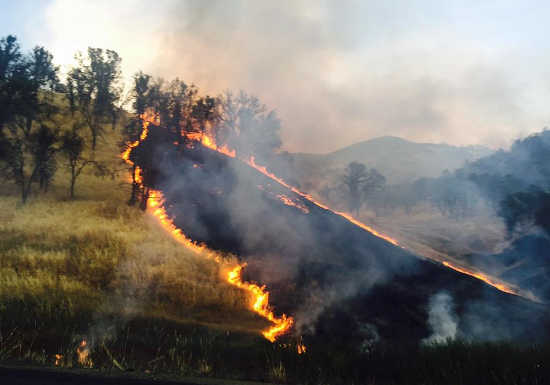
LAKE COUNTY, Calif. – State and local firefighters spent several hours battling a wildland fire along Highway 20 Friday night, finally containing it shortly before midnight.
The Oasis Fire was first reported just before 8 p.m., according to radio reports.
The fire was located on the north side of Highway 20 near the Lake and Colusa County line.
Firefighters arriving on scene found the fire quickly moving uphill, scanner reports indicated.
Cal Fire had incident command on the fire, calling in battalion chiefs, engines and hand crews. The agency's aircraft also worked the fire, stopping operations due to the darkness just after 9 p.m.
Northshore Fire, Lake County Fire and Williams Fire also sent resources to work on the incident, according to reports from the scene.
Northshore Fire Chief Jay Beristianos said the fire burned in oak woodland.
Because of the fire's close proximity to the highway and the potential hazard to motorists, firefighters requested Caltrans and the California Highway Patrol respond to the scene. While the highway remained open, traffic control was in place.
Radio reports indicated the fire was contained just before 11:40 p.m.
Beristianos said mop up in the fire area was expected to continue through the night.
Email Elizabeth Larson at
LAKE COUNTY, Calif. – Nominations for the 18th annual Stars of Lake County Community Awards program are now open.
Anyone can make a nomination for a Star Award. There are 21 categories covering a myriad of areas of service to our communities.
The nomination form is currently available on the Lake County Chamber of Commerce Web site at http://www.lakecochamber.com/stars/ .
The form lists all the available categories and copies are available at the chamber office at 875 Lakeport Blvd., Lakeport at Vista Point.
Deadline for nominations is end of business on Friday, Oct. 9, or postmarked with that date.
The Soper Reese Theater will be the location for the Stars program on Saturday, Nov. 14, from 5 to 8:30 p.m.
During the first 17 years of this program, more than 1,800 individuals, businesses and organizations have been acknowledged by nominations for their efforts to improve the quality of life in Lake County.
Tickets for the 18th annual Stars of Lake County Awards program will be $25 per person and all seats are reserved.
Each nominee will receive one free ticket. The chamber will advise when the tickets go on sale.
For more information on the Stars Community Awards program, please contact Melissa Fulton, chief executive officer of the Lake County Chamber of Commerce, at 707-263-5092.
LAKE COUNTY, Calif. – With warm, summer weather arriving, it will be more common to see accumulations of cyanobacteria, often referred to as “blue-green algae,” along the shorelines of Clear Lake.
Cyanobacteria are microscopic organisms that occur naturally in many bodies of freshwater.
Under certain conditions, such as high nutrient and light levels, they can reproduce rapidly, resulting in a dense growth or “bloom.”
Blooms can cause discoloration of the water or produce floating scums or mats, which tend to accumulate along shorelines.
In recent days, Lake County Water Resources has confirmed the presence of blooms in various locations along the shorelines of Clear Lake.
The types of cyanobacteria known to be present include Microcystis and Aphanizomenon.
While most blue-green algal blooms are not harmful, some can be. Some are capable of producing algal toxins that can be harmful to humans, pets and wildlife.
Because it is impossible to tell from a visual inspection whether an algal bloom is toxic, the safest approach is to avoid all blooms.
Although toxins can sometimes be present even when a bloom is not obvious, it is generally the case that the worse it looks, the greater likelihood that there could be cyanotoxins.
It is easy to avoid exposure to harmful toxins and still possible to enjoy recreational activities in and around the lake.
People and pets should not swim or wade through algal scums. It is always advisable to promptly shower off with fresh water after swimming in any lake or body of freshwater.
Activities that generate aerosol, such as jet skiing, should be avoided in affected areas.
Pets are more susceptible to illness from algal toxins because they are not repulsed by the foul odors often associated with blooms that cause humans to naturally avoid them.
Pets should not drink lake water during a bloom or be allowed to eat the mats (wet or dry) or lick mats and scum off their fur.
Never drink untreated lake water; boiling the water does not inactivate algal toxins.
With these simple precautions, activities in and near the lake – such as camping, picnicking, biking and hiking – are safe, as is boating in unaffected areas.
More information about cyanobacteria can be found at http://www.co.lake.ca.us/Government/Directory/Environmental_Health/Blue-Green_Algae.htm and http://www.cdph.ca.gov/healthinfo/environhealth/water/pages/bluegreenalgae.aspx .