How to resolve AdBlock issue?
Refresh this page
How to resolve AdBlock issue?
Refresh this page
Lake County News,California
  • Home
    • Registration Form
  • News
    • Education
    • Veterans
    • Community
      • Obituaries
      • Letters
      • Commentary
    • Police Logs
    • Business
    • Recreation
    • Health
    • Religion
    • Legals
    • Arts & Life
    • Regional
  • Calendar
  • Contact us
    • FAQs
    • Phones, E-Mail
    • Subscribe
  • Advertise Here
  • Login

News

Lakeport City Council to consider final approval of tobacco retailers ordinance

LAKEPORT, Calif. – The Lakeport City Council this week will consider approving the final step in adopting a new ordinance to establish a tobacco retail license program.

The council will meet Tuesday, Dec. 3, at 6 p.m. in the council chambers at Lakeport City Hall, 225 Park St.

The agenda can be found here.

If you cannot attend in person, and would like to speak on an agenda item, you can access the Zoom meeting remotely at this link or join by phone by calling toll-free 669-900-9128 or 346-248-7799.

The webinar ID is 973 6820 1787, access code is 477973; the audio pin will be shown after joining the webinar. Those phoning in without using the web link will be in “listen mode” only and will not be able to participate or comment.

Comments can be submitted by email to This email address is being protected from spambots. You need JavaScript enabled to view it.. To give the city clerk adequate time to print out comments for consideration at the meeting, please submit written comments before 3:30 p.m. on Tuesday, Dec. 3.

On Tuesday, the council will hold a public hearing to adopt an ordinance to the municipal code requiring the licensure of tobacco retailers, regulating the sale of tobacco products, and determining that this ordinance is not subject to the California Environmental Quality Act.

The council approved the first reading during a public hearing held at its Nov. 19 meeting.

City Manager Kevin Ingram’s report explained, “Lake County faces significant health challenges, including a high rate of tobacco use,” adding that tobacco use and vaping are prevalent among even younger populations and are “a significant problem in our school system.”

At its Aug. 16 meeting, the Board of Supervisors adopted its own tobacco retail ordinance.

The council began considering the ordinance in September, when its members heard an in-depth presentation from Lake County Public Health regarding its recently adopted ordinance
establishing a tobacco retail license program. At that time, the majority of the council signaled support for moving forward with such regulations.

“During that meeting, the City Council expressed support for establishing local tobacco retail regulations and partnering with Lake County Public Health to develop an enforcement program with a specific focus on reducing sales to minors,” Ingram said.

He said the city of Lakeport has discussed creating consistent tobacco retailer regulations that can be implemented countywide by Lake County Public Health with both county officials and the city of Clearlake.

“The proposed ordinance before the Council aligns closely with the County's ordinance but includes additional flexibility for enforcement responsibilities. Specifically, the ordinance designates the City Manager as responsible for enforcement. This designation allows the City Manager to delegate enforcement authority to any agency, department, or individual as approved by the City Council,” Ingram wrote.

“The ordinance also explicitly permits the City Council to enter into agreements with the County or other agencies to perform enforcement duties,” Ingram continued. “City staff recommends contracting with Lake County Public Health to enforce and administer the ordinance. However, should the City choose to alter this arrangement in the future, the ordinance ensures that enforcement authority remains clearly under the City's jurisdiction. This proposed approach provides flexibility while maintaining the necessary structure to effectively regulate tobacco retail activities and protect public health.”

Also on Tuesday, the council will conduct a second reading and hold a public hearing to consider the addition of a section to the Lakeport Municipal Code establishing a procedure requiring the exhaustion of administrative remedies for individuals or entities challenging fees, charges, and assessments on real property levied by the City of Lakeport,” said Finance Director and Assistant City Manager Nick Walker in his report to the council.

Under business, the council will discuss and review observed trends in received traffic safety related complaints as part of its bi-annual traffic safety report.

On the consent agenda — items considered noncontroversial and usually accepted as a slate on one vote — are ordinances; minutes of the City Council’s regular meeting on Nov. 19; approval of the continuation of the proclamation declaring a local state of emergency due to severe weather conditions including heavy rain, and extreme wind; adoption of the resolution accepting the Potable Water Backup Power Project; adoption of the resolution accepting the exchange of granulated activated carbon, Bid No., 24-08, and authorize the filing of the notice of completion; and adoption of the resolution rescinding Resolution 2957 (2024) and revising the Master Pay Schedule in conformance with California Code of Regulations, Title 2, Section 570.5.

The council also will hold a closed session to discuss negotiations with the Big Valley Band of Pomo Indians for city-owned property at 3665 State Highway 175, with Wine Country Compressors for a city-owned property at 910 Bevins St., and with the Lake County Tax Collector’s Office for four properties.

Email Elizabeth Larson at This email address is being protected from spambots. You need JavaScript enabled to view it.. Follow her on Twitter, @ERLarson, and on Bluesky, @erlarson.bsky.social. Find Lake County News on the following platforms: Facebook, @LakeCoNews; X, @LakeCoNews; Threads, @lakeconews, and on Bluesky, @lakeconews.bsky.social.

Board of Supervisors to discuss lease revenue bonds for sheriff’s headquarters remodel

LAKE COUNTY, Calif. — The Board of Supervisors this week will consider lease revenue bonds to fund the new sheriff’s headquarters, and hear presentations on the county’s opioid settlement funds and on flood insurance.

The‌ ‌board will meet beginning ‌at‌ ‌9‌ ‌a.m. Tuesday, Dec. 3, in the board chambers on the first floor of the Lake County Courthouse, 255 N. Forbes St., Lakeport.

The‌ ‌meeting‌ ‌can‌ ‌be‌ ‌watched‌ ‌live‌ ‌on‌ ‌Channel‌ ‌8, ‌online‌ ‌at‌ ‌https://countyoflake.legistar.com/Calendar.aspx‌‌ and‌ ‌on‌ ‌the‌ ‌county’s‌ ‌Facebook‌ ‌page. ‌ ‌Accompanying‌ ‌board‌ ‌documents, ‌the‌ ‌agenda‌ ‌and‌ ‌archived‌ ‌board‌ ‌meeting‌ ‌videos‌ ‌also‌ ‌are‌ ‌available‌ ‌at‌ ‌that‌ ‌link. ‌ ‌

To‌ ‌participate‌ ‌in‌ ‌real-time, ‌join‌ ‌the‌ ‌Zoom‌ ‌meeting‌ ‌by‌ ‌clicking‌ ‌this‌ ‌link‌. ‌ ‌

The‌ ‌meeting‌ ‌ID‌ ‌is‌ 865 3354 4962, ‌pass code 726865.‌ ‌The meeting also can be accessed via one tap mobile at +16694449171,,86533544962#,,,,*726865#. The meeting can also be accessed via phone at 669 900 6833.

At 9:05 a.m., the board will hold a public hearing to consider approving lease revenue bonds of up to $25 million to remodel the former Lakeport National Guard Armory facility into the Lake County Sheriff’s Office headquarters.

The staff report for the discussion said the remodel’s construction agreement is expected to be brought before the board on Dec. 17. It calls for a 16-month construction timeframe.

At 9:45 a.m., the board will hear a presentation on the county's opioid settlement funds expenditure plan and consider approving a letter of support for Lake County Behavioral Health Services' Behavioral Health Continuum Infrastructure Program grant application.

At 10:15 a.m., the supervisors also will hear a presentation on the National Flood Insurance Program.

The full agenda follows.

CONSENT AGENDA

5.1: Adopt resolution approving agreement No. 23-0529-016-SF with California Department of Food Agriculture for Glassy-Winged Sharpshooter (GWSS) program of $28,257.75 for July 1, 2024, through June 30, 2025.

5.2: Adopt resolution approving agreement No. 24-0388-025-SF with the California Department of Food and Agriculture for compliance with the Sudden Oak Death quarantine program for the period July 1, 2024, through June 30, 2025, in the amount of $2,809.91.

5.3: Approve closure of the Auditor-Controller/Clerk Office from 1 p.m. to 5 p.m. on Friday, Dec. 13.

5.4: Approve continuation of emergency proclamation declaring a shelter crisis in the County of Lake.

5.5: Approve continuation of proclamation of the existence of a local emergency due to pervasive tree mortality.

5.6: Approve continuation of proclamation declaring a Clear Lake hitch emergency.

5.7: Approve continuation of local emergency by the Lake County Sheriff/OES director for the 2024 late January, early February winter storms.

5.8: Approve continuation of proclamation of a local health emergency by the Lake County health officer for the Boyles Fire.

5.9: Approve continuation of a local emergency by the Lake County Sheriff/OES director for the 2024 Boyles Fire.

5.10: Approve continuation of local emergency proclamation by the Lake County Sheriff/OES director for the Glenhaven Fire.

5.11: Approve Board of Supervisors minutes for June 20 to 21, Oct. 22 and Nov. 5, 2024.

5.12: Authorize closure of the Community Development Department to the public on Wednesday, Dec. 11, from 12 p.m. to 5 p.m. for all-staff training.

5.13: Approve SafeRx grant application for the California Overdose Prevention Network Coalition funding for $75,000 per year for three years.

5.14: Approve request to close the Probation Department on Thursday, Dec. 12, from 10:30 a.m. to 5 p.m. for all-staff training.

5.15: Approve the qualified list from the request for qualifications for on-call civil engineering services.

5.16: Accept the offers of dedication and adopt the resolution approving the final subdivision map — Valley Oaks Subdivision Village PDC II Phase I.

5.17: Adopt resolution expressing support for the Lower Lake HoliDAZE Street Fair and temporarily authorizing a road closure, prohibiting parking, and authorizing removal of vehicles and ordering the Department of Public Works to post signs.

5.18: Approve the purchase of one vehicle from Pape’ Kenworth in the amount of $244,728.49 for the heavy equipment fleet and authorize the Public Works director/assistant purchasing agent to sign the sales order.

5.19: Approve amendment two to the engineering services agreement for staff augmentation between the county of Lake and Coastland Civil Engineering LLC, increasing the not-to-exceed amount to $750,000, and authorize the chair to sign amendment two.

5.20: Authorize the Department of Public Works to apply for an FY 2025 Rebuilding American Infrastructure with Sustainability and Equity (RAISE) grant for the South Main Street/Soda Bay Road project and authorize the chair to sign a letter of support.

5.21: Adopt resolution authorizing the department head of Lake County Department of Social Services to apply for and accept the County Allocation Award under Round 6 of the Transitional Housing Program and Round 3 of the Housing Navigation and Maintenance Program.

5.22: Sitting as the Lake County Sanitation District, Board of Directors, approve purchase of a submersible pump assembly to replace the pump at Lift Station No. 2 in the Northwest Wastewater System from DXP Enterprises Inc. in the amount not to exceed $120,372.40.

5.23: Sitting as the Lake County Sanitation District Board of Directors, adopt resolution revising the fiscal year 2024-2025 adopted budget of the County of Lake by closing out Fund 702 State Revolving Loan Fund Northwest and appropriating unanticipated revenues to Lake County Sanitation District Northwest Regional Capital Improvement Reserve designation, in the amount of $2,521,281, to make appropriations in the Budget Units 8355, Object Code 783.18-00, 783.61-60, and 783.62-74 for multiple capital improvement projects.

5.24: Approve agreement between the county of Lake on behalf of CSA No. 2 Spring Valley, CSA No. 6 Finley, CSA No. 13 Kono Tayee, CSA No. 20 Soda Bay, CSA No. 21 North Lakeport, Kelseyville County Water Works District No. 3, and Lake County Sanitation District and Brelje & Race Consulting Engineers and LACO Associates for on-call civil engineering and design services, award the identified task orders, and authorize the chair to sign.

TIMED ITEMS

6.2, 9:03 a.m.: Pet of the Week.

6.3, 9:05 a.m.: Public hearing, (a) consideration of lease financing by the county of Lake and Lake County Public Financing Authority to provide financing for certain public capital improvements (seated as the Lake County Board of Supervisors and Board of Directors for Lake County Public Financing Authority). (b) Seated as the Lake County Board of Supervisors, consideration of resolution of the county of Lake approving proceedings by the Lake County Public Financing Authority for the issuance of lease revenue bonds in an initial aggregate principal amount not to exceed $25,000,000. (c) Seated as the Board of Directors for Lake County Public Financing Authority, consideration of resolution of the Lake County Public Financing Authority authorizing the issuance of lease revenue bonds in an initial aggregate principal amount not to exceed $25,000,000.

6.4, 9:45 a.m.: (a) Presentation of the county of Lake's opioid settlement funds expenditure plan; and (b) approve letter of support for Lake County Behavioral Health Services' Behavioral Health Continuum Infrastructure Program grant application.

6.5, 10:15 a.m.: Presentation of the National Flood Insurance Program.

6.6, 11:15 a.m.: Public hearing, consideration of resolution adopting the Title VI implementation plan.

6.7, 11:30 a.m.: Consideration of a lease agreement between the county of Lake and Lakeport Plaza LLC, for office space at 55 1st St., Lakeport.

UNTIMED ITEMS

7.2: Consideration of advanced salary step appointment of Danielle Dizon to Health Services administrative manager.

7.3: (a) Consideration of contract change order No. 1 to the construction contract between Lake County and Stewart Engineering Inc., for the construction of the Chalk Mountain Bridge Replacement Project (Federal Project No. BRLO-5914(094)) in the amount of $25,270.77, increasing the original contract amount of $6,176,906 to a new contract amount of $6,202,176.77, and authorize the chair to sign the change order. (b) Consideration of contract change order No. 2 to the construction contract between Lake County and Stewart Engineering, Inc., for the construction of the Chalk Mountain Bridge Replacement Project (Federal Project No. BRLO-5914(094)) in the amount of $52,668, increasing the contract amount from $6,202,176.77 to a new contract amount of $6,254,844.77, and authorize the chair to sign the change order.

7.4: (a) Consideration of contract change order No. 1 to the construction contract between Lake County and Greg Simpson Trucking Inc., for the construction of the Socrates Mine Road landslide repair project (Federal Project No. FEMA-4308-DR-CA) in the amount of $9,722.10, increasing the original contract amount of $491,864.53 to a new contract amount of $501,586.63, and authorize the chair to sign the change order. (b) Consideration of contract change order No. 2 to the construction contract between Lake County and Greg Simpson Trucking Inc., for the construction of the Socrates Mine Road landslide repair project (Federal Project No. FEMA-4308-DR-CA) in the amount of $139,200.25, increasing the contract amount from $501,586.63 to a new contract amount of $640,786.88, and authorize the chair to sign the change order.

CLOSED SESSION

8.1: Public employee evaluation: Public Works director.

8.2: Conference with legal counsel: Significant exposure to litigation pursuant to Gov. Code section 54956.9(d)(2), (e)(1) – One potential case.

Email Elizabeth Larson at This email address is being protected from spambots. You need JavaScript enabled to view it.. Follow her on Twitter, @ERLarson, and on Bluesky, @erlarson.bsky.social. Find Lake County News on the following platforms: Facebook, @LakeCoNews; X, @LakeCoNews; Threads, @lakeconews, and on Bluesky, @lakeconews.bsky.social.

Americans face an insurability crisis as climate change worsens disasters – a look at how insurance companies set rates and coverage


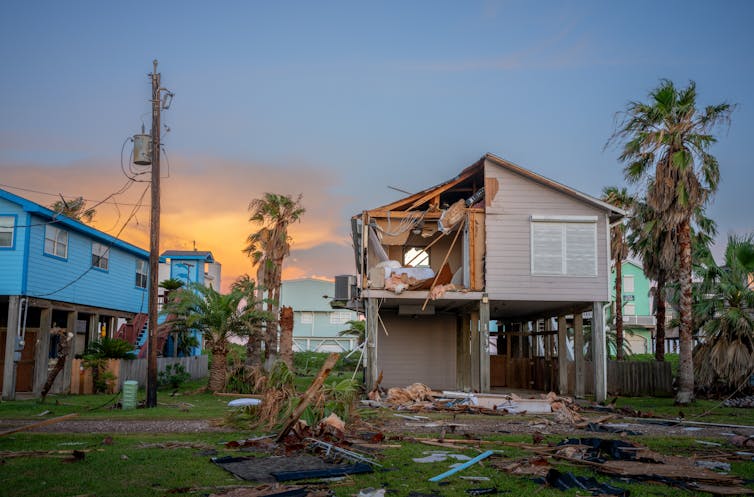
Hurricane Beryl tore up homes in Freeport, Texas, in July 2024. Brandon Bell/Getty Images)

Home insurance rates are rising in the United States, not only in Florida, which saw tens of billions of dollars in losses from hurricanes Helene and Milton, but across the country.

According to S&P Global Market Intelligence, homeowners insurance increased an average of 11.3% nationwide in 2023, with some states, including Texas, Arizona and Utah, seeing nearly double that increase. Some analysts predict an average increase of about 6% in 2024.

These increases are driven by a potent mix of rising insurance payouts coupled with rising costs of construction as people build increasingly expensive homes and other assets in harm’s way.

When home insurance averages $2,377 a year nationally, and $11,000 per year in Florida, this is a blow to many people. Despite these rising rates, Jacques de Vaucleroy, chairman of the board of reinsurance giant Swiss Re, believes U.S. insurance is still priced too low to fully cover the risks.

It isn’t just that premiums are changing. Insurers now often reduce coverage limits, cap payouts, increase deductibles and impose new conditions or even exclusions on some common perils, such as protection for wind, hail or water damage. Some require certain preventive measures or apply risk-based pricing – charging more for homes in flood plains, wildfire-prone zones, or coastal areas at risk of hurricanes.

Homeowners watching their prices rise faster than inflation might think something sinister is at play. Insurance companies are facing rapidly evolving risks, however, and trying to price their policies low enough to remain competitive but high enough to cover future payouts and remain solvent in a stormier climate. This is not an easy task. In 2021 and 2022, seven property insurers filed for bankruptcy in Florida alone. In 2023, insurers lost money on homeowners coverage in 18 states.

But these changes are raising alarm bells. Some industry insiders worry that insurance may be losing its relevance and value – real or perceived – for policyholders as coverage shrinks, premiums rise and exclusions increase.

How insurers assess risk

Insurance companies use complex models to estimate the likelihood of current risks based on past events. They aggregate historical data – such as event frequency, scale, losses and contributing factors – to calculate price and coverage.

However, the increase in disasters makes the past an unreliable measure. What was once considered a 100-year event may now be better understood as a 30- or 50-year event in some locations.

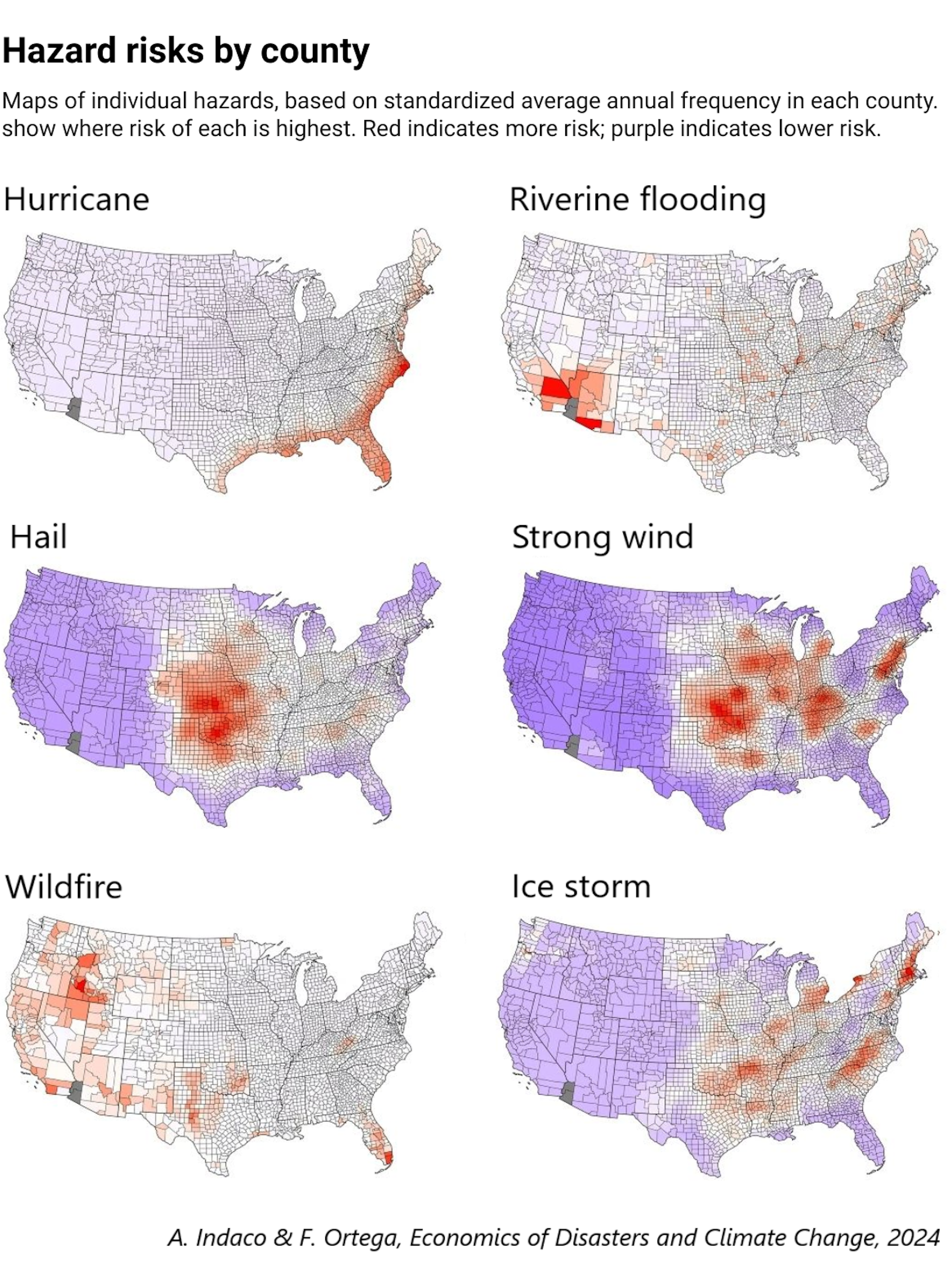
What many people do not realize is that the rise of so-called “secondary perils” – an insurance industry term for floods, hailstorms, strong winds, lightning strikes, tornadoes and wildfires that generate small to mid-size damage – is becoming the main driver of the insurability challenge, particularly as these events become more intense, frequent and cumulative, eroding insurers’ profitability over time.
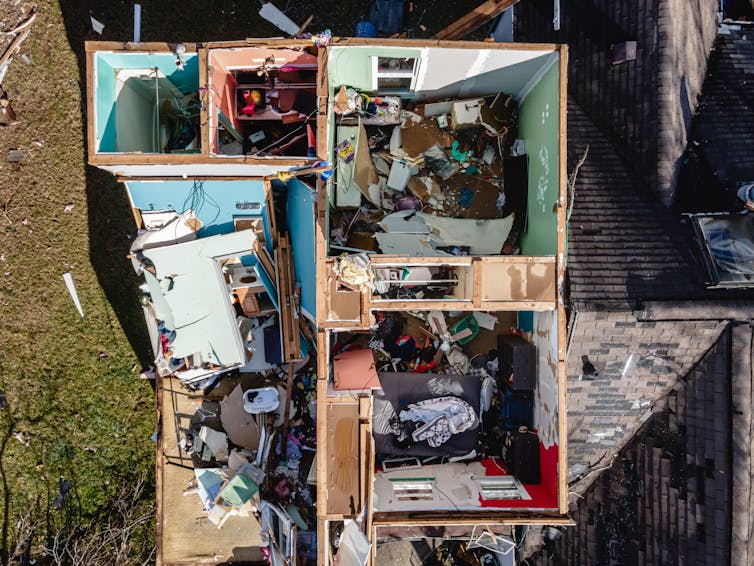
A tornado-damaged home seen from above with the roof missing and belongings strewn about in the rooms. The rooms look like colored boxes.
A tornado tore the roof off a home in Madison, Tenn., in 2023. The 2024 tornado season was one of the busiest on record. Jon Cherry/Getty Images

Climate change plays a role in these rising risks. As the climate warms, air can hold more moisture – about 7% more with every degree Celsius of warming. That leads to stronger downpours, more thunderstorms, larger hail events and a higher risk of flooding in some regions. The U.S. was on average 1.5 degrees Celsius (2.6 degrees Fahrenheit) warmer in 2022 than in 1970.

Insurance companies are revising their models to keep up with these changes, much as they did when smoking-related illnesses became a significant cost burden in life and health insurance. Some companies use climate modeling to augment their standard actuarial risk modeling. But some states have been hesitant to allow climate modeling, which can leave companies systematically underrepresenting the risks they face.

Each company develops its own assessment and geographic strategy to reach a different conclusion. For example, Progressive Insurance has raised its homeowner rates by 55% between 2018 and 2023, while State Farm has raised them only 13.7%.

While a homeowner who chooses to make home improvements, such as installing a luxury kitchen, can expect an increase in premiums to account for the added replacement value, this effect is typically small and predictable. Generally, the more substantial premium hikes are due to the ever-increasing risk of severe weather and natural disasters.

Insurance for insurers

When risks become too unpredictable or volatile, insurers can turn to reinsurance for help.

Reinsurance companies are essentially insurance companies that insure insurance companies. But in recent years, reinsurers have recognized that their risk models are also no longer accurate and have raised their rates accordingly. Property reinsurance alone increased by 35% in 2023.

Reinsurance is also not very well suited to covering secondary perils. The traditional reinsurance model is focused on large, rare catastrophes, such as devastating hurricanes and earthquakes.
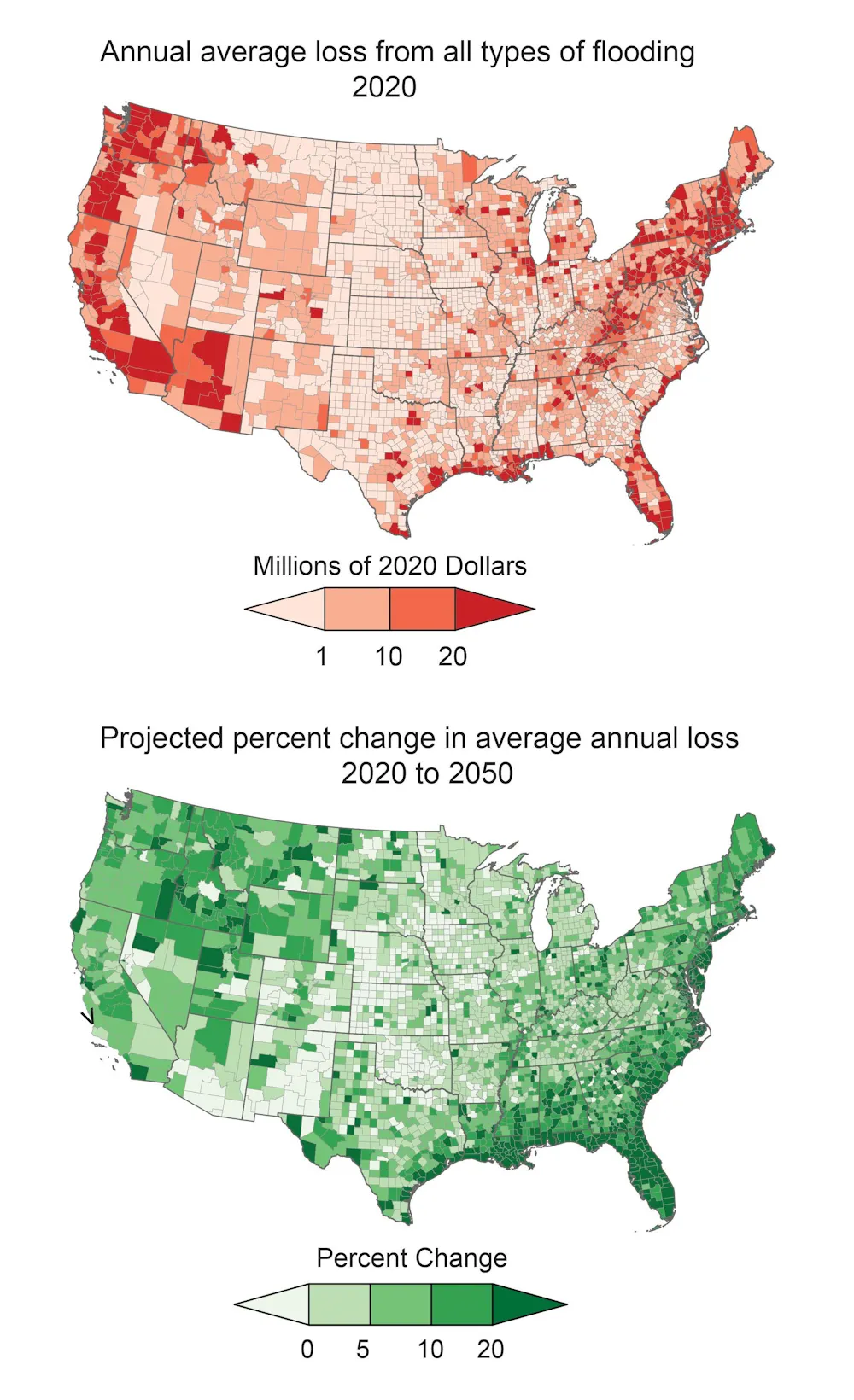
Two maps show highest costs on the coasts and in the West and Northeast.
Maps illustrate the average loss from flooding alone and expected increases by mid-century. About 90% of catastrophes in the U.S. involve flooding, but just 6% of U.S. homeowners have flood insurance. Fifth National Climate Assessment

As an alternative, some insurers are moving toward parametric insurance, which provides a predefined payment if an event meets or exceeds a predefined intensity threshold. These policies are less expensive for consumers because the payouts are capped and cover events such as a magnitude 7 earthquake, excessive rain within a 24-hour period or a Category 3 hurricane in a defined geographical area. The limits allow insurers to provide a less expensive form of insurance that is less likely to severely disrupt their finances.

Protecting the consumer

Of course, insurers don’t operate in an entirely free market. State insurance regulators evaluate insurance companies’ proposals to raise rates and either approve or deny them.

The insurance industry in North Carolina, for example, where Hurricane Helene caused catastrophic damage, is arguing for a homeowner premium increase of more than 42% on average, ranging from 4% in parts of the mountains to 99% in some waterfront areas.

If a rate increase is denied, it could force an insurer to simply withdraw from certain market sectors, cancel existing policies or refuse to write new ones when their “loss ratio” – the ratio of claims paid to premiums collected – becomes too high for too long.

Since 2022, seven of the top 12 insurance carriers have either cut existing homeowners policies or stopped selling new ones in the wildfire-prone California homeowner market, and an equal number have pulled back from the Florida market due to the increasing cost of hurricanes.

To stem this tide, California is reforming its regulations to speed up the rate increase approval process and allow insurers to make their case using climate models to judge wildfire risk more accurately.

Florida has instituted regulatory reforms that have reduced litigation and associated costs and has removed 400,000 policies from the state-run insurance program. As a result, eight insurance carriers have entered the market there since 2022.

Looking ahead

Solutions to the mounting insurance crisis also involve how and where people build. Building codes can require more resilient homes, akin to how fire safety standards increased the effectiveness of insurance many decades ago.

By one estimate, investing $3.5 billion in making the two-thirds of U.S. homes not currently up to code more resilient to storms could save insurers as much as $37 billion by 2030.

In the end, if affordability and relevance of insurance continue to degrade, real estate prices will start to decline in exposed locations. This will be the most tangible sign that climate change is driving an insurability crisis that disrupts wider financial stability.

Justin D’Atri, Climate Coach at the education platform Adaptify U and Sustainability Transformation Lead at Zurich Insurance Group, contributed to this article.The Conversation

Andrew J. Hoffman, Holcim (US) Professor of Sustainable Enterprise, Ross School of Business, School for Environment & Sustainability, University of Michigan

This article is republished from The Conversation under a Creative Commons license. Read the original article.

Purrfect Pals: This week’s shelter cats

LAKE COUNTY, Calif. — Lake County Animal Care and Control has a growing number of cats and kittens waiting for adoption.

The kittens and cats at the shelter that are shown on this page have been cleared for adoption.

Call Lake County Animal Care and Control at 707-263-0278 or visit the shelter online for information on visiting or adopting.

The shelter is located at 4949 Helbush in Lakeport.

Email Elizabeth Larson at This email address is being protected from spambots. You need JavaScript enabled to view it.. Follow her on Twitter, @ERLarson, and on Bluesky, @erlarson.bsky.social. Find Lake County News on the following platforms: Facebook, @LakeCoNews; X, @LakeCoNews; Threads, @lakeconews, and on Bluesky, @lakeconews.bsky.social.


A#11b's preview photo
A#11b

A#11a's preview photo
A#11a

A#11c's preview photo
A#11c

A#111's preview photo
A#111


A#99b's preview photo
A#99b

A#99a's preview photo
A#99a

 
A#101's preview photo
A#101


A#102(Shelby)'s preview photo
A#102(Shelby)


Helping Paws: More new holiday puppies

LAKE COUNTY, Calif. — Lake County Animal Care and Control has more new puppies and adult dogs waiting for their new families.

The dogs available for adoption this week include mixes of Anatolian shepherd, boxer, bull terrier, cattle dog, Doberman pinscher, German shepherd, husky, Labrador Retriever, pit bull terrier, Pomeranian and terrier.

Dogs that are adopted from Lake County Animal Care and Control are either neutered or spayed, microchipped and, if old enough, given a rabies shot and county license before being released to their new owner. License fees do not apply to residents of the cities of Lakeport or Clearlake.

Those dogs and the others shown on this page at the Lake County Animal Care and Control shelter have been cleared for adoption.

Call Lake County Animal Care and Control at 707-263-0278 or visit the shelter online for information on visiting or adopting.

The shelter is located at 4949 Helbush in Lakeport.

Email Elizabeth Larson at This email address is being protected from spambots. You need JavaScript enabled to view it.. Follow her on Twitter, @ERLarson, and on Bluesky, @erlarson.bsky.social. Find Lake County News on the following platforms: Facebook, @LakeCoNews; X, @LakeCoNews; Threads, @lakeconews, and on Bluesky, @lakeconews.bsky.social.


Kennel#10's preview photo
Kennel#10

Kennel#16(Caney)'s preview photo
Kennel#16(Caney)

Kennel#20's preview photo
Kennel#20

Kennel#33's preview photo
Kennel#33

Kennel#14's preview photo
Kennel#14

Kennel#4a(pink collar)'s preview photo
Kennel#4a(pink collar)

Kennel#4b(Green collar)'s preview photo
Kennel#4b(Green collar)

Kennel#4c(Red Collar)'s preview photo
Kennel#4c(Red Collar)

Kennel#4d(Yellow Collar)'s preview photo
Kennel#4d(Yellow Collar)

Kennel#4e(Blue Collar)'s preview photo
Kennel#4e(Blue Collar)

Kennel#4f(Red collar)'s preview photo
Kennel#4f(Red collar)

 
Kennel#24a(DarkerCoat)'s preview photo
Kennel#24a(DarkerCoat)

Kennel#24b(LighterCoat)'s preview photo
Kennel#24b(LighterCoat)

Kennel#23b's preview photo
Kennel#23b

Kennel#23a's preview photo
Kennel#23a

Kennel#34's preview photo
Kennel#34


Kennel#27's preview photo
Kennel#27

Kennel#9's preview photo
Kennel#9

Kennel#6's preview photo
Kennel#6

Kennel#8(Buddy)'s preview photo
Kennel#8(Buddy)

Kennel#21's preview photo
Kennel#21

Kennel#30's preview photo
Kennel#30

Kennel#22's preview photo
Kennel#22

Kennel#28's preview photo
Kennel#28

Kennel#2(Saint)'s preview photo
Kennel#2(Saint)

Kennel#18's preview photo
Kennel#18

 
Kennel#31's preview photo
Kennel#31

Kennel#32's preview photo
Kennel#32

Kennel#13's preview photo
Kennel#13

Kennel#15's preview photo
Kennel#15

Kennel#7(Fonzi)'s preview photo
Kennel#7(Fonzi)


C#9's preview photo
C#9


Americans agree more than they might think − not knowing this jeopardizes the nation’s shared values


Americans could work together to achieve shared values. Fotografía de eLuVe/Moment via Getty Images

The United States presents a paradox: Though the media and public opinion suggest it is a nation deeply divided along partisan lines, surveys reveal that Americans share significant common ground on many core values and political issues.

As a political philosopher, I am deeply concerned about the perceived contrast between the public’s shared political concerns and the high level of polarization that is dividing the electorate.

Sharing common ground on key issues

Despite the prevailing narrative of polarization, Americans frequently agree on essential issues.

For instance, there is widespread support for high-quality health care that is accessible to all and for stronger gun-control regulations. Remarkably, many Americans advocate for both the right to bear arms and additional restrictions on firearms.

There is strong support for fundamental democratic principles, including equal protection under the law, voting rights, religious freedoms, freedom of assembly and speech, and a free press.

On critical issues such as climate change, a majority of citizens acknowledge the reality of human-caused climate change and endorse the development of renewable energy. Similarly, support for women’s reproductive rights, including the right to an abortion, is widespread.

Though Republicans tend to be more concerned about the economy when they vote, both Republicans and Democrats rank it highly as a top political priority. Despite a currently strong economy by many standards, however, supporters of both parties believe the economy is performing poorly.

This fact is likely the result of a combination of pandemic-related factors, from reduced spending and increased saving during the height of the pandemic to lingering inflation, partly triggered by the pandemic. Whatever the reason for this shared pessimism over the economy, it clearly helped Donald Trump win the 2024 election.

Overall, Americans have a positive view of immigration. That sentiment has declined in recent years, however, as most Americans now want to see rates of immigration reduced – Republicans more so than Democrats.

Part of the tension in the nation’s thinking about immigration is likely the result of a political culture that favors sensational stories and disinformation over more sober consideration of related issues and challenges. For instance, much of this election’s discourse over immigration was marred by fictional and bigoted accounts of immigrants eating pets and inaccurate portrayals of most immigrants as criminals. It should be evident that even shared political perceptions aren’t always based on good evidence or reasons.

Despite the existence of so much common ground, Americans see the nation as polarized. Shared values and concerns matter little if constant exposure to disinformation makes it nearly impossible for half the population to sort fact from fiction.

A red head and a blue head crash into each other, sparking flames.
Believing there is conflict can itself breed more conflict. wildpixel/iStock / Getty Images Plus

The effect of perception

The perception of division itself can fuel distrust where common ground might otherwise be found among citizens.

Even with substantial consensus on many issues, the perception of polarization often drives public discourse. This misalignment can be exacerbated by partisans with something to gain.

Research shows that when people are told that experts are divided on an issue, such as climate change, it can lead to increased polarization. Conversely, emphasizing the fact of scientific consensus tends to unify public concern and action.

The perception among U.S. voters that they disagree more than they agree can precede and perpetuate discord. Differing political camps begin to perceive each other as foes rather than fellow citizens.

This continued perception that Americans are more divided on issues than we actually are poses an enormous threat to democracy. The biggest threat is that people begin to see even neighbors and family members who vote differently as enemies. Stress about holiday interactions with relatives who voted differently is reportedly leading some people to cancel family gatherings rather than spend time together.

Yet, Americans are still potential allies in a larger fight to realize similar political aspirations. If people are too busy attacking each other, they will miss opportunities to unite in defense of shared goals when threats emerge. In fact, they will fail to recognize the real threats to their shared values while busily stoking divisions that make them increasingly vulnerable to disinformation.

People stand at tables moving small boxes into different piles.
Volunteering, like these people sorting donated meals for medical patients in Colorado in 2023, can be a way to share priorities and form real connections with community members who have different political views. Hyoung Chang/The Denver Post

Bridging the gap

Recognizing the public’s shared values is an important step in healing political divides. Philosopher Robert B. Talisse has argued that one way to get started might be refocusing attention on community projects that are nonpolitical but bring together people who don’t normally think of each other as political allies.

This might include, for example, participating in civic or sports clubs, or volunteering to help with local community events. These actions are not overtly politically charged. Rather, they are collaborative in a way that supports community identity rather than partisan identity. It is an exercise in rebuilding civic trust and recognizing each other as fellow citizens, and perhaps even friends, without the tension of partisan politics. Once this trust in each other’s civic identity is healed, it can open a door for meaningful political discussion and understanding of each other’s shared concerns.

If we Americans don’t find ways to recognize our shared values, and even our shared humanity, we won’t be able to defend those values when they are challenged.The Conversation

Lawrence Torcello, Associate Professor of Philosophy, Rochester Institute of Technology

This article is republished from The Conversation under a Creative Commons license. Read the original article.

  • 307
  • 308
  • 309
  • 310
  • 311
  • 312
  • 313
  • 314
  • 315
  • 316

Community

  • Lake County Wine Alliance offers sponsor update; beneficiary applications open 

  • Mendocino National Forest announces seasonal hiring for upcoming field season

Public Safety

  • Lakeport Police logs: Thursday, Jan. 15

  • Lakeport Police logs: Wednesday, Jan. 14

Education

  • Woodland Community College receives maximum eight-year reaffirmation of accreditation from ACCJC

  • SNHU announces Fall 2025 President's List

Health

  • California ranks 24th in America’s Health Rankings Annual Report from United Health Foundation

  • Healthy blood donors especially vital during active flu season

Business

  • Two Lake County Mediacom employees earn company’s top service awards

  • Redwood Credit Union launches holiday gift and porch-to-pantry food drives

Obituaries

  • Rufino ‘Ray’ Pato

  • Patty Lee Smith

Opinion & Letters

  • The benefits of music for students

  • How to ease the burden of high electric bills

Veterans

  • CalVet and CSU Long Beach team up to improve data collection related to veteran suicides

  • A ‘Big Step Forward’ for Gulf War Veterans

Recreation

  • Wet weather trail closure in effect on Upper Lake Ranger District

  • Mendocino National Forest seeking public input on OHV grant applications

  • State Parks announces 2026 Anderson Marsh nature walk schedule 

  • BLM lifts seasonal fire restrictions in central California

Religion

  • Kelseyville Presbyterian to host Ash Wednesday service and Lenten dinner Feb. 18

  • Kelseyville Presbyterian Church to hold ‘Longest Night’ service Dec. 21

Arts & Life

  • Auditions announced for original musical ‘Even In Shadow’ set for March 21 and 28

  • ‘The Rip’ action heist; ‘Steal’ grounded in a crime thriller

Government & Politics

  • Lake County Democrats issue endorsements in local races for the June California Primary

  • County negotiates money-saving power purchase agreement

Legals

  • March 3 hearing on ordinance amending code for commercial cannabis uses

  • Feb. 12 public hearing on resolution to establish standards for agricultural roads

How to resolve AdBlock issue?
Refresh this page