How to resolve AdBlock issue?
Refresh this page
How to resolve AdBlock issue?
Refresh this page
Lake County News,California
  • Home
    • Registration Form
  • News
    • Education
    • Veterans
    • Community
      • Obituaries
      • Letters
      • Commentary
    • Police Logs
    • Business
    • Recreation
    • Health
    • Religion
    • Legals
    • Arts & Life
    • Regional
  • Calendar
  • Contact us
    • FAQs
    • Phones, E-Mail
    • Subscribe
  • Advertise Here
  • Login

News

Space News: Extraterrestrial life may look nothing like life on Earth − so astrobiologists are coming up with a framework to study how complex systems evolve


Evolution, the process of change, governs life on Earth − and potentially different forms of life in other places. Just_Super/E+ via Getty Images

We have only one example of biology forming in the universe – life on Earth. But what if life can form in other ways? How do you look for alien life when you don’t know what alien life might look like?

These questions are preoccupying astrobiologists, who are scientists who look for life beyond Earth. Astrobiologists have attempted to come up with universal rules that govern the emergence of complex physical and biological systems both on Earth and beyond.

I’m an astronomer who has written extensively about astrobiology. Through my research, I’ve learned that the most abundant form of extraterrestrial life is likely to be microbial, since single cells can form more readily than large organisms. But just in case there’s advanced alien life out there, I’m on the international advisory council for the group designing messages to send to those civilizations.

Detecting life beyond Earth

Since the first discovery of an exoplanet in 1995, over 5,000 exoplanets, or planets orbiting other stars, have been found.

Many of these exoplanets are small and rocky, like Earth, and in the habitable zones of their stars. The habitable zone is the range of distances between the surface of a planet and the star it orbits that would allow the planet to have liquid water, and thus support life as we on Earth know it.

The sample of exoplanets detected so far projects 300 million potential biological experiments in our galaxy – or 300 million places, including exoplanets and other bodies such as moons, with suitable conditions for biology to arise.

The uncertainty for researchers starts with the definition of life. It feels like defining life should be easy, since we know life when we see it, whether it’s a flying bird or a microbe moving in a drop of water. But scientists don’t agree on a definition, and some think a comprehensive definition might not be possible.

NASA defines life as a “self-sustaining chemical reaction capable of Darwinian evolution.” That means organisms with a complex chemical system that evolve by adapting to their environment. Darwinian evolution says that the survival of an organism depends on its fitness in its environment.

The evolution of life on Earth has progressed over billions of years from single-celled organisms to large animals and other species, including humans.

Evolution is the process of change in systems. It can describe how a group of something becomes more complex – or even just different – over time.

Exoplanets are remote and hundreds of millions of times fainter than their parent stars, so studying them is challenging. Astronomers can inspect the atmospheres and surfaces of Earth-like exoplanets using a method called spectroscopy to look for chemical signatures of life.

Spectroscopy might detect signatures of oxygen in a planet’s atmosphere, which microbes called blue-green algae created by photosynthesis on Earth several billion years ago, or chlorophyll signatures, which indicate plant life.

NASA’s definition of life leads to some important but unanswered questions. Is Darwinian evolution universal? What chemical reactions can lead to biology off Earth?

Evolution and complexity

All life on Earth, from a fungal spore to a blue whale, evolved from a microbial last common ancestor about 4 billion years ago.

The same chemical processes are seen in all living organisms on Earth, and those processes might be universal. They also may be radically different elsewhere.

In October 2024, a diverse group of scientists gathered to think outside the box on evolution. They wanted to step back and explore what sort of processes created order in the universe – biological or not – to figure out how to study the emergence of life totally unlike life on Earth.

Two researchers present argued that complex systems of chemicals or minerals, when in environments that allow some configurations to persist better than others, evolve to store larger amounts of information. As time goes by, the system will grow more diverse and complex, gaining the functions needed for survival, through a kind of natural selection.

A rock made up of metal, with translucent olivine crystals suspended within.
Minerals are an example of a nonliving system that has increased in diversity and complexity over billions of years. Doug Bowman, CC BY

They speculated that there might be a law to describe the evolution of a wide variety of physical systems. Biological evolution through natural selection would be just one example of this broader law.

In biology, information refers to the instructions stored in the sequence of nucleotides on a DNA molecule, which collectively make up an organism’s genome and dictate what the organism looks like and how it functions.

If you define complexity in terms of information theory, natural selection will cause a genome to grow more complex as it stores more information about its environment.

Complexity might be useful in measuring the boundary between life and nonlife.

However, it’s wrong to conclude that animals are more complex than microbes. Biological information increases with genome size, but evolutionary information density drops. Evolutionary information density is the fraction of functional genes within the genome, or the fraction of the total genetic material that expresses fitness for the environment.

Organisms that people think of as primitive, such as bacteria, have genomes with high information density and so appear better designed than the genomes of plants or animals.

A universal theory of life is still elusive. Such a theory would include the concepts of complexity and information storage, but it would not be tied to DNA or the particular kinds of cells we find in terrestrial biology.

Implications for the search for extraterrestial life

Researchers have explored alternatives to terrestrial biochemistry. All known living organisms, from bacteria to humans, contain water, and it is a solvent that is essential for life on Earth. A solvent is a liquid medium that facilitates chemical reactions from which life could emerge. But life could potentially emerge from other solvents, too.

Astrobiologists Willam Bains and Sara Seager have explored thousands of molecules that might be associated with life. Plausible solvents include sulfuric acid, ammonia, liquid carbon dioxide and even liquid sulfur.

Alien life might not be based on carbon, which forms the backbone of all life’s essential molecules – at least here on Earth. It might not even need a planet to survive.

Advanced forms of life on alien planets could be so strange that they’re unrecognizable. As astrobiologists try to detect life off Earth, they’ll need to be creative.

One strategy is to measure mineral signatures on the rocky surfaces of exoplanets, since mineral diversity tracks terrestrial biological evolution. As life evolved on Earth, it used and created minerals for exoskeletons and habitats. The hundred minerals present when life first formed have grown to about 5,000 today.

For example, zircons are simple silicate crystals that date back to the time before life started. A zircon found in Australia is the oldest known piece of Earth’s crust. But other minerals, such as apatite, a complex calcium phosphate mineral, are created by biology. Apatite is a primary ingredient in bones, teeth and fish scales.

Another strategy to finding life unlike that on Earth is to detect evidence of a civilization, such as artificial lights, or the industrial pollutant nitrogen dioxide in the atmosphere. These are examples of tracers of intelligent life called technosignatures.

It’s unclear how and when a first detection of life beyond Earth will happen. It might be within the solar system, or by sniffing exoplanet atmospheres, or by detecting artificial radio signals from a distant civilization.

The search is a twisting road, not a straightforward path. And that’s for life as we know it – for life as we don’t know it, all bets are off.The Conversation

Chris Impey, University Distinguished Professor of Astronomy, University of Arizona

This article is republished from The Conversation under a Creative Commons license. Read the original article.
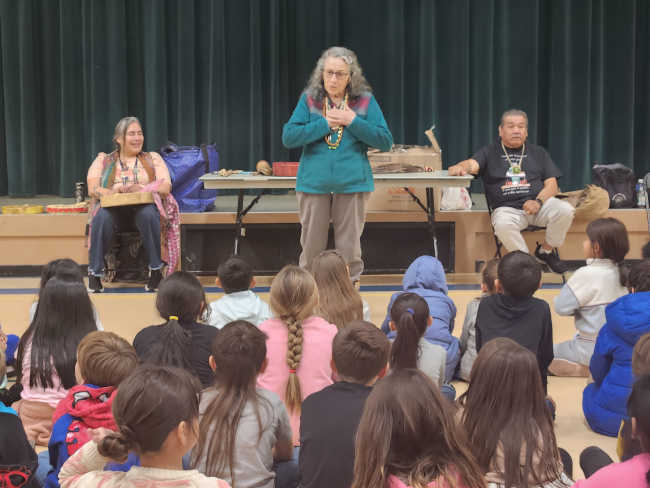
Lakeport Elementary students engage in cultural learning

Lakeport Unified School District students attend an assembly hosted by the 7th Generation Warriors for Peace. Photo courtesy of the Lake County Office of Education.

LAKEPORT, Calif. — Students in grades first through fourth at Lakeport Elementary School participated in a powerful assembly hosted by the 7th Generation Warriors for Peace, a program dedicated to fostering cultural awareness, social-emotional learning, and trauma-informed practices.

“This program provided our students with a meaningful opportunity to learn about culture, community, and resilience,” said Matt Bullard, superintendent of Lakeport Unified School District. “We are committed to providing experiences that build understanding and help students grow academically and emotionally.”

The event featured storytelling, drumming, dancing and wisdom-sharing, offering students an enriching and interactive experience.

Highlights of the assembly included:

• Maggie Steele captivated students with cultural storytelling and drumming, creating meaningful connections to history and tradition.

• MarTan Martinez energized the audience with interactive dancing and emphasized the importance of personal self-advocacy.

• Betty Castillo-Morrison shared valuable lessons in empathy and resilience through her wisdom and insights.

The ongoing presentations are funded through the Lake County Office of Education, or LCOE, Collaborative for Academic, Social, and Emotional Learning grant.

This grant supports efforts to integrate social-emotional learning, trauma-informed practices, and harm reduction strategies across the district.

This collaboration underscores Lakeport Unified School District’s commitment to building supportive and inclusive learning environments that empower students to thrive academically, socially, and emotionally.

“We are proud to partner with 7th Generation Warriors for Peace and LCOE to provide our students with these transformative experiences,” the Curriculum and Instruction Department said in a statement. “Events like this strengthen our community and equip our students with the tools they need to succeed both in school and in life.”

For more information about LUSD’s SEL initiatives or upcoming events, contact the Curriculum and Instruction Department at This email address is being protected from spambots. You need JavaScript enabled to view it..

Yuba Community College District welcomes new trustees

NORTHERN CALIFORNIA — The Yuba Community College District Board is welcoming three new members to its seven-member board.

William Cornelius, Area 3; John Cassidy, Area 4; and Jose Garcia, Area 6 won election to the board in the Nov. 5 election.

Cornelius, Cassidy and Garcia will succeed board members Rita Andrews, Juan Delgado and Susan Alves, respectively.

Area 2 Trustee Denise Burbank and Area 7 Trustee Douglas Harris also won reelection to retain their seat on the seven-member YCCD Board of Trustees.

Burbank was first elected to the YCCD Board of Trustees in 2020, attended Yuba College, serves as an elected trustee of the Olivehurst Public Utility District, and is president/founder of SoYouCan, a local nonprofit organization.

Harris was appointed to the YCCD Board of Trustees in early 2022 and elected to a partial two-year term in November 2022. He earned a Master of Social Work from San Francisco State University, has taught for many years at the Lake Campus of Woodland Community College, and is an advocate for low-income people, seniors, and those with disabilities.

The newly elected and reelected trustees will join continuing board members Richard Teagarden, Area 1; and Jesse Ortiz, Area 5.

YCCD serves over 9,500 unduplicated students annually at their two colleges — Yuba College and Woodland Community College — and campuses in Colusa, Lake and Sutter counties.

YCCD trustees are elected by the communities within the ward area they represent in the District’s almost 4,200 square mile service area.

The District Chancellor and the Board will invite the new trustees to participate in a rich set of onboarding activities in the coming months to ensure not only a successful start but also sustained effectiveness for all trustees across their tenures.

The public is invited to attend the Governing Board meeting held at Yuba College, 2088 N. Beale Road, Building 300 in Marysville on Dec. 19.

The administering of the oath of office for all five newly elected trustees will start at 3 p.m. and the annual organizational meeting will begin at 4:45 p.m. followed by the regular open session at 5p.m. The community can also view the ceremony and regular public meeting via Zoom at https://yccd-edu.zoom.us/j/82576145364.

More information about the new trustees follows.

WILLIAM CORNELIUS (Area 3)

William Cornelius is the retired superintendent of schools for Sutter County. Having grown up in Southern California and attending La Quint High School and Golden West Community College before attending California State University, Chico, Cornelius is a proud product of the California community college system and all it can offer.

After graduating from CSU Chico, he went into teaching in Colusa County before moving to Yuba City to become the principal of Live Oak High School, Biggs Unified School District as superintendent/high school principal, and then the Sutter County superintendent of schools. In these positions, he helped many of his students attend Yuba College and has also coached the Yuba College football team.

Cornelius hopes to bring his knowledge, experience and energy in guiding YCCD to meet the changing educational needs of the community.

JOHN CASSIDY (Area 4)

John Cassidy has been a board member of the Yuba Community College District Foundation for the past 20 years and has served as the honorary base commander at Beale Air Force Base for 13 years.

He attended high school in Livermore, California, and attended Butte College for two years before transferring and graduating from the University of San Francisco.

Cassidy retired after a 41-year career in the banking industry including leadership roles as the CEO of the Sierra Central Credit Union in Northern California, and two terms as chairman of the California Credit Union League Association and serving on their executive committee.

Cassidy is proud of his community involvement by raising funds for the Children’s Miracle Network hospitals and Big Brothers Big Sisters, and has chaired “The Event” concert series that raises funds for a variety of charities in Northern California.

JOSE GARCIA (Area 6)

Jose Garcia lives in Esparto and is the president/executive director of Garcia Almond Farms.

He received his Bachelor of Science degree from CSU Sacramento and obtained the Lean Six Sigma Green Belt Certification from UC Davis School of Management.

Garcia is proud of his leadership with GCC Acres Inc., a residential care facility, and business experience as a branch manager for Bank of America/Countrywide Home Loans.

He looks forward to applying his business knowledge and experience to help the district be more efficient and optimize resources to benefit students.

Avian flu virus has been found in raw milk − a reminder of how pasteurization protects health


Pasteurizing milk kills disease-causing pathogens that dairy cattle pick up in fields and barns. steverts, iStock /Getty Images Plus

In late November 2024, however, California regulators recalled two batches of raw, unpasteurized milk from a Fresno dairy farm after bird flu virus was detected in the milk. The dairy subsequently recalled all of its raw milk and cream products from stores due to possible bird flu contamination. State regulators placed the farm under quarantine, suspending any new distribution of its raw milk, cream, kefir, butter and cheese products produced on or after November 27.

No human bird flu cases associated with the milk were detected immediately following the recalls. But officials strongly urged buyers not to drink raw milk from the affected batches and to return it to the store where they bought it.

Despite health experts’ warning that raw milk could contain high levels of the avian flu virus, along with many other pathogens, raw milk sales are up in the U.S. Robert F. Kennedy Jr., whom President-elect Donald Trump has said he will nominate to head the Department of Health and Human Services, has asserted that raw milk “advances human health,” contrary to warnings from FDA officials and food scientists.

As an extension food scientist in a state where raw milk sales are legal, I provide technical support to help processors produce high-quality, safe dairy foods. I also like to help people understand the confusing world of pasteurization methods on their milk labels, and why experts strongly discourage consuming raw milk and products made from it.

What can make milk unsafe

Dairy products, like many foods, have inherent risks that can cause a variety of illnesses and even death. Dairy milk comes from animals that graze outdoors, live in barns and lie in mud and manure. Milk is picked up from the farm in tanker trucks and delivered to the processing plant. These environments offer numerous opportunities for contamination by pathogens that cause illness and produce organisms that make food spoil.

For example, listeria monocytogenes comes from environmental sources like soil and water. Mild infections with listeriosis cause flu-like symptoms. More serious cases are, unfortunately, too common and can cause miscarriages in pregnant women and even death in extreme cases.

Other pathogens commonly associated with dairy animals and raw milk include E. coli, which can cause severe gastrointestinal infections and may lead to kidney damage; Campylobacter, the most common cause of diarrheal illness in the U.S.; and Salmonella, which cause abdominal pain, diarrhea and other symptoms.

Washington State University students explain the process of milking cows in their school’s herd and pasteurizing the milk at the university creamery.

Keeping beverages safe with heat

In the 1860s, French microbiologist Louis Pasteur discovered that heating wine and beer killed the organisms that caused spoilage, which then was a significant problem in France.

This heating process, which became known as pasteurization, was adopted in the U.S. prior to World War II, at a time when milk was responsible for 25% of all U.S. outbreaks of foodborne illnesses. In 1973 the federal government required that all milk sold across state lines in the U.S. had to be pasteurized, and in 1987 it banned interstate sales of raw milk.

Pasteurization heats every particle of a food to a specific temperature for a continuous length of time in order to kill the most heat-resistant pathogen associated with that product. Different organisms have different responses to heat, so controlled scientific studies are required to determine what length of time at a given temperature will kill a specific organism.

Since 1924, pasteurization in the U.S. has been guided by the Grade “A” Pasteurized Milk Ordinance, a federal guidance document that is updated every two years to reflect current science and has been adopted by all 50 states. Pasteurization equipment in the U.S. must meet stringent requirements that include sanitary design, safety controls and material standards.

A man in work clothes stands on a truck bed loaded with stacked multi-gallon cans.
A farmer unloads milk cans for processing at a cooperative creamery in East Berkshire, Vt., on Jan. 1, 1941. Jack Delano, FSA/Library of Congress

Pasteurization methods

Dairy processors can choose among several different types of pasteurization. When executed properly, all of these methods produce the same result: pathogen-free milk. Processors may treat milk beyond minimum times or temperatures to provide an extra margin of safety, or to reduce bacteria that can cause milk to spoil, thus increasing the product’s shelf life.

Smaller-scale processors who handle limited volumes use what are known as vat pasteurizers, also known as batch pasteurizers. Milk is pumped into a temperature-controlled tank with a stirrer, heated to a minimum of 145 degrees Fahrenheit (63 Celsius) and held there continuously for 30 minutes. Then it is cooled and pumped out of the vat.

The most common method used for commercial milk is high-temperature short-time pasteurization, which can treat large volumes of milk. Milk is pumped through a series of thin plates at high speed to reach a minimum temperature of 161 F (71 C). Then it travels through a holding tube for 15 seconds, and the temperature is checked automatically for safety and cooled.

The most complex and expensive systems are ultra-pasteurizers and ultra-high-temperature pasteurizers, which pasteurize milk in just a few seconds at temperatures above 285 F (140 C). This approach destroys many spoilage organisms, giving the milk a significantly longer shelf life than with other methods, although sometimes products made this way have more of a “cooked” flavor.

Ultra-high-temperature products are processed in a sterile environment and packaged in sterile packaging, such as lined cartons and pouches. They can be shelf-stable for up to a year before they are opened. Ultra-high-temperature packaging makes taking milk to school for lunch safe for kids every day.

Avian flu in milk

The detection of avian flu virus fragments in milk is a new challenge for the dairy industry. Scientists do not have a full picture of the risks to humans but are learning.

Health experts are warning against consuming raw milk during the H5N1 avian flu outbreak.

Research so far has shown that virus particles end up in the milk of infected cows, but that pasteurization will inactivate the virus. The FDA advises consumers not to drink raw milk because there is limited information about whether it may transmit avian flu.

The agency also is urging producers not to manufacture or sell raw milk or raw milk products, including cheese, made with milk from cows showing symptoms of illness.

Avian flu continues to appear in new species, and as of early December 2024, 57 human cases had been confirmed in the U.S. Of these, all but two were people who worked with livestock.

Two recent cases – a child in California and a teen in Canada – may indicate that young people with immature immune systems are more vulnerable than adults to the virus. With medical researchers still learning how H5N1 is transmitted, I agree with the FDA that raw milk poses risks not worth taking.

This is an updated version of an article originally published on May 17, 2024.The Conversation

Kerry E. Kaylegian, Associate Research Professor of Food Science, Penn State

This article is republished from The Conversation under a Creative Commons license. Read the original article.

As the H5N1 avian flu virus continues to spread in poultry flocks and dairy cattle, consumers may worry about whether the U.S. milk supply is safe to drink. According to the U.S. Food and Drug Administration, the answer is yes, as long as the milk is pasteurized.

Clearlake Animal Control: ‘Jean’ and the dogs

"Jean." Photo courtesy of Clearlake Animal Control.


CLEARLAKE, Calif. — Clearlake Animal Control has dogs of a wide variety of ages and types needing homes.

The shelter has 48 adoptable dogs listed on its website.

This week’s dogs include “Jean,” a 2-year-old female Labrador retriever mix with a black coat with white markings.

The shelter is located at 6820 Old Highway 53. It’s open from 9 a.m. to 6 p.m. Tuesday through Saturday.

For more information, call the shelter at 707-762-6227, email This email address is being protected from spambots. You need JavaScript enabled to view it., visit Clearlake Animal Control on Facebook or on the city’s website.

This week’s adoptable dogs are featured below.

Email Elizabeth Larson at This email address is being protected from spambots. You need JavaScript enabled to view it.. Follow her on Twitter, @ERLarson, and on Bluesky, @erlarson.bsky.social. Find Lake County News on the following platforms: Facebook, @LakeCoNews; X, @LakeCoNews; Threads, @lakeconews, and on Bluesky, @lakeconews.bsky.social.

Space News: What's up for December 2024


What’s up for December? Venus, Jupiter, and Mars shine brightly; the stars of winter and their pointy little friend; and "Meteors, meet the Moon."

Starting off with the planets, Venus is hard to miss in the southwest after sunset — it's that dazzling bright "evening star." You’ll find it getting a bit higher in the sky each evening through the month.

Saturn is visible toward the south beginning at nightfall. Look for it to track a bit farther to the west as the weeks go by.

Meanwhile, Jupiter reaches opposition on Dec. 7, meaning it’s at its brightest for the year and visible all night long. You’ll find it rising in the east-northeast as darkness falls, among the stars of the constellation Taurus.

Mid-month, around Dec. 14, watch for Jupiter sitting between the nearly full Moon and Taurus's brightest star, orange-colored Aldebaran.

Next, Mars will also be putting on its own show, doubling its brightness during December as it heads toward its own opposition in January.

Early in the month, it rises about four hours after dark, but by New Year’s Eve, it’s rising just about 90 minutes after sunset — always shining with its distinctive reddish hue.

And on Dec. 17, you’ll find the Red Planet super close to the Moon, which will be just two days past its full phase.

The stars of winter are making their grand entrance in December. As evening falls, you’ll see the mighty hunter Orion rising in the east, with Taurus the bull above it, and the stars of the twins in Gemini to their left.

These constellations host some wonderful sights — like the Crab Nebula and Pleiades star cluster in Taurus and the misty Orion Nebula, which hangs below Orion's belt. If you look to the western sky soon after dark, you can still spot the three bright stars of the Summer Triangle getting quite low on the horizon. But as they depart, three bright stars of winter bring their own prominent triangular shape to mark the season.

Once you spot Orion's distinctive belt of three stars, you’re well on your way to finding what we call the Winter Triangle. Just follow the belt stars to the left and slightly downward — they point right to Sirius, the brightest star in the night sky. Then look upward and to the left of Sirius to spot Procyon, and back up toward Orion to find reddish Betelgeuse at its shoulder. These three bright stars form an equilateral triangle that’s visible throughout the season.

The Geminid meteor shower peaks after midnight in the early morning of Dec. 14, and they’re usually one of the best meteor showers of the year under good conditions.

This year, the nearly full Moon will wash out the fainter meteors on the peak night. Still, the Geminids are known for bright meteors, and it’s common to spot their shooting stars up to a week before the peak.

If you’re up before dawn that week, it’s worth looking up, just in case you spot a speck of dust from space streaking through the morning sky.

Preston Dyches works for NASA’s Jet Propulsion Laboratory.
  • 303
  • 304
  • 305
  • 306
  • 307
  • 308
  • 309
  • 310
  • 311
  • 312

Community

  • Lake County Wine Alliance offers sponsor update; beneficiary applications open 

  • Mendocino National Forest announces seasonal hiring for upcoming field season

Public Safety

  • Lakeport Police logs: Thursday, Jan. 15

  • Lakeport Police logs: Wednesday, Jan. 14

Education

  • Woodland Community College receives maximum eight-year reaffirmation of accreditation from ACCJC

  • SNHU announces Fall 2025 President's List

Health

  • California ranks 24th in America’s Health Rankings Annual Report from United Health Foundation

  • Healthy blood donors especially vital during active flu season

Business

  • Two Lake County Mediacom employees earn company’s top service awards

  • Redwood Credit Union launches holiday gift and porch-to-pantry food drives

Obituaries

  • Rufino ‘Ray’ Pato

  • Patty Lee Smith

Opinion & Letters

  • The benefits of music for students

  • How to ease the burden of high electric bills

Veterans

  • CalVet and CSU Long Beach team up to improve data collection related to veteran suicides

  • A ‘Big Step Forward’ for Gulf War Veterans

Recreation

  • Wet weather trail closure in effect on Upper Lake Ranger District

  • Mendocino National Forest seeking public input on OHV grant applications

  • State Parks announces 2026 Anderson Marsh nature walk schedule 

  • BLM lifts seasonal fire restrictions in central California

Religion

  • Kelseyville Presbyterian to host Ash Wednesday service and Lenten dinner Feb. 18

  • Kelseyville Presbyterian Church to hold ‘Longest Night’ service Dec. 21

Arts & Life

  • Auditions announced for original musical ‘Even In Shadow’ set for March 21 and 28

  • ‘The Rip’ action heist; ‘Steal’ grounded in a crime thriller

Government & Politics

  • Lake County Democrats issue endorsements in local races for the June California Primary

  • County negotiates money-saving power purchase agreement

Legals

  • March 3 hearing on ordinance amending code for commercial cannabis uses

  • Feb. 12 public hearing on resolution to establish standards for agricultural roads

How to resolve AdBlock issue?
Refresh this page