How to resolve AdBlock issue?
Refresh this page
How to resolve AdBlock issue?
Refresh this page
Lake County News,California
  • Home
    • Registration Form
  • News
    • Education
    • Veterans
    • Community
      • Obituaries
      • Letters
      • Commentary
    • Police Logs
    • Business
    • Recreation
    • Health
    • Religion
    • Legals
    • Arts & Life
    • Regional
  • Calendar
  • Contact us
    • FAQs
    • Phones, E-Mail
    • Subscribe
  • Advertise Here
  • Login

News

CHP sends safety messages directly to truckers during Thanksgiving enforcement period

This Thanksgiving, the California Highway Patrol is taking an innovative approach to keeping roadways safe during its 2024 Maximum Enforcement Period.

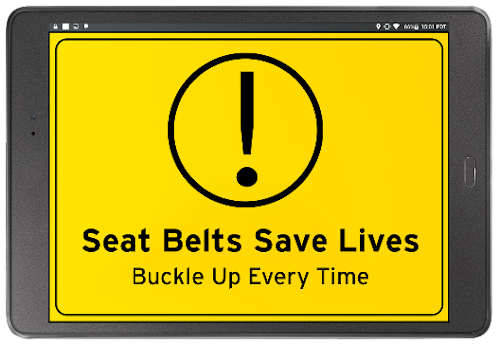
For the first time, the CHP’s Commercial Vehicle Section will send critical safety messages directly to commercial truck drivers through their electronic logging devices, or ELDs.

Under federal and state rules, all commercial truck drivers must use ELDs to track hours of service, or HOS.

These devices help ensure compliance with HOS regulations and promote a safer work environment for drivers.

Now, thanks to the Smart Roadways service developed by Drivewyze Inc., the CHP can use these devices to provide real-time safety alerts.

Short, geo-targeted messages — no more than 25 characters — will notify drivers of roadway hazards, long-term closures, enforcement operations, and high-crash areas.

These alerts, displayed on a bright yellow background on the driver’s dash-mounted ELD, give drivers advance warning to slow down or prepare for upcoming conditions.

California is among a handful of states leveraging this cutting-edge technology to enhance roadway safety.

In addition to delivering safety alerts, the CHP will ramp up enforcement efforts to address unsafe driving behaviors that contribute to crashes, such as speeding, following too closely, improper lane changes, reckless driving, and distracted driving.


Officers will actively patrol to ensure compliance and educate drivers about traffic safety.

“Our top priority is the safety of everyone traveling this Thanksgiving,” said CHP Commissioner Sean Duryee. “By leveraging innovative tools like Electronic Logging Devices to communicate directly with commercial drivers, we can provide timely alerts and help prevent crashes before they happen.”

The CHP said it remains committed to reducing crashes and keeping all road users safe during one of the busiest travel periods of the year.

Commercial drivers are encouraged to stay alert, follow traffic laws, and utilize the information provided through their ELDs to make safer driving decisions.

An upward spiral – how small acts of kindness and connection really can change the world, according to psychology research


Strengthening relationships strengthens communities, which influences societies. Charles Gullung/The Image Bank via Getty Images

Political chasms, wars, oppression … it’s easy to feel hopeless and helpless watching these dark forces play out. Could any of us ever really make a meaningful difference in the face of so much devastation?

Given the scale of the world’s problems, it might feel like the small acts of human connection and solidarity that you do have control over are like putting Band-Aids on bullet wounds. It can feel naive to imagine that small acts could make any global difference.

As a psychologist, human connection researcher and audience member, I was inspired to hear musician Hozier offer a counterpoint at a performance this year. “The little acts of love and solidarity that we offer each other can have powerful impact … ” he told the crowd. “I believe the core of people on the whole is good – I genuinely do. I’ll die on that hill.”

I’m happy to report that the science agrees with him.

Research shows that individual acts of kindness and connection can have a real impact on global change when these acts are collective. This is true at multiple levels: between individuals, between people and institutions, and between cultures.

This relational micro-activism is a powerful force for change – and serves as an antidote to hopelessness because unlike global-scale issues, these small acts are within individuals’ control.

two young men in conversation, seated at a table
A personal connection makes you more willing to find common ground. Hinterhaus Productions/DigitalVision via Getty Images

Abstract becomes real through relationships

Theoretically, the idea that small, interpersonal acts have large-scale impact is explained by what psychologists call cognitive dissonance: the discomfort you feel when your actions and beliefs don’t line up.

For example, imagine two people who like each other. One believes that fighting climate change is crucial, and the other believes that climate change is a political ruse. Cognitive dissonance occurs: They like each other, but they disagree. People crave cognitive balance, so the more these two like each other, the more motivated they will be to hear each other out.

According to this model, then, the more you strengthen your relationships through acts of connection, the more likely you’ll be to empathize with those other individual perspectives. When these efforts are collective, they can increase understanding, compassion and community in society at large. Issues like war and oppression can feel overwhelming and abstract, but the abstract becomes real when you connect to someone you care about.

So, does this theory hold up when it comes to real-world data?

Small acts of connection shift attitudes

Numerous studies support the power of individual acts of connection to drive larger-scale change.

For instance, researchers studying the political divide in the U.S. found that participants self-identifying as Democrats or Republicans “didn’t like” people in the other group largely due to negative assumptions about the other person’s morals. People also said they valued morals like fairness, respect, loyalty and a desire to prevent harm to others.

I’m intentionally leaving out which political group preferred which traits – they all sound like positive attributes, don’t they? Even though participants thought they didn’t like each other based on politics, they also all valued traits that benefit relationships.

One interpretation of these findings is that the more people demonstrate to each other, act by act, that they are loyal friends and community members who want to prevent harm to others, the more they might soften large-scale social and political disagreements.

Even more convincingly, another study found that Hungarian and Romanian students – people from ethnic groups with a history of social tensions – who said they had strong friendships with each other also reported improved attitudes toward the other group. Having a rocky friendship with someone from the other group actually damaged attitudes toward the other ethnic group as a whole. Again, nurturing the quality of relationships, even on an objectively small scale, had powerful implications for reducing large-scale tensions.

In another study, researchers examined prejudice toward what psychologists call an out-group: a group that you don’t belong to, whether based on ethnicity, political affiliation or just preference for dogs versus cats.

They asked participants to reflect on the positive qualities of someone they knew, or on their own positive characteristics. When participants wrote about the positive qualities of someone else, rather than themselves, they later reported lower levels of prejudice toward an out-group – even if the person they wrote about had no connection to that out-group. Here, moving toward appreciation of the other, rather than away from prejudice, was an effective way to transform preconceived beliefs.

So, small acts of connection can shift personal attitudes. But can they really affect societies?

From one-on-one to society-wide

Every human being is embedded in their own network with the people and world around them, what psychologists call their social ecology. Compassionate change at any level of someone’s social ecology – internally, interpersonally or structurally – can affect all the other levels, in a kind of positive feedback loop, or upward spiral.

For instance, both system-level anti-discrimination programming in schools and interpersonal support between students act reciprocally to shape school environments for students from historically marginalized groups. Again, individual acts play a key role in these positive domino effects.

a chain of colorful dominos falling one by one
Small positive steps can build off each other in a chain reaction. bee32/iStock via Getty Images Plus

Even as a human connection researcher, I’ve been surprised by how much I and others have progressed toward mutual understanding by simply caring about each other. But what are small acts of connection, after all, but acts of strengthening relationships, which strengthen communities, which influence societies?

In much of my clinical work, I use a model called social practice — or “intentional community-building” – as a form of therapy for people recovering from serious mental illnesses, like schizophrenia. And if intentional community-building can address some of the most debilitating states of the human psyche, I believe it follows that, writ large, it could help address the most debilitating states of human societies as well.

Simply put, science supports the idea that moving toward each other in small ways can be transformational. I’ll die on that hill too.The Conversation

Liza M. Hinchey, Postdoctoral Research Fellow in Psychology, Wayne State University

This article is republished from The Conversation under a Creative Commons license. Read the original article.
Christmas tree fundraiser to support VFW Post 2337’s work in community

CLEARLAKE, Calif. — The Veterans of Foreign Wars Auxiliary Post 2337 in Clearlake is launching a Christmas tree fundraiser this week.

The VFW Auxiliary Post, which supports veterans of all wars, will host a Christmas tree lot on its grounds at 3980 Veterans Lane, Clearlake.

Post Commander Irl Morehouse said the tree lot will open on Saturday, Nov. 30, and remain open daily from 10 a.m. to 4 p.m. while supplies last.

Morehouse, who has experience running Christmas tree lots, decided to sell a selection of 50 Christmas trees as a fundraiser for the post this year.

“This is the first year that we’ve attempted this,” said Morehouse, who is new to his post commander job.

Morehouse said the post, which has 119 members, supports vets and helps connect them to resources.

The post often finds itself responding to different types of needs, from immediate help such as food or a place to say.

Veterans in need “knock on our doors and say, ‘I’m broke,’” Morehouse said.

He said the post does what it can to provide assistance through its food pantry, contacts with other organizations and its own limited financial resources.

“The troops are in trouble and they need help, and that’s what we try to do,” Morehouse said.

He said the post is “trying in every way” to be a part of the community.

For more information about the post, call 707-994-4748.

Email Elizabeth Larson at This email address is being protected from spambots. You need JavaScript enabled to view it.. Follow her on Twitter, @ERLarson, and on Bluesky, @erlarson.bsky.social. Find Lake County News on the following platforms: Facebook, @LakeCoNews; X, @LakeCoNews; Threads, @lakeconews, and on Bluesky, @lakeconews.bsky.social.

Redwood Credit Union Community Fund provides $41,000 in support for Lake County fire victims

NORTH COAST, Calif. — Families hard-hit by the September Boyles fire are receiving much-needed help from a local fund.

The Redwood Credit Union Community Fund, or RCUCF, has disbursed $41,000 to those who lost their primary residence in the Boyles fire in Lake County.

After at least 35 homes were lost in the fire, RCUCF was able to give $1,000 in support to 20 individuals and families who lost their primary residences, with an additional $1,000 for 21 schoolchildren affected.

Through a partnership with Sen. Mike McGuire’s office and the Konocti Unified School District, representatives from RCUCF dropped off the gift cards to support these students last month.

“Our priority is helping the families and individuals affected by this devastating wildfire get the resources they need to get on their feet as quickly as possible,” said Mishel Kaufman, president of RCUCF. “The fund allows us to be ready to step in when communities need us most.”

The RCU Community Fund is a 501(c)(3) nonprofit created by Redwood Credit Union to be there when communities need it, through good times and bad.

Since 2015, RCUCF has been instrumental in disaster relief efforts, providing critical aid during wildfires and natural disasters. One hundred percent of donations go directly to our communities, supporting disaster relief and preparedness, housing assistance, financial well-being, and overall community wellness.

For more information about RCUCF and or information on how to donate, please visit rcucommunityfund.org.

CHP to hold Thanksgiving Maximum Enforcement Period

As millions of motorists gear up for travel, the California Highway Patrol is gearing up, too.

Starting at 6:01 p.m. on Wednesday, Nov. 27, and running through 11:59 p.m. on Sunday, Dec. 1, the CHP will activate its annual Thanksgiving Maximum Enforcement Period, or MEP.

Throughout the holiday weekend, CHP officers statewide will be on patrol, promoting safe driving and ensuring seat belts are buckled.

“Thanksgiving is a time for togetherness, and our mission is to ensure everyone reaches their destinations safely,” said CHP Commissioner Sean Duryee. “We encourage everyone to prepare their vehicles for travel, leave early to account for heavy traffic, buckle up, and never drive impaired. The well-being and safety of others starts with making good decisions behind the wheel.”

Last year’s Thanksgiving MEP resulted in 1,047 arrests by CHP officers for driving under the influence and 27 fatal crashes in CHP jurisdiction.

Tragically, five of the 17 vehicle occupants killed in a crash were not wearing a seat belt.

These sobering numbers highlight the importance of making smart, safe decisions behind the wheel.

The CHP urges everyone to play their part in making the holidays safe: buckle up, drive sober, refrain from speeding and avoid distractions.

No need to overload your cranberry sauce with sugar this holiday season − a food scientist explains how to cook with fewer added sweeteners


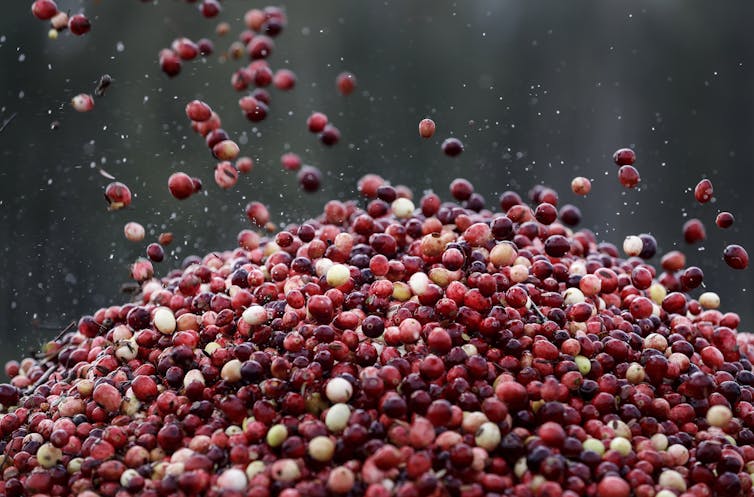
Fall means cranberry season − and sweet seasonal holiday dishes. AP Photo/Sergei Grits

The holidays are full of delicious and indulgent food and drinks. It’s hard to resist dreaming about cookies, specialty cakes, rich meats and super saucy side dishes.

Lots of the healthy raw ingredients used in holiday foods can end up overshadowed by sugar and starch. While adding extra sugar may be tasty, it’s not necessarily good for metabolism. Understanding the food and culinary science behind what you’re cooking means you can make a few alterations to a recipe and still have a delicious dish that’s not overloaded with sugar.

Particularly, if you’re a person living with Type 1 diabetes, the holidays may come with an additional layer of stress and wild blood glucose levels. It’s no time for despair though – it is the holidays, after all.

Cranberries are one seasonal, tasty fruit that can be modified in recipes to be more Type 1 diabetic-friendly – or friendly to anyone looking for a sweet dish without the extra sugar.

I am a food scientist and a Type 1 diabetic. Understanding food composition, ingredient interactions and metabolism has been a literal lifesaver for me.

Type 1 diabetes defined

Type 1 diabetes is all day every day, with no breaks during sleep, no holidays or weekends off, no remission and no cure. Type 1 diabetics don’t make insulin, a hormone that is required to live that promotes the uptake of glucose, or sugar, into cells. The glucose in your cells then supplies your body with energy at the molecular level.

Consequently, Type 1 diabetics take insulin by injection, or via an insulin pump attached to their bodies, and hope that it works well enough to stabilize blood sugar and metabolism, minimize health complications over time and keep us alive.

Type 1 diabetics mainly consider the type and amount of carbohydrates in foods when figuring out how much insulin to take, but they also need to understand the protein and fat interactions in food to dose, or bolus, properly.

In addition to insulin, Type 1 diabetics don’t make another hormone, amylin, which slows gastric motility. This means food moves more quickly through our digestive tract, and we often feel very hungry. Foods that are high in fat, proteins and fiber can help to stave off hunger for a while.

Cranberries, a seasonal treat

Cranberries are native to North America and grow well in the Northeastern and Midwestern states, where they are in season between late September and December. They’re a staple on holiday tables all over the country.

A bowl of cranberries with the zest of an orange on top.
Cranberries are a classic Thanksgiving side dish, but cranberry sauce tends to contain a lot of sugar. bhofack2/iStock via Getty Images

One cup of whole, raw cranberries contains 190 calories. They are 87% water, with trace amounts of protein and fat, 12 grams of carbohydrates and just over 4 grams of soluble fiber. Soluble fiber combines well with water, which is good for digestive health and can slow the rise of blood glucose.

Cranberries are high in potassium, which helps with electrolyte balance and cell signaling, as well as other important nutrients such as antioxidants, beta-carotene and vitamin C. They also contain vitamin K, which helps with healthy blood clotting.

Cranberries’ flavor and aroma come from compounds in the fruit such as cinnamates that add cinnamon notes, vanillin for hints of vanilla, benzoates and benzaldehyde, which tastes like almonds.

Cranberries are high in pectin, a soluble starch that forms a gel and is used as a setting agent in making jams and jellies, which is why they thicken readily with minimal cooking. Their beautiful red jewel-tone color is from a class of compounds called anthocyanins and proanthocyanidins, which are associated with treating some types of infection.

They also contain phenolics, which are protective compounds produced by the plant. These compounds, which look like rings at the molecular level, interact with proteins in your saliva to produce a dry, astringent sensation that makes your mouth pucker. Similarly, a compound called benzoic acid naturally found in cranberries adds to the fruit’s sourness.

These chemical ingredients make them extremely sour and bitter, and difficult to consume raw. To mitigate these flavors and effects, most cranberry recipes call for lots of sugar.

All that extra sugar can make cranberry dishes hard to consume for Type 1 diabetics, because the sugars cause a rapid rise in blood glucose.

Cranberries without sugar?

Type 1 diabetics – or anyone who wants to reduce the added sugars they’re consuming – can try a few culinary tactics to lower their sugar intake while still enjoying this holiday treat.

Don’t cook your cranberries much longer after they pop. You’ll still have a viscous cranberry liquid without the need for as much sugar, since cooking concentrates some of the bitter compounds, making them more pronounced in your dish.

A line of spoons, each heaped with a pile of powdered spice.
Adding spices to your cranberries can enhance the dish’s flavor without extra sugar. klenova/iStock via Getty Images

Adding cinnamon, clove, cardamom, nutmeg and other warming spices gives the dish a depth of flavor. Adding heat with a spicy chili pepper can make your cranberry dish more complex while reducing sourness and astringency. Adding salt can reduce the cranberries’ bitterness, so you won’t need lots of sugar.

For a richer flavor and a glossy quality, add butter. Butter also lubricates your mouth, which tends to compliment the dish’s natural astringency. Other fats such as heavy cream or coconut oil work, too.

Adding chopped walnuts, almonds or hazelnuts can slow glucose absorption, so your blood glucose may not spike as quickly. Some new types of sweeteners, such as allulose, taste sweet but don’t raise blood sugar, requiring minimal to no insulin. Allulose has GRAS – generally regarded as safe – status in the U.S., but it isn’t approved as an additive in Europe.

This holiday season you can easily cut the amount of sugar added to your cranberry dishes and get the health benefits without a blood glucose spike.The Conversation

Rosemary Trout, Associate Clinical Professor of Culinary Arts & Food Science, Drexel University

This article is republished from The Conversation under a Creative Commons license. Read the original article.

  • 310
  • 311
  • 312
  • 313
  • 314
  • 315
  • 316
  • 317
  • 318
  • 319

Community

  • Lake County Wine Alliance offers sponsor update; beneficiary applications open 

  • Mendocino National Forest announces seasonal hiring for upcoming field season

Public Safety

  • Lakeport Police logs: Thursday, Jan. 15

  • Lakeport Police logs: Wednesday, Jan. 14

Education

  • Woodland Community College receives maximum eight-year reaffirmation of accreditation from ACCJC

  • SNHU announces Fall 2025 President's List

Health

  • California ranks 24th in America’s Health Rankings Annual Report from United Health Foundation

  • Healthy blood donors especially vital during active flu season

Business

  • Two Lake County Mediacom employees earn company’s top service awards

  • Redwood Credit Union launches holiday gift and porch-to-pantry food drives

Obituaries

  • Rufino ‘Ray’ Pato

  • Patty Lee Smith

Opinion & Letters

  • The benefits of music for students

  • How to ease the burden of high electric bills

Veterans

  • CalVet and CSU Long Beach team up to improve data collection related to veteran suicides

  • A ‘Big Step Forward’ for Gulf War Veterans

Recreation

  • Wet weather trail closure in effect on Upper Lake Ranger District

  • Mendocino National Forest seeking public input on OHV grant applications

  • State Parks announces 2026 Anderson Marsh nature walk schedule 

  • BLM lifts seasonal fire restrictions in central California

Religion

  • Kelseyville Presbyterian to host Ash Wednesday service and Lenten dinner Feb. 18

  • Kelseyville Presbyterian Church to hold ‘Longest Night’ service Dec. 21

Arts & Life

  • Auditions announced for original musical ‘Even In Shadow’ set for March 21 and 28

  • ‘The Rip’ action heist; ‘Steal’ grounded in a crime thriller

Government & Politics

  • Lake County Democrats issue endorsements in local races for the June California Primary

  • County negotiates money-saving power purchase agreement

Legals

  • March 3 hearing on ordinance amending code for commercial cannabis uses

  • Feb. 12 public hearing on resolution to establish standards for agricultural roads

How to resolve AdBlock issue?
Refresh this page