How to resolve AdBlock issue?
Refresh this page
How to resolve AdBlock issue?
Refresh this page
Lake County News,California
  • Home
    • Registration Form
  • News
    • Education
    • Veterans
    • Community
      • Obituaries
      • Letters
      • Commentary
    • Police Logs
    • Business
    • Recreation
    • Health
    • Religion
    • Legals
    • Arts & Life
    • Regional
  • Calendar
  • Contact us
    • FAQs
    • Phones, E-Mail
    • Subscribe
  • Advertise Here
  • Login

News

Helping Paws: Little puppies and big dogs

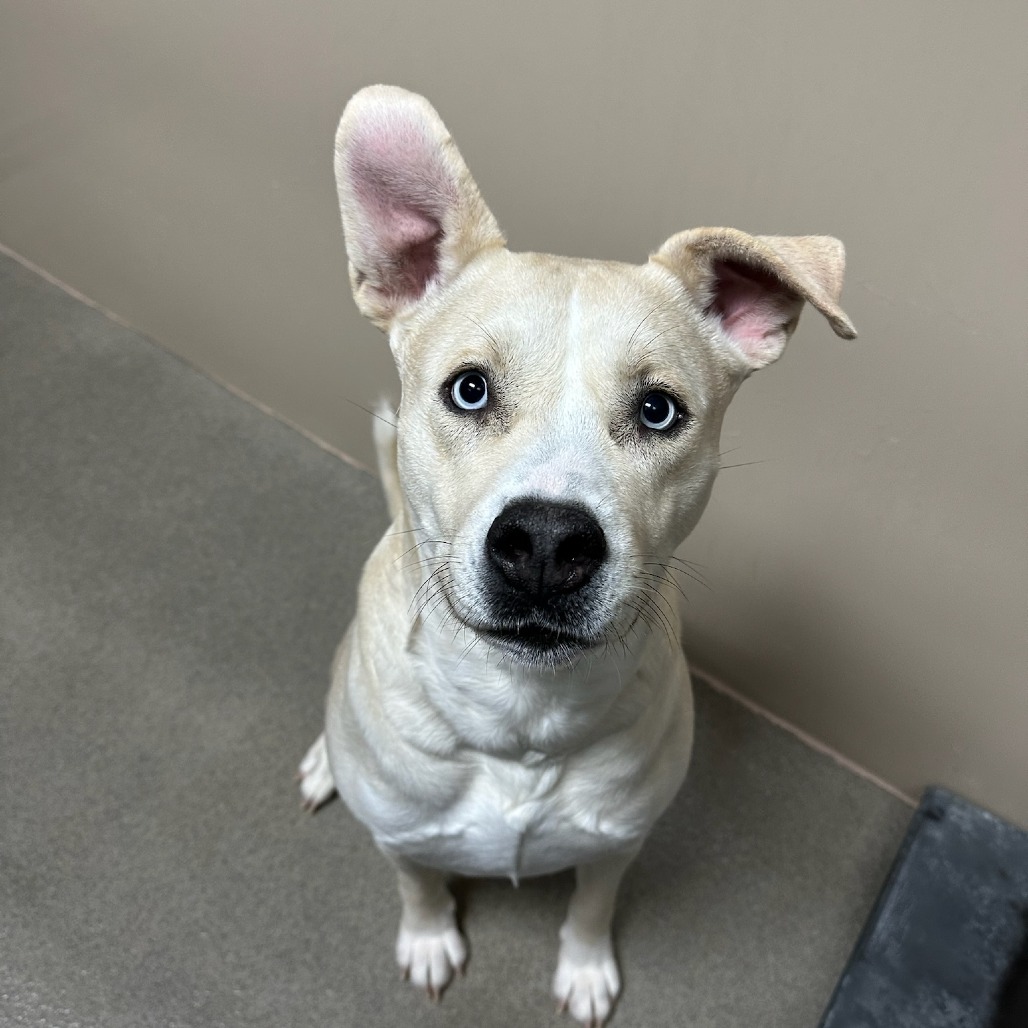
LAKE COUNTY, Calif. — Lake County Animal Care and Control has dogs from tiny puppies to seniors waiting to be adopted at its shelter.

The dogs available for adoption this week include mixes of Anatolian shepherd, Belgian malinois, boxer, cattle dog, Chihuahua, German shepherd, German shorthaired pointer, husky, Labrador Retriever, pit bull terrier and terrier.

Dogs that are adopted from Lake County Animal Care and Control are either neutered or spayed, microchipped and, if old enough, given a rabies shot and county license before being released to their new owner. License fees do not apply to residents of the cities of Lakeport or Clearlake.

Those dogs and the others shown on this page at the Lake County Animal Care and Control shelter have been cleared for adoption.

Call Lake County Animal Care and Control at 707-263-0278 or visit the shelter online for information on visiting or adopting.

The shelter is located at 4949 Helbush in Lakeport.

Email Elizabeth Larson at This email address is being protected from spambots. You need JavaScript enabled to view it.. Follow her on Twitter, @ERLarson, and on Bluesky, @erlarson.bsky.social. Find Lake County News on the following platforms: Facebook, @LakeCoNews; X, @LakeCoNews; Threads, @lakeconews, and on Bluesky, @lakeconews.bsky.social.

Kennel#4a(pink collar)'s preview photo
Kennel#4a(pink collar)

FostertoAdopt#8247's preview photo
FostertoAdopt#8247

Kennel#4d(Yellow Collar)'s preview photo
Kennel#4d(Yellow Collar)

Kennel#4e(Blue Collar)'s preview photo
Kennel#4e(Blue Collar)

FostertoAdopt#8250's preview photo
FostertoAdopt#8250

Kennel#28's preview photo
Kennel#28

Kennel#18's preview photo
Kennel#18

Kennel#13a's preview photo
Kennel#13a

 
Kennel#13b's preview photo
Kennel#13b

Cedar 's preview photo
Cedar

Fostertoadopt#9849's preview photo
Fostertoadopt#9849

Kennel#32b's preview photo
Kennel#32b

Kennel#32a's preview photo
Kennel#32a

Kennel#14b's preview photo
Kennel#14b

Kennel#23's preview photo
Kennel#23

FostertoAdopt#9883's preview photo
FostertoAdopt#9883

Kennel#24's preview photo
Kennel#24

Kennel#5's preview photo
Kennel#5

Kennel#30's preview photo
Kennel#30

Kennel#9's preview photo
Kennel#9

Kennel#15's preview photo
Kennel#15


Quarantine#6

Quarantine#3
Kennel#33's preview photo
Kennel#33

 
Kennel#10's preview photo
Kennel#10

Kennel#2a's preview photo
Kennel#2a

Kennel#6's preview photo
Kennel#6
Kennel#12a's preview photo
Kennel#12a

Kennel#12b's preview photo
Kennel#12b

C#111(RedCollar)'s preview photo
C#111(RedCollar)

Kennel#3's preview photo
Kennel#3

Kennel#8's preview photo
Kennel#8

Kennel#16's preview photo
Kennel#16

Kennel#29's preview photo
Kennel#29


C#32's preview photo
C#32
 
Kennel#11's preview photo
Kennel#11


Kennel#17's preview photo
Kennel#17

Kennel#34a's preview photo
Kennel#34a

Kennel#34b's preview photo
Kennel#34b

Kennel#7a's preview photo
Kennel#7a

Kennel#7b's preview photo
Kennel#7b

 
Kennel#25's preview photo
Kennel#25

Kennel#26's preview photo
Kennel#26

Kennel#27's preview photo
Kennel#27


Will AI revolutionize drug development? Researchers explain why it depends on how it’s used


A high drug failure rate is more than just a pattern recognition problem. Thom Leach/Science Photo Library via Getty Images

The potential of using artificial intelligence in drug discovery and development has sparked both excitement and skepticism among scientists, investors and the general public.

“Artificial intelligence is taking over drug development,” claim some companies and researchers. Over the past few years, interest in using AI to design drugs and optimize clinical trials has driven a surge in research and investment. AI-driven platforms like AlphaFold, which won the 2024 Nobel Prize for its ability to predict the structure of proteins and design new ones, showcase AI’s potential to accelerate drug development.

AI in drug discovery is “nonsense,” warn some industry veterans. They urge that “AI’s potential to accelerate drug discovery needs a reality check,” as AI-generated drugs have yet to demonstrate an ability to address the 90% failure rate of new drugs in clinical trials. Unlike the success of AI in image analysis, its effect on drug development remains unclear.

Pharmacist searching through drawer of drug packages
Behind every drug in your pharmacy are many, many more that failed. nortonrsx/iStock via Getty Images Plus

We have been following the use of AI in drug development in our work as a pharmaceutical scientist in both academia and the pharmaceutical industry and as a former program manager in the Defense Advanced Research Projects Agency, or DARPA. We argue that AI in drug development is not yet a game-changer, nor is it complete nonsense. AI is not a black box that can turn any idea into gold. Rather, we see it as a tool that, when used wisely and competently, could help address the root causes of drug failure and streamline the process.

Most work using AI in drug development intends to reduce the time and money it takes to bring one drug to market – currently 10 to 15 years and US$1 billion to $2 billion. But can AI truly revolutionize drug development and improve success rates?

AI in drug development

Researchers have applied AI and machine learning to every stage of the drug development process. This includes identifying targets in the body, screening potential candidates, designing drug molecules, predicting toxicity and selecting patients who might respond best to the drugs in clinical trials, among others.

Between 2010 and 2022, 20 AI-focused startups discovered 158 drug candidates, 15 of which advanced to clinical trials. Some of these drug candidates were able to complete preclinical testing in the lab and enter human trials in just 30 months, compared with the typical 3 to 6 years. This accomplishment demonstrates AI’s potential to accelerate drug development.

Drug development is a long and costly process.

On the other hand, while AI platforms may rapidly identify compounds that work on cells in a Petri dish or in animal models, the success of these candidates in clinical trials – where the majority of drug failures occur – remains highly uncertain.

Unlike other fields that have large, high-quality datasets available to train AI models, such as image analysis and language processing, the AI in drug development is constrained by small, low-quality datasets. It is difficult to generate drug-related datasets on cells, animals or humans for millions to billions of compounds. While AlphaFold is a breakthrough in predicting protein structures, how precise it can be for drug design remains uncertain. Minor changes to a drug’s structure can greatly affect its activity in the body and thus how effective it is in treating disease.

Survivorship bias

Like AI, past innovations in drug development like computer-aided drug design, the Human Genome Project and high-throughput screening have improved individual steps of the process in the past 40 years, yet drug failure rates haven’t improved.

Most AI researchers can tackle specific tasks in the drug development process when provided with high-quality data and particular questions to answer. But they are often unfamiliar with the full scope of drug development, reducing challenges into pattern recognition problems and refinement of individual steps of the process. Meanwhile, many scientists with expertise in drug development lack training in AI and machine learning. These communication barriers can hinder scientists from moving beyond the mechanics of current development processes and identifying the root causes of drug failures.

Current approaches to drug development, including those using AI, may have fallen into a survivorship bias trap, overly focusing on less critical aspects of the process while overlooking major problems that contribute most to failure. This is analogous to repairing damage to the wings of aircraft returning from the battle fields in World War II while neglecting the fatal vulnerabilities in engines or cockpits of the planes that never made it back. Researchers often overly focus on how to improve a drug’s individual properties rather than the root causes of failure.

Diagram of airplane with clusters of red dots on the wing tips, tail and cockpit areas
While returning planes might survive hits to the wings, those with damage to the engines or cockpits are less likely to make it back. Martin Grandjean, McGeddon, US Air Force/Wikimedia Commons, CC BY-SA

The current drug development process operates like an assembly line, relying on a checkbox approach with extensive testing at each step of the process. While AI may be able to reduce the time and cost of the lab-based preclinical stages of this assembly line, it is unlikely to boost success rates in the more costly clinical stages that involve testing in people. The persistent 90% failure rate of drugs in clinical trials, despite 40 years of process improvements, underscores this limitation.

Addressing root causes

Drug failures in clinical trials are not solely due to how these studies are designed; selecting the wrong drug candidates to test in clinical trials is also a major factor. New AI-guided strategies could help address both of these challenges.

Currently, three interdependent factors drive most drug failures: dosage, safety and efficacy. Some drugs fail because they’re too toxic, or unsafe. Other drugs fail because they’re deemed ineffective, often because the dose can’t be increased any further without causing harm.

We and our colleagues propose a machine learning system to help select drug candidates by predicting dosage, safety and efficacy based on five previously overlooked features of drugs. Specifically, researchers could use AI models to determine how specifically and potently the drug binds to known and unknown targets, the level of these targets in the body, how concentrated the drug becomes in healthy and diseased tissues, and the drug’s structural properties.

These features of AI-generated drugs could be tested in what we call phase 0+ trials, using ultra-low doses in patients with severe and mild disease. This could help researchers identify optimal drugs while reducing the costs of the current “test-and-see” approach to clinical trials.

While AI alone might not revolutionize drug development, it can help address the root causes of why drugs fail and streamline the lengthy process to approval.The Conversation

Duxin Sun, Associate Dean for Research, Charles Walgreen Jr. Professor of Pharmacy and Pharmaceutical Sciences, University of Michigan and Christian Macedonia, Adjunct Professor in Pharmaceutical Sciences, University of Michigan

This article is republished from The Conversation under a Creative Commons license. Read the original article.

Space News: What’s up for January 2025?


What’s up for January?

Cue the planet parade, Saturn and Venus cross paths, Mars expresses its opposition, and the outlook for the Quadrantid meteors.

In January, you’ll have the opportunity to take in four bright planets in a single, sweeping view.

All month after dark, you’ll find Venus and Saturn in the southwest for the first couple of hours, while Jupiter shines brightly high overhead, and Mars rises in the east. Uranus and Neptune are there too, technically, but they don't appear as "bright planets." These multi-planet viewing opportunities aren’t super rare, but they don’t happen every year, so it’s worth checking it out.

Now, these events are sometimes called “alignments” of the planets, and while it’s true that they will appear more or less along a line across the sky, that’s what planets always do. That line is called the ecliptic, and it represents the plane of the solar system in which the planets orbit around the Sun. This is, incidentally, why we sometimes observe planets appearing to approach closely to each other on the sky, as we view them along a line while they careen around the cosmic racetrack.

This is exactly what we'll be seeing from Venus and Saturn as they head for a super close approach in mid-January. After the beginning of the month, they quickly get closer and closer each evening, appearing at their most cozy on the 17th and 18th before going their separate ways. Remember, they’re really hundreds of millions of miles apart in space, so when you observe them, you’re staring clear across the solar system!

Mars reaches “opposition” this month, which is when the planet lies directly on the opposite side of Earth from the Sun, forming a straight line. This is around the time when the planet is at its closest to Earth, making it appear at its biggest and brightest. For Mars, oppositions happen about every two years. This one won’t be the most spectacular ever, but it’s still closer than average, and provides a great opportunity to observe the nearby planet where NASA has five missions currently operating.

And on the 13th, the full Moon cozies up to Mars, appearing super close to the Red Planet that evening. Across the U.S. and Eastern Canada, the Moon will appear to pass in front of Mars over a couple of hours, as the pair rise into the eastern sky. Mars also will be the lone planet in the sky on January mornings. You’ll find it hanging out in the west in morning twilight.

The Quadrantid meteors peak in the early morning hours on Jan. 3. Interference from moonlight won’t be a problem, as the Moon is a mere crescent and sets early in the night. The way to see the most meteors is to observe after midnight from clear, dark skies away from bright city lights, and let your eyes adapt to the dark. The meteor rate will be highest as dawn approaches, and you’ll see more meteors from rural locations than in the suburbs. Now, this is a shower best seen from the Northern Hemisphere, and observers in the Northwest and Pacific region will likely have the best viewing this year.

Stay up to date on all of NASA's missions exploring the solar system and beyond at science.nasa.gov.

Preston Dyches is with NASA's Jet Propulsion Laboratory.

Clearlake Oaks Post Office set to fully reopen following vehicle crash

LAKE COUNTY, Calif. — A Thursday vehicle crash resulted in injuries and led to a temporary closure of retail services at the Clearlake Oaks Post Office, which is set to reopen on Saturday.

The Clearlake Oaks Post Office is located at 13280 E. Highway 20.

“A runaway vehicle crashed through the building yesterday, forcing retail operations to be temporarily suspended,” a Friday statement from the US Postal Services’ San Francisco office said.

Sgt. Joel Skeen of the California Highway Patrol’s Clear Lake Area office said the crash occurred when a young woman accidentally stepped on her vehicle’s gas pedal rather than the brake pedal.

He said it caused a wall collapse and resulted in minor injuries to a little girl and an older man inside the building.

“Nobody was in need of medical transport so pretty minor overall, other than the building damage,” Skeen said, adding that no drugs or alcohol were suspected as factors in the crash.

Postal Service spokesperson Kristina Uppal said the vehicle hit the front entry portion of the building where the postal lobby is located, causing damage to a window, walls and postal equipment, and making it unsafe on Friday to open for retail services.

“Efforts are underway to make the building accessible and safe. We appreciate our customers' patience as we recover from this accident,” said Uppal.

Uppal said PO Box mail and packages were available for pick up at the rear entrance of the building during normal business hours on Friday, while retail operations were available at the Clearlake Post Office, 14500 Olympic Drive.

“This is again just a temporary closure of retail services only for the safety of our customers and staff,” Uppal said Friday.

Later on Friday, the Postal Service reported that the Clearlake Oaks Post Office would resume retail services and lobby access on Saturday on its regular schedule.

The Clearlake Oaks Post Office is open for retail operations and PO Box pickup from Monday through Friday, 8:30 a.m. to 4:30 p.m., and Saturday, 8:30 a.m. to noon.

Many retail services including temporary forwards, stamps and more are also available anytime, online at https://www.usps.com/.

Email Elizabeth Larson at This email address is being protected from spambots. You need JavaScript enabled to view it.. Follow her on Twitter, @ERLarson, and on Bluesky, @erlarson.bsky.social. Find Lake County News on the following platforms: Facebook, @LakeCoNews; X, @LakeCoNews; Threads, @lakeconews, and on Bluesky, @lakeconews.bsky.social.

Thompson sworn in to serve in the 119th Congress

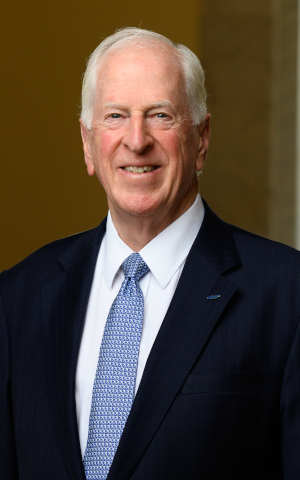
Congressman Mike Thompson. Courtesy photo.

On Friday, U.S. Representative Mike Thompson (CA-04) was sworn in as a member of the United States House of Representatives by Speaker of the House Mike Johnson.

The swearing-in ceremony for Thompson and hundreds of other recently elected House members took place after Johnson was reelected as speaker.

“It’s the honor of my life to serve the people of the community where I was born, grew up, raised my own family and live today,” said Thompson. “Over the next two years, my priority will remain the same: To deliver for the constituents of the Fourth District. That includes working to lower costs, improve community safety, fight climate change, and protect your fundamental rights and freedoms.”

Thompson was reelected on Nov. 5 to serve California’s Fourth Congressional District, which includes all of Lake and Napa counties, and parts of Solano, Sonoma and Yolo counties.

An Army veteran who reached the rank of staff sergeant in the 173rd Airborne Brigade and received the Purple Heart while serving in Vietnam, he became the first Vietnam veteran elected to the California Senate in 1990.

Thompson then ran successfully in 1998 for Congress, where he has served ever since.

On Friday, he was once again added to the rolls of the House upon executing the oath of office.

Thompson, a Democrat, is a senior member of the House Committee on Ways and Means, chairman of the House Gun Violence Prevention Task Force, co-chair of the bipartisan, bicameral Congressional Wine Caucus and a member of the fiscally-responsible Blue Dog Coalition.

Email Elizabeth Larson at This email address is being protected from spambots. You need JavaScript enabled to view it.. Follow her on Twitter, @ERLarson, and on Bluesky, @erlarson.bsky.social. Find Lake County News on the following platforms: Facebook, @LakeCoNews; X, @LakeCoNews; Threads, @lakeconews, and on Bluesky, @lakeconews.bsky.social.

As whooping cough cases increase, state health officials encourage Tdap vaccination

State health officials said California is experiencing an increase in cases of whooping cough.

Also known as pertussis, whooping cough is a highly contagious bacterial disease that can be spread though coughing and can cause severe illness, especially in infants.

The California Department of Public Health, or CDPH, is urging all Californians — especially those who are pregnant and those who provide care to infants — to be up to date on their Tdap (tetanus, diphtheria, pertussis) vaccine to help prevent whooping cough.

Individuals vaccinated against whooping cough are protected against severe illness and complications due to whooping cough.

These complications can be most severe in infants, causing apnea (dangerous pauses in breathing) and can be fatal.

More than 2,000 cases of whooping cough were reported statewide between January and October 2024. 62 of those cases were infants less than four months of age who were hospitalized, including one infant who tragically died. During the same time range in 2023, there were less than 400 whooping cough cases reported in the state.

“Since the COVID-19 pandemic has subsided, many practices that had lowered instances of whooping cough are no longer in place, and we’re seeing the disease return to pre-pandemic levels,” said Dr. Tomás J. Aragón, CDPH director and State Public Health officer. “Infants are particularly vulnerable and that’s why CDPH especially encourages people who are pregnant to receive the Tdap vaccine in their third trimester which will pass along protective antibodies to the baby.”

Health officials’ recommendations

With whooping cough cases rising, ensure you are up to date on your whooping cough vaccine. Vaccination is recommended for all:

• Pregnant people between 27 and 36 weeks of pregnancy, even if they have received Tdap in the past.
• Adults, every 10 years.
• Adolescents aged 11 or 12 years (Tdap vaccine is also required for 7th grade advancement in California).
• Infants and young children receive their own whooping cough (DTaP) vaccines starting at 2 months through 4-6 years of age. Babies and children who haven't had all recommended doses are more likely to have serious complications.
Talk to your doctor or pharmacist about which vaccines are right for you and your family.

People with whooping cough have severe coughing attacks that can last for months. Infants too young for vaccination are at greatest risk for hospitalization and death.

Early signs of whooping cough are similar to symptoms of the common cold such as a runny or stuffy nose and low-grade fever. Babies with whooping cough may have trouble breathing, turn blue or stop breathing.

To protect infants from whooping cough, CDPH strongly urges maternal immunization with Tdap (tetanus, diphtheria, pertussis) vaccine in the last trimester (between 27 and 36 weeks) of every pregnancy.

When given during pregnancy, Tdap is approximately 90% effective in preventing infant hospitalizations due to whooping cough. It is also beneficial for all family members and caregivers of newborns to receive either the Tdap (for adults and children older than seven) or DTaP (for those seven years of age or younger) vaccines to prevent spreading whooping cough to infants.

CDPH said these vaccines are safe and effective and can be received at the same time as flu, COVID or RSV vaccines.

Tdap vaccines are widely available at many doctor offices and pharmacies. Schedule a vaccine appointment by visiting https://myturn.ca.gov/ or contacting your local pharmacy or health care provider.

Most health insurance plans, including Medi-Cal, cover Tdap vaccines. Individuals experiencing difficulty finding a place to get immunized may contact their health care provider or local health department for help.

The Vaccines For Children, or VFC, program is a federally funded program that provides vaccines at no cost to children (18 and younger) who might not otherwise be vaccinated because of an inability to pay. Contact your doctor to learn if they are enrolled in VFC or visit MyTurn to find a location based on your eligibility.

Get more information about whooping cough or pertussis by visiting CDPH’s Pertussis (Whooping Cough) webpage or CDC’s Whooping Cough Vaccination webpage.
  • 283
  • 284
  • 285
  • 286
  • 287
  • 288
  • 289
  • 290
  • 291
  • 292

Community

  • Lake County Wine Alliance offers sponsor update; beneficiary applications open 

  • Mendocino National Forest announces seasonal hiring for upcoming field season

Public Safety

  • Lakeport Police logs: Thursday, Jan. 15

  • Lakeport Police logs: Wednesday, Jan. 14

Education

  • Woodland Community College receives maximum eight-year reaffirmation of accreditation from ACCJC

  • SNHU announces Fall 2025 President's List

Health

  • California ranks 24th in America’s Health Rankings Annual Report from United Health Foundation

  • Healthy blood donors especially vital during active flu season

Business

  • Two Lake County Mediacom employees earn company’s top service awards

  • Redwood Credit Union launches holiday gift and porch-to-pantry food drives

Obituaries

  • Rufino ‘Ray’ Pato

  • Patty Lee Smith

Opinion & Letters

  • The benefits of music for students

  • How to ease the burden of high electric bills

Veterans

  • CalVet and CSU Long Beach team up to improve data collection related to veteran suicides

  • A ‘Big Step Forward’ for Gulf War Veterans

Recreation

  • Wet weather trail closure in effect on Upper Lake Ranger District

  • Mendocino National Forest seeking public input on OHV grant applications

  • State Parks announces 2026 Anderson Marsh nature walk schedule 

  • BLM lifts seasonal fire restrictions in central California

Religion

  • Kelseyville Presbyterian to host Ash Wednesday service and Lenten dinner Feb. 18

  • Kelseyville Presbyterian Church to hold ‘Longest Night’ service Dec. 21

Arts & Life

  • Auditions announced for original musical ‘Even In Shadow’ set for March 21 and 28

  • ‘The Rip’ action heist; ‘Steal’ grounded in a crime thriller

Government & Politics

  • Lake County Democrats issue endorsements in local races for the June California Primary

  • County negotiates money-saving power purchase agreement

Legals

  • March 3 hearing on ordinance amending code for commercial cannabis uses

  • Feb. 12 public hearing on resolution to establish standards for agricultural roads

How to resolve AdBlock issue?
Refresh this page