How to resolve AdBlock issue?
Refresh this page
How to resolve AdBlock issue?
Refresh this page
Lake County News,California
  • Home
    • Registration Form
  • News
    • Education
    • Veterans
    • Community
      • Obituaries
      • Letters
      • Commentary
    • Police Logs
    • Business
    • Recreation
    • Health
    • Religion
    • Legals
    • Arts & Life
    • Regional
  • Calendar
  • Contact us
    • FAQs
    • Phones, E-Mail
    • Subscribe
  • Advertise Here
  • Login

News

Technology is supposed to decrease teacher burnout – but we found it can sometimes make it worse


Asking teachers to adopt new tools without removing old requirements is a recipe for burnout. Drazen Zigic via Getty Images

When we set out to study pandemic-related changes in schools, we thought we’d find that learning management systems that rely on technology to improve teaching would make educators’ jobs easier. Instead, we found that teachers whose schools were using learning management systems had higher rates of burnout.

Our findings were based on a survey of 779 U.S. teachers conducted in May 2022, along with subsequent focus groups that took place in the fall of that year. Our study was peer-reviewed and published in April 2024.

During the COVID-19 pandemic, when schools across the country were under lockdown orders, schools adopted new technologies to facilitate remote learning during the crisis. These technologies included learning management systems, which are online platforms that help educators organize and keep track of their coursework.

We were puzzled to find that teachers who used a learning management system such as Canvas or Schoology reported higher levels of burnout. Ideally, these tools should have simplified their jobs. We also thought these systems would improve teachers’ ability to organize documents and assignments, mainly because they would house everything digitally, and thus, reduce the need to print documents or bring piles of student work home to grade.

But in the follow-up focus groups we conducted, the data told a different story. Instead of being used to replace old ways of completing tasks, the learning management systems were simply another thing on teachers’ plates.

A telling example was seen in lesson planning. Before the pandemic, teachers typically submitted hard copies of lesson plans to administrators. However, once school systems introduced learning management systems, some teachers were expected to not only continue submitting paper plans but to also upload digital versions to the learning management system using a completely different format.

Asking teachers to adopt new tools without removing old requirements is a recipe for burnout.

Teachers who taught early elementary grades had the most complaints about learning management systems because the systems did not align with where their students were at. A kindergarten teacher from Las Vegas shared, “Now granted my kids cannot really count to 10 when they first come in, but they have to learn a six digit student number” to access Canvas. “I definitely agree that … it does lead to burnout.”

In addition to technology-related concerns, teachers identified other factors such as administrative support, teacher autonomy and mental health as predictors of burnout.

Why it matters

Teacher burnout has been a persistent issue in education, and one that became especially pronounced during and after the COVID-19 pandemic.

If new technology is being adopted to help teachers do their jobs, then school leaders need to make sure it will not add extra work for them. If it adds to or increases teachers’ workloads, then adding technology increases the likelihood that a teacher will burn out. This likely compels more teachers to leave the field.

Schools that implement new technologies should make sure that they are streamlining the job of being a teacher by offsetting other tasks, and not simply adding more work to their load.

The broader lesson from this study is that teacher well-being should be a primary focus with the implementation of schoolwide changes.

What’s next

We believe our research is relevant for not only learning management systems but for other new technologies, including emerging artificial intelligence tools. We believe future research should identify schools and districts that effectively integrate new technologies and learn from their successes.

The Research Brief is a short take on interesting academic work.The Conversation

David T. Marshall, Associate Professor of Educational Research, Auburn University; Teanna Moore, Associate Researcher at Accessible Teaching, Learning and Assessment Systems, University of Kansas, and Timothy Pressley, Associate Professor of Psychology, Christopher Newport University

This article is republished from The Conversation under a Creative Commons license. Read the original article.
Dedication of ‘Water Baskets’ art project planned for Jan. 12


This story has been updated.

MIDDLETOWN, Calif. — The public is invited to attend the “Water Baskets” project dedication and celebratory public reception on Sunday, Jan. 12, from 3:30 to 5 p.m.

It will be held at the Middletown Art Center, or MAC, 21456 State Highway 175 at the junction of Highway 29 in Middletown.

The event is free to the public and refreshments will be available.

Tribal and civic leaders as well the artists will be present. The public is also invited to weave a small chi or hitch from tule to contribute to the piece “Calling the Chi - Hitch” at the Reciprocity EcoArts Sculpture Walk.

Community members wishing to walk up to the Water Baskets on Rabbit Hill are encouraged to do so following opening remarks by Middletown Rancheria Tribal Chair Moke Simon, Lake County’s Assembly member Cecilia Aguiar-Curry, and other speakers.

The Water Baskets will be particularly spectacular at 4:30 or 5 p.m. following the reception, during the golden hour, sunset or dusk.

“The Water Basket project represents true collaboration between our Middletown Rancheria Tribal Nation, the Middletown Art Center, Callayomi County Water District and our local community,” said Tribal Chairman Moke Simon. “Water is life. And as the first people of this land we are honored to be a part of this historic project.”

The project honors the cultural legacy of the original stewards of this land, and the Indigenous flora and fauna of the Middletown area. It also reflects the unification, regeneration, and revitalization of the Middletown community as a whole, after the 2015 Valley Fire.

The selection process for the Water Basket designs was comprehensive and inclusive. It followed a call for proposals for 360° designs inspired by Pomo basketry design patterns. Pomo Baskets are renowned worldwide for excellence in aesthetics, craftsmanship, durability, and form and function. Several workshops, led by Pomo artists, were held to increase artists’ and the public’s awareness about the distinct design patterns and plant materials used in Pomo basketry and their relationship to this region’s ecology.

After careful consideration of over 20 designs, a jury of 14 diverse local stakeholders chose six designs to present to the public. Models were on view for voting for three full weeks at three locations. The designs now seen on Rabbit Hill are a reflection of the public’s choice.

“Tsúkli - To Shine Forth” by Trelasa Baratta, graces the larger tank.

“I come from the Chappo and Knight families of Middletown Rancheria,” Baratta said. “My design incorporates personal variations of common Pomo basketry patterns. It is dedicated to our ancestors, whose lives embodied Native survival and resilience, and a resolute commitment to preserving our culture.”

“Echoes of the Land,” which graces the smaller tank is by Lorraine Triana Rueda, a local artist originally from Colombia. “This mural tells a story of unity, respect, and shared harmony,” Lorraine shared. “It connects the community’s rich heritage with the natural beauty of the Middletown area’s land and wildlife, honoring the traditions, ancestral knowledge, and the people.”

The Water Basket project is funded in part by an award from the National Endowment for the Arts, with additional funding from the Middletown Rancheria, the Callayomi County Water District, MAC, Calpine at The Geysers and Lake County Tribal Health Consortium. The project was initiated and produced by MAC.

Middletown Art Center is a Lake County non-profit dedicated to engaging the public in art making, education and appreciation. Through exhibitions, performances, workshops, and community events, the Art Center provides a platform for diverse voices and perspectives, striving to create an inclusive and accessible space for all.

To learn more or to donate to support cultural and other arts programs at MAC please visit middletownartcenter.org or call 707-809-8118. The MAC is located at 21456 State Highway 175 in Middletown.

New 2024 population estimates show nation’s population grew by about 1% to 340.1 million since 2023


Following historically low growth at the height of the COVID-19 pandemic, the U.S. population grew substantially by almost 1% since 2023, outpacing average annual growth since 2000 and signaling a significant turnaround from the meager population gains at the start of this decade.

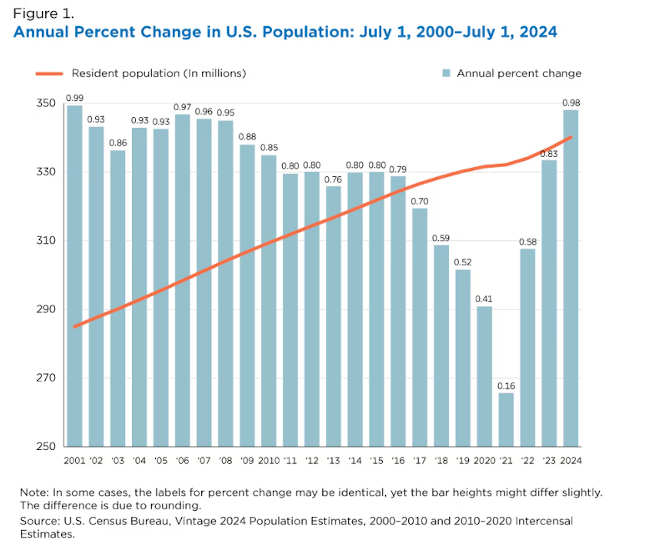
The U.S. Census Bureau released July 1, 2024, population estimates for the nation and states. The U.S. population reached 340.1 million, up 0.98% from 336.8 million on July 1, 2023 — the highest year-over-year increase since a jump of 0.99% between 2000 and 2001.

Population trends since 2000

Since 2000, the nation has grown by almost 58 million, with an average annual growth rate of approximately 0.8%. The most robust growth occurred between 2001 and 2008, fueled by changing migration trends and higher birth rates.

However, population trends have fluctuated over the past two decades, reflecting how major world and national events can influence population growth.

For instance, national security concerns immediately following 9/11 resulted in fewer migrants, slightly tempering population growth between 2001 and 2003.

Similarly, the financial crisis which started in 2008, dubbed “The Great Recession,” impacted both fertility and immigration in the United States. Between 2008 and 2009, births dipped by nearly 3% and net international migration fell almost 12%.

By the early 2010s, the pace of U.S. growth had begun to slow down. After a slight uptick in 2014-2015, population growth slowed again and 2016 ushered a new period of sluggish growth brought on by declining net international migration and falling birth rates (Figure 1).

That marked the start of a prolonged period of below-average growth.


COVID-19 pandemic and recovery

At the start of the 2020s, the COVID-19 pandemic slowed the nation’s population growth further.

A national emergency declaration resulted in travel restrictions, temporarily limiting entry. Also during this time, the number of deaths surged and births declined. This combination resulted in the United States experiencing the slowest period of growth on record in 2021 — as the population increased by just 0.16% — underscoring the pandemic’s effect on the population.

When the nation recovered from the pandemic, its population growth did as well, more than doubling from 2021 to 2022.

As travel restrictions started to ease and migration increased, the pace of growth quickened. A slight rise in births and decrease in the number of deaths supported the turnaround.

By 2024, after three consecutive years of population growth exceeding 0.5%, the United States seems to have recovered from pandemic-era lows.

What influences population change?

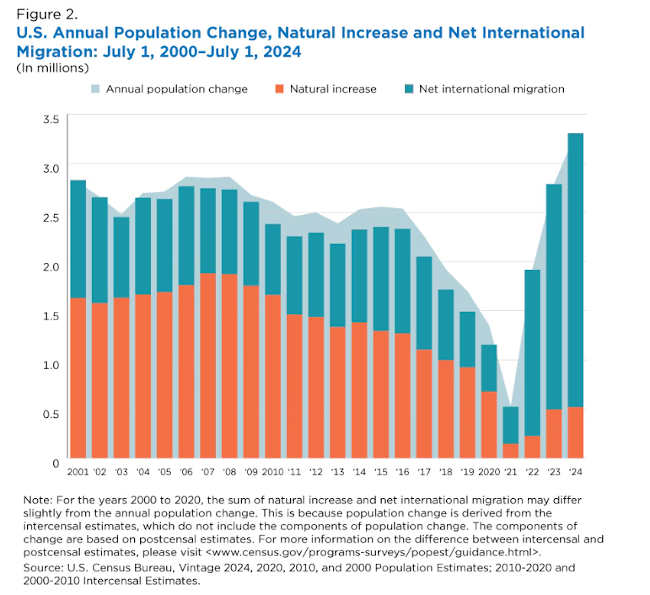
Natural increase (births minus deaths) and net international migration (immigration minus emigration) are the major influences on population growth, but their relative contributions to growth have changed over time (Figure 2).

Natural increase has historically been the cornerstone of U.S. population growth. Yet, in recent years, its contribution has dwindled due to fewer births and more deaths. The aging of the population is fueled by the large number of Baby Boomers born between 1946 and 1964 entering high mortality ages.

There was a brief uptick in births from 2021 to 2022, but rates returned to their downward trend in 2023.

In contrast, net international migration’s influence on population trends has increased over the last few years.

Since 2021, it accounted for the majority of the nation’s growth — departure from the last two decades, when natural increase was the main factor.

Kristie Wilder is a demographer in the U.S. Census Bureau’s Population Estimates Branch.
`

New study shows California’s educators ‘stretched thin’ due to financial pressures; four in 10 thinking of leaving the profession

While 77 percent of California teachers find their jobs rewarding, four in 10 are thinking about leaving the profession due to a lack of resources at school and financial pressures at home, according to a new report released Wednesday by the California Teachers Association.

Conducted by GBAO Strategies, the “State of California's Public Schools” surveyed more than 2,000 transitional kindergarten to 12th grade public school educators across the state this school year, providing new insight about the increasing difficulty of recruiting and retaining California teachers.

“Too many educators are spread thin and can’t make ends meet,” CTA President David Goldberg said during a news conference held Tuesday. “For more than 46 years, schools have been operating in a deficit in large part due to the passage of Proposition 13. This created a shift away from investing in our schools and into profits for corporations.”

Goldberg highlighted some of the report’s findings:

• 84 percent of teachers surveyed cannot afford to live near their schools.
• 81 percent say their salaries are not keeping up with rising costs for groceries, childcare and other necessary expenses.
• 80 percent have concerns that they would not be able to cover an unexpected cost.
• 69 percent cite high, out-of-pocket costs for often inadequate health care benefits eating into their paychecks.

Carolina Gomez, a transitional kindergarten, or TK, teacher in San Diego and a single parent with five children, had a nearly impossible time finding affordable housing in one of California’ most expensive housing markets. At one point, she found it necessary to commute daily from across the border in Mexico to put a roof over her family's heads.

“I’m very grateful to have a union,” said Gomez, who participated in the CTA news conference. “My union helped me obtain affordable housing. I was fortunate. Across the state, many teachers are struggling to find a place — any place — for their families to live.”

Not only are educators struggling to find housing and pay rent, 91 percent of those who do rent say that they can’t afford to buy a home, according to the report.

Goldberg said the popular perception is that California public school teachers have generous health care benefits, but the reality is that some teachers pay as much as $1,500 per month in out-of-pocket costs.

Sacramento-area TK teacher Kristina Caswell said these exorbitant health care costs, in addition to rising housing and daycare expenses, have tightened her family budget to the point where she “thinks twice before paying for a prescription.” While she enjoys her job and loves her students and families, Caswell said the financial pressures are difficult to navigate.

Despite the financial impacts, Caswell routinely reaches into her own pocket to purchase supplies, food and other items for her classroom and students — and she’s not alone: 93 percent of educators surveyed reported routinely spending their own money to help and support their students.

The report also shows a number of alarming concerns educators have about California public schools:

• 84 percent of educators surveyed said inadequate resources for students provided by the state and school districts were a major concern, while the same number (84 percent) cited a lack of school funding.
• 68 percent specifically mentioned a lack of support for mental health issues. The report notes that California is failing at providing students with access to school counselors, with the state ranking 48th nationally for these crucial supports.
• 76 percent said overcrowded classes and a lack of staffing was a serious issue, with California ranking in the top 5 states with the largest average class sizes in the country.

“State of California's Public Schools” details the stark realities for new and veteran educators at both home and school that are causing dedicated teachers to consider leaving education.

The situation is even more dire for new educators, with one in three thinking about leaving and 92 percent citing financial reasons as the primary reason. This is compounding the ongoing teacher shortage crisis, which currently sees more than 10,000 teacher vacancies statewide.

Goldberg concluded the conference stating CTA's commitment to fighting for robust and stable revenue for public schools in the years to come: “California’s students, schools and communities deserve a more stable and robust funding system to support an equitable education system for all. This includes creative revenue-raising solutions that apply the great wealth of this state to our educational system.”

Vitamin deficiency may be why you’re so tired – a nutritional neuroscientist explains how to kickstart your energy by getting essential nutrients in a well-rounded diet, along with more sleep and exercise


It’s not necessarily overwork that is exhausting you. Daniel de la Hoz/Moment via Getty Images

Feeling drained and lethargic is common: A 2022 national survey found that 13.5% of U.S. adults said they felt “very tired” or “exhausted” most days or every day over a three-month period.

Women ages 18 to 44 had the highest rate of fatigue – just over 20%.

Being tired is linked to something deeper than just overwork or a sign of the times. I’m a registered dietitian and nutritional neuroscientist. My research, along with the work of others in the field, shows that your diet and lifestyle choices may contribute to your struggles. These two factors are closely interconnected and could be the key to understanding what’s holding you back.

In particular, not getting enough of three essential nutrients – vitamin D, vitamin B12 and omega-3 fatty acids – is linked to low energy levels.

Vitamin D

More than 40% of adult Americans are deficient in vitamin D. Low levels are linked to fatigue, bone pain, muscle weakness, mood disorders and cognitive decline.

Foods high in vitamin D include fatty fish like salmon, sardines, freshwater rainbow trout, fortified dairy products and egg yolks. Among the sources for vegetarians and vegans are fortified plant-based milks and cereals and some kinds of mushrooms.

The U.S. government’s recommended daily amount of vitamin D is 400 international units, or IU, for infants up to 12 months, 600 IU for people ages 1 to 70 and 800 IU for people over 70. Just over 5 ounces (150 grams) of sockeye salmon fillet has about 800 IU of vitamin D. If you are low in a vitamin, your doctor may prescribe you a higher dose than the recommended daily amount to elevate your blood levels to normal.

Shrimp, organ meats, milk, eggs and fortified nutritional yeast are foods high in vitamin B12.

Vitamin B12

About 20% of Americans have inadequate vitamin B12 levels, which can impair energy production and lead to anemia, resulting in fatigue.

Low levels of B12 are notably higher in older people, pregnant and lactating women, people with gastrointestinal disorders like inflammatory bowel disease, those who take certain medications like proton-pump inhibitors, and people with alcohol use disorder.

Because vitamin B12 is primarily found in meat, fish, dairy and eggs, vegetarians and vegans should consider taking a vitamin B12 supplement. The recommended daily amount for anyone ages 4 and older is 2.4 micrograms, about what’s found in 3 ounces of tuna or Atlantic salmon. Pregnant and breastfeeding women require slightly more.

Taking B12 supplements can be as effective as getting the vitamin from food – and taking the supplement with food may enhance its absorption.

That said, here’s a note on supplements in general: While they can be beneficial, they shouldn’t replace whole foods.

Not only are supplements less strictly regulated by the Food and Drug Administration compared to prescription and over-the-counter drugs, making their potency uncertain, but real food also provides a complex array of nutrients that work in a synergistic way. Many supplements on the market boast multiple servings of vegetables, but nothing beats the actual food.

A display of foods rich in omega-3 fatty acids, including salmon, avocado and a variety of nuts and seeds.
Along with salmon and sardines, the many vegan sources for omega-3 fatty acids include pecans, almonds and pumpkin seeds. fcafotodigital/E+ via Getty Images

Omega-3 fatty acids

About 87% of adults ages 40 to 59, and about 80% of those 60 and older, don’t get enough omega-3 fatty acids to meet dietary recommendations. Neither do many pregnant women.

Omega-3 fatty acids are crucial for brain health, and a deficiency can lead to higher anxiety and depression levels and impaired cognitive function. Taken together, these deficiencies can add to fatigue.

The best sources of omega-3 fatty acids are fatty fish, but if you’re strictly vegan, flaxseeds, chia seeds and walnuts can be great alternatives. However, it’s worth noting the omega-3s in fish are absorbed better in the body than plant sources – and that determines how efficiently the body can use the omega-3.

Also, whole flaxseed has a tough outer shell, which makes it more difficult to digest and absorb its nutrients. But ground flaxseed has been broken down, making the omega-3s and other nutrients more available for absorption.

The role of alcohol

Although alcohol may provide a sense of relaxation in the moment, it actually contributes to fatigue after the buzz wears off. Alcohol is a toxin; it forces your body to prioritize its metabolism over that of nutrients, which means the body reduces the use of carbohydrates and fat for energy.

Alcohol also reduces the absorption of B vitamins, which consequently affects energy production. The bottom line: If you drink alcohol, ultimately you will feel tired.

Lifestyle factors

Diet isn’t everything. Sunlight, exercise, better sleep and stress management are all critical factors for reducing fatigue.

Your body can make vitamin D from sunlight, and you don’t need a lot. A few minutes up to a half hour of sun exposure can help most people get what they need. The amount of time can vary depending on where you live, how much clothing you wear and what time of year you get the exposure. You’ll reach your vitamin D daily quota much faster on a sunny day during the summer than a cloudy day in winter.

And it may sound counterintuitive, but the more you exercise, the more energy you will produce; working out doesn’t drain you. Instead, it boosts energy, along with mood, by improving blood flow and helping to release endorphins, which are hormones produced by the body to relieve pain or stress.

Without exercise, the human body becomes less efficient at producing energy, which leads to lethargy. Coupled with erratic blood sugar levels – often caused by diets high in refined sugars and low in nutrients – these energy dips and spikes can leave you feeling irritable and drained.

Aim for at least 150 minutes of moderate exercise each week through activities like brisk walking, cycling, swimming and strength training.

Poor sleep makes things even worse. Not getting enough rest disrupts the body’s natural recovery processes and will leave you with diminished energy and focus.

So you should try to get seven to nine hours of quality sleep each night. For some people this is not easy; creating a calming bedtime routine helps, and limiting screen time is key.

Avoid phones, computers and other screens for at least 30 to 60 minutes before bed. The blue light emitted from screens can interfere with your body’s production of melatonin, a hormone that helps regulate sleep. Conversely, activities like reading, meditation or gentle stretching help signal to your body that it’s time to sleep.

In short, there are things you can do about your fatigue. Smart choices help optimize mood, energy levels and overall health, and reduce the surges of sluggishness you feel throughout the day.

Make no mistake: Your diet and lifestyle can make all the difference between being alert or wiped out.The Conversation

Lina Begdache, Associate Professor of Health and Wellness Studies, Binghamton University, State University of New York

This article is republished from The Conversation under a Creative Commons license. Read the original article.

New supervisors sworn in; board elects new chair and vice chair

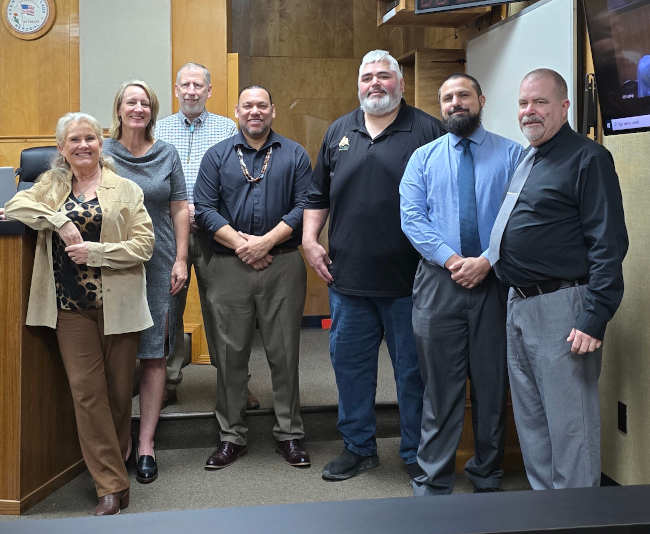
From left, new District 1 Supervisor Helen Owen, District 5 Supervisor Jessica Pyska, outgoing District 4 Supervisor Michael Green, District 3 Supervisor and Board Chair EJ Crandell, outgoing District 1 Supervisor Moke Simon, District 2 Supervisor Bruno Sabatier and new District 4 Supervisor Brad Rasmussen during the Board of Supervisors meeting on Tuesday, Jan. 7, 2025. Photo by Lingzi Chen/Lake County News.

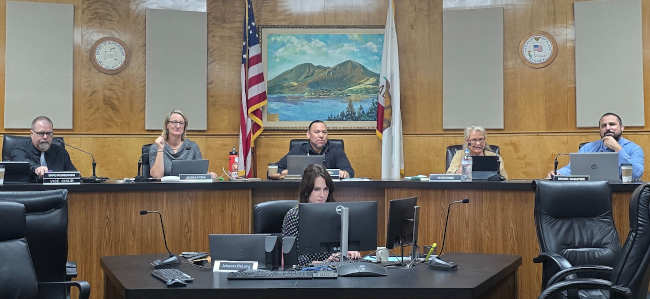
LAKE COUNTY, Calif. — At the Board of Supervisors’ first meeting of 2025 on Tuesday, newly elected and re-elected supervisors were sworn into office and they elected the board’s new chair and vice chair.

District 1 Supervisor Helen Owen, a longtime Middletown rancher, and District 4 Supervisor Brad Rasmussen, Lakeport’s retired police chief, officially took office as the county’s newest supervisors. They succeed outgoing supervisors Mike Simon and Michael Green, respectively.

District 5 Supervisor Jessica Pyska, who won reelection in March, is starting her second term.

Supervisor Eddie Crandell was elected as the chair and Supervisor Rasmussen as the vice chair.

In the meeting, outgoing supervisors made their final remarks.

“Just want to thank everybody who supported me throughout my two terms,” said Simon, who expressed special thanks to the county administration and employees for their hard work.

Supervisor Green said being a supervisor does not only mean to represent the constituency and workforce, but also “the municipal corporation that is the county itself,” where “hundreds of millions of dollars flow through the County of Lake to provide services.”

“I do want to thank county administrative staff and all the department heads for their support, patience and understanding during my brief yet rewarding term,” Green said. He was appointed by the Governer’s Office as District 4 supervisor at the end of 2022 to succeed Tina Scott.

Lake County Registrar of Voters Maria Valadez administered the oath of office individually for all candidates who were to start a new term of service for the county, including the three supervisors and the new Sheriff-Coroner Lucas Bingham, who won his election unopposed in March.

‘Double election’ of the board chair and vice chair

The process of electing a new chair and vice chair generated some confusion.

After taking the oath, new supervisors Owen and Rasmussen were asked to take a seat at the table right below the dais, while Green and Simon stayed in their seats.

“Stay right there,” said Green to Owen and Rasmussen. “We’re going to do an election, and then we’re going to get you up here.”

“And this, ladies and gentlemen, is how we do a peaceful, orderly transition of power,” Green added, and the audience in the chamber applauded with light laughter.

Green, who was stepping down from his role, went on to take nominations for the chair and vice chair for the new board.

Pyska nominated Crandell — who was the vice chair in 2024 — as the chair, which was the only nomination for the position. Green moved on to have the vote by the sitting board that included the two outgoing supervisors.

It turned out that the seven “supervisors,” incoming and outgoing, all said “aye” in favor of having Crandell as the new chair.

Owen then nominated Rasmussen as vice chair. Pyska immediately raised a question.

“According to our board policy, you have to have one year to be vice chair or chair,” Pyska said. “It’s in our board policy.”

“I don’t believe it’s a hard shall-not,” said Supervisor Bruno Sabatier.

While the board policy does not have a written prerequisite for the vice chair position, it does have one for the chair.

County Counsel Lloyd Guintivano said in the meeting that he found the rule from the Board of Supervisors’ policy manual which states “a member shall not be elected to serve as chair unless he or she has been a member of the board for the preceding calendar year.”

Guintivano noted in the situation where the chair is not available, “whoever’s sitting as a chair must be a member of the board for the preceding calendar year.”

“In reading that language, it appears that your board may consider other nominations for the vice chair in light of that clause,” Guintivano added.

“I would say, that particular clause, the most strict application? Yes,” said Green. “But if we want it to be that strict in that application, we should have added the term ‘vice chair’ to that same clause.”

He added, “As the sitting chair, that’s my outgoing act — I don’t think the strict application is necessary at this point. And most importantly, we don’t have any other nominations.”

During the discussion, a member of the public called in on Zoom saying that she wanted to nominate another candidate. It was stopped by Green, who said that the public would not be entitled to make nominations. While the woman did not identify herself, Lake County News staff believe it was Julia Bono of Middletown.

The board went on to have the vote and all voted in favor of having Rasmussen as the vice chair.

After a brief recess, Green and Simon left the dais and Owen and Rasmussen moved up to take their seats.

The new board then voted again to select the chair and vice chair, with the same results, with unanimous approval.

While both rounds of votes generated the same outcome, Assistant Clerk to the Board of Supervisors Johanna DeLong said only the votes of the five supervisors of the new board would count.

“They were all sitting there saying aye, but I think the only ones that count are technically the new board,” she said when Lake County News called to verify the voting action details. “There were only five seats; we don’t have seven supervisors.”

The new Board of Supervisors now includes Helen Owen for District 1, Bruno Sabatier for District 2, Eddie Crandell for District 3, Brad Rasmussen for District 4 and Jessica Pyska for District 5, with Crandell serving as the new chair and Rasmussen the vice chair for 2025.

Email staff reporter Lingzi Chen at This email address is being protected from spambots. You need JavaScript enabled to view it..


The new Lake County Board of Supervisors gets down to business in its first meeting of the year on Tuesday, Jan. 7, 2025. Photo by Lingzi Chen/Lake County News.
  • 280
  • 281
  • 282
  • 283
  • 284
  • 285
  • 286
  • 287
  • 288
  • 289

Community

  • Lake County Wine Alliance offers sponsor update; beneficiary applications open 

  • Mendocino National Forest announces seasonal hiring for upcoming field season

Public Safety

  • Lakeport Police logs: Thursday, Jan. 15

  • Lakeport Police logs: Wednesday, Jan. 14

Education

  • Woodland Community College receives maximum eight-year reaffirmation of accreditation from ACCJC

  • SNHU announces Fall 2025 President's List

Health

  • California ranks 24th in America’s Health Rankings Annual Report from United Health Foundation

  • Healthy blood donors especially vital during active flu season

Business

  • Two Lake County Mediacom employees earn company’s top service awards

  • Redwood Credit Union launches holiday gift and porch-to-pantry food drives

Obituaries

  • Rufino ‘Ray’ Pato

  • Patty Lee Smith

Opinion & Letters

  • The benefits of music for students

  • How to ease the burden of high electric bills

Veterans

  • CalVet and CSU Long Beach team up to improve data collection related to veteran suicides

  • A ‘Big Step Forward’ for Gulf War Veterans

Recreation

  • Wet weather trail closure in effect on Upper Lake Ranger District

  • Mendocino National Forest seeking public input on OHV grant applications

  • State Parks announces 2026 Anderson Marsh nature walk schedule 

  • BLM lifts seasonal fire restrictions in central California

Religion

  • Kelseyville Presbyterian to host Ash Wednesday service and Lenten dinner Feb. 18

  • Kelseyville Presbyterian Church to hold ‘Longest Night’ service Dec. 21

Arts & Life

  • Auditions announced for original musical ‘Even In Shadow’ set for March 21 and 28

  • ‘The Rip’ action heist; ‘Steal’ grounded in a crime thriller

Government & Politics

  • Lake County Democrats issue endorsements in local races for the June California Primary

  • County negotiates money-saving power purchase agreement

Legals

  • March 3 hearing on ordinance amending code for commercial cannabis uses

  • Feb. 12 public hearing on resolution to establish standards for agricultural roads

How to resolve AdBlock issue?
Refresh this page