How to resolve AdBlock issue?
Refresh this page
How to resolve AdBlock issue?
Refresh this page
Lake County News,California
  • Home
    • Registration Form
  • News
    • Education
    • Veterans
    • Community
      • Obituaries
      • Letters
      • Commentary
    • Police Logs
    • Business
    • Recreation
    • Health
    • Religion
    • Legals
    • Arts & Life
    • Regional
  • Calendar
  • Contact us
    • FAQs
    • Phones, E-Mail
    • Subscribe
  • Advertise Here
  • Login

News

Federal agency proposes protection of Clear Lake hitch

Clear Lake hitch. Photo by Richard Macedo/California Department of Fish and Wildlife.

LAKE COUNTY, Calif. — The U.S. Fish and Wildlife Services is proposing to list the Clear Lake hitch as a threatened species under the federal Endangered Species Act, after 13 years of an ongoing petition led by the nonprofit Center of Biological Diversity.

“After a review of the best available scientific and commercial information, we find that listing the Clear Lake hitch is warranted,” the proposal states.

This marks a step toward securing federal protection — for the first time — of the hitch, a large minnow that only exists in the Clear Lake watershed in Lake County and which holds ecological and cultural significance.

Known as “chi” to the county's Pomo tribes, the hitch used to be abundant and had long served as the primary food source for the tribes.

However, the hitch population has been declining with its habitat degrading.

“The survey data in Clear Lake has shown a decline in the hitch population over an extended period, but there’s a lot of variability in the population numbers year-to-year due to changes in environmental conditions,” said Michael Fris, field supervisor of the Service’s Sacramento Fish and Wildlife Office on a Wednesday press release by the U.S. Fish and Wildlife Services, or the USFWS.

“We will continue to look at all potential factors that could be contributing to the decline of this culturally important species and invest in projects that support the recovery of the hitch,” he added.

For hitch advocates, the federal help should have come earlier.

“It should have happened a decade ago,” said Jeff Miller, senior advocate at the Center for Biological Diversity, in a phone call with Lake County News. “But better late than never.”

“I’m relieved that strong protections are on the way for these iconic fish,” said Miller in the center’s press release. “The hitch need immediate emergency actions if they’re going to survive. Endangered Species Act protections can help ensure that happens.”

Yet, it is still just a proposal at this point, Miller said.

It could take up to a year for the USFWS to finalize the listing and start providing protection, he explained.

The proposal now enters a 60-day window to take public comments from all interested parties until March 17, according to the USFWS.

The proposal and information on how to submit comments can be found on www.regulations.gov by searching under docket number FWS–R8–ES–2024–0161.

The long fight

In 2012, the Center for Biological Diversity petitioned to protect the hitch under both the federal and California Endangered Species Act, stating that this large minnow native to Clear Lake was “vanishing.”

In August 2014, the California listed the Clear Lake hitch as a threatened species under the California Endangered Species Act, making it the first aquatic listed species in the Clear Lake Basin, as Lake County News has reported.

However, it has never been successful on the federal level.

In December of 2020, the Trump administration denied protection to 11 species, including the hitch — a decision that the USFWS said was “based on the best available science. However, Miller said at that time that it was based on “misinformation.”

In August 2021, the center sued USFWS in federal court over their decision to deny hitch protection, which was the last of their three lawsuits against the federal agency over the years, Miller told Lake County News.

In April 2022, a settlement was reached with the USFWS agreeing to reconsider protecting the hitch by January of 2025.

In November of that year, the California Fish and Game Commission wrote to the USFWS to request emergency listing of the hitch under the Endangered Species Act.

Later in December of 2022, Big Valley along with three other local tribes joined the advocacy effort, signing a letter to the leadership at the Department of the Interior and the USFWS, requesting emergency listing.

In February 2023, the Lake County Board of Supervisors proclaimed a local emergency for the hitch.

Despite local and state efforts, the USFWS declined the request in May 2023.

The current proposal is pending final approval, and with the upcoming Trump Administration — which in their first term denied the protection, Miller expressed his concerns while hoping “it will go through.”

“There’s potential that the Trump Administration could try to derail this,” said Miller. “I hope it doesn’t rise to the top of their agenda.”

“Everyone who’s involved, who lives in the Clear Lake basin and all the tribal folks and state biologies and anyone who's involved in trying to protect this fish know how close it is to disappearing.” He continued. “It’s pretty obvious to everyone that it deserves these protections.”

What federal protection may entail?

Once the proposal is finalized and Clear Lake hitch added to the List of Endangered and Threatened Wildlife, USFWS will extend the protections to the hitch under the Endangered Species Act.

The act protects the species against harmful conducts such as harassing, killing and capturing, and attempts to do so.

There are some exemptions to the prohibitions such as tribal harvest under a conservation plan, Miller noted.

Also exempted are some fish rescue activities carried out by state and tribal biologists in recent years. “Because they’re basically helping the conservation of the hitch,” Miller said.

The USFWS will also designate the species’ “critical habit” which Miller sees as a crucial tool that adds “another layer of federal protection.”

“It protects not just the individual fish, but the actual habitat they rely on,” he explained.

It is designed to make sure that “the federal agencies not only don’t destroy or damage the habitat that’s essential for the survival of endangered species but also help promote the recovery of those species.”

Email staff reporter Lingzi Chen at This email address is being protected from spambots. You need JavaScript enabled to view it..

Hopland teen selected for United States Senate Youth Program

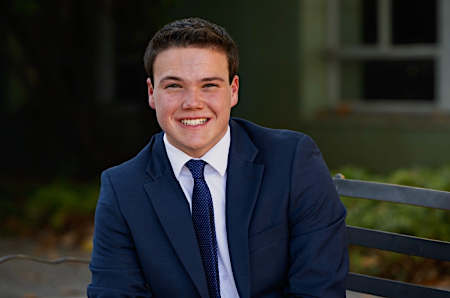
Bode Gower. Courtesy photo.

NORTH COAST, Calif. — The United States Senate Youth Program, or USSYP, has selected high school students Sarah Rumei Gao and Bode Emet Gower to join senators Alex Padilla and Adam Schiff in representing California during the 63rd annual USSYP Washington Week.

The event will be held March 1 to 8.

Gao of San Diego and Gower of Hopland were selected from among the state’s top student leaders to be part of the 104 national student delegation that will attend meetings and briefings with senators, the president, a justice of the Supreme Court, leaders of cabinet agencies, and other officials throughout the week.

Each delegate will also receive a $10,000 college scholarship for undergraduate study.

“I am humbled and grateful for the opportunity to represent California in the U.S. Senate Youth Program,” said Gower. “As an advocate for youth in rural communities, I am excited to use this platform to elevate their voices and highlight the unique challenges that many rural communities in Northern California experience.”

Gower is a senior at Ukiah High School, where he serves as the president of the Associated Student Body. As the founder and chair of the Northern California Youth Policy Coalition, he supports rural youth by advocating for youth-related legislation at both state and federal levels, spotlighting the perspectives of rural youth and communities across Northern California.

He also serves as a member of the Board of Governors for the Young Leaders PAC and the K-12 director of policy for GenerationUp, California’s largest youth-led advocacy organization. He has been a member of Sen. Laphonza Butler’s Youth Advisory Council, where he regularly met with the senator, ensuring that the voices of rural communities are represented.

Gower also is a commissioner on the Mendocino County Juvenile Justice and Delinquency Prevention Commission and founded the first-ever Mendocino County Youth Advisory Council
which works with the Mendocino County Board of Supervisors to engage the county youth on issues that come before the board.

He has been recognized as outstanding prosecution attorney during the 2024 California State Mock Trial Competition and as best attorney from the UCLA Mock Trial Institute, as well as having received the Congressional Award. He has worked on multiple political campaigns at both state and local levels.

He plans to major in public policy and pre-law studies, attend law school, and pursue a career in public service.

The USSYP was founded in 1962 by the sons of William Randolph Hearst and the senate leadership of the day — Senators Kuchel, Mansfield, Dirksen and Humphrey — in response to the deep divisiveness and national anxiety following the McCarthy era.

They outlined a plan to encourage America’s most talented young people to consider public service as an important, life-long, and noble pursuit, sponsoring Senate Resolution 324, which passed unanimously.

As stated in founding testimony, the program strives “to increase young Americans’ understanding of the interrelationships of the three branches of government, learn the caliber and responsibilities of federally elected and appointed officials, and emphasize the vital importance of democratic decision making not only for America but for people around the world.”

Chosen as alternates to the 2025 program were Mr. James Miller, a resident of Oxnard, who attends Westlake High School and Ms. Sriya Srinivasan, a resident of Fairfield, who attends Rodriguez High School.

Delegates and alternates are selected by the state departments of education nationwide and the District of Columbia and Department of Defense Education Activity, after nomination by teachers and principals. The chief state school officer for each jurisdiction confirms the final selection.

This year’s California delegates and alternates were designated by Tony Thurmond, State Superintendent of Public Instruction.

Each year this extremely competitive merit-based program provides two outstanding high school students from each state, the District of Columbia and the Department of Defense Education Activity with an intensive week-long study of the federal government and the people who lead it.

Each student will also receive a $10,000 undergraduate college scholarship with encouragement to continue coursework in government, history and public affairs. The Hearst Foundations have fully funded the program since inception; as stipulated, no government funds are utilized.

In addition to outstanding leadership abilities and a strong commitment to volunteer work, the student delegates rank academically in the top 1% of their states among high school juniors and
seniors. Now more than 6,200 strong, alumni of the program continue to excel and develop impressive qualities that are often directed toward public service.

Among the many distinguished alumni are: Sen. Susan Collins, the first alumnus to be elected U.S. senator; Secretary of Transportation and former Mayor of South Bend Indiana Pete Buttigieg, the first alumnus to be appointed as a cabinet secretary; Rep. Sarah McBride, the second alumnus to be elected to the U.S. House of Representatives; former Senator Cory Gardner, the second alumnus to be elected U.S. senator and the first to be elected to the U.S. House of Representatives, and former New Jersey Governor Chris Christie, the first alumnus to be elected governor.

Members of the U. S. Senate Youth Program 2025 annual Senate Advisory Committee are Sen. Thom Tillis of North Carolina, the 2025 USSYP Republican co-chair, and Senator Jeanne Shaheen of New Hampshire, the 2025 USSYP Democratic co-chair.

The full USSYP Senate Advisory Committee includes the vice president of the United States and the Senate majority and minority leaders, and four senators from each party who lend their names in support.

Serving on the 2025 Advisory Committee: Sen. Susan M. Collins of Maine, Sen. John Cornyn of Texas, Sen. Jerry Moran of Kansas, Sen. Pete Ricketts of Nebraska, Sen. Richard Blumenthal of Connecticut, Sen. Catherine Cortez Masto of Nevada, Sen. Tina Smith of Minnesota and Sen. Peter Welch of Vermont.

Mendocino County officials investigate death of man rescued from the ocean

NORTH COAST, Calif. — Officials in Mendocino County are investigating a Tuesday water rescue that ended in a Mendocino man’s death.

The victim has been identified as 65-year-old Douglas Craig Shapiro, according to a report from Sgt. Ze Lima.

Just after 3:30 p.m. Tuesday, the Mendocino Volunteer Fire Department was dispatched to a possible water rescue in the area of Portuguese Beach in Mendocino.

A citizen in the area of Main Street in Mendocino called emergency services to report a subject along the coastline who may have fallen from the cliffs above. The sheriff’s office said the reporting party informed emergency responders the subject on the beach below was not moving and called to request assistance.

Mendocino County Sheriff's Office Deputies arrived to assist, along with Adventist Health Mendocino Coast Ambulance Paramedics.

Lima said Shapiro was located on the beach below the steep cliff south of Kasten Street. The Mendocino Volunteer Fire Department water-rescue team deployed a pair of their jet-skis from the Big River Boat Launch and quickly arrived in the area where Shapiro was located and packaged for transport.

Shapiro was transported via jet-ski from the beach to the north boat launch at Big River Beach in Mendocino, Lima said.

An off-duty emergency room physician happened to be near the boat launch and immediately conducted an assessment of Shapiro upon arrival at Big River Beach. The physician pronounced Shapiro deceased just after 4:30 p.m. Tuesday, Lima said.

Lima said deputies observed injuries on Shapiro’s body consistent with a great fall and began a coroner's investigation into Shapiro's death.

Deputies determined foul play was not suspected and Shapiro's cause and manner of death will be later determined by a forensic pathologist.

It can take multiple months to receive all associated reports to finalize the coroner's investigation and determine the official manner and cause of death.

Shapiro's next of kin was contacted and notified of his death.

Anyone with information regarding this coroner’s investigation is requested to contact the Mendocino County Sheriff's Office Dispatch Center at 707-463-4086.

Insurance for natural disasters is failing homeowners − I don’t have the answers, but I do know the right questions to ask


The wildfires that have devastated large parts of Los Angeles County have drawn fresh attention to the struggles many Americans face insuring their homes.

Since 2022, seven of the 12 largest insurance companies have stopped issuing new policies to homeowners in California, citing increased risks due to climate change. California isn’t alone: The same thing has happened in other vulnerable states, including Louisiana and Florida. The proportion of Americans without home insurance has risen from 5% to 12% since 2019. Meanwhile, those fortunate enough to have insurance are paying more than ever: Premiums in California, like elsewhere, have increased dramatically over the past five years.

When the private insurance market fails to provide coverage, the government often comes in to fill the gap. For example, the National Flood Insurance Program was established back in the 1960s because almost all private insurers excluded flood coverage. Meanwhile, the California FAIR Plan, which serves more than 450,000 Californians, is a typical state-created insurer of last resort. Such programs, which are available in many states, offer limited coverage to people who can’t get private insurance.

But the sheer scale of need means it’s hard for public programs to stay afloat. It’s not inconceivable that the recent wildfires could exceed the reserves and reinsurance available to the California FAIR plan. Because of the way the plan is set up, that would force other insurers – and ultimately homeowners – to make up the difference.

These are tricky problems, and – speaking as an expert in insurance – I can’t say I have answers. But I do know the right questions to ask. And that’s a crucial first step if you want to find solutions.

What is insurance for, anyway?

One of the most important questions is also the most basic: What are the goals of insurance?

Insurance is a financial product that allows people to share risk – meaning that if a catastrophe strikes any one person, they won’t have to bear the costs alone. But it’s not just about money. Even if most people don’t realize it, every form of insurance embodies values and serves public policy goals. This often requires making social, political and even moral trade-offs.

What is the problem we’re trying to solve?

The first step in solving a problem is to identify it. When it comes to insurance, this isn’t always easy. For example, “Homeowners need insurance coverage that they can’t afford in the private market” might seem like a good description of the problem. But it’s not. This is because some homes in disaster-prone areas are simply too risky to insure.

Imagine a home in a coastal area that floods over and over, for example. If you were an insurer, how much would you charge for that policy? When a house is subject to repeated losses, it makes more economic sense to buy and demolish it instead.

Defining the problem carefully also helps to clarify the values at stake. For example, one value is protecting the investments of current homeowners – particularly, say, long-time, elderly residents. But another value is pricing risk correctly, so people don’t move into dangerous developments.

Put more broadly, one value is recognizing society’s collective responsibility toward people who suffer financial distress, and another is promoting fair and efficient use of social resources. These values can be in conflict.

What does the government have to do with insurance?

Back in 1881, in his classic lectures on The Common Law, Supreme Court Justice Oliver Wendell Holmes Jr. said:

The state might conceivably make itself a mutual insurance company against accidents and distribute the burden of its citizens’ mishaps among all its members. There might be a pension for paralytics, and state aid for those who suffered in person or estate from tempest or wild beasts.

Holmes’ own position was clear: “The state does none of these things,” he wrote – and it should not. This strain of individualism has remained strong in U.S. politics: Individual liberty, personal responsibility and economic opportunity are the foundations of American life, individualists say, so each person should win or lose on their own.

Under this approach, the private insurance market bases its pooling, risk classification and pricing mostly on how much risk each policyholder presents, so that homes in wildfire-prone areas are charged higher premiums. In theory, this is both morally sound and economically efficient, since each policyholder bears the cost of their own risks. But when the private market fails – as happened with flood insurance – the government has a strong incentive to step in.

Today, as an empirical matter, Holmes’ statement couldn’t be more wrong. The state does, in fact, make itself “a mutual insurance company against accidents” and provides a “pension for paralytics,” through Medicaid, Social Security Disability Insurance and other programs. And in California, as elsewhere, the government does provide aid for those who “suffered in estate … from tempest,” through the Federal Emergency Management Agency and other entities.

Since at least the New Deal, there has been broad recognition that some level of collective responsibility is essential; the only questions are where and how much. In the health insurance realm, for example, the Affordable Care Act provides subsidized health insurance for many Americans, and changing Medicare is a political third rail.

Public policy on disaster losses is situated between the two extremes of letting losses lie and having the state assume all of the burdens of those losses. Often policymakers and researchers see insurance or insurance-like plans as solutions – whether provided by a public entity or involving a mixed public-private program. FEMA, for example, operates the National Flood Insurance Program in cooperation with private insurers and also gives direct grants for mitigation of flood damage.

What should a public insurance solution look like?

Sometimes one question leads to another, and that’s the case here. In my research, I’ve identified more than a dozen questions that policymakers must answer in order to design an effective public solution to disaster insurance. Three questions are most important:

• What are the goals of the insurance?

• Who is being insured?

• How are policyholders and their risks classified?

Let’s start with the first question: What are the goals of the insurance? As I mentioned earlier, any form of insurance faces trade-offs and limits.

When an insurance solution has been adopted rather than some other form of intervention, a primary goal is to compensate the policyholder for a loss. But that’s not the only goal. For example, insurance often aims to reduce losses in addition to paying if they occur. Insurers have many ways to shape behavior, such as charging lower premiums for homeowners who keep their property free of flammable brush. Because many of these behaviors affect other people as well, they generate a social benefit. And since insurance has social benefits, how those benefits are distributed – along race, gender, class and other lines – is also important.

The remnants of a house and a car are seen engulfed in flames.
A home in Altadena, Calif., is consumed by flames due to the Eaton Fire on Jan. 8, 2025. Jon Putman/NurPhoto via Getty Images

That leads to the second key question: Who is being insured?

Insurance involves transferring risk from an individual to a larger group of people who can share the risk. Insurance experts call this “risk pooling.” Pools that are too small will struggle because there aren’t enough people to share the burden.

In public solutions to catastrophe problems, getting more people in the pool could be especially useful in expanding coverage. For example, the National Flood Insurance Program brings many homeowners across the country into a pool, but it also excludes some, such as those who suffer damage from wind during a hurricane. In contrast, the proposed INSURE Act, introduced in the last Congress, would effectively put the entire nation in a pool to cover a variety of catastrophic risks, including flood, wildfire, earthquake and others.

Still, just because you’re in the same pool as someone else doesn’t mean you’ll be treated the same – people with the same insurance can be charged different premiums and receive different amounts of coverage.

That leads to the third question: How are policyholders and their risks classified?

If insurers treated everybody exactly the same, they would quickly go out of business. That’s why they analyze huge amounts of information about past losses, current conditions and future predictions, trying to determine the risks posed by each member. This work is done by actuaries and underwriters, but it’s not just a matter of math: Insurers classify policyholders in ways that reflect the goals and values of the insurance, which typically include balancing widespread availability, broad coverage and affordable pricing, and the social benefits the insurance generates.

One view of this process is that more precise risk classification and pricing are good. Because insurance involves risk transfer, the more accurately risks can be calculated and priced, the better the process works.

But there’s a deeper problem, which has to do with values. Sometimes accuracy in underwriting can conflict with larger social goals. With catastrophes in particular, broad coverage may be a top priority, since many people believe the state has a responsibility to protect its people. Moreover, protecting people’s investments in their homes is important, and suddenly raising the premiums of homeowners at high risk would threaten their investments. Disasters also cause communal responses – many unaffected Americans donate to the Red Cross and other nonprofits to support victims – and a strict focus on accuracy in underwriting could undermine that sense of community.

As floods, storms, wildfires and other catastrophes become increasingly common, the availability and affordability of property insurance has become a high-profile political issue. Politics involve choices. Asking better questions will help politicians – and the rest of us – make better choices.The Conversation

Jay Feinman, Distinguished Professor of Law Emeritus, Rutgers University

This article is republished from The Conversation under a Creative Commons license. Read the original article.
Lakeport Police logs: Friday, Dec. 27

Friday, Dec. 27, 2024

00:12 SUSPICIOUS CIRCUMSTANCES 2412270002
Occurred on Clear Lake Av. RP JUST HAD SOMEONE KNOCK ON HER DOOR VERY LOUDLY APPX FIVE MINS AGO - NO ONE WAS THERE WHEN THEY ANSWERED / RP IS REQUESTING AN AREA CHECK. Disposition: GENERAL SERVICES RENDERED.

00:36 PEDESTRIAN CHECK 2412270006
Officer initiated activity at Lake County Sheriff's Office, Martin, Lakeport, CA. IFO. Disposition: ARREST MADE.

03:21 NOISE DISTURBANCE 2412270018
Occurred at Skylark Motel on N Main. PER EMP / OUT IN PARKING LOT - SEVERAL SUBJECTS BEING LOUD AND PLAYING MUSIC. Disposition: GONE ON ARRIVAL.

06:44 SUSPICIOUS PERSON 2412270026
Occurred at Us Postal Service-Lakeport on 11TH. PER EMP / TRANSIENT MALE IN THE LOBBY, YELLING AND TALKING TO HIMSELF, POSS SCHIZOPRENIC / MAKING PEOPLE NOT FEEL COMFORTABLE AND RP WANTS HIM TRESSPASSED / UNK HNS OR HBD / NO WEAP / DESC WMA, 50'S / LSW ALL BLK. Disposition: WARNING.

07:38 SUSPICIOUS CIRCUMSTANCES 2412270029
Occurred at Cvs Pharmacy on 11TH. PER EMP / HEARD ONLY INFO - UNK MALE IS SCREAMING IN THE BATHROOM / NFI. Disposition: WARNING.

10:43 FAMILY DISTURBANCE 2412270043
Occurred at Aqua Village Mobile Home Park on S Main. RPS CLIENT AND FEMALE WERE IN A 415, WAS PHYSICAL, NO LONGER PHYSICAL,. Disposition: REPORT TAKEN.

11:05 SUSPICIOUS CIRCUMSTANCES 2412270047
Occurred at Xabatin Community Park on N Main. TRANSIENT MALE IS CAMPING INSIDE THE MEN'S BATHROOM TAKING UP THE WHOLE THING / NFI. Disposition: WARNING.

11:07 SHOTS FIRED 2412270048
Occurred at 13TH/N High. 3 SHOTS HEARD IAO / RP WAS ADV CHAPEL WAS DOING A VETERAN SERVICE AROUND THIS TIME. Disposition: GENERAL SERVICES RENDERED.

11:48 FOLLOW UP 2412270052
Occurred at Wiggles And Wag on N High. HAS QUESTIONS RE INC, IT'S A 242 THAT OCC AT WIGGLES AND WAG. Disposition: GENERAL SERVICES RENDERED.

11:54 ALARM 2412270053
Occurred at La Fiesta Market on S Main. AUD, FRONT WEST DOOR, NO CONTACTS LISTED. Disposition: FALSE ALARM.

12:21 FOLLOW UP 2412270058
Officer initiated activity at Aqua Village Mobile Home Park, S Main, Lakeport, CA. Disposition: REPORT TAKEN.

14:11 WIRELESS 911 HANG UP 2412270067
Occurred at Howard Av/Rainbow Rd. CULVERT IS ALMOST FLOODING AND TRYING TO CAVE IN / INFO GIVEN TO 3F PUBLIC WORKS. Disposition: REFERRED TO ANOTHER AGENCY.

14:39 WIRELESS 911 HANG UP 2412270071
Occurred on N Forbes. CAN HEAR SHUFFLING AROUND AND DISTANT CONVERSATION,. Disposition: GENERAL SERVICES RENDERED.

14:47 LPD ANIMAL CONTROL ISSUE 2412270073
Occurred at Lake County Fair Grounds on Martin. WHITE/TAN FEMALE K9 LAYING IFO THE GATE / HAS A PINK HARNESS AND COLLAR BUT NO IDENTIFICATION , BEEN THERE FOR A WHILE / RP WILING TO WAIT ON SCENE. Disposition: GENERAL SERVICES RENDERED.

15:56 911 HANG UP 2412270082
Occurred at Rocky Point Care Facility on 16TH. TXF TO CDF. Disposition: REFERRED TO ANOTHER AGENCY.

16:01 TRAFFIC STOP 2412270083
Officer initiated activity at 8TH/N Forbes, Lakeport, CA. Disposition: WARNING.

16:02 TRAFFIC STOP 2412270084
Officer initiated activity at 10TH/N Forbes, Lakeport, CA. Disposition: WARNING.

16:35 CITIZEN ASSIST 2412270086
Occurred at Lakeport Police Department on S Main. WANTS TO KNOW IF HE CAN PARK HIS RV ON THE ST FOR 7 DAYS. Disposition: GONE ON ARRIVAL.

16:40 SUSPICIOUS VEHICLE 2412270087
Officer initiated activity at N MAIN/1ST, Lakeport, CA. Disposition: WARNING.

17:00 THEFT 2412270088
Occurred at Residence on S Main. RPS PHONE AND BANK CARDS WERE STOLEN THIS MORNING BY KWN FEMALE / REQ IN PERSON RESPONSE. Disposition: REPORT TAKEN.
20:08 WIRELESS 911 HANG UP 2412270111
Occurred at Cvs Pharmacy on 11TH. OPEN LINE, HEARD 2 FEMALES TALKING, SOUNDS LIKE SOMEONE CHECKING OUT, ON CALL BACK LEFT VM. Disposition: CHECKS OK.

21:00 EXTRA PATROL 2412270117
Occurred on Martin. NOBODY SHOULD BE AT THE RESD, RP IS OWNER OF THE RESD. Disposition: GENERAL SERVICES RENDERED.

21:31 FAMILY DISTURBANCE 2412270121
Occurred on North. SUBJ PUT HANDS ON SISTER / PARTIES SEPARATED - RESP IS INSIDE REFUSING TO LET RP IN - RP IS OUTSIDE /NEG WEAP / RESP IS HBD / RP STOPPED RESPONDING TO CENTRAL. Disposition: REPORT TAKEN.

21:34 WIRELESS 911 HANG UP 2412270122
Occurred on Clear Lake Av. REPORTING 415 - UNITS ALREADY ENRT INC 2412270121. Disposition: GENERAL SERVICES RENDERED.

22:06 THEFT 2412270124
Occurred at Safeway on 11TH. PER SECURITY - 2 UNK MALES STOLE FROM STORE BEFORE DRIVING OFF TWDS 11TH / RP HAS SURVEILLANCE / BOTH RESPS DESC: WMA / ONE LSW: BLK HOODIE SHORTS /VEH DESC: WHI CHEVY STATION WAGON. Disposition: REPORT TAKEN.

Sheriff’s office expands efforts to find missing Middletown woman

Anne Jamieson. Photo courtesy of the Lake County Sheriff’s Office.

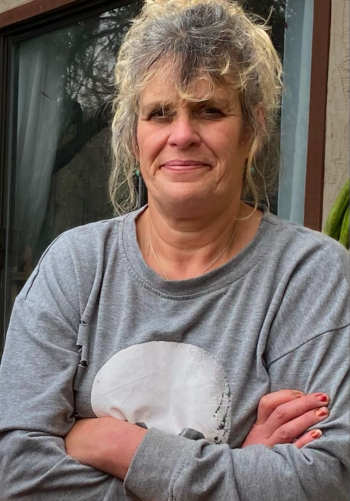
LAKE COUNTY, Calif. — The Lake County Sheriff’s Office is seeking public assistance in locating a Middletown woman missing since the fall.

Anne Marie Jamieson, 58 — also known as Anne Marie Mancini — was reported missing on Nov. 29, the sheriff’s office said.

A Tuesday press release said detectives have been investigating the case, collaborating with Jamieson’s family and surrounding law enforcement agencies.

Jamieson is described as 6 feet, 2 inches tall, approximately 200 pounds, with blonde hair and hazel eyes.

Authorities said she is known to frequent the Middletown, Cobb and Calistoga areas.

Detectives determined that she was last heard from in May or June of 2024. However, “We can’t say whether or not that’s when she went missing,” said Sheriff’s Public Information Officer Lauren Berlinn.

The case was reported to authorities in late November, about six months after Jamieson’s last known contact, Berlinn said.

Jamieson’s case was posted on the Lake County Sheriff’s Office Facebook page on Monday and a press release was issued the following day — which created a 45-day delay in seeking public assistance.

“We were doing the investigation, we were trying to get the pieces together of whether or not she was actually missing since the last known contact was June,” Berlinn explained.

Berlinn said the length of that gap varies in such cases. “It really depends on the situation and the person and their lifestyle and the information that we’ve able to gather immediately or if we need the community’s assistance.”

Jamieson has been added to the California Department of Justice’s Missing Persons Database.

Lake County now has a total of 12 active cases of missing persons in that database, with the oldest case stretching back to 1980.

If anyone was in contact with Jamieson during mid to late 2024 or has any information regarding her whereabouts, please contact the Lake County Sheriff’s Office Major Crimes Unit Tip Line at 707-262-4088.

Email staff reporter Lingzi Chen at This email address is being protected from spambots. You need JavaScript enabled to view it..
  • 275
  • 276
  • 277
  • 278
  • 279
  • 280
  • 281
  • 282
  • 283
  • 284

Community

  • Lake County Wine Alliance offers sponsor update; beneficiary applications open 

  • Mendocino National Forest announces seasonal hiring for upcoming field season

Public Safety

  • Lakeport Police logs: Thursday, Jan. 15

  • Lakeport Police logs: Wednesday, Jan. 14

Education

  • Woodland Community College receives maximum eight-year reaffirmation of accreditation from ACCJC

  • SNHU announces Fall 2025 President's List

Health

  • California ranks 24th in America’s Health Rankings Annual Report from United Health Foundation

  • Healthy blood donors especially vital during active flu season

Business

  • Two Lake County Mediacom employees earn company’s top service awards

  • Redwood Credit Union launches holiday gift and porch-to-pantry food drives

Obituaries

  • Rufino ‘Ray’ Pato

  • Patty Lee Smith

Opinion & Letters

  • The benefits of music for students

  • How to ease the burden of high electric bills

Veterans

  • CalVet and CSU Long Beach team up to improve data collection related to veteran suicides

  • A ‘Big Step Forward’ for Gulf War Veterans

Recreation

  • Wet weather trail closure in effect on Upper Lake Ranger District

  • Mendocino National Forest seeking public input on OHV grant applications

  • State Parks announces 2026 Anderson Marsh nature walk schedule 

  • BLM lifts seasonal fire restrictions in central California

Religion

  • Kelseyville Presbyterian to host Ash Wednesday service and Lenten dinner Feb. 18

  • Kelseyville Presbyterian Church to hold ‘Longest Night’ service Dec. 21

Arts & Life

  • Auditions announced for original musical ‘Even In Shadow’ set for March 21 and 28

  • ‘The Rip’ action heist; ‘Steal’ grounded in a crime thriller

Government & Politics

  • Lake County Democrats issue endorsements in local races for the June California Primary

  • County negotiates money-saving power purchase agreement

Legals

  • March 3 hearing on ordinance amending code for commercial cannabis uses

  • Feb. 12 public hearing on resolution to establish standards for agricultural roads

How to resolve AdBlock issue?
Refresh this page