 How to resolve AdBlock issue?
News
California’s governor and leaders in the Legislature said they’re planning to move forward on a deal that would devote billions of dollars to fixing the state’s roads, freeways and bridges while also setting aside money for transit and safety, but opponents say it comes as the result of numerous tax and fee increases.
Gov. Jerry Brown, Senate President pro Tempore Kevin de León and Assembly Speaker Anthony Rendon on Wednesday joined labor, business and local leaders to announce the deal, which Brown’s office called “a landmark transportation investment.”
“California has a massive backlog of broken infrastructure that has been neglected far too long,” Brown said. “Fixing the roads will not get cheaper by waiting – or ignoring the problem. This is a smart plan that will improve the quality of life in California.
The plan already is getting pushback from some quarters, including State Board of Equalization Vice Chair George Runner.
"Leave it to elite, cosmopolitan Democrats to try and raise the gas tax on working-class and poor Californians who must travel further distances to work,” Runner said in a Wednesday statement.
Assembly and Senate Republicans also came out against the transportation package, which they say isn’t the right option for a state that’s becoming increasingly unaffordable for everyday residents.
In a joint statement, the groups said, “Californians already pay some of the highest gas taxes in the nation. The transportation proposal announced by the Capitol Democrats is a costly and burdensome plan that forces ordinary Californians to bail out Sacramento for years of neglecting our roads. This proposal would include the largest gas tax increase in state history, which will continue to rise over time, and a massive increase to the diesel tax and vehicle license fee.”
They said the state’s roads and bridges can be fixed by ensuring that the billions of dollars that drivers are already paying in transportation fees and taxes are actually used for transportation purposes, rather than being swept into the state’s General Fund.
The program as it’s proposed will invest $52.4 billion over the next decade, split equally between state and local investments. Proponents say it will cost most drivers less than $10 a month and comes with strict new accountability provisions to ensure funds can only be spent on transportation.
State Sen. Jim Beall (D-San Jose) introduced the bill, SB 1, the Road Repair and Accountability Act of 2017, in December. Signing on as co-authors are a number of state senators, including Bill Dodd and Mike McGuire, the latter who represents Lake County.
The language of the bill explains that it would create the Road Maintenance and Rehabilitation Program to address deferred maintenance on the state highway system and the local street and road system.
It would raise revenue by increasing the state gas tax for the first time in 23 years by $0.12 per gallon increase, phased in over three years; a 20-cent increase to the diesel excise tax; a $38 increase to the vehicle registration fee; a $100 vehicle registration fee on zero emission vehicles; $300 million from existing cap and trade funds; and returning $500 million in vehicle weight fees phased in over five years.
“We have been working hard to ensure a critical transportation funding package was approved this year,” said McGuire. “We have a transportation funding crisis in California – our roads, highways and bridges are crumbling because our state has failed to invest in our transportation infrastructure – and tens of millions of California commuters, businesses and travelers are literally paying the price for our lack of action.”
McGuire said the transportation funding package will provide cities and counties with significant annual revenue streams to make local infrastructure improvements like rebuilding and paving local roads and streets and bridge repair.
Eighty-seven percent of California’s roads rated in fair or poor condition, and estimated statewide deferred maintenance backlog over the next 10 years of $132 billion, McGuire’s office reported.
McGuire also said that every billion dollars spent on transportation infrastructure, creates 14,000 full-time jobs.
Californians drive more than 350 billion miles a year– more than any other state – yet road and transit investments have not kept pace with this growth, officials reported.
An October report sponsored by the League of California Cities and the California State Association of Counties found that the conditions of California’s local streets and roads are deteriorating.
The state’s 58 counties and 482 cities own and maintain over 143,000 centerline-miles of local streets
and roads, or 81.2 percent of the state’s total publicly maintained centerline miles, a network the report said is conservatively valued at more than $168 billion.
The report said the statewide average pavement condition index, or PCI, deteriorating to 65 – the “at risk” level – in 2016.
Lake County’s overall PCI is among the worst in the state, in the “poor” category with an overall rating of 40, for its 753 center line miles. The report showed that Lake County’s roads actually have improved from a PCI of 31 in 2010.
Leadership in both the Senate and the Assembly expect the measure to be voted on by Thursday, April 6.
SB 1 would raise the funds for the infrastructure programs from the following sources:
– $7.3 billion by increasing diesel excise tax 20 cents;
– $3.5 billion by increasing diesel sales tax to 5.75 percent;
– $24.4 billion by increasing gasoline excise tax 12 cents;
– $16.3 billion from an annual transportation improvement fee based on a vehicle’s value;
– $200 million from an annual $100 Zero Emission Vehicle fee commencing in 2020;
– $706 million in General Fund loan repayments.
The bill’s proposed infrastructure investments break down as follows.
Fix local streets and transportation infrastructure (50 percent):
– $15 billion in “Fix-It-First” local road repairs, including fixing potholes;
– $7.5 billion to improve local public transportation;
– $2 billion to support local “self-help” communities that are making their own investments in transportation improvements;
– $1 billion to improve infrastructure that promotes walking and bicycling;
– $825 million for the State Transportation Improvement Program local contribution;
– $250 million in local transportation planning grants.
Fix state highways and transportation infrastructure (50 percent):
– $15 billion in “Fix-it-First” highway repairs, including smoother pavement;
– $4 billion in bridge and culvert repairs;
– $3 billion to improve trade corridors;
– $2.5 billion to reduce congestion on major commute corridors;
– $1.4 billion in other transportation investments, including $275 million for highway and intercity-transit improvements.
Email Elizabeth Larson at
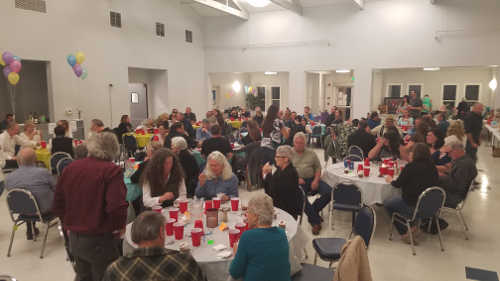
CLEARLAKE, Calif. – The organization that oversees the Lake County Safe House reported that it held a successful fundraiser this past weekend.
On Saturday, March 25, Lake Community Pride Foundation hosted its inaugural Spring Equinox Dinner/Dance fundraiser at the Highlands Community Center in Clearlake.
The close-to-sold-out event brought around 100 people together to support the Lake County Safe House, a teen shelter managed by foundation, according to foundation President Bruno Sabatier
“It was a pleasure to see such great support from our community for such a great cause...helping our most vulnerable population, our youth,” said Sabatier. “It has been over 10 years and approximately 70 young community members that we have been able to help overcome life's hurdles. We get to continue the legacy of the Safe House with the support that we've received tonight.”
Sabatier said the event was catered by the Chatter Box, the Highlands Senior Center catering team. Led by alumni culinary arts students from Woodland Community College, the cooking staff offered a delicious appetizer complete with homemade Caesar dressing and a plentiful entrée choice of eggplant or chicken Parmesan.
To finish the meal, Woodland Community College's Culinary Arts department donated a wonderful chocolate mousse dessert in support of the event, he said.
The event was complimented by a silent auction, a prize drawing table, and a live auction where the final item, chocolate covered strawberries, were being competitively bid on by two separate tables. Sabatier said lots of great items were on display such as wine baskets, art pieces, jewelry, gift cards, and more with 50 items to choose from.
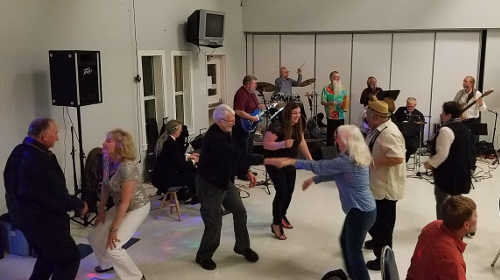
When dinner was over, the party started. The music for the evening was played by The Rotarians who kept playing until the last hour with attendees dancing and enjoying their rhythm, Sabatier said.
Sabatier said all of the proceeds from the event went directly to the maintenance and upkeep of the house as well as the welfare of the Safe House tenants. All board members and counselors for the Safe House are strictly volunteers.
He estimated that it costs $24,000 a year to cover all of the Safe House’s costs – including maintenance, taxes, insurance, food and other expenses.
The foundation has been doing a single annual fundraiser with its fall golf tournament. However, Sabatier said costs have increased – particularly, energy bills and food prices – therefore the organizations has been forced to have two fundraisers to ensure that the program can continue.
Lake Community Pride Foundation is a 501(c)3 nonprofit group. If you are interested in donating to their cause, send your donations to P.O. Box 1042, Lower Lake, CA 95457 or for more information contact Sabatier at 707-695-0834.
Report: Students who earn associate degrees or certificates at community colleges get big wage gains
It pays to complete your degree: Earning a degree or certificate from a California community college continues to deliver a remarkable return on investment, according to updated analysis on Salary Surfer data.
The online tool allows students and the public to view aggregated median earnings of those who complete a certificate or degree in a specific community college discipline and then enter the workforce.
Students who complete an associate degree more than double their annual pre-degree earnings after two years in the workforce and nearly triple their pre-degree earnings after five years in the workforce.
About 48 percent of students who graduated with an associate degree earned $56,000 or more annually five years after getting their degree. That is the median wage of someone with a bachelor’s degree living in California, according to the U.S. Census Bureau.
Students who complete a certificate nearly double their pre-degree earnings after five years in the workforce. About 44 percent of students who graduated with a certificate earned $56,000 or more annually five years after graduating.
The new Salary Surfer data are also available on the Here to Career mobile app. The app, created by the Foundation for California Community Colleges, in collaboration with the Chancellor’s Office and Young Invincibles, provides access to information about California Community College education opportunities and awareness of careers that can increase earning potential.
Here to Career uses personalized career pathway matching features to expose students to diverse career options available in their area. This information helps students make informed education and career decisions that lead to greater economic opportunities and professional success.
“This proves once again that earning a degree or certificate from a California community college can lead students to a well-paying career,” California Community Colleges Chancellor Eloy Ortiz Oakley said. “While potential earnings should not be the only factor in choosing a future career path, completing a degree or certificate from one of our 113 colleges pays off, for students, families and the state of California.”
Salary Surfer displays median annual incomes for those who complete 179 of the most widely enrolled program areas and do not transfer to a four-year institution.
The data show the median earnings for community college graduates two years prior to earning the award, then two years and five years after earning either a certificate or degree. Salary Surfer also provides information on which of the system’s colleges offer programs in a specific discipline.
Wage information comes from an agreement between the California Community Colleges Chancellor’s Office and the California Employment Development Department. For privacy purposes, all results are aggregated across campuses statewide and over five years. Additionally, all wages displayed have been indexed to current year dollar figures.
The California Community Colleges is the largest system of higher education in the nation composed of 72 districts and 113 colleges serving 2.1 million students per year. For more information about the community colleges, please visit http://californiacommunitycolleges.cccco.edu/ .
California State Controller Betty T. Yee on Wednesday issued the state’s Comprehensive Annual Financial Report (CAFR) for the fiscal year that ended June 30, 2016, showing that California ended the 2015-16 fiscal year with General Fund revenues of $117.6 billion, a 0.7 percent increase ($796 million) compared to the prior year.
Personal income tax and sales and use tax increased by $1.6 billion and $1.2 billion, respectively, while corporation taxes declined by $1.6 billion.
At June 30, 2016, the General Fund cash balance of $5.2 billion equated to 17 days of operating expenditures, while the prior year’s cash balance equated to 20 days of expenditures.
The state’s general revenues increased by $1.4 billion, or 1 percent, over the prior year—significantly less than the 10 percent growth experienced in the 2014-15 fiscal year.
While spending and transfers increased by 5.1 percent, they were less than total revenues received, resulting in a $7.5 billion increase in the governmental activities’ net position.
California had a net pension liability of $71.76 billion as of June 30, 2016. The state had $228.5 billion in total long-term obligations including bonds, pensions, loans, and leases.
“After seven years of economic expansion, California is approaching an economic plateau as its rate of growth has started to slow,” said Controller Yee, the state’s chief fiscal officer. “Coupled with our growing long-term obligations, it is clear that the state and local governments must plan future funding strategies to weather the inevitable storm.”
The CAFR, prepared by the Controller’s team each year, adheres to generally accepted accounting principles and follows guidance from the Governmental Accounting Standards Board (GASB).
The CAFR is audited by an outside party—in the state’s case, the California State Auditor. It allows apples-to-apples comparisons between entities, which is valuable to the public, financial experts, and investors.
LAKEPORT, Calif. – The 92th annual Lakeport Rotary Easter Egg Hunt will take place on Sunday, April 16.
The event will once again be held at the Lake County Fairgrounds, 401 Martin St.
It is free and open to the public, and will be held rain or shine.
Gates open at 1:15 p.m., with the hunt to begin promptly at 1:30 p.m.
Hunts will be held for three age groups, from birth to 3, 4 to 8 and 9 to 12.
Rotarians will hide 2,880 eggs, including 300 “special pay” eggs.
LOWER LAKE, Calif. – On Wednesday, April 12, the Lake County Democratic Club will host guest speaker Justine Schneider of People Power, an ACLU advocacy group and one of several groups in Lake County that are organizing for change.
Her topic will be “Immigrant rights and working with law enforcement.”
Lake County Democratic Club meetings are held on the second Wednesday of every month at 6:30 p.m. in the social hall of the Lower Lake United Methodist Church, 16255 Second St.
All meetings are open to the public. Membership is open to registered Democrats.
Lake County Democratic Club is an officially chartered club of the Democratic Party of Lake County.
Visit www.lakecountydemocraticclub.org or contact the group at