 How to resolve AdBlock issue?
News
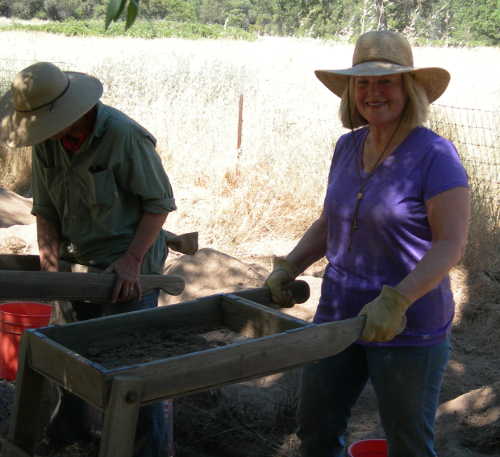
NORTHERN CALIFORNIA – In 1980 a nonprofit organization called the National Women's History Project, or NWHP, was created in honor of women, their achievements and to help preserve women in history.
This organization was formed in Santa Rosa by Molly Murphy MacGregor, Mary Ruthsdotter, Maria Cuevas, Paula Hammett and Bette Morgan.
It was due to the NWHP's lobbying Congress that March was designated as a declared month called, Women's History Month.
Each year there is a specific theme which the National Women's History Project highlights to honor women during Women's History month. This year, in 2017 the theme is “Honoring Trailblazing Women in Labor and Business.”
I interviewed archaeologist, Seetha Reddy, PhD, RPA of Reddy Anthropology Consulting Inc., Disadvantaged Business Enterprise, Women Minority Business Enterprise and Women Owned Small Business of Davis in honor of Women's History Month.
I have always had an interest in history and archaeology. My brother, David Livingstone, was an archaeologist, and I have had the good fortune to work with some other great archaeologists, such as State Parks archaeologist Breck Parkman with the "Fort Ross Global Village" project when I was an educator; Sonoma State University archaeologist Mike Newland, who taught my fourth graders about the skills and jobs of an archaeologist; Dr. John Parker, who helped me with my Anderson Marsh book and on whose team I have worked on digs; and with newly retired State Park archaeologist Leslie Steidl on "A Walk Through Time," an award-winning documentary about Anderson Marsh .
Question: Please tell me a bit about yourself and your affiliation with the Society For California Archaeology, or SCA.
Answer: I am originally from India and have been in the US for more than 30 years. I did my doctoral research on early agriculturalists and pastoral communities in Northwest India and South India and got my PhD from the University of Wisconsin, Madison. Subsequently, I moved to California and started working on California archaeology in 1993. I have worked at several environmental cultural resource management firms as a principal investigator and project manager. In 2014, I started my CRM firm which is a Disadvantaged and Women Owned Business offering services in archaeology and ethnography.
I have been a member of SCA for many years and regularly present talks and organize symposia at the annual meetings. In 2012, I started a committee “Women in California Archaeology,” or WCA, at the association. The mission of the WCA Committee is to provide a venue for discussion related to women archaeologists in California. It works to provide support and mentorship to women practicing archaeology in the state through individual and/or group interactions.
Question: When did your interest in archaeology begin?
Answer: My earliest childhood memories include interacting with paleontologists and cultural anthropologists who frequented the rural area in India where my family lived.
The paleontologists came over several years to excavate dinosaur remains and grew to be good family friends. The cultural anthropologists came to study the dwindling tribal groups who still lived traditional lives deep in the teak forests of central India.
The scholars were very generous with their time to us children who were fascinated with the dinosaur remains and the tribal groups; but also the unusual lifestyles of living in tent camps, traveling cross-country and all the adventure that comes to it.
I strongly believe that these early childhood experiences lit a fire in me to study the past and culture. I was a biological science student in India and switched to Anthropology when I came to the US for education; and my science background has been a great asset to me as an anthropologist.
Question: What are you working on now?
Answer: I am working on several projects. A couple of examples include ethnography of Native Americans in Yuba County, and a project looking at prehistoric period plant use by Native American along the Central Coast in Monterey, Santa Barbara and San Luis Obispo counties.
Question: In the past, like many occupations, the field of archaeology was dominated by male archaeologists. Do you have any female archaeologist role models who influence(d) your career?
Answer: I have turned to several women anthropologists for advice and mentorship. Among them include the late Dr. Carol Kramer (University of Arizona) and Dr. Christine Hastorf (a current professor at UC Berkeley).
In terms of role models, there are several women who I hold in great regard and respect – of particular mention are Dr. Diane Gifford Gonzales (UC Santa Cruz), and Dr. Kathleen Morrison (University of Pennsylvania). These women have been active in fieldwork and laboratory research, and have demonstrated how women make valuable contributions to the field while balancing other aspects of life.
Question: You are, no doubt, familiar with the fascinating archaeology of Lake County, such as Borax Lake, Anderson Marsh and the rich cultural history of the past here, with the Pomo, Miwok, Yuki, Patwin and Wappo Indians who lived here. Some of the peoples still do, of course, such as Pomo Indian Moke Simon and family. Moke is Lake County's first Native American county supervisor. Have you ever worked on any digs here in Lake County?
I have not worked on any projects in Lake County, but have worked in nearby Mendocino County, and am familiar with the rich and varied cultural history of the area. Both the rich cultural traditions of the indigenous Californians of Lake County and the remarkable archaeological record that their ancestors left behind are to be celebrated and preserved.
Question: Everyone knows that archaeology is interesting, from watching exciting Hollywood movies, or visiting famous archaeology sites around the world, but not many realize the varied tasks you archaeologists need to be proficient at. Can you please talk about what the real job of archaeology entails?
Answer: Archaeology is highly romanticized in the media and most students in their first archaeology class are perhaps disillusioned by the lackluster of the daily practice of the discipline in general. Much of archaeology entails tedious work that involves physical labor, and mundane tasks such as sorting through gravel looking for artifacts, and a lot of reading and writing.
Of course, along with theses detailed efforts that form the basis of most scientific study, are the bursts of discoveries and intellectual breakthroughs (either personally or within the wider discipline itself).
These discoveries may seem routine to most people, but to the archaeologist invested in the study a small shell bead, carbonized seeds, a bone tool, or a single projectile point, will bring immense joy as it opens a small window into the past.
A very big part of the job is patience and experience, but with it comes the very real, firsthand knowledge of how people lived in the past, and such knowledge ultimately enriches us all. And sometimes, one finds oneself on the cutting edge of a new discovery that may change, if only in a modest way, how we view and understand what happened in the past.
Question: What are some of the tools you use in your job?
Answer: Tools used by archaeologists range widely depending on the task at hand. The essential minimum tools for archaeological surveys include maps, compasses, GPS units, recording forms, and cameras.
For excavation projects, there are a wide range of tools from maps, compasses, GPS units, shovels, trowels, screens, line levels, to recording forms, artifact bags, and soil sample bags.
In the lab, a whole different set of tools are needed including but not limited to weighing scales, microscopes, sieves, computers, printers, archival bags and so on.
We also use all sorts of state-of-the-art scientific equipment to carry out detailed analysis on material recovered from excavations; and a great deal of time is spent using computers to enter data, analyze it, and write reports.
As such, tools of the trade are greatly dependent on the type of archaeological work that is being conducted.
Question: Would you recommend archaeology as a career for young women today? If so, what should they be doing, now, to prepare for a future in archaeology, whether they are fourth graders or college students?
Answer: I would definitely recommend archaeology as a career for young women. Regardless of whether one is a fourth grader or college student, if they are interested in the discipline, they should prepare by working on their writing skills, and importantly to cultivate and nurture curiosity about life, history, science, math, etc.
One of the wonderful aspects of archaeology is that it is multidisciplinary and encourages you to learn and grow through many outlets. It combines anthropology (the study of culture), with geology, sociology, art, linguistics, biology, chemistry, statistics, etc. We intersect with so many facets of knowledge, from history to biology and botany to chemistry, and social aspects of human behavior.
Even at a young age, it is important that girls start assessing what makes them happy. Archaeology is a discipline that accommodates a lot of different wishes – being outside, exploring the world, conducting experiments, learning about new cultures, working on soils, etc.
On a more practical level, anyone in college who is considering archaeology should definitely attend a field school and/or volunteer in an archaeological project. This will give the individual a more realistic idea of what archaeology is in practice while connected with people who are involved with the field.
Open homes at universities and colleges are one way of finding out and connecting with archaeologists. Similarly, most museums provide opportunities to budding students to volunteer along with public events and lectures.
United States Forest Service offers a program called Passport In Time which provides opportunities as a volunteer on public lands and help in conserve cultural sites. I highly recommend that students first volunteer at a museum, agency or university; and/or take field school before deciding on becoming an archaeologist.
Question: What do you most enjoy about archaeology?
Answer: For me, the most wonderful aspect of archaeology is that it is a multidisciplinary discipline. For example, I combine my background in biology with history to study how ancient populations used plants for food, how the plants were collected/grown, how they were processed and prepared, and how they were consumed.
I regularly use geology, botany, chemistry and math in my archaeological research, along with history and sociology to study and understand the human condition in the past.
Additionally, because it is multidisciplinary, we work with people from different scholastic backgrounds (geologists/soil scientists, zoologists, programmers, database specialists, etc.) which enrich us and our projects.
Furthermore, because we study human cultural behavior, we are constantly learning and therefore are constantly growing our knowledge of the world and life.
Another aspect of archaeology that keeps me continually excited is that it is highly varied in that I am doing varied tasks from fieldwork, lab work, reading, and writing.
If there comes a day when I cannot do fieldwork for whatever reason, I can focus on labwork and writing. As such, there is opportunity to grow into different aspects of the discipline depending on where one is in their career and life. Of course, it is important to be a versatile scholar, proficient in all aspects (fieldwork, labwork and writing) to enjoy this unique opportunity that archaeology offers.
Question: What does archaeology offer for the future?
Answer: Unlike, cancer research and nuclear physics, archaeology is not a field that will provide potential cures for fatal diseases or find new power source(s).
It is a field that studies human past and unfolds and reveals lost lifeways. Its importance lies in the very fact that our past has and will continue to shape our present and future: political, social, cultural, and religious. Our past is the foundation of our present and future.
Archaeology is also one avenue that helps us learn from past mistakes and successes. For example, it questions and provides answers to why some past civilizations failed after enjoying a long period of success. Whether it is external or internal factors and such knowledge provides great power in how we can organize ourselves and avoid similar pitfalls in our present and future.
On a final note, study of the human condition over time, understanding how we changed or did not, how we faced challenges, succeeded, and failed, are more important in today’s world where fear of the unknown and the unfamiliar is increasing. It is important for us to teach and learn to appreciate diversity and how it enriches us rather than threaten us.
Thank you very much, Seetha, for a fascinating look at the science of archaeology and the diverse work that it entails.
For more information on Women's History Month, see the Library of Congress Web site at http://womenshistorymonth.gov/ .
Kathleen Scavone, M.A., is a retired educator, potter, writer and author of “Anderson Marsh State Historic Park: A Walking History, Prehistory, Flora, and Fauna Tour of a California State Park” and “Native Americans of Lake County.” She also writes for NASA and JPL as one of their “Solar System Ambassadors.” She was selected “Lake County Teacher of the Year, 1998-99” by the Lake County Office of Education, and chosen as one of 10 state finalists the same year by the California Department of Education.
NORTHERN CALIFORNIA – With every monthly measurement of the California snowpack this winter, the state’s rebound from the previous five years of drought becomes more evident, officials said Thursday.
Thursday’s electronic readings from 95 sites in the Sierra Nevada showed an average statewide snow water equivalent, or SWE, of 45.8 inches, or 164 percent of the historical average for March 30 (27.9 inches).
The manual snow survey by the Department of Water Resources, or DWR, on Thursday at Phillips Station in the Sierra Nevada found a SWE of 46.1 inches, 183 percent of the late March/early April long-term average at Phillips (25.2 inches).
The three previous 2017 surveys at Phillips near the beginning of March, February and January found an SWE of 43.5 inches for March, 28 inches for February and 6 inches for January.
SWE is the depth of water that theoretically would result if the entire snowpack melted instantaneously. That measurement is more important than depth in evaluating the status of the snowpack. On average, the snowpack supplies about 30 percent of California’s water needs as it melts in the spring and early summer.
Electronic measurements indicate the water content of the northern Sierra snowpack is 40.8 inches, 147 percent of the multi-decade March 30 average. The central and southern Sierra readings are 50.5 inches (175 percent of average) and 43.9 inches (164 percent of average), respectively.
“Although the record pace of the snowpack accumulation fell off significantly in March, California enters the snowmelt season with a large snowpack that will result in high water in many rivers through the spring,” said State Climatologist Dr. Michael Anderson.
The Phillips snow course, near the intersection of Highway 50 and Sierra-at-Tahoe Road, is one of hundreds surveyed manually throughout the winter.
Manual measurements augment the electronic readings from about 100 sensors in the state’s mountains that provide a current snapshot of the water content in the snowpack.
Frank Gehrke, chief of the California Cooperative Snow Surveys Program, conducted DWR’s survey.
"The storm track shifted away from California during March, but we still have a very substantial snowpack, particularly in the higher elevations in the central and southern Sierra. This is an extremely good year from the snowpack standpoint,” Gehrke said, adding that this year’s snowpack ranks in the upper quarter of historic snowpacks and is providing “great reservoir recovery.”
In the Mendocino National Forest, the California Data Exchange Center reported that at Anthony Peak in the Covelo Ranger District, on March 1 there was 75 inches of snow – four inches more than February’s reading – with 29 percent water content and 39 percent density. The March reading is the best for that site since May of 2011.
Many Californians continue to experience the effects of drought, and some Central Valley communities still depend on water tanks and bottled water.
Groundwater – the source of at least a third of the supplies Californians use – will take much more than even an historically wet water year to be replenished in many areas.
California’s climate is the most variable of any state. Historically, it swings from drought to flood and back to drought.
In addition, as global warming drives up average temperatures in California, more precipitation will fall as rain, not as snow stored in the Sierra Nevada and other mountains.
To help prepare for these ever-wider extremes, Californians can learn ways to save water every day by visiting www.SaveOurWater.com .
The California Department of Fish and Wildlife, or CDFW, is seeking public input to assist in the development of a red abalone fishery management plan, or FMP.
An online survey to collect public opinions on red abalone management can be accessed on the CDFW Web site.
To complete the survey by mail instead of through the website, please call (707) 964-5791 to request the survey forms or write to: CDFW, attn. Jerry Kashiwada, 32330 North Harbor Dr., Fort Bragg, CA 95437. The survey will close April 16, so interested parties should participate as soon as possible.
The red abalone FMP will build off current management of the northern California red abalone sport fishery as outlined in the Abalone Recovery and Management Plan, as well as meet requirements for fisheries management in the Marine Life Management Act.
A similar survey was conducted in 2015 (results available online) but CDFW is interested in learning if recent unprecedented environmental conditions have changed preferences on abalone management.
The online survey is intended to reach a broad audience and help ensure the abalone management framework developed under the FMP addresses the interests and concerns of the public.
More details about abalone management and the FMP process can be found on the CDFW Web site.
LAKE COUNTY, Calif. – County officials are reporting that Clear Lake is open and anglers are boaters are welcome.
The flood waters have receded and though some damage remains at a few locations around the lake, nearly all the boat ramps are open.
The lake level is normal for this time of year so anglers, boaters and other water users are welcome and the crappie fishing is great.
Anglers should bear in mind that due to mercury in the environment, the normal fish consumption advisories remain in place:
– Women 18-45 and children less than 17 years old should eat no more than 1 serving per week and no bass should be consumed.
– Women 46 and older and men 18 and older should consume no more than 3 servings per week and only a single serving of black bass per week.
For more information contact the Lake County Water Resources Department at 707-263-2344 or visit the Environmental Health Department Web page at www.co.lake.ca.us/Government/Directory/Environmental_Health/Fish.htm .
NORTH COAST, Calif. – Caltrans reports that the following road projects will be taking place around Lake County and the North Coast during the coming week.
Included are Mendocino County projects that may impact Lake County commuters.
LAKE COUNTY
Highway 20
– Emergency highway repairs at various locations from Bachelor Creek Bridge to Bruner Drive will continue. One-way traffic control will be in effect from 7 a.m. to 5 p.m. weekdays. Motorists should anticipate 15-minute delays.
– Curb and sidewalk repairs from Sayre Avenue to Country Club Drive will continue through Friday, March 31. One-way traffic control will be in effect from 7 a.m. to 6 p.m. weekdays. Motorists should anticipate 15-minute delays.
Highway 29
– Emergency culvert repairs from Spruce Grove Road to Hofacker Lane will continue. One-way traffic control will be in effect from 7 a.m. to 5 p.m. weekdays. Motorists should anticipate five-minute delays.
Highway 175
– Emergency highway repairs from Grouss Springs Road to Emerford Road will continue. One-way traffic control will be in effect 24 hours per day, seven days per week. Motorists should anticipate five-minute delays.
– Emergency highway repairs from east of Arroyo Vista Road will continue. One-way traffic control will be in effect 24 hours per day, seveb days per week. Motorists should anticipate five-minute delays.
– PG&E has been granted a Caltrans Encroachment Permit for utility repairs near the Putah Creek Bridge beginning Thursday, April 6. One-way traffic control will be in effect from 9 a.m. to 3 p.m. weekdays. Motorists should anticipate five-minute delays.
MENDOCINO COUNTY
Highway 1
– Emergency slide removal near Leggett will continue. A full road closure is in effect 24 hours per day, seven days per week. Motorists should seek an alternate route.
Highway 20
– PG&E has been granted a Caltrans Encroachment Permit for utility repairs about 0.7 mile east of Wildwood Campground on Monday, April 3. One-way traffic control will be in effect from 9 a.m. to 3 p.m. Motorists should anticipate five-minute delays.
Highway 101
– Routine maintenance near Frog Woman Rock will continue. Northbound traffic will be restricted to one lane 24 hours per day, seven days per week. Motorists should anticipate minor traffic slowdowns.
– Emergency slide repairs on the westbound Route 20 to southbound Route 101 connector ramp will continue. Intermittent ramp closures will be in effect from 7 a.m. to 7 p.m. Motorists should anticipate 10-minute delays.
– Emergency slide removal near Hermitage Vista Point will continue. Northbound traffic will be reduced to one lane 8 a.m. to 8 p.m. weekdays. Motorists should anticipate minor traffic slowdowns.
– Emergency slide removal near the Dora Creek Bridge will continue. One-way traffic control will be in effect 24 hours per day, seven days per week. Motorists should anticipate 20-minute delays.
– Emergency slide removal near Piercy will continue. Traffic will be reduced to one lane in both directions 24 hours per day, seven days per week. Motorists should anticipate minor traffic slowdowns.
Highway 128
– Roadway repairs from Fish Rock Road to Yorkville will begin Monday, April 3. One-way traffic control will be in effect from 7 a.m. to 5 p.m. weekdays. Motorists should anticipate five-minute delays.
Highway 162
– Emergency storm damage repairs near The Middle Way will continue. One-way traffic control with temporary stop signs will be in effect 24 hours per day, seven days per week. Motorists should anticipate five-minute delays.
Highway 222
– PG&E has been granted a Caltrans Encroachment Permit for utility repairs near West Street on Tuesday, April 4. One-way traffic control will be in effect from 9 a.m. to 3 p.m. Motorists should anticipate five-minute delays.
The Caltrans Traffic Operations Office has reviewed each project and determined that individual project delays are expected to be less than the statewide policy maximum of 30 minutes, unless noted otherwise above.
For information pertaining to emergency roadwork or for updates to scheduled roadwork, please contact the California Highway Information Network (CHIN) at 1-800-GAS-ROAD (1-800-427-7623).
LAKE COUNTY, Calif. – An annual ranking that shows the healthiest and least healthy counties in California has once again place Lake County near the bottom of the list.
The eighth annual County Health Rankings, released Wednesday by the Robert Wood Johnson Foundation and the University of Wisconsin Population Health Institute, ranked San Mateo County ranks healthiest in California and Modoc County the least healthy county in the state.
Lake was among the five counties with the poorest health, ranking No. 56, just one spot higher than Modoc. Other counties in that group included Trinity, Siskiyou and Kern. Alpine was not ranked.
Top counties with the best health, in addition to San Mateo, were Marin, Santa Clara, Placer and Sonoma.
"The County Health Rankings show us that where people live plays a key role in how long and how well they live," said Risa Lavizzo-Mourey, MD, Robert Wood Johnson Foundation president and chief executive officer. "The rankings allow local leaders to clearly see and prioritize the challenges they face – whether it's rising premature death rates or the growing drug overdose epidemic – so they can bring community leaders and residents together to find solutions."
The report’s local level data makes it clear that good health is influenced by many factors beyond medical care including housing, education, jobs and access to healthy foods.
This year the study also took a closer look at premature deaths – or deaths that occur among people under age 75.
Exploring California's premature death trends from 1997 to 2014, the study found that 42 counties have seen improvements in premature death rates, while three have seen worsening rates and the rest saw no change.
For premature death, Lake County also ranked poorly, earning the No. 56 spot, only slightly improved from the No. 57 rating it received in 2016.
For physical environment, Lake County ranked far higher, at No. 36, while it earned a No. 47 ranking for quality of life, No. 49 both for health behaviors and clinical care, and No. 50 for social and economic factors.
While Lake County ranked No. 56 for health outcomes, it ranked slightly better – at No. 49 – for health factors.
The key findings for the health rankings also showed that drug overdose deaths are fueling a dramatic increase in premature deaths nationally because of an increase in deaths among 15 to 44 year olds. From 2014 to 2015, 85 percent of the increase in premature deaths can be attributed to a swift increase in deaths among these younger populations.
The rankings did not specifically break down how those deaths may be influencing Lake County’s outcomes.
Earlier this year, the results of the 2016 Community Health Needs Assessment was released for Lake County, which confirmed the county’s challenges.
Every three years the county is required by the federal government to assess the health of its residents using metrics such as average age of mortality, rate of preventable diseases, and availability of health-related resources, according to a report from Sutter Lakeside Hospital and St. Helena Hospital Clear Lake.
That assessment revealed that Lake County has shown improvement in the areas of mental health resources, access to healthcare, homelessness and housing, drug and alcohol abuse services, and preventative health education.
In looking at the data released Wednesday, Lake County Health Officer Karen M. Tait, M.D., said she didn’t see any major changes in this year’s outcomes.
However, she noted that some of the data is from as far back as 2012, so it is not necessarily reflective of recent years, with the expectation that the wildland fires of 2015 and 2016 could impact future air quality rankings.
“While some of the data are not from as far back as 2012, the lag over several years means that the rankings are not reflective our current status,” she said. “Many of the major findings still probably hold true, but I believe that we will need to be patient to see the results of the significant changes in healthcare that have taken place over the past several years.”
Tait said those changes include the introduction of Partnership HealthPlan of California, which now serves more than 40 percent of Lake County’s population and is open to innovative ways to meaningfully improve health outcomes.
“Other initiatives, such as Hope Rising and Safe Rx Lake County have been very active in the past couple of years and local clinic systems are approaching healthcare much more holistically than in the past,” Tait said. “Even though it often takes many years for good results to be evident in population health data, I would hope that nobody is too discouraged by these 2017 health rankings, as they don’t reflect the here and now.”
Tait added, “We can still accept that we have real challenges in areas like smoking, shortages of clinical services and social determinants of health including poverty and single-parent households. We should continue to pay attention to these health risk factors.”
She said that when the county receives its rankings in the future, factors to be considered should include the possible impacts of the significant trauma the community experienced from the fires of 2015 and 2016, and the flood earlier this year.
“I’m hoping we are on a more even keel as we move forward and that our community’s health will eventually reflect better times,” Tait said.
Email Elizabeth Larson at