 How to resolve AdBlock issue?
News
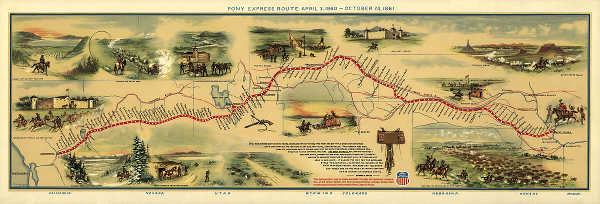
This week in history features the birth of an American icon, one that shows just how far we were willing to go to get the latest news in the middle of the 19th century.
April 3, 1860
In today’s fast-paced world of the New York Stock Exchange, where fortunes are made and lost in mere fractions of a second, instantaneous communication is imperative.
It is almost inconceivable to think that businesses of any kind could operate without modern conveniences: phones, computers and automobiles.
So integrated into our lives have these technologies become that we have literally built our existence around them. To do without them on a large scale is simply impossible. I dare you to approach a trader on Wall Street and tell him he can only use snail mail to communicate with his clients. That wolf of Wall Street would become a simpering sheep in a heartbeat.
And yet, as with any modern convenience, there was a time when people did fine without them. In fact, before April 3, 1860, businessmen and everyday citizens expected that the surest way to communicate with someone on the opposite coast of the country would be via steamer to the Isthmus of Panama, overland through jungles to the Pacific Ocean and once more by ship to San Francisco. The total journey would last a minimum of three weeks.
In 1859 an alternative to the sea route was established when three companies began operating overland mail routes. These arduous paths started somewhere in Missouri and went either south through Texas or centrally through Nebraska and Utah.
The overland companies were able to deliver messages in roughly the same amount of time as the steamers over the Isthmus of Panama.
However, these were new lines, going through territory sparsely populated over land that was a menace to the most veteran stagecoach driver. One breakdown along a single stretch of the route and the entire mail schedule would be backed up.
Of course, the steamer route was no less fraught with possible delays, between weather at sea and the choked confines of the Panamanian jungle.
Who knew that sending a simple letter could be such a gamble? But these were the exigencies that one had to count on to do business in pre-Civil War America.
The turning point was soon in coming. You see, the government began offering lucrative contracts for overland mail service in the late 1850s.
Those same new and somewhat unreliable overland routes were being operated by private companies with federal money (between $205,000 and $600,000 each year).
If anything could ensure speedier deliveries it was the possibility of making more money. Competition soon grew and by the dawn of 1860, other men hoped to cash in and bellied up to the federal feeding troth.
William H. Russell, Alexander Majors and William B. Waddell were old hats at the game of milking the federal cow. They first joined forces in 1854 to get the government contract to ship military supplies to western outposts.
The Mormon War of 1857 threatened these shipments and eventually led to the three men digging themselves into debt.
Looking once more to the government, the three partners found themselves in charge of an overland mail route, between St. Joseph’s Missouri and Salt Lake City, Utah.
After a failed start by Russell, who had split with the trio to create the Leavenworth and Pike’s Peak Express Company (which went under almost immediately), the reunited trio created the Central Overland California & Pike’s Peak Express Company (COC&PP) in November of 1859.
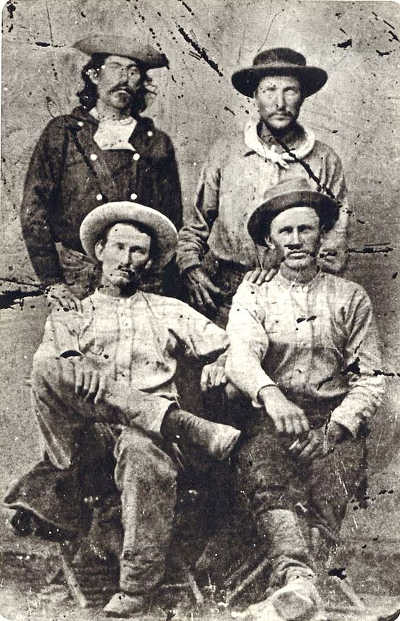
But they had not yet received the lucrative government contract. In a stunning move, Russell once more broke ranks and announced that the company would create an express service that could transport mail from Missouri to California in just 10 days. They’d call it the Pony Express.
Since it was created primarily as a marketing ploy by the COC&PP to gain the more financially-secure government contract for their standard overland service, it shouldn’t be a surprise that the Pony Express was a financial failure of sorts.
The Pony Express was designed to operate on a relay system, with a rider changing horses every 10 to 15 miles and a new rider taking over every 75 or so.
In the end, the total distance traveled along the route was approximately 1,840 miles from St. Joseph, Missouri, to Sacramento, where the mail was put on a steamer to San Francisco). Such a route required roughly 190 stations to be constructed, 400-500 horses gathered together and estimated 50 to 80 riders hired.
Announcing their intention to create the express in January of 1860, the trio set the start date for the service for April 3 of that year. They had just four months to put together these logistics. Then as now, money was a great motivator and the COC&PP got the job done.
On April 3, 1860 two riders – one in San Francisco and the other in St. Joseph – set out on the first ride of the Pony Express.
The land they crossed was unsurpassed in its ruggedness and danger, but represented the untarnished beauty of the American west. On the westward trip from Missouri the intrepid rider would race along with herds of bison numbering in the tens of thousands, dashing towards the horizon where the great expanse of the blue sky met the flowing prairie.
As with any dearly-held American story, specific details about the Pony Express are sometimes hard to verify. On the first trip, the westward-riding expressman was probably John Frye, who carried in his leather pouches about 85 pieces of mail.
Of course, he didn’t carry it the whole way and the rider who trotted into Sacramento on the afternoon of April 13 with the mail from Missouri was far removed from the riders who had hauled the load through the plains and Rocky Mountains.
Contrary to the popular myth, the company did not intentionally hire men without families to serve as their express riders. Although, they probably did look for young, lithe men eager for adventure.
Adventure they found, but only for a time. That first trip was certainly enough to light a fire in the minds of Americans. “Go west, young man,” said famed journalist of the day Horace Greely.
The Pony Express embodied that admonition and did one better: it went west faster than anyone before it. As a marketing ploy, the Pony Express worked and the COC&PP won the contract to run mail overland for the Postal Service.
In fact, it was perhaps the most effective PR campaign in American business because the memory of this great American venture still intrigues us today; this despite the fact that the Pony Express only operated for 19 months.
When the transcontinental telegraph line was finally completed in 1861, the ability to nearly instantaneously transmit information across the nation made a relic of the Pony Express.
Despite its short run, the Pony Express nevertheless persists. In memorabilia, old westerns and in the hearts and minds of nostalgic Americans, the young man on his fast horse racing towards the horizon survives.
Antone Pierucci is the former curator of the Lake County Museum and a freelance writer whose work has been featured in such magazines as Archaeology and Wild West as well as regional California newspapers.
The residents of the South Lake Fire Protection District have been through a great deal since the 2015 fire season.
From one extreme to the other, you’ve seen devastating wildfires, pouring rain, mudslides, rockslides, flooding, falling trees and snow. I think all would agree that you’ve endured more than your share of hardship.
Throughout those hardships, you’ve been fortunate to have people and groups working to assist your community. One of those groups has dedicated itself to your well-being since 2002.
The South Lake Fire Safe Council, a group I’m proud to support, has worked to provide fire safety education to the young and not-so-young in the South Lake community for 15 years. Along with their education activities, SLFSC has also provided an exceptional chipping program.
Each year, for a modest membership donation, they’ve offered chipping services within your fire protection district.
They contribute thousands of dollars in donated time to administer and organize this service. Money is spent only on a professional chipping crew – other expenses are covered by the donated time and efforts of this all-volunteer organization.
The Valley fire was a tragic event where evacuation was a necessity rather than an option. Some were fortunate – others were not.
Two of the directors of SLFSC lost their homes, as did many of you. The other directors evacuated their homes, just as you did, and because of a very active 2015 fire season – it happened more than once.
In the aftermath of the Valley fire, many came to your aid with the assistance of funding from charitable groups or government agencies.
The directors of SLFSC, despite their own personal losses, subsidized their chipping program to help fellow residents clear debris after the fire.
SLFSC contributed over $20,000 to help their community during this tragic time. Before others came to do the same work and get paid for it – the South Lake Fire Safe Council was there to support you.
They helped you as much as they could, as long as they could, and they kept going until their funds were nearly exhausted.
Now, in order to continue assisting you as they have in the past, they need your help. Times are tough and money is tight, but dollars add up.
Please, if you can help in any way, donate to a group who has given so much to you. With your assistance, they’ll be able to continue working for your community.
They meet the first Wednesday of each month at 2 p.m. in the South Lake Fire Station in Middletown. They welcome new members and volunteers.
If you can help in donated time or money, you’ll also be helping your own community. Please send donations to the South Lake Fire Safe Council, P.O. Box 1773, Middletown, CA 95461.
Any amount is welcome. As a nonprofit organization, your donation is tax-deductible.
Linda Juntunen lives in Lakeport, Calif.

LAKE COUNTY, Calif. – The infamous apparatus known as a still was a popular item in days of yore.
During Prohibition, a still could sometimes be found, if one looked hard enough, camouflaged out in the woods.
The still which can be viewed in the Lower Lake Historic Schoolhouse Museum is known as “Lee's Still.”
The information card on the still reads, “The Lee family lived on Liberty Street on the west side of Lower Lake. This still was used to make brandy.”
A still made brandy through a high-heat process. The liquid was boiled, then, through a process of condensing, the cooling created a vapor.
A still can be used to create not only brandy, but other kinds of alcoholic drinks, like gin, as well as perfume and some types of medicines.
When illegal stills were used in America the drink was known as “moonshine.” When moonshine was prepared, the beverage wizards sometimes used corn for the potent brew which could turn out to be quite a strong, high-proof alcoholic drink.
Brandy and the distilling process to concoct it have been in evidence around the world since prior to the 15th century. The term “brandy” is a shortened version of the word “brandywine,” which was originally a Dutch term, brandewijn, meaning “burned wine.”
Considered a spirit, brandy is an alcoholic beverage produced through the process of distilling wine, and can hold a whopping 35 to 60 percent alcohol by volume.
Since brandy can be anywhere from 70 to 120 proof alcohol, it has traditionally been reserved as an after-dinner drink to be consumed in small amounts, most often in glasses called snifters.
Brandy has sometimes been aged in wooden barrels, often oak, or casks, and can obtain its glossy, amber-to-chocolate color from caramel additive, or simply through the aging process.
In the wine-making world brandy is often synonymous with Cognac, but that term is taken from the area of Southwestern France.
Long ago, brandy was distilled as a way to help it keep its flavor for long transports to various markets, and some sources make note of the distillation process being used as an aid to lower taxes, since they were levied by volume. Then, after it reached the market, water could be added back to the product.
Most brandies were produced through distilling wine from grapes so areas with a large viticulture region like those in Western Europe were where most brandies were produced.
Brandy is synonymous with “fruit brandy” when peaches or other fruit is used. It can be called “applejack” when apples are the main ingredient in the process of distillation, and “grain brandy” when grains are used.
Brandy has historically been popular in cooking meat sauces, adding distinctive flavors to soups, and for desserts such as holiday cakes, butters and puddings.
Using brandy as a fancy flambé in crepe Suzettes and cherries jubilee and set to light over other desserts gives a unique character to the meal.
Kathleen Scavone, M.A., is a retired educator, potter, writer and author of “Anderson Marsh State Historic Park: A Walking History, Prehistory, Flora, and Fauna Tour of a California State Park” and “Native Americans of Lake County.” She also writes for NASA and JPL as one of their “Solar System Ambassadors.” She was selected “Lake County Teacher of the Year, 1998-99” by the Lake County Office of Education, and chosen as one of 10 state finalists the same year by the California Department of Education.
LAKE COUNTY, Calif. – Lake County Animal Care and Control has a new mix of big and little dogs waiting for their new homes this week.
The dogs available this week include mixes of American Staffordshire Terrier, Australian Kelpie, border collie, boxer, fox terrier, German Shorthaired Pointer, Labrador Retriever, mastiff, pit bull, Pomeranian, poodle and shepherd.
Dogs that are adopted from Lake County Animal Care and Control are either neutered or spayed, microchipped and, if old enough, given a rabies shot and county license before being released to their new owner. License fees do not apply to residents of the cities of Lakeport or Clearlake.
If you're looking for a new companion, visit the shelter. There are many great pets hoping you'll choose them.
The following dogs at the Lake County Animal Care and Control shelter have been cleared for adoption (additional dogs on the animal control Web site not listed are still “on hold”).

Pomeranian mix
This male Pomeranian mix has a long red and black coat.
He’s in kennel No. 2, ID No. 7224.

‘Blanco’
“Blanco” is a male poodle with a curly white coat.
He’s in kennel No. 4, ID No. 7228.

Female shepherd mix
This female shepherd mix has a medium-length black and tan coat.
She’s in kennel No. 6, ID No. 7217.

‘Luke’
“Luke” is a male German Shorthaired Pointer mix with a short black and white coat.
Shelter staff said he is a big, young, happy, bouncy boy would will be a lot of fun for an active family that is willing to include him in their activities. He would benefit from training classes for basic manners. He does well with other dogs that tolerate his level of play, but would do best in a home with no small dogs or cats due to his size and energy level.
He’s in kennel No. 7, ID No. 7057.

Australian Kelpie-fox terrier
This female Australian Kelpie-fox terrier has a medium-length black and white coat.
She’s in kennel No. 8, ID No. 7213.

American Staffordshire Terrier-mastiff
This male American Staffordshire Terrier-mastiff has a short black and brown coat.
He’s in kennel No. 11, ID No. 7225.

Female pit bull terrier
This female pit bull terrier mix has a short gray and white coat.
She’s in kennel No. 12, ID No. 7218.

‘Trixie’
“Trixie” is a female boxer-Labrador Retriever mix.
She has a short tan coat with white markings, and has already been spayed.
Shelter staff said she is very bouncy and playful needs an energetic family that will give her lots of exercise and guidance. Trixie does well with other dogs her size that will tolerate her playfulness. She would do best in a home with no small dogs, cats or livestock,and has great manners.
She’s in kennel No. 17, ID No. 7036.
To fill out an adoption application online visit http://www.co.lake.ca.us/Government/Directory/Animal_Care_And_Control/Adopt/Dog___Cat_Adoption_Application.htm .
Lake County Animal Care and Control is located at 4949 Helbush in Lakeport, next to the Hill Road Correctional Facility.
Office hours are Monday through Friday, 11 a.m. to 5 p.m., and 11 a.m. to 3 p.m., Saturday. The shelter is open from 11 a.m. to 4 p.m. Monday through Friday and on Saturday from 11 a.m. to 3 p.m.
Visit the shelter online at http://www.co.lake.ca.us/Government/Directory/Animal_Care_And_Control.htm .
For more information call Lake County Animal Care and Control at 707-263-0278.
Email Elizabeth Larson at
In April, there are several happenings in the night sky that should delight skywatchers.
Jupiter will be visible all night long this month. On April 7, Jupiter will be at opposition, at which point it shines the brightest and appears the largest. Through binoculars, its four moons should also be visible.
Through a telescope Jupiter’s cloud belts and zones are easily visible, and the Great Red Spot can be seen beginning its crossing of the planet’s disk every 10 hours.
Look for the summer triangle this month, which is made up of the bright stars Deneb, Vega and Altair.
The second major meteor shower of the year, the Lyrids, will radiate through the summer triangle and will peak in the morning hours of April 22. It’s expected to offer 18 meteors an hour, with excellent moonless viewing conditions.

LOWER LAKE, Calif. – As you read this article Carlé High School is on spring break.
Spring break starts April 3 and ends April 10. After break only one week remains in the fifth grade period. Be sure to make as many credits as you can before we enter the last grading period of the year.
At Carlé we feel it’s important for the students to know where they are and what they need in particular to achieve graduation.
That is why Carlé offers 12 grade and credit checks throughout the year to give students an opportunity to assess when they could possibly graduate and what is required for graduation.
Carlé feels by putting students, with the aid of an advisor, in charge of their own credits that it helps train students in the responsibilities of adulthood.
Five new students entered Carlé during the fifth grading period; we at Carlé would like to give them a warm welcome. Bienvenue Marshall Gotschall, Jessie Hampton, Marco Anguiano, Eric Marks and Michelle Steele. We hope Carlé offers you great opportunities to graduate.
A trip to Woodland Community College’s Lake County Campus in Clearlake is scheduled to take place on April 11. During this trip the students of Carlé will tour the majority of the Woodland campus.
We will visit and be served by the culinary program they have at Woodland run by the wonderful Chef Robert who has supported and worked with Carlé students and staff for quite a while.
We would also like to thank Bruno Sabatier and Pamela Bordisso for their devotion to the Carlé students.
Carlé students will tour various building including the library and even the administration office. Since Woodland Community College is so close to Carlé, and many of our graduates do take and will take classes there, touring the college is extremely advantageous for students to be exposed to what opportunities the college has to offer.
On Saturday, March 25, Carlé attended the Rotary reforestation community project at Middletown Trailside Park.
After the Valley fire more than 76,000 acres were scorched. Concerned with the burning of all these trees the Lake Area Rotary Club Association, or LARCA, quickly sprang into action.
LARCA hosted an event in which more than 300 people gathered and reforested a portion of Trailside Park in Middletown. During this reforestation more than 3,000 baby tree saplings were planted to assist in this campaign against the thousands of acres that were burned in the Valley fire.
We would like to give a special mention to the student and staff of Carlé who attended. Thank you to Angie Siegel and Rayven Baldwin-Riggs for contributing to this wonderful event held by the Rotary Club.
The Carlé S.B.E. program is holding an art contest of sorts, in this contest students may take their own original art and the S.B.E. program will press the art onto a key chain, mouse pad or mug. Good luck everyone and we hope to see a lot of cool artwork.
There are multiple students of the week to celebrate this week. the people who were rewarded: Anthony Bigness, Lloyd Bridges, David Jones and Johnnye Melvin.
Sherry Hoeckendorf our school secretary nominated Bridges. She said, “I nominated Lloyd because he always is willing to help and he has a very positive demeanor toward both students and staff.”
Angie Siegel nominated Bigness. “Anthony is an amazing student, he always does top-quality work, he’s polite, cooperative and very respectful in class. We really enjoy having him at Carlé.”
Siegel nominated Jones as well. “Davis has really improved his attendance and shown us what a great student he is, all the staff members of Carlé are proud to see that he’s committed to his education.”
She also nominated Johnnye Melvin. “Johnnye is also a very bright and excellent student that always does her very best on every assignment and remains focused on her education.”
The cardboard car races as mentioned in the last article will be continuing on Friday, more on the winners and designers in the next issue of the Carlé Chronicle. Students put in way more effort than we expected them to and the hand designed cars came out very unique and interesting.
On March 28, the Student Council gave a presentation on Adverse Childhood Experiences, or ACES.
This presentation highlighted the ways that both negative and positive childhood experiences affect the health of an individual. It also addressed how knowing this information could help change how people respond to stress and thus improve their interpersonal relationships.
Carlé students attended this presentation along with the teaching staff, some Lower Lake High School staff, Healthy Start, members of the Probation and Clear Lake Police Department, and Woodland Community College staff.
Lilli Edson, a Carlé staff member, helped the student council create this event. “The student council put a lot of effort and time into learning the information they presented, doing research and developing a power point,” said Edson. “They were excited to share what they had learned and wanted to present again, with the opportunity.”
Edson spoke of how helpful Alan Siegel and the students were when it came to setting up for the event and making sure all technology was running properly.
Wednesday, March 29, marked teachers Angie and Alan Siegel’s 30th anniversary. Thirty years and you still seem to share deep feelings of warm personal attachment, which I think is something every human longs for. Congratulations on 30 happy years and many more to come.
Nicholas Phipps is a student at Carlé Continuation High School.