LAKEPORT, Calif. – In an effort to reestablish the Lakeport Police Department’s canine program, the Lakeport City Council will consider this week a federal grant application, and also will discuss a protocol for how to appoint members to the Lakeport Fire Protection District Board.
The council will meet in closed session at 5:30 p.m. Tuesday, Dec. 4, to discuss a possible case of litigation regarding Verizon Wireless before convening in open session at 6 p.m. in the council chambers at Lakeport City Hall, 225 Park St.
On Tuesday the council will hold a public hearing in order to adopt a resolution supporting the application to the United States Department of Agriculture Rural Development Communities Facilities Loan and Grant Program for the Lakeport Police canine program.
“In 2018 the Police Department identified a need to re-establish the police canine program. As part of the program the police department was approached by a local business owner who requested to work with the department to establish a non-profit to raise money to help offset the costs associated with developing and implementing the program,” according to the staff report for the meeting written by Lakeport Police Chief Brad Rasmussen.
Rasmussen said his department was notified by USDA regarding a grant opportunity to help fund all aspects and development of the program.
“Since the mid 1980's the Police Department has successfully managed canine programs that were instrumental in providing safety to the community and officers alike,” Rasmussen said. “In 2009 the Department’s canine retired and the city was unable to commit to maintaining the program due to staffing and funding deficiencies.”
He said his agency “is excited at the potential to bring the canine program back utilizing the assistance from USDA and the local nonprofit group. This is an opportunity for our community to benefit from a police canine program with very little costs from local tax payers.”
The USDA application is the first step in obtaining funding for the program and if successful, Rasmussen explained. He said the grant would provide $68,480 to develop and operate the program, with funds to be used for equipment, the dog and training, and an outfitted vehicle, which is the largest expense.
An addition $50,000 is anticipated from the nonprofit group, Rasmussen said.
“The benefit of having a canine program includes the canine's superior senses, the ability to search for suspects and locate persons and alert to their presence without hearing or seeing them. All these facts contribute to ensuring community and officer safety,” Rasmussen said. “Additionally, the use of police service dogs can lessen the potential for the need to use lethal force. Canines are also instrumental in detecting and recovering contraband and evidence.
Also on Tuesday’s agenda is adoption of a proposed resolution to establish a protocol for appointing directors to the Lakeport Fire Protection District Board.
Both the board and the council have roles in making appointments, which is based on their population.
Other agenda items for Tuesday include introduction of new employees Hector Heredia and Codie Lairson and presentation of the Government Finance Officers Association Certificate of Achievement for Excellence in Financial Reporting to Finance Director Nick Walker on behalf of the city of Lakeport.
On the consent agenda – items considered noncontroversial and usually accepted as a slate on one vote – are ordinances; minutes of the council regular meeting of Nov. 20; confirmation of the continuing existence of a local emergency in the City of Lakeport; approval of application 2019-002, with staff recommendations, for the 2019 Shipwreck Day event to be held in Library Park on May 4, 2019; approval of application 2019-003, with staff recommendations, for the 2019 Shakespeare at the Lake production of Taming of the Shrew to be held in Library Park July 27 and 28, 2019; and adoption of a resolution accepting construction of the Carnegie Library Accessibility Upgrade Project by R & C Construction and authorize the filing of the notice of completion.
Email Elizabeth Larson at This email address is being protected from spambots. You need JavaScript enabled to view it.. Follow her on Twitter, @ERLarson, or Lake County News, @LakeCoNews.
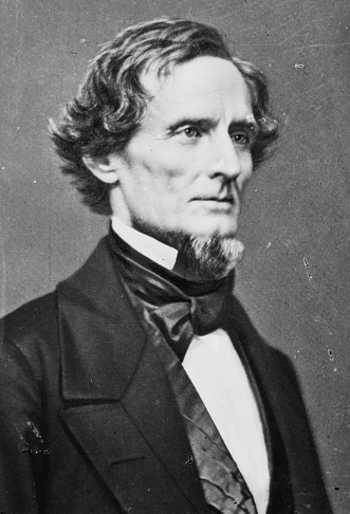
Confederate States of America President Jefferson Davis. Photo courtesy of the Brady-Handy photograph collection, Library of Congress, Prints and Photographs Division. Purchase; Alice H. Cox and Mary H. Evans; 1954. General information about the Brady-Handy photograph collection is available at https://hdl.loc.gov/loc.pnp/pp.brhc Forms part of: Brady-Handy photograph collection (Library of Congress). It was going to be the trial of the century. A bloody war had just been fought over the very issue that was now set to be argued before judge and jury.
This was going to be the legal case that finally settled the question of whether or not it was constitutionally legal for states to secede from the Union.
On trial was none other than Jefferson Davis, the former president of the Confederate States of America.
But like most of the goals pursued in Reconstruction America, this trial was never seen through to its bitter conclusion.
The saga of Davis’ trial began in May of 1865 when Jefferson Davis became a prisoner of the United States of America.
Ironically, Davis became such a high-valued target primarily because of the assassination of President Lincoln the month before. President Johnson and other cabinet members suspected that Jefferson Davis had been complicit in the assassination plot and therefore pursued him relentlessly until finally capturing him.
No evidence was uncovered to substantiate the claim of Davis’ complicity in the assassination, and so a charge of treason was instead levelled at Davis, for his role in the recent Civil War. It soon became a trial test to finally determine in the highest courts of law that secession was treasonous.
The executive branch had attempted just such a thing half a century before when charges of treason were levelled at Aaron Burr for his role in a plot to secede the recently-acquired western lands and create his own country.
Burr was acquitted of treason on the grounds that he had not engaged in an “overt act,” which was a requirement of treason as specified by the U.S. Constitution. This would be the very same argument Jefferson Davis’ lawyers would pursue in his treason trial.
It took nearly two years for the federal government to bring formal charges against Jefferson Davis, a delay that castigated the already harried President Johnson, who was facing impeachment proceedings from Congress.
The country had been bloodied, physically and spiritually, during the four years of civil war. The federal occupation of the south following the war, and the continued economic depression elsewhere, had cooled the blood of even the hottest, most fervent Unionists.
Nowhere was this most evident than in the case against Jefferson Davis. When he was finally accused of treason, his bail was set in 1867 for the equivalent of $1 million in today’s money.
More surprising than the size of the bail was the list of 20 wealthy men who ponied up – which included three of the fiercest Unionists in the country.
Gerrit Smith, who was one of six financiers who had supported John Brown’s aborted attempt to take the arsenal at Harpers Ferry before the war, was one of these men, and so too was Cornelius Vanderbilt.
Perhaps the most surprising benefactor of the former Confederate leader was Horace Greeley. The excitable publisher of the New York Tribune had urged readers “Forward to Richmond!” when the war broke out.
When pressed to explain why they were helping Davis, each one expressed his displeasure at the federal government’s prosecution of the trial, namely that they were not granting Davis a timely trial, which is a hallmark of the American justice system.
Davis’ case finally appeared before the circuit court in Virginia Nov. 30 to Dec. 3, 1868. By this time, the government was not convinced it had enough support or legal backing to successfully try Davis for treason.
Rather than risk an unfavorable ruling, and in light of the bitter opposition he faced in Congress, President Johnson signed his proclamation granting amnesty to all who had participated in the late rebellion on Christmas Day, 1868.
There is no doubt that Jefferson Davis did not receive a speedy trial, but the absolution of the leader of the rebellion left a bad taste in many Unionists’ mouths.
In reality, however, Davis’ trial was a perfect encapsulation of the failed attempt to reconstruct America following the war.
In the brief few years of federal supervision of official proceedings in the south, recently freed slaves began to enjoy a level of civic participation that had seemed all by impossible five years before.
The first African Americans were elected to U.S. Congress and to a slew of local and state offices. It was looking as if America would make good on its promise to the millions who had been enslaved.
In Davis’ trial, the first ever-integrated jury in the state of Virginia had been called and the seven black and five white jurors were ready to do their duty.
But at the crest of this movement towards integration, just as things were beginning to look good, federal support vanished.
No sooner did the federal troops pull out of the south than white vigilantes, wearing white hoods, brutalized the former enslaved population, stringing them up in trees and permanently stifling their all-too-brief taste of real freedom.
Apologists will say that the federal occupation of the south was unconstitutional, or that it was starting to cause the same sort of friction that had led to the war in the first place. This is certainly true.
But it is also true that at the risk of creating another civil war, the federal government sacrificed millions of African Americans and damned millions more in future generations to the deprivations of a Jim Crow south.
Those lucky few who had been elected to office in the heady days of emancipation would be the last to hold such office for a century or more in some states.
The trial against Jefferson Davis was just one of many unfulfilled promises that left America as divided as ever. We are still grappling with those unresolved issues to this day.
Antone Pierucci is curator of history at the Riverside County Park and Open Space District and a freelance writer whose work has been featured in such magazines as Archaeology and Wild West as well as regional California newspapers.
LAKE COUNTY, Calif. – Lake County Animal Care and Control has a group of adult cats waiting to meet their new families this week.
The following cats at the shelter have been cleared for adoption.
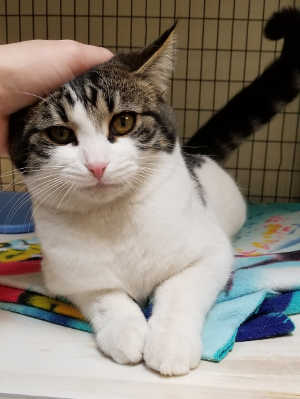
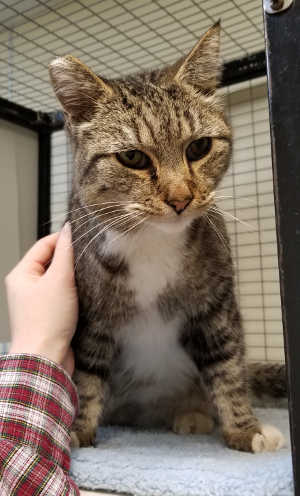
This domestic short hair cat is in kennel No. 49, ID No. 11413. Photo courtesy of Lake County Animal Care and Control. Male brown tabby
This male cat has a short brown tabby coat with white markings.
He’s in kennel No. 49, ID No. 11413.
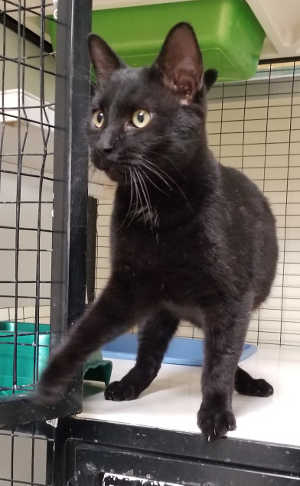
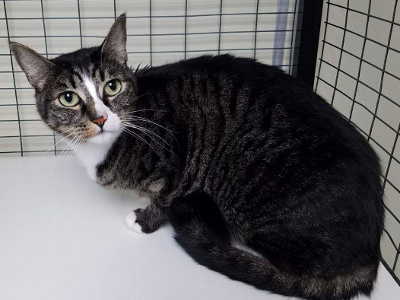
This handsome male domestic short hair cat is in cat room kennel No. 53, ID No. 11370. Photo courtesy of Lake County Animal Care and Control. Male domestic short hair
This handsome male domestic short hair cat has an all-black coat.
He already has been neutered.
He’s in cat room kennel No. 53, ID No. 11370.
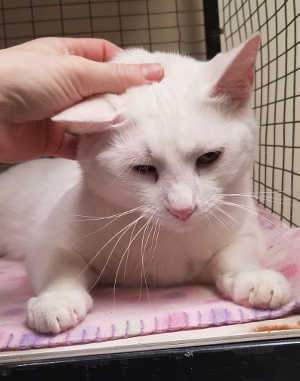
“Princess” is a white domestic short hair cat in cat room kennel No. 70, ID No. 11361. Photo courtesy of Lake County Animal Care and Control. ‘Princess’
“Princess” is a white domestic short hair cat with a white coat and green eyes.
She already has been spayed.
She’s in cat room kennel No. 70, ID No. 11361.
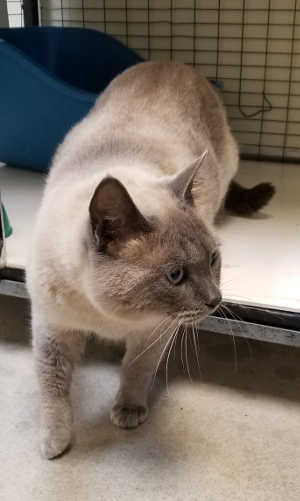
“Simon” is a male domestic short hair cat in kennel No. 74, ID No. 11458. Photo courtesy of Lake County Animal Care and Control. ‘Simon’
“Simon” is a male domestic short hair cat with a blue point coat.
He’s already been neutered.
He’s in kennel No. 74, ID No. 11458.
This male domestic short hair is in cat room kennel No. 117, ID No. 11418. Photo courtesy of Lake County Animal Care and Control. Male domestic short hair
This male domestic short hair has a brown tabby coat.
He’s in cat room kennel No. 117, ID No. 11418.
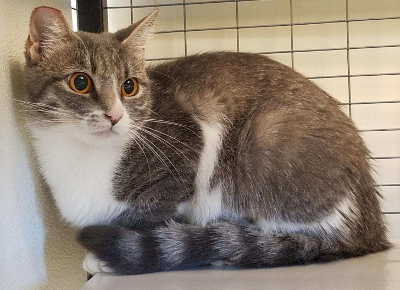
This female domestic short hair cat is in cat room kennel No. 130, ID No. 11166. Photo courtesy of Lake County Animal Care and Control. Female domestic short hair
This female domestic short hair cat has a gray tabby coat.
She already has been spayed.
She’s in cat room kennel No. 130, ID No. 11166.
This female domestic short hair is in kennel No. 140, ID No. 11225. Photo courtesy of Lake County Animal Care and Control. Female domestic short hair
This female domestic short hair has a brown tabby coat and green eyes.
She’s in kennel No. 140, ID No. 11225.
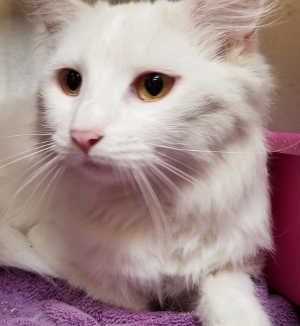
“Francis” is a male domestic short hair cat in cat room kennel No. 150, ID No. 11357. Photo courtesy of Lake County Animal Care and Control. ‘Francis’
“Francis” is a male domestic short hair cat with an all-white coat and gold eyes.
He already has been neutered.
He’s in cat room kennel No. 150, ID No. 11357.
Lake County Animal Care and Control is located at 4949 Helbush in Lakeport, next to the Hill Road Correctional Facility.
Office hours are Monday through Friday, 11 a.m. to 5 p.m., and 11 a.m. to 3 p.m., Saturday. The shelter is open from 11 a.m. to 4 p.m. Monday through Friday and on Saturday from 11 a.m. to 3 p.m.
For more information call Lake County Animal Care and Control at 707-263-0278.
Email Elizabeth Larson at This email address is being protected from spambots. You need JavaScript enabled to view it.. Follow her on Twitter, @ERLarson, or Lake County News, @LakeCoNews.
LAKE COUNTY, Calif. – Cal Fire reported that it has initiated pile burning operations for removal of hazardous vegetation on the Boggs Mountain Demonstration State Forest and will continue to do so throughout the winter of 2019.
The hazardous vegetation is a result of the Valley fire and bark beetle mortality.
Over the past three years the forest management staff have been salvage logging to remove these standing dead trees and brush in preparation for replanting.
As a result of this treatment there are hundreds of residual slash piles that must be disposed of. Disposal of this material is not feasible by other means due to the volume of the material, number of piles, access issues, and time frame of which it must be disposed of, Cal Fire said.
“It is the goal of the department to restore the forest to a condition that is safe for public access. Allowing wood cutting, trail access, and camping is an important part of having this public land in Lake County,” said Cal Fire Sonoma Lake Napa Unit Chief Shana Jones.
While the forest has been open to the public for day use since July, there are still many hazards present on the forest that must be mitigated. Officials said pile burning operations are a key component of this work.
State forest personnel will conduct the pile burns throughout the winter on permissive burn days. A large scale smoke management plan has been completed in coordination with the Sacramento Air Resources Board and the Lake County Air Quality Management District. Department staff will follow the same rules and regulations that apply to the public.
Cal Fire reminded the public that the Boggs Mountain Demonstration State Forest is open for day use only and is subject to temporary closures due to hazardous conditions at the forest managers discretion per state law.
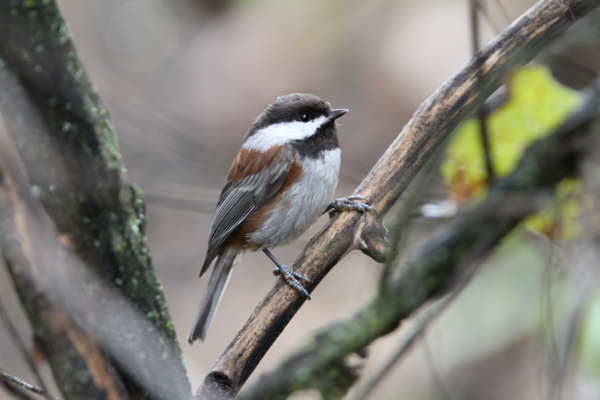
A chestnut-backed chickadee. Photo by Brad Barnwell. LAKE COUNTY, Calif. – This year, the annual Clear Lake Christmas Bird Count, held by the Redbud Audubon Society, will be on Saturday, Dec. 15.
The Christmas Bird Count is a traditional project of Audubon societies around the country.
This is National Audubon's 119th Christmas Bird Count with all counts being held between the dates of Friday, Dec. 14, 2018 through Saturday, Jan. 5, 2019.
Each December or early January, birders gather to record every individual bird and species encountered during the day.
Each count group has a designated circle of 15 miles in diameter and tries to cover as much ground as possible within a certain period of time.
There is a specific methodology to the Christmas Bird Count, and all participants must make arrangements to participate in advance with the circle compiler within an established circle, but anyone can participate.
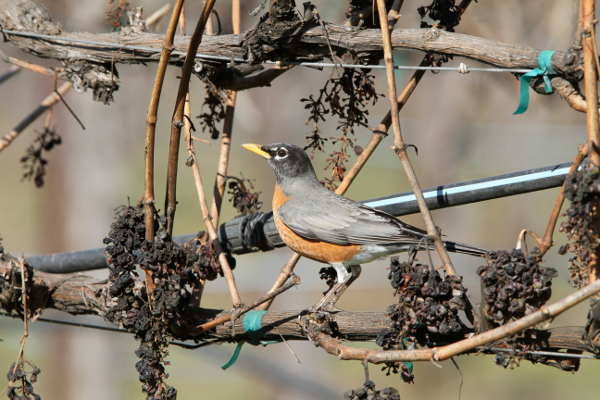
An American Robin. Photo by Brad Barnwell. Count volunteers follow specified routes through the designated 15-mile (24-kilometer) diameter circle, counting every bird they see or hear all day.
It's not just a species tally; all birds are counted all day, giving an indication of the total number of birds in the circle that day.
If you are a beginning birder, you will be able to join a group that includes at least one experienced birdwatcher.
If your home is within the boundaries of a Christmas Bird Count circle, then you can stay at home and report the birds that visit your feeder on count day as long as you have made prior arrangements with the count compiler.
The data collected by each count group are then sent to the National Audubon Headquarters in New York and is made available online.
Redbud Audubon invites all birders and nature enthusiasts to join in the upcoming count. Birders of all skill levels are encouraged to participate. This is Audubon’s longest running wintertime tradition and is the 44th year the count has taken place in Lake County.
There will be two main groups that participants might wish to join – one will meet at Anderson Marsh State Historic Park and the other will meet at the Visitor’s Center Parking lot at the Clear Lake State Park.
Both groups will meet at 8 a.m. and continue through to early or mid-afternoon.
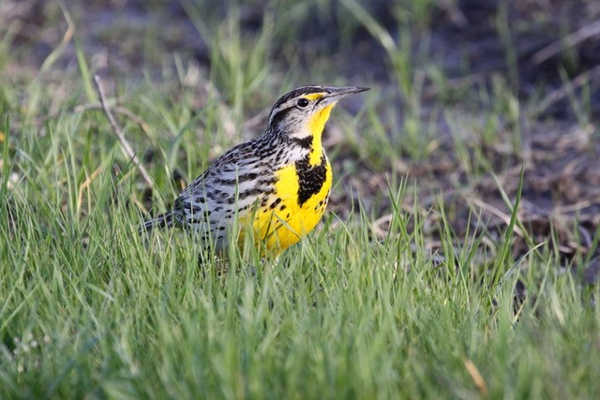
A meadowlark. Photo by Brad Barnwell. After the count, participants are invited to a pizza dinner at 5 p.m. at Kelseyville Pizza on State Street in Kelseyville to join in the count compilation where the tally of the day’s sightings is compiled.
Previous to the bird count, at the Thursday, Dec. 13, Redbud Audubon meeting, Brad and Kathy Barnwell will present an extensive slide show and discussion of distinguishing features of birds that are often seen during the annual count.
The meeting is open to the public and visitors are encouraged to attend. It starts at 7 p.m. The meeting is being held at the Kelseyville Methodist/Unitarian Social Hall, corner of Main and First streets.
If you are interested in participating in the bird count, call Brad or Kathy Barnwell at 707-263-1283.
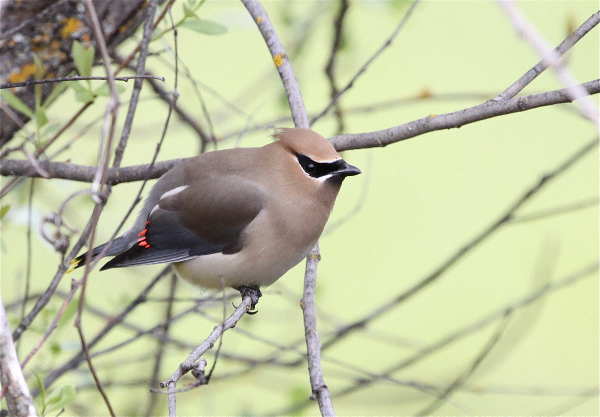
A cedar waxwing. Photo by Brad Barnwell. The Christmas Bird Count began more than a century ago when 27 conservationists in 25 localities, led by scientist and writer Frank Chapman, changed the course of ornithological history.
On Christmas Day in 1900, the small group posed an alternative to the “side hunt,” a Christmas day activity in which teams competed to see who could shoot the most birds and small mammals. Instead, Chapman proposed to identify, count and record all the birds they saw, founding what is now considered to be the world’s most significant citizen-based conservation effort – and century-old institution.
Scientists rely on the remarkable trend data of Audubon’s CBC to better understand how birds and the environment are faring throughout North America – and what needs to be done to protect them. Data from Audubon’s signature Citizen Science program are at the heart of numerous peer-reviewed scientific studies.
With all of the issues, including climate change and habitat loss, facing both local bird species and birds worldwide, there is no time like the present to start getting involved in local bird conservation and educating yourself about the numerous bird species we have right here in Lake County; the annual Christmas Bird Count is a fun way of doing this.
Santa Claus visits with a young visitor at a past “Christmas in Middletown” event in Middletown, Calif. Photo by Davis Palmer. MIDDLETOWN, Calif. – The annual “Christmas in Middletown” event will take place this year on Saturday, Dec. 8, from 4 to 8 p.m.
Sponsored by the Middletown Area Merchants Association, this free event lets friends and families celebrate the season together along with local businesses and organizations, filling the streets of Middletown with cheer, rain or shine.
Nonprofit organizations set up booths with goodies, crafts, and gift-wrapping services on the streets throughout town, to raise funds for their good works.
The town looks festive with decorated merchant storefronts and business-sponsored Christmas trees that are decorated by area schoolchildren. The trees are later donated to local families in need through Spirit of the Season.
Individual businesses compete for “best decorated” storefront, and they pass out their own refreshments to passersby.
In the free “Passport for Fun” program, participants visit member businesses and collect passport stamps for a chance to win a prize.
This year, the nine prizes include two firepits donated by Hardester’s Markets and $25 gift certificates from participating area businesses.
The brand new bands of the Middletown Middle and High School will give a performance starting at 5 p.m. on the steps of the Library in conjunction with a “Celebrate a Life” service conducted by Hospice Services of Lake County (rain cancels the band performance).
Santa Claus arrives at 5:30 p.m. at the Middletown Square Park on an old-fashioned fire truck. Afterward, he meets children from 5:30 to 7 p.m. and Mrs. Claus gives each a stuffed animal, courtesy of Hospice Services.
Nearby is a free hot chocolate bar and craft table for kids, donated and run by the Middletown Seventh-Day Adventist School.
Besides local restaurants, street food will be available for dinner from Goddess of the Mountain, A Passion for Food, and Smoked Out BBQ.
It’s a perfect small-town event! Find out more at the Middletown Area Merchants Association Web site at www.middletownareamerchants.com.
 How to resolve AdBlock issue?