 How to resolve AdBlock issue?
News
What's up for December? High rates for the Geminid meteor shower and a visible comet.
This month’s Geminid meteors peak on the morning of Dec. 14 at 7:30 a.m. Eastern Standard Time or 4:30 a.m. Pacific and are active from Dec. 4 through the 17. The peak lasts for a full 24 hours, meaning meteor watchers around the globe will get to see this spectacle.
If you can see the familiar winter constellations Orion and Gemini in the sky, you'll see some Geminids. Expect to see up to 120 meteors per hour from a dark sky location but only after the first quarter moon sets around midnight your local time. From the Southern Hemisphere, observers should see fewer but still plenty of medium-speed meteors once Gemini rises above the horizon after midnight local time.
The best observing equipment for meteor watching is a comfortable chair and your eyes.
Comet 46P/Wirtanen started to brighten last month but it will be easier to see in December. It's a short-period comet with an orbital period of only 5.4 years. It's diameter is estimated to be three quarters of a mile or 1.2 kilometers across.
On Dec. 16, 46P will be only 7.2 million miles or 11.7 million kilometers from Earth and will reach an estimated naked-eye magnitude of 3 to 7.5.
Catch your last view of Saturn for several months when it's near the Moon at sunset Dec. 8 through 10. Then Mars meets up with the Moon Dec. 13 through 15.
From Dec. 24 to 26, catch the Moon above, near, and below Leo's bright white star Regulus. Year-end brings the Moon near Virgo's pretty white star Spica from Dec. 29 through 31.
Remember, you can catch up on all of NASA's current and future missions at: www.nasa.gov .
Jane Houston Jones works for NASA's Jet Propulsion Laboratory in Pasadena.
Lt. Shannon Barney said that just before 12:45 p.m. Wednesday the Mendocino County Sheriff's Office received a call related to found human remains in the South Fork of the Eel River, just south of the Humboldt/Mendocino County line in Piercy.
The body was first observed by a wildlife photographer around 9 a.m. that day but the photographer did not recognize it as human remains at first, thinking it might have been a deceased animal, Barney said.
Barney said the photographer later examined the photographs and showed them to a friend, and they decided to contact a member of the Southern Humboldt Technical Rescue Team, or SHTRT, about their concern.
SHTRT notified the Mendocino County Sheriff's Office and then responded to the location with a swift water team to assist in confirming if there was a human body and if so, to assist in body recovery, Barney said.
Team members entered the river with a raft and navigated to a closer vantage point where it was confirmed to be a human body entangled in branches of a downed tree laying partially in the water of the Eel River, according to Barney.
The SHTRT was able to free the body from the tree branches and then navigate back to the shoreline. The body appeared to be that of a white male adult, over 6 feet tall, with a heavy build. Barney said the decedent appeared to have been in the water for a week or more and did not have any identification on him.
On Thursday, the Mendocino County Sheriff's Office was contacted by a family member of a missing adult male from Santa Rosa. Barney said the family member advised they heard of the story of the body’s discovery on a local news outlet.
This family member indicated her brother had visited her in Eureka and was last seen leaving to go back to his home in Santa Rosa. This was in mid-November and her brother had not been seen or heard from since then, Barney said.
Barney said the Santa Rosa Police Department does have an active missing persons investigation on the caller's brother. The missing person matches the description of the male who was recovered.
The missing person’s vehicle was later located near Confusion Hill, approximately 6 miles upstream from where the body was found, Barney said.
Barney said the cause of death is not yet know and an autopsy is schedule for Tuesday, Dec. 11.
The Mendocino County Sheriff’s Office is not releasing any further information about the recovered body or the missing person's identify until the remains are positively identified, Barney said.
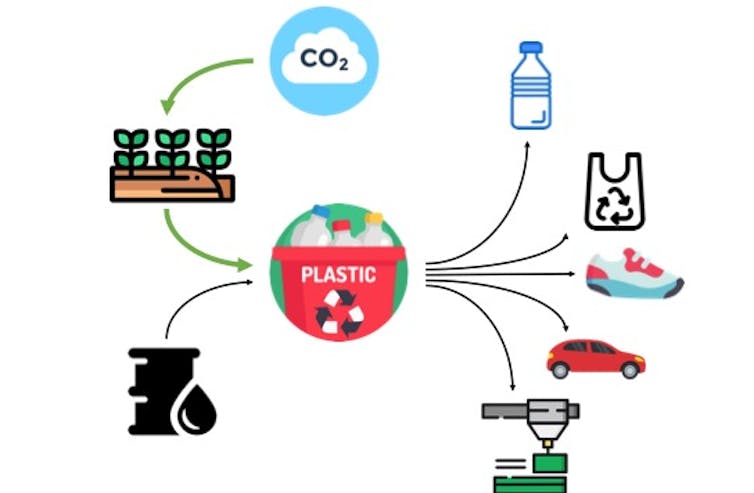 Over 99 percent of today’s plastics come from oil, but new bio-based options are becoming available. Icons by Vectors Market, Freepik and srip, CC BY
What do your car, phone, soda bottle and shoes have in common? They’re all largely made from petroleum. This nonrenewable resource gets processed into a versatile set of chemicals called polymers – or more commonly, plastics. Over 5 billion gallons of oil each year are converted into plastics alone.
Polymers are behind many important inventions of the past several decades, like 3D printing. So-called “engineering plastics,” used in applications ranging from automotive to construction to furniture, have superior properties and can even help solve environmental problems. For instance, thanks to engineering plastics, vehicles are now lighter weight, so they get better fuel mileage. But as the number of uses rises, so does the demand for plastics. The world already produces over 300 million tons of plastic every year. The number could be six times that by 2050.
Petro-plastics aren’t fundamentally all that bad, but they’re a missed opportunity. Fortunately, there is an alternative. Switching from petroleum-based polymers to polymers that are biologically based could decrease carbon emissions by hundreds of millions of tons every year. Bio-based polymers are not only renewable and more environmentally friendly to produce, but they can actually have a net beneficial effect on climate change by acting as a carbon sink. But not all bio-polymers are created equal.

Degradable bio-polymers
You may have encountered “bioplastics” before, as disposable utensils in particular – these plastics are derived from plants instead of oil. Such bio-polymers are made by feeding sugars, most often from sugar cane, sugar beets, or corn, to microorganisms that produce precursor molecules that can be purified and chemically linked together to form polymers with various properties.
Plant-derived plastics are better for the environment for two reasons. First, there is a dramatic reduction in the energy required to manufacture plant-based plastics – by as much as 80 percent. While each ton of petroleum-derived plastic generates 2 to 3 tons of CO₂, this can be reduced to about 0.5 tons of CO₂ per ton of bio-polymer, and the processes are only getting better.

Second, plant-based plastics can be biodegradable, so they don’t accumulate in landfills.
While it’s great for disposables like plastic forks to biodegrade, sometimes a longer lifetime is important – you probably wouldn’t want the dashboard of your car to slowly turn into a pile of mushrooms over time. Many other applications require the same type of resilience, such as construction materials, medical devices and home appliances. Biodegradable bio-polymers are also not recyclable, meaning more plants need to be grown and processed continually to meet demand.
Bio-polymers as carbon storage
Plastics, no matter the source, are mainly made of carbon – about 80 percent by weight. While petroleum-derived plastics don’t release CO₂ in the same way that burning fossil fuels does, they also don’t help sequester any of the excess of this gaseous pollutant – the carbon from liquid oil is simply converted into solid plastics.
Bio-polymers, on the other hand, are derived from plants, which use photosynthesis to convert CO₂, water and sunlight to sugars. When these sugar molecules are converted into bio-polymers, the carbon is effectively locked away from the atmosphere – as long as they’re not biodegraded or incinerated. Even if bio-polymers end up in a landfill, they will still serve this carbon storage role.
CO₂ is only about 28 percent carbon by weight, so polymers comprise an enormous reservoir in which to store this greenhouse gas. If the current world annual supply of around 300 million tons of polymers were all non-biodegradable and bio-based, this would equate to a gigaton — a billion tons — of sequestered CO₂, about 2.8 percent of current global emissions. In a recent report, the Intergovernmental Panel on Climate Change outlined capturing, storing and reusing carbon as a key strategy for mitigating climate change; bio-based polymers could make a key contribution, up to 20 percent of the CO₂ removal required to limit global warming to 1.5 degrees Celsius.
The non-degradable biopolymer market
Current carbon sequestration strategies, including geological storage that pumps CO₂ exhaust underground or regenerative agriculture that stores more carbon in the soil, lean heavily on policy to drive the desired outcomes.
While these are critical mechanisms for climate change mitigation, the sequestration of carbon in the form of bio-polymers has the potential to harness a different driver: money.
Competition based on price alone has been challenging for bio-polymers, but early successes show a path toward greater penetration. One exciting aspect is the ability to access new chemistries not currently found in petroleum-derived polymers.
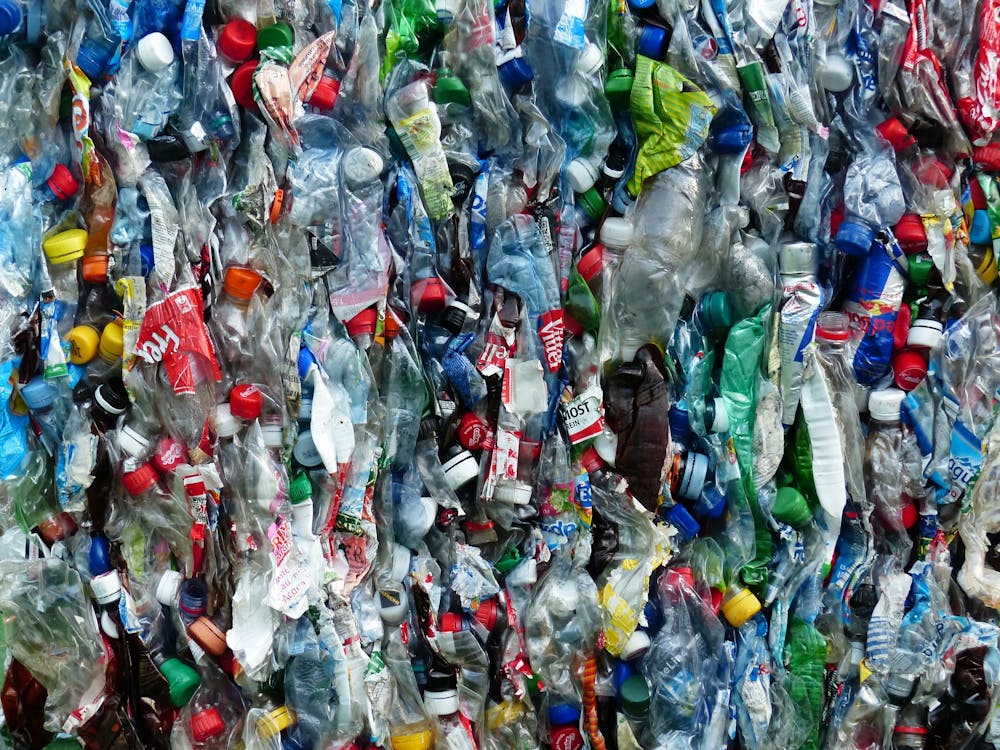
Consider recyclability. Few traditional polymers are truly recyclable. These materials actually are most often downcycled, meaning they’re suitable only for low-value applications, such as construction materials. Thanks to the tools of genetic and enzyme engineering, however, properties like complete recyclability – which allows the material to be used repeatedly for the same application – can be designed into bio-polymers from the beginning.
Bio-polymers today are based largely on natural fermentation products of certain species of bacteria, such as the production by Lactobacillus of lactic acid – the same product that provides the tartness in sour beers. While these constitute a good first step, emerging research suggests the true versatility of bio-polymers is set to be unleashed in the coming years. Thanks to the modern ability to engineer proteins and modify DNA, custom design of bio-polymer precursors is now in reach. With it, a world of new polymers become possible – materials in which today’s CO₂ will reside in a more useful, more valuable form.

.jpg)
For this dream to be realized, more research is needed. While early examples are here today – like the partially bio-based Coca-Cola PlantBottle – the bioengineering required to achieve many of the most promising new bio-polymers is still in the research stage – like a renewable alternative to carbon fiber that could be used in everything from bicycles to wind turbine blades.
Government policies supporting carbon sequestration would also help drive adoption. With this kind of support in place, significant use of bio-polymers as carbon storage is possible as soon as the next five years – a timeline with the potential to make a significant contribution to helping solve the climate crisis.
Joseph Rollin, Postdoctoral Researcher in Bioenergy, National Renewable Energy Laboratory and Jenna E. Gallegos, Postdoctoral Researcher in Chemical and Biological Engineering, Colorado State University
This article is republished from The Conversation under a Creative Commons license. Read the original article.
Lake County Registrar of Voters Diane Fridley released the results of the official canvass on Thursday night.
Fridley, who retires Dec. 28, wrapped up her final official canvass on the day of the deadline. Election officials have 30 days to complete the canvass and certify the election results.
One of the notable findings in the official canvass is that voter turnout was a strong 65.7 percent. That’s just 7 percentage points below the November 2016 presidential election.
Absentee, or vote-by-mail, voters remain in the majority in Lake County, casting 47.2 percent of the total ballots, while precinct voters accounted for 18.5 percent.
In local races, key changes in the results included Measure L – the South Lake County Fire special benefit tax – getting a small boost in support that pushed it over the two-thirds supermajority it needed.
In preliminary results, Measure L had 66.2 percent, and needed 66.7 percent to pass. The final results showed that the measure received a yes vote of 67.9 percent versus a no vote of 32.1 percent, giving it the margin needed to go into effect. Fire officials have said it is necessary to maintain service levels across the south county.
Another notable change is that the result in the race for Lake County Board of Education’s Trustee Area No. 5 flipped.
Incumbent Madelene Lyon had led by a slim 0.6 percent in the preliminary count over challenger Anna Rose Ravenwoode. In the final count, Ravenwood edged Lyon out, 51 to 48.5 percent, respectively.
The other change in standings was in the race for three seats on the Konocti Unified School District Board of Trustees. The preliminary results showed Joan Mingori leading the field, followed by Bill Diener and Pamela Bening-Hale. In the final results all three were still elected, with Mingori maintaining the top spot but Bening-Hale’s vote count just edging out Diener’s.
In what was the year’s most notable race, for Superior Court judge, Shanda Harry strengthened her commanding lead over Don Anderson to win the seat.
Harry, a deputy county counsel for the county of Lake, won with 59.1 percent of the vote to 40.5 percent for Anderson, the sitting district attorney.
With her election, Harry becomes the second woman to sit on the bench in Lake County’s 157-year history.
Lake County Superior Court officials said Harry’s swearing-in ceremony will be held Jan. 7.
In the race for Clearlake City Council, Dirk Slooten remained the top vote-getter with 40.5 percent. Elected along with Slooten is Russell Cremer, with 35.6 percent. Russell Perdock finished out of the running with 23.4 percent of the vote.
The final vote count also showed across-the-board strengthening of support for school bonds, all of which passed.
Measure H, which will raise $28 million for Middletown Unified’s schools, received a 60.8 percent yes vote in the final count, up nearly 3 percent from the preliminary count.
Upper Lake Unified School District placed two measures on the Nov. 6 ballot: Measure I, a $10 million bond for high school improvements, and Measure J, a $12 million bond for elementary and middle school renovations and upgrades.
The measures passed with 65.9 and 64.3 percent yes votes, respectively, with Measure I gaining 3.3 percent approval and Measure J another 2.1 percent when the final results came in.
A rundown of the final official results is published below.
FINAL OFFICIAL RESULTS
Judge of the Superior Court, Department 4
Shanda Harry: 11,574 ballots, 59.1 percent
Don Anderson: 7,928 ballots, 40.5 percent
Write-in candidate(s): 75 ballots, 0.4 percent
Lake County Board of Education, Trustee Area No. 3 (vote for one)
Denise Lee Loustalot: 1,735 ballots; 50.3 percent
Joanne Breton: 1,697 ballots, 49.2 percent
Write-in candidate(s): 18 ballots, 0.5 percent
Lake County Board of Education, Trustee Area No. 5 (vote for one)
Anna Rose Ravenwoode: 2,014 ballots, 51 percent
Madelene M. Lyon, 1,913 ballots, 48.5 percent
Write-in candidate(s): 19 ballots; 0.5 percent
Mendocino-Lake Community College District Governing Board, Trustee Area No. 5 (vote for one)
Philip “Ed” Nickerman: 789 ballots, 54.7 percent
Camille Schraeder: 642 ballots, 44.5 percent
Write-in candidate(s): 11 ballots; 0.8 percent
Mendocino-Lake Community College District Governing Board, Trustee Area No. 6 (vote for one)
John H. Tomkins: 2,303 ballots; 57.3 percent
Andy Anderson: 1,698 ballots; 42.2 percent
Write-in candidate(s): 20 ballots; 0.5 percent
Middletown Unified School District Board of Trustees (vote for three)
Larry Allen: 2,026 ballots; 30.1 percent
Latrease Walker: 1,764 ballots; 26.2 percent
Thad R. Owens: 1,686 ballots; 25 percent
Christina Braden: 1,250 ballots; 18.6 percent
Write-in candidate(s): 11 ballots; 0.2 percent
Konocti Unified School District Board of Trustees (vote for three)
Joan S. Mingori: 2,994 ballots; 26.7 percent
Pamela Bening-Hale: 2,911 ballots; 26 percent
Bill Diener: 2,858 ballots; 25.5 percent
Herb Gura: 2,410 ballots; 21.5 percent
Write-in candidate(s): 30 ballots; 0.3 percent
Lakeport Unified School District Board of Trustees, four-year term (vote for two)
Carly Alvord: 2,426 ballots; 39.4 percent
Jennifer Hanson: 2,340 ballots, 38 percent
Thomas W. Powers: 1,092 ballots, 17.7 percent
Write-in candidate(s): 307 ballots; 5 percent
Lakeport Unified School District Board of Trustees, two-year term (vote for one)
Daniel Buffalo: 2,233 ballots; 60.3 percent
Dennis Darling: 1,447 ballots; 39.1 percent
Write-in candidate(s): 22 ballots; 0.6 percent
Upper Lake Unified School District Board of Trustees (vote for five)
Ronald L. Raetz: 1,529 ballots; 20 percent
Ana Santana: 1,442 ballots; 18.9 percent
Diane Tomkins Plante: 1,318 ballots; 17.2 percent
Franklin Gudmundson: 1,151 ballots; 15.1 percent
Claudine M. Pedroncelli: 1,138 ballots; 14.9 percent
Don "Donnie" Meri: 1,041 ballots; 13.6 percent
Write-in candidate(s): 24 ballots; 0.3 percent
Clearlake City Council (vote for two)
Dirk C. Slooten: 1,847 ballots; 40.5 percent
Russell Cremer: 1,624 ballots; 35.6 percent
Russell Perdock: 1,070 ballots; 23.4 percent
Write-in candidate(s): 22 ballots; 0.5 percent
Clearlake city treasurer
No candidate filed
Write-in candidate(s): 202 ballots; 100 percent
Redbud Health Care District director, Zone 2 (vote for one)
Sandra M. Richards: 572 ballots; 58.8 percent
Brice Trask: 238 ballots; 24.5 percent
Mark Burkdoll: 161 ballots; 16.6 percent
Write-in candidate(s): 1 ballot; 0.1 percent
Email Elizabeth Larson at
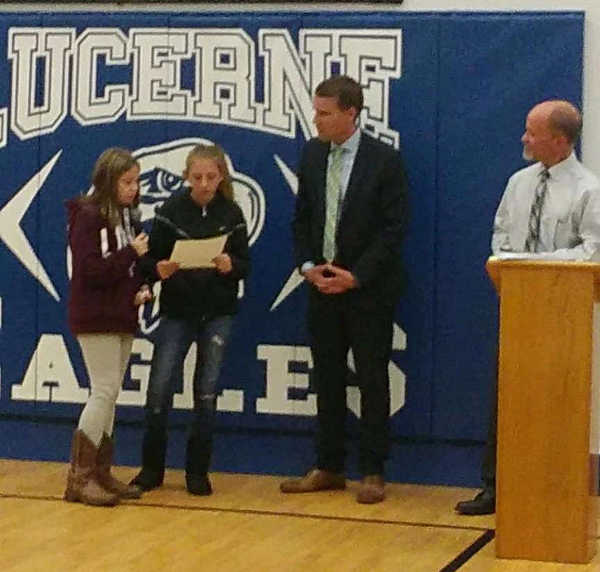
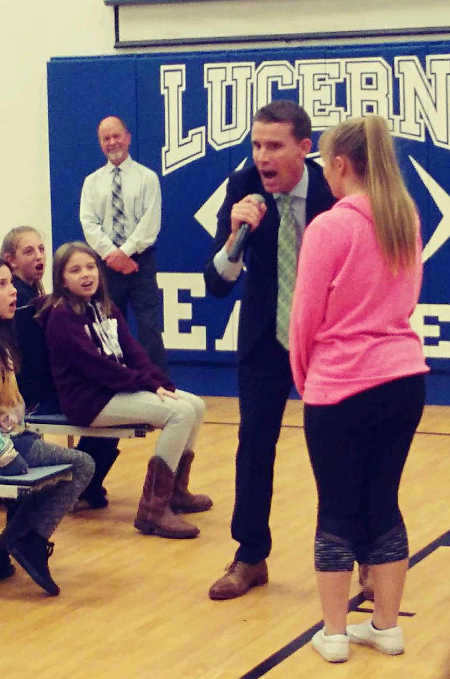
LUCERNE, Calif. – Lucerne Elementary School students had the chance to learn about government directly from Lake County’s state senator, Mike McGuire, during a special Wednesday visit.
McGuire made an appearance at an assembly that was held for the seventh and eighth grade students.
He spoke to the students about leadership and government, which supports the curriculum for the eighth grade students on the U.S. Constitution.
Sen. McGuire engaged students with questions about what changes they would make in our country to make it a better place.
At one point in the assembly, McGuire had students and staff up on their feet doing the sprinkler dance and having a great time. Even Principal/Superintendent Mike Brown and District 3 Supervisor-elect Eddie Crandell, also a parent of a student, got in on the action.
Students Tillie Grant and Cassidy McAuley presented Sen. McGuire with an Eagle lapel pin and named him an honorary "Lucerne Eagle.”
Staff said the event was a special treat for the students and made a huge impact on them.

CLEARLAKE, Calif. – On Saturday, Dec. 1, the city of Clearlake and the Clear Lake Chamber of Commerce sponsored the annual Christmas Parade along Lakeshore Drive and tree lighting ceremony at Austin Park.
There were a number of outstanding participants in the parade, but the judges chose the Lower Lake High School Marching Band as the first place winner, with Clearlake Bass Master in second and Action Sanitation in third.
“I would like to thank all the participants in this year’s parade,” said Clear Lake Chamber Manager Patrick Prather.
This year’s grand marshals for the parade were two students, Bianca Saldana and Jovanni Marcial.
Bianca was selected by Pomo School staff members and Jovanni was selected by other students at Burns Valley School. Both were chosen based on outstanding personal qualities that make them stand out as positive examples by students and staff alike.
City Manager Greg Folsom, added “This is one of my favorite events of the year. I love the participation of the community in braving the elements to participate in the festivities. The city of Clearlake has added more lights in Austin Park this year, as well as on City Hall.”