 How to resolve AdBlock issue?
News
This committee oversees a wide array of policy areas, including general plan development, land use, housing element, city and county organization and powers, special district governance and finance, government transparency and accountability measures, redevelopment, joint powers authorities, state mandates, county clerks/recorders and civil grand juries.
“I’m honored to remain in this critical role,” Aguiar-Curry said. “As chair of the Local Government committee this year, I will continue to prioritize land use planning, disaster preparedness, and housing. ACA 1, a constitutional amendment, is my first step as chair to foster the investment needed in local infrastructure, housing, and public safety projects. I thank Speaker Rendon for this opportunity, and I look forward to continuing to work for my district and our entire state on these critical areas.”
In addition to this leadership position, Aguiar-Curry was also reappointed as member on the committees of agriculture, governmental organization, health and transportation.
Aguiar-Curry represents the Fourth Assembly District, which includes all of Lake and Napa Counties, parts of Colusa, Solano and Sonoma counties, and all of Yolo County except West Sacramento.
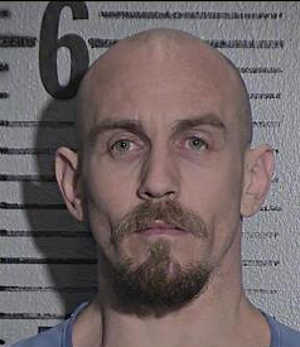
LOWER LAKE, Calif. – Authorities in Riverside County on Saturday apprehended a minimum-security inmate who walked away from Konocti Conservation Camp in Lower Lake on Dec. 31.
Inmate Nicolas Dunning, 32, was taken into custody without incident at around 1:15 a.m. Dec. 31 during a traffic stop in Coachella, according to the California Department of Corrections and Rehabilitation.
Authorities said the arrest was made by officers from the Riverside County Gang Impact Team based on investigative leads.
Dunning is being transported to Calipatria State Prison, and his case will be referred to the Imperial County District Attorney’s Office for consideration of escape charges.
Several law enforcement agencies assisted CDCR during the investigation, including the Imperial County Sheriff’s Department, California Highway Patrol, Anaheim Police Department, Cathedral City Police Department and Palm Springs Police Department.
Dunning was discovered missing at 7:40 a.m. on Monday, Dec. 31. A search of the camp buildings and grounds was immediately conducted. He was committed to CDCR from Imperial County in April 2018 with a five-year sentence for assault with a deadly weapon.
Since 1977, 99 percent of all offenders who have left an adult institution, camp or community-based program without permission have been apprehended.
The board will meet beginning at 10 a.m. Tuesday, Jan. 8, in the board chambers on the first floor of the Lake County Courthouse, 255 N. Forbes St., Lakeport.
The meeting can be watched live on Channel 8 and online at https://countyoflake.legistar.com/Calendar.aspx. Accompanying board documents, the agenda and archived board meeting videos also are available at that link.
At the start of the meeting, outgoing Supervisors Jeff Smith and Jim Steele will offer remarks, and the board will present to them commendations for their service. Smith has served five four-year terms, while Steele is completing his first.
At 9:11 a.m., the oath of office will be administered to their successors. Bruno Sabatier is succeeding Smith in representing District 2 and EJ Crandell is the new District 3 supervisor.
Immediately after Sabatier and Crandell are sworn, they will be seated and participate in electing the new year’s chair and vice chair, as well as the chair and vice chair of the Lake County Board of Equalization and the Lake County In-Home Supportive Services Public Authority Board of Directors .
At 9:15 a.m., the board also will consider appointing new District 3 Commissioner Batsulwin A. Brown – who will succeed Crandell on the Lake County Planning Commission – and reappoint District 1 Commissioner John H. Hess III, District 2 Commissioner Bob Malley, District 4 Commissioner Daniel Camacho and District 5 Commissioner Daniel Suenram.
In an untimed item, the board will make appointments to the EaRTH Emergency Medical Care Committee, Fish and Wildlife Advisory Council, Hartley Cemetery District, IHSS Public Authority Advisory Committee, Lakeport Fire Protection District, Lake County Resource Conservation District, Mental Health Board, Spring Valley CSA No. 2 Advisory Board and Upper Lake Cemetery District.
The full agenda follows.
CONSENT AGENDA ITEMS
5.1: Adopt proclamation commending Jeff Smith for 20 years of service as a member of the Lake County Board of Supervisors.
5.2: Adopt proclamation commending Jim Steele for four years of service as a member of the Lake County Board of Supervisors.
5.3: Approve waiver of applicant interview travel policy to enable reimbursement to assistant county administrator finalist candidates.
5.4: (a) Approve amendment one by and between the county of Lake and Richard Bachman, DVM to provide veterinary professional services for an amount not to exceed $50,000 annually, and authorize the chair to sign, and (b) approve amendment one by and between the county of Lake and Debra Sally, DVM to provide veterinary professional services for an amount not to exceed $50,000 annually, and authorize the chair to sign.
5.5: Adopt resolution approving agreement between the county of Lake and the county of Plumas for medi-cal administrative activities and targeted case management and authorizing the director of Health Services to sign.
5.6: Sitting as the Lake County Watershed Protection District Board of Directors, consideration and approval of joint funding agreement with the U.S. Geological Survey, U.S. Dept. of the Interior for annual maintenance of the Kelsey Creek flow gauge station in the amount of $15,650 and authorize the chair to sign.
5.7: Approve aeronautical activities permit at Lampson Field Airport between the county of Lake and Lake Aero Styling Repair for fiscal year 2018/2019, and authorize the chair to sign.
5.8: Approve agreement between the sheriff's office and the Public Works Department for use of inmate workers.
5.9: Approve agreement between the county of Lake and the city of Lakeport for dispatch services.
5.10: Adopt resolution revising the list of capital assets in Social Services Budget Unit 5011.
TIMED ITEMS
6.1, 9 a.m.: Remarks from outgoing Supervisors Smith and Steele, and presentations and commendations thereto.
6.2, 9:11 a.m.: Administer oath of office to District 2 and District 3 supervisors.
6.3, 9:12 a.m.: Election of chair of the board of supervisors and vice-chair of the board of supervisors for 2019 (vice-chair conducts election).
6.4, 9:13 a.m.: Sitting as the Lake County Board of Equalization, election of chair and vice-chair of the Lake County Local Board of Equalization for 2019.
6.5, 9:14 a.m.: Sitting as the Lake County In-Home Supportive Services, election of chair and vice-chair of the Lake County In-Home Supportive Services Public Authority Board of Directors for 2019.
6.6, 9:15 a.m.: Appoint/reappoint members of the Lake County Planning Commission for a two-year term; (a) reappoint District 1 Commissioner John H. Hess III; (b) reappoint District 2 Commissioner Bob Malley; (c) appoint District 3 Commissioner Batsulwin A. Brown; (d) reappoint District 4 Commissioner Daniel Camacho; and (e) reappoint District 5 Commissioner Daniel Suenram.
6.7, 9:20 a.m.: Consideration of continuing a proclamation of a local health emergency by the Lake County health officer due to the Mendocino Complex fire.
6.9, 10 a.m.: Public hearing, final Community Development Block Grant review of the Performance of Grant No. 12-CDBG-8395.
UNTIMED ITEMS
7.2: Discussion and consideration of possible county responses to damage of county roads resulting from wildfires, including but not limited to the creation of zones of benefit .
7.3: Consideration of chairman's recommended 2019 committee assignments for members of the Board of Supervisors.
7.4: Consideration of the following appointments: EaRTH Emergency Medical Care Committee, Fish and Wildlife Advisory Council, Hartley Cemetery District, IHSS Public Authority Advisory Committee, Lakeport Fire Protection District, Lake County Resource Conservation District, Mental Health Board, Spring Valley CSA No. 2 Advisory Board and Upper Lake Cemetery District.
7.5: Consideration of (a) agreement between the county of Lake and Quincy Engineering Inc. for engineering services for replacement of Wolf Creek Bridge at Wolf Creek Road; (b) agreement between the county of Lake and Quincy Engineering for the rehabilitation of Bartlett Creek Bridge at Bartlett Springs Road; and (c) approve agreement between the county of Lake and Quincy Engineering for the rehabilitation of Middle Creek Bridge at Rancheria Road and authorize the chair to sign all documents.
7.6: Consideration of agreement between the county of Lake and Peterson Brustad Inc. in the amount of $499,971.00 for the Middle Creek Flood Control Feasibility Study for the community of Upper Lake, and authorize the chair to sign.
Email Elizabeth Larson at
The committee, or LEDAC, will meet from 7:30 to 9 a.m. Wednesday, Jan. 9, at Lakeport City Hall, 225 Park St.
The meeting is open to the public.
LEDAC Chair Wilda Shock reported that the agenda will include a presentation from Mendocino College Lake Center and CareerPoint Lake representatives about classes and training opportunities available for those currently employed or seeking employment.
She said there also will be updates on a variety of city projects completed or under way will be provided by City Manager Margaret Silveira and Community Development Director Kevin Ingram.
There also will be the annual election of the chair, vice chair and secretary, Shock said.
LEDAC advocates for a strong and positive Lakeport business community and acts as a conduit between the city and the community for communicating the goals, activities and progress of Lakeport’s economic and business programs.
Members are Chair Wilda Shock and Vice Chair Denise Combs, Candy De Los Santos, Bill Eaton, Melissa Fulton, Pam Harpster, Judith Kanavle, Terre Logsdon, Andy Lucas, Dan Peterson and Panette Talia. City staff who are members include City Manager Margaret Silveira and Community Development Director Kevin Ingram.
Email Elizabeth Larson at
Dogs available for adoption this week include mixes of American Bulldog, cattle dog, Chihuahua, Dachshund, German Shepherd, husky, Labrador Retriever, Maltese, pit bull, Rottweiler, shepherd and Shih Tzu.
Dogs that are adopted from Lake County Animal Care and Control are either neutered or spayed, microchipped and, if old enough, given a rabies shot and county license before being released to their new owner. License fees do not apply to residents of the cities of Lakeport or Clearlake.
If you're looking for a new companion, visit the shelter. There are many great pets hoping you'll choose them.
The following dogs at the Lake County Animal Care and Control shelter have been cleared for adoption (additional dogs on the animal control Web site not listed are still “on hold”).

Male Maltese
This male Maltese has a long white coat.
He’s in kennel No. 2a, ID No. 11598.

Female Chihuahua
This female Chihuahua has a medium-length buff-colored coat.
She’s in kennel No. 2b, ID No. 11599.

‘Growler’
“Growler” is a male Rottweiler with a short tan and black coat.
He’s in kennel No. 3, ID No. 11594.

Male Shih Tzu
This male Shih Tzu has a medium-length tan and gray coat.
He’s in kennel No. 4, ID No. 11597.

Female Chihuahua
This female Chihuahua has a short brown coat.
She’s in kennel No. 5, ID No. 11591.

Male shepherd
This young male shepherd has a medium-length tricolor coat.
He’s in kennel No. 6, ID No. 11600.

‘Bo’
“Bo” is a male American Bulldog with a short white and brown coat.
He’s in kennel No. 8, ID No. 11593.

Female Labrador Retriever
This female Labrador Retriever has a short black coat.
She’s in kennel No. 11, ID No. 11580.

Female cattle dog
This female cattle dog has a medium-length fawn-colored coat.
She’s in kennel No. 12, ID No. 11581.

Female pit bull
This female pit bull terrier has a short white and brindle coat.
She’s in kennel No. 13, ID No. 11579.

Male Chihuahua
This male Chihuahua puppy has a short tan coat.
He’s in kennel No. 14a, ID No. 11585.

Female Chihuahua
This female Chihuahua puppy has a short tan coat.
She’s in kennel No. 14b, ID No. 11586.

‘Jax’
“Jax” is a male shepherd-husky mix with a short tan and white coat.
He’s in kennel No. 15, ID No. 11547.

Male pit bull terrier
This male pit bull terrier has a short brindle and white coat.
He’s in kennel No. 18, ID No. 11543.

Senior Chihuahua
This senior male Chihuahua has a short black and gray coat.
He already has been neutered.
He’s in kennel No. 19, ID No. 11560.
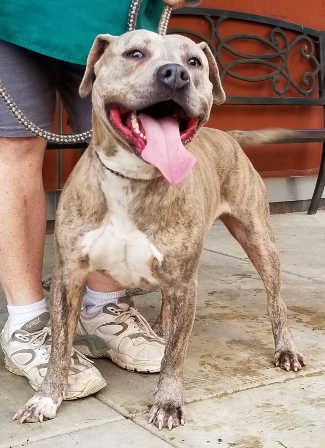
‘Tank’
“Tank” is a male pit bull terrier with a short brown brindle coat.
He already has been neutered.
He’s in kennel No. 21, ID No. 7002.

Male Chihuahua
This male Chihuahua has a short white and brindle coat.
He’s in kennel No. 28, ID No. 11565.

Male German Shepherd
This male German Shepherd has a medium-length tricolor coat.
He’s in kennel No. 33, ID No. 11564.
Lake County Animal Care and Control is located at 4949 Helbush in Lakeport, next to the Hill Road Correctional Facility.
Office hours are Monday through Friday, 11 a.m. to 5 p.m., and 11 a.m. to 3 p.m., Saturday. The shelter is open from 11 a.m. to 4 p.m. Monday through Friday and on Saturday from 11 a.m. to 3 p.m.
Visit the shelter online at http://www.co.lake.ca.us/Government/Directory/Animal_Care_And_Control.htm.
For more information call Lake County Animal Care and Control at 707-263-0278.
Email Elizabeth Larson at
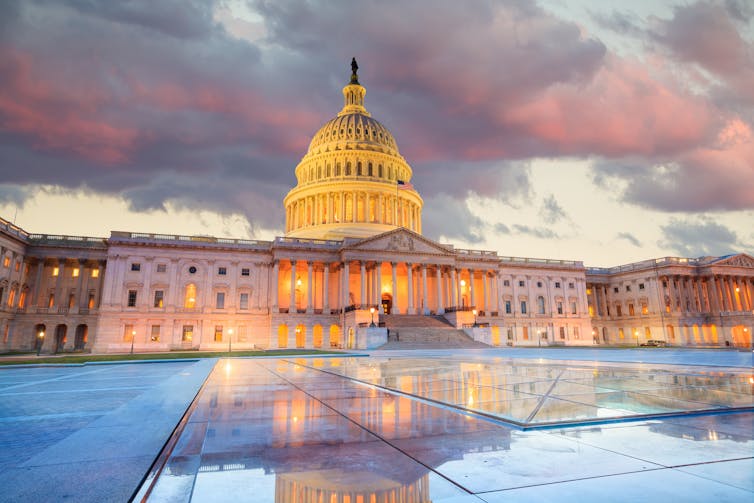
What will a divided Congress do over the next two years? Shutterstock
As the 116th Congress convenes, power has shifted from Republican control of both the Senate and House to a Republican Senate and a Democratic House, poised to battle each other under a Republican president who is under fire.
How can American political history help us anticipate what might be in the offing?
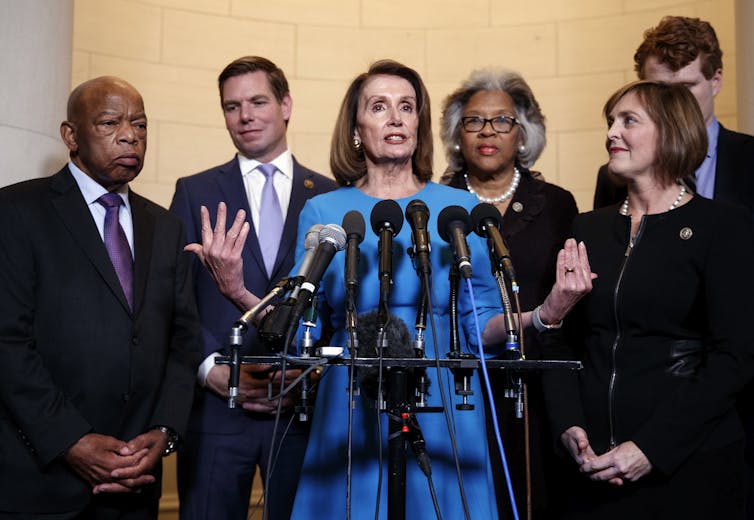
Democrat Nancy Pelosi of San Francisco is the new speaker of the House. AP/Carolyn Kaster
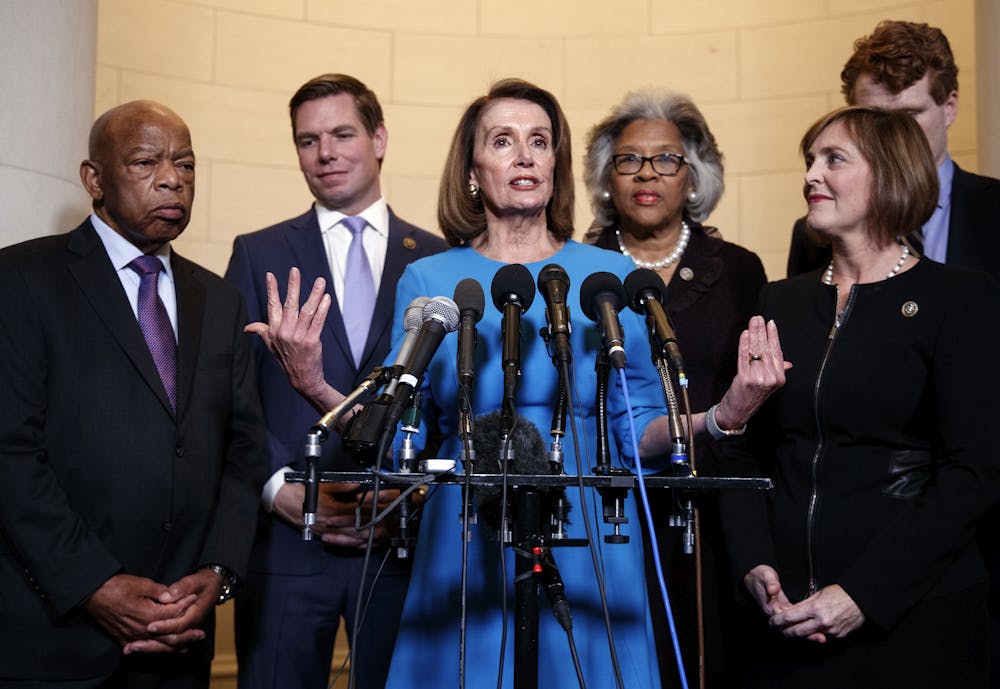
Congressional division means conflict
The Democratic takeover of the House was not unusual. The party not in power in the White House usually gains ground during midterm elections. That’s especially true in the House of Representatives, where all seats are up for grabs every two years.
Four previous midterm elections that produced divided Congresses suggest what to expect over the next two years.
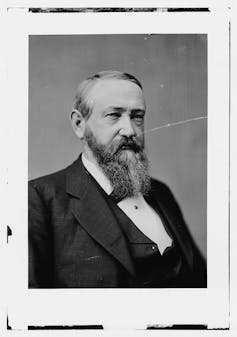
A Democratic majority in the House from 1890-92 ended the agenda of President Benjamin Harrison. Brady-Handy Collection, Library of Congress
In 1890 and 1910 Democratic majorities in the House brought an end to the agendas of presidents Benjamin Harrison and William Howard Taft, both Republicans, and set the stage for Democratic triumphs in the presidential contests of 1892 and 1912.
Harrison had promoted tariffs and federal protection for black voters, but neither policy stood a chance of legislative success given the Democrats’ House majority.
Perhaps the most noteworthy achievement of Congress during Taft’s final two years was the framing of a constitutional amendment providing for the direct popular election of United States senators. Previously, state legislatures had usually that selection. Proposed constitutional amendments are not subject to presidential veto, so the process bypassed Taft altogether. The amendment was ratified in April 1913.
Lots of questions ahead
Two other historic midterm setbacks for the party in power support a forecast for more combative politics during the next two years. They suggest that a Democratic-controlled House of Representatives can undertake investigations of the Republican administration that could bring a presidency to a halt.
In the fall of 1858, Republicans secured control of the House of Representatives. They quickly went to work to investigate the wrongdoings of James Buchanan’s already stumbling presidency.
The investigation scrutinized allegations that Buchanan and members of his administration had bribed Democrats with either money or patronage jobs. Those bribes were to ensure the success of administration policies to admit Kansas to the union as a slave state and to reward Democratic supporters with government contracts.
The committee didn’t gather sufficient evidence to secure Buchanan’s impeachment. But it uncovered enough wrongdoing to damage his presidency as well as the Democratic Party in a presidential election year – the 1860 election that resulted in Republican Abraham Lincoln’s victory.
Sixteen years later, the Democrats got their revenge when they regained control of the House in the midterm elections of 1874.
Their electoral victory, Democrats believed, hinged on a combination of unfortunate elements that hurt Republicans.
Those elements included the onset of an economic depression in 1873, revelations of corrupt behavior among leading congressional Republicans, and the growing unpopularity of Reconstruction. Southern Democrats also benefited from efforts to suppress black political participation through violence and intimidation.
The Democratic triumph proved the death knell for Republican efforts to promote Reconstruction through federal legislation, especially to secure the protection of black rights.
Vigorously using the power to launch investigations, Democrats struck telling blows against Ulysses S. Grant’s administration.
They exposed the corrupt behavior of several cabinet members, notably Secretary of War William Belknap, who was charged with accepting kickbacks from holders of frontier trading posts. The House impeached Belknap, who escaped conviction only because he had already resigned.
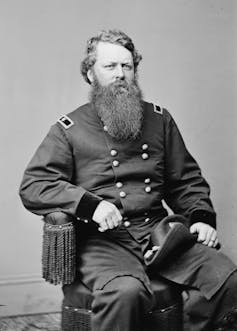
William Belknap, President Ulysses Grant’s secretary of war. Library of Congress/Matthew Brady
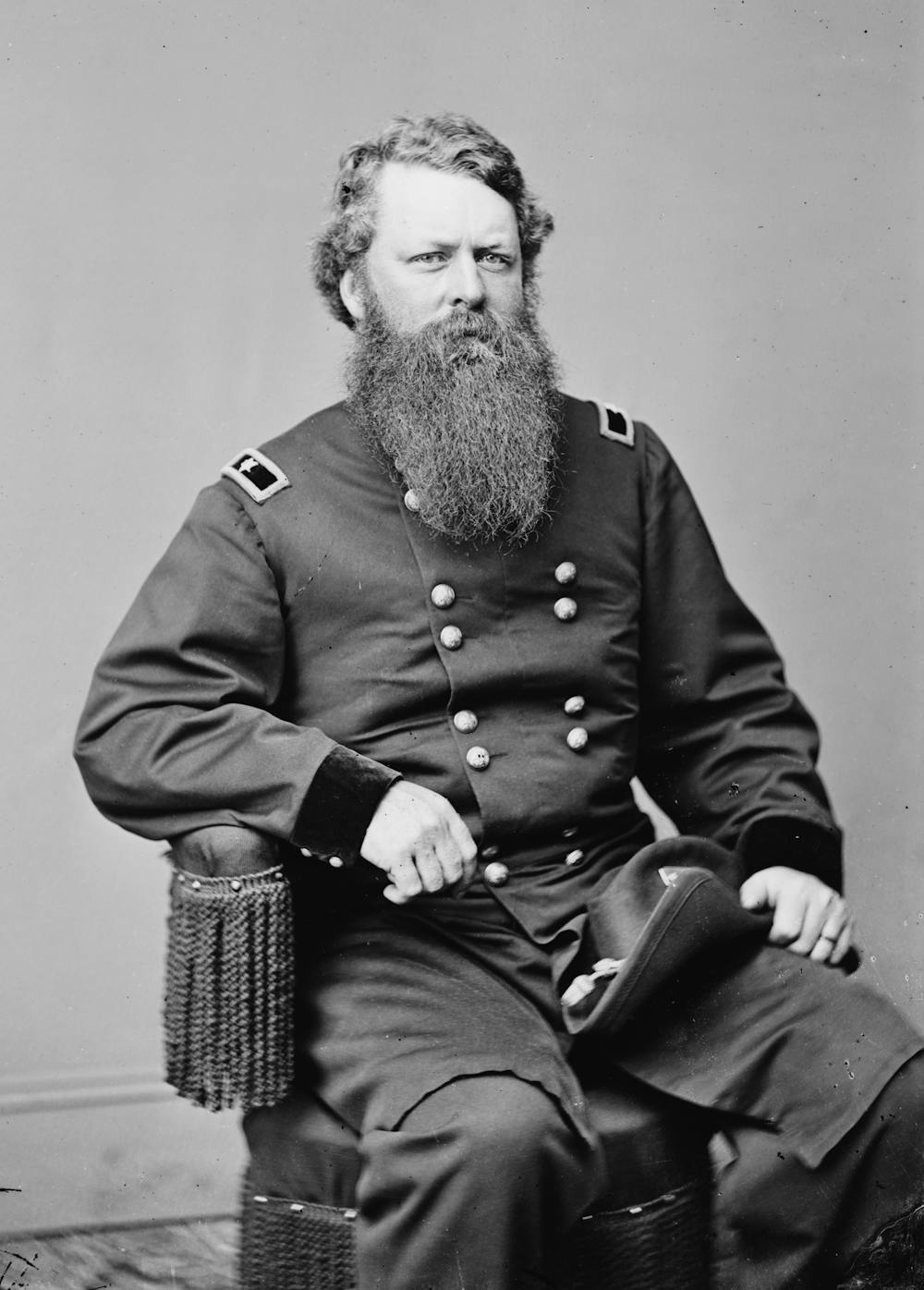
Other House investigations also damaged the reputations of Grant’s brother Orvil, who was also involved in accepting kickbacks for trading post licenses, and Secretary of the Navy George M. Robeson, who was accused of improper dealing with shipbuilding contracts.
Adding to Grant’s woes was the fact that his own secretary of the treasury had been pursuing the prosecution of the president’s private secretary for revenue fraud. Grant retired from office with a reputation for presiding over a cesspool of corruption rarely seen in our nation’s history.
Both parties ran reform candidates in 1876, with the victorious Rutherford B. Hayes, a Republican, pledging to end federal support for black voting rights in the South.
Stalemate and struggle
Even if the majority party retains control of both the presidency and both houses of Congress, a president may still find his agenda languishes. Franklin D. Roosevelt’s desire for additional New Deal initiatives was frustrated by Republican gains in 1938. Those gains allowed the minority party to join with southern Democrats to block further legislation.
Sometimes the opposition party increases its control of both houses. In 1866, an overwhelming Republican triumph led to veto-proof majorities in the Senate and the House.
Just two years after the end of slavery, Republicans wanted to pass Reconstruction legislation to re-establish state governments throughout the South that included African-Americans as voters, convention delegates and officeholders.
When Democratic President Andrew Johnson tried to obstruct the legislation’s passage, lawmakers overrode his vetoes.
On occasion, the party in the White House loses control of both houses of Congress, forcing the president to seek common ground with his political foes where possible. Just as often, the outcome results in stalemate and confrontation.
President Bill Clinton resisted House Speaker New Gingrich’s vision of a “Contract with America,” which promoted slashing various federal programs, eventually leading to a pair of government shutdowns totalling 27 days in 1995 and 1996.
President Barack Obama found it difficult to get anything done after the 2010 midterms brought to Congress a Republican majority determined to block administration initiatives.
Enough power to investigate, not legislate
While today’s House Democrats hold different political beliefs than did their party brethren 144 years ago, they confront a similar situation.
A Republican president and Senate spell doom for the Democratic House’s legislative agenda. But Democrats can check their foes’ ambitions.
A target-rich environment of rumored corruption, malfeasance and scandal may prove sufficiently tempting to spark a series of investigations that could undermine the Trump presidency. They could also enhance Democratic political prospects for 2020.
Brooks D. Simpson, Faculty Head and Professor of Interdisciplinary Humanities and Communication, Arizona State University
This article is republished from The Conversation under a Creative Commons license. Read the original article.