LAKEPORT, Calif. – Grillers, get ready to sizzle in the 10th annual “Grillin’ on the Green” cook-off.
The Westside Community Park Committee is seeking interested grillers to compete this year when the barbecue cook-off and family fun event returns to Westside Community Park, 1401 Westside Park Road.
Sponsors of the event also are sought and will be recognized at the event.
Scheduled for Saturday, Aug. 3, from 5 to 7:30 p.m., the annual fundraiser features food, drink and entertainment for all ages.
Taste competitors’ barbecue fare, dance to live music by the LC Diamonds, and enjoy a car show featuring vintage vehicles from local car clubs. Children may participate in water activities, as well.
Local organizations, individuals and professionals battle for bragging rights each year by preparing their best barbecue recipes for attendees who then cast Peoples’ Choice votes for the favorites.
Additionally, “celebrity” judges will select their favorite grillers in various categories.
This year’s celebrity judges are Lake County Sheriff Brian Martin; Dana Stubblefield, retired San Francisco 49ers and Oakland Raiders defensive tackle; and Luis Castelero, a retired San Francisco restaurant manager who now offers cooking classes from the Finca Castelero venue just outside of Kelseyville.
Interested grilling chefs and team representatives are urged to sign up as soon as possible. Call Cindy Ustrud at 707-263-7091. Entries are due by Friday, July 12.
Event organizers are seeking sponsors of the event and sponsors for grillers this year. Levels of sponsor recognition are $100, $300, $500, $1,000, $3,000, and $5,000.
Opportunities to sponsor a Grillin’ participant are available at the rate of $500. Major sponsors for this year’s event include Lake County News, KNTI, Lakeport Cinema 5, Keeling-Barnes Family Foundation and the Ustrud-Rollins Family.
Information about the event can be found on the park’s Web site, www.westsidecommunitypark.org, or on Westside Community Park’s Facebook page. Additionally, people may call Dennis Rollins, 707-349-0969, for information.
Westside Community Park is a city of Lakeport recreational facility that has been in development for 20 years.
The nonprofit Park Committee is developing the park in conjunction with the city of Lakeport, volunteers, and numerous contributions by individuals and businesses dedicated to constructing a recreational facility for the youth and adults of Lake County.
Westside Community Park is home to the Konocti Youth Soccer League, Westshore Little League's softball league, the Lakeport team of the Ukiah Men's Soccer League and the Early Lake Lions Horseshoe League.
LAKEPORT, Calif. – The Lakeport Police Department will hold its next “Coffee with a Cop” event on Saturday, June 29.
It will take place from 8 to 10 am. At Marcel's French Bakery & Cafe, 105 N. Main St.
Come have coffee and interact with Lakeport Police staff.
There is no agenda and your regular coffee will be covered. Just show up and tell the staff at Marcel's or officers you are there for the event.
The chief and other staff hope to see community members and answer their questions or concerns.
Coffee with a Cop is an event where police and community members come together in an informal, neutral space to discuss community issues, build relationships and drink coffee.
It is a national initiative supported by the U.S. Department of Justice, Office of Community Oriented Policing Services, and has been implemented by many cities and towns across the country.
LAKE COUNTY, Calif. – Lake County Animal Care and Control has numerous young kittens – plus some adult cats – now ready to go to their new families.
The following cats at the Lake County Animal Care and Control shelter have been cleared for adoption.
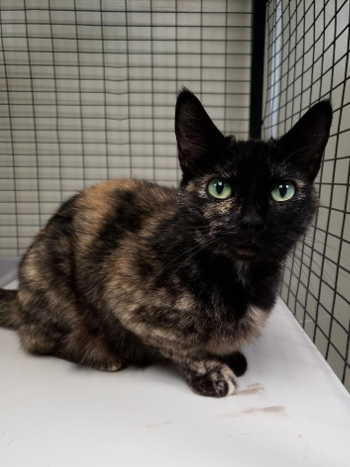
This female domestic short hair cat is in cat room kennel No. 3, ID No. 12415. Photo courtesy of Lake County Animal Care and Control. Domestic short hair
This female domestic short hair cat has a tortoiseshell coat and green eyes.
She is in cat room kennel No. 3, ID No. 12415.
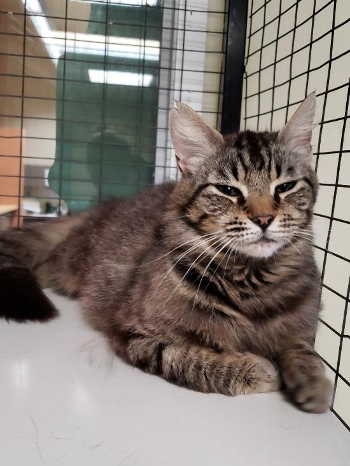
This domestic medium hair cat is in cat room kennel No. 26, ID No. 12378. Photo courtesy of Lake County Animal Care and Control. Domestic medium hair cat
This domestic medium hair cat has a gray tabby coat and gold eyes.
She’s in cat room kennel No. 26, ID No. 12378.
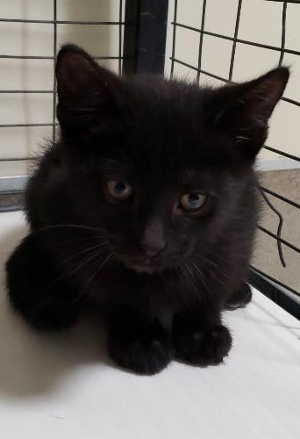
This male domestic short hair kitten is in cat room kennel No. 39, ID No. 12390. Photo courtesy of Lake County Animal Care and Control. Domestic short hair kitten
This male domestic short hair kitten has an all-black coat and gold eyes.
He has been neutered.
He’s in cat room kennel No. 39, ID No. 12390.
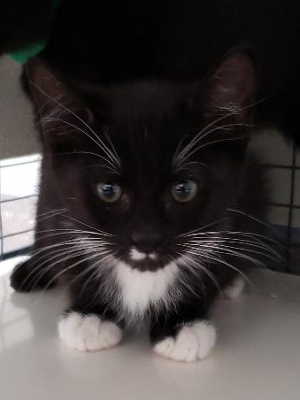
This male domestic short hair kitten is in cat room kennel No. 39, ID No. 12387. Photo courtesy of Lake County Animal Care and Control. Domestic short hair kitten
This male domestic short hair kitten has an all-black coat and gold eyes.
He has been neutered.
He’s in cat room kennel No. 39, ID No. 12387.
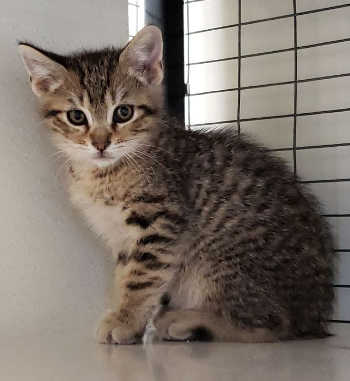
This brown tabby kitten is in cat room kennel No. 43a, ID No. 12332. Photo courtesy of Lake County Animal Care and Control. Brown tabby kitten
This brown tabby kitten has a short coat and green eyes.
He’s in cat room kennel No. 43a, ID No. 12332.
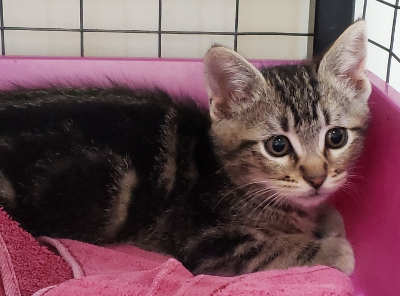
This male tabby kitten is in cat room kennel No. 43b, ID No. 12333. Photo courtesy of Lake County Animal Care and Control. Brown tabby kitten
This male tabby kitten has a short brown and black coat and gold eyes.
He’s in cat room kennel No. 43b, ID No. 12333.
This male gray tabby kitten is in kennel No. 43c, ID No. 12338. Photo courtesy of Lake County Animal Care and Control. Gray tabby kitten
This male gray tabby kitten has a short coat and gold eyes.
He’s in kennel No. 43c, ID No. 12338.
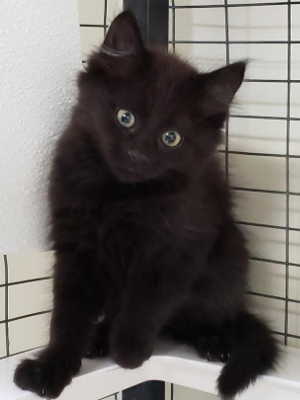
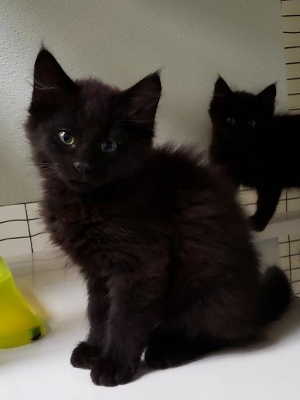
This male domestic medium hair kitten is in cat room kennel No. 79, ID No. 12379. Photo courtesy of Lake County Animal Care and Control. Domestic medium hair kitten
This male domestic medium hair kitten has an all-black coat and gold eyes.
He’s in cat room kennel No. 79, ID No. 12379.
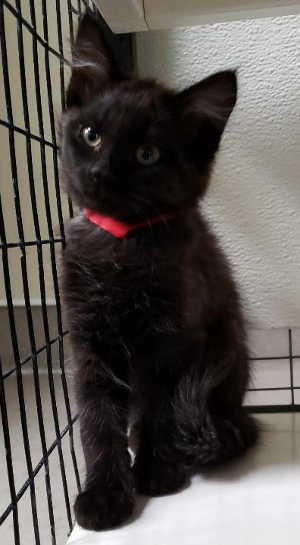
This female domestic medium hair kitten is in cat room kennel No. 79, ID No. 12380. Photo courtesy of Lake County Animal Care and Control. Domestic medium hair kitten
This female domestic medium hair kitten has an all-black coat and gold eyes.
She is in cat room kennel No. 79, ID No. 12380.
This male domestic medium hair kitten is in cat room kennel No. 79, ID No. 12381. Photo courtesy of Lake County Animal Care and Control. Domestic medium hair kitten
This male domestic medium hair kitten has an all-black coat and gold eyes.
He’s in cat room kennel No. 79, ID No. 12381.
This female domestic medium hair kitten is in cat room kennel No. 79, ID No. 12382. Photo courtesy of Lake County Animal Care and Control. Domestic medium hair kitten
This female domestic medium hair kitten has an all-black coat and gold eyes.
She is in cat room kennel No. 79, ID No. 12382.
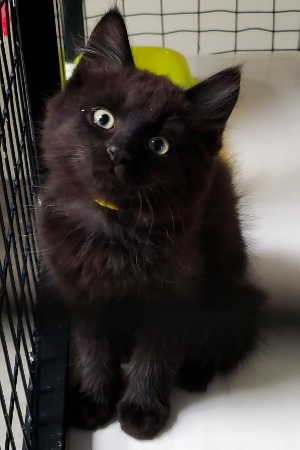
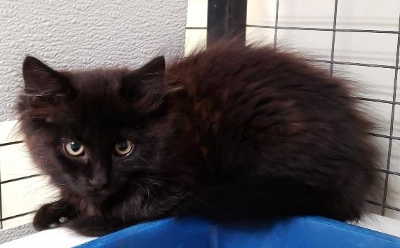
The female domestic long hair kitten is in cat room kennel No. 88, ID No. 12402. Photo courtesy of Lake County Animal Care and Control. Domestic long hair kitten
The female domestic long hair kitten has an all-black coat and gold eyes.
She’s in cat room kennel No. 88, ID No. 12402.
Lake County Animal Care and Control is located at 4949 Helbush in Lakeport, next to the Hill Road Correctional Facility.
Office hours are Monday through Friday, 11 a.m. to 5 p.m., and 11 a.m. to 3 p.m., Saturday. The shelter is open from 11 a.m. to 4 p.m. Monday through Friday and on Saturday from 11 a.m. to 3 p.m.
For more information call Lake County Animal Care and Control at 707-263-0278.
Email Elizabeth Larson at This email address is being protected from spambots. You need JavaScript enabled to view it.. Follow her on Twitter, @ERLarson, or Lake County News, @LakeCoNews.
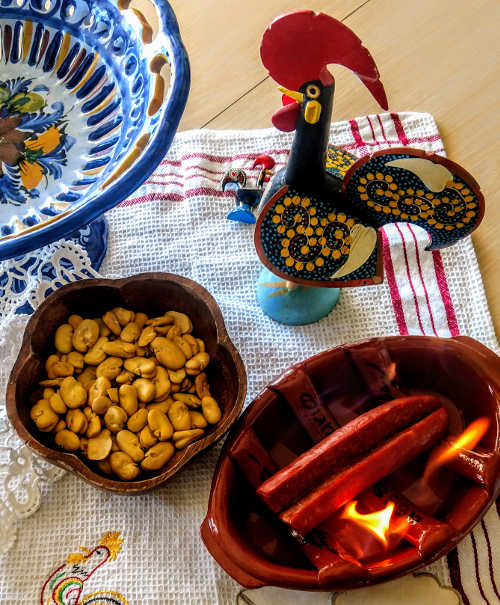
Pictured are Azorean sausage cooked in a traditional dish by lighting rubbing alcohol on fire; dried fava beans, popular in Azorean cuisine; and the ubiquitous rooster, which is a symbol of good luck in Portugal. Photo by Esther Oertel.
Rising above the water along the mid-Atlantic ridge are the Azores, nine pristine volcanic islands scattered like jewels in the world’s second largest ocean.
Gleaming with natural beauty, they sit some 900 miles from the western coast of Portugal.
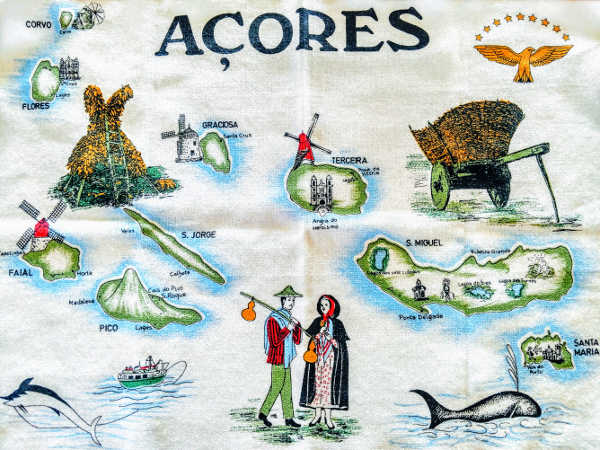
The nine islands are clustered in three groups: Sao Miguel and Santa Maria are easternmost; Terceira, Sao Jorge, Pico, Faial and Graciosa sit in the middle of the archipelago; and Flores and tiny Corvo make up the western flank.
The Azores are a full third of the way to North America, so it’s no wonder they remained unnoticed until the 14th century when they appear on the Catalan Atlas, the most important map of the Medieval period.
Despite this recognition, they were void of human settlement for at least another hundred years until a sea captain sailing for Prince Henry the Navigator landed in the early 15th century and claimed the islands for Portugal.
It is posited that explorer Goncalo Velho Cabral was the trailblazer in question; however, the historical record provides no certainty of this, though it is confirmed that he gathered settlers and resources to establish colonies on the easternmost islands, Santa Maria and Sao Miguel.
Until recent decades, the people who lived in the Azores were almost entirely self-sufficient, eating what they grew, raised, milked, or gleaned from the sea. Their distance from the European mainland made imported products expensive, as well as difficult to obtain.
In addition, each island was self-sustainable, as there tended to be very little travel between them.
Even today, when air travel between islands is possible, most Azoreans will travel to mainland Portugal, the U.S., or other parts of Europe and the world before going to another island in the archipelago.
Azorean cuisine is rich and hearty, its rustic, peasant quality differentiating it from the food of mainland Portugal.
One-pot soups and stews based on locally harvested vegetables, seafood, or meat, often with bread added for heartiness, are a staple.
Dried beans, particularly fava, tomatoes, and robust vegetables such as potatoes and cabbage figure prominently in Azorean cooking.
With the Azores home to the biggest sea zone in Europe, seafood is abundant, and many a meal revolves around what was gathered from the sea that day, whether, for example, mackerel, lamprey eels or octopus.
Caldeirade de peixe, a fish and potato stew, is popular throughout the islands, as are grilled limpets and fresh lobster.
Tuna, one of the Azores’ most popular fish, are pulled large from the sea.
Azoreans are known for their cheesemaking, and It would be an understatement to say that rich dairy foods are beloved throughout the islands.
The Azores are comprised of nine volcanic islands approximately 900 miles west of Portugal. Note that this a picture of a decorative map that is not to scale. Photo by Esther Oertel.
Fifty percent of the cheese in Portugal is from the Azores, where dairy cows are ubiquitous. (At last count, there were roughly 20,000 of them that graze on the island’s lush green hills.)
Sao Jorge, a semi-hard, aged cheese with a mild but full and buttery flavor, is particularly popular and made on the island for which it’s named.
Cheese served with bread (sometimes with jam or condiments) is a favorite breakfast, snack or appetizer and is enjoyed any time of day.
Cozido (meaning “cooked”) is a quintessentially Azorean dish and can only be had in the geothermally active Sao Miguel town of Furnas, where stew is cooked for hours in the hot volcanic soil.
Massa di pimiento, a spicy, salty, sweet red pepper paste is a popular seasoning, as is flor de acafroa, also known as safflower, a colorful spice similar to Spanish saffron.
Azoreans love their desserts, and pastries and puddings of all types abound. A sweet that’s prevalent throughout the islands is queijada, a tiny tartlet made with flour, egg, butter, and sugar.
The Azores is home to the only two tea plantations in Europe, both on the island of Sao Miguel.
Camellia sinensis, the shrub that produces tea leaves, was found growing wild in the Azores in the late 1800s, and now verdant rows of these evergreen plants are cultivated, rising beautifully above the bright blue Atlantic.
Each plantation has a factory on site to process the tea, with one using the original equipment from the 19th century.
Coffee is also grown in the Azores; Sao Jorge in particular has a microclimate in which coffee bushes thrive.
Though some islands might experience light dustings of snow, temperatures remain relatively mild in the Azores year-round, unusual for such a northerly location, due mainly to its distance from continents and its proximity to the Gulf Stream.
For this reason, the Azores are rife with fruits such as bananas, passion fruit and a variety of citrus, which thrive in the islands’ rich microclimates.
Resourceful Azoreans make liqueurs from such exotic fruits, and wine is commonly made from grapes grown in home vineyards.
The island of Pico, whose volcano is the tallest mountain in Portugal, is renowned for wines made from grapes grown in lava-rich soils which were favored by Russian Czars in the 19th century.
Its vineyards surrounded by centuries-old stone walls are now UNESCO World Heritage Sites.
Pineapples, typically smaller than those here, are extremely popular and are grown in greenhouses (or “estufas” in Portuguese) throughout the islands.
In a method discovered during an accidental greenhouse fire, smoke is infused into the estufas when the pineapples are ten or eleven months into their 18-month growing cycle. This forces all the plantings to flower simultaneously, which makes for an easier harvest.
The Azores, and particularly the island of Faial, are known for the explosion of blue hydrangeas prolific there in the summer months thanks to the acidity of its volcanic soil.
Introduced to the Azores in the 17th century, hydrangeas now grow abundantly in the wild and are a popular point of interest for flora-appreciating tourists.
And speaking of Faial, I spent one recent afternoon with Azorean friend Noele DaRosa, who generously shared her memories of growing up on that beautiful island.
Typical of the Azores, her family was self-sustaining, and I enjoyed hearing memories of, among many other things, her mother’s homemade cheese, her father’s winemaking, and their gathering limpets from the sea for a favorite childhood dish.
DaRosa hired me some years ago to prepare a Portuguese birthday luncheon. Creating Bacalhau con Nata (Salt Cod with Cream) and Caldo Verde (Green Broth Soup) for her celebratory meal was my first introduction to food from that part of the world.
The recipe that follows for Caldo Verde is thusly inspired, and I owe a debt of gratitude to DaRosa for that and for the magnanimous sharing of her time and recollections.
Pictured is handmade lace, a popular handicraft in the Azores, as well as a replica of a crown used in the many Catholic festivals from May to September in the Azores that honor the Holy Ghost. Photo by Esther Oertel.
Caldo Verde
The original recipe includes a quarter pound of sliced Portuguese sausage, which can be added if a meaty version is preferred.
6 cups vegetable broth 5 medium starchy potatoes, like Yukon Gold, peeled and quartered, about 5 cups 1 small yellow onion, finely chopped, about ½ cup 1 tablespoon coarse salt, or to taste 1 bunch, about 1-1/2 pounds before trimming, Swiss chard, cut into thin chiffonade (flat-leaf kale or collard greens may also be used) 5 tablespoons olive oil
In a 4-quart stockpot, combine the broth, potatoes and onion. Cover and bring to a boil over high heat. Reduce the heat to medium-low, season with salt, then simmer until the potatoes are very tender, about 20 to 30 minutes.
Trim the chard leaves off the central stem; wash and drain leaves. Cut into thin chiffonade, with the strands no longer than a couple of inches in length. Continue cutting until you have about 6 cups. Set aside.
When the potatoes are cooked, puree the contents of the soup pot to a smooth consistency. Return to a boil.
Add the reserved greens and the olive oil. Simmer until the greens are bright green and tender but not mushy, about 5 minutes.
Though variations in the ratio of broth to potatoes varies from cook to cook, the soup’s consistency should be like light cream. If too thick, it can be thinned with water, beginning with about ½ cup. (Note that Portuguese soups typically thicken as they cool due to the starch they contain.)
Esther Oertel is a writer and passionate home cook from a family of chefs. She grew up in a restaurant, where she began creating recipes from a young age. She’s taught culinary classes in a variety of venues in Lake County and previously wrote “The Veggie Girl” column for Lake County News. Most recently she’s taught culinary classes at Sur La Table in Santa Rosa, Calif. She lives in Middletown, Calif.
The Mount Konocti Lookout in Kelseyville, Calif. Courtesy photo. LAKE COUNTY, Calif. – The Mount Konocti Lookout team continues to seek volunteers to help with fire detection this fire season.
A second orientation for volunteers will take place at 9 a.m. Saturday, June 29, at the Kelseyville Fire Protection District Station, 4020 Main St.
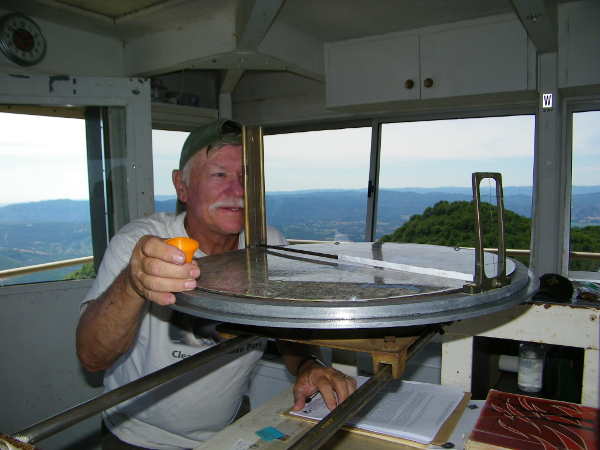
This will be the fourth year volunteers have occupied the 45-foot tower eight hours each day from June until the rainy season in October or November.
Volunteers drive their own vehicle to the top of the mountain and climb the stairs to the top of the tower.
If smoke is spotted any time during a watch, it is immediately reported by radio to the Cal Fire station in St. Helena.
Volunteers pick their day of service by checking for openings on an online schedule. A full watch is eight hours, but sometimes four-hour watches can be had.
Those interested in volunteering are asked to contact Jim Adams at 707-245-3771 or Chuck Sturges at 707-349-5311.
A volunteer uses equipment to locate a possible fire. Courtesy photo.
LAKE COUNTY, Calif. – Lake County Animal Care and Control has big and little dogs needing homes as the summer season gets started.
Dogs available for adoption this week include mixes of boxer, Chihuahua, Doberman Pinscher, German Shepherd, husky, Labrador Retriever, pit bull and shepherd.
Dogs that are adopted from Lake County Animal Care and Control are either neutered or spayed, microchipped and, if old enough, given a rabies shot and county license before being released to their new owner. License fees do not apply to residents of the cities of Lakeport or Clearlake.
If you're looking for a new companion, visit the shelter. There are many great pets hoping you'll choose them.
The following dogs at the Lake County Animal Care and Control shelter have been cleared for adoption (additional dogs on the animal control Web site not listed are still “on hold”).
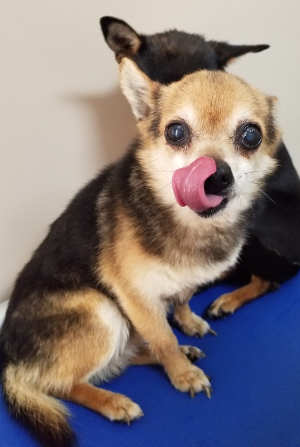
This male Chihuahua is in kennel No. 2, ID No. 12393. Photo courtesy of Lake County Animal Care and Control. Male Chihuahua
This male Chihuahua has a short tricolor coat.
He’s in kennel No. 2, ID No. 12393.
“Capulin” is a male Doberman Pinscher in kennel No. 4, ID No. 12384. Photo courtesy of Lake County Animal Care and Control. ‘Capulin’
“Capulin” is a male Doberman Pinscher with a short black and brown coat.
He is in kennel No. 4, ID No. 12384.
This female shepherd is in kennel No. 6, ID No. 12343. Photo courtesy of Lake County Animal Care and Control. Female shepherd
This female shepherd has a short black and brown coat.
Shelter staff said she smiles.
She’s in kennel No. 6, ID No. 12343.
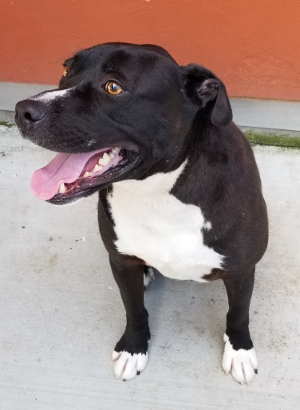
“Houdini” is a male pit bull in kennel No. 8, ID No. 12386. Photo courtesy of Lake County Animal Care and Control. ‘Houdini’
“Houdini” is a male pit bull with a short black coat.
He already has been neutered.
He’s in kennel No. 8, ID No. 12386.
“Koda” is a male German Shepherd-husky mix in kennel No. 9. ID No. 12406. Photo courtesy of Lake County Animal Care and Control. ‘Koda’
“Koda” is a male German Shepherd-husky mix with a medium-length black and brown coat.
He is in kennel No. 9. ID No. 12406.
“Tonka” is a male boxer mix in kennel No. 10, ID No. 12437. Photo courtesy of Lake County Animal Care and Control. ‘Tonka’
“Tonka” is a male boxer mix with a short black and white coat.
He’s in kennel No. 10, ID No. 12437.
‘Beau’ is a male shepherd in kennel No. 14, ID No. 6745. Photo courtesy of Lake County Animal Care and Control. ‘Beau’
“Beau” is a male shepherd with a medium-length black coat.
He has been neutered.
He’s in kennel No. 14, ID No. 6745.
This young male Doberman Pinscher is in kennel No. 16, ID No. 12374. Photo courtesy of Lake County Animal Care and Control. Doberman Pinscher
This young male Doberman Pinscher has a short black and brown coat.
He’s in kennel No. 16, ID No. 12374.
This female boxer is in kennel No. 19, ID No. 12326. Photo courtesy of Lake County Animal Care and Control. Female boxer
This female boxer has a short brown and white coat.
She already has been spayed.
She is in kennel No. 19, ID No. 12326.
“Nikkie” is a female pit bull terrier in kennel No. 20, ID No. 12369. Photo courtesy of Lake County Animal Care and Control. ‘Nikkie’
“Nikkie” is a female pit bull terrier with a short black coat.
She already has been spayed.
She’s in kennel No. 20, ID No. 12369.
This male Chihuahua in kennel No. 21, ID No. 12397. Photo courtesy of Lake County Animal Care and Control. Male Chihuahua
This male Chihuahua has a short tan coat.
He is in kennel No. 21, ID No. 12397.
This female Doberman Pinscher is in kennel No. 22, ID No. 12385. Photo courtesy of Lake County Animal Care and Control. Female Doberman Pinscher
This female Doberman Pinscher has a short black and brown coat.
She is in kennel No. 22, ID No. 12385.
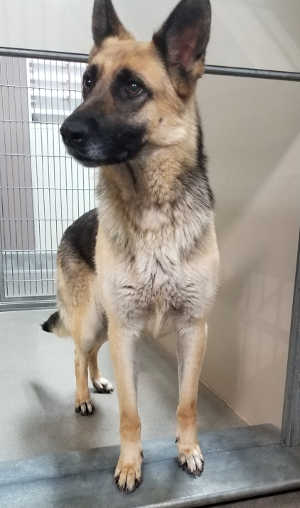
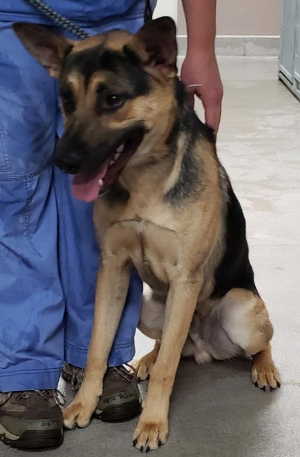
“Jack” is a male German Shepherd in kennel No. 24, ID No. 12376. Photo courtesy of Lake County Animal Care and Control. ‘Jack’
“Jack” is a male German Shepherd with a medium-length black and brown coat.
He’s in kennel No. 24, ID No. 12376.
This male pit bull is in kennel No. 28, ID No. 12355. Photo courtesy of Lake County Animal Care and Control. Male pit bull
This male pit bull has a short brown coat.
He is in kennel No. 28, ID No. 12355.
This male German Shepherd is in kennel No. 30, ID No. 12314. Photo courtesy of Lake County Animal Care and Control. Male German Shepherd
This male German Shepherd has a short black and tan coat.
He’s in kennel No. 30, ID No. 12314.
This female pit bull is in kennel No. 32, ID No. 12383. Photo courtesy of Lake County Animal Care and Control. Female pit bull
This female pit bull has a short brown coat.
She already has been spayed.
She’s in kennel No. 32, ID No. 12383.
Lake County Animal Care and Control is located at 4949 Helbush in Lakeport, next to the Hill Road Correctional Facility.
Office hours are Monday through Friday, 11 a.m. to 5 p.m., and 11 a.m. to 3 p.m., Saturday. The shelter is open from 11 a.m. to 4 p.m., Monday through Friday and on Saturday from 11 a.m. to 3 p.m.
For more information call Lake County Animal Care and Control at 707-263-0278.
Email Elizabeth Larson at This email address is being protected from spambots. You need JavaScript enabled to view it. . Follow her on Twitter, @ERLarson, or Lake County News, @LakeCoNews.
 How to resolve AdBlock issue?