LAKE COUNTY, Calif. – The Lake County Sheriff’s Office said Wednesday that, in accordance with new state law, it is making available to the public videos and investigative documents related to use of five force-related incidents that occurred between 2014 and 2018.
The California Public Records Act requires a state or local agency, such as the Lake County Sheriff’s Office, to make public records available for inspection, subject to certain exceptions.
Last year, the Legislature passed SB 1421, which then-Gov. Jerry Brown signed in September.
SB 1421 amends sections of the penal code relating to peace officer records.
Specifically, it requires disclosure of records involving officer-involved shootings or other use of force events, investigations into police misconduct such as lying under oath, complaints and other specified incidents under the auspices of the California Public Records Act.
In order to comply with SB 1421, Lt. Rich Ward said the Lake County Sheriff’s Office has developed a way to disseminate records for public inspection for qualifying cases.
Members of the public can find a list of documents, videos, photographs and other information by navigating to a “Use of Force” page on the Lake County Sheriff’s Web site.
If any additional incidents occur that qualify for public release per SB 1421, Ward said the Lake County Sheriff’s Office Use of Force page will be updated in order to make those records available for public inspection.
The records released on Wednesday cover five critical incidents, two of them involving fatal shootings.
Sheriff Brian Martin introduces each of the videos, with deputies offering additional information about the incidents.
They include the following, listed in chronological order.
Nov. 9, 2014: Christopher Keith O’Neal
Christopher Keith O’Neal, 57, was fatally shot just after 12 a.m. Nov. 9, 2014, in Lucerne.
O’Neal, a survivor of the 1978 Peoples Temple Jonestown massacre, was shot by two sheriff’s deputies who had responded to his home on the report of a domestic disturbance.
O’Neal emerged from his home into the front yard with a kitchen knife. He refused to follow deputies’ orders to drop the knife, he told them he was going to charge them and then did so.
The deputies shot 10 rounds at O’Neal, who was hit by seven them, according to his autopsy.
The incident occurred nine days before the 36th anniversary of the Jonestown massacre.
Then-District Attorney Don Anderson ruled Sienze’s shooting was justified.
Feb. 21, 2015: Adam David Young
Shortly after 9 p.m. on Feb. 21, 2015, deputies and California Highway Patrol officers responded to a report of a physical fight between two male subjects in Nice.
The deputies identified the males who were fighting, and one of the deputies found Young to be intoxicated to the point where he couldn’t care for himself, arrested him for public intoxication and handcuffed him.
The deputy placed Young in the front passenger seat of his patrol car because the back seat was outfitted for a K9.
As the deputy was driving Young to the Lake County Jail, Young became violent, hitting his head on the dash and spitting on the deputy, who managed to keep control of the car while also handling Young.
The deputy pulled into the parking lot at the Rodman Slough County Park and ordered Young out of the car. When he refused, the deputy pulled Young out of the vehicle. Young fell and lost consciousness.
At the deputy’s request, medical personnel responded and transported Young to the hospital for treatment.
March 1, 2017: Wesley David Thaxton
Wesley David Thaxton was knocked consciousness while being taken into custody by a sheriff’s deputy in Upper Lake on March 1, 2017.
Shortly after 9:30 p.m. a deputy responded to Upper Lake to a report of a male subject who had broken down a woman’s door and was refusing to leave. Thaxton was found drunk and passed out on a couch on a porch.
The deputy took Thaxton to the patrol car and contacted the reporting party, who declined to press charges. He returned to the car and Thaxton attempted run away.
The video, shot at night, does not clearly show what happened next. The deputy said in his written report that he chased Thaxton and took him down with a leg sweep. When Thaxton tried to get up, the deputy forced him down again with another leg sweep.
In the video, the deputy can be heard calling for medical assistance due to Thaxton having lost consciousness. The deputy told Northshore Fire paramedics that Thaxton hit his head “pretty hard.”
Thaxton regained consciousness shortly afterward and was transported to the hospital.
Feb. 15, 2018: Jason Richard Sienze
At 11:40 a.m. Feb. 15, 2018, Jason Richard Sienze was observed by witnesses in the area of Marin Street in Nice acting strangely and talking to himself. A 2003 Chrysler Sebring that has been linked to Sienze was located wrecked and abandoned in the area of Buckingham Way, authorities said.
Minutes later, Sienze was seen in the 3000 block of Highway 20 knocking on doors and asking for money, acting strangely and talking about going back to prison. Not long after that, he was seen driving a stolen pickup on Nice Road, where he pointed a handgun at a man and pulled the trigger, but the gun misfired.
Authorities said he forced entry into a residence, took keys and stole a 2006 Ford F-350 pickup. Deputies confronted him in the area of Lakeview Drive and Burpee Drive.
The 15-minute video shows deputies in the area trying to locate Sienze, finding him and shooting numerous times at him as he backed the pickup down Lakeview Drive. The deputy whose body cam video is shown is heard saying he can see a pistol in Sienze’s right hand.
Several deputies approached the vehicle and found him shot, with the vehicle still running. A deputy reaches inside and turns off the pickup, which had several bullet holes in the windshield. The deputy with the body cam video then calls for medics.
Sienze was declared dead at the scene a short time later.
An autopsy found that Sienze had been struck a total of seven times in the neck, chest, both arms and right thigh.
Then-District Attorney Don Anderson ruled Sienze’s shooting was justified.
Sept. 5, 2018: Carlos Anthony Gonzalez
On Sept. 5, 2018, Carlos Anthony Gonzalez, an inmate at the Lake County Jail, refused to comply with correctional officers’ orders to move from his cell to another.
Several correctional officers subsequently entered the cell to move him. Gonzalez reportedly fought them before they handcuffed him and moved him to the other cell.
When they placed him on the floor in the second cell he complained that his elbow hurt. A jail nurse checked him, he was taken to booking then transported without further incident to Sutter Lakeside Hospital, where he was evaluated for his injury.
Email Elizabeth Larson at This email address is being protected from spambots. You need JavaScript enabled to view it.. Follow her on Twitter, @ERLarson, or Lake County News, @LakeCoNews.
CLEARLAKE, Calif. – Clearlake Animal Control has a host of dogs that continue to wait for someone to give them loving forever homes.
The kennels also have many dogs that need to be reunited with their owners. To find the lost/found pet section, click here.
The following dogs are ready for adoption.
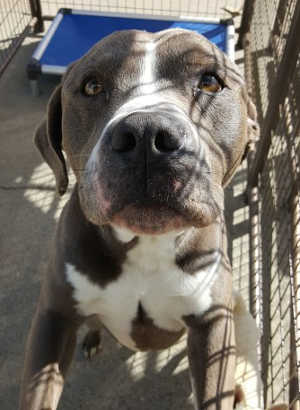
“Wynn.” Photo courtesy of Clearlake Animal Control. ‘Wynn’
“Wynn” is a male American Staffordshire Terrier with a short brindle coat.
Staff said he is a lovely fellow who has been at the shelter for several months.. He loves affection and is available for adoption or through the foster to adopt program.
He’s believed to be about 6 to 7 years old.
He is No. 969.
“Tyson.” Photo courtesy of Clearlake Animal Control. ‘Tyson’
“Tyson” is a male American Staffordshire terrier mix with a medium-length gray and white coat.
He is No. 1863.
“Snowflake.” Photo courtesy of Clearlake Animal Control. ‘Snowflake’
“Snowflake” is a male Chihuahua with a white coat.
He is No. 1864.
“Scorpio.” Photo courtesy of Clearlake Animal Control. ‘Scorpio’
“Scorpio” is a male American Bulldog mix with a brindle coat.
He is No. 2269.
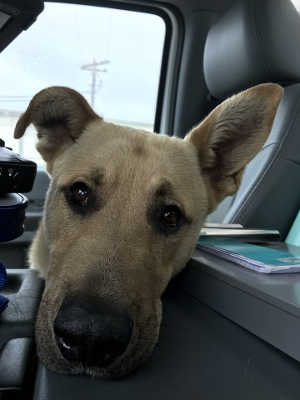
“Lexi.” Photo courtesy of Clearlake Animal Control. ‘Lexi’
“Lexi” is a female German Shepherd with a medium-length black and tan coat.
She is No. 2262.
“Hamilton.” Photo courtesy of Clearlake Animal Control. ‘Hamilton’
“Hamilton” is a male German Shepherd with a medium-length brown and black coat.
He is No. 2177.
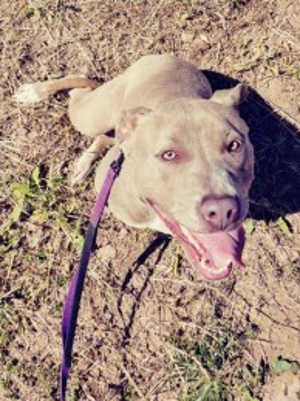
“Cadbury.” Photo courtesy of Clearlake Animal Control.
‘Cadbury’
“Cadbury” is a female Staffordshire Bull Terrier mix with a smooth medium-length beige coat.
She is No. 1215.
Clearlake Animal Control’s shelter is located at 6820 Old Highway 53, off Airport Road.
Hours of operation area noon to 4 p.m. Tuesday through Saturday. The shelter is closed Sundays, Mondays and major holidays; the shelter offers appointments on the days it’s closed to accommodate people.
Call the Clearlake Animal Control shelter at 707-273-9440, or email This email address is being protected from spambots. You need JavaScript enabled to view it. to inquire about adoptions.
Visit Clearlake Animal Control on Facebook or at the city’s Web site.
Email Elizabeth Larson at This email address is being protected from spambots. You need JavaScript enabled to view it.. Follow her on Twitter, @ERLarson, or Lake County News, @LakeCoNews.
The California Department of Public Health urges all Californians to protect themselves from mosquito bites during West Nile virus season, which extends from now through early fall.
“West Nile virus activity in the state is increasing, so it is important to take every possible precaution to protect against mosquito bites,” said State Public Health Officer and CDPH Director Dr. Karen Smith.
So far this year, no West Nile virus activity has been reported in Lake County.
West Nile virus spreads to humans and animals through the bite of an infected mosquito. Late-spring rains have contributed to standing water, which serves as a breeding source for mosquitoes that can spread West Nile virus.
Hot temperatures also contribute to increasing numbers of breeding mosquitoes and an increased risk of virus transmission to humans.
Currently, West Nile virus activity is within expected levels and is similar to activity at this time last year.
The risk of disease due to West Nile virus increases as the summer progresses, and declines in early fall as the weather cools.
In 2018, there were 217 reported West Nile virus cases in California, including 11 deaths.
Since West Nile virus was first introduced into California in 2003, there have been more than 6,000 human cases and 303 West Nile virus-related deaths across the state.
West Nile virus is influenced by many factors, including climate, the number and types of birds and mosquitoes in an area, and the level of WNV immunity in birds.
For most people, the risk of developing serious illness is low. However, some individuals – less than 1 percent – can develop serious neurologic illnesses such as encephalitis or meningitis.
People 50 years of age and older, and individuals with diabetes or hypertension, have a higher chance of getting sick and are more likely to develop complications from WNV infection.
CDPH recommends that people protect against mosquito bites and WNV by practicing the “Three Ds”:
1. DEET – Apply U.S. Environmental Protection Agency (EPA)-registered insect repellent containing DEET, picaridin, oil of lemon eucalyptus, or IR3535 according to label instructions. EPA-registered repellents are recommended for use because they have been tested for safety and efficacy in preventing mosquito bites. Insect repellents should not be used on children under two months of age. For more information, visit CDPH’s insect repellent toolkit.
2. DAWN AND DUSK – Mosquitoes that transmit WNV usually bite in the early morning and evening, so it is important to wear proper clothing and repellent if outside during these times. Make sure that your doors and windows have tight-fitting screens to keep out mosquitoes. Repair or replace screens that have tears or holes.
3. DRAIN – Mosquitoes lay their eggs on standing water. Eliminate all sources of standing water on your property by emptying flower pots, old car tires, buckets, and other containers. If you know of a swimming pool that is not being properly maintained, please contact your local mosquito and vector control agency.
California’s West Nile virus Web site includes the latest information on West Nile virus activity in the state. Californians are encouraged to report dead birds on the website or by calling toll-free 1-877-WNV-BIRD (968-2473).
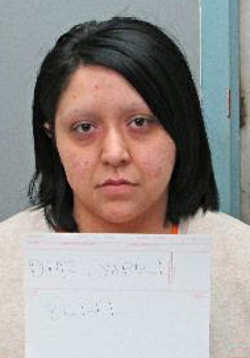
Yareli Diaz, 24, of Ukiah, Calif., was arrested on Tuesday, June 25, 2019, for murder in the death of her newborn daughter in April 2018. Photo courtesy of the Mendocino County Sheriff’s Office. NORTH COAST, Calif. – Authorities say a Ukiah woman has been arrested for homicide after an investigation concluded that she killed her newborn baby in April 2018.
Yareli Diaz, 24, was taken into custody on Tuesday evening, according to Lt. Shannon Barney of the Mendocino County Sheriff’s Office.
Diaz is charged with killing her daughter, Mia Cielo Diaz, on April 3, 2018.
On that day just after 10 p.m., the Mendocino County Sheriff's Office was called to the Ukiah Valley Medical Center on the report of a suspicious death of an infant who was less than one day old, Barney said.
Barney said deputies learned the infant had been delivered by Diaz earlier that day. In Diaz's initial statement she claimed that she was unaware that she was pregnant but delivered the baby while in the bathroom at her home.
The death of the child was determined to be suspicious, as Barney said it appeared to be a health baby with no obvious cause of death, and Diaz’s statements were inconsistent. Mendocino County Sheriff's detectives were assigned to continue the investigation.
During the investigation, Barney said detectives learned Diaz delivered the child around 2:45 p.m. on April 3, 2018, but failed to render any aid or care to the child. Diaz cleaned up the bathroom in what appeared to be an attempt to conceal the child's birth from her parents.
Barney said Diaz wrapped the child in a towel, carried her to a parked vehicle and placed the child in the rear seat area and left her there before going back in the house. The outdoor temperature on that afternoon was 77 degrees Fahrenheit, according to the National Weather Service.
Diaz later went to work shortly before 6 p.m. and worked until approximately 8:45 p.m. when she left to meet a friend. Barney said Diaz then told the friend what had happened and the friend convinced her to immediately take the baby to the hospital for care.
Detectives believed between the birth and the arrival at the hospital the infant had received no care from Diaz. Barney said life-saving measures were attempted by hospital staff but they were not successful.
A post mortem examination was later conducted by a forensic pathologist and the infant was found to be a full-term, healthy female, Barney said.
In August, the Mendocino County Coroner's Office received the final cause of death from the pathologist. Barney said the cause of death was determined to be asphyxia due to the baby's mouth and nose being covered by towels and the placenta.
Detectives learned Diaz did in fact know she had been pregnant and that she had delivered a child several years before that her parents were helping her raise, Barney said.
At the conclusion of the investigation, detectives submitted the case to the Mendocino County District Attorney's Office for review and consideration of a charge of murder. Barney said the DA's Office then filed a case in the Mendocino County Superior Court and requested an arrest warrant charging Diaz with murder.
At 5:45 p.m. Tuesday, deputies responded to the 2400 block of North State Street in Ukiah and took Diaz into custody on the warrant, Barney said.
She was later booked into the Mendocino County Jail on one count of murder. Her bail was set at $500,000.
In a move to improve horse safety and bring a greater level of transparency and accountability to race tracks, Gov. Gavin Newsom on Wednesday signed SB 469 by Sen. Bill Dodd (D-Napa) and announced the appointment of seasoned veterinarian Gregory Ferraro to the California Horse Racing Board, or CHRB.
SB 469 would allow the CHRB to suspend horse racing licenses when necessary to protect the health and safety of horses and riders.
The bill signing comes weeks after Governor Newsom directed CHRB to apply new safety measures and create a review group at Santa Anita Park to provide additional examination and determine if an individual horse is at elevated risk of injury before racing. A total of 38 horses were scratched or denied entry at Santa Anita Park since this new review process was established earlier this month.
“Business as usual has resulted in too many horse deaths,” said Gov. Newsom. “I applaud the Legislature for taking action to expand the authority of the CHRB to cancel or move race meets when animal and human safety are at risk. This problem demands deeper partnership between the CHRB and track officials. I call on race tracks around the state to hold themselves to the higher screening standards recently adopted at Santa Anita. This model can save horses’ lives.”
Currently, short of an allegation of an actual rule violation, the CHRB is limited in its ability to take action against a licensee to limit, place conditions on or suspend a racing license. SB 469 will update the law to allow the CHRB to take immediate action on race meet licenses if horse or rider safety is determined to be at risk.
“Putting the safety of horses first is paramount,” said Sen. Dodd, the author of SB 469. “I appreciate Gov. Newsom’s partnership and swift action in supporting this commonsense measure to allow the Horse Racing Board to halt racing when dangerous conditions exist.”
After reports about the increasing number of horse deaths at California race tracks, Governor Newsom announced new regulatory actions through the CHRB and called for additional oversight measures, including the creation of a review group at Santa Anita Park during the final two weekends of race meets in June.
This horse safety review group examined the past performances of all the horses, including any history on the veterinarian’s list and steward’s list, as well as any medical history CHRB was aware of, and physical observations of the horse when practicable.
The panel then advised Santa Anita management if certain horses were considered high-risk. The Stronach Group, which owns Santa Anita Park, agreed to deny the entry of any such horses and treat the review group’s recommendation as the final word. A total of 38 horses were scratched or denied entry at Santa Anita under this process.
The governor’s new appointee to the CHRB, Gregory Ferraro, 73, of San Francisco, was the director of the University of California, Davis School of Veterinary Medicine Center for Equine Health from 1997 to 2014.
Ferraro was owner and chief executive officer of Gregory L. Ferraro DVM, LLC from 1972 to 1997.
He earned a Doctor of Veterinary Medicine degree from the University of California, Davis School of Veterinary Medicine and is a member of the American Association of Equine Practitioners and the American Veterinary Medical Association.
This position requires Senate confirmation and the compensation is $100 per diem. Ferraro is registered without a party preference.
LAKEPORT, Calif. – While the federal government has severely limited the kinds of rules local governments can impose on telecommunications facilities, the Board of Supervisors on Tuesday explored what budge room the county still has in determining where towers and equipment can be located.
County staff began working on a review of rules in the spring at the request of Supervisor Rob Brown. On Tuesday, Community Development Director Michalyn DelValle and Anita Grant went over the possibilities with the board, starting with the county’s zoning ordinance.
During the discussion, DelValle said that, as far as she can tell, the county has made no significant changes to the zoning ordinance’s Article 71 – which establishes regulations for communications towers and antennae – since 2008.
In that time, Grant pointed out, the federal government has rolled back what rules local governments can implement.
During the discussion, Grant referenced a September 2018 Federal Communications Commission order regarding small wireless facilities, which she said in her written report “invokes an expansive interpretation of the 1996 Telecommunications Act provisions which preempt any local regulations that prohibit or have the effect of prohibiting wireless facilities. That interpretation is applicable to virtually all local interactions with wireless facilities with very limited exceptions.”
Staff is proposing the expansion of setbacks in residential areas for macro communications towers – defined as those on high towers, masts or antennas – as well as expanded design criteria, and more specific and clarified restrictions for the siting of macro towers in viewshed locations.
For small wireless facilities – small antennas placed on existing existing infrastructure such as utility poles – staff wants to establish “objective and reasonable” regulations for design and location, including concealment and/or screening, height and size, location and mounting.
DelValle explained that the zoning ordinance doesn’t currently call out small wireless facilities, and staff is recommending a new permit process be introduced. She said small wireless facilities are those mounted on structures no more than 10 percent higher than adjacent structures.
The September FCC order established two new “shot clocks” for small wireless facilities – 60 days for collocation on preexisting structures and 90 days for new builds.
“Sixty days is generally not enough time to get a project before the planning commission,” DelValle said.
DelValle said other jurisdictions have incorporated “preferred” location criteria, with the common theme being the location of such structures within rights of way, or commercial and industrial zones. The least-preferred sites are in residential areas.
However, there are still exceptions, as DelValle said the county cannot prohibit telecommunications service. That means a provider can apply for a site that isn’t preferred if it can prove that there isn’t another preferred site within 500 or 1,000 feet of the requested placement.
“There are different rules when it comes to the siting requirements for the small cell facilities and macro towers, so you can’t lump them all in together,” said Grant.
She explained that the effective prohibition standard from the FCC’s September order applies to both small cell and macro towers, and the FCC rulings have the force of law. “They’re not guidelines. They’re legal requirements.”
Grant said the county doesn’t have anything regarding aesthetic requirements for small cell facilities in the zoning ordinance. The county does have some maneuvering possibility for macro facilities, especially in residential areas, when it comes to design review and location. She said it’s much more difficult to mandate restrictions for small cell facilities.
DelValle said the common theme in rules she’s studied from other jurisdictions is that they encourage small cell facilities within rights-of-way, county roads, county-owned streetlights and other existing utilities.
She said they’ve built cell facilities to look like water towers, flag poles and trees; Lake County also has had similar disguised cell facilities here.
DelValle said staff recommends updating the zoning ordinance with new definitions, which will require some research, as she’s not aware of what updates Article 71 has had since 2008.
She recommended that small cell facilities be allowed subject to obtaining a zoning permit with established criteria, such as preferred locations, as that will affect the 60- and 90-day permitting requirements which the county currently can’t meet in getting projects before the planning commission.
Del Valle also suggested updating an abandonment and discontinuance section for telecommunications facilities in county rules. Currently, the county allows companies up to six months to remove unused equipment and towers. Some other jurisdictions limit it to 90 days.
She also mentioned that there are jurisdictions that have put in place communications facilities setbacks from schools ranging from 500 to 1,000 feet, with some exceptions allowed.
Board welcomes alternatives
“I’m the one that asked for this to be on the agenda initially,” Brown said during the board’s subsequent discussion of DelValle’s report.
“It doesn’t come close to what I was hoping for but I think we’ve pushed it as far as we can,” Brown said.
He said he originally had asked for a 2,500-foot setback from residences, but he was happy to do what they can legally rather than putting up a big and expensive fight that the county is likely to lose.
Grant said that distinguishing between the macro towers and the small cell facilities is critical. Preferred site rules wouldn’t prohibit a siting but would certainly streamline the location of a tower. “Time being money for cell tower companies, that may be very attractive to them going forward.”
The height and size of a macro tower doesn’t fall under the 2018 ruling, so Grant said the board has more room to maneuver in terms of setting rules for residential areas, thus the “preferred” status DelValle is suggesting that could situate the facilities in other areas.
Grant said DelValle is proposing to expand the considerations for the planning commission and the Board of Supervisors to the extent it’s possible to do so.
“That’s what I’m asking for,” said Brown.
Supervisor Moke Simon, like Brown, approved of what staff proposed. “If we could go a little farther that would be great, but I think this is a great start.”
Supervisor Bruno Sabatier said he went through Article 71 with a fine-toothed comb and suggested that one section that discourages siting on ridgetops should be reconsidered. He said it could cut down the number of towers because he said ridgetops are the best places to put them and are located away from residential areas.
“I see where you’re going with that,” said Brown, noting every site should be considered equally and that not every ridgetop is sacred. He said he can’t think of a more prominent ridgetop than Mount Konocti, where the county owns communication tower facilities.
Grant suggested that the board could direct that new facilities could be considered in a way so as not to create visual clutter. Brown agreed.
She said the FCC has spoken about such facilities a couple of times since 2008, when the last changes were made to Article 71. As a result, “Some of these areas of discretion truly no longer exist for you in the same way.” she said.
Sabatier also found in Article 71 a rule for a 150-foot maximum height for communication towers, with a requirement that the foundation must be set back at least 100 feet from the property line. He said he wanted the setback to match the tower height.
Grant said another jurisdiction did exactly that, making the setback match the height plus an additional 25 feet. “You’re looking at a fall zone in that case, and that’s a public safety issue.”
The board directed DelValle to take her proposed updates to the zoning ordinance first to the planning commission, which will then send it back to the board.
Email Elizabeth Larson at This email address is being protected from spambots. You need JavaScript enabled to view it.. Follow her on Twitter, @ERLarson, or Lake County News, @LakeCoNews.
 How to resolve AdBlock issue?