 How to resolve AdBlock issue?
News
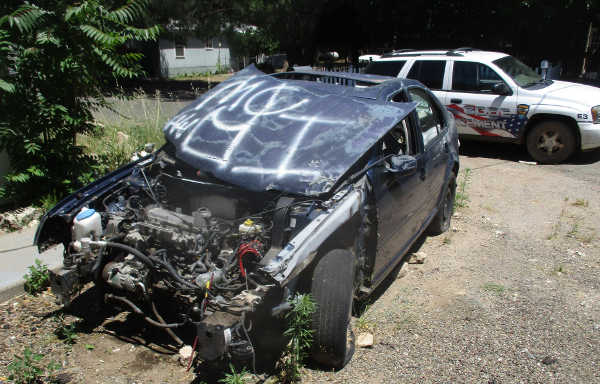
CLEARLAKE PARK, Calif. – The Clearlake Code Enforcement Bureau has removed dozens of abandoned, wrecked, dismantled and inoperative vehicles from the Clearlake Park area in recent weeks as part of a special enforcement.
The agency said it was focusing its special enforcement efforts on removing the vehicles from the public right of way and private properties.
In total, 42 vehicles were identified, seven were voluntarily removed by the owners and 35 were abated by Code Enforcement, officials said.
Code Enforcement officials said that it violates both the Clearlake Municipal Code and the California Vehicle Code to park or store an inoperative or abandoned vehicle in the right of way, roadway or on private property within public view.
Even if you have filed a “non op” registration with the Department of Motor Vehicles an inoperative vehicle is not permitted to be stored in the right of way, roadway or on private property within public view. Filing a “non op” with the DMV is confirming that the vehicle is inoperable, officials said.
The parking or storing of an abandoned, wrecked, dismantled or inoperative vehicle for more than 72 hours is subject to a citation of $350 per day, officials said. Failing to remove a vehicle upon notice by the city is a separate fine of $350. The fines are in addition to removal/abatement costs.
If you see or suspect someone illegally abandoning or dumping a vehicle, you should immediately contact the Clearlake Police Department at 707-994-8251.
For all questions regarding the abatement of vehicles, please call the Code Enforcement Bureau at 707-994-8251, Extension 309.
While Independence Day is synonymous with backyard barbecues, fireworks and parades, it is also one of the most dangerous times on the road for alcohol-related crashes.
According to preliminary numbers from the California Highway Patrol, seven people were killed and 73 injured in alcohol-related crashes statewide on July 4 last year. Every deadly crash involved a driver who had been drinking.
“We all know driving after drinking is bad, but many people continue to do so,” OTS Director Rhonda Craft said. “Be mindful of others participating in Fourth of July festivities and choose a sober way to leave a party or event.”
Additional officers will be on patrol over the Independence Day holiday to stop drivers suspected of being under the influence of alcohol or drugs.
The OTS wants to make drivers aware that a DUI doesn’t just mean booze.
Prescription drugs, over-the-counter medications and marijuana can all affect your ability to drive, especially in combination with alcohol or other drugs.
If you are headed to a July 4 event or party, designate a sober driver before leaving. Hosting a party? Offer nonalcoholic drinks to designated sober drivers and watch who is drinking. Make sure they are finding a safe way to get home.
“Impaired driving is a serious problem that always puts other people on the road at risk,” Director Craft said. “Don’t make a decision you will regret. The consequences are steep and often tragic.”
The average cost for a DUI arrest is $13,500, which includes vehicle impound and attorney fees, insurance premium hikes and other penalties.
There is no excuse for driving under the influence. Always remember to choose a sober way to go. If you see a drunk driver, call 911.
The OTS administers funding for traffic safety programs statewide with the goal of reducing crashes that result in deaths, injuries and economic losses.
The OTS is a department under the California State Transportation Agency.
The Banks fire was first dispatched just before 5 p.m. in the 12800 block of Sulphur Bank Mine Road in Clearlake Oaks.
Copter 104 from the Boggs Mountain Helitack responded and was at the scene within 10 minutes, finding the fire at between and three acres, burning under power lines with a slow rate of spread, according to the radio reports.
Firefighters arriving at the fire said there was no structure threat, although it was near the Elem Indian Colony.
Because the nearby Sulphur Bank Mine is a federal Superfund site, incident command directed the helicopter not to pick up water from a nearby water source – likely the Herman Pit – but to go to the lake instead.
Lake County Fire Protection District Chief Willie Sapeta and his firefighters were on scene, as was Chief Mike Ciancio of Northshore Fire and his crew, and Cal Fire and US Forest Service personnel.
Sapeta reported that forward progress on the fire was stopped at approximately 5:42 p.m.
He said lines running through the fire were deenergized, while lines on the outskirts of the blaze remained energized. The power lines that were shut off were reported to have left thousands of area customers without power for several hours.
Sapeta later told Lake County News that the fire burned a total of about five acres.
Sulphur Bank Road remained closed to traffic for a period of time during mop up in order to give firefighters the chance to clean retardant off the roadway, as it had become a hazard, according to Sapeta.
Resources responding to the fire included two dozers, three aircraft, one helicopter, nine engines and one water tender, and four overhead or command staff, Sapeta said.
He said the fire burned partially within the October 2017 Sulphur fire burn scar.
On Tuesday afternoon, the fire’s cause remained under investigation, with Sapeta explaining that investigators were not sure if Pacific Gas and Electric infrastructure was a primary or secondary cause.
“Their infrastructure was involved,” he said.
Earlier in the day, Sapeta and his firefighters, along with Northshore Fire, contained a structure fire on 35th Avenue in Clearlake.
The fire was dispatched at about 10 a.m. Tuesday, with firefighters able to see the column of smoke from the station, Sapeta said.
He said firefighters arriving at the scene found a well-involved singlewide mobile home and a detached overhead camper.
Sapeta said firefighters knocked down and contained the fire within about 25 minutes, followed by an hour and a half of overhaul.
They had to shut down the road as there was a lot of pedestrian and vehicle traffic coming through the area to look at the fire, which Sapeta said caused engines to have to come into the scene from another direction.
The structure was a total loss, Sapeta said.
One man was sent to the hospital to be evaluated for smoke inhalation, and Sapeta said a total of three people were displaced and are staying with neighbors.
Sapeta said the response included three engines, a water tender, two medic units, a company officer and mutual aid from Northshore Fire’s Station 75 in Clearlake Oaks.
He said on Tuesday that investigators are still working on determining that fire’s cause and origin.
Email Elizabeth Larson at
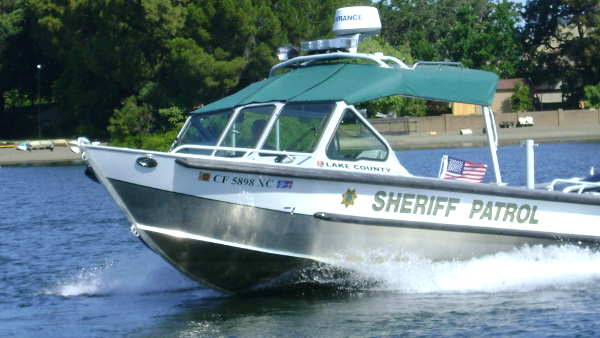
LAKE COUNTY, Calif. – The Lake County Sheriff’s Office Marine Patrol Unit will be participating in Operation Dry Water from Friday, July 5, through Sunday, July 7.
Marine Patrol deputies will be out in force specifically looking for signs of boaters operating boats while impaired.
Operation Dry Water is a national awareness and enforcement campaign focused on reducing the number of alcohol- and drug-related accidents and fatalities and fostering a stronger, more visible deterrent to alcohol and drug use on the water.
Operation Dry Water is coordinated by the National Association of State Boating Law Administrators, or NASBLA, in partnership with the U.S. Coast Guard as well as local, state and federal law enforcement agencies.
Over the July 4 holiday weekend, law enforcement agencies and officers across the United States will be conducting Operation Dry Water and will be on heightened alert for those in violation of boating under the influence laws.
Agencies from all 56 U.S. states, trusts and territories are expected to participate in Operation Dry Water 2019.
Operation Dry Water has been a highly successful campaign, drawing public attention to the dangers of boating under the influence of alcohol and drugs.
Since the inception of the Operation Dry Water Campaign in 2009, law enforcement officers have removed 3,500 BUI operators from the nation’s waterways.
The campaign continues to make a significant impact on boater safety and spreading the message of the danger of boating under the influence.

The Fourth of July can be a miserable day for dogs. The fireworks make scaredy-cats out of many canines.
That’s because dogs, like humans, are hardwired to be afraid of sudden, loud noises. It is what keeps them safe. Some dogs, though, take that fear to the extreme with panting, howling, pacing, whining, hiding, trembling and even self-injury or escape. And, unlike humans, they don’t know that the fanfare on the Fourth is not a threat. Dogs hear the fireworks and process it as if their world is under siege.
How a dog responds to noises may be influenced by breed, with German shepherd dogs more likely to pace, while border collies or Australian cattle dogs are more likely to show their fear by hiding.
While we veterinarians don’t know exactly why some dogs are afraid of fireworks and others not, many dogs that react to one noise often react to others. Therefore, early intervention and treatment are essential in protecting the welfare of these terrified dogs. Here’s how you can protect your dog from fireworks.
-
Take your pet to the vet. If your dog is afraid of fireworks, the first step is to have your veterinarian evaluate him or her, especially if your dog’s noise sensitivity is relatively new. One recent study found a link between pain and noise sensitivities in older dogs, indicating that muscle tension or sudden movements in response to a loud noise may aggravate a tender area on the body and thus create an association between the loud noise and pain, causing fear of that particular noise to develop or escalate.
-
Create a “safe haven” in your home with a secure door or gate, preferably away from outside windows or doors. Close the blinds or curtains to reduce outside noises, and play some classical music to help reduce stress by creating a relaxing environment for your dog during the show. A white noise machine or box fan may also help reduce anxiety, along with a pheromone like Adaptil sprayed on bedding, a bandanna, a collar or from a diffuser plugged into the wall.
-
Consider noise-canceling headphones such as Mutt Muffs to muffle the sounds and further reduce noise sensitivities.
-
Find a food your pet will love. This could be cut pieces of boiled chicken or squeeze cheese. Sit with your pet and feed him with each boom. You can also use a long-lasting food-dispensing or puzzle toy to release food continuously during the show. This is to help your dog make a positive association with the noises for the future.
-
Consider anxiety wraps, fabric wraps that exert a gentle pressure on your dog’s body. These may help to lower heart rate and other clinical signs of fear and anxiety, operating on the belief that they swaddle a scared animal and thus calm its fears. These work best, however, in conjunction with a complete behavior treatment plan including medication or behavior modification, or both.
-
When it comes to comforting your dog, the jury is still out. It is difficult, however, to reinforce an emotional response with comfort. Therefore, it is OK to pet your dog when frightened by a noise event so long as the dog appears to be comforted and not more distressed by the attention.
[ Deep knowledge, daily. Sign up for The Conversation’s newsletter. ]
Christine Calder, Assistant Clinical Professor of Behavior, College of Veterinary Medicine, Mississippi State University
This article is republished from The Conversation under a Creative Commons license. Read the original article.
The US Geological Survey reported that the quake occurred at 8:04 p.m. Tuesday.
It was centered five and a half miles west northwest of Cobb, just inside the Sonoma County border, and 13.3 miles southwest of Clearlake at a depth of six-tenths of a mile, the survey reported.
By early Wednesday, the survey had received 16 shake reports from areas including Kelseyville, Geyserville, Middletown, Healdsburg, St. Helena, Yountville and Clayton.
Email Elizabeth Larson at