 How to resolve AdBlock issue?
News
NORTH COAST, Calif. – The Sonoma County Sheriff’s Office said its detectives are releasing new information into an officer-involved shooting that occurred on Thursday night in Bodega Bay.
A Sonoma County Sheriff’s deputy shot a 32-year-old San Francisco man who was high on acid and had assaulted eight people, including hitting several of them with a stolen truck, before trying to assault the deputy and a California Highway Patrol officer with the truck.
The name of the deputy has not yet been released but will be soon, according to Sgt. Spencer Crum.
Shortly after 8 p.m. Thursday, a sheriff’s deputy and a California Highway Patrol officer were dispatched to a disturbance in Bodega Bay with multiple injured people, Crum said.
Crum said detectives responded and after questioning numerous witnesses and collecting video evidence they learned that the suspect, Betai Koffi, was with five longtime friends who had rented a Bodega Bay home for the Independence Day holiday. They arrived at the home in the 600 block of Swan Drive on Wednesday.
On Thursday at about noon Koffi consumed two doses of LSD or acid, a known dangerous hallucinogenic drug, Crum said. At approximately 3 p.m. Koffi became delusional around the home while his friends tried to keep him calm.
Between 4 and 5 p.m., he took two more doses of LSD. Shortly before 8 p.m. Koffi wanted to leave but his friends tried to stop him, Crum said.
Crum said Koffi punched a woman in the chest and side, then stabbed a man with a pencil, choked another man and punched a third man in the face before leaving the home and getting into his rental car, a blue Hyundai sedan, Crum said.
Koffi tried to back out of the driveway, only to hit another car that was parked behind him. Crumn said Koffi put the car in drive and drove towards one of the men, who was able to get out of the way, then drove the car into the garage of the home, lodging it into the home.
Crum said Koffi then exited the car and ran down the street to a home several doors down where he was confronted by a security guard. Upon questioning, Koffi picked up a landscape light and stabbed the guard in the chest with the metal stake end and knocked the security guard to the ground; he was unable to get back up.
Koffi then went to the security guard’s truck, which was unlocked and running, and stole the truck, driving away at high speed. As he fled, he drove straight towards an unrelated man and woman walking on the road. Crum said Koffi drove straight towards the pair and violently hit the woman with the truck causing significant injuries. The man was struck on the arm but was not seriously injured.
He then immediately drove off the road and drove after another man and woman who were walking on a bluff. He aimed at the woman and hit her with the truck, causing significant injuries, Crum said.
Koffi continued driving off road, hit a wall, entered a side yard of a home, then drove back out onto Pelican Loop Road. Crum said a deputy arrived in a patrol car and stopped in the street as a CHP officer pulled up to the left of the sheriff’s car.
Crum said Koffi turned the truck and accelerated towards the two patrol cars and drove straight towards the officers. The deputy, who had exited his patrol car attempting to get out of the way,fired several rounds at Koffi but he continued to accelerate, hitting the CHP officer’s car.
Koffi continued to accelerate and the deputy fired several more rounds, at which point Koffi’s truck was stopped and the deputy took Koffi into custody and applied medical aid until paramedics arrived. Koffi was hit at least three times through the windshield, according to Crum.
In his report, Crum said Koffi and the first woman hit by the truck was flown by helicopters to nearby hospitals and treated for their injuries. The woman received significant injuries that are not expected to be life-threatening.
The security guard and second woman hit by the truck were transported to a local hospital by ground ambulance and are expected to survive their injuries, Crum said.
Koffi received major injuries and is currently in critical condition. Koffi’s friends at the rented home were able to treat their own injuries and did not require hospitalization, according to Crum.
A countywide protocol was invoked that details how the incident will be investigated because this is an officer involved shooting causing major injuries. Santa Rosa Police and the Sonoma County District Attorney’s Office are investigating the officer involved shooting portion of this incident. Crum said the Sonoma County Sheriff’s Office is investigating the assaults and events leading up to the shooting.
Currently Koffi is under arrest by the Sonoma County Sheriff’s Office at the hospital for two counts of attempted murder, three counts of assault with a deadly weapon and one charge of carjacking for the incidents leading up to the officer involved shooting. Bail has not been set. Crum said.
Crum said more information and video of the incident will be released as soon as possible.
A Sonoma County Sheriff’s deputy shot a 32-year-old San Francisco man who was high on acid and had assaulted eight people, including hitting several of them with a stolen truck, before trying to assault the deputy and a California Highway Patrol officer with the truck.
The name of the deputy has not yet been released but will be soon, according to Sgt. Spencer Crum.
Shortly after 8 p.m. Thursday, a sheriff’s deputy and a California Highway Patrol officer were dispatched to a disturbance in Bodega Bay with multiple injured people, Crum said.
Crum said detectives responded and after questioning numerous witnesses and collecting video evidence they learned that the suspect, Betai Koffi, was with five longtime friends who had rented a Bodega Bay home for the Independence Day holiday. They arrived at the home in the 600 block of Swan Drive on Wednesday.
On Thursday at about noon Koffi consumed two doses of LSD or acid, a known dangerous hallucinogenic drug, Crum said. At approximately 3 p.m. Koffi became delusional around the home while his friends tried to keep him calm.
Between 4 and 5 p.m., he took two more doses of LSD. Shortly before 8 p.m. Koffi wanted to leave but his friends tried to stop him, Crum said.
Crum said Koffi punched a woman in the chest and side, then stabbed a man with a pencil, choked another man and punched a third man in the face before leaving the home and getting into his rental car, a blue Hyundai sedan, Crum said.
Koffi tried to back out of the driveway, only to hit another car that was parked behind him. Crumn said Koffi put the car in drive and drove towards one of the men, who was able to get out of the way, then drove the car into the garage of the home, lodging it into the home.
Crum said Koffi then exited the car and ran down the street to a home several doors down where he was confronted by a security guard. Upon questioning, Koffi picked up a landscape light and stabbed the guard in the chest with the metal stake end and knocked the security guard to the ground; he was unable to get back up.
Koffi then went to the security guard’s truck, which was unlocked and running, and stole the truck, driving away at high speed. As he fled, he drove straight towards an unrelated man and woman walking on the road. Crum said Koffi drove straight towards the pair and violently hit the woman with the truck causing significant injuries. The man was struck on the arm but was not seriously injured.
He then immediately drove off the road and drove after another man and woman who were walking on a bluff. He aimed at the woman and hit her with the truck, causing significant injuries, Crum said.
Koffi continued driving off road, hit a wall, entered a side yard of a home, then drove back out onto Pelican Loop Road. Crum said a deputy arrived in a patrol car and stopped in the street as a CHP officer pulled up to the left of the sheriff’s car.
Crum said Koffi turned the truck and accelerated towards the two patrol cars and drove straight towards the officers. The deputy, who had exited his patrol car attempting to get out of the way,fired several rounds at Koffi but he continued to accelerate, hitting the CHP officer’s car.
Koffi continued to accelerate and the deputy fired several more rounds, at which point Koffi’s truck was stopped and the deputy took Koffi into custody and applied medical aid until paramedics arrived. Koffi was hit at least three times through the windshield, according to Crum.
In his report, Crum said Koffi and the first woman hit by the truck was flown by helicopters to nearby hospitals and treated for their injuries. The woman received significant injuries that are not expected to be life-threatening.
The security guard and second woman hit by the truck were transported to a local hospital by ground ambulance and are expected to survive their injuries, Crum said.
Koffi received major injuries and is currently in critical condition. Koffi’s friends at the rented home were able to treat their own injuries and did not require hospitalization, according to Crum.
A countywide protocol was invoked that details how the incident will be investigated because this is an officer involved shooting causing major injuries. Santa Rosa Police and the Sonoma County District Attorney’s Office are investigating the officer involved shooting portion of this incident. Crum said the Sonoma County Sheriff’s Office is investigating the assaults and events leading up to the shooting.
Currently Koffi is under arrest by the Sonoma County Sheriff’s Office at the hospital for two counts of attempted murder, three counts of assault with a deadly weapon and one charge of carjacking for the incidents leading up to the officer involved shooting. Bail has not been set. Crum said.
Crum said more information and video of the incident will be released as soon as possible.
NORTHERN CALIFORNIA – Authorities in Colusa and Yolo counties are searching for two male subjects who robbed the Umpqua Bank in Arbuckle on Friday afternoon.
The Colusa County Sheriff’s Office said the armed robbery occurred shortly after 4:30 p.m. Friday.
The responsible subjects were two males dressed in hoodie style sweatshirts with masks covering their faces. One was described as a heavyset male with a light complexion, the second was described as having a thinner build, possibly a Hispanic male adult with a dark complexion or as a black male adult, the sheriff’s office said.
The two men were armed with handguns. Authorities said they took an undisclosed amount of money before fleeing southbound in a stolen tan Toyota pickup. No injuries occurred during the robbery.
A Colusa County Sheriff’s deputy pursued the vehicle into Yolo County, where one of the subjects fled on foot and the other continued driving southbound. The second subject abandoned the vehicle in an orchard south of County Road 2 and west of County Road 88 in Yolo County, authorities said.
Colusa County Sheriff’s deputies, Colusa County Task Force Agents and Colusa County detectives along with personnel from the Yolo County Sheriff’s Office, California Highway Patrol, Williams Police Department and Woodland Police Department set a perimeter around the area.
The sheriff’s office said a CHP Air Unit and CHP K9 were utilized in the search for the subjects.
As of early Saturday, the two subjects were reported to still beat large and the Colusa County Sheriff’s Office is currently following active leads. The FBI is assisting in the investigation.
The investigation is ongoing. If anyone has information regarding this incident they are asked to contact Det. Sgt. Jose Ruiz or Det. Chris Doble at 530-458-0200.
The Colusa County Sheriff’s Office said the armed robbery occurred shortly after 4:30 p.m. Friday.
The responsible subjects were two males dressed in hoodie style sweatshirts with masks covering their faces. One was described as a heavyset male with a light complexion, the second was described as having a thinner build, possibly a Hispanic male adult with a dark complexion or as a black male adult, the sheriff’s office said.
The two men were armed with handguns. Authorities said they took an undisclosed amount of money before fleeing southbound in a stolen tan Toyota pickup. No injuries occurred during the robbery.
A Colusa County Sheriff’s deputy pursued the vehicle into Yolo County, where one of the subjects fled on foot and the other continued driving southbound. The second subject abandoned the vehicle in an orchard south of County Road 2 and west of County Road 88 in Yolo County, authorities said.
Colusa County Sheriff’s deputies, Colusa County Task Force Agents and Colusa County detectives along with personnel from the Yolo County Sheriff’s Office, California Highway Patrol, Williams Police Department and Woodland Police Department set a perimeter around the area.
The sheriff’s office said a CHP Air Unit and CHP K9 were utilized in the search for the subjects.
As of early Saturday, the two subjects were reported to still beat large and the Colusa County Sheriff’s Office is currently following active leads. The FBI is assisting in the investigation.
The investigation is ongoing. If anyone has information regarding this incident they are asked to contact Det. Sgt. Jose Ruiz or Det. Chris Doble at 530-458-0200.

On June 27, 2019, California Gov. Newsom signed AB 328, which amends California’s Probate Code, to better protect dependent adults in California from financial elder abuse by their care custodians (a defined term).
Existing law presumes that gifts – made either during life or at death – by a dependent adult (a defined term) to their care custodian are the product of undue influence (a defined term), and thus void; unless the undue influence presumption is overcome by clear and convincing evidence to the contrary.
A dependent adult is a person who is unable to provide properly for his or her own personal needs for physical health, food, clothing, or shelter and/or due to one or more deficits in mental functions, as defined, the person has difficulty managing that person’s own financial resources or resisting fraud or undue influence.
Care custodians are caregivers who provide health or social services to a dependent adult. An exception exists for an unpaid caregiver who had a personal relationship (friendship) with the dependent adult at least 90 days prior to commencing the caregiver services.
However, many predatory care custodians are marrying, cohabiting or becoming registered domestic partners to their dependent adult to take advantage of an existing loophole for such relationships.
Existing law exempts gifts by partners to their spouses, domestic partners and cohabitants (partners) who are also care custodians from the presumption of undue influence. Many predatory care custodians, therefore, marry or cohabitate with their dependent adults. Marriage, however, provides many additional financial benefits to a surviving spouse.
By marrying the dependent adult, the care custodian could receive lifetime gifts and become a death beneficiary under the dependent adult’s will, trust, retirement accounts or life insurance without the presumption of undue influence.
Also, if the dependent adult made no provisions for the care custodian after marrying then the care custodian as an “omitted spouse” receives a presumptive intestate share in the deceased dependent adult’s estate (i.e., one-third to one-half of the decedent’s estate).
AB 328 tightens the marriage loophole: First, gifts to care custodians who marry their dependent adult within six (6) months prior to the gift (date of transfer) or to the execution of a testamentary document (i.e., a will or trust) are presumed to be the product of undue influence; second, care custodians who marry their dependent adult within six months prior to the dependent adult’s own death do not qualify as an omitted spouse to receive an intestate share of the dependent adult’s estate.
In both these scenarios, the care custodian must either still be providing care services or have ceased such services within 90 days of getting married for these rules to apply. The 90 days is a cooling off period between when the caregiver services end and the marriage takes place. It may or may not be long enough to allow for the caregiver and the dependent adult to go their own separate ways.
In sum, testamentary gifts or intestate inheritances that arise within a short term marriage (under 6 months) between a care custodian and a dependent adult are now presumptively void as the product of undue influence.
Also, such marriages no longer qualify the surviving care custodian spouse for an intestate share of the deceased dependent adult’s estate.
While AB 328 is real progress, it arguably does not go far enough. That is, predatory care custodians may be able to wait out the 90 day and/or the six month periods discussed above.
Note: AB 328 was sponsored by the Trusts and Estates Committee of the California Lawyers Association. Dennis Fordham contributed to AB 328 as a volunteer attorney on the Marriage Subcommittee that worked on the legislative bill.
Dennis A. Fordham, attorney, is a State Bar-Certified Specialist in estate planning, probate and trust law. His office is at 870 S. Main St., Lakeport, Calif. He can be reached at
Imagine slow-motion fireworks that started exploding 170 years ago and are still continuing.
This type of firework is not launched into Earth's atmosphere, but rather into space by a doomed super-massive star, called Eta Carinae, the largest member of a double-star system.
A new view from NASA's Hubble Space Telescope, which includes ultraviolet light, shows the star's hot, expanding gases glowing in red, white and blue. Eta Carinae resides 7,500 light-years away.
The celestial outburst takes the shape of a pair of ballooning lobes of dust and gas and other filaments that were blown out from the petulant star. The star may have initially weighed more than 150 Suns. For decades, astronomers have speculated about whether it is on the brink of total destruction.
The fireworks started in the 1840s when Eta Carinae went through a titanic outburst, called the Great Eruption, making it the second-brightest star visible in the sky for over a decade. Eta Carinae, in fact, was so bright that for a time it became an important navigational star for mariners in the southern seas.
The star has faded since that eruption and is now barely visible to the unaided eye. But the fireworks aren't over yet because Eta Carinae still survives. Astronomers have used almost every instrument on Hubble over the past 25 years to study the rambunctious star.
Using Hubble's Wide Field Camera 3 to map the ultraviolet-light glow of magnesium embedded in warm gas (shown in blue), astronomers were surprised to discover the gas in places they had not seen it before.
Scientists have long known that the outer material thrown off in the 1840s eruption has been heated by shock waves after crashing into the doomed star's previously ejected material. In the new images, the team had expected to find light from magnesium coming from the same complicated array of filaments as seen in the glowing nitrogen (shown in red). Instead, a completely new luminous magnesium structure was found in the space between the dusty bipolar bubbles and the outer shock-heated nitrogen-rich filaments.
"We've discovered a large amount of warm gas that was ejected in the Great Eruption but hasn't yet collided with the other material surrounding Eta Carinae," explained Nathan Smith of Steward Observatory at the University of Arizona in Tucson, Arizona, lead investigator of the Hubble program. "Most of the emission is located where we expected to find an empty cavity. This extra material is fast, and it 'ups the ante' in terms of the total energy for an already powerful stellar blast."
The newly revealed gas is important for understanding how the eruption began, because it represents the fast and energetic ejection of material that may have been expelled by the star shortly before the expulsion of the bipolar lobes. Astronomers need more observations to measure exactly how fast the material is moving and when it was ejected.
The streaks visible in the blue region outside the lower-left lobe are a striking feature in the image. These streaks are created when the star's light rays poke through the dust clumps scattered along the bubble's surface.
Wherever the ultraviolet light strikes the dense dust, it leaves a long, thin shadow that extends beyond the lobe into the surrounding gas.
"The pattern of light and shadow is reminiscent of sunbeams that we see in our atmosphere when sunlight streams past the edge of a cloud, though the physical mechanism creating Eta Carinae's light is different," noted team member Jon Morse of BoldlyGo Institute in New York.
This technique of searching in ultraviolet light for warm gas could be used to study other stars and gaseous nebulas, the researchers say.
"We had used Hubble for decades to study Eta Carinae in visible and infrared light, and we thought we had a pretty full accounting of its ejected debris. But this new ultraviolet-light image looks astonishingly different, revealing gas we did not see in other visible-light or infrared images," Smith said. "We're excited by the prospect that this type of ultraviolet magnesium emission may also expose previously hidden gas in other types of objects that eject material, such as protostars or other dying stars. Only Hubble can take these kinds of pictures."
Eta Carinae has had a violent history, prone to chaotic eruptions that blast parts of itself into space like an interstellar geyser.
One explanation for the monster star's antics is that the convulsions were caused by a complex interplay of as many as three stars, all gravitationally bound in one system.
In this scenario, the most massive member would have swallowed one of the stars, igniting the massive Great Eruption of the mid-1800s. Evidence for that event lies in the huge, expanding bipolar lobes of hot gas surrounding the system.
A fortuitous trick of nature also allowed astronomers in a previous Hubble study to analyze the Great Eruption in detail. Some of the light from the eruption took an indirect path to Earth and is just arriving now. The wayward light was heading away from our planet when it bounced off dust clouds lingering far from the turbulent stars and was rerouted to Earth, an effect called a "light echo."
The stellar behemoth will eventually reach its fireworks show finale when it explodes as a supernova. This may have already happened, although the geyser of light from such a brilliant blast hasn't yet reached Earth.
The Hubble Space Telescope is a project of international cooperation between NASA and European Space Agency. NASA's Goddard Space Flight Center in Greenbelt, Maryland, manages the telescope. The Space Telescope Science Institute in Baltimore, Maryland, conducts Hubble science operations. STScI is operated for NASA by the Association of Universities for Research in Astronomy in Washington, D.C.
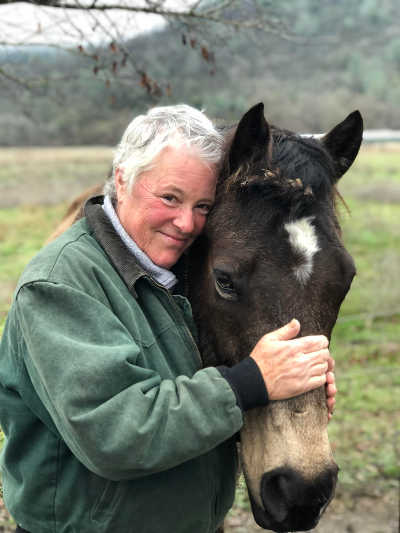
LAKEPORT, Calif. – Organizers are putting the final touches on preparations for the 90th annual Lake County Rodeo.
The event will take place on Friday, July 12, and Saturday, July 13, at the Lake County Fairgrounds in Lakeport, 401 Martin St.
Gates open at 5 p.m. both days, with the rodeo starting at 6 p.m.
Events include bareback bronc riding, bareback riding, barrels, bull riding, calf roping, local barrels, local team roping, mutton bustin, steer wrestling and team roping. The rodeo is sanctioned by the California Cowboys Pro Rodeo Association.
This year’s rodeo is being dedicated to the memory of Quincy Andrus, an accomplished Kelseyville horsewoman, medical professional, wife, mother of three daughters and grandmother who died in April.
In addition to riding, Andrus also enjoyed driving, and could often be seen driving her Belgian along Clark Drive and Gaddy Lane near her home.
The Lake County Rodeo Association said it is very proud to dedicate the 90th annual Lake County Rodeo to Andrus, “a quiet, beautiful, behind-the-scenes treasure of Lake County.”
The association also announced that it has named Kelseyville resident Johnny Jones as this year’s grand marshal.
Jones, a Lake County native, has been a practicing farrier for 42 years, is a trainer and riding instructor and a mentor to young people.
He’s dedicated to the sport of rodeo, judging high school, college, open and CCPRA rodeos, and having been president of the California High School Rodeo Association as well as a board member of the Lake County Rodeo Association.
This year’s rodeo will once again feature popular contests for children, including the Cutest Lil’ Cowpoke competition, which takes place from 6 to 7 p.m. Friday and the mutton bustin’, set for both days from 6 to 7 p.m.
Winners for each contest will receive silver buckles. Applications for both contests are available online at www.lakecountyrodeo.com and the Lake County Chamber of Commerce at Vista Point in Lakeport.
The Cutest Cowpoke Competition is open to boys and girls, ages 3 to 8. The deadline to enter is Friday, July 12, at 5:30 p.m. All participants should arrive at the Rodeo on Friday, no later than 5:15 p.m. to check in at the Rodeo office.
Children are encouraged to dress rodeo style, but no live props are allowed. For more information call 707-245-7431.
For mutton bustin’, the competition is open to boys and girls between the ages of 4 and 8 years old, who weigh in on those dates at no more than 50 pounds. Contestants should check in at the rodeo office no later than 5:15 p.m. on the day of their ride.
The entry fee is $10 per child – which does not include rodeo admission. Participants should be dressed in long sleeve shirts and jeans, sturdy boots or shoes, with a properly sized helmet. Every rider will be given an authentic mutton bustin’ tee shirt. Winner's buckles will be awarded Friday and Saturday night to the youngsters who have the longest ride of the night.
For questions concerning the mutton bustin' competition, contact Chair Angel Purdy at 707-536-7257.
Admission prices for Friday are $9 for adults and $6 for seniors; the Saturday ticket prices, which include the Saturday night dance, are $13 for adults and $9 for seniors. Children age 12 and under may attend for free on both days when accompanied by a paid adult or senior.
For more information visit https://www.lakecountyrodeo.com/ .
Email Elizabeth Larson at

LAKEPORT, Calif. – The city of Lakeport has completed a state-required dam breach inundation study and emergency action plan, which the Lakeport City Council approved at a June meeting.
In the wake of the February 2017 Oroville Dam incident, which involved the failure of its main and emergency spillways, the state is now requiring jurisdictions to identify dams, identify hazards and have an emergency action plan in the case of a failure.
At the council's June 18 meeting, Andrew Britton, the city’s compliance officer, and Melissa Larsen, a project manager and senior hydrologist with WEST Consultants Inc. presented the study and plan for the Lakeport Dam to the council.
At that meeting, the city also solicited public comment on the plan.
The discussion on the Lakeport Dam begins at the 52:29 mark in the video above. The staff report starts on page 219 of the agenda packet published below.
The written report by Britton and Utilities Superintendent Paul Harris said the state has classified the Lakeport Dam as a “high hazard facility,” which he said is “based solely downstream hazard considerations, not the actual condition of the dam or its critical appurtenant structures. Dams in the high hazard category have the potential to cause loss of life and impacts to downstream property should they fail or undergo an uncontrolled release from the dam.
Britton explained to the council that the Lakeport Dam is an important component of the city’s wastewater treatment plan.
The earthen embankment dam initially was built in 1980 and raise and expanded from 1990 to 1991. It’s 51 feet high and has a crest length of 890 feet. The report said the dam retains treated effluent stored in a reservoir that has a maximum capacity of approximately 650-acre feet, or nearly 212 million gallons.
The city’s treated wastewater is stored in the reservoir before the effluent can be applied on pasture land via a sprinkler irrigation system.
Britton told the council that the state responded to the Oroville Dam failure by passing Senate Bill 92 in June 2017. That bill added sections to state water code requiring dam breach studies and inundation maps that are required to be publicly accessible, as well as emergency action plans. The plan and maps are to be updated every 10 years.
Larsen said they completed maps for each type of failure, showing how long it would take for the water to reach certain areas. The maps start on page 258 of the agenda packet.
An arrival time map for an east breach on the dam anticipates it could reach Highway 29 in about 10 to 15 minutes and Clear Lake in between 30 to 50 minutes. For a north breach, inundation would be slower, with water expected to reach the highway in about 20 minutes and Clear Lake in about 45 to 60 minutes.
Britton said the plan is now complete, and once approved by the California Office of Emergency Services, the city will be in compliance with the new state requirements.
The plan calls for city personnel to immediately determine the emergency level once a failure event is observed or reported.
Three emergency levels are:
• Emergency Level 1: Unusual event, slowly developing;
• Emergency Level 2: Potential dam failure situation, rapidly developing;
• Emergency Level 3: Dam failure appears imminent or is in progress.
Each of those emergency levels then has a number of potential actions that are laid out in the plan, including plugging leak flows, lowering the water level, completing an immediate engineering exploration, contacting law enforcement, closing inlets, opening gates, placing sandbag and riprap, and more.
Councilman Kenny Parlet asked why Lakeport’s dam is classified as a dam and not a pond.
Larsen said he wasn’t alone in asking that, noting many cities and counties have the exact same questions and concerns. She explained that it just means there is the potential for the loss of one life if an uncontrolled release of water occurs.
Parlet complained that millions of dollars for such plans are now being spent and the city forced to fulfill another state mandate because of the earthen dams.
Britton noted that until WEST Consulting did the hydraulic modeling, taking into account the topography, it really wasn't clear how a potential dam release by a north breach would impact nearby homes on Linda Lane.
Larsen said the maps are a conservative estimate of how a water release would behave.
Councilman George Spurr asked how the city would stop it if a dam release occurred. Britton said very little can be done to stop it, but they can react to it, which is why there are specific steps and procedures set forward in the plan.
Spurr asked if the city would need to evacuate people in such a circumstance. Britton said yes.
Britton said dam inspections are done on a daily basis, and there is a lot of monitoring to make sure the dam remains stable and fully functional.
Larsen said it is unlikely that one day the Lakeport Dam would simply fail, as it’s walked and checked regularly.
“On a big earthquake you don't know it's going to happen,” said Spurr. He asked if there isn’t something they could do to keep it from getting into the lake.
Public Works Director Doug Grider said the water coming out of the dam is cleaner than what comes from the creek. He said he can back that up with testing done on the water when the city had an overflow of effluent several years ago, but it still cost the city $2 million.
The water in the dam is not raw sewage but treated water with chlorine injected. He added that it’s not a hazard to cause huge public health crisis.
Spurr, remembering a release of treated wastewater the city had several years ago, asked if the city would once again be fined millions of dollars if it happened. Grider said yes.
Britton said the water is treated to a quality where cattle eat the grass from the pastureland where the water is applied.
The council opened up the discussion for public comment that could be incorporated into the final plan but none was offered.
Parlet moved to approve the plan and maps, which the council approved 4-0.
Email Elizabeth Larson at
061819 Lakeport City Council agenda packet by LakeCoNews on Scribd