 How to resolve AdBlock issue?
News
- Details
- Written by: Elizabeth Larson
CLEARLAKE, Calif. – During a special meeting last week, the Clearlake City Council voted to sell the former Austin Resort property to a developer.
Meeting for about a half-hour on Wednesday morning, the council offered unanimous approval for the plan, which Vice Mayor Dirk Slooten estimated will be a $40 million project.
This spring, Bailey Building and Loans LLC approached the city with a proposal to purchase the property, consisting of two parcels, in order to build a destination resort at the site that would include a marina, hotel, restaurant and retail.
The council approved an initial letter of intent with the developer in March, and it has since received approval from the Clearlake Planning Commission, as Lake County News has reported
The property is made up of two parcels. The first is the 4.74-acre parcel located at 14061 Lakeshore Drive and owned by the city’s redevelopment successor agency since 1997. The second property, located at 14071 Lakeshore Drive, is 2.94 acres and owned by the city since 2001, when it purchased it from the Redevelopment agency.
City Manager Alan Flora said the purchase price for both properties will be $915,350.
The larger parcel at 14061 Lakeshore Drive, held by the redevelopment successor agency, will sell for $564,943, and 15.73 percent of the proceeds, or $88,815, will go to the city. Other taxing entities will split up the remaining funds. Flora’s report said the largest amount, or $252,534, will go to Konocti Unified School District.
The parcel at 14071 Lakeshore Drive, is priced at $350,407, all of which will go to the city, Flora said.
Among the items Bailey Building and Loans LLC is requesting of the city, it’s asking for the city to coordinate with tribal governments as necessary; build a roundabout at the intersection of Olympic and Lakeshore drives, in partnership with developer for property frontage improvements; that the police department would identify the property as a priority for law enforcement visibility and enforcement; that the city would take all reasonable efforts to ensure expedited entitlement approval process; and that the city would consider a lease or license agreement for adjoining property that would facilitate infrastructure improvements to reflect and unified project image, while maintaining public access.
The developer’s responsibilities including developing a waterfront resort including a hotel, restaurant, marina and other services; maintaining public access to the waterfront of Clear Lake in perpetuity; perform desired due diligence of property including any requests to city for data; and work collaboratively with the police department in identifying processes and equipment that continue the decrease in crime within the city.
Flora noted that when the council had discussed the letter of intent earlier this year, it had given direction to make sure that if the project stole the city would have the opportunity to get ownership of the property back.
As such, the developer has agreed to a three-year timeline; if they haven't started construction within three years of closing the sale the city would have the opportunity to purchase the property back for the sale price.
Flora said the project will be a fairly complicated one, particularly because of the developers’ interest in doing a large marina which will require both permits through the California Department of Fish and Game and the U.S. Army Corps of Engineers. He said permits through the Army Corps can take up to two years.
Flora said the Redevelopment Agency Oversight Board is due to meet on June 8 to consider approving sale of the property owned by the successor agency.
Once the oversight board and council had given approval, Flora said city staff would finalize the sale agreement with the developer and begin working on the terms of a development agreement any other issues needed in order to close escrow within 120 days.
Slooten said he thought it was an exciting time, explaining that based on the estimated size of the project you could cost $40 million to build. He said he also thought it was reasonable to include the three-year time frame to start construction considering environmental review and other requirements that they will face.
Mayor Russ Cremer said he, Slooten and Flora had been in an initial meeting with the developers. He said the project will transform the city landscape along with a newly redeveloped Austin Park.
Cremer asked about a lease agreement the developer is requesting for Austin Beach. Flora explained that the developer had wanted to buy the beach but instead has agreed to a staff proposed lease agreement for the beach.
Flora said the developer is interested in making the beach appear to be part of the resort development and would like to make improvements to it including to the short wall along the sidewalk.
Councilman Phil Harris said at resorts he’s visited he’s seen them utilize and work to maintain public beach space, and he said it would be a huge benefit to the city to have the developer helping with Austin Beach.
He said he also wanted to see the project include a celebration of local Native American culture, such as a stature.
Flora said he thought it was a great idea, and he noted that the developers seem sensitive and interested in the local Native American history and have asked the city to help them work with the local Native American tribes on this project.
“I think that's a great suggestion and I think it's pretty likely to be part of the project,” Flora said.
Cremer asked Police Chief Andrew White if he foresaw any difficulties responding to the developers’ request that the police department make the property – located across from City Hall – a priority for law enforcement visibility and enforcement.
White said no, that he didn’t foresee any issue.
Cremer asked to see periodic progress reports on the project as well as a concept drawing.
Slooten moved to approve both parcel sales separately, with each receiving 5-0 votes.
Email Elizabeth Larson at
Clearlake City Council agen... by LakeCoNews on Scribd
- Details
- Written by: Elizabeth Larson
Chris Rivera is director of the Forest Fire Lookout Association, California-Pacific Region, which includes the Mendocino National Forest and some of the Los Padres National Forest.
The Forest Fire Lookout Association has been getting more calls to see it can assist with staffing lookouts, he said.
Rivera said the US Forest Service has asked him to assume the responsibility of recruiting and training experienced and new lookout fire watchers.
He said Lake County currently has no available fire lookouts, as the one on Mount Konocti can’t be used due to structural issues and the High Glade Lookout above Upper Lake burned during the 2018 Ranch fire.
“We’re going to do old-school, mountaintop types of lookouts,” Rivera said.
They are planning to have several locations. One will be Anthony Peak in Mendocino County, which is 16 miles above Covelo. Anthony Peak will need experienced lookouts which Rivera said will probably turn out to be a paid, part-time job during fire season.
Another area where they plan to have a lookout is in Upper Lake at a location yet to be determined, Rivera said. The Pinnacle Rock area is a possibility.
They also plan to have people up on top of Mount Konocti, though not in the tower, Rivera said.
He said they want to put fire lookouts on a mountain top in the “old school” style. They’ll have binoculars, a compass and a radio, and will report fires and smoke.
Rivera said that the group feels it’s important to protect the county.
The need that led to towers being built in the first place is coming back, said Rivera.
Even though there is the use of infrared or cameras with satellites, “The human element cannot be replaced,” Rivera said, adding that all of the elements need to come together.
Rivera said they want to continue the early detection methods, preserve the towers and refurbish them, and train people to locate fires.
Fire lookouts have been deemed essential because they are part of the fire workforce at this time, Rivera said.
For more information, call Rivera at 707-239-6824 or email him at
To learn more about the Forest Fire Lookout Association, visit www.FFLA.org . To donate to the Mount Konocti fire lookout tower renovations, visit https://ffla-ccwr.org/ .
Email Elizabeth Larson at
- Details
- Written by: Shervin Assari, Charles R. Drew University of Medicine and Science
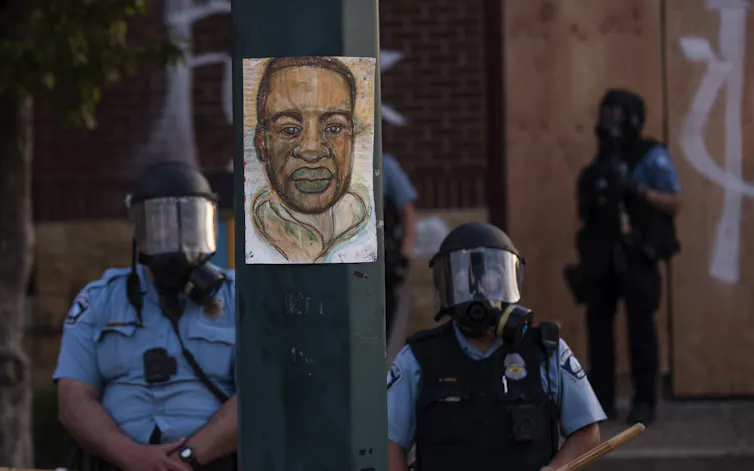
High-profile police shootings and deaths of black men in custody – or even while out jogging – bring cries of racism across the country. The May 25 death of George Floyd by a white police officer in Minneapolis and the shooting death of Ahmaud Arbery in Brunswick, Georgia on Feb. 23, 2020 by a white father and son have resulted in outrage and protests in cities across the U.S.
But, as a public health researcher who studies the effects of racism on the health of black men, I have found that the life-and-death effects of racism in the U.S. go far beyond police shootings. I also have found that, while racism harms many groups of people, black men are paying the highest cost.
As a result of racism, and associated poverty and injustice, life expectancy at birth of black men is 71.9 years, far below white women (81.2), black women (78.5), and white men (76.4). These are mainly because of black men’s higher risk of dying from several types of cancer, stroke, HIV, and homicide. Despite overall declining numbers of homicide in the U.S., homicide remains the number one cause of death for black males 10 to 24.
My research and that of many others strongly links these deaths and poor physical and mental health outcomes in general to racism. For black men in the U.S., racism is a daily experience that harms their health and leads to chronic disease and poor health. About 66% of blacks report high levels of day-to-day racial discrimination.
One example is being turned down for a job (as opposed to being treated differently on the job). On average, each black youth faces one major discriminatory experience each year. Discrimination is a major risk factor for health problems across the board, as shown by reviews.
There are also blocked opportunities for black men and other types of discrimination that are less frequent but very consequential, also called major discriminatory events. Combined, these discriminatory experiences make living harder and shorter for black men than for other race by gender groups. While discrimination is known to be a risk factor for premature death, heart disease, depression, and suicide, we know black men experience discrimination more than other groups, including black women.
As an associate professor of family medicine at Charles R. Drew University of Medicine and Science, a historically black medical school, I study how racism affects racial and ethnic minority people, particularly black men. My studies have shown that discrimination and racism are root causes of depression, anxiety, substance use and suicide, as well as poor physical health.
Education does not save black men
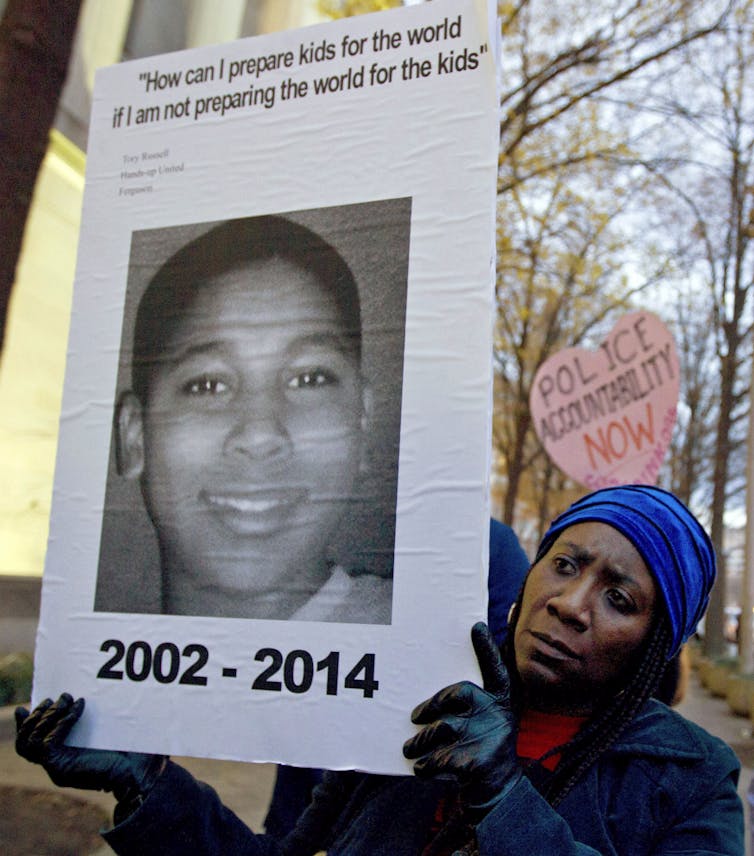
In a recent study, I found that a sense of mastery, which refers to people’s ability to take control of their life, could reduce psychological distress for black women. For black men, however, high levels of mastery were not enough to reduce psychological distress.
In another study, I compared black men and black women for the effect of their educational attainment on their depressive symptoms and psychological distress. I analyzed data of 3,570 black adults (2,299 females and 1,271 males) and found that education protects black men less than it protects black women from depressive symptoms and psychological distress. That means black men are at risk of depressive symptoms and psychological distress at all levels of educational attainment. That is, their success is not enough to reduce their depression and distress.
As all these studies have used nationally representative data. Thus, the results are generalizable to the U.S. people. They all show a pattern called diminished returns of economic and non-economic resources for black men. Although they are also seen for other race by gender groups, they are most pronounced for black men. As a result of these diminished returns, black men who have high levels of aspirations and motivation to get to the top of society still get sick, feel unhealthy and die early.
In other words, as long as U.S. unfairly treats black men, their very same resource would fail to protect them, so they show systemically poor outcomes, regardless of their status in the society.
Again, these are not limited to, but worst for, black men.
Racism in health care
Even the U.S. health care system treats black men worse than black women. This includes receiving a lower quality of health care compared to whites, and even black women. Such discrimination deteriorates their ability to manage their disease, so they develop worse outcomes and get sicker.
One of my papers shows that white men have a specific role in this. My work shows that anti-black bias is highest in white men than white women. This is very concerning because white men have the highest level of power in law, politics, police and many other institutions in the U.S. These all mean that odds are not in favor of black men.
Recent shootings of black men, either by police, or others, also shows that black men are specifically targeted by white men, the group which also is in charge of law and order. These all are examples of how social structures and biases cause poor health among black men.
Money doesn’t improve health for black men

Several of my studies have documented high risk of depression in black men and boys of high socioeconomic status. These studies shows higher, instead of lower, risk of depression as a result of socioeconomic mobility in the US.
One explanation for this is that they pay a very high price for their ticket to the top of the society. This journey also opens their eyes to the real inequalities that exist in the U.S. society.
In another study among black boys, high income increased the risk of depression, suggesting that high-income black boys are more, not less, depressed than low-income black boys. In yet another study of mine, 25 years’ follow-up of American adults showed that high education actually increases depressive symptoms of black men over time. I did not see this pattern in white men, white women or even black women.
In another study, I found that white men gain most life expectancy from their employment. The gain was smaller but still considerable for white women and black women. Black men, however, died earlier, regardless of their employment.
Thus, in todays’s U.S., racism is a root cause of poor health of black men. Given the societal structure, personal assets and ambitions such as advanced education, income and employment do not insulate black men from the racism of the American society they live in. In fact, these assets increase the likelihood of black men to be discriminated.
Many studies have shown that racism, discrimination, prejudice and related environmental stressors have a more prominent role in causing anxiety, depression, substance use, and poor physical health of black men than black women.
Questions we should ask ourselves as a society
I end this conversation with a few questions for my fellow Americans. How on earth can social mobility make the lives of white Americans easier, but not for black men? Why should social status increase rather than decrease black men’s exposure and vulnerability to discrimination? Why, for whites, does discrimination vanish if people attain high levels of success, but for black men, discrimination increases as they move up the social ladder? Why does success increase discriminatory experiences of black men?
Racism, however, is bad for everyone’s health, not just black men. It is just bad in a different way. Everyone dies sooner in a racist community. This is partially because societal inequalities increase people’s vulnerablities, even the most privileged ones, as I explained in another piece.
[Get the best of The Conversation, every weekend. Sign up for our weekly newsletter.]
Shervin Assari, Associate Professor of Family Medicine, Charles R. Drew University of Medicine and Science
This article is republished from The Conversation under a Creative Commons license. Read the original article.
- Details
- Written by: Lake County News reports
The city of Santa Rosa declared a local state of emergency due to the violence and vandalism, and City Manager Sean McGlynn, in consultation with Police Chief Rainer Navarro, has implemented a citywide curfew that officials said is meant to keep the community safe.
The curfew is from 8 p.m. to 5 a.m. daily through 5 a.m. Thursday, June 4.
During those hours, residents must stay home. City officials said those exempt from the curfew are first responders, essential city service employees, individuals who are in the course of traveling directly to and from work or to obtain medical assistance, credentialed media and persons who are experiencing homelessness who remain sheltered in place in a single location.
In addition, the curfew permits medical facilities, pharmacies, cannabis dispensaries and gas stations to remain open to the public.
Windsor’s curfew is between the hours of 9 p.m. and 5 a.m., and will last until Friday, June 5, at 5 a.m.
Windsor residents are required to stay home during curfew hours.
If you are not a Windsor resident, travel into the town is discouraged and enforcement action may be taken against you, officials said.