 How to resolve AdBlock issue?
News
- Details
- Written by: Elizabeth Larson
In mid-March, in response to county and state shelter in place orders and direction from the Judicial Council of California, the court shut down in-person proceedings and trials were put on hold, as Lake County News has reported.
Later in the spring, the Judicial Council allowed for trials to restart in June.
In the Lake County Superior Court, jury trials had been scheduled to start on July 8, but Court Executive Officer Krista LeVier told Lake County News that, to date, all cases for which trials had been scheduled to start between July 8 and this Wednesday have been resolved or the proceedings rescheduled to a later date.
Scheduling for any jury trials for the first week of August should be determined by the end of this week.
Meantime, officials said that while the pandemic persists and shelter in place orders remain in effect, the court is continuing to provide necessary and essential services to court users while protecting the health of all who come before or work within the court.
In response to public health orders, the court has limited the number of cases on calendar, requires social distancing in court facilities as well as face coverings, and will continue to handle matters via remote means whenever possible.
The following is an overview of how current proceedings are handled.
As the situation is quickly evolving, the court said it will keep the public up to date on its website.
All Judicial Council forms may be found here.
Remote court hearings
The court will continue to hold the following hearings by remote appearance until further notice. All attorneys and parties must appear by phone/video as directed by the court.
– Daily in-custody criminal arraignments.
– Juvenile detention hearings, Department 4.
– Felony law and motion, Department 3, Tuesdays at 8:15 a.m.
– Sentencings, Department 3, Mondays at 3 p.m.
– Misdemeanor disposition/setting and motions, Department 1, Mondays at 8:15 a.m. and 1:30 p.m.
– Misdemeanor settlement conferences, Department 1, Tuesdays at 1:30 p.m.
– Civil law and motion, Department 2, Mondays at 9 a.m.
– Civil case management, Department 2, Mondays at 10:30 a.m.
– Conservatorships, Department 2, Mondays at 1:30 p.m.
– Probate, Department 2, Mondays at 2 p.m.
– Department of Child Support Services Family Support, Clearlake Branch Tuesdays at 9 a.m.
– Domestic violence restraining orders, Department 2, Tuesdays at 8:15 a.m.
– Family law and motion, Department 2, Tuesdays at 10 a.m.
– Juvenile delinquency and dependency calendars, Mondays, 8:15 a.m./1:30 p.m., Department 4.
– Civil harassment restraining order calendar, Tuesdays, 8:15 a.m., Department 4.
– Civil Settlement Calendar, Tuesdays, 9:00 a.m., Department 4.
– Trial assignment, Fridays, 8:15 a.m., Department 4.
Trials and contested hearings
The court will continue conducting in-person trials or contested hearings which will be direct set for Thursdays and Fridays. The number of cases set on a given date/time will be limited to allow for appropriate social distancing.
Felony law and motion, sentencing and preliminary hearings
The felony law and motion and sentencing calendars will be held by remote appearance. However, out-of-custody defendants ordered to appear will be required to attend in person. Preliminary hearings will continue to be held in person.
Misdemeanor arraignment calendar
The misdemeanor arraignment calendar will continue to be held in person. The number of cases set on a given date/time has been limited to allow for appropriate social distancing.
Jury trials
The court is prepared to conduct jury trials, as necessary. If you receive a jury summons, you are required to appear.
Steps have been taken to minimize the risk to jurors, including reducing the number of jurors who are summoned to appear at one time. Jurors who are unable to serve because they are at high-risk for COVID-19-related complications will be excused prior to coming to the courthouse.
Additional details about the excusal process and precautions will be provided with the jury summons.
Clearlake Branch operations: Small claims/traffic/unlawful detainer
The Clearlake Branch will continue to hold court calendars in-person. The number of cases set on the calendar has been limited and staff will limit the number of people who enter the building to ensure proper social distancing.
Self-Help Center
The Self-Help Center will continue to provide service by remote means only. Litigants can contact the Self-Help Center by phone 707-994-4612, or email
Court clerk’s offices
The Court Clerk’s Offices continue to be open to the public daily from 8 a.m. to 4 p.m.
The public is encouraged to continue to make use of the drop-box whenever possible, to avoid a person-to-person interaction.
Email Elizabeth Larson at
- Details
- Written by: Elizabeth Larson
The special meeting in recognition of Silveira will take place on Friday, July 31.
The meeting will take place virtually beginning at 9 a.m. The agenda can be found here.
Access the meeting remotely here or join by phone by calling toll-free 866-901-6455 or 562- 247-8421. The access code is 981-143-571; the audio pin will be shown after joining the webinar. Those phoning in without using the web link will be in “listen mode” only and will not be able to participate or comment.
Comments can be submitted by email to
Please indicate in the email subject line "for public comment" and list the item number you wish to comment on. Comments that participants want read to the council will be subject to the three minute time limitation (approximately 350 words). Written comments that are only to be provided to the council and not read at the meeting will be distributed to the council prior to the meeting.
Silveira is retiring as of Friday after 10 years as Lakeport’s city manager. She is the third person to hold that job – the city went to the city manager form of government in 2001 – and the first woman. The council has tapped her assistant city manager, Kevin Ingram, to succeed her.
The council has bestowed other honors on Silveira, including naming the former Bank of America building on Main Street – which she convinced the company to donate after closing it – the Silveira Community Center.
At Friday’s meeting, Mayor George Spurr will present Congressional Record remarks from Congressman Mike Thompson honoring Silveira.
Mayor Pro Tem Kenny Parlet will offer a certificate of recognition from California State Assemblymember Cecilia Aguilar Curry and Sen. Mike McGuire.
Councilman Tim Barnes will present recognition from Redwood Empire Municipal Insurance Fund.
Councilwoman Mireya Turner will deliver a resolution of recognition from the California Association for Local Economic Development.
Councilwoman Stacey Mattina will give to Silveira a proclamation by the council recognizing her for her years of service.
There also will be a presentation of a video tribute and public comment.
Email Elizabeth Larson at
- Details
- Written by: Lake County News reports
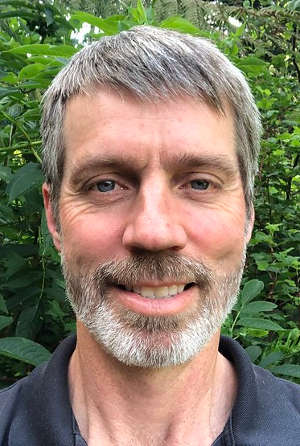
The Bureau of Land Management has named Chris Heppe as its new director for the Central California District, which covers Lake County.
Heppe grew up playing in the streams and forests of the Sierra Nevada foothills in Nevada City. It is his love of water, wildlife and their habitat that led him on a lifelong career in federal service to remote corners of the world.
But Heppe’s path has now brought him back home as the new Bureau of Land Management Central California District Manager based in El Dorado Hills.
“It is a tremendous privilege to be a steward of such a diverse landscape and spectacular cross-section of California that is enjoyed and utilized in a variety of ways,” says Heppe. “I look forward to supporting the BLM managers, staff and specialists who are fantastic at handling the popularity of our recreation areas, while building partnerships with other agencies and communities. Together we can leverage resources and enhance the work being done on the ground.”
The Central California District encompasses roughly 2.2 million acres of BLM-managed public lands stretching from the Pacific Ocean through the Central Valley across the Sierra Nevada and Eastern Sierra to the California-Nevada border.
It includes five BLM field offices – Bakersfield, Bishop, Central Coast, Mother Lode and Ukiah, which includes Lake County – as well as four national monuments, among them the Berryessa Snow Mountain National Monument. The district also includes three wild and scenic rivers, two national trails and a national scenic area scattered across 42 counties.
Two weeks after graduating with a biological sciences degree from the University of California at Davis, Heppe started his federal service as a Peace Corps volunteer planting trees as living fences that provide habitat, forage and erosion control in Paraguay.
He then hooted for spotted owls as a seasonal wildlife technician in the Tahoe National Forest, before earning a master’s degree in environmental management from the University of San Francisco.
Heppe went to work for the Environmental Protection Agency in their Regional Office reviewing hazardous waste management permits, then transitioned into the Water Management Division administering grants to states to improve water quality and watershed health.
Watershed restoration next led him to the Redwood National Park as a natural resource program manager and onto the BLM as manager of the Headwaters Forest Reserve.
Heppe most recently served as the assistant field manager for the BLM Arcata Field Office where he oversaw a variety of natural and cultural resource programs in partnership with local communities.
Heppe succeeds Este Stifel, who retired from federal service last year.
When not in the office, Heppe enjoys family time, hiking and shooting hoops in the driveway.
The BLM manages more than 245 million acres of public land located primarily in 12 Western states, including Alaska. The BLM also administers 700 million acres of subsurface mineral estate throughout the nation.
- Details
- Written by: Lake County News reports
Although current economic conditions due to the COVID-19 pandemic authorize him to suspend the scheduled increase in the minimum wage for 2021, Newsom declined to do so, announcing that he will move the increase forward as reflected in the 2020 state budget.
The minimum wage will increase on Jan. 1 to $13.00 per hour for businesses with 25 or fewer employees, and to $14 per hour for businesses with more than 25 employees.
“As we continue our efforts to slow the spread of COVID-19, we must also ensure that as our economy recovers, all Californians can benefit in its growth,” said Gov. Newsom. “Not allowing this increase to go forward will only make life harder for those Californians who have already borne a disproportionate share of the economic hardship caused by this pandemic. Many of them are on the front lines of the pandemic, providing child care, working in our hospitals and nursing facilities and making sure there’s food on grocery store shelves.”
The COVID-19 recession has not only dealt a swift and broad-based blow to California’s economy – it has taken a disproportionate toll on low-income Californians, worsening income disparities that predate the pandemic.
Newsom said the expansion of the California Earned Income Tax Credit, or CalEITC, and the creation of the Young Child Tax Credit, or YCTC, have provided much-needed financial relief to millions of Californians, especially families with young children.
As of Monday, more than 3.6 million filers claimed the CalEITC and YCTC, providing over $1 billion back to hardworking Californians, Newsom reported.
“The CalEITC is providing critical relief for millions of low-income Californians and their families, many of whom were struggling before the COVID-19 pandemic and have been hit especially hard during this time,” said Newsom. “The CalEITC and the new Young Child Tax Credit are helping families make ends meet.”
CalEITC-eligible families with children under the age of 6 can also receive up to $1,000 more by claiming the YCTC, established through the budget signed by Gov. Newsom last year.
Of the over $1 billion distributed through CalEITC and YCTC, $370 million was credited to 409,000 taxpayers who claimed the Young Child Tax Credit. This means money back in the pockets of almost half a million California families to help relieve their economic strain and address childhood poverty.
Last year, Gov. Newsom significantly expanded CalEITC, investing $1 billion to help Californians become more financially secure.
He expanded the program so Californians making up to $30,000 per year now qualify, and added a new Young Child Tax Credit for families with children under the age of 6.
“The CalEITC is an important investment in California’s families and our future,” said First Partner Jennifer Siebel Newsom. “I am grateful to the countless community organizations and volunteers who partnered with our administration to ensure this benefit reached those who need it most, particularly California’s kids.”