How to resolve AdBlock issue?
Refresh this page
How to resolve AdBlock issue?
Refresh this page
Lake County News,California
  • Home
    • Registration Form
  • News
    • Education
    • Veterans
    • Community
      • Obituaries
      • Letters
      • Commentary
    • Police Logs
    • Business
    • Recreation
    • Health
    • Religion
    • Legals
    • Arts & Life
    • Regional
  • Calendar
  • Contact us
    • FAQs
    • Phones, E-Mail
    • Subscribe
  • Advertise Here
  • Login
How to resolve AdBlock issue?
Refresh this page

News

Officials warn of Lake County residents’ information being given to Immigration and Customs Enforcement

Details
Written by: Elizabeth Larson
Published: 30 July 2025

LAKE COUNTY, Calif. — Access to the private information of millions of Californians and tens of thousands of Lake County residents who have used Medi-Cal and CalFresh has been given to the Department of Homeland Security’s Immigration and Customs Enforcement, or ICE, an action that also is affecting millions of other Americans.

On July 1, California Attorney General Rob Bonta led a multistate coalition to sue the Trump Administration over the transfer of the data.

“The Trump Administration has upended longstanding privacy protections with its decision to illegally share sensitive, personal health data with ICE. In doing so, it has created a culture of fear that will lead to fewer people seeking vital emergency medical care,” said Attorney General Bonta.

Bonta said California and 19 other states were headed to court “to prevent any further sharing of Medicaid data — and to ensure any of the data that’s already been shared is not used for immigration enforcement purposes.”

State and county officials said the data for the Medicaid program, created in 1965, has been strictly protected up until this point.

“In the seven decades since Congress enacted the Medicaid Act to provide medical assistance to vulnerable populations, federal law, policy, and practice has been clear: the personal healthcare data collected about beneficiaries of the program is confidential, to be shared only in certain narrow circumstances that benefit public health and the integrity of the Medicaid program itself,” Bonta’s office said in a July 1 statement.

As of January, 78.4 million people were enrolled in Medicaid and the Children’s Health Insurance Program nationwide, Bonta’s office reported.

In a statement on the situation, Lake County Social Services explained that, to receive federal funding, California has always been required to share data gathered from the local county welfare department with the federal government.

Medi-Cal data must be shared with the federal Center for Medicaid and Medicare Services, or CMS, and CalFresh data must be shared with the federal United States Department of Agriculture, Food and Nutrition Services, Social Services reported.

Social Services said this data has traditionally been treated with strict confidentiality, used only for program administration.

However, on June 13, CMS released Medicaid data to the Department of Homeland Security’s Immigration and Customs Enforcement, or ICE.

The data CMS released to ICE included the names, Social Security numbers and home addresses of Medi-Cal recipients.  

The federal government claims it gave this data to DHS “to ensure that Medicaid benefits are reserved for individuals who are lawfully entitled to receive them.” But Bonta’s office said it is Congress that extended coverage and federal funds for emergency Medicaid to all individuals residing in the United States, regardless of immigration status.

Bonta’s office said that on June 13, California and other states learned through news reports that Health and Human Services has transferred en masse their state’s Medicaid data files, containing personal health records representing millions of individuals, to DHS. 

“Reports indicate that the federal government plans to create a sweeping database for ‘mass deportations’ and other large-scale immigration enforcement purposes,” the Attorney General’s Office reported.

Medicaid is known as Medi-Cal in California. California’s Medi-Cal program provides health care coverage for one out of every three Californians, including more than two million noncitizens, the Attorney General’s Office reported.

Non-citizens include green card holders, refugees, individuals who hold temporary protected status, Deferred Action for Childhood Arrival recipients, and others. 

Not all noncitizens are eligible for federally funded Medi-Cal services, and so California uses state-only funds to provide a version of the Medi-Cal program to all eligible state residents, regardless of their immigration status, the Attorney General’s Office reported.

The lawsuit didn’t stop the Trump administration from continuing to move forward, with a July 17 Associated Press report stating that CMS signed an agreement with Homeland Security to allow ICE continued access to all Medicaid recipient’s data, nationwide.  

On the same day as the Associated Press report was published, Bonta came out with a statement, noting his alarm that the data sharing agreement came out after the lawsuit he is leading against the government.

“I’m deeply disturbed by the Trump Administration’s reckless and unprecedented weaponization of the private, sensitive data of Medicaid recipients,” said Bonta. “It is devastating to think that individuals may not seek essential medical care because they are afraid that if they do so, they may be targeted by this Administration. We sued President Trump and his lackeys after we received initial reports of this illegal data sharing earlier this month. Despite this, the Trump Administration appears to have entered into a new illegal data sharing agreement with ICE. We are moving quickly to secure a court order blocking the sharing of this data for immigration enforcement. The President’s efforts to pull personal, private, and unrelated health data to create a mass deportation machine cannot be allowed to continue.”

A hearing on the motion for a preliminary injunction filed against the Trump administration by California and the multistate coalition is scheduled for Aug. 7. 

The coalition is asking that the court find the Trump Administration’s actions arbitrary and capricious and rulemaking without proper procedure in violation of the Administrative Procedure Act, contrary to the Social Security Act, Health Insurance Portability and Accountability Act, or HIPAA, the Federal Information Security Modernization Act and Privacy Act, and in violation of the Spending Clause. 

They’re also asking the court to enjoin Health and Human Services from transferring personally identifiable Medicaid data to Homeland Security or any other federal agency and Homeland Security from using this data to conduct immigration enforcement.  

The impacts in Lake County

In Lake County, Medi-Cal is known as the Partnership Health Plan, said Social Services Director Rachael Dillman Parsons.

Dillman Parsons told Lake County News that as of June, 30,490 individuals were enrolled in Medi-Cal in Lake County. That’s roughly 45% of the Lake County population, which as of Jan. 1, the California Department of Finance reported that Lake County had a population of 67,254 residents.

She said that the specific information regarding how many or whose data was released by CMS to ICE was not available to her.

In Social Services’ statement on the situation, it noted, “Individuals will need to weigh their risk in continuing to receive, or applying for, needed benefits. Lake County Social Services cannot delete case records or prevent federal data sharing. We can no longer assure people that the information we gather will be used solely for program administration.”

Social Services said it encourages trusted partners to help individuals, especially immigrants, assess their personal risks and benefits of accessing human services programs in this environment.

The California Department of Social Services funds community organizations to provide certain resources for immigrants. A list can be found here.

“Experts anticipate that the chilling effect from this federal data sharing will create further strain on already limited food distribution resources and medical care, the impact of which will be felt community wide,” Social Services said.

“These are concerning times,” Dillman Parsons told Lake County News.

Other lawsuits push back on information usage

In May, the US Department of Agriculture’s Food and Nutrition Services, or FNS, released a notice about a new National Supplemental Nutrition Assistance Program, or SNAP, Information Database, which referenced a March executive order by President Trump called “Stopping Waste, Fraud, and Abuse by Eliminating Information Silos.”

The agency planned to use the data on SNAP applicants, recipients, and former recipients for a wide variety of purposes.  

“FNS will use the data it receives from processors to ensure program integrity, including by verifying the eligibility of benefit recipients. This is consistent with FNS’s statutory authority and the President’s Executive Order and will ensure Americans in need receive assistance, while at the same time safeguarding taxpayer dollars from abuse,” the agency said.

SNAP is known as CalFresh in California and is sometimes referred to as “EBT” since the benefits are loaded onto an Electronic Benefit Transfer, or EBT, card to be spent at grocery stores on food.  

Groups including Protect Democracy, Student Defense, the National Center for Law and Economic Justice and the Electronic Privacy Information Center on behalf of students, SNAP recipients, MAZON: A Jewish Response to Hunger and EPIC filed a lawsuit against the Trump administration over the plan.

As a result, by the start of June, the Trump administration backed off the plan, with senior U.S. Department of Agriculture official Shiela Corley giving a sworn declaration “that the agency has not collected any of the SNAP recipient data in question and will not proceed with its plan to do so without following laws intended to protect privacy and data security,” according to a Protect Democracy statement on the suit.

Email Elizabeth Larson at This email address is being protected from spambots. You need JavaScript enabled to view it.. Follow her on Twitter, @ERLarson, and on Bluesky, @erlarson.bsky.social. Find Lake County News on the following platforms: Facebook, @LakeCoNews; X, @LakeCoNews; Threads, @lakeconews, and on Bluesky, @lakeconews.bsky.social. 

Russian earthquake triggers tsunami concerns along West Coast

Details
Written by: Elizabeth Larson
Published: 30 July 2025
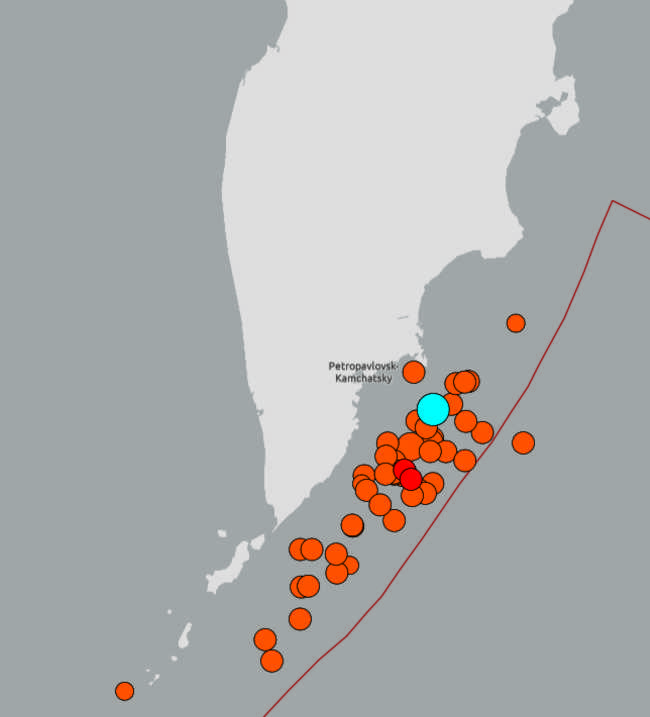
The 8.8 earthquake that happened off the eastern coast of Russia on Tuesday, July 29, 2025, shown in blue, followed by a cluster of other smaller, but still significant, earthquakes. Image courtesy of the United States Geological Survey.


NORTHERN CALIFORNIA — A Tuesday afternoon earthquake off the Russian coast triggered a tsunami advisory for much of the West Coast, and a warning for the Hawaii Islands and a portion of the North Coast of California.

The United States Geological Survey said the 8.8-magnitude earthquake occurred just before 4:30 p.m. Pacific Time off the Kamchatka Peninsula on the eastern coast of Russia.

That initial quake was followed by dozens of quakes in the same area, some as large at 6.5 magnitude.

The quake’s 8.8-magnitude earned it a tie for the sixth-largest recorded earthquake, according to seismic historical records.

The National Tsunami Warning Center began issuing updates on the potential for a tsunami shortly after it occurred.

At around 10 p.m. Tuesday night, “a tsunami is occurring in the Pacific Ocean tonight,” the center posted on its Facebook page.

“This is the most significant event we've seen in some time. It is _not_ the same thing as recent alerts near California in December, or Alaska a few weeks ago,” the center said in its post.

At that time, a tsunami warning was in effect for the Western Aleutians and Pribilof Islands in the Bering Sea, which later was downgraded to an advisory.

A warning was in effect for the Hawaiian Islands, and a stretch of the Northern California coast that included northern Humboldt County and southern Del Norte County. A tsunami advisory was in place for the rest of the West Coast.  

Late Tuesday, the Sonoma County Sheriff’s Office said the Sonoma coast was under a tsunami warning until 3:30 a.m. 

The public was urged to stay out of coastal waters, off the beach, harbor docks and piers as strong currents and dangerous waves were expected. 

Tsunami start times for the North Coast were:

• Fort Bragg: 11:50 p.m. July 29.
• Crescent City: 11:50 p.m. July 29.
• Monterey: 12:15 a.m. July 30.
• San Francisco: 12:40 a.m. July 30.

The Sonoma County Sheriff’s office said tsunamis often arrive as a series of waves or surges which could be dangerous for many hours after the first wave arrives. The first tsunami wave or surge may not be the highest in the series. 

The forecast peak tsunami wave heights along much of the North Coast were expected to be less than one foot high.

The Del Norte Office of Emergency Services said late Tuesday that tsunami waves from 2.7 to 5 feet would begin to arrive shortly before midnight and may last for approximately 30 hours. 

In a late Tuesday night video, Eric Wier, Crescent City’s city manager, said the tsunami would not be like that of 1964. 

He said some city residents in an inundation area had been asked to evacuate. A temporary evacuation point was set up at the Veteran's Memorial Building in Crescent City.

Ryan Aylward of the National Weather Service said that when high tide arrives around 3 a.m., there could be waves that are higher than the normal high tide, with the surge into the 5 foot range. There is the possibility of some minor flooding close to the bay.

State Sen. Mike McGuire, who was on the video with Del Norte officials, noted that the worst case scenario could have been much worse.

Email Elizabeth Larson at This email address is being protected from spambots. You need JavaScript enabled to view it.. Follow her on Twitter, @ERLarson, and on Bluesky, @erlarson.bsky.social. Find Lake County News on the following platforms: Facebook, @LakeCoNews; X, @LakeCoNews; Threads, @lakeconews, and on Bluesky, @lakeconews.bsky.social. 

Clearlake churches partner for school backpack giveaway

Details
Written by: LAKE COUNTY NEWS REPORTS
Published: 30 July 2025

CLEARLAKE, Calif. — Praises of Zion Baptist Church and the Church of the Nazarene in Clearlake are partnering to present a community backpack giveaway for all local children attending schools in the area.

The churches’ inaugural backpack giveaway will take place from 11 a.m. to 2 p.m. Saturday, Aug. 2, at the Church of the Nazarene, 15917 Olympic Drive.  

The two churches are distributing 150 backpacks filled with school supplies.

The children — from kindergarten through high school — must be present to receive a backpack, while supplies last.

In addition to the backpacks, there will be agencies present to provide health and safety information for parents and children as the children prepare to go back to school starting in August.  

For more information, call the Church of the Nazarene at 707-994-4008.

Revoking EPA’s endangerment finding – the keystone of US climate policies – isn’t simple and could have unintended consequences

Details
Written by: Patrick Parenteau, Vermont Law & Graduate School
Published: 30 July 2025

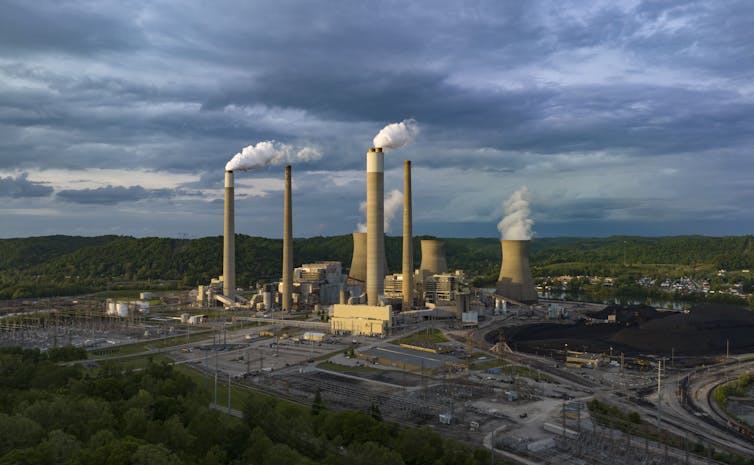
Several U.S. climate regulations aim to reduce burning of fossil fuels, a driver of climate change. Visions of America/Joseph Sohm/Universal Images Group via Getty Images

Most of the United States’ major climate regulations are underpinned by one important document: It’s called the endangerment finding, and it concludes that greenhouse gas emissions are a threat to human health and welfare.

The Trump administration is trying to eliminate it.

Environmental Protection Agency Administrator Lee Zeldin announced on July 29, 2025, that the EPA would soon publish a rule to rescind the endangerment finding and allow 45 days for public comment.

A draft released by the EPA of the proposal argues that the agency didn’t have the authority to issue the endangerment finding in 2009 or regulations based on it. The draft also argues that U.S. vehicle emissions are not significant in terms of global emissions of greenhouse gases and that the costs to consumers outweigh the benefits.

These are dubious factual and legal propositions that will require deeper analysis once the proposal is officially published in the Federal Register.

Revoking the endangerment finding isn’t a simple task. If the rule is finalized, it will also trigger an onslaught of lawsuits. And revoking the finding could have unintended consequences for the very industries President Donald Trump is trying to help.

EPA Administrator Lee Zeldin announces plans in March 2025 to reconsider more than 30 climate regulations.

As a law professor, I have tracked federal climate regulations and the lawsuits and court rulings that have followed them over the past 25 years. To understand the challenges, let’s look at the endangerment finding’s origins and Zeldin’s options.

Origin and limits of the endangerment finding

In 2007, the U.S. Supreme Court ruled in Massachusetts v. EPA that six greenhouse gases are pollutants under the Clean Air Act and that the EPA has a duty under the same law to determine whether they pose a danger to public health or welfare.

The court also ruled that once the EPA made an endangerment finding, the agency would have a mandatory duty under the Clean Air Act to regulate all sources that contribute to the danger.

The court emphasized that the endangerment finding was a scientific determination and rejected a laundry list of policy arguments made by the George W. Bush administration for why the government preferred to use nonregulatory approaches to reduce emissions. The court said the only question was whether sufficient scientific evidence exists to determine whether greenhouse gases are harmful.

The endangerment finding was the EPA’s response.

The finding was challenged and upheld in 2012 by the U.S. Court of Appeals for the D.C. Circuit. In that case, Coalition for Responsible Regulation v. EPA, the court found that the “body of scientific evidence marshaled by the EPA in support of the endangerment finding is substantial.” The Supreme Court declined to review the decision. The endangerment finding was updated and confirmed by the EPA in 2015 and 2016.

Challenging the endangerment finding

The scientific basis for the endangerment finding is stronger today than it was in 2009.

The Intergovernmental Panel on Climate Change’s latest assessment report, involving hundreds of scientists and thousands of studies from around the world, concluded that the scientific evidence for warming of the climate system is “unequivocal” and that greenhouse gases from human activities are causing it.

According to the National Climate Assessment released in 2023, the effects of human-caused climate change are already “far-reaching and worsening across every region of the United States.”

Maps show most of the US, especially the West, getting hotter, and the West getting drier.
Summer temperatures have climbed in much of the U.S. and the world as greenhouse gas emissions have risen. Fifth National Climate Assessment

During Trump’s first term, then-EPA Administrator Scott Pruitt considered repealing the endangerment finding but ultimately decided against it. In fact, he relied on it in proposing the Affordable Clean Energy Rule to replace President Barack Obama’s Clean Power Plan for regulating emissions for coal-fired power plants.

Zeldin’s cost argument

Zeldin had previewed some of his arguments for rescinding the endangerment finding in a news release on March 12.

His first argument then was that the 2009 endangerment finding did not consider costs. However, that argument was rejected by the District of Columbia Circuit Court in Coalition for Responsible Regulation v. EPA in 2012. Cost becomes relevant once the EPA considers new regulations – after the endangerment finding.

Moreover, in a unanimous 2001 decision, the Supreme Court in Whitman v. American Trucking Associations held that the EPA cannot consider cost in setting air quality standards.

What happens if the EPA revokes the endangerment finding?

Even if Zeldin is able to revoke the endangerment finding, that does not automatically repeal all the rules that rely on it. Each of those rules must go through separate rulemaking processes that will also take months. The agency will also face lawsuits.

Zeldin could simply refuse to enforce the rules on the books.

However, a blanket policy abdicating any enforcement responsibility could be challenged in lawsuits as arbitrary and capricious. Further, the regulated industries would be taking a chance if they delay complying with regulations, only to find the endangerment finding and climate laws still in place.

A repeal could backfire

Repealing the endangerment finding could also backfire on the fossil fuel industry.

States and cities have filed dozens of lawsuits against the major oil companies. The industry’s strongest argument has been that these cases are preempted by federal law. In AEP v. Connecticut in 2011, the Supreme Court ruled that the Clean Air Act “displaced” federal common law, barring state claims for remedies related to damages from climate change.

However, if the endangerment finding is repealed, then there is arguably no basis for federal preemption, and these state lawsuits would have legal grounds. Prominent industry lawyers have warned the EPA about this and urged it to focus instead on changing individual regulations. The industry is concerned enough that it may try to get Congress to grant it immunity from climate lawsuits.

To the extent that Zeldin is counting on the conservative Supreme Court to back him up, he may be disappointed.

In 2024, the court overturned the Chevron doctrine, which required courts to defer to agencies’ reasonable interpretations when laws were ambiguous. That means Zeldin’s reinterpretation of the statute is not entitled to deference. Nor can he count on the court overturning its Massachusetts v. EPA ruling to free him to disregard science for policy reasons.

This article, originally published March 19, 2025, has been updated with the EPA’s announcement to rescind the endangerment finding.The Conversation

Patrick Parenteau, Professor of Law Emeritus, Vermont Law & Graduate School

This article is republished from The Conversation under a Creative Commons license. Read the original article.

  1. Unemployment in Lake County and across the state rises in June
  2. Upcoming event to continue focus on Lake County’s challenges with homelessness
  3. Yuba College awarded $300,000 grant to expand fire and forestry career training
  • 210
  • 211
  • 212
  • 213
  • 214
  • 215
  • 216
  • 217
  • 218
  • 219
How to resolve AdBlock issue?
Refresh this page