How to resolve AdBlock issue?
Refresh this page
How to resolve AdBlock issue?
Refresh this page
Lake County News,California
  • Home
    • Registration Form
  • News
    • Education
    • Veterans
    • Community
      • Obituaries
      • Letters
      • Commentary
    • Police Logs
    • Business
    • Recreation
    • Health
    • Religion
    • Legals
    • Arts & Life
    • Regional
  • Calendar
  • Contact us
    • FAQs
    • Phones, E-Mail
    • Subscribe
  • Advertise Here
  • Login
How to resolve AdBlock issue?
Refresh this page

News

Unemployment in Lake County and across the state rises in June

Details
Written by: Elizabeth Larson
Published: 29 July 2025

LAKE COUNTY, Calif. — The state’s latest report on the jobless rate showed a one-point jump for Lake County’s unemployment, while the state rate also edged up.

The California Employment Development Department’s report said Lake County’s rate rose from 6.3% in May to 7.3% in June. The June 2024 rate was 6.6%.

California’s June unemployment rate changed slightly, rising to 5.4% from 5.3% in May. The state’s June 2024 rate was 5.3%.

The federal Bureau of Labor Statistics said the nationwide unemployment rate was 4.1% in June, down from 4.2 percent in May. The June 2024 jobless rate also was 4.1%.

The report said that the number of Californians employed in June was 18,770,800, an increase of 21,700 persons from May’s total of 18,749,100 and up 153,100 from the employment total in June 2024.

At the same time, the number of unemployed Californians was 1,070,000 in June, an increase of 11,700 over the month and up 28,800 in comparison to June 2024.

California payroll jobs fell from 18,017,200 in May 2025 to 18,011,100 in June 2025. On a year-to-year basis, payroll jobs increased to 18,011,100 from 17,910,000, according to the report.

California has gained 3,091,300 jobs since April 2020, an average of 49,860 per month, the report said. Although the State did post a month-over loss of 6,100 jobs for June 2025, California has a net gain of 101,100 nonfarm jobs since June 2024.

Four of California's 11 industry sectors gained jobs in June, with private education and health services (+9,900) posting a gain for the 41st consecutive month, according to the report.

The largest gains were in health care and social assistance (+2,700). This includes jobs in continuing care retirement communities and assisted living facilities, and nursing and residential care facilities, partly attributed to California’s aging population.

Leisure and hospitality (+4,300) also posted a month-over job gain as the arrival of the summer season spurs growth in California’s recreation-focused businesses such as arts and entertainment, spectator sports, and amusement parks.

Professional and business services (-9,900) posted the state’s largest month-over loss as jobs declined in administrative and support services and temporary employment services. Losses also occurred in accounting, tax preparation, bookkeeping and payroll services, and computer systems design.

In Lake County, the transportation, warehousing and utilities sector grew by 12.3%; federal government, 6.7%; the total farm category, 4.5%; and manufacturing, 3%.

Categories showing losses included professional and business services, down 6.6%; goods producing, down 2.2%; and service producing, down -0.7%.

In the July report, Lake County’s jobless rate ranked it 46 out of California’s 58 countries. Lake’s neighboring county jobless rates and ranks last month were: Colusa, 12.2%, No. 57; Glenn, 7.8%, No. 48; Mendocino, 5.8%, No. 27; Napa, 4.2%, No. 3; Sonoma, 4.6%, No. 8; and Yolo, 6.1%, No. 32.

In related data that figures into the state’s unemployment rate, there were 387,555 people certifying for Unemployment Insurance benefits during the June 2025 sample week. 

The Employment Development Department said that this compares to 384,749 people in May and 381,123 people in June 2024. 

Concurrently, 46,629 initial claims were processed in the June 2025 sample week, which was a month-over increase of 5,393 claims from May, but a year-over increase of 1,467 claims from June 2024.

Email Elizabeth Larson at This email address is being protected from spambots. You need JavaScript enabled to view it.. Follow her on Twitter, @ERLarson, and on Bluesky, @erlarson.bsky.social. Find Lake County News on the following platforms: Facebook, @LakeCoNews; X, @LakeCoNews; Threads, @lakeconews, and on Bluesky, @lakeconews.bsky.social. 

Upcoming event to continue focus on Lake County’s challenges with homelessness

Details
Written by: LAKE COUNTY NEWS REPORTS
Published: 29 July 2025

LAKEPORT, Calif. — A September event will continue the community’s focus on how to find solutions for homelessness in Lake County.

The Lake County Continuum of Care will host the Community Conversation on Homelessness on Wednesday, Sept. 24.

The event will take place from 5:30 to 7:30 p.m. at the Soper Reese Theater, 275 S. Main St. in Lakeport.

Officials said this follows on previous community efforts that explored homelessness and mental health, including one that took place in September of 2023.

At the upcoming event, organizers said the following will be up for discussion:

• What’s currently being done to address homelessness;
• Discussion of upcoming plans and projects;
• Listen to ideas and experiences from community members;
• Collaboration on community-driven solutions.

“Your voice matters. Whether you’re a resident, business owner, service provider, or someone with lived experience — we want to hear from you,” the Continuum of Care said in its event announcement. “Together, we can create real and lasting change for our community.”

For more information contact Melissa Kopf at This email address is being protected from spambots. You need JavaScript enabled to view it.. 

Yuba College awarded $300,000 grant to expand fire and forestry career training

Details
Written by: LAKE COUNTY NEWS REPORTS
Published: 29 July 2025

NORTHERN CALIFORNIA — Yuba College has been awarded a $300,000 Fire and Forestry Pathway Grant to strengthen the region’s workforce in wildland fire response and forest management.

The funding, awarded in June 2025 and running through June 2028, will support the expansion of the college’s Career Technical Education, or CTE, programs. 

Key areas of focus include increasing enrollment in basic wildland fire training, watershed courses and the Forest Management Resilience Certificate program.

The grant will enable Yuba College to develop new courses that address the growing need for skilled professionals in fire prevention, suppression and forest health. 

Topics will include fire behavior, suppression tactics, forest ecology, fuels management and climate resilience. The courses will complement existing curriculum and provide hands-on, industry-relevant training designed to prepare students for immediate employment in high-demand fields.

The initiative will also support outreach efforts aimed at attracting new students, especially those from underrepresented populations, while funding instructional equipment, materials and faculty development.

In addition, the grant will help Yuba College create or expand regional partnerships with other colleges, employers, the California Department of Forestry and Fire Protection, or Cal Fire, and related agencies. 

College officials said these collaborations will support broader efforts to build comprehensive workforce training pathways and increase the number of learners advancing into fire and forestry careers.

“This grant is a significant investment in our students and our community,” said Yuba College Dean of Career Technical Education and Workforce Development, Dr. W. Alan Dixon Sr. “By expanding our fire and forestry programs, we’re not only helping students build meaningful careers, but also contributing to the safety and sustainability of our region’s natural resources.”

Yuba College’s efforts align with California’s goals to enhance wildfire preparedness and forest resilience through education and workforce development. 

Officials said the college remains committed to leading the way in preparing the next generation of fire and forestry professionals.

For more information about the Forest Management Resilience Certificate and upcoming course offerings, visit www.yubacollege.edu or contact the Career Technical Education office at 530-741-6700.

California farmers identify a hot new cash crop: Solar power

Details
Written by: Jacob Stid, Michigan State University; Annick Anctil, Michigan State University, and Anthony Kendall, Michigan State University
Published: 29 July 2025

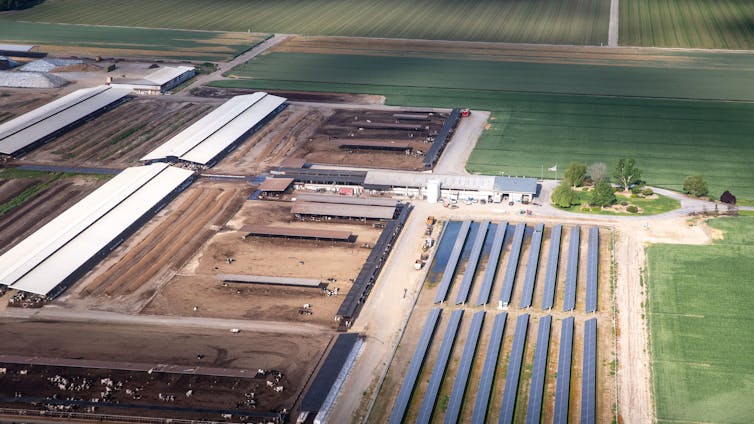
This dairy farm in California’s Central Valley has installed solar panels on a portion of its land. George Rose/Getty Images

Imagine that you own a small, 20-acre farm in California’s Central Valley. You and your family have cultivated this land for decades, but drought, increasing costs and decreasing water availability are making each year more difficult.

Now imagine that a solar-electricity developer approaches you and presents three options:

  • You can lease the developer 10 acres of otherwise productive cropland, on which the developer will build an array of solar panels and sell electricity to the local power company.
  • You can select 1 or 2 acres of your land on which to build and operate your own solar array, using some electricity for your farm and selling the rest to the utility.
  • Or you can keep going as you have been, hoping your farm can somehow survive.

Thousands of farmers across the country, including in the Central Valley, are choosing one of the first two options. A 2022 survey by the U.S. Department of Agriculture found that roughly 117,000 U.S. farm operations have some type of solar device. Our own work has identified over 6,500 solar arrays currently located on U.S. farmland.

Our study of nearly 1,000 solar arrays built on 10,000 acres of the Central Valley over the past two decades found that solar power and farming are complementing each other in farmers’ business operations. As a result, farmers are making and saving more money while using less water – helping them keep their land and livelihood.

A hotter, drier and more built-up future

Perhaps nowhere in the U.S. is farmland more valuable or more productive than California’s Central Valley. The region grows a vast array of crops, including nearly all of the nation’s production of almonds, olives and sweet rice. Using less than 1% of all farmland in the country, the Central Valley supplies a quarter of the nation’s food, including 40% of its fruits, nuts and other fresh foods.

The food, fuel and fiber that these farms produce are a bedrock of the nation’s economy, food system and way of life.

But decades of intense cultivation, urban development and climate change are squeezing farmers. Water is limited, and getting more so: A state law passed in 2014 requires farmers to further reduce their water usage by the mid-2040s.
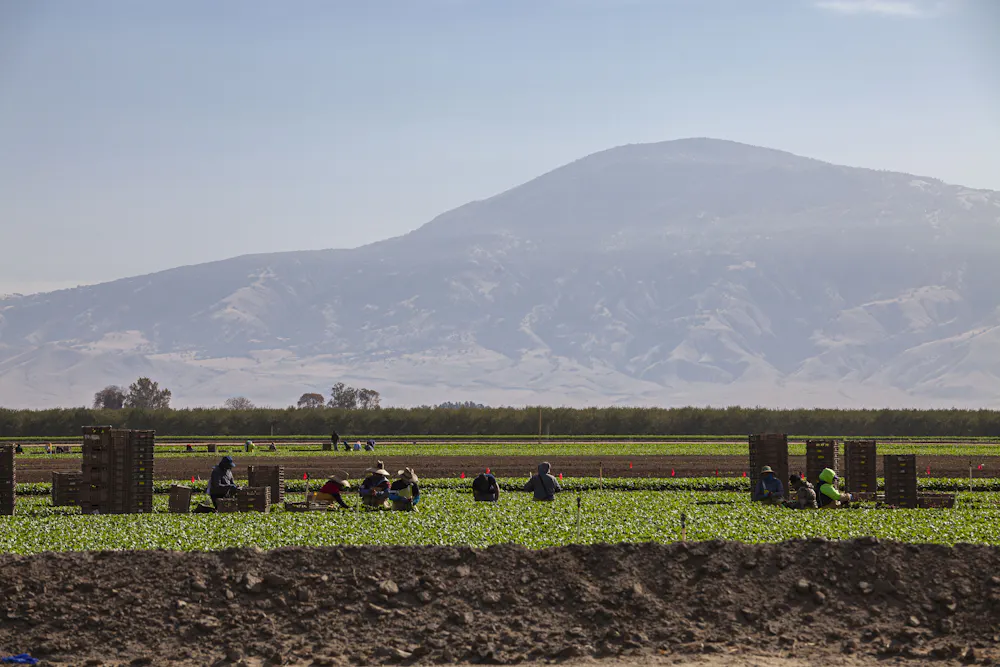
Workers on farmland with mountains in the background.
California’s Central Valley is some of the most productive cropland in the country. Citizen of the Planet/UCG/Universal Images Group via Getty Images

The trade-offs of installing solar on agricultural land

When the solar arrays we studied were installed, California state solar energy policy and incentives gave farm landowners new ways to diversify their income by either leasing their land for solar arrays or building their own.

There was an obvious trade-off: Turning land used for crops to land used for solar usually means losing agricultural production. We estimated that over the 25-year life of the solar arrays, this land would have produced enough food to feed 86,000 people a year, assuming they eat 2,000 calories a day.

There was an obvious benefit, too, of clean energy: These arrays produced enough renewable electricity to power 470,000 U.S. households every year.

But the result we were hoping to identify and measure was the economic effect of shifting that land from agricultural farming to solar farming. We found that farmers who installed solar were dramatically better off than those who did not.

They were better off in two ways, the first being financially. All the farmers, whether they owned their own arrays or leased their land to others, saved money on seeds, fertilizer and other costs associated with growing and harvesting crops. They also earned money from leasing the land, offsetting farm energy bills, and selling their excess electricity.

Farmers who owned their own arrays had to pay for the panels, equipment and installation, and maintenance. But even after covering those costs, their savings and earnings added up to US$50,000 per acre of profits every year, 25 times the amount they would have earned by planting that acre.

Farmers who leased their land made much less money but still avoided costs for irrigation water and operations on that part of their farm, gaining $1,100 per acre per year – with no up-front costs.

The farmers also conserved water, which in turn supported compliance with the state’s Sustainable Groundwater Management Act water use reduction requirements. Most of the solar arrays were installed on land that had previously been irrigated. We calculated that turning off irrigation on this land saved enough water every year to supply about 27 million people with drinking water or irrigate 7,500 acres of orchards. Following solar array installation, some farmers also fallowed surrounding land, perhaps enabled by the new stable income stream, which further reduced water use.

A view of farmland with irrigation sprinklers spraying widely.
Irrigation is key to cropland productivity in California’s Central Valley. Covering some land with solar panels eliminates the need for irrigation of that area, saving water for other uses elsewhere. Citizen of the Planet/UCG/Universal Images Group via Getty Images

Changes to food and energy production

Farmers in the Central Valley and elsewhere are now cultivating both food and energy. This shift can offer long-term security for farmland owners, particularly for those who install and run their own arrays.

Recent estimates suggest that converting between 1.1% and 2.4% of the country’s farmland to solar arrays would, along with other clean energy sources, generate enough electricity to eliminate the nation’s need for fossil fuel power plants.

Though many crops are part of a global market that can adjust to changes in supply, losing this farmland could affect the availability of some crops. Fortunately, farmers and landowners are finding new ways to protect farmland and food security while supporting clean energy.

One such approach is agrivoltaics, where farmers install solar designed for grazing livestock or growing crops beneath the panels. Solar can also be sited on less productive farmland or on farmland that is used for biofuels rather than food production.

Even in these areas, arrays can be designed and managed to benefit local agriculture and natural ecosystems. With thoughtful design, siting and management, solar can give back to the land and the ecosystems it touches.

Farms are much more than the land they occupy and the goods they produce. Farms are run by people with families, whose well-being depends on essential and variable resources such as water, fertilizer, fuel, electricity and crop sales. Farmers often borrow money during the planting season in hopes of making enough at harvest time to pay off the debt and keep a little profit.

Installing solar on their land can give farmers a diversified income, help them save water, and reduce the risk of bad years. That can make solar an asset to farming, not a threat to the food supply.The Conversation

Jacob Stid, Ph.D. student in Hydrogeology, Michigan State University; Annick Anctil, Associate Professor of Civil and Environmental Engineering, Michigan State University, and Anthony Kendall, Professor of Earth and Environmental Sciences, Michigan State University

This article is republished from The Conversation under a Creative Commons license. Read the original article.

  1. Supervisors to review housing plans, road project concerns, and funding loss for Clear Lake mussel prevention
  2. Western Region Town Hall to hold special July 30 meeting 
  3. Property insurance costs can be high in every U.S. region
  • 211
  • 212
  • 213
  • 214
  • 215
  • 216
  • 217
  • 218
  • 219
  • 220
How to resolve AdBlock issue?
Refresh this page