How to resolve AdBlock issue?
News
- Details
- Written by: Shelley MacDermid Wadsworth, Purdue University
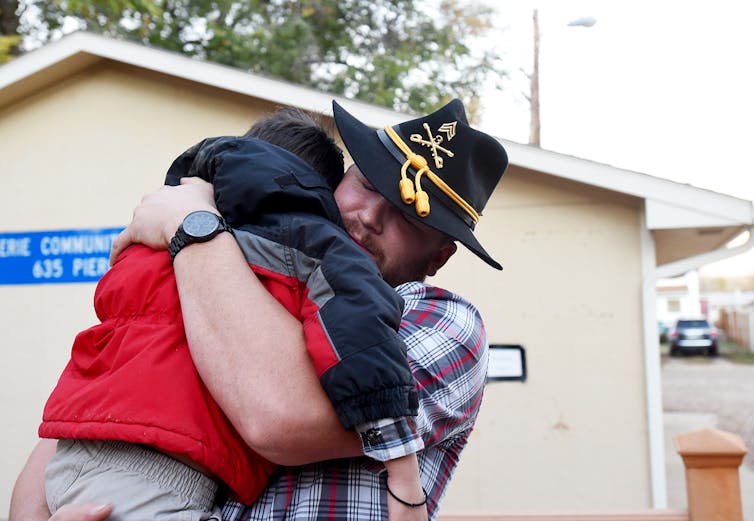
As the nation celebrates our 17 million living veterans, it is also important to know that the number of these heroes who are ending their own lives prematurely is rising.
In the general population, suicide is the 10th most common cause of death, but among veterans with PTSD, it’s fourth. Among veterans younger than 35, it’s second. Suicide rates are also rising among members of the military. Since 2017, rates for active-duty service members have been above those of civilians. The same is true for National Guard service members since 2015 and and nonactive veterans for the past decade.
I’m a researcher who studies risk and resilience in military and veteran families. I can tell you that the single most common stressor for those who attempt or complete suicide is a serious relationship difficulty with an intimate partner or someone else within the previous 90 days. And more than half of service members who attempt or complete suicide had been seen within those 90 days by a medical, mental health or social service professional. Almost one-third communicated a potential for self-harm.
It’s not only medical professionals who can help a veteran who is dealing with despair and contemplating death by suicide. You can also help.
A ‘good catch’
Some recent studies have suggested that a complex array of factors combine to lead a person to contemplate death by suicide. And many things contribute to the feelings of despair that veterans experience.
In addition to post-traumatic stress disorder, other mental health problems and medical challenges, veterans also face unemployment, bereavement and parenting issues. It is easy to understand how veterans might feel overwhelmed and desperate.
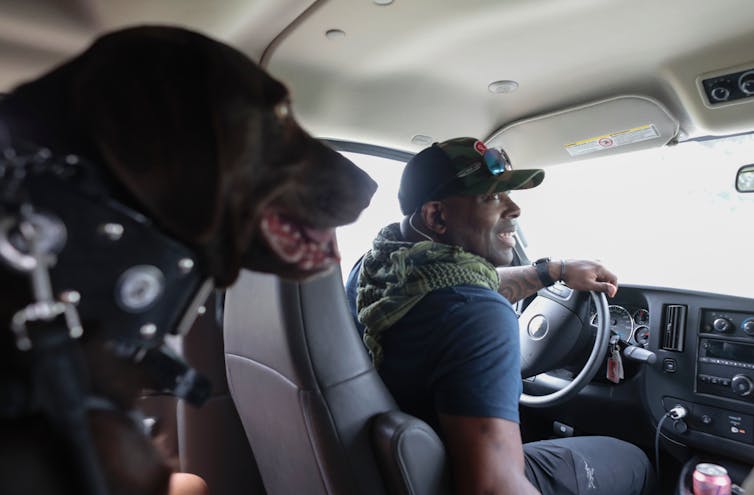
Through my work, I’ve heard firsthand the stories of service members and veterans who had decided to take their own lives but did not. Often I’ve observed that it was a “good catch” that did it: a friend or family member answered a call at an odd hour; noticed the person seemed “off” and asked careful questions; stayed with them while summoning professional help; or checked in with them so they wouldn’t feel isolated. Families, friends, neighbors and colleagues all may have opportunities to make these catches.
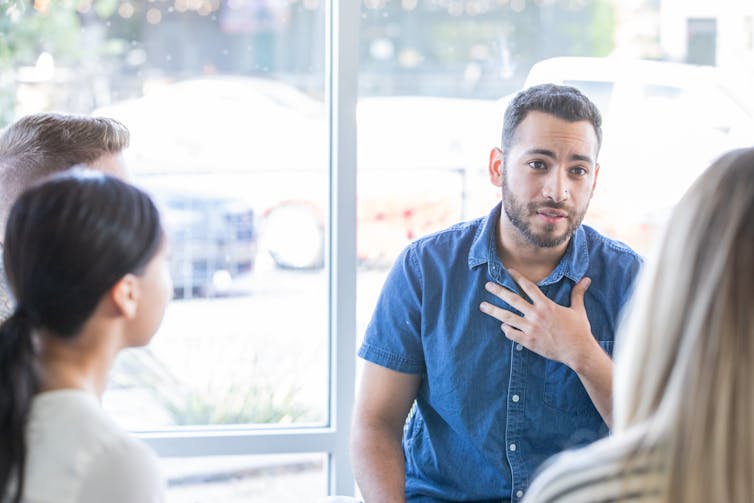
Peer support programs may also help. Alcoholics Anonymous and Narcotics Anonymous are effective alone or in combination with clinical treatment for substance use disorders. Results regarding mental health problems such as depression are more mixed, but a consistent finding is that peer support can help promote compliance with treatment, communication with clinicians, improved coping and self-care, and increased feelings of hope and self-efficacy. Studies suggest that peer support can also help people during transition times, particularly when they are leaving military service to return to civilian life.
Veterans themselves are taking action. In the Department of Veterans Affairs, peer facilitators are key to a new “whole health” approach. American Legion members also offer support aimed at preventing suicide. Across the country, veterans treatment courts routinely include mentors to boost the success of clients.
Peer support is out there
Not all peers have to be veterans. Sometimes the strongest connections are with those who have had different challenges and who also can therefore relate – like a family member’s addiction, or one’s own disability or mental health problem.
Many peer networks can help, including the National Alliance on Mental Illness, the American Cancer Society and the Alzheimers Association. Even though they may not focus specifically on suicide, they help reduce isolation, increase social connections, and support coping and self-care.
We can all help to prevent death by suicide. And joining a peer support program or training to make ourselves ready aren’t the only ways. Simply being more attentive as a friend, family member, neighbor or colleague can help.
It is normal for a person to feel awkward when talking to someone contemplating death by suicide. Learning is a great way to prepare. For example, “Question, Persuade, Refer (QPR)” is evidence-based training that can help anyone recognize early warning signs of suicide, learn ways to offer hope and encouragement, and connect with help.
[Deep knowledge, daily. Sign up for The Conversation’s newsletter.]
On this Veterans Day, by all means, let’s thank veterans for their service. But perhaps we could challenge ourselves to go further and do service on behalf of others. Who knows what opportunities might arise to make a good catch?
If you or anyone of your loved ones are in need of help, call the National Suicide Prevention Lifeline at 800-273-8255 or text 838255. You can also get help at the Veterans Crisis Line and the Military Crisis Line.
Shelley MacDermid Wadsworth, Distinguished Professor of Human Development and Family Studies, Purdue University
This article is republished from The Conversation under a Creative Commons license. Read the original article.
- Details
- Written by: Lake County News reports
The California Road Charge Phased Demonstration will first explore how drivers could be charged for the miles they travel rather than the gasoline they use by testing a user-friendly pay-at-the-pump and electric vehicle charging station system, or through a usage-based insurance approach.
Participants will be eligible to receive up to $100 in incentives each for their time and feedback.
Future phases of the Caltrans demonstration will include testing of app-based payment of rideshare miles and capturing data from autonomous vehicles.
Taxes on fuel are the primary source of state funding for road and highway repairs and upgrades.
With vehicles growing more fuel-efficient and more zero-emission options becoming available, Caltrans is testing various methods to collect per-mileage fees in a system where drivers contribute based on how much they use the road.
“Caltrans is continuing its research to explore how a future road user charge can fund transportation projects throughout the state,” said Caltrans Director Toks Omishakin. “We want Californians to join us in testing payment options that will inform our research in designing an equitable and sustainable road charge program.”
The six-month demonstration will start in January 2021 and builds on California’s 2017 Road Charge Pilot, that tested the feasibility of funding road and highway repairs based on how many miles a driver travels instead of how much gas they purchase.
Volunteer for the demonstration by completing the participant recruitment survey. Participants must be California residents over the age of 18, and do not need to own or lease a vehicle in order to participate.
The Road Charge Program is working to develop a fairer, more transparent, and more sustainable way to fund road and highway repairs based on how many miles Californians drive, instead of how many gallons of gas they buy.
Visit www.CARoadCharge.com to learn more about the California Road Charge Pilot and the Road Charge Program.
- Details
- Written by: Elizabeth Larson
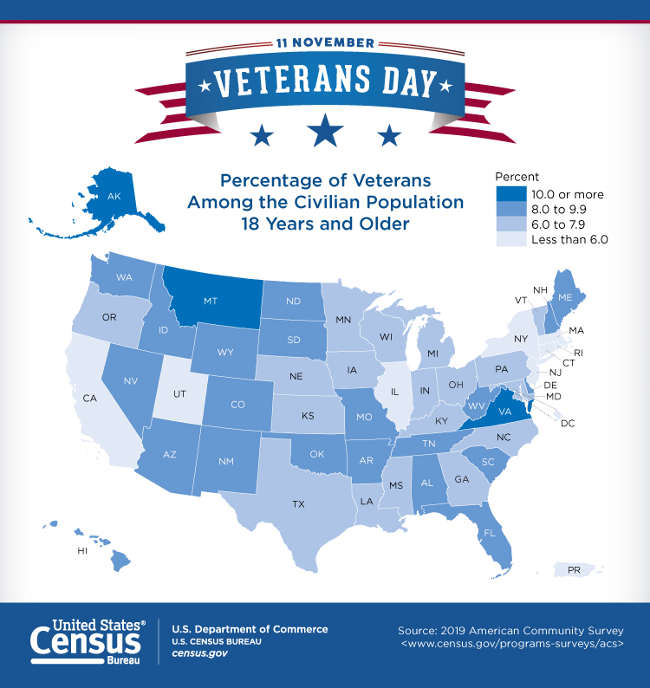
LAKE COUNTY, Calif. – On Wednesday, Nov. 11, the United States will commemorate the service and sacrifices of millions of members of the armed forces during the course of the nation’s history.
Gov. Gavin Newsom issued a proclamation declaring Nov. 11 as Veterans Day in California.
“Today, nearly 1.6 million veterans live and work in our state, and many more Californians have close family members who are veterans. These individuals continue to serve their communities as small business owners, civic leaders, first responders, volunteers, mentors and in countless other roles and professions,” Gov. Newsom said.
“We set aside this day to recognize the personal sacrifices American heroes have made to defend our Constitution and the freedoms it guarantees, but also to recognize the enduring respect they deserve every day. Some members of our veteran population experience homelessness, mental health disorders and other challenges after military service. In our boundless gratitude for their service, we must continue our efforts to support veterans and address these important issues,” Newsom said.
Newsom quoted President Harry S Truman, "Our debt to the heroic men and valiant women in the service of our country can never be repaid. They have earned our undying gratitude. America will never forget their sacrifices."
The Veterans Day we know today has its origins in Armistice Day, Nov. 11, 1919, which marked the one-year anniversary of the end of World War I. President Woodrow Wilson proclaimed that first observance.
Armistice Day became an annual observance when Congress passed a concurrent resolution on June 4, 1926. A bill passed by Congress in May 1938 made Armistice Day a national holiday, according to the Department of Veterans Affairs.
The VA reported that Armistice Day originally focused on honoring World War I veterans. However, in recognition of the efforts of veterans in World War II and the Korea War, in 1954 Congress changed the name from Armistice Day to Veterans Day to make it a day for honoring veterans of all wars.
President Dwight D. Eisenhower, one of the United States’ World War II generals, signed the 1954 bill changing the holiday’s name to Veterans Day, and in October of that year would issue the first Veterans Day proclamation, the VA reported.
Lake County is reported to have one of the highest per-capita veterans populations in the state, and it’s also home to a Department of Veterans Affairs clinic in Clearlake.
In recognition of its veterans, Lake County over the years has been home to a large countywide Veterans Day ceremony, but COVID-19 has not allowed for that celebration in 2020.
In his proclamation, Newsom noted, “The ongoing pandemic will alter the way we recognize Veterans Day this year in many parts of the state. Though it restricts or prevents the parades,
picnics and other gatherings that have become tradition over the decades, it cannot and will not diminish our love, respect and continued support for veterans.”
Census Bureau reports on numbers of veterans in California, across the nation
The US Census Bureau’s 2019 American Community Survey gave the following breakdown of veterans, by period of service, nationwide and in California:
• Gulf War (9/2001 or later) veterans: 3,772,708 (US); 320,701 (California).
• Gulf War (8/1990 to 8/2001) veterans: 3,834,993 (US); 280,799 (California).
• Vietnam era veterans: 6,192,877 (US); 530,839 (California).
• Korean War veterans: 1,156,096 (US); 111,163 (California).
• World War II veterans: 380,327 (US); 40,005 (California).
The following facts are possible thanks to U.S. Census Bureau surveys.
17.4 million
The number of military veterans in the United States in 2019.
1.6 million
The number of female veterans in the United States in 2019.
12.3 percent
The percentage of veterans in 2019 who were Black. Additionally, 76.2 percent were non-Hispanic White; 1.8 percent were Asian; 0.8 percent were American Indian or Alaska Native; 0.2 percent were Native Hawaiian or Other Pacific Islander; and 1.4 percent were some other race. (The numbers cover only those reporting a single race.)
7.2 percent
The percentage of veterans in 2018 who were Hispanic.
50.4 percent
The percentage of veterans age 65 and older in 2019. At the other end of the age spectrum, 8.4 percent were younger than age 35.
Email Elizabeth Larson at
- Details
- Written by: Elizabeth Larson
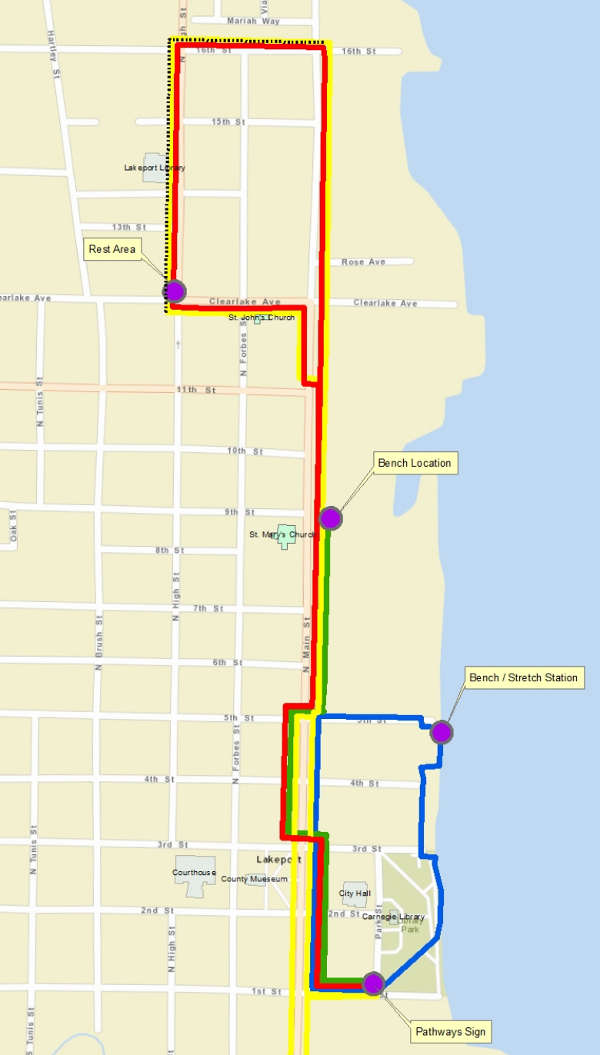
The council approved a resolution naming the downtown walking path “The Ann Blue Walking Path” in honor of Ann Blue.
Public Works Director Doug Grider presented the resolution to the council at its Nov. 3 meeting.
Grider said Blue was the driving force for designating the walking path, which extends from Martin Street at the south end of town to 16th Street to the north. It follows Main Street, looping around Library Park and then follows another loop that includes N. High Street and Clearlake Avenue.
While working on the walking path, Blue was a member of the city’s Parks and Recreation Committee. She also previously served on the Lakeport Planning Commission and the Traffic Safety Advisory Committee, and was a longtime member of the Clear Lake Trowel & Trellis Garden Club.
The council approved the proposal to create the walking path in February 2016. Initial funding came from a $5,000 grant from the Sutter Lakeside Active Living Grant Program.
At the time the council approved the plan, Blue said she had been working on the path since July 2015.
Grider said the proposal to name the path for Blue was brought to the Parks and Recreation Commission, which agreed and asked staff to bring it to the council.
He said Blue walked the path many times to make sure it would work.
Grider also recognized Blue for being very active in community projects and in her service on city commissions.
Mayor George Spurr said he had the honor of working with Blue on the Traffic Safety Advisory Committee, calling her a very nice lady. Renaming the path in her honor is “definitely something we should do,” he said.
Suzanne Russell, who formerly served on the planning commission, Traffic Safety Advisory Committee and the Parks and Recreation Commission, said she had the pleasure of working with Blue on two of those commissions and with the garden club for about 18 years. She said Blue was on the Lakeport Planning Commission in the late 1970s.
Both Blue and her husband had been teachers, Russell said.
“She’s been a joy to work with,” said Russell, who reported that Blue is now living in a nursing home.
Russell said she was pleased to see that the renaming wouldn’t take five years to do, as that’s how long it took to complete the path project in the Parks and Recreation Commission.
“It was a real big thing for Ann to do,” said Russell, who along with Susanne Lyons, donated a bench for the path.
City Manager Kevin Ingram noted that, to say Blue walked the path a number of times is an understatement. He said an incredible amount of thought and effort went into the project.
Spurr asked about a new path going through the Lakefront Park now under development.
Ingram said that would be fitting, as he said he didn’t believe Blue saw the path ending in its current form. There is definitely an opportunity to add more paths and pieces to the main path, he added.
Councilwoman Stacey Mattina moved to approve the resolution, which the council approved 5-0.
Email Elizabeth Larson at