 How to resolve AdBlock issue?
News
- Details
- Written by: Lake County News reports
The city is inviting applications for the Lakeport Planning Commission, the Measure Z Advisory Committee and the Lakeport Economic Development Advisory Committee.
The deadline to apply has been extended to 5 p.m. Tuesday, Dec. 1.
These appointments would be effective as of Jan. 1, 2021.
Membership on these commissions and committees is voluntary.
If you are interested in serving on one of these committees, applications are available on the city’s website under the Community News Topic, “Now Recruiting: Commission/Committee Openings,” or under the “Government” tab (Committees & Commissions).
For additional information, please contact Deputy City Clerk Hilary Britton at 707-263‑5615, Extension 102, or by email at
- Details
- Written by: Julie Lesnik, Wayne State University
Most Americans probably don’t realize that we have a very limited understanding of the first Thanksgiving, which took place in 1621 in Massachusetts.
Indeed, few of our present-day traditions resemble what happened almost 400 years ago, and there’s only one original account of the feast.
As an anthropologist who specializes in reconstructing past diets, I can say that even though we don’t have a definitive account of the menu at the first Thanksgiving, letters and recorded oral histories give us a pretty good idea of what they probably ate. And we know for a fact that it didn’t include mashed potatoes and pumpkin pie.
A main course of waterfowl and venison
The main course is the one scholars can speak about with certainty.
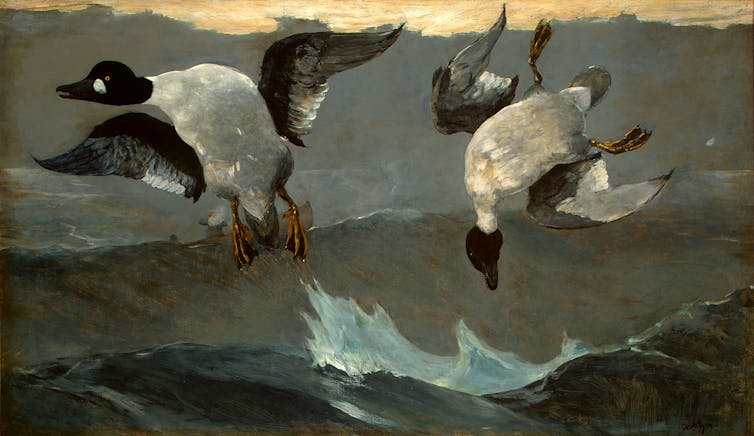
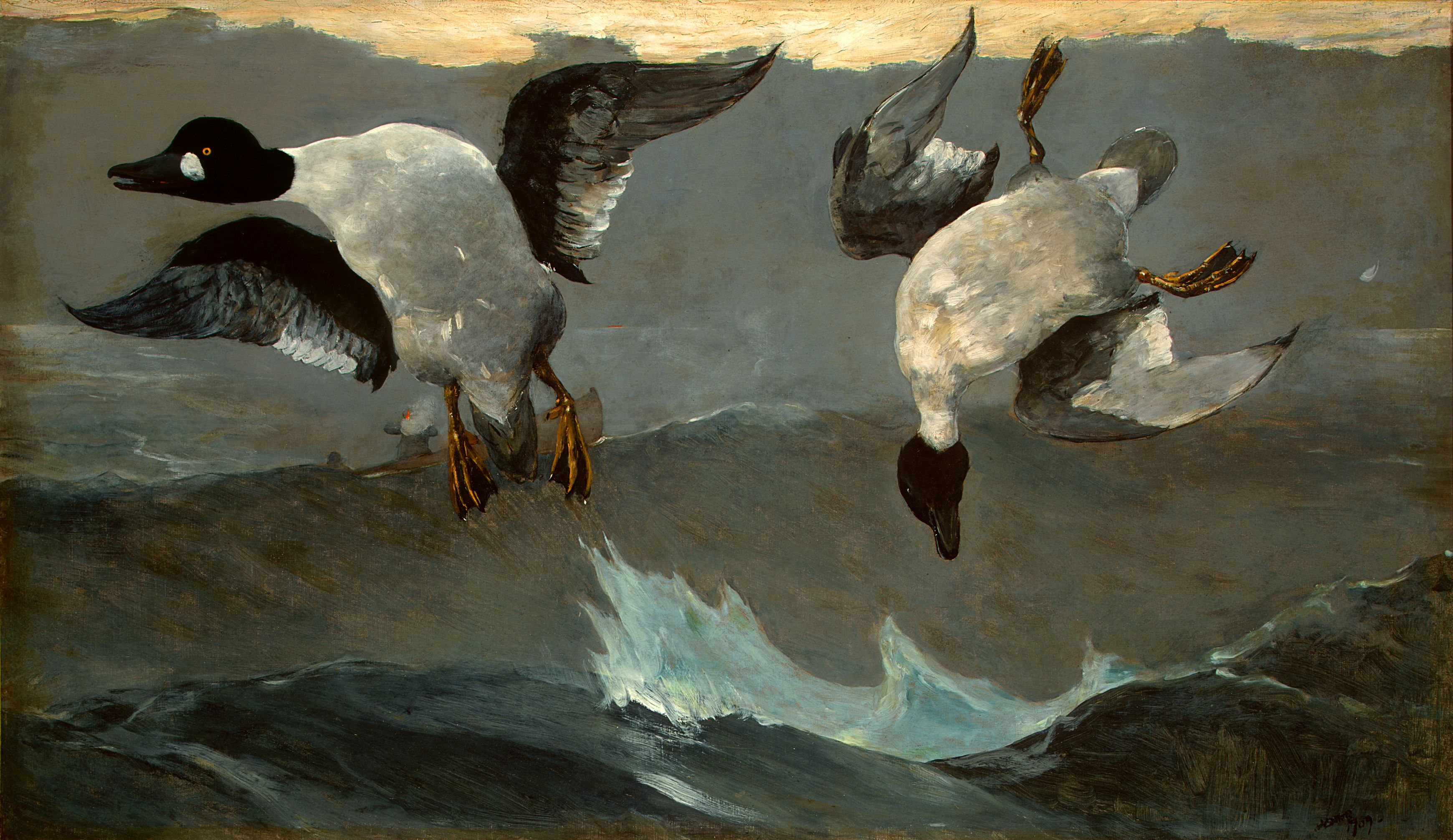
The only eyewitness account of the first Thanksgiving comes from a letter written by Edward Winslow on Dec. 11, 1621. In it, he describes how the Puritans, after utilizing fertilization methods imparted by Tisquantum (also known as “Squanto”), had their first successful harvest. To celebrate, Governor William Bradford “sent four men on fowling” and they returned later that day with enough food to feed the colony for almost a week. Since waterfowl was plentiful in the Massachusetts Bay area, it’s widely accepted that they were eating goose and duck rather than turkey.
The letter also recounts that the Wampanoag leader Massasoit Ousamequin was present, along with “some ninety men,” and that they gifted five deer to the governor. Therefore, venison likely had a prominent place alongside waterfowl on the first Thanksgiving table.
Not cranberry sauce, but sobaheg stew
The natural bogs of the the region contained wild cranberries that could be dried and used all winter to bring variety and vitamin C into the diets of the Wampanoags. They even have their own holiday, Cranberry Day, that resembles our Thanksgiving.
However, there’s no account of cranberries at the first Thanksgiving, nor is there any mention of cranberries in other records of foods introduced to people who arrived on the Mayflower.
This may be due, in part, to the location of Plymouth Plantation relative to the boggy regions of Massachusetts, which are several miles away.

If bogs were not in the immediate area, then the fruit may not have been as readily used by the Wampanoags of this region as they were in other places with Wampanoag settlements, like Martha’s Vineyard.
Instead, for a side dish to the main course, a stew called sobaheg was most likely served. An easy way to make use of seasonal ingredients, the stew often included a mixture of beans, corn, poultry, squash, nuts and clam juice. All are used in the traditional dish today, and all would have been available in 1621. In fact, clams, fish and other seafood were abundant in the area, so they were probably present in some form, whether in sobaheg or another dish.
For carbs, look to cornbread, not potatoes
Historians attribute the first New England crop of potatoes to Derry, New Hampshire in 1722, so there’s no way mashed potatoes could have made an appearance during the first Thanksgiving.
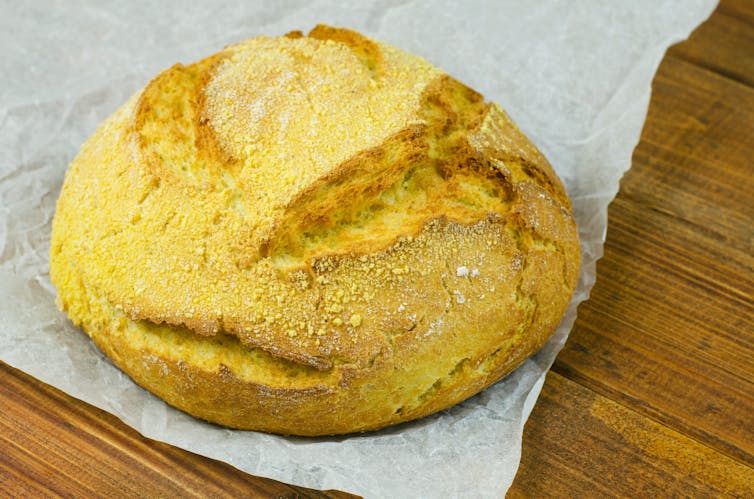
Corn, on the other hand, was the staple starch of the time, and in the published notes of William J. Miller on the Wampanoag tribe, he indicates that among the foods introduced to them, the corn bread, called maizium, was “kind.” European settlers didn’t often speak favorably of indigenous food, so mazium stands out as a recipe that likely made it onto the table at this first feast.
A ‘green sauce’ gravy
Although the settlers may have made a gravy out of the drippings from the meats procured for the feast, a common staple for these early colonizers was a dish known simply as “green sauce.”
Although the best accounts of this sauce come from later records when households had their own gardens of European crops, recipes also utilized crops introduced to them by the Wampanoag. In addition to the corn (and barley) mentioned in Winslow’s letter, the harvest of 1621 likely included beans, squash, onions, turnips and greens such as spinach and chard. All could have been cooked at length to create a pulpy sauce that later became a staple in early New England homes.
What about dessert?
A regular supply of sugar or maple syrup wasn’t available in the area until much later. Sugar, which was the major export of Caribbean plantations, didn’t become popular in New England until the 18th century.
As for maple syrup, Native Americans of the Northeast are credited as the first to procure it; however, it’s believed that European settlers didn’t begin harvesting it until 1680.
Although it is tough to think of Thanksgiving without decadent sweets, at least the first attendees were spared the awkwardness of having to refuse dessert after such a large feast.
Julie Lesnik, Assistant Professor of Anthropology, Wayne State University
This article is republished from The Conversation under a Creative Commons license. Read the original article.
- Details
- Written by: Elizabeth Larson
The jury handed down the verdict in the trial of 22-year-old Mavrick William Fisher on Friday.
Fisher stood trial for the killing of 25-year-old Grant David Whitaker of Mackinaw, Illinois, on Aug. 20, 2019, at Richardson Grove State Park in Humboldt County.
The trial proceedings were transferred to Lake County after Whitaker’s body was recovered on a property in the Scotts Valley area near Lakeport.
The two men, both deaf, had driven west, reportedly looking for property to purchase when they had a disagreement about parting ways.
District Attorney Susan Krones’ theory was that following their argument, Fisher attacked Whitaker – who she said wanted to part company – with a rock and beat him to death while he was sleeping in the tent they shared at Richardson Grove State Park.
Defense attorney Tom Feimer said that Fisher, however, has maintained since the beginning – and would do so again on the stand at trial – that he was defending himself against Whitaker’s attack.
Feimer said it was Fisher who wanted to go his separate way, and that night after their argument, Whitaker came into his tent and lunged at him. Fisher said he grabbed Whitaker’s hand and felt a sharp cut on his own hand.
The defense argued that a struggle ensued in which Fisher, in self-defense, grabbed a rock that was being used to hold down the tent and began hitting Whitaker, resulting in his death.
Feimer said Fisher admitted to driving to Lake County after Whitaker’s death.
Once here, Krones said Fisher – who drove the Chevy Impala that Whitaker had borrowed from his grandmother – disposed of Whitaker’s body on a ranch where the two of them had worked in Scotts Valley.
Sheriff’s deputies found the Chevrolet at the Clearlake Oaks Dollar General on Aug. 24, 2019, the same day that Whitaker’s grandmother reported him missing in Tazewell County, Illinois.
Two days later, Whitaker’s body was recovered in Scotts Valley and Fisher was taken into custody in Mexico. Days later, he was transferred to the Lake County Jail, where he’s remained since.
Trial began in October
After several delays – some of them due to the court closures resulting from COVID-19 – Fisher’s 12-day trial began in October.
Krones said jury selection began on Oct. 21 with evidence and testimony beginning on Oct. 26.
The trial, presided over by Judge Andrew Blum, took place in the Phil Lewis Hall at the Lake County Fairgrounds in Lakeport. That larger venue allowed for social distancing of all involved, including six alternate jurors. Krones said that, during the course of the trial, they lost only one juror.
Fisher had given two statements to police, which were entered into the record, in which he claimed Whitaker’s death was a matter of self-defense. At trial, Feimer said it was important for Fisher to tell his side of the story, and he had nothing to hide.
So Feimer said Fisher himself took the stand, where he testified over the course of about two and a half days.
On the stand, during questioning by Krones, Fisher said after the fight that killed Whitaker, he walked down to the Eel River and threw the rock into it.
He then returned to the tent, put Whitaker’s body in a sleeping bag and then placed it in the car.
Fisher brought the body to Lake County and left it at the Scotts Valley ranch. After the property owner raised concerns about leaving the car there, Fisher cleaned it out and left it in Clearlake Oaks.
Later, when he was in Mexico, he acknowledged feeling suicidal and sending messages about his state of mind to friends via social media.
Because Fisher is deaf, as was Whitaker, the case “drew a considerable amount of attention in the deaf community,” said Feimer.
Some of that attention was in the form of vitriol online, not all of it aimed at Fisher. Feimer said one of the interpreters in the trial mentioned seeing a death threat aimed toward them online, “which was very disturbing to all of us,” Feimer said.
On the afternoon of Tuesday, Nov. 17, the case went to the jury, which deliberated three days. Late Friday afternoon, they returned with a verdict, Krones said.
Krones said the jury found Fisher not guilty of murder – either in the first or second degree.
They hung on a charge of voluntary manslaughter but found him guilty of a lesser included offense, involuntary manslaughter, Krones said.
The jury also hung on a charge of assault with a deadly weapon with a special allegation of great bodily injury or death, she said.
Krones said the jury found Fisher guilty of taking a vehicle without permission.
Feimer said Fisher was disappointed that the jury didn’t find him to be entirely justified in his actions.
However, Feimer added, “It’s a much better outcome by far to have a verdict of not guilty on murder one and murder two, so he’s very grateful for that.”
The case isn’t quite over yet.
Blum has scheduled the case to return to court on Dec. 4, by which point Krones must decide if she is going to retry Fisher on the voluntary manslaughter and assault with a deadly weapon charges and the special allegation of great bodily injury or death.
If she decides to retry Fisher, because he has not agreed to a time waiver, proceedings would start as soon as January, and likely would return to the fairgrounds, she said.
She said Blum also set sentencing for Dec. 21 at 1:30 p.m.
Fisher, who remains in custody, is facing a maximum of four years in prison, but it would be served in the local jail, not state prison, Krones said.
Krones said Fisher is eligible for half-time credits, meaning that, with the nearly year and a half he’s already served in custody, he could be set for release early in 2021.
Email Elizabeth Larson at
Caltrans extends deadline for Lucerne pedestrian and bicycling facilities improvement project survey
- Details
- Written by: Lake County News reports
The survey can be found here: https://survey123.arcgis.com/share/2045209373b94955ad2169093950dbf2.
Caltrans reported that the survey deadline has been extended to Dec. 31.
The agency will use the survey response as it prepares a project initiation document for the Lucerne Complete Streets Improvements Project.
Caltrans said the project was identified in two studies completed this past year, as Lake County News has reported.
As a result, Caltrans is looking at a project that it said may include improved sidewalks, crosswalks and bikeways on Highway 20 throughout Lucerne from the Morrison Creek Bridge to Country Club Drive
The document Caltrans is now preparing is the first step in seeking a funding source for the project.
The survey takes, at most, 10 to 15 minutes to complete, and allows participants to share their observations and to help prioritize needs and locations.
For more information or to offer additional comments, contact Alexis Kelso at