 How to resolve AdBlock issue?
News
- Details
- Written by: Elizabeth Larson

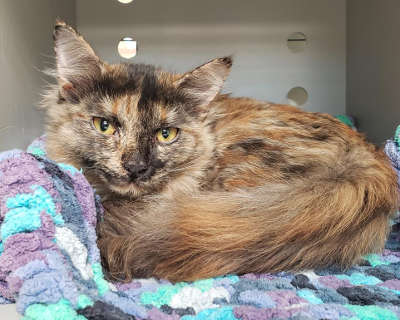
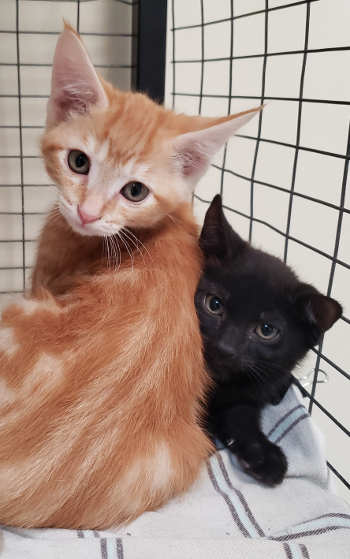
LAKE COUNTY, Calif. – Lake County Animal Care and Control has nearly two dozen kittens ready and waiting for new homes this Thanksgiving week.
The kittens can be seen here: http://publicapps.lakecountyca.gov/publicanimals/shelter/sheltersearch.
The little cats available for adoption include brown, gray and orange tabbies, torties, those with all-black coats and gray coats.

There are domestic short and long-haired kittens in the group.
A few of the kittens are featured on this page.
Call Lake County Animal Care and Control at 707-263-0278 or visit the shelter online at http://www.co.lake.ca.us/Government/Directory/Animal_Care_And_Control.htm for information on visiting or adopting.
Email Elizabeth Larson at
- Details
- Written by: Ken Albala, University of the Pacific
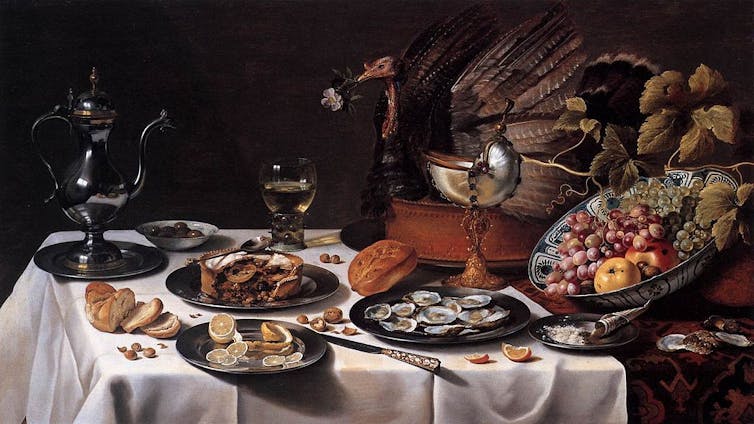
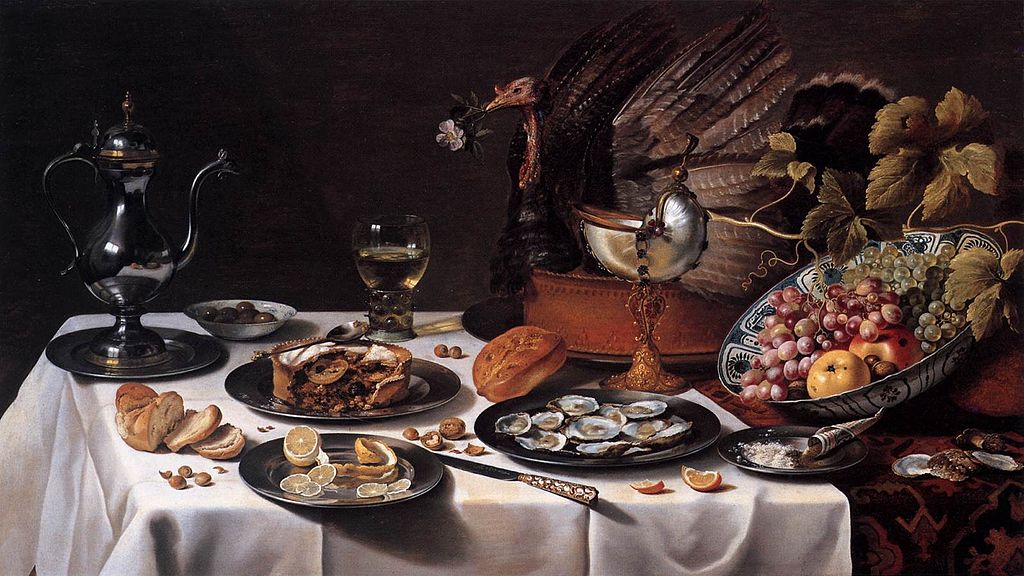
How and why did the dishes served at Thanksgiving dinner come to be so fixed?
Many assume that most of them were simply eaten by the Pilgrims during the first Thanksgiving. For this reason, they continue to be eaten today. And it’s true that most of the ingredients are American in origin: the turkey, cranberries, pumpkin, sweet potatoes – even the green beans in the casserole and the pecans in the pie.
Yet we only have one firsthand account of the “first” Thanksgiving – a brief paragraph by Edward Winslow that doesn’t mention any of these foods. And it’s been shown, time and again, that the idea of a unique culinary tradition originating from a feast between the Pilgrims and their Native American neighbors is more advertising myth than historical truth.
But maybe there is something, nonetheless, that’s very traditional about this meal.
In fact, there may be a very good reason these particular dishes – and even the way we eat the meal – came to be strongly associated with Thanksgiving. The first Americans simply mimicked or adapted the traditional fare, flavor combinations and rituals of Europe, using them to fashion the popular dishes we continue to enjoy today.
Alaye that fesande!
To start, think of when we eat the meal: always in the early afternoon, which is just as a proper dinner would have been served 400 years ago. Back then, supper was a smaller, evening meal. Of course, there are other early dinners that families traditionally observe (especially on Sunday). But Thanksgiving always has been, and continues to be, early. It didn’t simply start sooner to accommodate a football game.
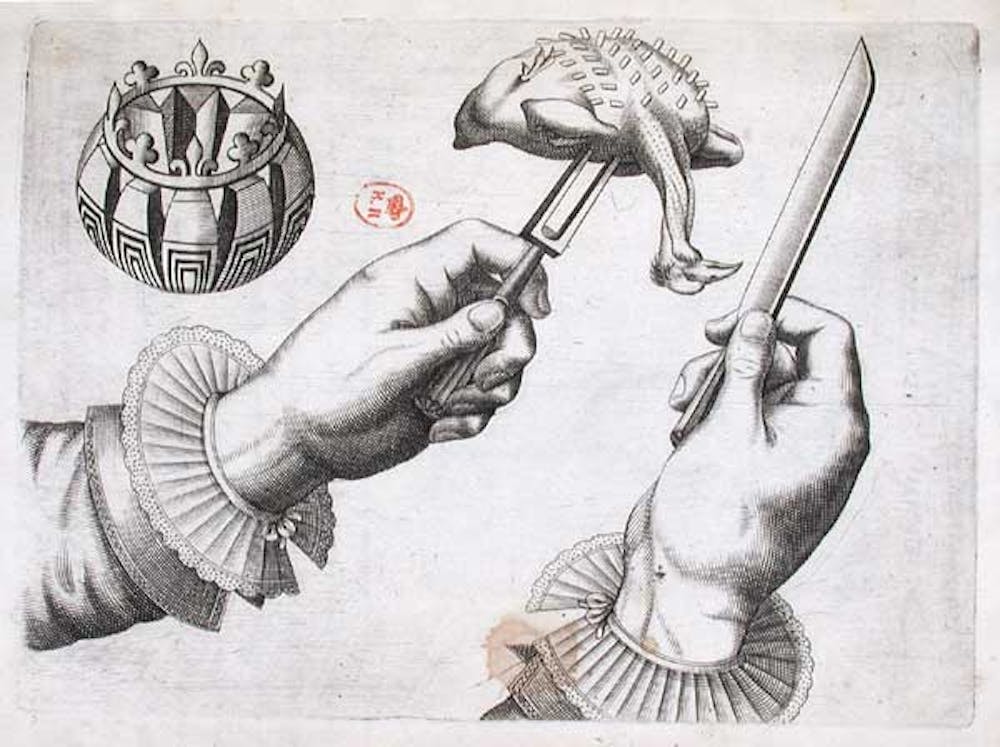
As for the ritual of carving at the table, it’s not something we normally do. But it was positively fashionable when the colonists left Europe in the 17th century. There were even carving manuals replete with illustrations for serving their favorite roasts, which were almost always wild fowl. The only difference is that they would hold the entire bird up in the air to carve thin slices, which would fall gently on each diner’s plate. (With today’s huge, domestic turkeys, it’s understandable that we leave them on the platter.)
There was even a whole language of dismemberment in medieval England: you would lyfte that swanne, alaye that fesande, wynge that partyche, dysplaye that crane, but breke that egryt.
Raspberry sauce and pompion-pye
As for the turkey itself, it was one of the few New World foods that had already gained immediate acceptance in Europe, precisely because of its similarity to peacocks and pheasants, which were among the era’s most fashionable foods. In other words, the Englishmen who landed in Massachusetts didn’t eat turkey because it was the only local food available. Rather, they’d been quite familiar with it back in England, where it was even common to remove the skin and feathers, cook it and serve it with the feathers replaced, as if it were still living – a standard medieval trick.
The side dishes also date back to Europe, with flavor profiles that are actually medieval in origin.
Take cranberry sauce. In medieval Europe, sour fruit sauce with wild fowl was a popular combination, one that balanced a cold and moist condiment with a hot, dry meat. In the mid-17th century, for example, the famous French chef La Varenne served turkey with raspberries.
But the real connection between Thanksgiving and the medieval feast is in the spices. Although today we use the blanket term “pumpkin spice” to characterize variations of cinnamon, nutmeg, clove and ginger (and they show up practically everywhere in cheap artificial form), these flavors were the backbone of medieval cuisine, appearing in a wide array of sweet and savory dishes, from chicken to pasta.
Back then, it simply wasn’t a lavish meal without a riot of spices (which, because they needed to be imported from Asia, were wildly expensive). Today the only one of these spices that stays on the table year-round is pepper. But their pivotal role in Thanksgiving again is a reminder of the tradition’s remote origins.
And many think of green bean casserole as a classic postwar dish – invented in the 1950s as a way to use up all the cans of cream of mushroom soup that had amassed in the pantry. But “French beans” (from America) were already well-known and loved in 17th-century Europe. English Poet Gervase Markham, in 1608’s Farewel to Husbandry, remarks how tender they are when stewed. And Thomas Tryon, a British author of self-help books, writes in The Way to Health, Long Life and Happiness that French beans “far exceed and are much better than other pulses eaten green.”
Candied yams were also a 16th-century staple. In Shakespeare’s The Merry Wives of Windsor, when Sir John Falstaff exclaims that it should rain kissing comfits and hail potatoes, he is actually talking about Virginia sweet potatoes, which had been brought back to Europe in the late 16th century. (These weren’t just candied; they were also considered an aphrodisiac.)
Famed English chef Robert May in the mid-17th-century cookbook The Accomplisht Cook has a great recipe for (sweet) potato pie, which wouldn’t seem too amiss on the Thanksgiving table today (though with cockscombs, testicles and bone marrow would be considered perhaps a bit overgarnished).

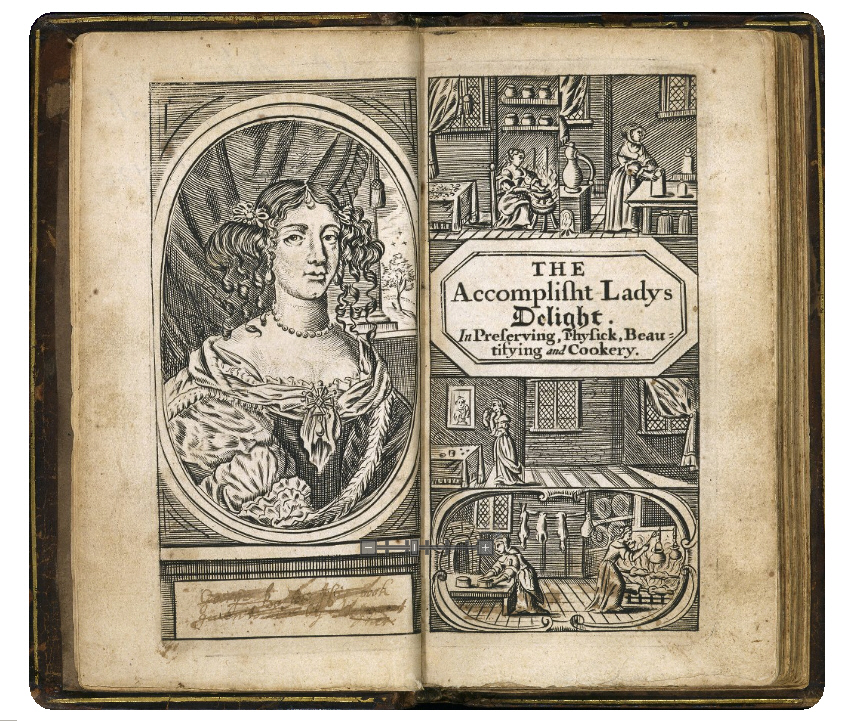
As for that very American pumpkin pie? In the 17th century, it was already quite common. One of the earliest female cookbook authors, Hannah Woolley, has a recipe for “pompion-pye” with the same spices we use today. She also includes apples, which, incidentally, are also thoroughly English in a pie.
So despite the picture we have of English colonists adapting to strange new ingredients in their new home, most of the recipes – and those we still insist on having at the Thanksgiving table – were already regular favorites.
Remember that when you lift high your (very American) turkey leg, like Henry VIII.
Ken Albala, Professor of History, Director of Food Studies, University of the Pacific
This article is republished from The Conversation under a Creative Commons license. Read the original article.
- Details
- Written by: Lake County News reports
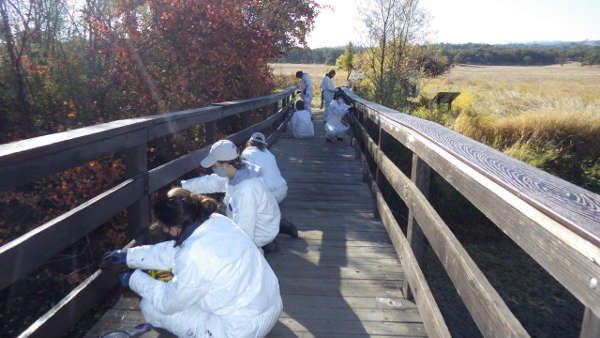
LOWER LAKE, Calif. – Work is almost completed on the repair and upgrade of the iconic boardwalk on the Cache Creek Nature Trail located at Anderson Marsh State Historic Park.
The Anderson Marsh Interpretive Association, or AMIA, has partnered with the California Department of State Parks, AmeriCorps and the California State Parks Foundation on the project.
The work has been supported by a “Keeping Parks Whole” grant from the California State Parks Foundation, a member-supported nonprofit that works to create support for California State Parks.
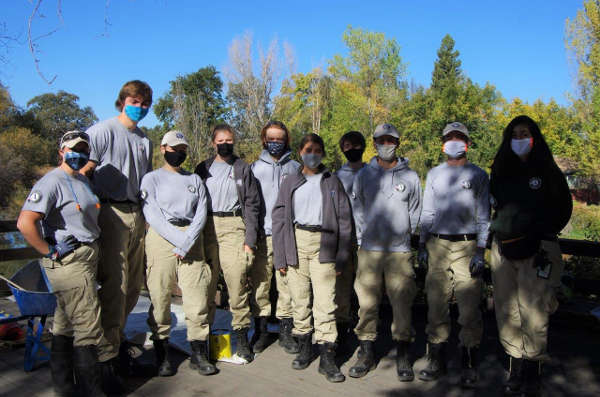
An AmeriCorps volunteer crew has been working hard to finish the project, with supervision and training by State Parks maintenance staff.
“The work on the boardwalk will include tightening the structure itself, repairing broken boards, refinishing the wood, and installing new upgraded ‘Trex’ railings that will resist the effects of hot summers and cold winters,” explained AMIA Treasurer Henry Bornstein. “The work will ensure that the boardwalk remains available for guided nature walks and public-school trips when the park fully reopens.”
The AmeriCorps volunteer team members have come from all across the United States to work on this Lake County project.
“The AmeriCorps volunteers have been living, eating and working together as a single ‘cohort,’ allowing them to safely work together with minimized risk from COVID-19,” Bornstein said. “While working along-side State Parks staff and in areas in which they may encounter the public, the crew ‘masks up’ to comply with health recommendations.”
“California State Parks appreciates the help of the AmeriCorps volunteers, who give their time and energy for the benefit of all of us,” said Park Maintenance Chief Wendy Lieberg. “We also appreciate the continued help and support of our partner Anderson Marsh Interpretive Association. In times of need, they are always there to help keep the Park safe and maintained.”
“While guided public tours at Anderson Marsh State Historic Park have been temporarily suspended in compliance with current COVID-19 guidelines, the hiking trails remain open and the public is encouraged to take advantage of the opportunity to get into nature and take a walk in the Park, while observing recommended guidelines regarding social distancing, face coverings and hygiene,” said AMIA President Roberta Lyons.
Anderson Marsh State Historic Park is located off of Highway 53 between Lower Lake and Clearlake and is open to the public during daylight hours.
More information about hiking at the Park can be found at www.andersonmarsh.org or by calling AMIA at 707-995-2658.
- Details
- Written by: Kathleen Scavone
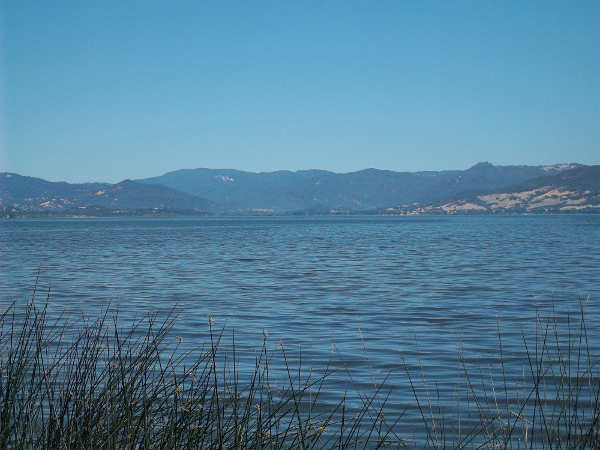
LAKE COUNTY, Calif. – What if our ancient and sprawling lake could talk?
The stories it would tell would originate in the Early Pleistocene, around 500,000 years ago.
In a sense, our ancient lake is talking to us today thanks to core samples that were taken from beneath the lake in the spring of 2012.
Then, a team of scientists from the University of California, Berkeley commenced drilling the sediments beneath the lake from their floating sediment core drilling rig.
Situated in the center of the Upper Arm of the lake, they extracted 3-inch diameter cores in order to answer a myriad questions about the lake.
For example, what were prehistoric conditions like back then on the lake? Which species of insect and plant life proliferated then? And, even more important, how has global warming affected Clear Lake and its environs?
UC Berkeley biologists hope that these core samples will aid them in predicting how life on our planet today will adapt throughout current and future environmental issues.
The answers may help state and local governments with plans and policies in these uncertain times.
UC Berkeley project leader, Cindy Looy, assistant professor of integrative biology, states on her website, “We are reconstructing the past to better forecast the future, because we need to know what's coming in order to adequately prepare for it.”
Looy's team of UC Berkeley faculty includes experts such as ecologists, climate modeling experts, paleontologists, pollen experts and botanists.
They are looking at our lake's core for charcoal, freshwater organisms and pollen spanning back 130,000 years, well before the human population of the vicinity.
Methods utilized by the experts include the analysis of the aforementioned matter by observing the 400-foot cores every centimeter, or every 10 years, which will give them readings of the lake's nutrient levels, temperature and oxygen content that all correlate to lake levels as well as rainfall.
Previous United States Geological Survey core samples were read every meter, making the UC Berkeley observations 100 times better with regards to time resolution.
The series of pictures into the past will reveal how the area transformed itself throughout natural global warming occurrences.
The UC Berkeley mud core samples from the lake prove that there were once forests much like Cobb Mountain's. Then, when the ice sheets receded the area became oak-dominated.
Our lake is considered by scientists to be unique, since it has endured when most other lakes outside the tropics were wiped out by glaciers.
Through the science of limnology, as the science of inland water is named, lakes around the globe are arrayed from oligotrophic to eutrophic, meaning “undernourished” and “well-nourished,” respectively.
Lakes like Lake Tahoe that are deep and cold are nearly sterile or oligotrophic, while lakes such as ours that are shallow and warm are considered eutrophic.
Eutrophic lakes support a thriving plant population with its rich nutrients, such as nitrogen, phosphorus and iron.
All of these plants give sustenance to fish, worms, shellfish and crustaceans such as crayfish, which then feed the astonishing array of avian species like grebes, egrets, wood ducks, coots, eagles, osprey and more, along with the thriving mammal populations of river otters, mink, raccoons, etc.
Learning about our lake is thrilling and ongoing.
Here in our bioregion the “book of nature” constantly reveals its hidden aspect under volcanic rocks, along the shoreline, and now beneath the depths of the oldest lake in North America.
Kathleen Scavone, M.A., is a retired educator, potter, freelance writer and author of “Anderson Marsh State Historic Park: A Walking History, Prehistory, Flora, and Fauna Tour of a California State Park” and “Native Americans of Lake County.”