 How to resolve AdBlock issue?
News
- Details
- Written by: NATIONAL AERONAUTICS AND SPACE ADMINISTRATION
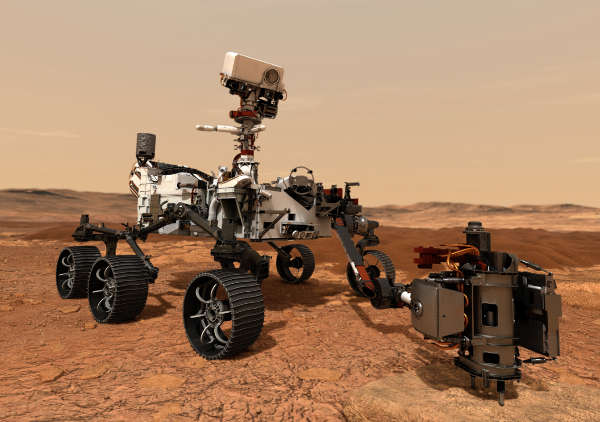
NASA and the European Space Agency, or ESA, are moving to the next phase in a campaign to deepen understanding of whether life ever existed on Mars and, in turn, better understand the origins of life on Earth.
NASA has approved the Mars Sample Return, or MSR, multi-mission effort to advance to Phase A, preparing to bring the first pristine samples from Mars back to Earth. During this phase, the program will mature critical technologies and make critical design decisions, as well as assess industry partnerships.
The first endeavor of this campaign is in progress. NASA's Mars 2020 Perseverance rover launched in July and is set to land on the Red Planet Feb. 18, 2021. The car-size rover will search for signs of ancient microbial life.
Using a coring drill at the end of its robotic arm, Perseverance has the capability to gather samples of Martian rock and regolith (broken rock and dust), and hermetically seal them in collection tubes. Perseverance can deposit these samples at designated locations on the Martian surface or store them internally.
In the next steps of the MSR campaign, NASA and ESA will provide respective components for a Sample Retrieval Lander mission and an Earth Return Orbiter mission, with launches planned in the latter half of this decade.
The Sample Retrieval Lander mission will deliver a Sample Fetch Rover and Mars Ascent Vehicle to the surface of Mars. The rover will retrieve the samples and transport them to the lander.
The Perseverance rover also provides a potential capability for delivery of collection tubes to the lander. A robotic arm on the lander will transfer the samples into a container embedded in the nose of the Mars Ascent Vehicle.
Once sealed, the system will prepare for the first launch from another planet. In Mars orbit, the Earth Return Orbiter will rendezvous with and capture the sealed sample container, and then place the samples in an additional high-reliability containment capsule for return to Earth in the early 2030s.
"Returning samples of Mars to Earth has been a goal of planetary scientists since the early days of the space age, and the successful completion of this MSR key decision point is an important next step in transforming this goal into reality," said Thomas Zurbuchen, associate administrator for science at NASA Headquarters in Washington. "MSR is a complex campaign, and it encapsulates the very essence of pioneering space exploration – pushing the boundaries of what's capable and, in so doing, furthering our understanding of our place in the universe."
Bringing Mars samples back to Earth will allow scientists across the world to examine the specimens using sophisticated instruments too large and too complex to send to Mars, and will allow future generations to study them using technology not yet available. Curating the samples on Earth will allow the science community to test new theories and models as they are developed, much as the Apollo samples returned from the Moon have done for decades.
The MSR campaign also advances NASA's efforts to send humans to the Red Planet. It will involve landing heavier spacecraft on the Martian surface than ever before. It would also involve launch from and rendezvous operations around another planet for the first time. With the Artemis program, NASA will land the first woman and next man on the lunar surface in 2024 to prepare for humanity's next giant leap – sending astronauts to Mars.
"MSR will foster significant engineering advances for humanity and advance technologies needed to successfully realize the first round-trip mission to another planet," said Jeff Gramling, Mars Sample Return program director at NASA Headquarters. “The scientific advances offered by pristine Martian samples through MSR are unprecedented, and this mission will contribute to NASA’s eventual goal of sending humans to Mars."
NASA established a Mars Sample Return Independent Review Board earlier this year to evaluate its early concepts for partnership with ESA to return the first samples from another planet. The board’s report with NASA’s responses released in October found the agency is now ready to undertake its Mars sample return campaign. NASA convened a second group of independent experts, the MSR Standing Review Board (SRB), to provide ongoing assessment of the MSR program. The SRB also recommended the program move into Phase A.
"Beginning the formulation work of Phase A is a momentous step for our team, albeit one of several to come," said Bobby Braun, Mars Sample Return program manager at NASA’s Jet Propulsion Laboratory in Southern California, which leads development for NASA’s MSR effort. "These reviews strengthened our plan forward and this milestone signals creation of a tangible approach for MSR built upon the extraordinary capabilities of the NASA centers, our ESA partners, and industry."
ESA is providing the Earth Return Orbiter, Sample Fetch Rover, and the lander's robotic arm to the partnership. NASA is providing the Sample Retrieval Lander, Mars Ascent Vehicle, and the Capture/Containment and Return System payload on the Earth Return Orbiter. Multiple NASA Centers are involved in this effort, contributing in their areas of strength.
For more information about the agency’s activities on Mars, visit http://www.nasa.gov/mars .
- Details
- Written by: Lake County News reports
Dr. Gary Pace said that, so far, 300 health care workers in Lake County have been vaccinated.
Lake County received its first shipment of 975 doses on Dec. 17, as Lake County News has reported.
He acknowledged that many are wondering where they will fit in the priority list.
“The supply is much less than the need,” said Pace.
He said Lake County Public Health is following the guidelines from the Centers for Disease Control and Prevention and the California Department of Public Health.
Those guidelines establish the following tiers:
· Tier 1 (this is the current phase where the county is now): hospital workers, medical first responders, nursing home staff and dialysis staff.
· Tier 2 (which Pace said should hopefully begin in the next one to two weeks): outpatient clinic staff, jail medical, home health and In-Home Supportive Services workers.
·Tier 3 (which Pace said is expected to start in a few weeks): specialty clinics, lab workers, dental clinics and pharmacy staff.
“Protecting people serving in these roles first will help ensure there are sufficient health care workers to take care of sick people in the coming months,” said Pace.
“Timelines and priority guidelines for subsequent tiers are still under development,” Pace said. “Those expected to be in near-term groups include essential workers like law enforcement, teachers, farmworkers, public transit workers, food workers, elders over 75 years old and those with chronic medical illness.”
Pace added, “We are currently working through established medical systems to distribute and administer these vaccines. Public Health will also provide targeted immunization clinics in the coming weeks.”
Updates on vaccination availability will be posted on the Public Health website at http://health.co.lake.ca.us.
Updates to testing services
Pace said COVID-19 testing availability is an essential part of containing the spread.
Due to the weather, and some contract changes with the state, OptumServe will begin providing regular testing in Lake County Jan. 4.
“We are excited about this change, as it will improve the ability of Lake County residents to get tested,” Pace said.
The two test sites will be indoors, not drive-thru:
· Lakeport: Mondays, Fridays and Saturdays, 7 a.m. to 7 p.m., at the Silveira Community Center, 500 N. Main St.
· Lower Lake: Tuesdays, Wednesdays and Thursdays, 7 a.m. to 7 p.m., at the Lower Lake Town Hall, 16195 Main St.
Appointments can be made online, at https://lhi.care/covidtesting or by phone. Walk-in slots will also be available. Children can now get tested, as well as adults.
General information on testing with OptumServe can be found at https://covid19.ca.gov/get-tested/.
Rite Aid is also now conducting Drive-Thru testing in Clearlake and Ukiah. Appointments can be made online: https://www.riteaid.com/pharmacy/services/covid-19-testing.
The Lakeport drive-thru site still has three more days of testing: 9 a.m. to 2 p.m. Dec. 28, 29 and 30. The standup site in Clearlake has closed.
“Many thanks to Verily and the volunteers and others that made our drive-thru sites possible,” Pace said.
This article has been corrected to show that Lower Lake will have testing on Thursdays, not Fridays.
- Details
- Written by: Lake County News reports
This lease allows the installation of an additional wireless communications tower at an existing telecommunication site on National Forest System lands.
“This project will contribute to the existing telecommunications infrastructure on Big Signal that is an integral part of the agency’s goal of providing quality communication access to all Americans,” Forest Engineer Shannon Pozas said.
The project is located approximately 18 miles northeast of Willits and is adjacent to the Sanhedrin Wilderness.
The telecommunications services provided at this site will contribute to the safety of the surrounding communities.
The Mendocino National Forest worked in collaboration with Mendocino County Emergency Services to reach a solution to provide this communications site while not interfering with existing county emergency operations and maintenance.
Mendocino Forest Supervisor Ann Carlson added, “Issuing this lease will bring important internet services to rural communities, like Covelo and Laytonville, during a time when telework and distance learning for families is ever more important due to the COVID-19 pandemic.”
Project implementation may occur immediately.
Correction: The Forest Service has issued an update in which it said the project is to the northeast of Willits, not the southwest.
- Details
- Written by: Laurie Archbald-Pannone, University of Virginia; Kathleen C. Brown, University of Tennessee; Ryan Huerto, University of Michigan; Sue Mattison, Drake University, and Thomas A. Russo, University at Buffalo
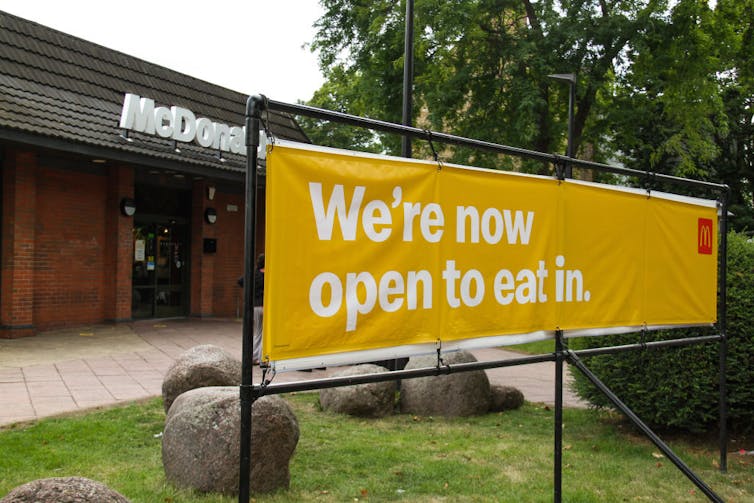
Earlier this fall, many of the nation’s restaurants opened their doors to patrons to eat inside, especially as the weather turned cold in places. Now, as COVID-19 cases surge across the country, some cities and towns have banned indoor dining while others have permitted it with restrictions. Still other geographies have no bans at all.
The restaurant and hospitality industry has reacted strongly, filing lawsuits challenging indoor dining bans and, in New York state, pointing to data that showed restaurants and bars accounted for only 1.4% of cases there – far lower compared with private gatherings.
We asked five health professionals if they would dine indoors at a restaurant. Four said no – and one had a surprising answer.

Not an option
Dr. Laurie Archbald-Pannone, Associate Professor of Medicine, University of Virgina
No. March 12, 2020 was the last day I ate indoors at a restaurant. At the time, there was mild apprehension – but much changed that week. The COVID-19 pandemic altered many aspects of “normalcy,” and for me eating inside at a restaurant is one of those activities. I loved eating out and typically would eat out three times a week (sometimes more!). But understanding how the COVID-19 infection is transmitted, I feel that being inside without a mask on – even just to eat – is not an option for me. I strongly believe that we need to support our community through these challenging times, so we still get curbside pickup or delivery from our favorite local restaurants at least three times a week – sometimes more! – but it will be a while before I’m back inside. When I do return I’m definitely getting dessert.
Great risk
Dr. Thomas A. Russo, Chief of Infectious Disease Division, Jacobs School of Medicine and Biomedical Sciences, University at Buffalo
No. And it’s been “no” right from the beginning.
We have a little more information now, but what I said in the spring hasn’t really changed. The greatest risk of getting infected with SARS-CoV-2 is being indoors with people who aren’t using masks at all times. The concern isn’t just big respiratory droplets when close to someone talking; it’s also the tiny aerosols that linger in the air.
Making it even riskier is the generally poor ventilation in many restaurants. The key differences between indoor dining and shopping in a big box store or grocery store are: 1) big stores have more ventilation and greater air space; 2) everyone can wear a mask at all times; 3) you’re not fixed in space, so if you see someone who just has a bandanna or their mask drops down below their nose, you can steer clear of them; and 4) it should take less time than dinner out. At a restaurant, you’re stuck at that table. If a party near you is having an animated conversation, they could be generating a lot of respiratory secretions.
Some interesting studies have looked at the airflow and air currents in restaurants in relation to where people became infected. In one, a person was 20 feet away from the source for only about 5 minutes, but the person was directly in the airflow and became infected. It’s a reminder of what we’ve been saying – there’s nothing magical about 6 feet. The high degree of community disease in the U.S. right now increases the likelihood that another diner in the restaurant is infected. If you are tired of cooking and need a break, takeout is the way to go.
Careful mixed with trust
Sue Mattison, Provost and Professor in the College of Pharmacy and Health Sciences, Drake University
Yes. As an epidemiologist, my response may seem surprising or hypocritical: I do eat at local restaurants, but only because in April, like more than 17 million Americans since that time, I tested positive for COVID-19 and recovered. According to the latest evidence, I believe I have immunity for now, and perhaps longer. But I am not pushing my luck.
I have my own list of four restaurants where I eat. I trust these restaurants because each has drastically reduced their number of tables and spaced them at least 6 feet apart, and everyone inside is diligent about wearing a mask. My husband and I also order takeout a lot. It is important to reiterate, however, that evidence shows restaurants are a significant source of infection, and those who have not recovered from COVID-19 should refrain from eating at restaurants until the community gets a better handle on the spread of infection.
Short-term sacrifices
Dr. Ryan Huerto, Family Medicine Physician, Health Services Researcher and Clinical Lecturer, University of Michigan
No. While I understand many factors contribute to indoor dining, such as the mental health toll of social isolation, the opportunity to support small businesses and cold weather, I strongly recommend against indoor dining.
The risk of contracting COVID-19 from indoor activities is far greater than from physically distanced outdoor activities. The recent spike in COVID-19 infections, deaths and ICU bed shortages is likely linked to indoor gatherings during Thanksgiving.
On Dec. 22, 201,674 infections and 3,239 deaths due to COVID-19 were reported. This death toll is equivalent to approximately 20 Boeing 737 aircrafts crashing in a single day.
Even with a COVID-19 vaccine approved, staying home, physically distancing, wearing a mask and good hand hygiene are as important as ever. Think of these as short-term sacrifices to help protect your friends, family, neighbors and essential workers.
Instead of dining in, please consider exponentially safer alternatives such as ordering delivery or curbside pickup.
Restaurants pose big risk
Kathleen C. Brown, Associate Professor of Practice and MPH Program Director, College of Education, Health, and Human Sciences, University of Tennessee
No. The Centers for Disease Control and Prevention reported that patients testing positive were twice as likely to have eaten in a restaurant than those testing negative in the 14 days preceding their test. I regularly get takeout but do not eat in restaurants.
What I cannot control poses a risk. I have very open and honest conversations with family and friends about where we have been and who we have been with. From there, our risk is pretty clear but still not at zero. The more people I come into contact with, the greater the risk.
In a restaurant, I am not able to assess the risk posed by other patrons or the staff. Each person in that restaurant has a network of others that, taken together, increases my risk of contracting COVID-19. Currently, Tennessee, where I live, is the second-leading state for cases per 100,000, which means community spread is high.
In plain language, that means there is an increased likelihood that I may come into contact with someone who is infectious – symptomatic or not – if I eat inside a restaurant. I will continue to pick up my takeout for now.
[Deep knowledge, daily. Sign up for The Conversation’s newsletter.]
Laurie Archbald-Pannone, Associate Professor Medicine, Geriatrics, University of Virginia; Kathleen C. Brown, Associate Professor of Practice and MPH Program Director, College of Education, Health, and Human Sciences, University of Tennessee; Ryan Huerto, Family Medicine Physician, Health Services Researcher and Clinical Lecturer, University of Michigan; Sue Mattison, Provost and Professor in the College of Pharmacy and Health Sciences., Drake University, and Thomas A. Russo, Professor and Chief, Infectious Disease, Jacobs School of Medicine and Biomedical Sciences, University at Buffalo
This article is republished from The Conversation under a Creative Commons license. Read the original article.