 How to resolve AdBlock issue?
News
- Details
- Written by: Timothy Callaghan, Texas A&M University and Matt Motta, Oklahoma State University
Today, more Americans hope to receive a COVID-19 vaccine than current vaccine supply will allow. Consequently, although President Joe Biden’s initial promise to dole out 100 million vaccine doses in 100 days would require a ramp-up in vaccine allocation, some consider the promise to be insufficient to meet current levels of demand and put the pandemic’s spread into decline.
The current mismatch between vaccine demand and supply, however, may be short-lived. Despite concerns about lagging vaccine allocation for front-line health care workers and other vulnerable groups, health experts are optimistic that public demand for a COVID-19 vaccine will remain high in coming months as more vaccine doses become available.
While it is clear that many political leaders expect public demand for a coronavirus vaccine to be strong, whether or not expectations can live up to reality is an open question. In fact, there is some evidence to suggest instead that large segments of both the public and health care workers do not intend to get vaccinated against COVID-19.
Figuring out whether or not some people are less likely to get vaccinated – and their reasons for not getting vaccinated – can help political leaders and health professionals better anticipate vaccine demand. If some social, political and other demographic groups are more (or less) likely to intend to get vaccinated than others, demand for a vaccine may be higher (or lower) in vaccine distribution networks that primarily service vaccine-hesitant groups.
Additionally, understanding why some individuals are more likely to refuse vaccination than others can help inform health communication efforts to increase vaccine uptake. For example, if some Americans intend to refuse to get vaccinated due to concerns that the vaccine is not safe, health communicators can target these groups with easy-to-understand information about how scientists determined that the vaccine is safe.
In a recent peer-reviewed study, we provide important insight into what public demand for a coronavirus vaccine could actually look like, once most Americans have the opportunity to get vaccinated. Just as important, we detail reasons certain Americans do not intend to get vaccinated.
Some Americans more likely to get vaccinated
We studied Americans’ COVID-19 vaccination intentions in a large, demographically representative online survey of 5,009 U.S. adults, conducted in June 2020. We measured vaccination intentions by asking respondents whether or not they would pursue getting vaccinated for the coronavirus if a COVID-19 vaccine became available.
Our study found that almost a third (31.1%) of respondents did not intend to pursue vaccination. This is concerning, given that recent epidemiological estimates suggest that up to 70% of Americans must become immune to COVID-19 in order to put the pandemic’s spread into decline.
We also found strong differences in vaccination intention between key demographic groups. Notably, we found that 35.7% of women (vs. 26.3% of men), 42.9% of Black people (vs. 28.6% of white people), and 37.8% of conservatives (vs. 33.4% of independents and 24.1% of liberals) intended to forgo vaccination.
Why will some people refuse a COVID-19 vaccine?
Our study provides new insights into the reasons that some Americans do not intend to get vaccinated against COVID-19. We found that concerns about the safety and effectiveness of the vaccine were the most consistent reasons for forgoing vaccination. We also found that portions of the American public did not intend to pursue vaccination because they lack health insurance, lack the financial resources they believe they need to be vaccinated or because they have already had COVID-19.
Our study also found considerable evidence that the reasons for not vaccinating were not the same for everyone. For example, women were more likely than men to say they would forgo vaccination due to concerns about safety and effectiveness. Additionally, we found that Black people were more likely to skip vaccination than white people due to perceived safety and effectiveness issues as well as concerns related to the cost of vaccinating and a lack of health insurance.
[Deep knowledge, daily. Sign up for The Conversation’s newsletter.]
What this all means for vaccine uptake
Together, our findings point to two key takeaways as the U.S. pushes to rapidly vaccinate its population against COVID-19. First, political leaders and public health experts need to recognize that what appears to be considerable public demand for the COVID-19 vaccine right now may be more modest in the coming months, as more Americans have the opportunity to get vaccinated. In its place, experts will be faced with the new challenge of convincing hesitant groups to get vaccinated in order to reach herd immunity and end the pandemic.
Second, our results demonstrate that in these efforts to vaccinate the hesitant, a one-size-fits-all approach to health communications will be insufficient. While health communications aimed at emphasizing the safety and effectiveness of the vaccine will be important, for some groups, it will be just as important to emphasize that Americans can be vaccinated against COVID-19 for free, regardless of insurance status. Developing these communications and identifying appropriate messengers to deliver this information will be vital to stopping the pandemic.
Timothy Callaghan, Assistant Professor, Texas A&M University School of Public Health, Texas A&M University and Matt Motta, Assistant Professor of Political Science, Oklahoma State University
This article is republished from The Conversation under a Creative Commons license. Read the original article.
- Details
- Written by: Elizabeth Larson
The storm battered the state with heavy rain, high winds and snow, including several inches of snow that the National Weather Service reported fell in Lake County.
As of 4 p.m. Wednesday, PG&E said 575,000 of its customers across the state had lost power due to the winds, rain and snow.
Of those, 434,000 – or 75 percent – had power restored with approximately 141,000 customers still out of power as of shortly before 7 p.m., PG&E reported.
The hardest-hit areas with the most remaining outages on Wednesday night included the Sacramento and Stockton regions as well as parts of Humboldt and Mendocino counties.
The company said more than 400 crews and nearly 500 electric troublemen and inspectors are working on restoration.
In some locations, PG&E said its crews have been using snowcats – described as truck-size tracked vehicles – to gain access to infrastructure in locations where snow is the deepest.
In Lake County, 5,822 PG&E customers had been impacted as of 7 a.m. Wednesday, according to company spokeswoman Deanna Contreras.
“With this type of storm that brings prolonged days of rain, several days of high winds and snow in the higher elevations, we do see the outages are caused by trees or tree limbs falling into power lines. In the areas of snow, the snow weighs down trees into the lines,” she said.
The areas with the largest impacts on customers were Clearlake, Cobb, Clearlake Oaks and Kelseyville, Contreras said.
At 8:30 p.m. Wednesday, Contreras told Lake County News that fewer than 1,900 customers remained without power in the county.
“We are working safely and as quickly as possible to restore power to at least 60 of the customers currently impacted in Upper Lake,” where Contreras said there are a total of 244 customers who remain affected by the outage.
PG&E’s in-house meteorologists reported that maximum wind gusts during the storm included 80 mile per hour gusts recorded at weather stations on Mount Diablo in Contra Costa County and Pelato Peak in Kern County.
Wind gusts for Lake County were in the 40s on Tuesday night, based on the company’s wind map.
As this storm is predicted to be the first of a series of storms through this weekend, PG&E reminded its customers to stay safe, be prepared and have an emergency plan.
The latest information on outages and preparedness can be found on PG&E’s website.
Email Elizabeth Larson at
- Details
- Written by: Elizabeth Larson
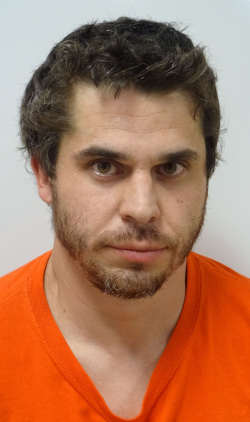
LAKE COUNTY, Calif. – An Upper Lake man has been arrested after authorities said he shot his stepmother to death during a Tuesday night argument.
Matthew Daniel Mora, 35, was arrested shortly before 11:30 p.m. Tuesday, according to the Lake County Sheriff’s Office.
Lt. Corey Paulich said that at 5:40 p.m. Tuesday Lake County Sheriff’s deputies responded to the 600 block of East Highway 20 in Upper Lake for a report of a gunshot victim.
When deputies arrived they found a female deceased from an apparent gunshot wound, Paulich said.
Paulich identified the shooting victim as 56-year-old Christine Mora. He said witnesses had identified Matthew Mora as Christine Mora’s stepson.
Matthew Mora fled the scene prior to deputies’ arrival, Paulich said.
Over the next several hours, deputies sought Mora, who at one point had been reported to be walking along East Highway 20, later being spotted at various locations around Upper Lake, based on radio traffic.
Scanner reports also indicated that the firearm was left behind at the scene.
Paulich said witnesses stated Matthew Mora was intoxicated and arguing with family at the residence when he shot his stepmother.
The Sheriff’s Office Major Crimes Unit responded to the scene to continue the investigation, Paulich said.
Paulich said deputies located Mora at a local hotel and took him into custody.
Mora was booked at the Lake County Jail early Wednesday morning. He is being held on $1 million bail.
Mora was booked at the Lake County Jail on a charge of murder early Wednesday morning. He is being held on $1 million bail.
Paulich told Lake County News that the sheriff’s office’s only previous contact with Mora was for a vehicle violation in 2018.
Anyone with information related to this investigation is asked to contact the Sheriff’s Office at 707-262-4238.
Email Elizabeth Larson at
- Details
- Written by: Elizabeth Larson
LAKE COUNTY, Calif. – A major winter storm descended across Lake County and the North Coast region on Tuesday, bringing heavy rain, snow and high winds, and leading to road closures and power outages.
The National Weather Service has an active winter storm warning in effect for Lake County through noon on Wednesday, along with a hazardous weather outlook due to the storm, which began to pick up during the afternoon and early evening on Tuesday.
Snow was reported in various parts of the county, from Clearlake to Clearlake Oaks, Cobb, Lakeport, Kelseyville and Upper Lake.
The California Highway Patrol reported numerous road hazards due to snow and stranded vehicles, downed trees and power lines on Tuesday.
Shortly after 4 p.m., the CHP said chains were necessary on Highway 175 over Cobb, from Socrates Mine Road to Red Hills Road.
Early in the evening, multiple vehicles were reported to be stuck in the snow on the Glasgow Grade near Lower Lake, with at least one vehicle struck in a ditch. A Caltrans snow plow was dispatched to the scene.
Just after 6:30 p.m., radio traffic reported that 40 to 50 vehicles on the grade remained at a standstill due to the snow.
About a half hour later, eight vehicles were reported to be stuck at Point Lakeview Road and Sunrise Drive near Lower Lake, with county roads staff working to respond.
Conditions had become so serious that just before 7 p.m. the Clearlake Police Department sent out a Nixle alert that said, “Due to the weather, please stay inside. If travel is necessary, please drive slowly and safely.”
Downed lines were reported just before 6:30 p.m. at 40th and Moss avenues in Clearlake and at Highway 175 and Adams Springs Road in Cobb shortly after 7:30 p.m.
A PG&E wind map at 8 p.m. showed high wind speeds around the county, including 41 mile per hour gusts near Nice and 31 miles per hour on Emerford Road in the Cobb area
Just before 9 p.m., the CHP reported that there were multiple vehicles stuck in the snow on both sides of the Lake and Mendocino County line along Highway 20 west of Witter Springs Road.
The Clearlake Police Department at 10:40 p.m. issued an alert asking that people avoid the area of 18th, 40th and Davis avenues due to hazardous conditions from the weather. “Some or all roads may be impassable,” the department said.
At 11:15 p.m., the police department reported a tree was down in the roadway at Old Highway 53 and Davis Avenue.
There also were reports on Tuesday of trees falling on several houses around the county.
The National Weather Service said winds with gusts of up to 45 miles per hour were expected to continue until about 12 a.m. Wednesday, and early Wednesday the wind map showed winds had dropped substantially from the peak speeds recorded on Tuesday night, with some areas in the single digits.
Conditions on Highway 29 between Lower Lake and Kelseyville, where dozens of vehicles had been reported stranded on Tuesday evening, led to a road closure that continued into early Wednesday.
At 2:15 a.m., the CHP said the roadway was closed from Highway 29 and 53 in Lower Lake to Highway 29 at Kit’s Corner in Kelseyville. There was no estimated time of reopening early Wednesday.
During the course of the night there were numerous reports of power outages around Lake County.
As of 2:30 a.m. Wednesday, nearly 2,800 PG&E customers combined were without power in Clearlake, Clearlake Oaks, Cobb, Kelseyville, Lakeport, Loch Lomond, Lower Lake and Upper Lake.
Weather stations in the National Weather Service’s network showed that Lower Lake and Middletown received more than an inch and a half of rain on Tuesday, while Upper Lake and parts of Cobb recorded more than 1.3 inches.
Heavy snow is expected through Wednesday morning in the area of 1,500 to 2,500 feet in elevation, based on the forecast.
Forecasters are predicting between 4 to 10 inches of snow in higher elevations and 2 to 3 inches of rain, particularly in southern Lake County.
Additional rain also is expected across Lake County from Wednesday through Monday, the National Weather Service said.
Email Elizabeth Larson at