 How to resolve AdBlock issue?
News
- Details
- Written by: Lake County News reports
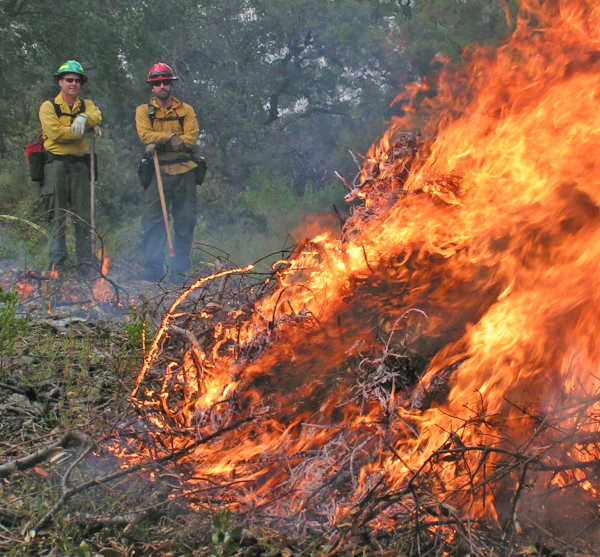
LAKE COUNTY, Calif. – The Bureau of Land Management Ukiah Field Office, in cooperation with Cal Fire Sonoma Lake Napa Unit, plans to conduct prescribed fire operations in the Black Forest along Soda Bay Road, on the northeast side of Mount Konocti in Kelseyville.
Pile burn operations are scheduled to start the week of Jan. 24 and may continue periodically through the winter and spring.
Burning will take place only when weather and fuel moisture allow for safe and successful burning.
The prescribed fire is part of a shaded fuel break initiated in 2008 and is designed to improve landscape health and to remove hazardous fuels that could feed wildland fires within this wildland-urban interface, where public lands meet urban development.
Approximately 18 acres of undergrowth and small trees were hand-thinned by firefighters and piled last summer.
The Black Forest encompasses approximately 200 acres of BLM-managed public lands and supports many sensitive plants and animals as well as important watershed ecosystems, including a pristine Douglas fir forest.
The BLM is committed to keeping public landscapes healthy and productive. More information is available from the BLM Ukiah Field Office at 707-468-4000.
- Details
- Written by: Elizabeth Larson
LAKE COUNTY, Calif. – One person was reported to have died early Sunday morning following a vehicle rollover near Lakeport.
The solo-vehicle wreck was reported shortly after 12 a.m. by someone who said they heard a loud crash, according to the California Highway Patrol.
The CHP said the crash was reported in the 1500 block of Mountview Road, near the intersection with Scotts Valley Road.
Firefighters arriving at the scene at around 12:15 a.m. found an overturned SUV with an unconscious male subject who had been ejected from the vehicle, according to radio reports.
An air ambulance was requested but a few minutes later the medic unit on scene reported that the patient had died, with the CHP’s online report confirming a fatality shortly thereafter.
The sheriff’s department was dispatched to respond to the scene because of the fatality, radio traffic indicated.
Additional details about the wreck were not immediately available early Sunday.
Email Elizabeth Larson at
Email Elizabeth Larson at
- Details
- Written by: Jonathan Runstadler, Tufts University and Kaitlin Sawatzki, Tufts University

Over the course of the COVID-19 pandemic, researchers have found coronavirus infections in pet cats and dogs and in multiple zoo animals, including big cats and gorillas. These infections have even happened when staff were using personal protective equipment.
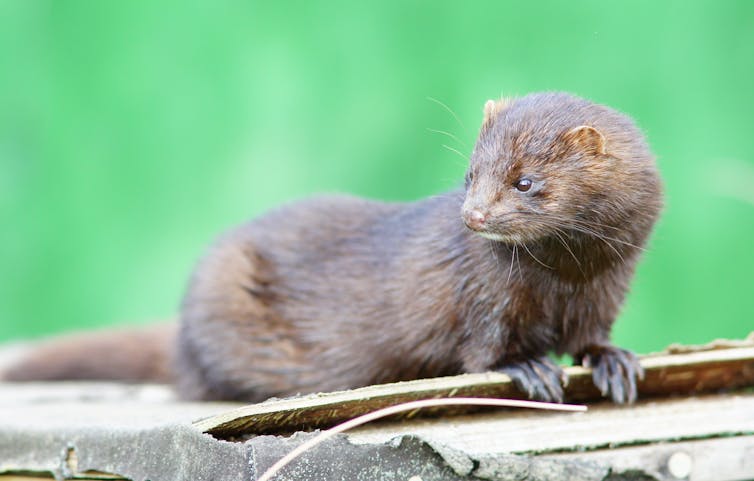
More disturbing, in December the United States Department of Agriculture confirmed the first case of a wild animal infected with SARS-CoV-2, the virus that causes COVID-19. Researchers found an infected wild mink in Utah near a mink farm with its own COVID-19 outbreak.
Are humans transmitting this virus to wildlife? If so, what would this mean for wild animals – and people too?
How viruses hop between species
We are two scientists who study viruses in wildlife and are currently running a study investigating the potential for SARS-CoV-2 transmission from humans into domestic and wild animals.
When viruses move from one species into another, scientists call it spillover. Thankfully, spillover doesn’t occur easily.
To infect a new species, a virus must be able to bind to a protein on a cell and enter the cell while dodging an immune system the virus hasn’t encountered before. Then, as a virus works to avoid antibodies and other antiviral attackers, it must replicate at a high enough volume to be transmitted on to the next animal.
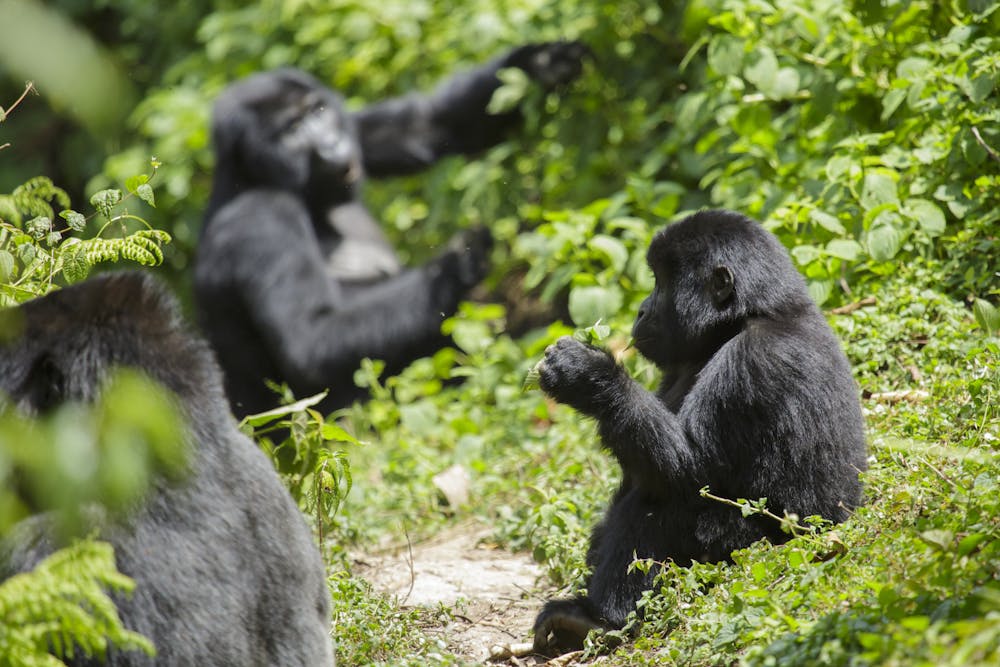
This usually means that the more closely related two species are, the more likely they are to share viruses. Chimpanzees, the species most closely related to humans, can catch and get sick from many human viruses. Earlier this month, veterinarians at the San Diego Zoo announced that the zoo’s troop of gorillas was infected with SARS–CoV–2. This indicated it is possible for this virus to jump from humans to our close relatives.
Some viruses tend to stay in a single species or in closely related species, while other viruses seem innately more capable of large species jumps. Influenza, for example, can infect a wide variety of animals, from sparrows to whales. Similarly, coronaviruses are known to regularly jump between species.
The question of how many and which species can be infected by SARS-CoV-2 – and which ones might be able to support continued circulation of the virus – is an important one.
Searching for COVID-19 in wildlife
For human-to-wildlife spillover of SARS-CoV-2 to occur, an animal needs to be exposed to a high-enough viral dose to become infected.
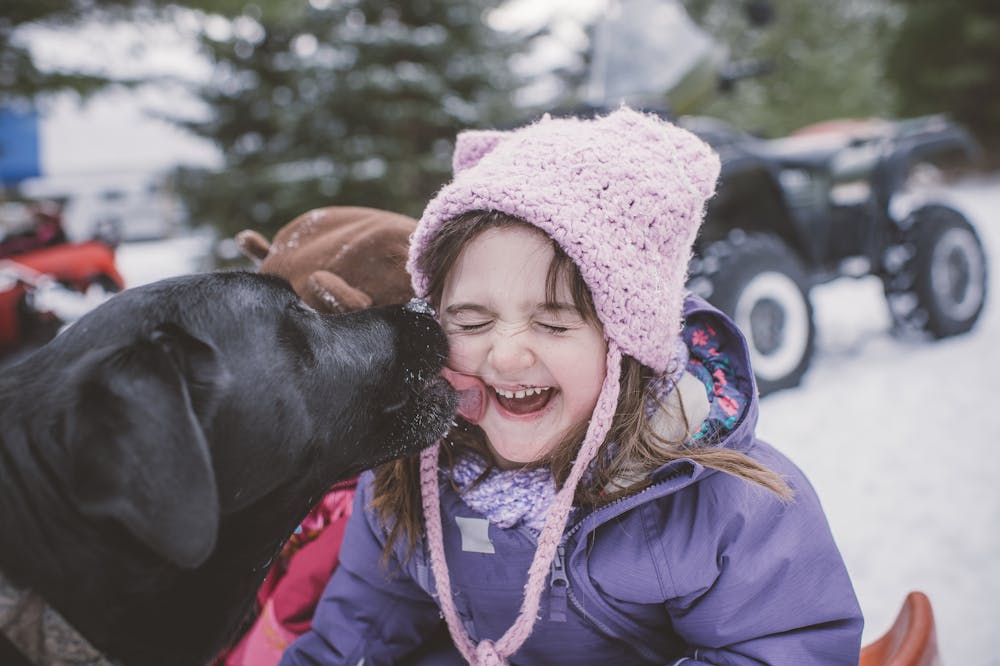
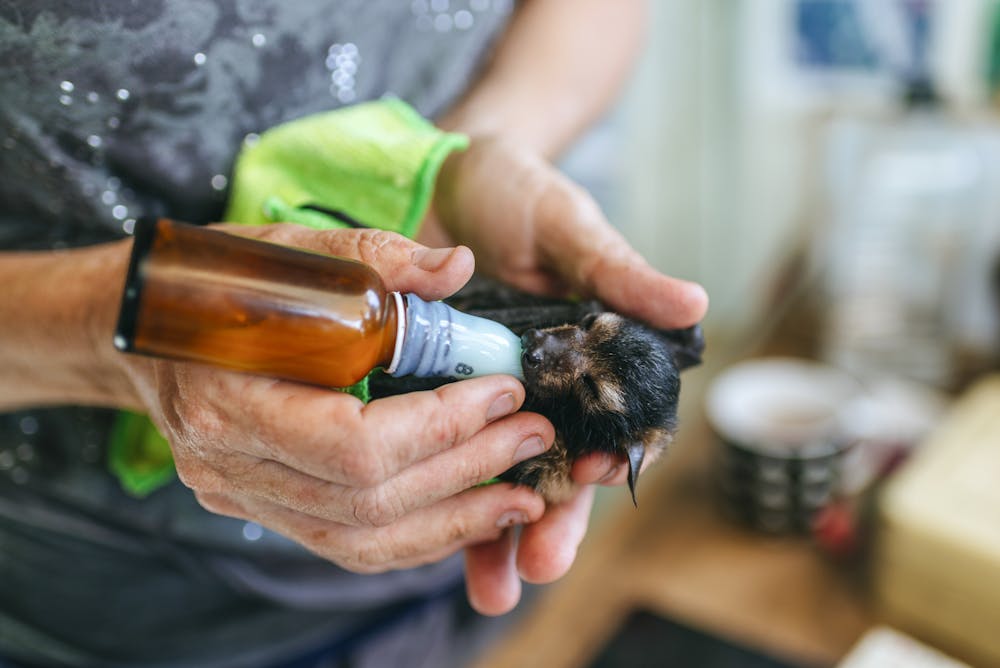
The highest-risk situations are during direct contact with humans, such as a veterinarian’s caring for an injured animal. Contact between a sick person and a pet or farm animal also poses a risk, as the domestic animal could act as an intermediate host, eventually passing the virus to a wild animal.
Another way COVID-19 could spill over from humans into animals is through indirect infection, such as through wastewater. COVID-19 and other pathogens can be detected in waste streams, many of which end up dumped, untreated, into environments where wildlife like marine mammals may be exposed. This is thought to be how elephant seals in California became infected with H1N1 influenza during the swine flu pandemic in 2009.
To study whether spillover of SARS-CoV-2 is happening, our team at Tufts is partnering with veterinarians and licensed wildlife rehabilitators across the U.S. to collect samples from and test animals in their care. Through the project, we have tested nearly 300 wild animals from over 20 species. So far, none – from bats to seals to coyotes – have shown any evidence of COVID-19 by swab or antibody tests.
Other researchers have launched targeted surveillance of wild animals in places where captive animals have been infected. The first confirmed infection in a wild mink was found during surveillance near an infected mink farm. It’s not yet clear how this wild mink got the coronavirus, but the high density of infected minks and potentially infectious particles from them made it a high-risk location.
_11.jpg)
Bad for animals, bad for humans
When a virus infects a new species, it sometimes mutates, adapting to infect, replicate and transmit more efficiently in a new animal. This is called host adaptation. When a virus jumps to a new host and begins adapting, the results can be unpredictable.
In late 2020, when SARS-CoV-2 jumped into farmed mink in Denmark, it acquired mutations that were uncommon in humans. Some of these mutations occurred in the part of the virus that most vaccines are designed to recognize. And it didn’t just happen once – these mutations independently arose in mink farms multiple times. While it’s not yet clear what impact, if any, these mutations may have on human disease or the vaccine, these are signs of host adaptation that could allow novel variants of the virus to persist and reemerge from animal hosts in the future.
Another risk is that SARS-CoV-2 could cause disease in animals. Ecologists are especially concerned about endangered species like the black-footed ferret, which is closely related to minks and thought to be very susceptible to the virus.
Human-to-wildlife spillover has happened before. In the late 20th century, the Ebola virus jumped from humans into great apes and has resulted in devastating consequences for these endangered animals. More recently, a human respiratory virus has been detected in threatened mountain gorilla populations and has caused deaths as well.
But perhaps the biggest risk to humans is that spillover could result in the coronavirus establishing a reservoir in new animals and regions. This could provide opportunities for reintroduction of COVID-19 into humans in the future. This month researchers published a paper showing that this had already happened on a small scale with human–to–mink–to–human transmission on mink farms in Denmark.
While our team has found no evidence of COVID-19 in wild animals in the U.S. at this time, we have seen convincing evidence of regular spillover into dogs and cats and some zoo animals. The discovery of the infected wild mink confirmed our fears. Seeing the first wild animal with natural COVID-19 is alarming, but sadly, not surprising.
Jonathan Runstadler, Professor of Infectious Disease and Global Health, Cummings School of Veterinary Medicine, Tufts University and Kaitlin Sawatzki, Postdoctoral Infectious Disease Researcher, Tufts University
This article is republished from The Conversation under a Creative Commons license. Read the original article.
- Details
- Written by: Elizabeth Larson
Dogs available for adoption this week include mixes of Belgian Malinois, German Shepherd, husky, Labrador Retriever, mastiff, pit bull and Rottweiler.
Dogs that are adopted from Lake County Animal Care and Control are either neutered or spayed, microchipped and, if old enough, given a rabies shot and county license before being released to their new owner. License fees do not apply to residents of the cities of Lakeport or Clearlake.
The following dogs at the Lake County Animal Care and Control shelter have been cleared for adoption (additional dogs on the animal control Web site not listed are still “on hold”).
Call Lake County Animal Care and Control at 707-263-0278 or visit the shelter online at http://www.co.lake.ca.us/Government/Directory/Animal_Care_And_Control.htm for information on visiting or adopting.
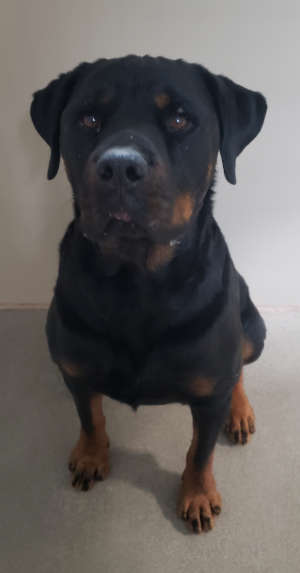
Male Rottweiler
This male Rottweiler has a short black and brown coat.
He has been neutered.
He is in kennel No. 10, ID No. 14315.
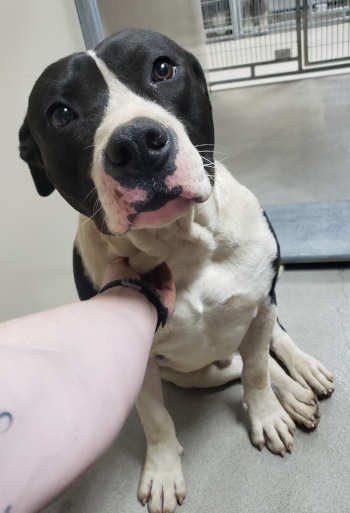
Male pit bull terrier
This male pit bull terrier has a short blue and white coat.
He is in kennel No. 11, ID No. 14314.
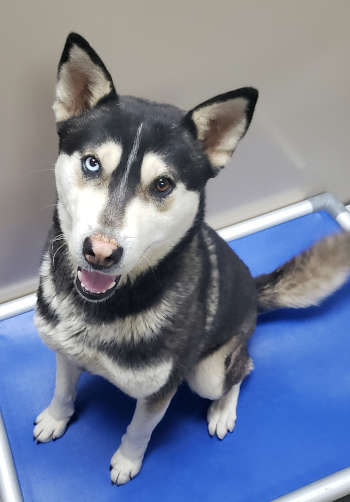
German Shepherd-husky mix
This male German Shepherd-husky mix has a medium-length coat.
He is in kennel No. 16, ID No. 14309.
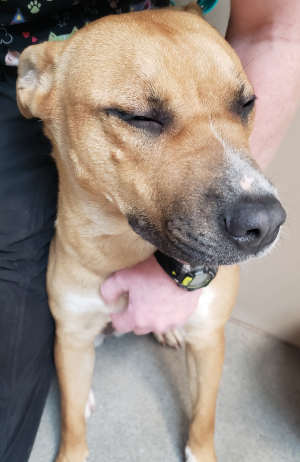
Female pit bull terrier
This young female pit bull terrier has a short tan coat.
She is in kennel No. 18, ID No. 14306.
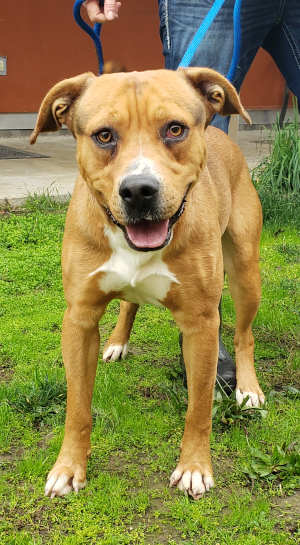
Male pit bull terrier-hound
This young male pit bull terrier-hound mix has a medium-length brown coat.
He is in kennel No. 19, ID No. 14276.
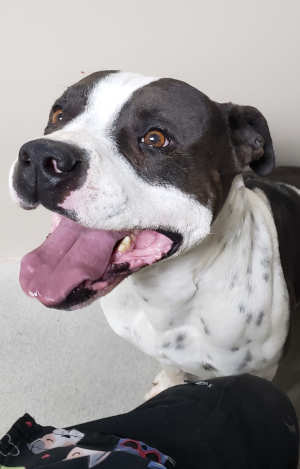
Male pit bull terrier
This male pit bull terrier has a short black and white coat.
He is in kennel No. 20, ID No. 14295.
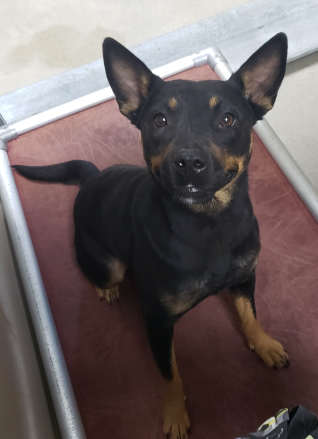
Female pit bull terrier
This female pit bull terrier has a short brown and black coat.
She is in kennel No. 21, ID No. 14310.
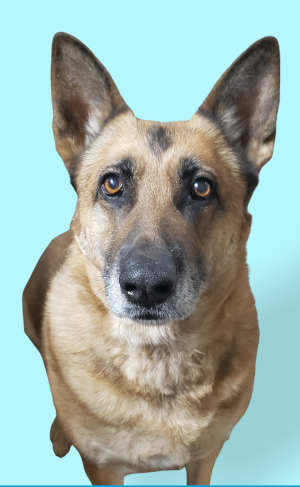
Female German Shepherd
This female German Shepherd has a medium-length black and tan coat.
She is in kennel No. 22, ID No. 14316.
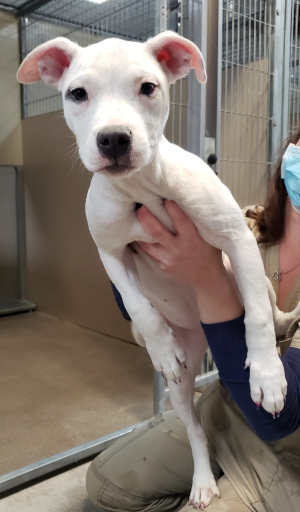
Female pit bull terrier
This female pit bull terrier puppy has a short black and white coat.
She is in kennel No. 23, ID No. 14305.
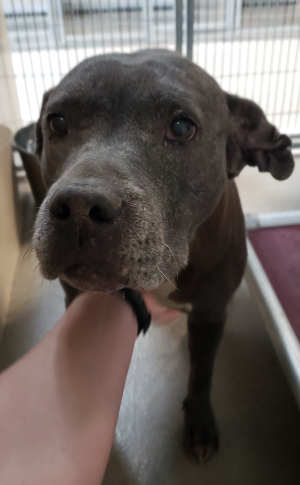
Female pit bull terrier
This senior female pit bull terrier has a short blue and white coat.
She is in kennel No. 24, ID No. 14299.
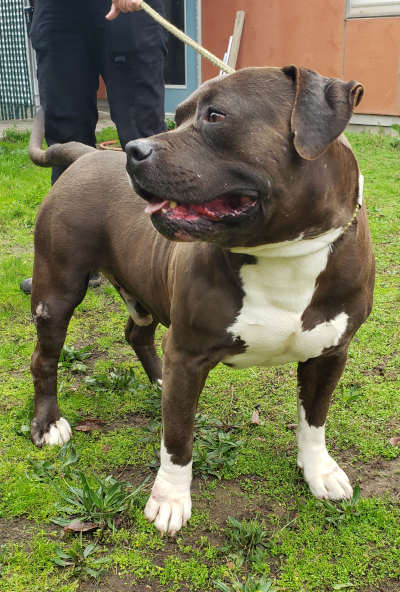
Pit bull-mastiff mix
This male pit bull-mastiff mix has a short chocolate coat.
He is in kennel No. 26, ID No. 14287.
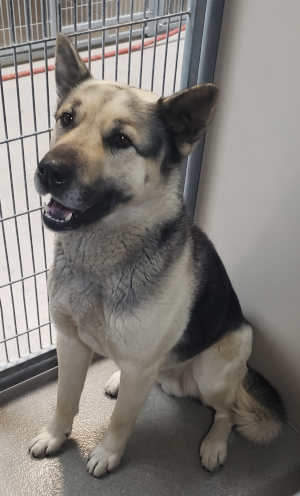
Male German Shepherd-husky mix
This male German Shepherd-husky mix has a medium-length black and tan coat.
He has been neutered.
He’s in kennel No. 28, ID No. 14307.
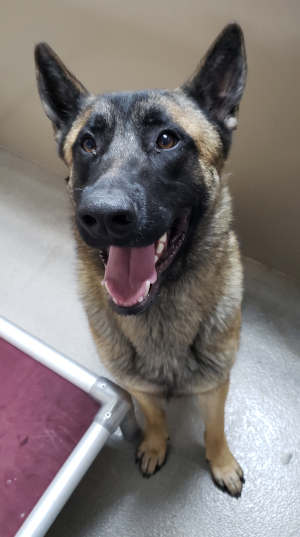
Male Belgian Malinois
This young male Belgian Malinois has a medium-length red and black coat.
He is in kennel No. 29, ID No. 14269.
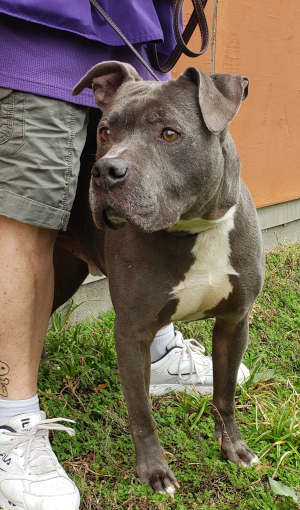
Male pit bull terrier
This male pit bull terrier has a short gray coat.
He has been neutered.
He is in kennel No. 32, ID No. 14271.
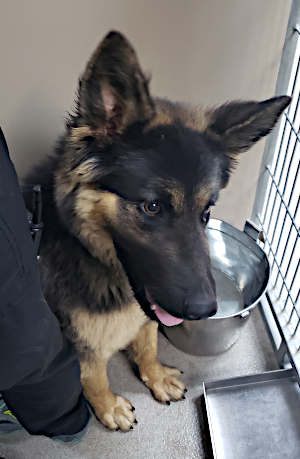
Female German Shepherd-husky mix
This young female German Shepherd-husky mix has a short black and tan coat.
She is in kennel No. 34, ID No. 14308.
Email Elizabeth Larson at