 How to resolve AdBlock issue?
News
- Details
- Written by: Richard Pildes, New York University
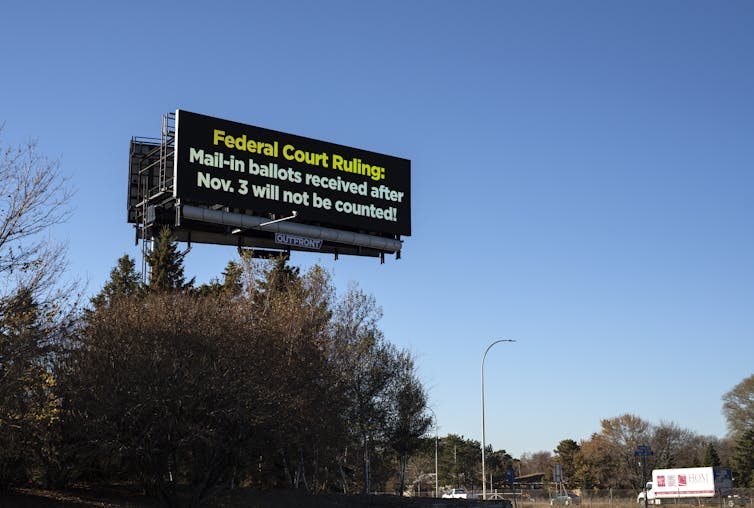
One of the most heavily contested voting-policy issues in the 2020 election, in both the courts and the political arena, was the deadline for returning absentee ballots.
Going into the election, the policy in a majority of states was that ballots had to be received by election night to be valid. Lawsuits seeking an extension of these deadlines were brought around the country for two reasons: First, because of the pandemic, the fall election would see a massive surge in absentee ballots; and second, there were concerns about the competence and integrity of the U.S. Postal Service, particularly after President Trump appointed a major GOP donor as the new postmaster general.
The issue produced the Supreme Court’s most controversial decision during the general election, which prohibited federal courts from extending the ballot-receipt deadlines in state election codes. Now that the data are available, a post-election audit provides perspective on what the actual effects of these deadlines turned out to be.
Perhaps surprisingly, the number of ballots that came in too late to be valid was extremely small, regardless of what deadline states used, or how much that deadline shifted back and forth in the months before the election. The numbers were nowhere close to the number of votes that could have changed the outcome of any significant race.
Changing deadlines in Wisconsin
Take Wisconsin and Minnesota, two important states that were the site of two major court controversies over these issues. In both, voters might be predicted to be the most confused about the deadline for returning absentee ballots, because those deadlines kept changing.
In Wisconsin, state law required absentee ballots to be returned by Election Night. The federal district court ordered that deadline extended by six days. But the Supreme Court, in a 5-3 decision, blocked the district’s court order and required the deadline in the state’s election code to be respected.
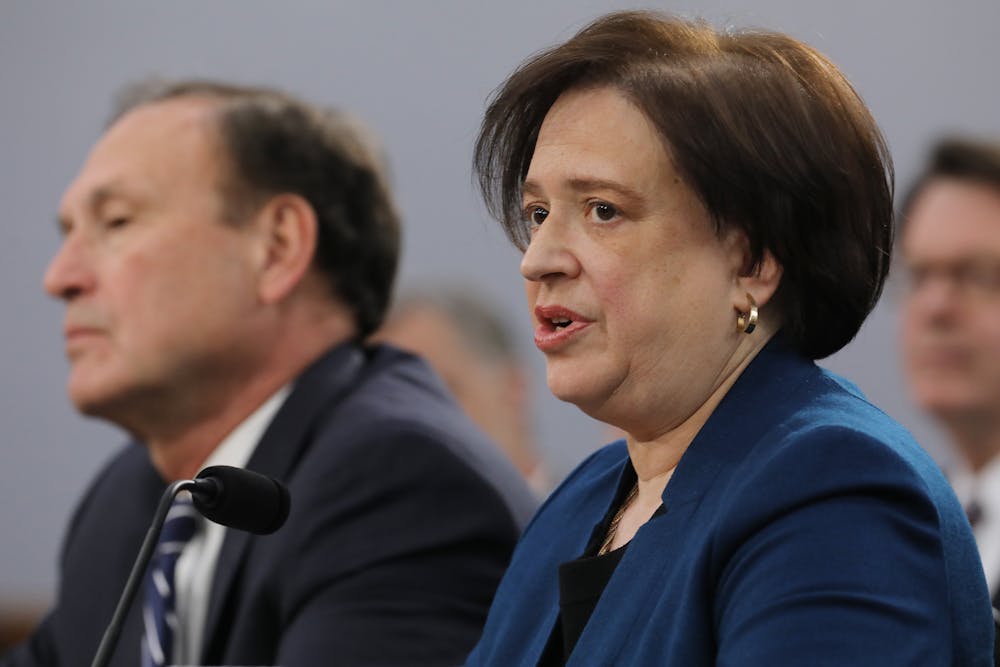
Writing for the three dissenters, Justice Elena Kagan invoked the district court’s prediction that as many as 100,000 voters would lose their right to vote, through no fault of their own, as a result of the majority’s ruling that the normal state-law deadline had to be followed. Commentators called this a “disastrous ruling” that “would likely disenfranchise tens of thousands” of voters in this key state.
The post-election audit now provides perspective on this controversy that sharply divided the court. Ultimately, only 1,045 absentee ballots were rejected in Wisconsin for failing to meet the Election Night deadline. That amounts to 0.05% ballots out of 1,969,274 valid absentee votes cast, or 0.03% of the total vote in Wisconsin.
If we put this in partisan terms and take Biden as having won roughly 70% of the absentee vote nationwide, that means he would have added 418 more votes to his margin of victory had these late-arriving ballots been valid.
Changing deadlines in Minnesota
The fight over ballot deadlines in Minnesota was even more convoluted. If voters were going to be confused anywhere about these deadlines, with lots of ballots coming in too late as a result, it might have been expected to be here.
State law required valid ballots to be returned by Election Night, but as a result of litigation challenging that deadline, the secretary of state had agreed in early August that ballots would be valid if they were received up to seven days later.
But a mere five days before the election, a federal court pulled the rug out from under Minnesota voters. On Oct. 29, it held that Minnesota’s secretary of state had violated the federal Constitution and had no power to extend the deadline. The original Election Night deadline thus snapped back into effect at the very last minute.
Yet it turns out that only 802 ballots, out of 1,929,945 absentees cast (0.04%), were rejected for coming in too late.
Even though voting-rights plaintiffs lost their battles close to Election Day in both Wisconsin and Minnesota, with the deadlines shifting back and forth, only a tiny number of ballots arrived too late.
Where deadlines didn’t change
What happened in states that had a consistent policy throughout the run-up to the election that required ballots to be returned by Election Night?
Among battleground states, Michigan provides an example. Only 3,328 ballots arrived after Election Day, too late to be counted, which was 0.09% of the total votes cast there.
Finally, Pennsylvania and North Carolina were two states in which litigation did succeed in generating decisions that overrode the state election code and pushed ballot-receipt deadlines back – in Pennsylvania by three days, in North Carolina by six days.
These decisions provoked intense political firestorms in some quarters, particularly regarding Pennsylvania. The Pennsylvania Supreme Court’s three-day extension of the deadline became the primary justification that some Republican senators and representatives offered on Jan. 6 for objecting to counting the state’s Electoral College votes.
How many voters took advantage of these extended deadlines? In North Carolina, according to information that the state Board of Elections provided to me, 2,484 ballots came in during the additional six days after Election Day that the judicial consent decree added. That comes to 0.04% of the total valid votes cast in the state.
In Pennsylvania, about 10,000 ballots came in during the extended deadline window, out of the 2,637,065 valid absentee ballots. That’s 0.14% of the total votes cast there. These 10,000 ballots were not counted in the state’s certified vote total, but had they been, Biden would likely have added around 5,000 votes to his margin of victory, given that he won about 75% of the state’s absentee vote.
These are not the numbers of ballots, of course, that would have come in late had the courts refused to extend the deadline in these two states. They show the maximum number that arrived after Election Day when voters had every right to return their ballots this late. Even so, those numbers are still far lower than the 100,000 that had been predicted in Wisconsin.
But had the statutory deadlines remained in place in Pennsylvania and North Carolina, there is no reason to think the number of late absentees would have been much different from those in similar swing states like Michigan, where the statutory deadlines remained fixed and 0.09% of ballots arrived too late.
Highly engaged voters
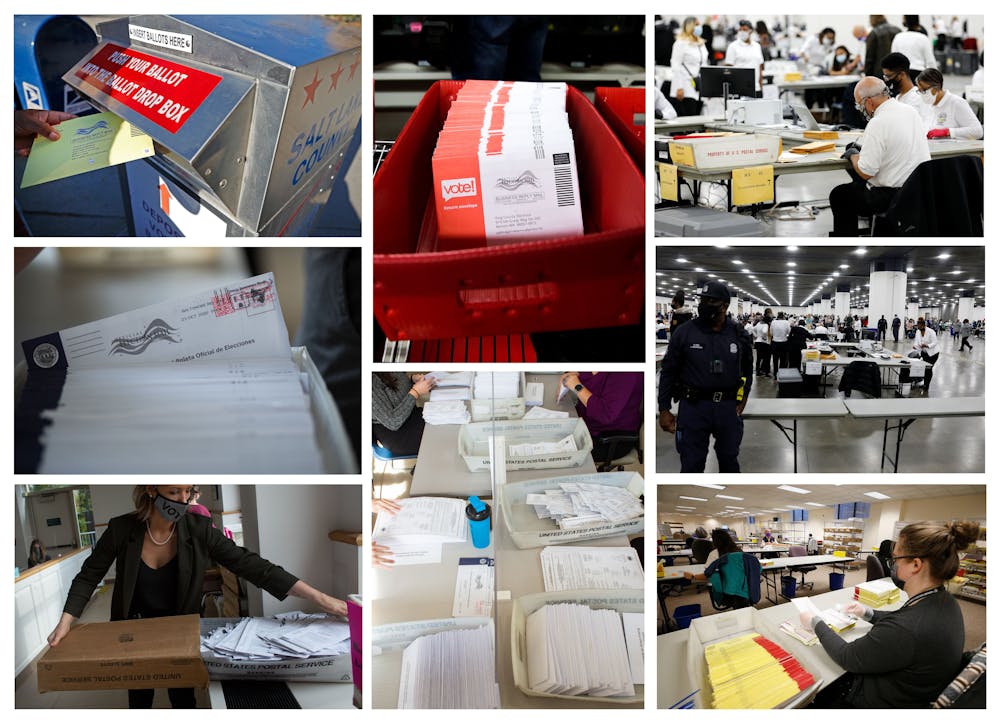
The small number of absentee ballots that came in after the legal deadlines occurred despite a massive surge in absentee voting in nearly all states. What explains that?
Voters were highly engaged, as the turnout rate showed. They were particularly attuned to the risk of delays in the mail from seeing this problem occur in the primaries. Throughout the weeks before the election, voters were consistently returning absentee ballots at higher rates than in previous elections.
The communications efforts of the Biden campaign and the state Democratic parties, whose voters cast most of these absentee votes, got the message across about these state deadlines. Election officials did a good job of communicating these deadlines to voters. In some states, drop boxes that permitted absentee ballots to be returned without using the mail might have helped minimize the number of late arriving ballots, though we don’t have any empirical analysis on that.
In a highly mobilized electorate, it turns out that the specific ballot-return deadlines, and whether they shifted even late in the day, did not lead to large numbers of ballots coming in too late.
That’s a tribute to voters, election officials, grassroots groups – and to the campaigns.
Richard Pildes, Professor of Constitutional Law, New York University
This article is republished from The Conversation under a Creative Commons license. Read the original article.
- Details
- Written by: Preston Dyches
What's up for April? Morning planets, a sunset arch and finding Leo the lion.
April 22 is Earth Day – an annual opportunity to collectively appreciate the wonder and beauty of our home planet. So it seems appropriate to feature an Earth-related sight you can see any time of the year when you have clear skies. It's a twilight phenomenon that you might have noticed just after sunset.
If you can pull your gaze away from the sunset in the west, and spin yourself around to face east, you'll often notice a band of pink- or orange-colored sky with a darker, bluish band beneath. These bands move upward over the minutes following sunset to form an arch across the sky that slowly fades as night sets in. The dark band is Earth's shadow rising. Above it, the rosy-hued band is known as the Belt of Venus.
We observe this sight for a short time after sunset when the sun is just below the horizon, but some of its light rays are still making their way through the atmosphere before nightfall. The redder, or longer wavelengths, of sunlight are able to travel the longest distance through the atmosphere. And at the point opposite to the sunset, this reddish light is scattered off the atmosphere and back toward your eyes.
The Belt of Venus is named not for the planet, but for the mythical goddess. Together with Earth's shadow, these sights form the "anti-twilight arch." This arch rises like a curtain on the night, slowly fading as Earth's shadow eventually fills the sky, allowing us to gaze outward into the stars.
You can see this sight in morning twilight as well, by looking in the direction opposite the rising sun – that is, toward the west. As the sky begins to lighten, Earth's shadow becomes noticeable with the Belt of Venus above it, and these bands slowly sink to the horizon as day breaks.
April is a great time to look for Leo, that is, the constellation Leo. Leo is the Latin word for "lion," and this well-known grouping of stars is named for a super-powered lion vanquished by the mythical hero Hercules. It's a pretty easy constellation to locate, because it sort of looks like a lion reclining in the sky, and has this recognizable curving shape, called the Sickle, that represents the lion's head.
In April, you can find Leo high overhead in the south in the first few hours after sunset. In addition to the sickle shape of the lion's head, look for the lion's heart – the brilliant bluish-white star Regulus, which is one of the brightest stars in the sky.
Astronomers think most stars have a family of planets orbiting them. And these two bright stars in Leo – named Algieba (which is actually a double star!) and Rasalas – each have a confirmed planet larger than Jupiter orbiting around them. So step out after dark in April to look for Leo, with its sickle-shaped lion's mane, and blazing bluish heart.
Preston Dyches works for NASA's Jet Propulsion Laboratory.
- Details
- Written by: Lake County News reports
At 11:22 a.m. Friday, the agency posted an update on its Facebook page saying that 14-year-old Ocean Smith was safely located.
He had gone missing on Thursday night after 10:30 p.m. after a dispute with family.
- Details
- Written by: Lake County News reports

LAKE COUNTY, Calif. – The Clearlake Police Department said early Friday that it is trying to locate a missing at-risk 14-year-old boy.
The department is trying to find Ocean Smith.
At 10:30 p.m. Thursday, Ocean Smith was in a dispute with family at his residence located in the area of the 14500 block of Lakeshore Drive, police said.
After the dispute, police said Ocean left the residence in an unknown direction.
Ocean is described by family as having special needs and this behavior is out of character for him, police said.
Ocean is a black male juvenile, standing 6 feet tall and weighing 300 pounds, with black hair and hazel eyes. Police said he was last seen wearing a t-shirt and blue shorts.
If you see Ocean, please contact the Clearlake Police Department at 707-994-8251.